The Science Behind Fall Foliage: Why, How, and When Leaves Change Color
Most people assume the first cold snap is what starts fall color. It isn't. The real trigger is day length, and everything else, temperature, rain, frost, wind, decides how vivid or short the season turns out to be. In this post, I break down why leaves change color, how the process actually works inside the tree, and why the same hillside can look completely different from one October to the next.
Here is the information you need to plan your fall foliage travel to make sure you find the best colors on your trip.

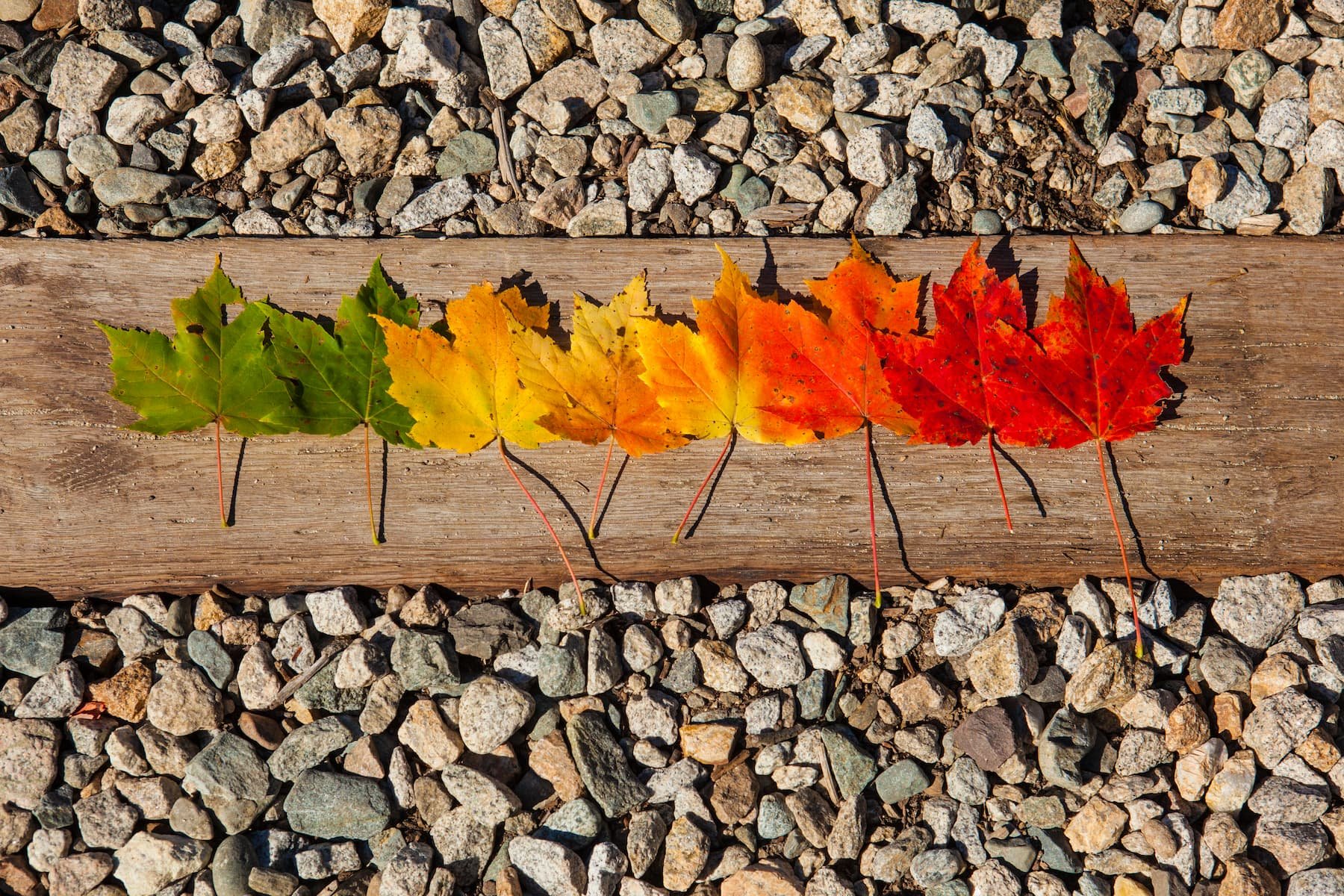
Fall Foliage Color Progression: Green to Red Maple Leaves. Photo taken by Anthony Quintano
Every fall, I get the same question from people planning a trip to New England. "When should I come?" Why do they come to me? Mostly because they know I’m obsessed with fall foliage and do lots of research before we make our annual pilgrimage to New England.
It's a fair question, but it's harder to answer than most people think. The color change isn't random and it isn't just about temperature. It's a mix of biology and weather working together, and once you understand how it actually works, you can read the signs yourself instead of guessing.
Here's what's really going on inside those trees.
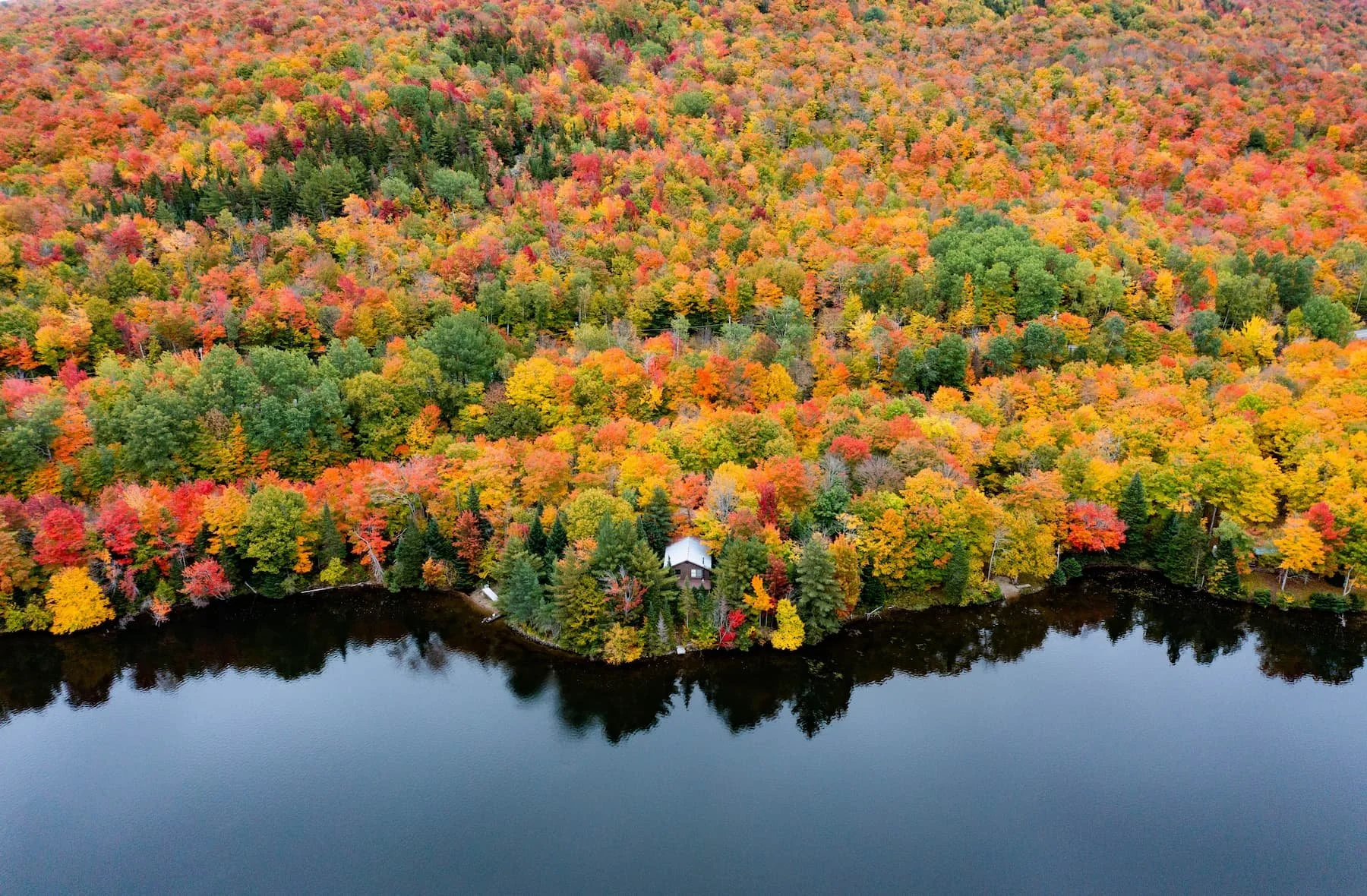
Peak Fall Foliage from Above at Norton Pond, Vermont's Northeast Kingdom. Photo taken by Anthony Quintano
Why Leaves Change Color
A leaf is green all summer because of a pigment called chlorophyll. Chlorophyll is what allows a leaf to absorb sunlight and turn it into energy for the tree, a process called photosynthesis. Chlorophyll is so dominant during the growing season that it covers up two other pigments that are in the leaf the whole time, we just can't see them yet.
Those two hidden pigments are carotenoids and anthocyanins. Carotenoids produce yellow and gold, and they are the same pigments that make carrots orange and bananas yellow. They are already sitting in the leaf all summer long, waiting.
Anthocyanins are different. They aren't there all summer. The tree actually produces them in the fall, and they're what give us the deep reds and purples. Anthocyanins form when sugar builds up inside the leaf, which is directly connected to how the tree shuts down for winter. I'll get into that part next.
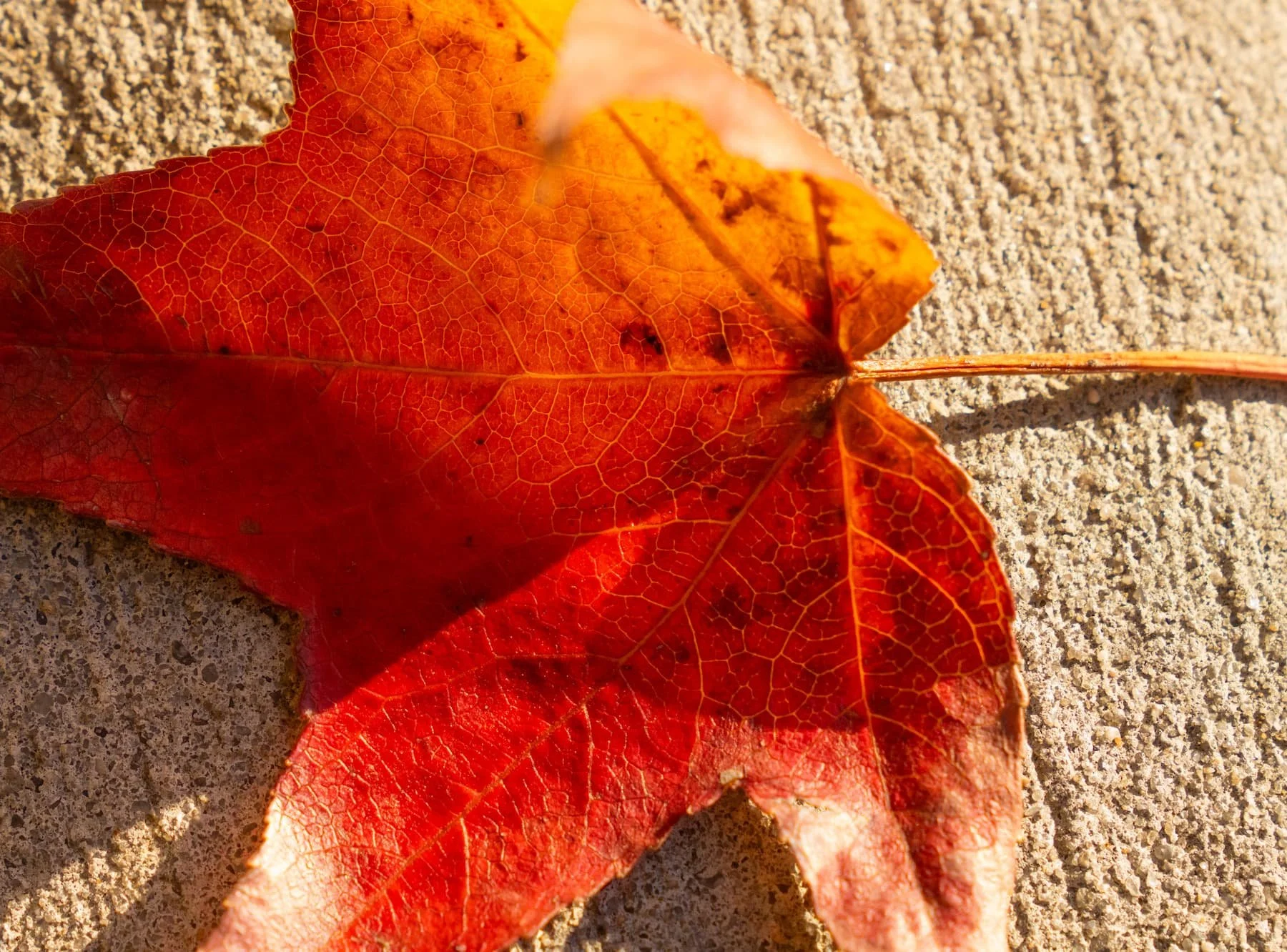
A macro shot of a fallen maple leaf backlit by low autumn sun, glowing red, orange, and gold, with every vein visible against the concrete underneath. Photo taken by Anthony Quintano
How the Change Actually Happens
As fall approaches, the tree starts preparing to shut down for winter. It does this by growing a layer of cells at the base of each leaf, called the abscission layer. Think of it as the tree building a wall between itself and the leaf.
Once that layer forms, it slowly closes off the veins that carry water and nutrients in and out of the leaf. That cuts off the leaf's ability to keep making chlorophyll, and the green starts to fade. As the green disappears, the yellows and golds from the carotenoids finally show through, since they were there all along.
At the same time, that closing-off process traps sugar inside the leaf. Trapped sugar is what triggers the tree to produce anthocyanins, which is why the reds and purples tend to show up a little later than the yellows, and why they're so dependent on the weather in a way the yellows aren't. This is also why the same tree can look different from year to year. The yellow is basically guaranteed. The red has to be earned by the right conditions.
Eventually that abscission layer finishes closing off completely, and the leaf detaches and falls. That's the whole point of it from the tree's perspective. It's not decoration, it's the tree protecting itself from winter by shedding the parts it can't support once the ground freezes and water becomes harder to pull up through the roots.
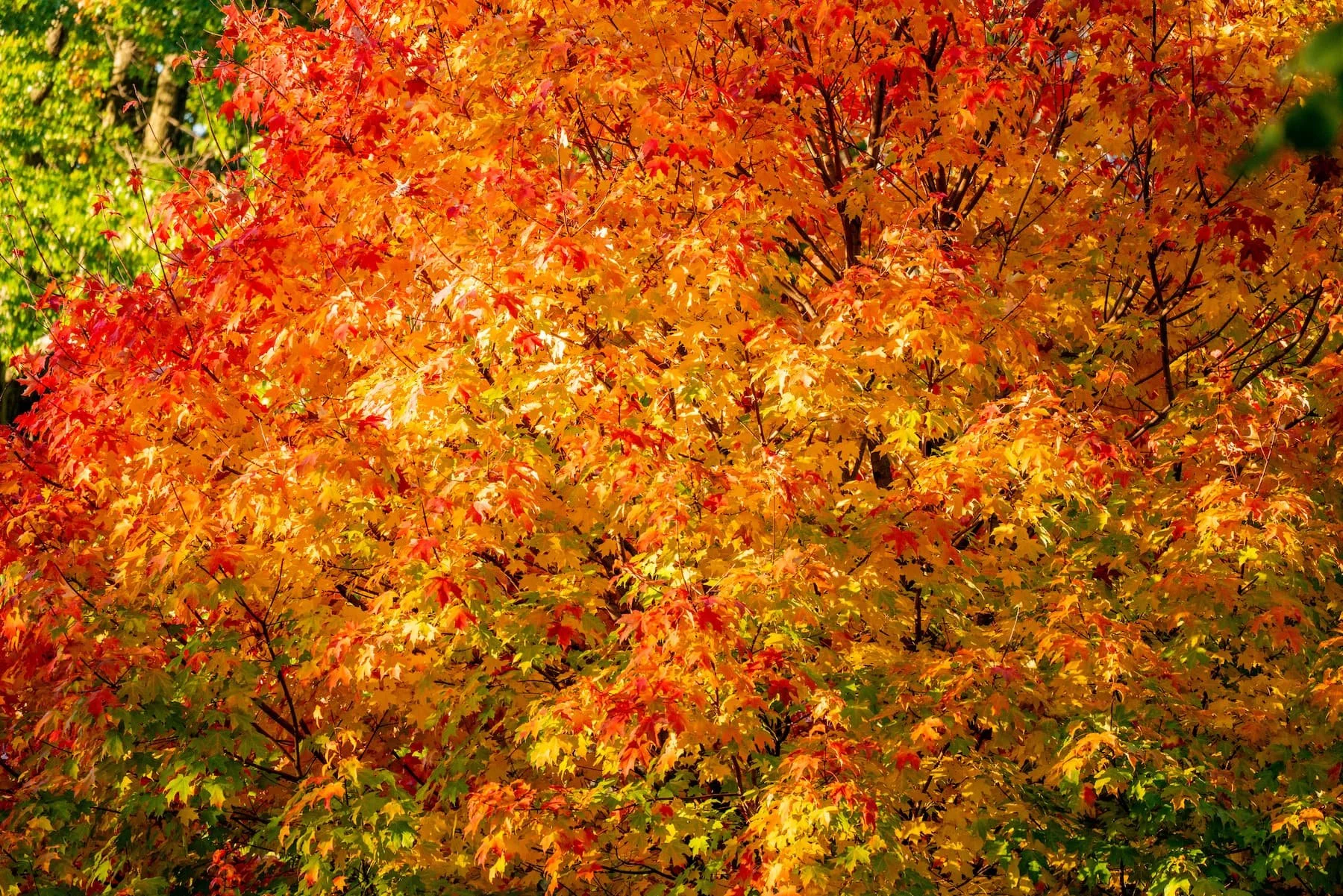
A maple mid-transition, red on one side, still holding green on the other. This is the stage that only lasts a few days before the whole tree catches up.
When It Happens: The Real Trigger
Most people assume the first cold snap is what starts the color change. It's not, not really. The real trigger is day length.
As we move through late summer into fall, nights get longer and days get shorter. Trees track that shift closely, and it's what tells them to start building that abscission layer and slowing chlorophyll production. This is why the color change starts around the same general time every single year in the same location, even in years with a hot September. Day length doesn't change based on the weather. It's the one constant a tree can always count on, so it relies on it as the master signal.
This is also why elevation and latitude matter so much for timing. Higher elevations and areas farther north experience their seasonal light and temperature shifts earlier, which is why the White Mountains and northern New Hampshire change before the Seacoast and southern New England. It's a real, predictable gradient that moves south over several weeks, not something random.
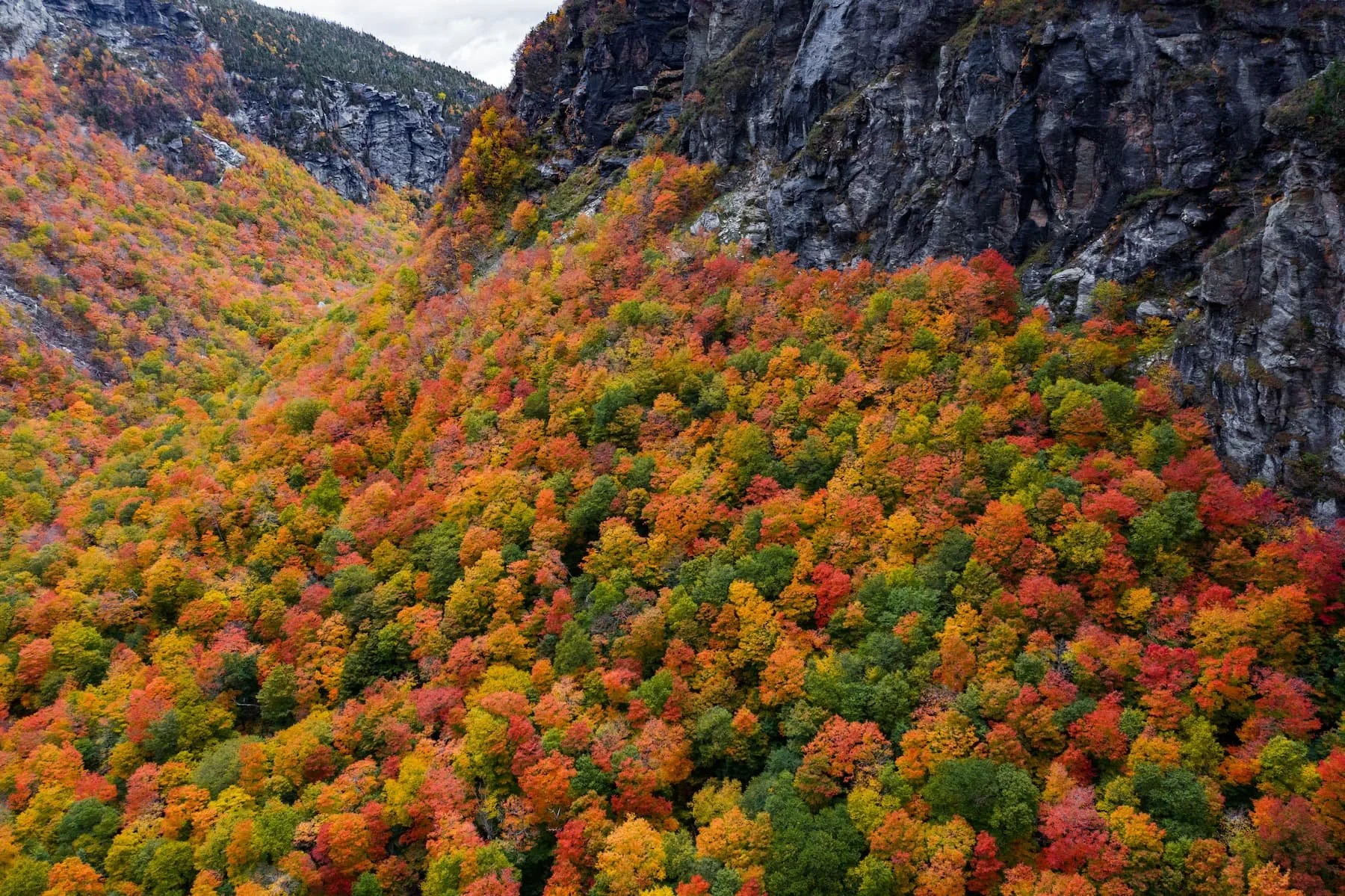
Smugglers Notch, Vermont. The cliffs make this one of the most dramatic passes in New England, and peak color against all that exposed rock is worth the drive on its own. Photo taken by Anthony Quintano
Why Higher Elevations Change First
This is one of the questions I get asked the most, and it comes down to basic meteorology, not just the calendar. Air gets colder the higher up you go. This is called the lapse rate, and on average, the air temperature drops a little over 3 degrees Fahrenheit for every 1,000 feet you climb. So the summit of Mount Washington, at over 6,200 feet, is running noticeably colder on any given day than the valleys down around Conway or Franconia.
That temperature difference matters because cool nights are one of the signals that pushes a tree toward shutting down for the season. A mountainside at 3,000 feet is already feeling those cool, crisp nights weeks before a town sitting at a few hundred feet of elevation does. The trees up high are essentially living a little further into fall than the trees down low, even on the same calendar day.
There's also a growing season difference. Higher elevations get their last spring frost later and their first fall frost earlier, so the whole growing season up there is shorter to begin with. That means the trees at elevation are naturally on an earlier internal clock all year, not just in October.
Put those two things together, colder average temperatures and a shorter growing season, and you get a real, physical reason why color starts at the summits and ridgelines first, then works its way down the mountain, and then spreads south and toward the coast over the following weeks. It's not a rumor or a tradition, it's the same reason it's colder at the top of a mountain than at the bottom of it. When I'm out shooting, this is exactly why I start my season at elevation in the north and chase the color as it moves downhill and south over the following weeks.
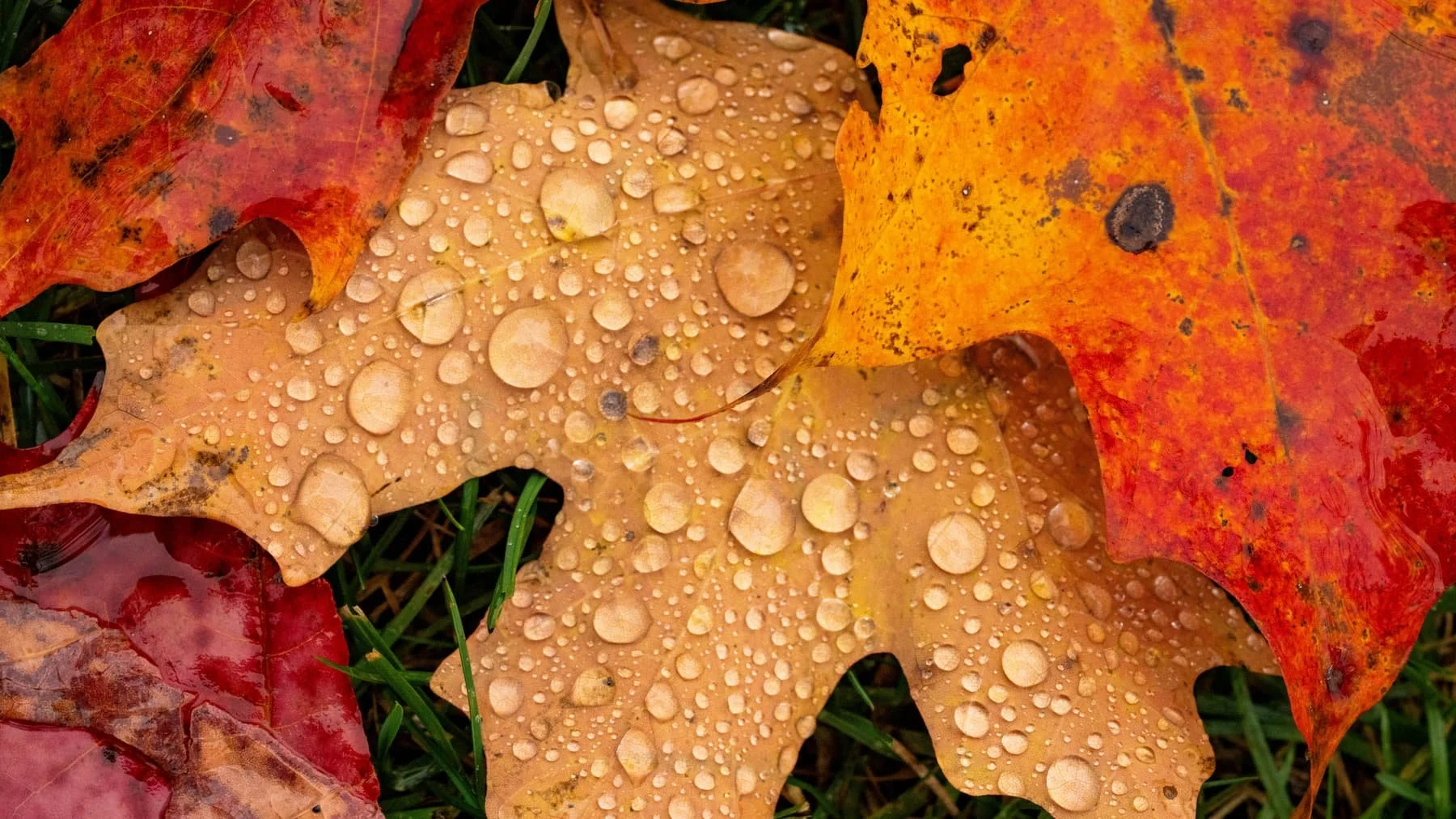
A close-up of fallen maple leaves in gold, red, and orange, beaded with heavy raindrops after a fall rain, resting in green grass. Photo taken by Anthony Quintano
The Weather's Role: Why Some Years Are More Vivid Than Others
If day length decides when the process starts, weather decides how good it looks once it does. This is where meteorology actually comes in, and it's the part that's the most fun to track.
Temperature swings. The ideal pattern is warm, sunny days paired with cool nights that don't quite reach freezing. Warm days keep the tree producing sugar. Cool nights slow down the tree's ability to move that sugar out of the leaf, so it stays trapped and builds up, which is what drives strong anthocyanin production and those deep reds. A fall with too many warm nights in a row tends to produce a duller, flatter season, because the sugar keeps moving out of the leaf instead of concentrating there.
Drought and summer rainfall. This is one of the bigger factors, and it's more complicated than "rain is good, drought is bad." Trees need water all summer to keep making chlorophyll and to build up the sugar that eventually turns into fall color. A lack of water slows that whole process down, which is why a dry summer often shows up as dull, early color, or leaves that turn brown and drop before they really change at all.
But the timing of the drought matters too, not just whether one happened. A severe drought tends to push the tree into an early shutdown, so color shows up ahead of schedule and doesn't last long. A milder, moderate dry stretch can actually do the opposite and delay color slightly, since the tree's metabolism slows down without fully shutting off. That's why two dry summers can produce two different-looking Octobers.
Too much rain causes its own problems. Waterlogged soil pushes oxygen out of the ground around the roots, which stresses the tree in a different way but leads to a similar result: yellowing and early leaf drop. Heavy, soaking rain during the peak weeks can also just physically knock leaves off the branch before anyone gets to see them at their best.
The ideal setup is steady, consistent moisture through the summer, enough to keep the tree healthy without a drought and without a washout, followed by a fall that turns cool and slightly wetter than normal right when the color is coming in. This is also why I don't just watch the fall weather. I'm paying attention to how dry or wet the whole summer was, since that tells me a lot about what kind of season we're heading into before the leaves ever start turning.
Frost timing. A light frost can actually help intensify color, since cold temperatures assist that sugar-trapping process. But a hard, early freeze does the opposite. It can damage the leaf outright and force an early drop, cutting a season short before it ever really gets going.
Wind and storms. This is the one that worries me the most every year, and it's the hardest to predict more than a few days out. A single strong wind event or heavy rainstorm at the wrong moment can strip a hillside bare in a single day, even if the color leading up to it was perfect. I've watched this happen. You can have the best week of color all season, and one nor'easter can end it overnight.
Cloud cover. This one's smaller, but it matters for how the color actually reads to the eye and in photos. Full sun on peak days makes reds and oranges look more saturated. An overcast stretch can make the exact same trees look muted, even though the biology underneath hasn't changed at all.
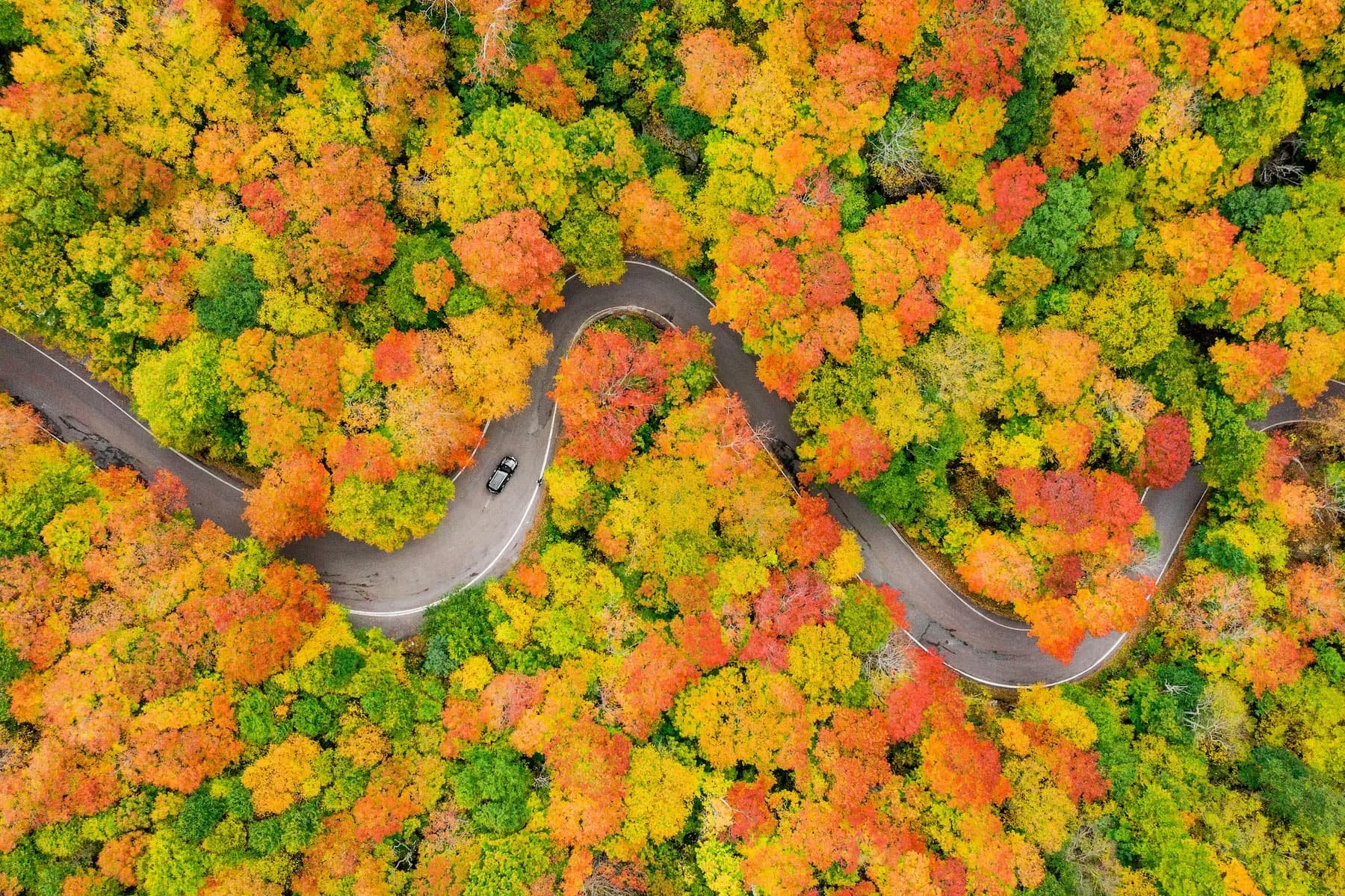
Peak fall foliage at Smuggler’s Notch in Vermont. Photo taken by Anthony Quintano
Why This Matters for Planning a Trip
Now that you know what's actually driving the color, here's what to do with that knowledge before and during the season.
Follow the daily reports instead of an old photo. A picture from someone's feed could be from last week, last year, or heavily edited. Real-time, dated reports are the only way to know what a location looks like right now.
Match your destination to elevation and latitude. If you're going early in the season, head north and up in elevation, the White Mountains and northern New Hampshire, Rangely, Maine or Northeast Kingdom in Vermont. If you're going later, look toward the Lakes Region, southern New Hampshire, and the coast.
Keep an eye on how the summer went. A summer with steady, normal rainfall points toward a strong season. A serious drought or an unusually soggy summer is a sign the color could come in early, dull, or short.
Watch the week-of forecast, not just the season forecast. Warm sunny days paired with cool, non-freezing nights right before your trip is the best possible sign. That combination is what actually builds vivid color.
Check for frost warnings. A light frost is a good sign. A hard, early freeze is a warning that the season could get cut short in that area.
Check for wind and storms before you lock in dates. A single strong storm can wipe the trees of all that beautiful foliage in a single day.
Stay flexible on your travel dates if you can. Peak color shifts by a week or more year to year. Locking in one exact weekend months in advance is the single biggest reason trips miss peak.
Verify conditions the same week you're planning to go, not the month before. Foliage moves fast once it starts. What was accurate two weeks ago may already be past peak or not there yet.
Follow along so you don't miss the window. The reporting window each fall is only a few weeks long in any one region. Following daily means you'll know the moment your target area hits peak.
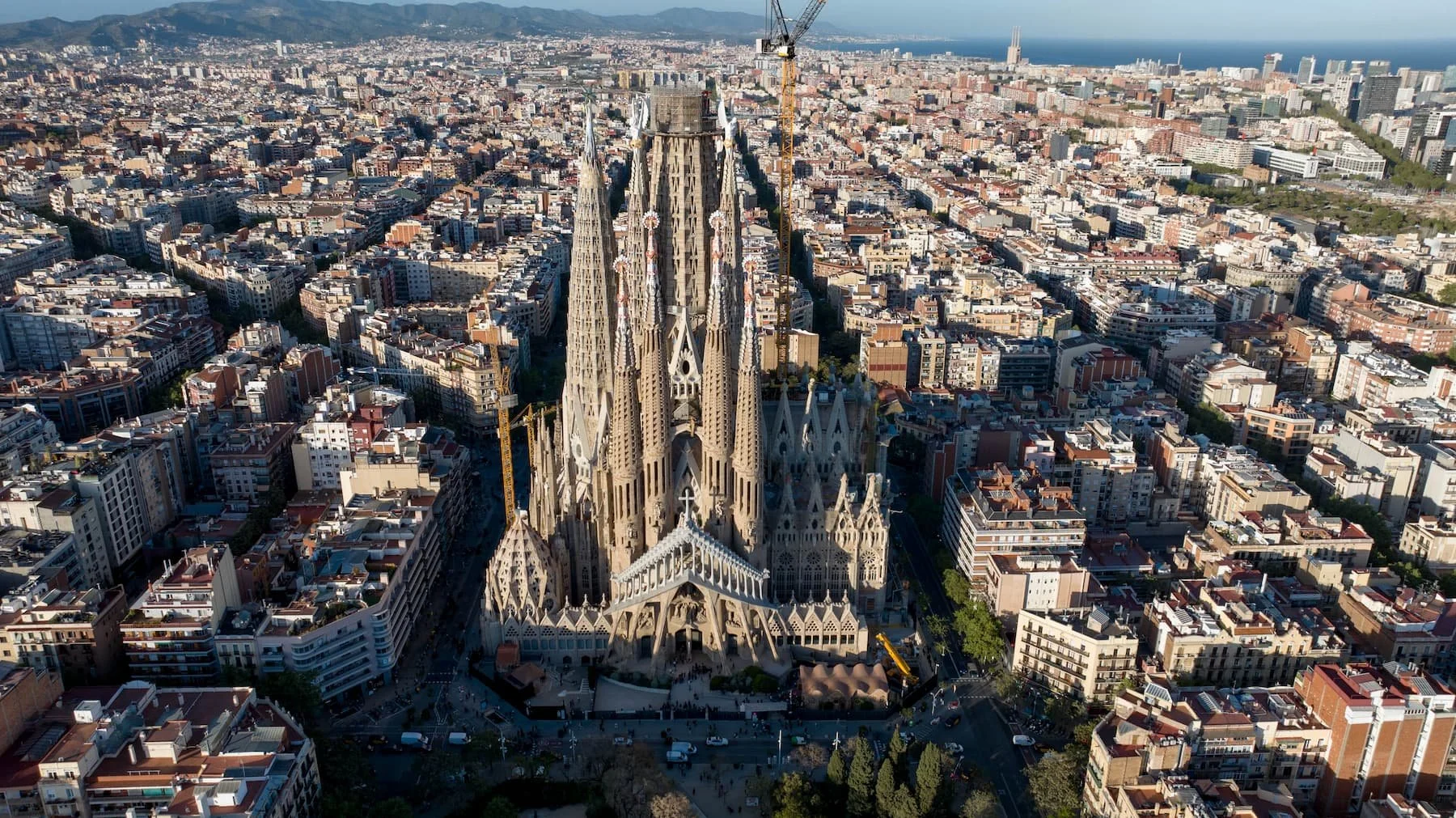
Three Days in Barcelona: Sagrada Família, Montjuïc, and Walking the City Without a Plan
A photographer's three days in Barcelona, from the Sagrada Família to the top of Montjuïc. Walking the city with no plan, a camera, and a drone.
Day One
My brother Christopher gave me the opportunity of a lifetime to join him a trip he was awarded by his employer. He was allowed to bring a guest and he chose me. I was excited to get to spend time with him and travel overseas which is something I do not get to do often, mostly because I can’t afford it. Especially at this moment in time because I had just left a toxic work environment and was unemployed.
My brother had some obligations on the trip with his employer that he had to attend to while there so that left me time to explore Barcelona on my own. I went with some locations I wanted to see but did my best to not get tied to any schedule or plan. I was also training to run a marathon so I was looking forward to getting extra steps in walking around the city.
I always make sure to book a window seat when flying somewhere new and I’m glad I did. I had an incredible view as we approached Barcelona.
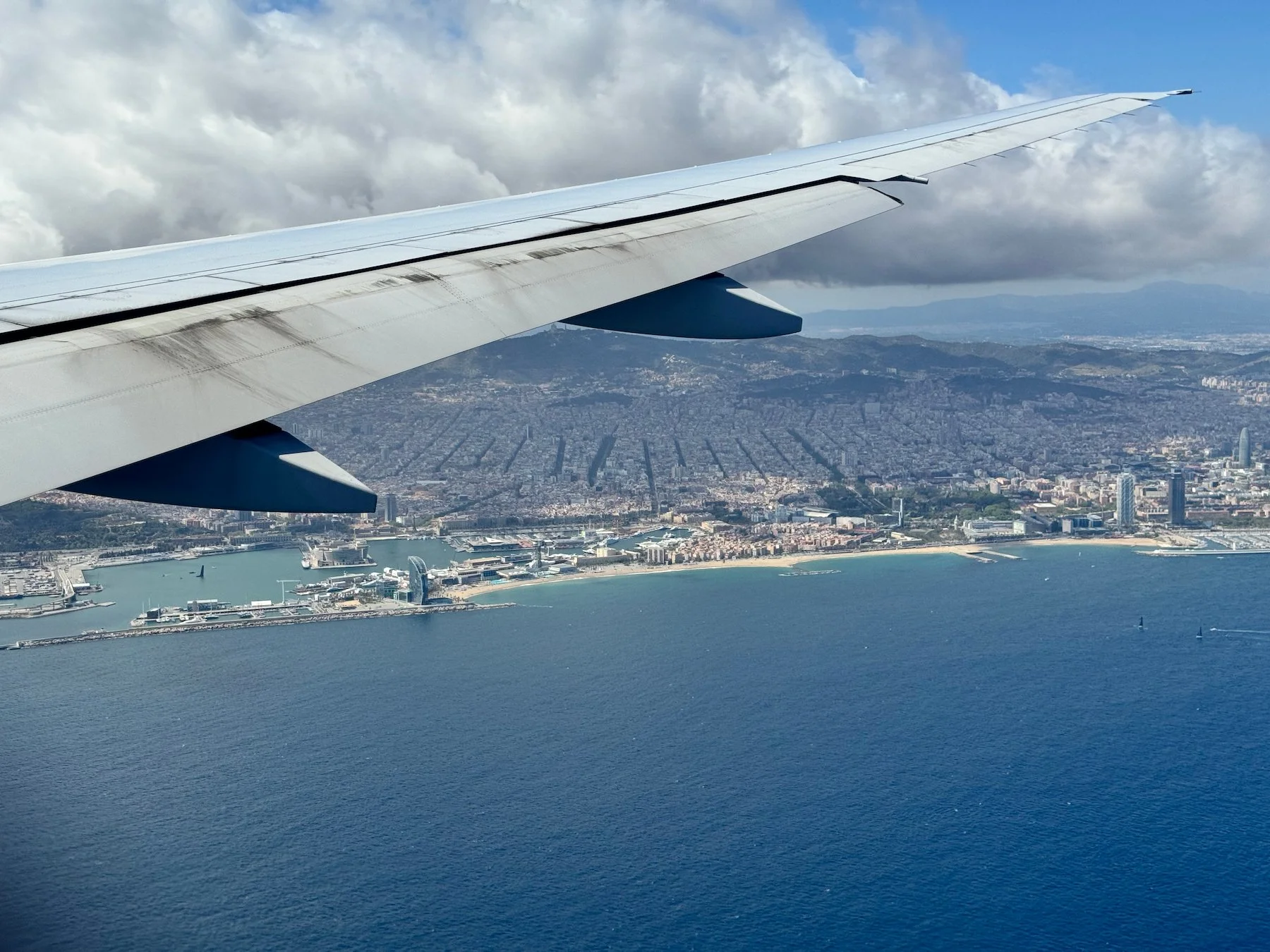
Our first look at Barcelona, shot out the window on final approach with my iPhone 15 Pro Max. That's Barceloneta along the beach, and the sail shaped hotel on the point is the W Barcelona, where we stayed for the trip.
Here's the thing about the Sagrada Família. It's the one place on this whole trip I bought a ticket for in advance, and I did it six days before we flew, on April 11th. Entry is timed and same-day slots are basically gone by the time you'd think to ask. If I hadn't booked it, there was a real chance I'd fly all the way to Barcelona and never get inside the one building I most wanted to see. So I picked a slot for 17:45 on our arrival day and hoped the flight cooperated.
Booking a timed ticket for the same day you land is a gamble, and I'd tell anyone reading this to know what they're risking. Our flight out of Newark had already been pushed back a couple of hours before we ever left the gate. If that delay had run any longer, I'd have been sitting on a runway in New Jersey watching a nonrefundable entry time tick past. It worked out, but it was tighter than I'd like.
So we checked in, and then I turned right back around and headed out on my own to make my slot.
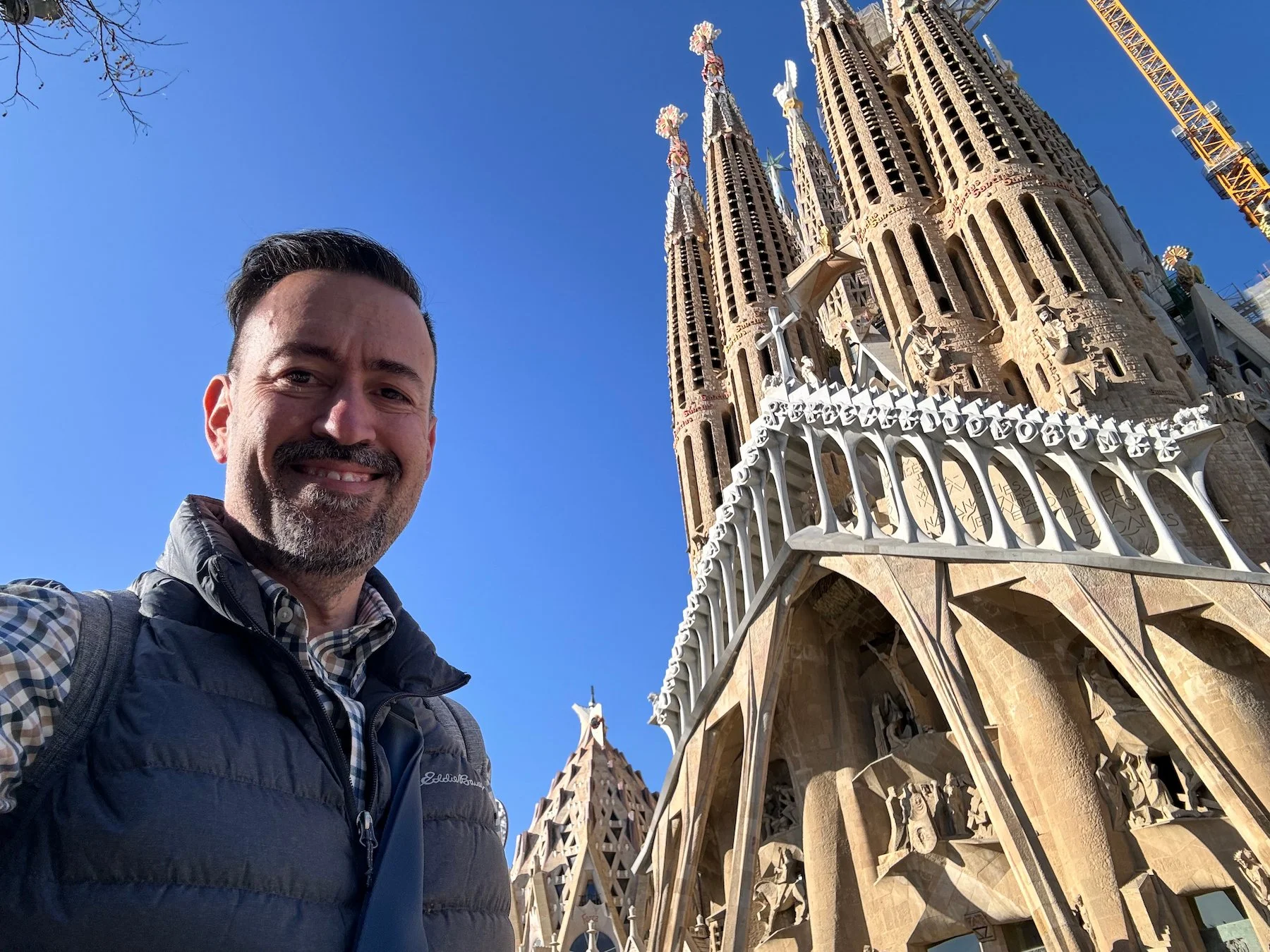
Selfie taken with my Apple iPhone 15 Pro Max in front of the Sagrada Familia in Barcelona.
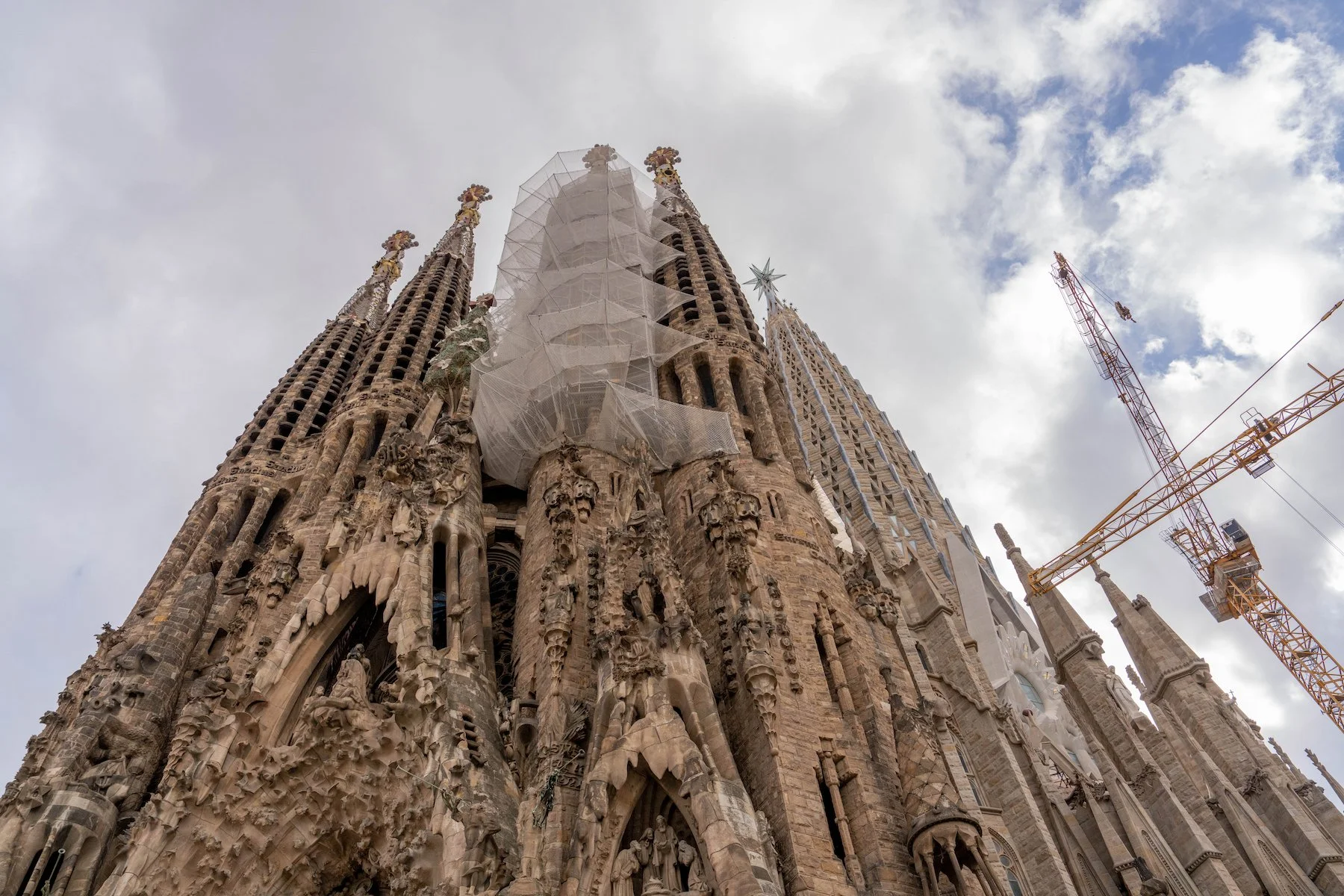
I came around the corner and just stopped. There's no other word for it than awe, and I'm not a guy who typically uses that word. You tip your head back and run out of neck before you run out of building. It's still under construction and has been for well over a century, so there are cranes bolted to the sides and scaffolding running up the towers. You're not looking at a finished monument behind glass, you're looking at a job still in progress that outlived the man who started it.
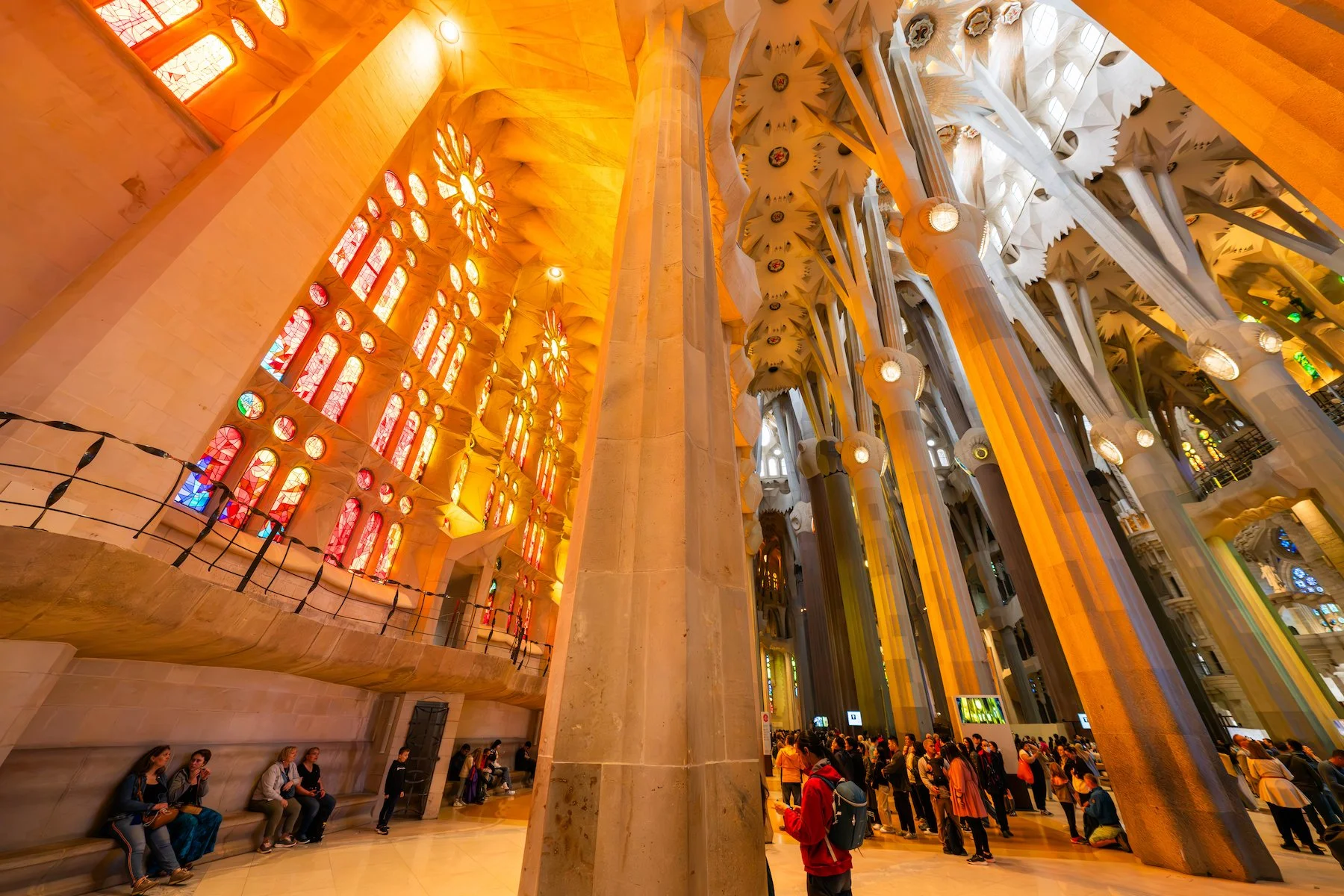
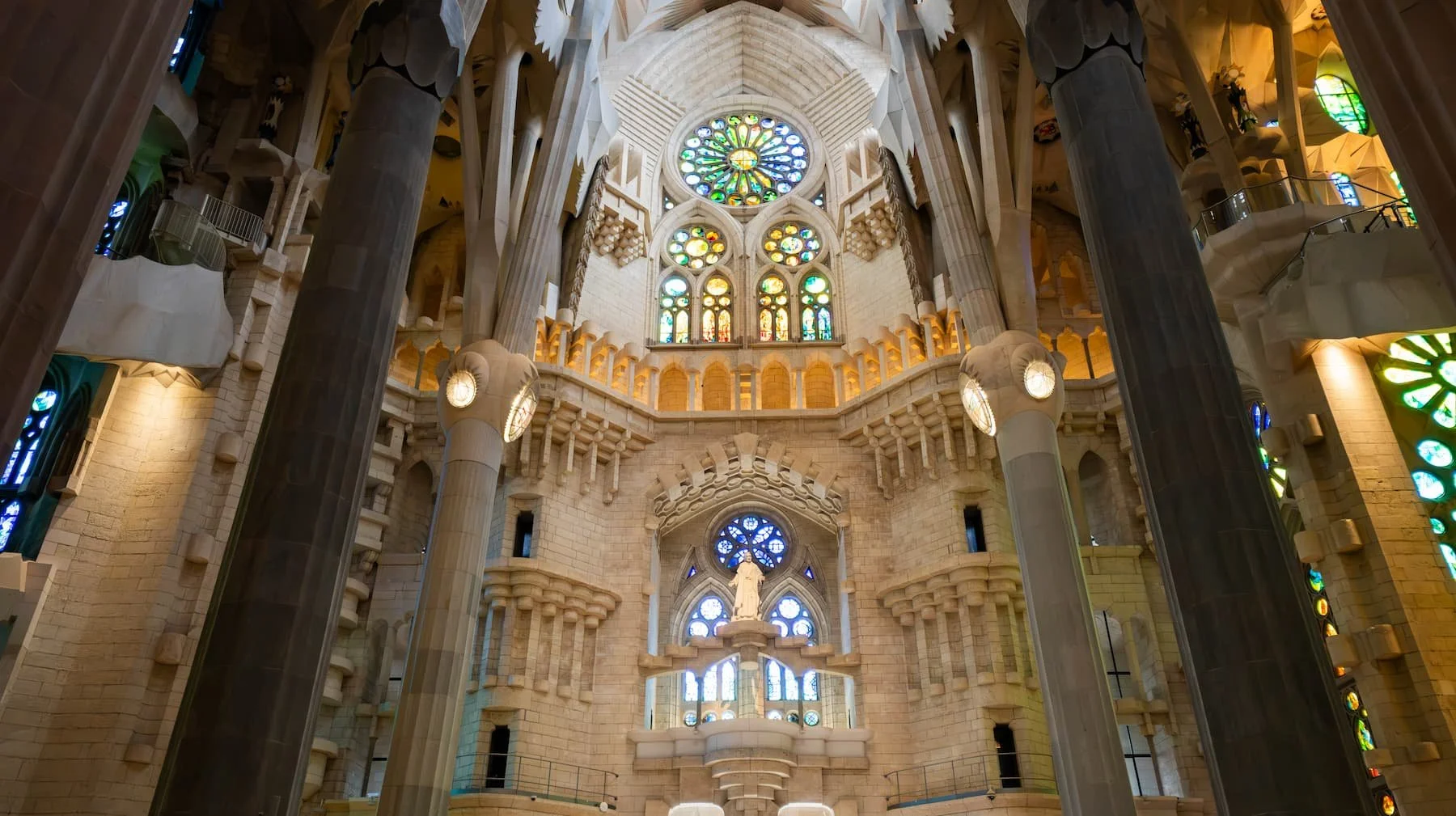
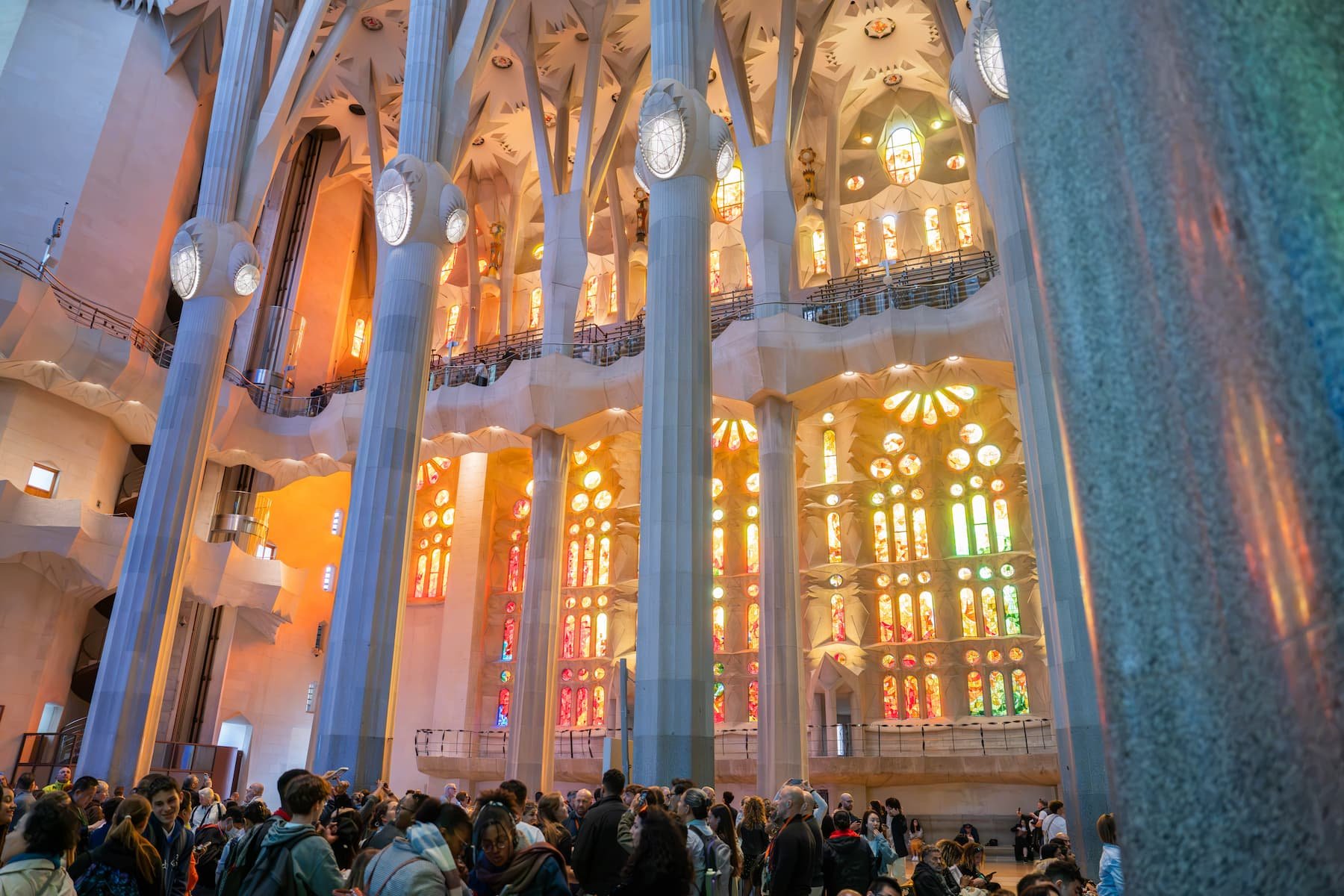
Gaudí ran the stained glass cool on one side for morning light and warm on the other for the afternoon. Late in the day, the Passion side windows were burning orange and red across the stone while the other side sat quiet in blues and greens. Go in the morning and it's a completely different room. Pick your time based on which one you want.
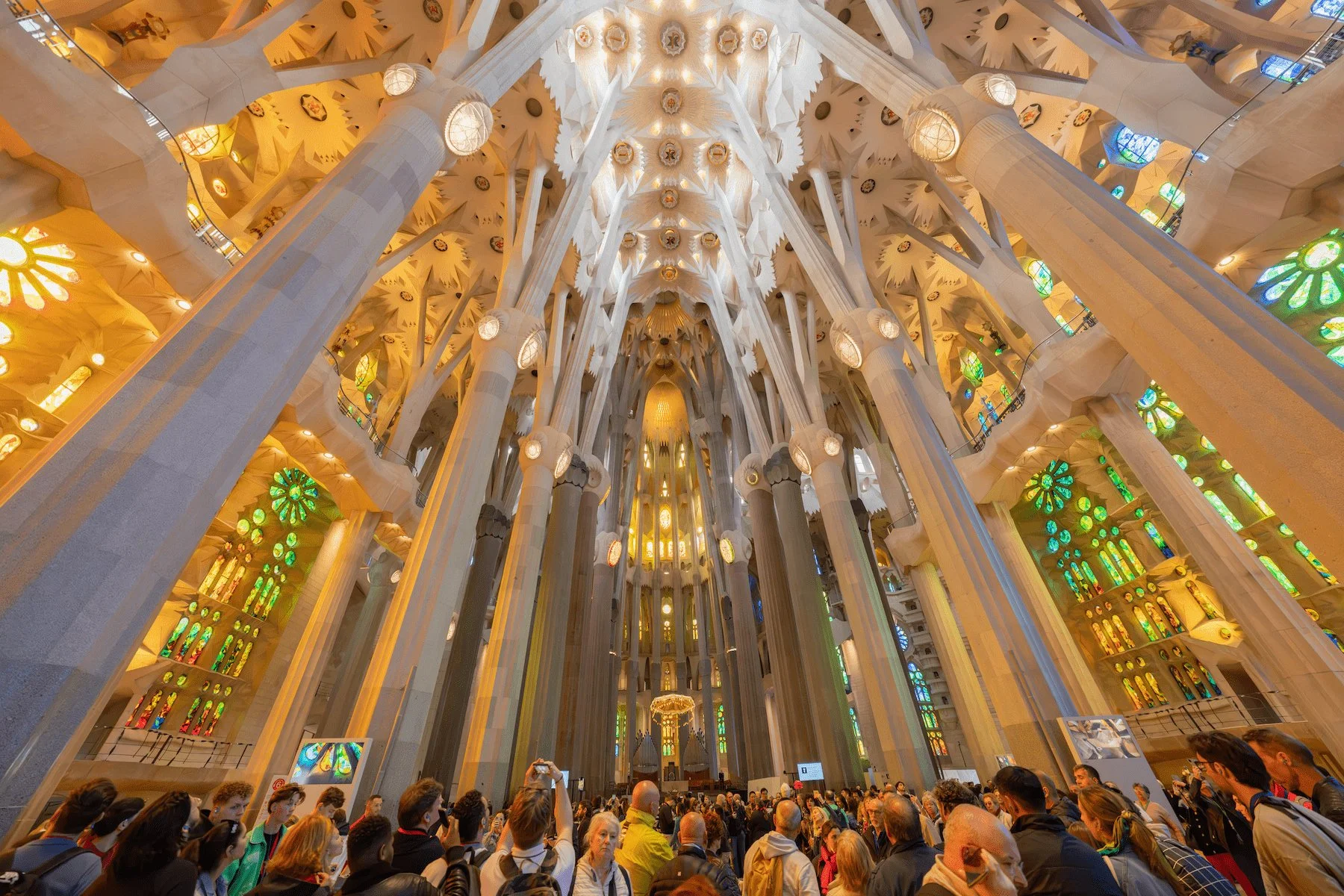
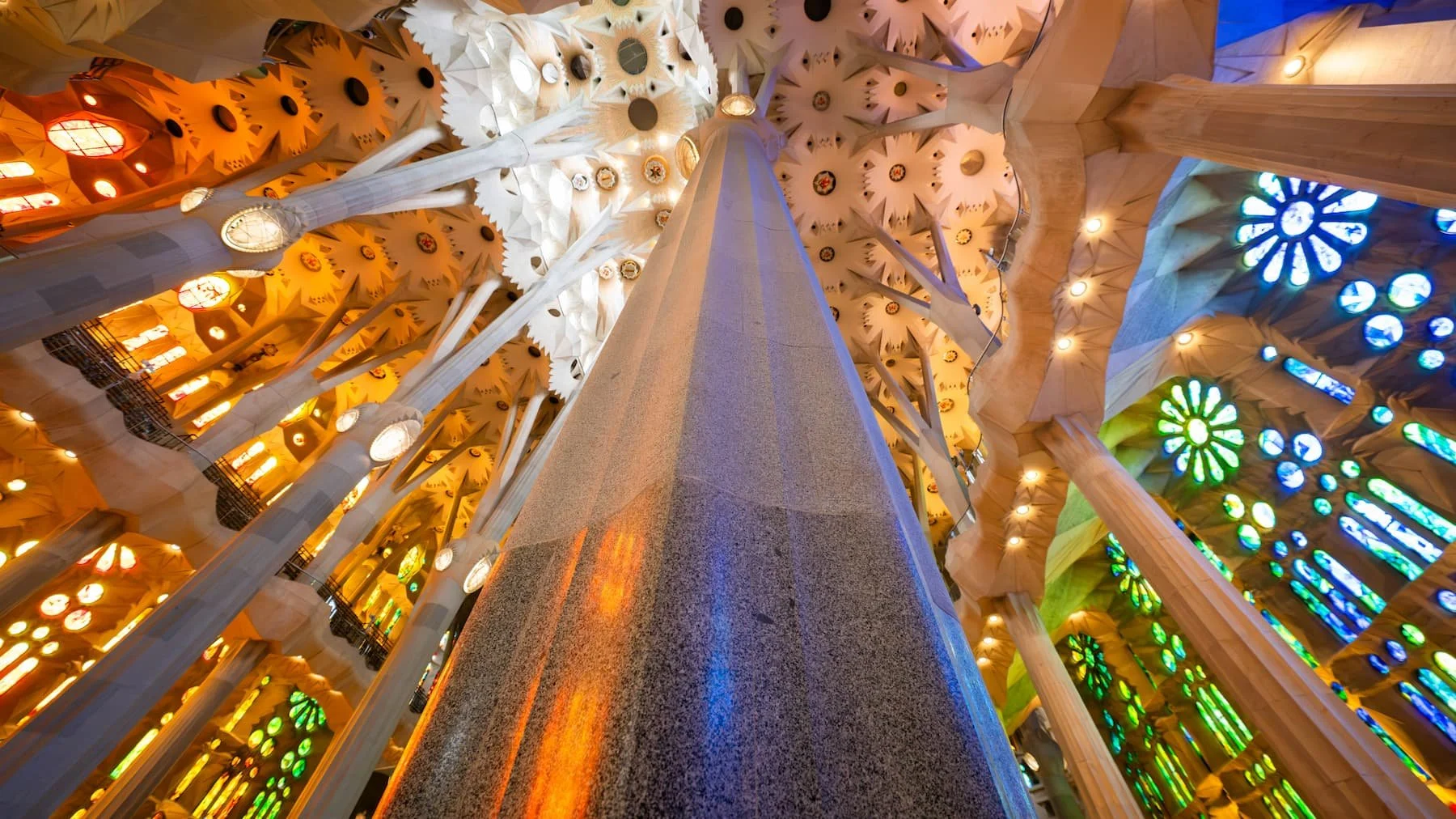
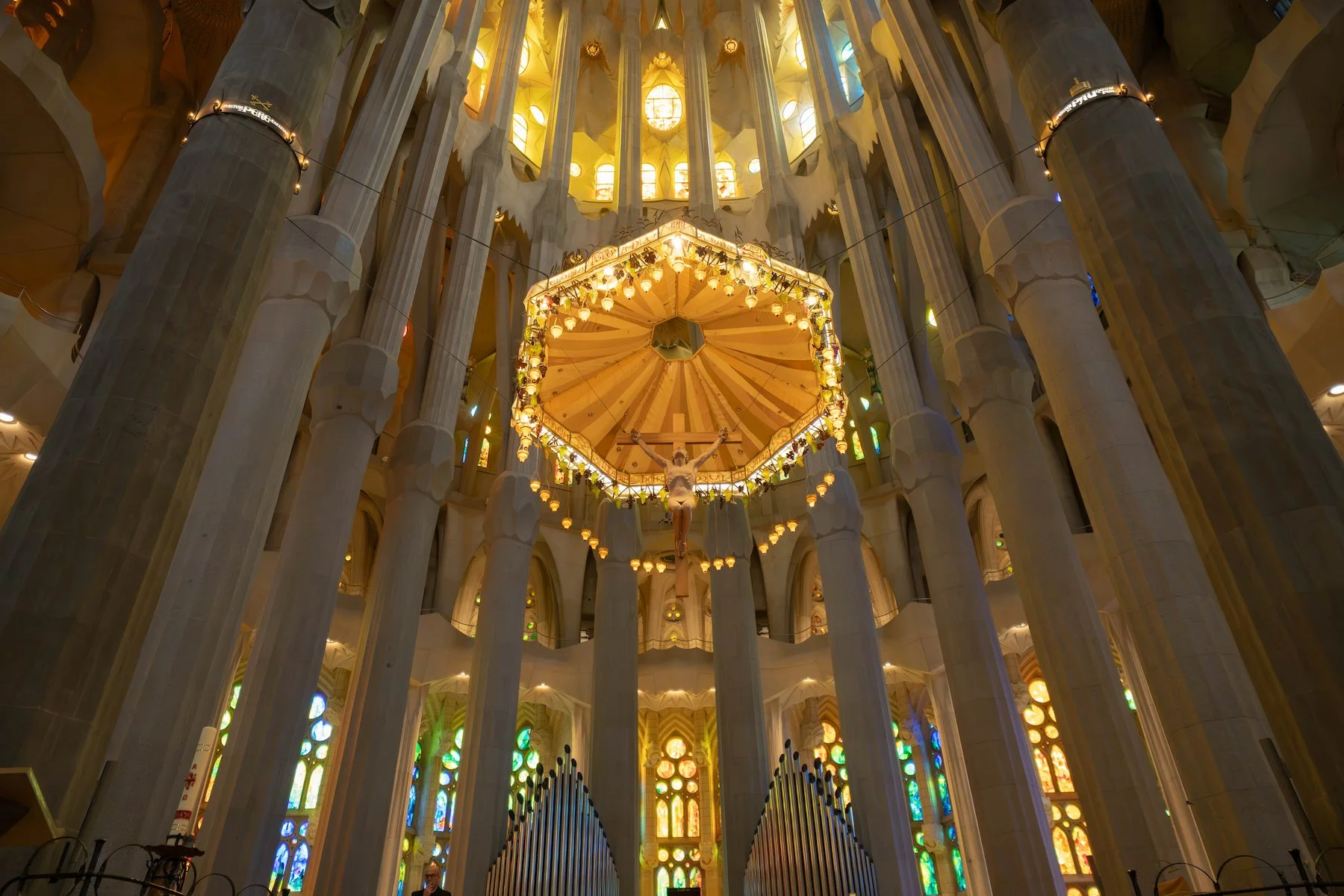
The thing that really got me was the scale and the design. The columns branch as they rise, splitting into limbs before they meet the vault, so the whole interior reads like standing in a stone forest and looking up through the canopy. A wide photo of the nave shows you a big room. No photo can really replace the feeling you get when you’re standing inside experiencing this for yourself.
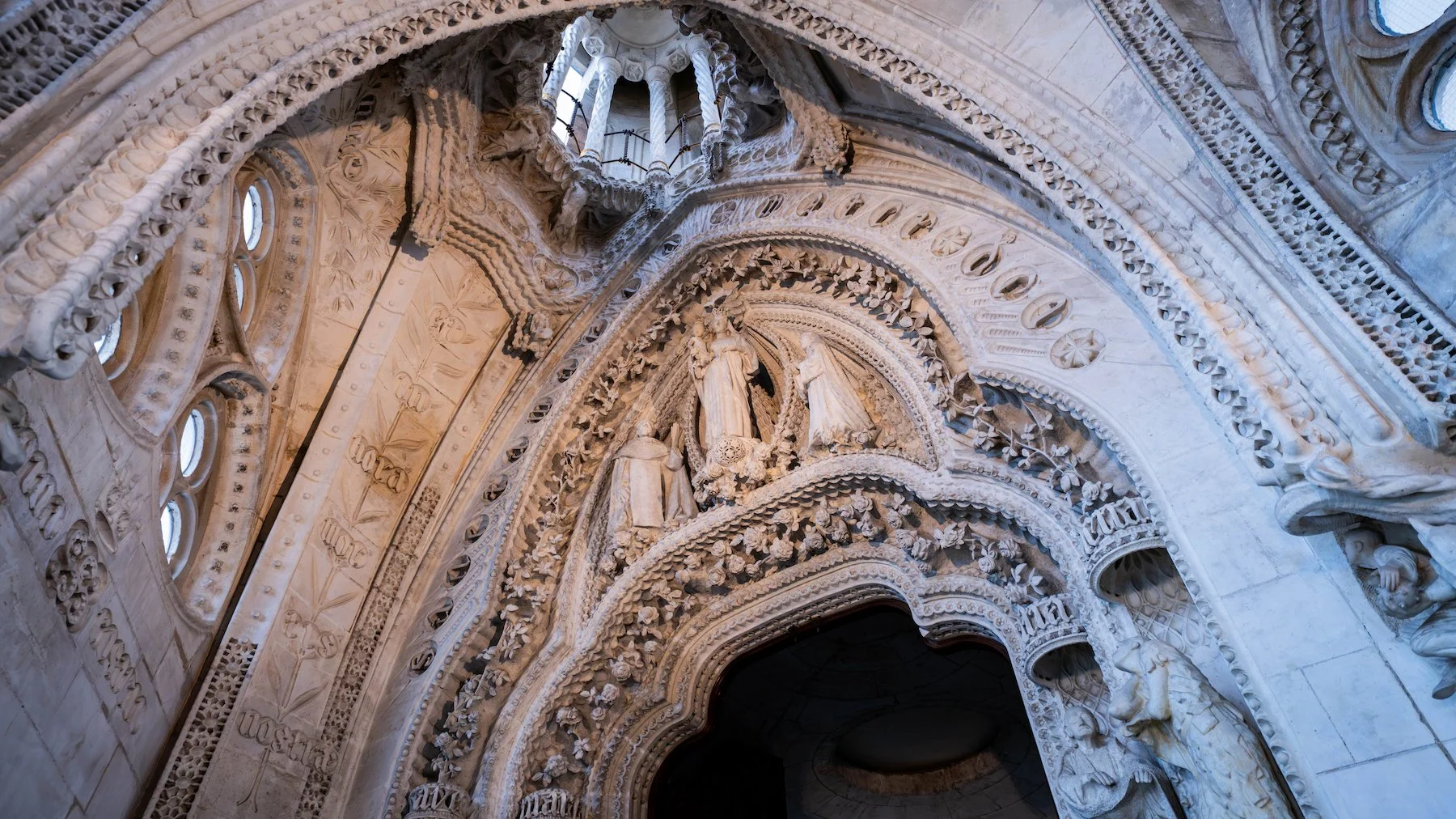
I shot it from every angle I could find. Straight up into the vault, along a single column into its branches, down the nave toward the altar, the wall of warm glass with people sitting on the bench beneath it. I usually pace myself. Not here. I wanted to document all of it.
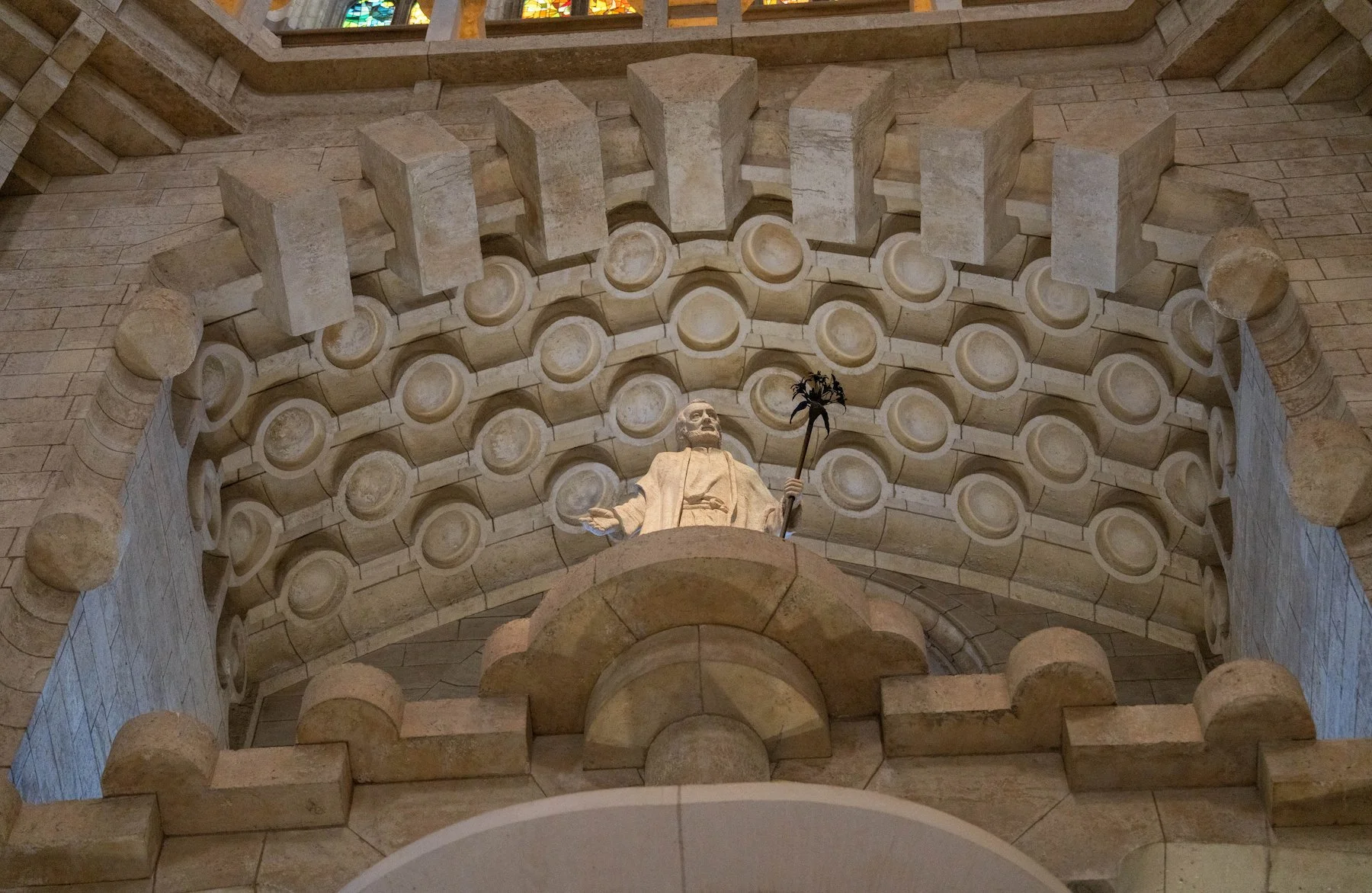
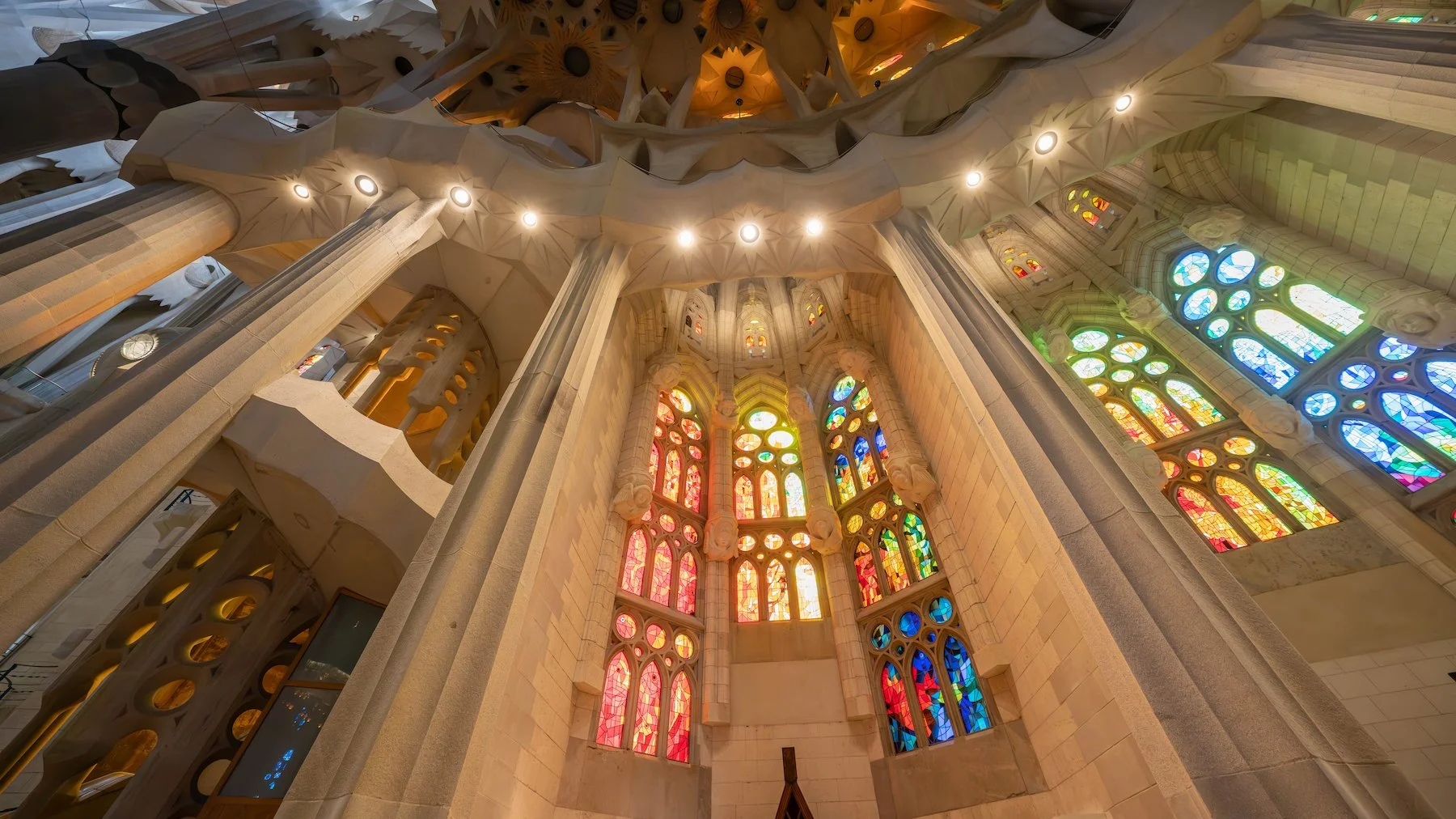
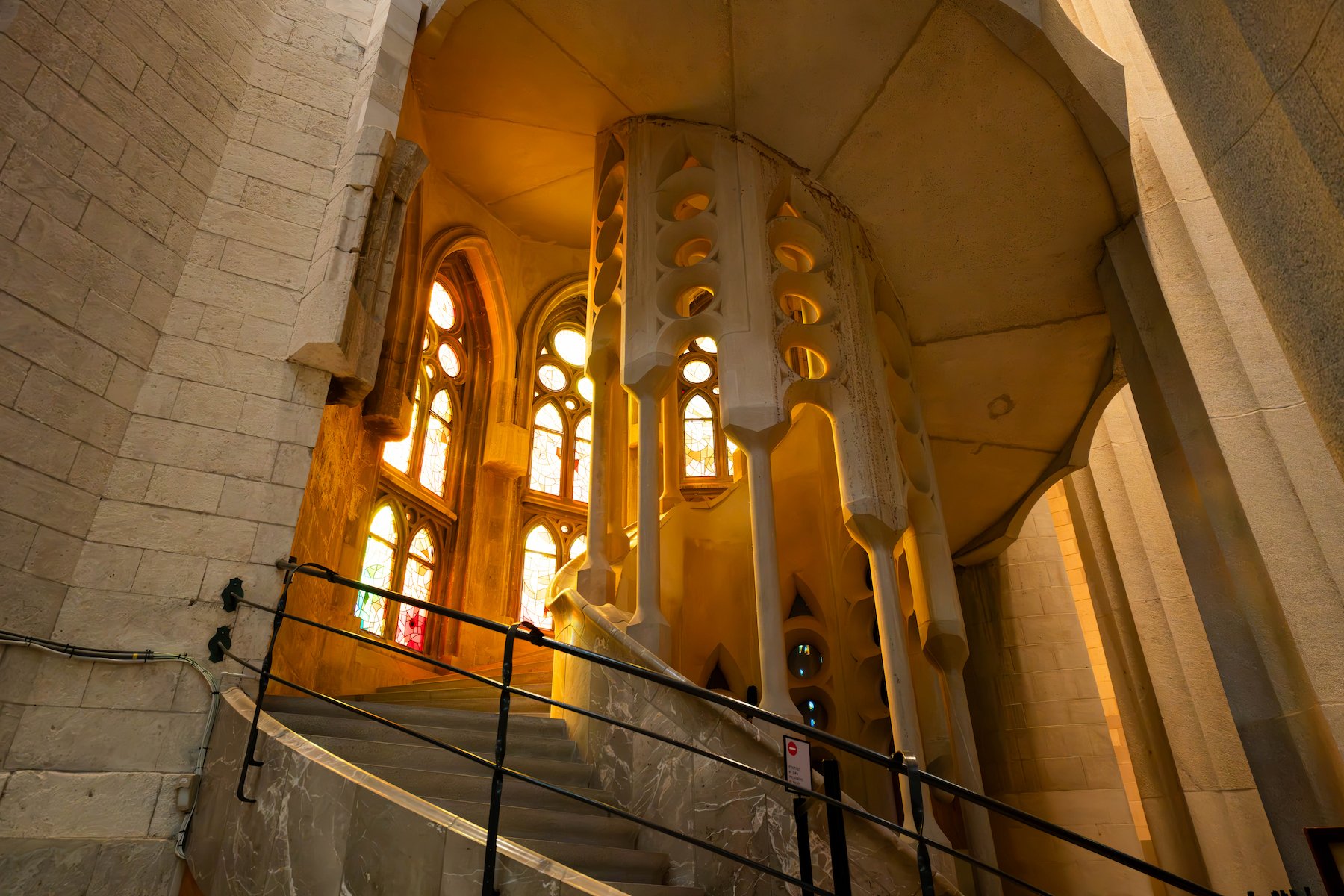
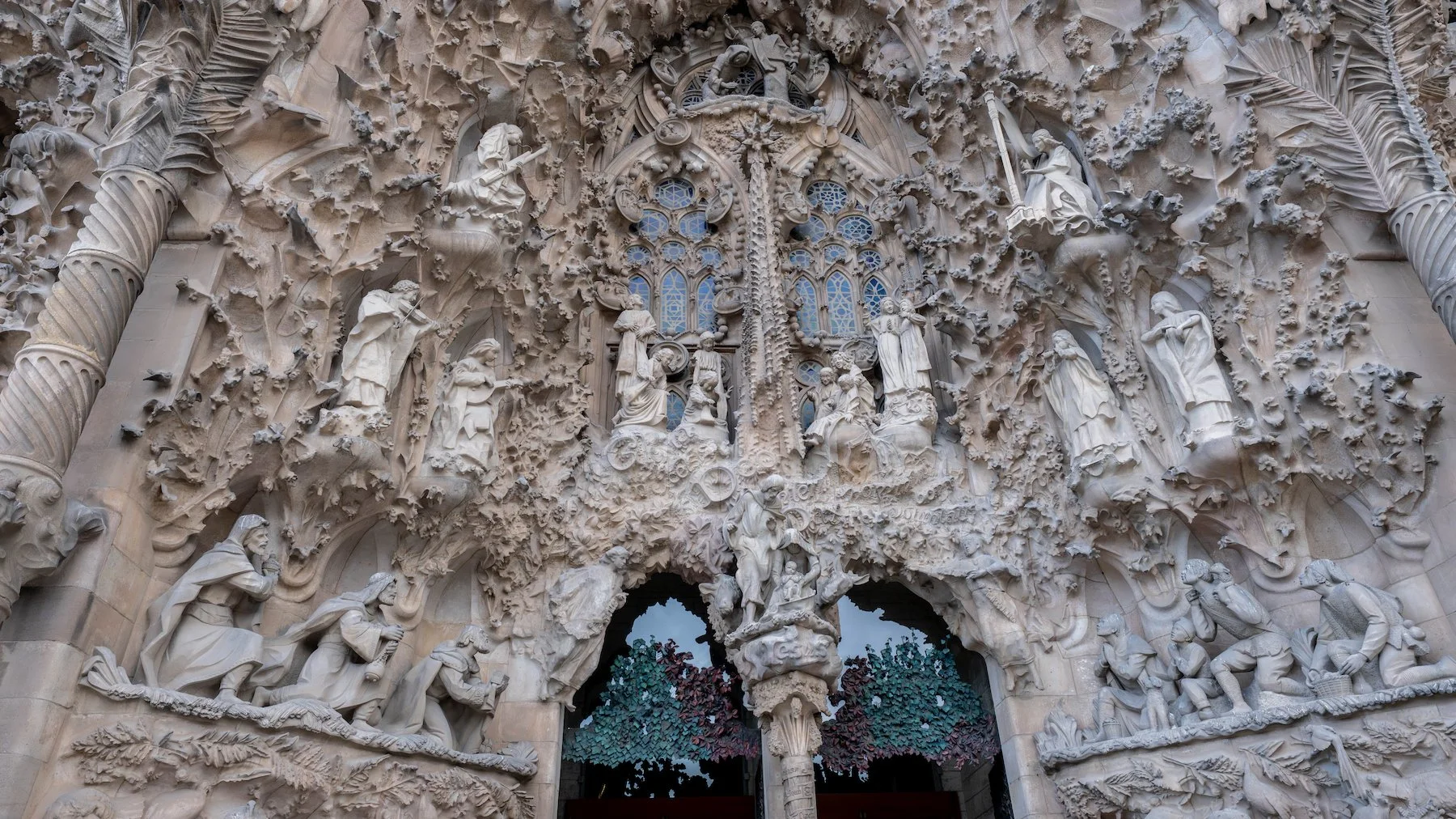
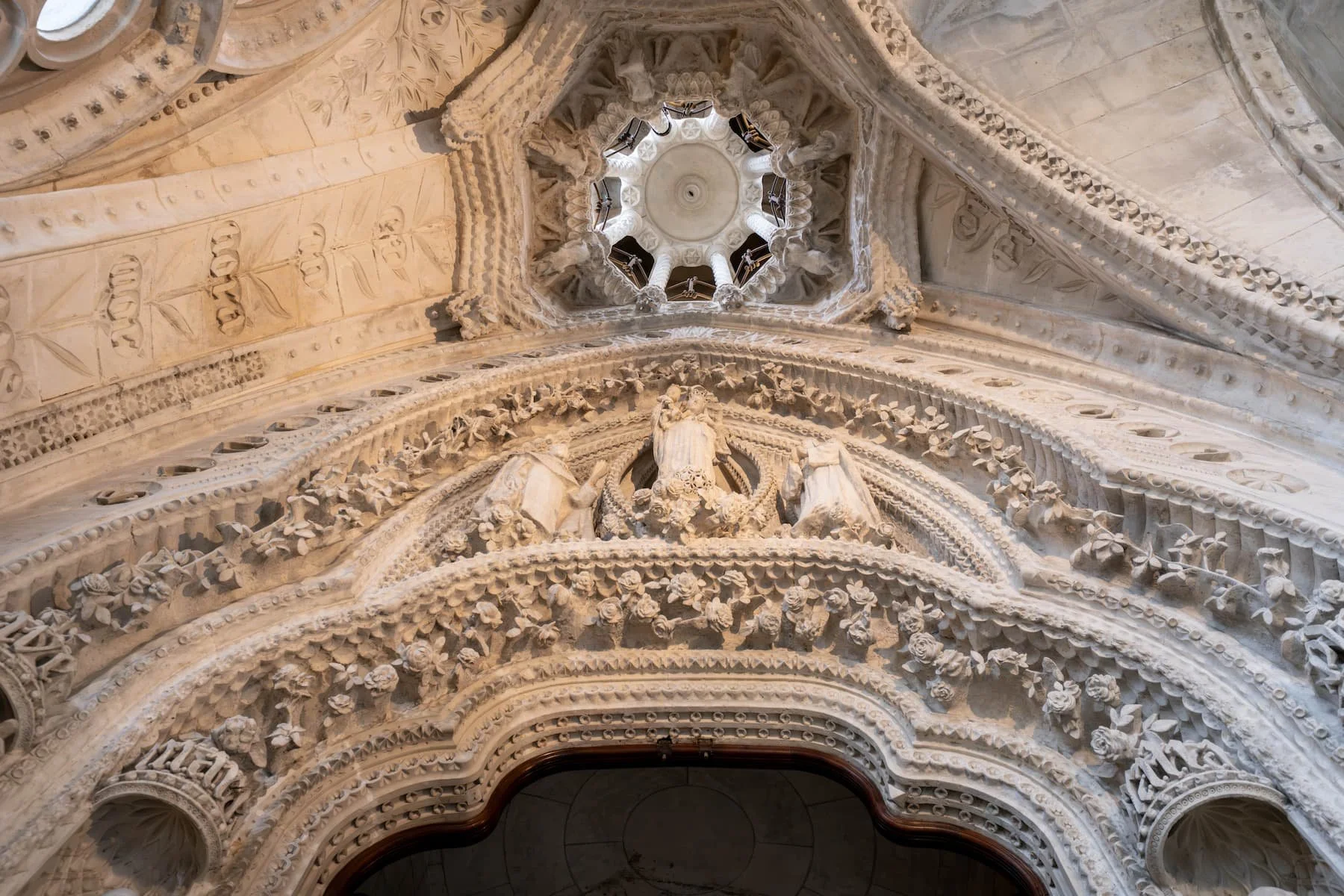
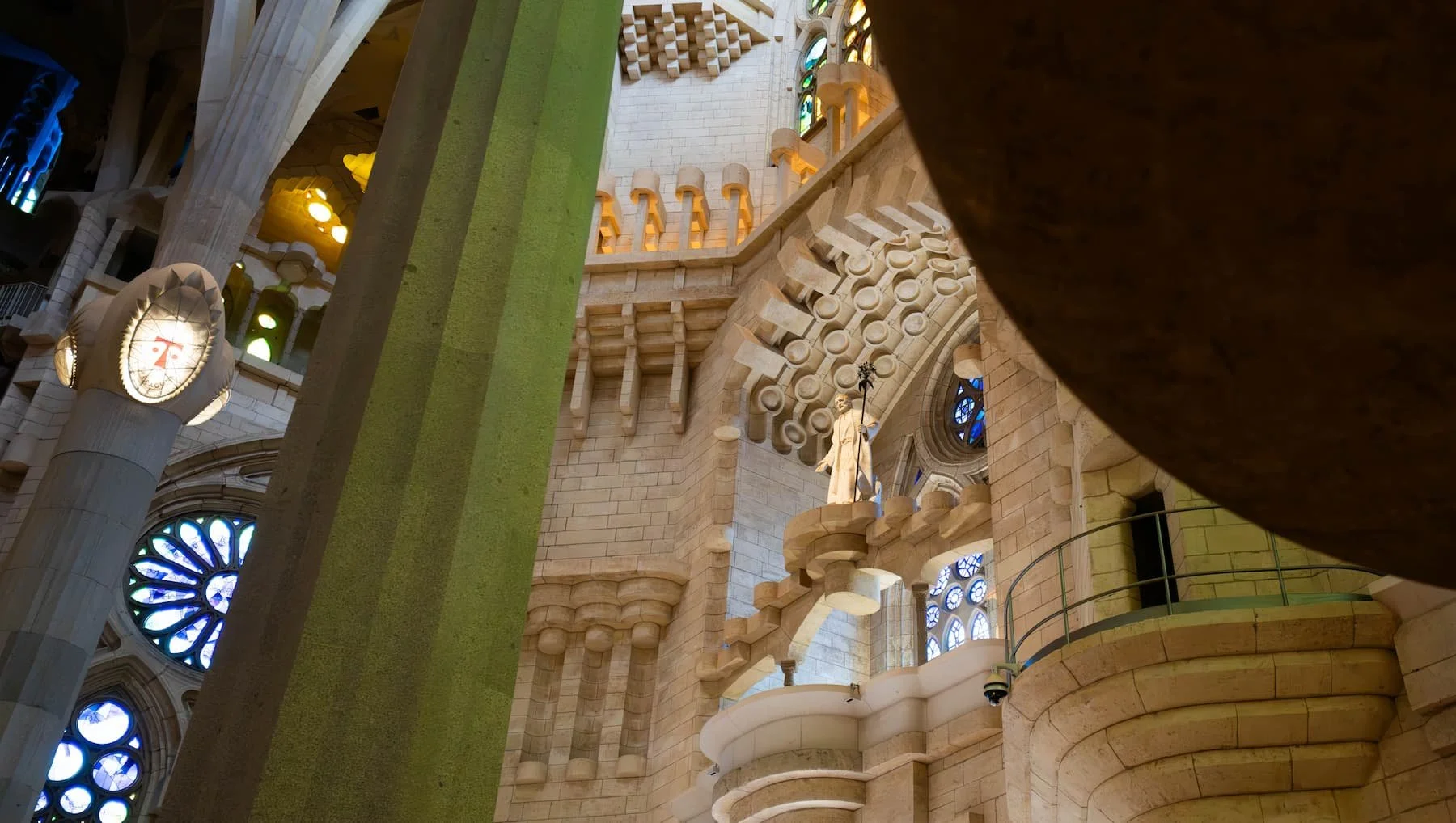
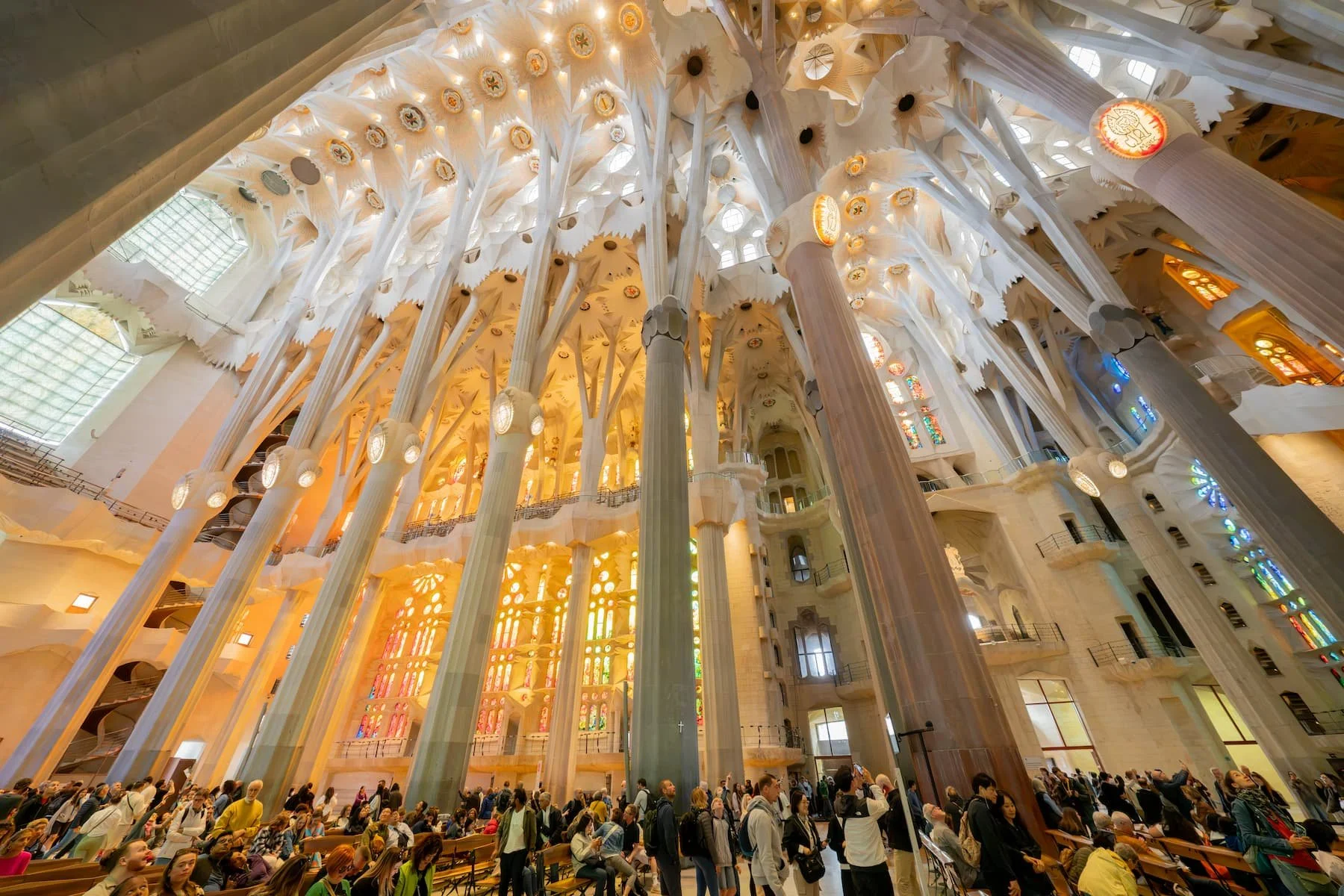
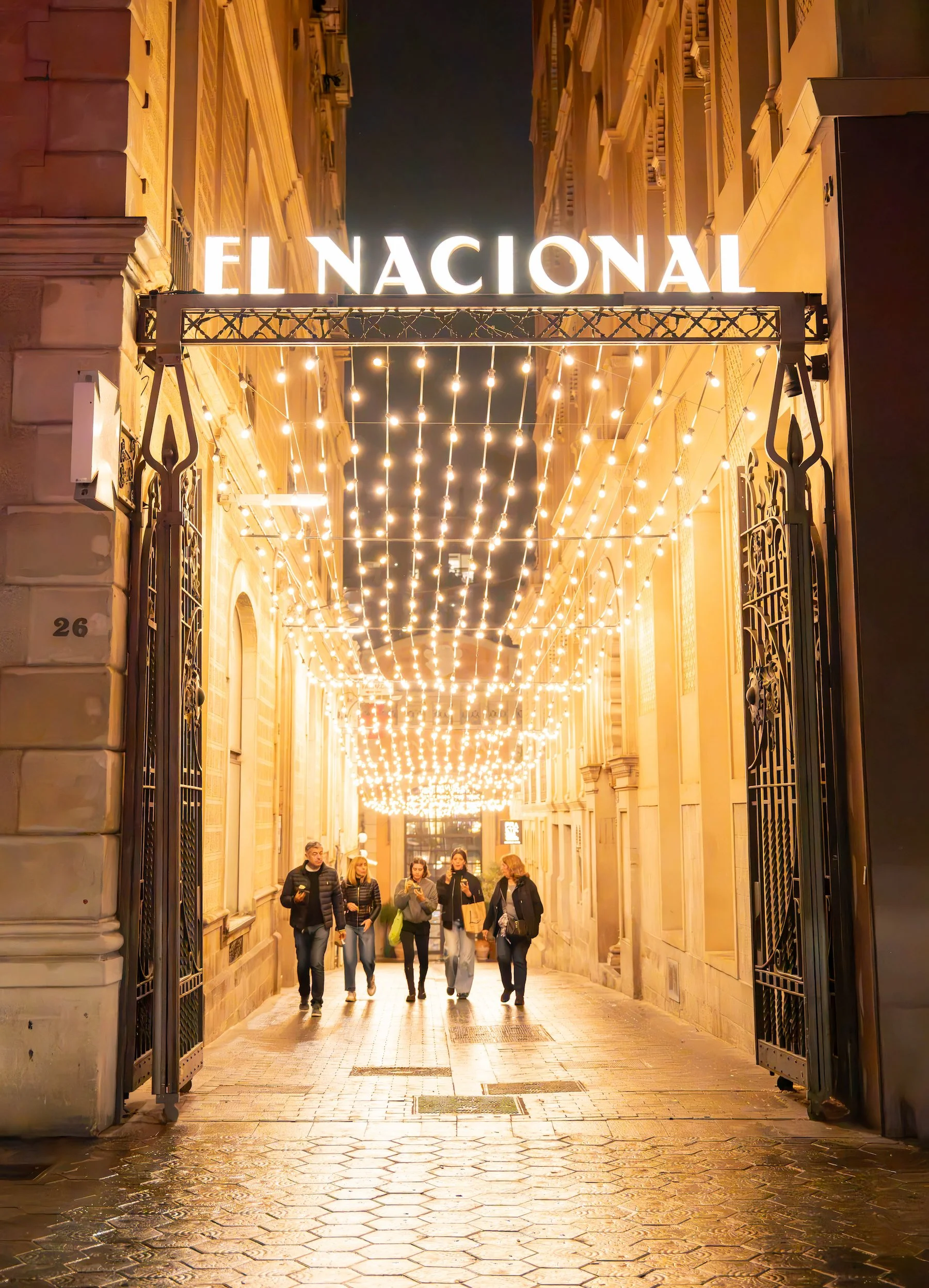
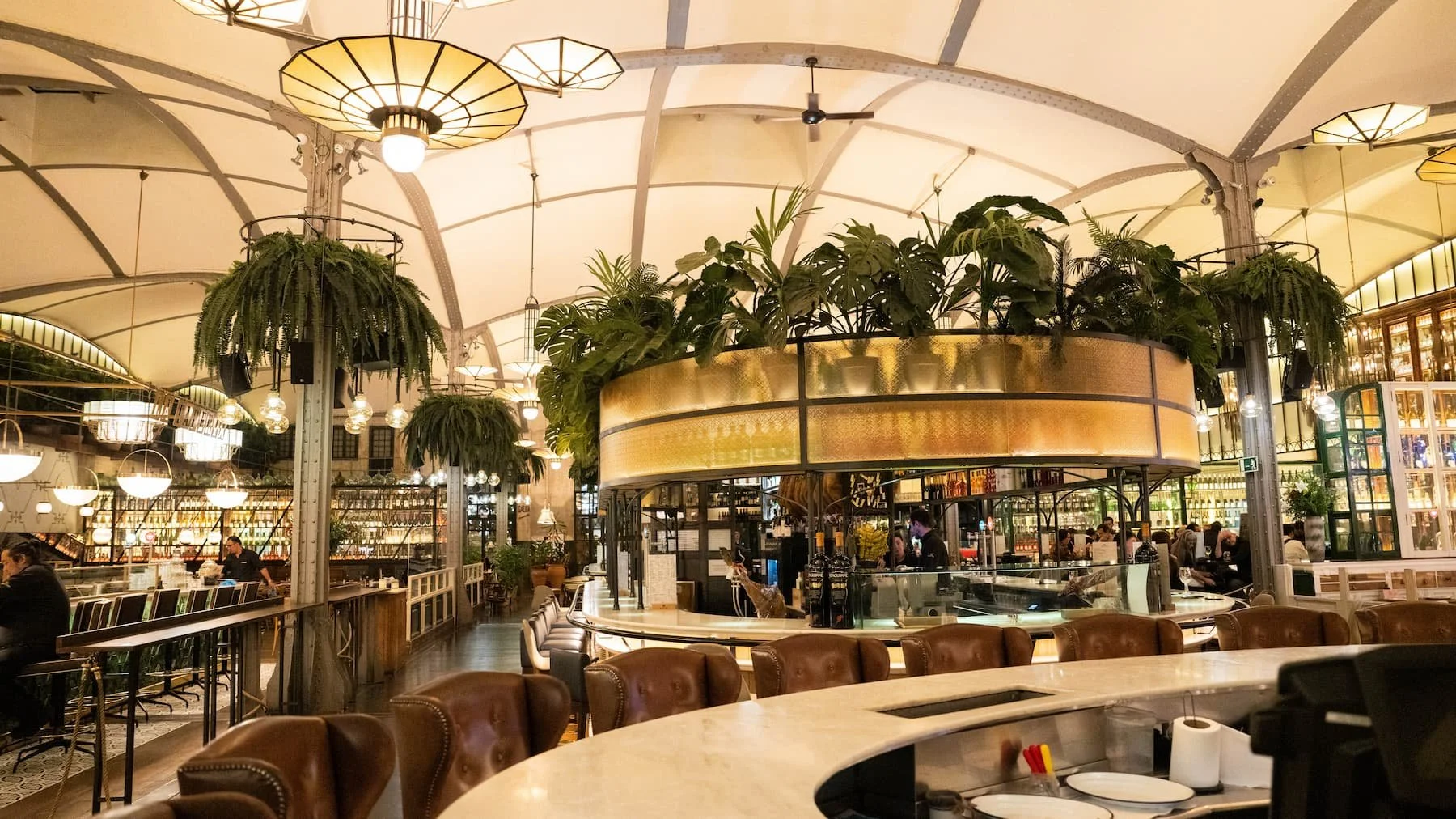
I got back to the W Barcelona in time for the group's welcome dinner, which was your typical company party. After that, Chris and I went out and walked into the old city, ended up at El Nacional over by the Ciutadella park, and had a drink and a plate of croquetas before calling it.
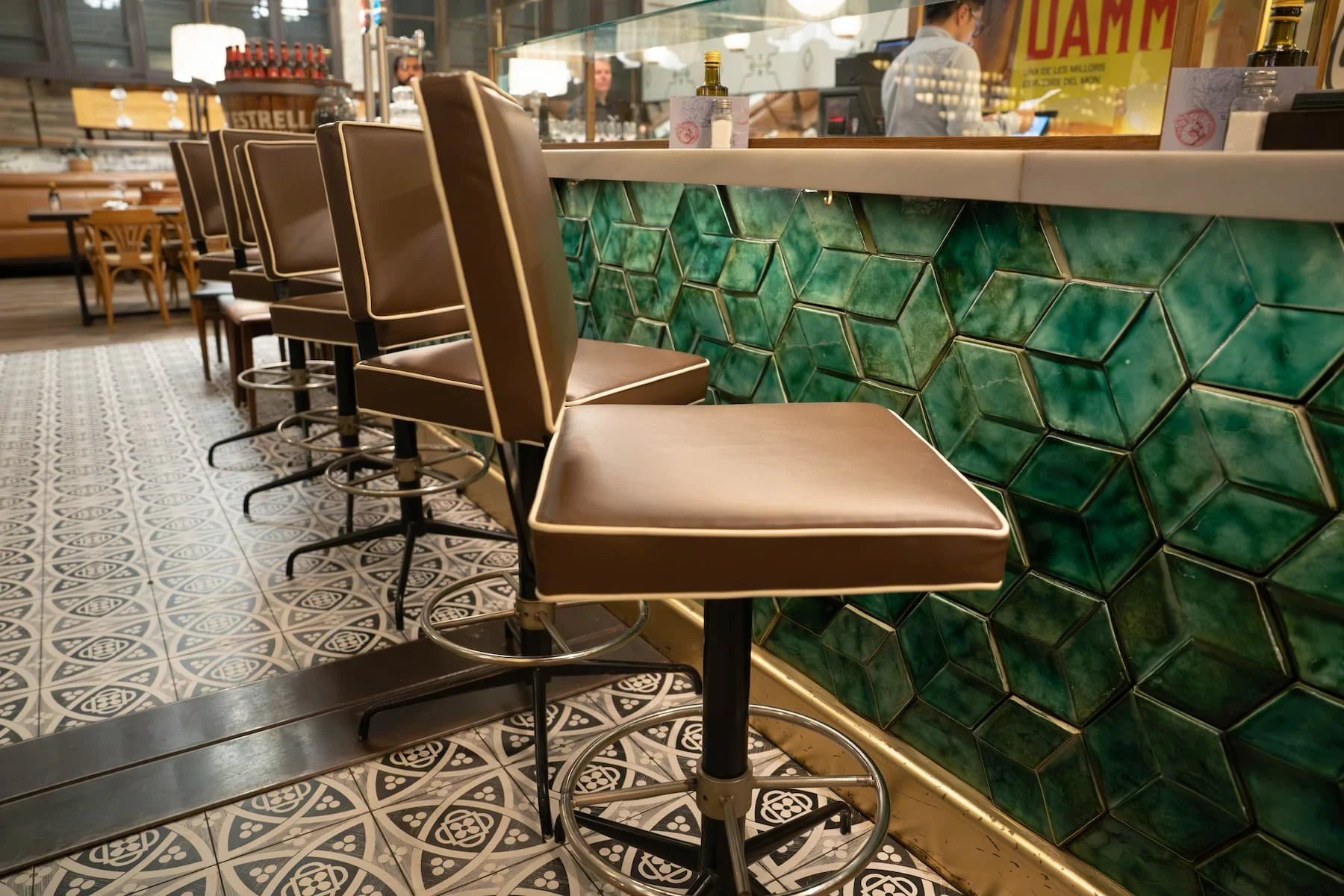
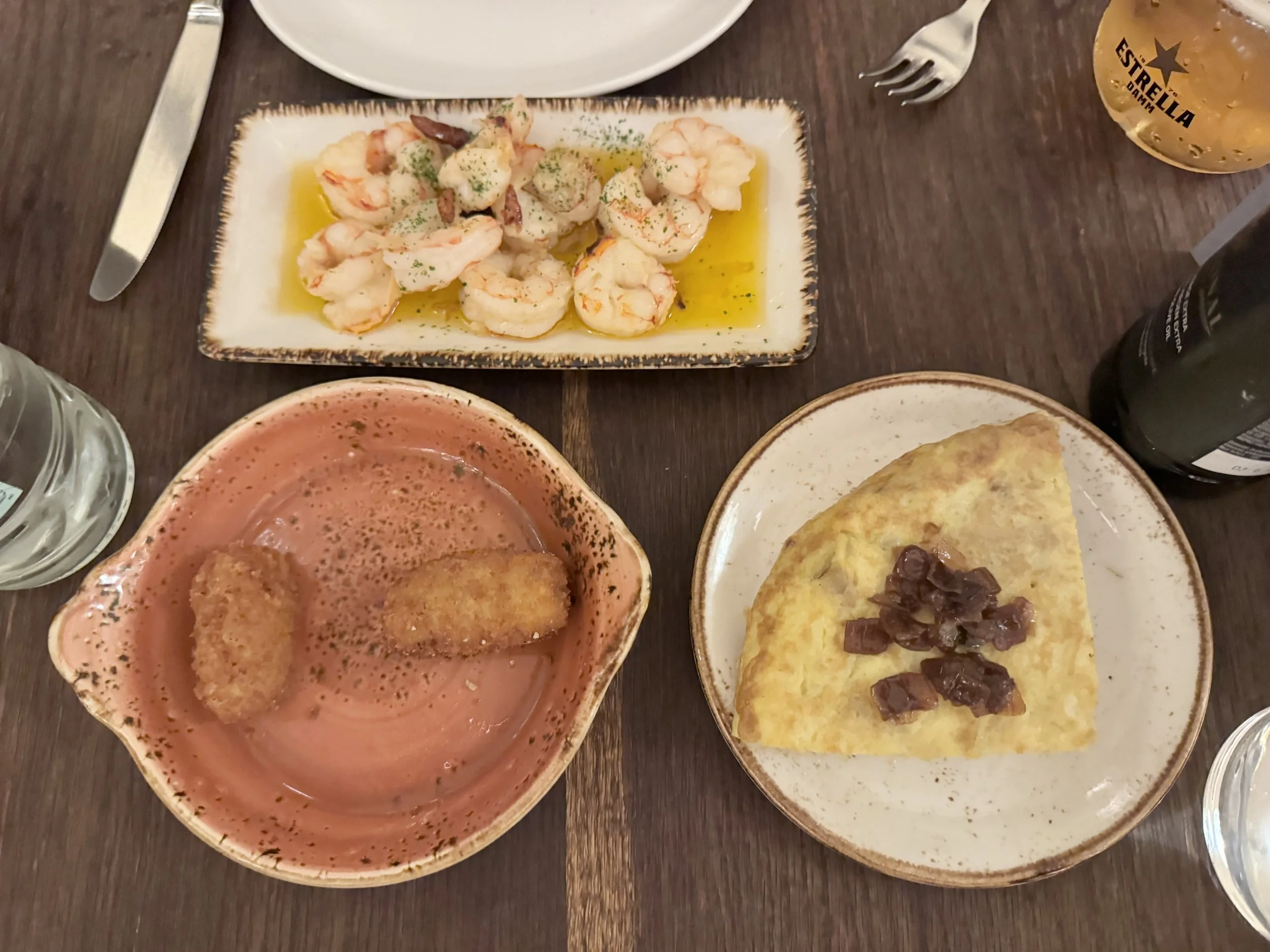
The next morning, Chris had his group's Gaudí activity, the whole day booked out from a quarter to nine until three in the afternoon. Which meant April 18th was mine.
I woke up at sunrise and went straight out to the beach.
It was grey. Low cloud sitting over the whole waterfront, no color in the sky except one thin yellow band way out on the horizon where the sun was trying to get through. I walked out past the palms on the promenade with nobody around but a couple of joggers. I love quiet, peaceful walks without sirens, crowds or car horns honking. You feel like you have the world to yourself for a brief moment.
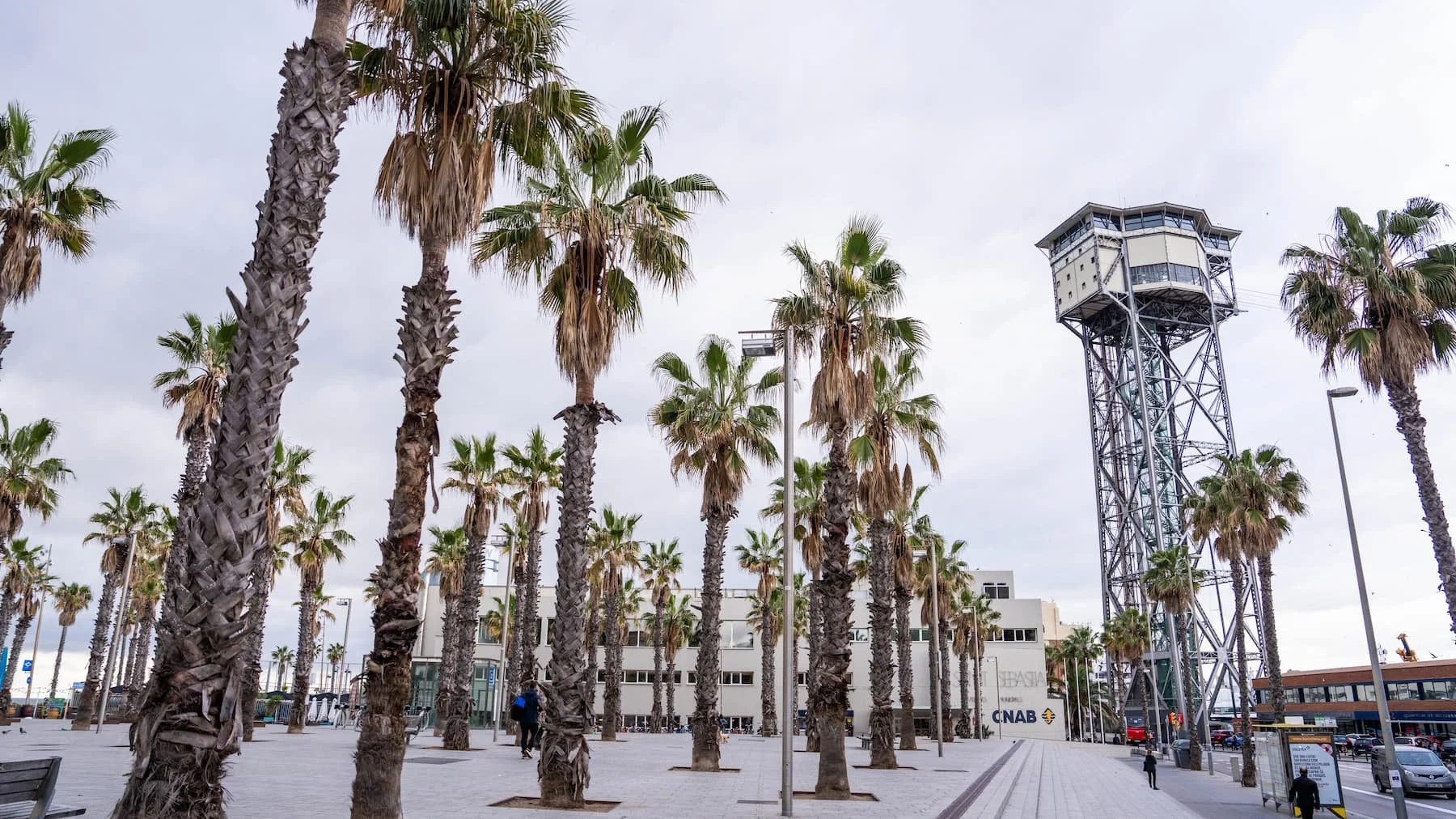
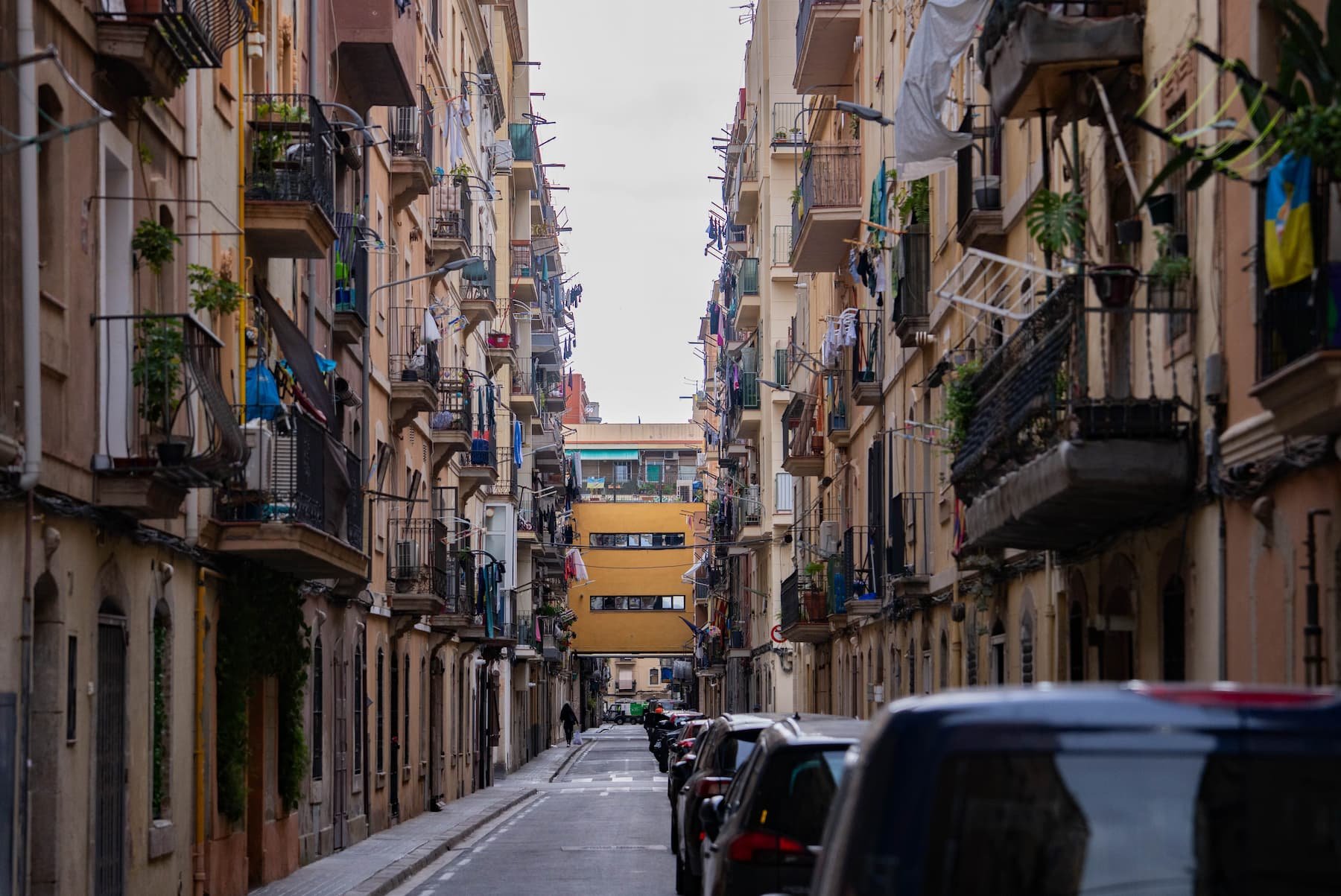
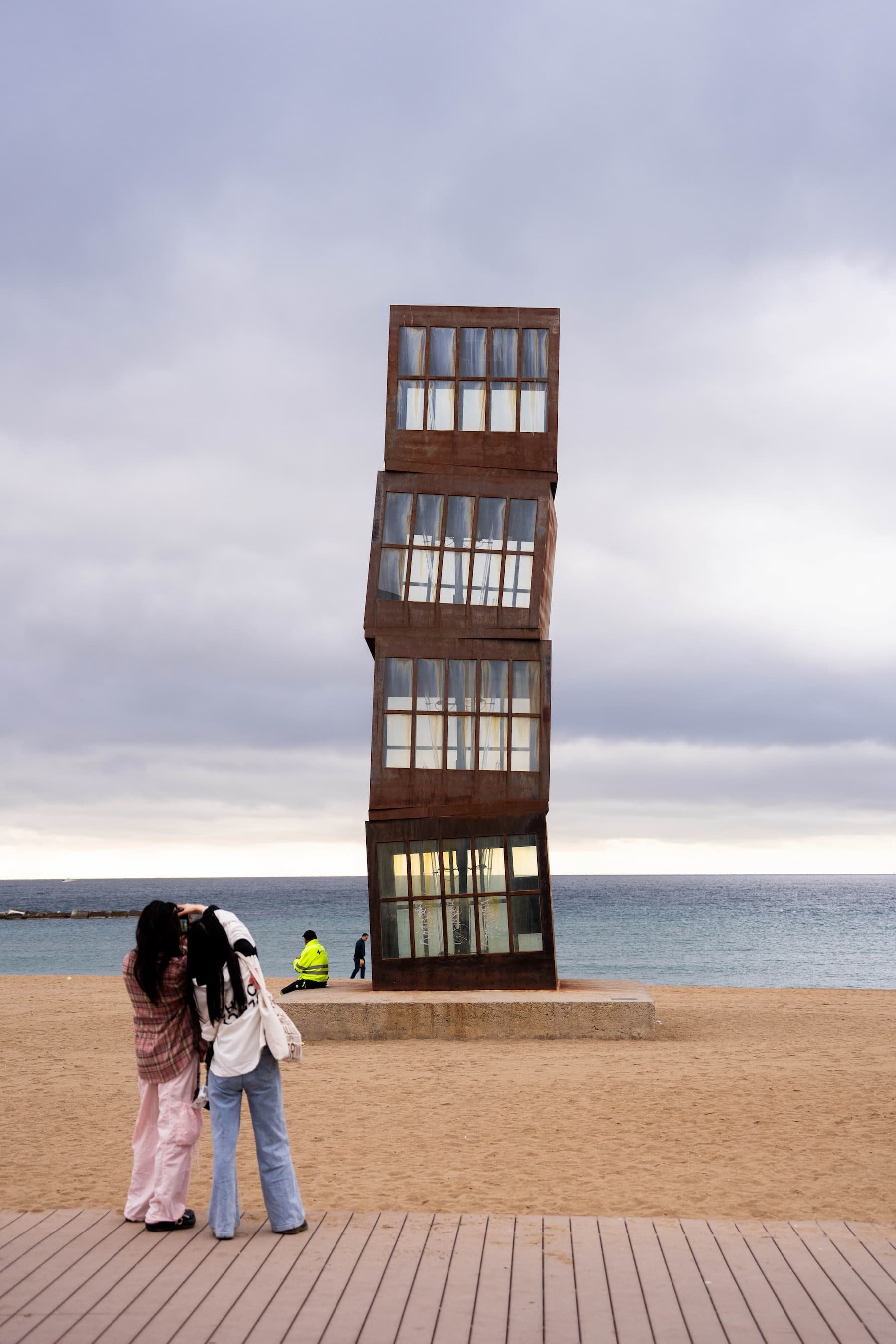
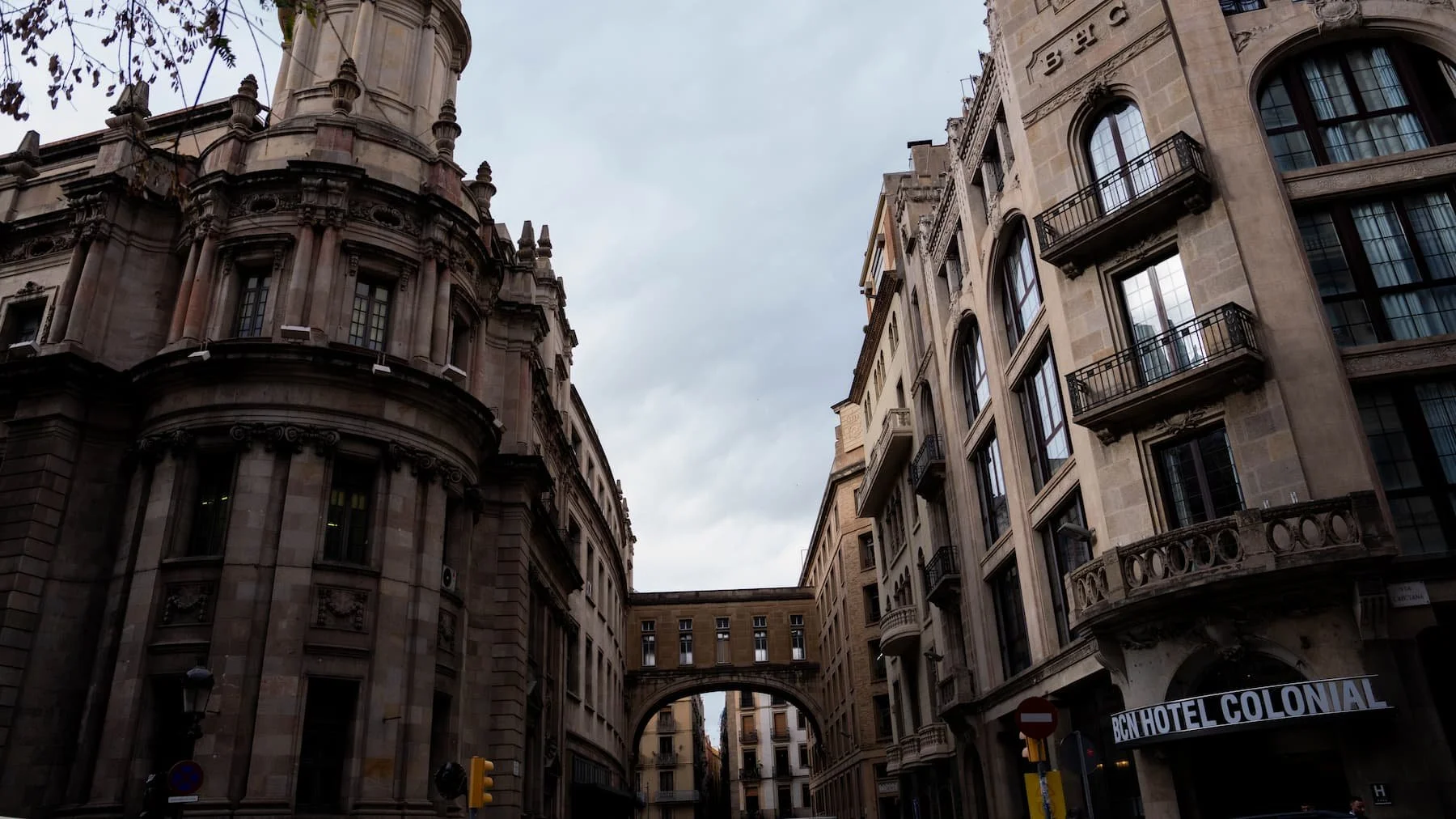
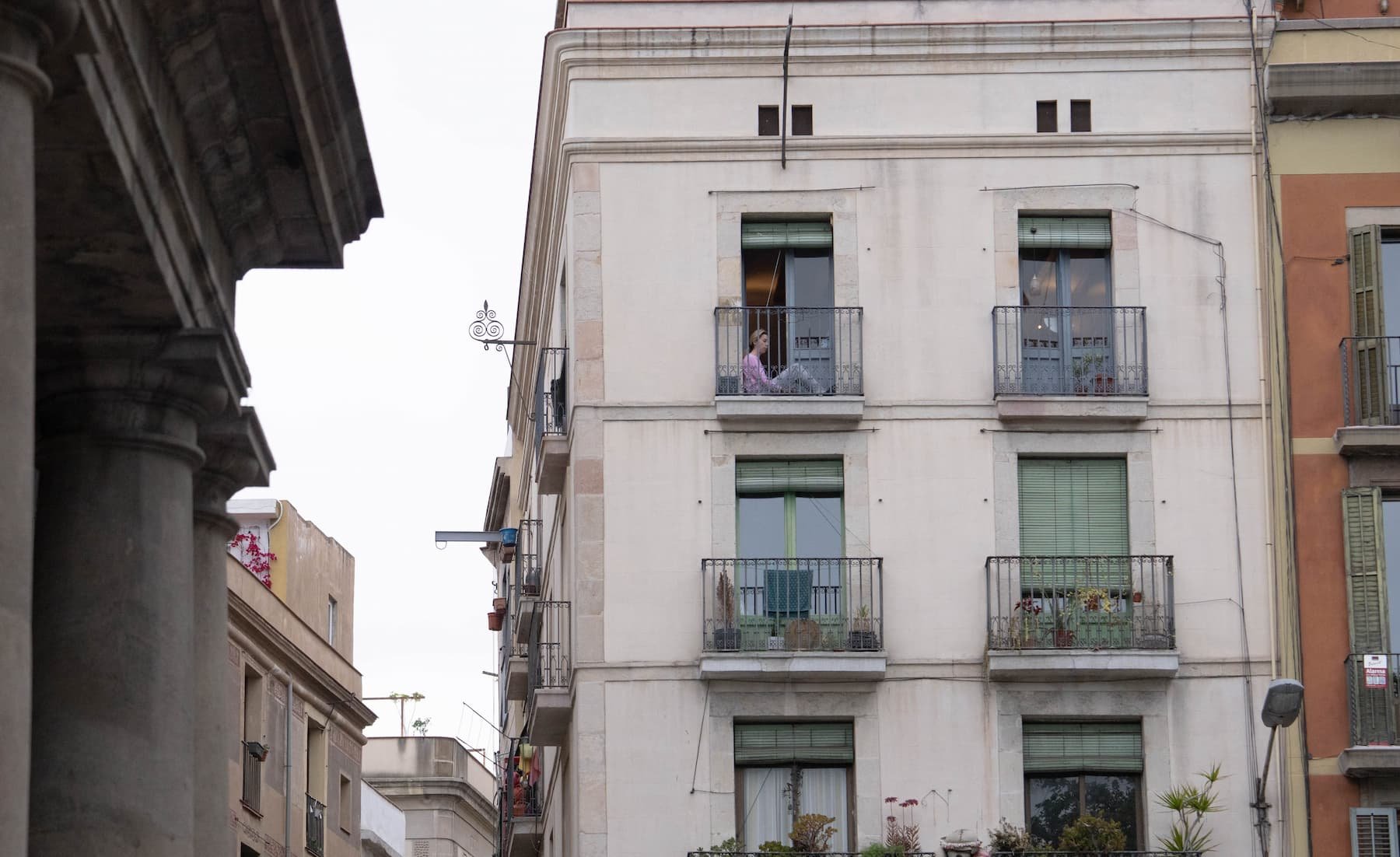
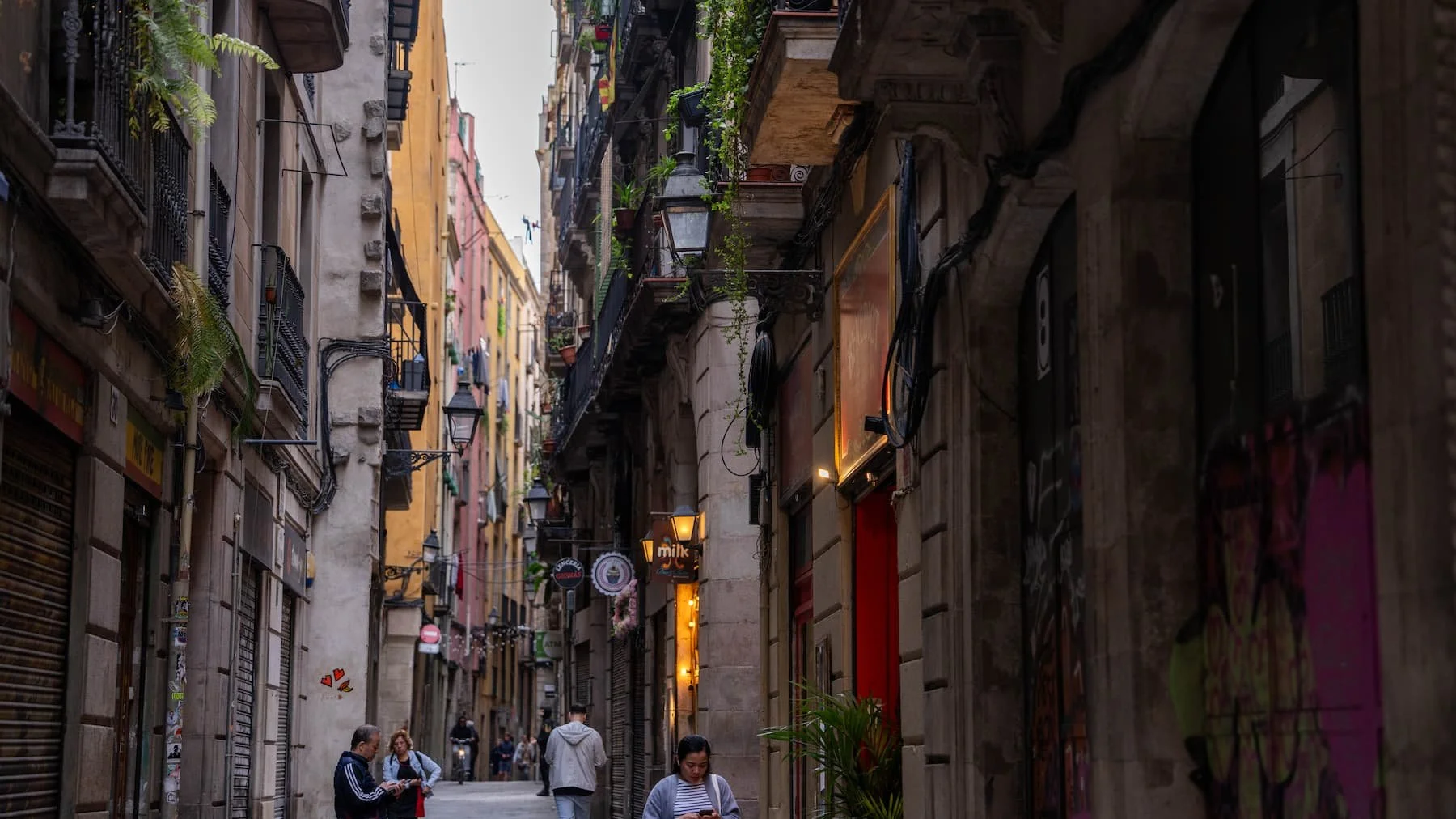
Then I just started walking, which is what I did most of this trip. No plan, only a general sense of where I wanted to end up.
Barceloneta first, the old fishermen's quarter behind the beach. It's a tight grid of narrow streets with laundry strung across the balconies, and at that hour it belongs to the people who live there. I passed a paddleboard shop with two boards standing up against the wall by the door and a hand-painted sign offering rentals. That's the version of a beach town most visitors miss because they never get more than a block off the sand.
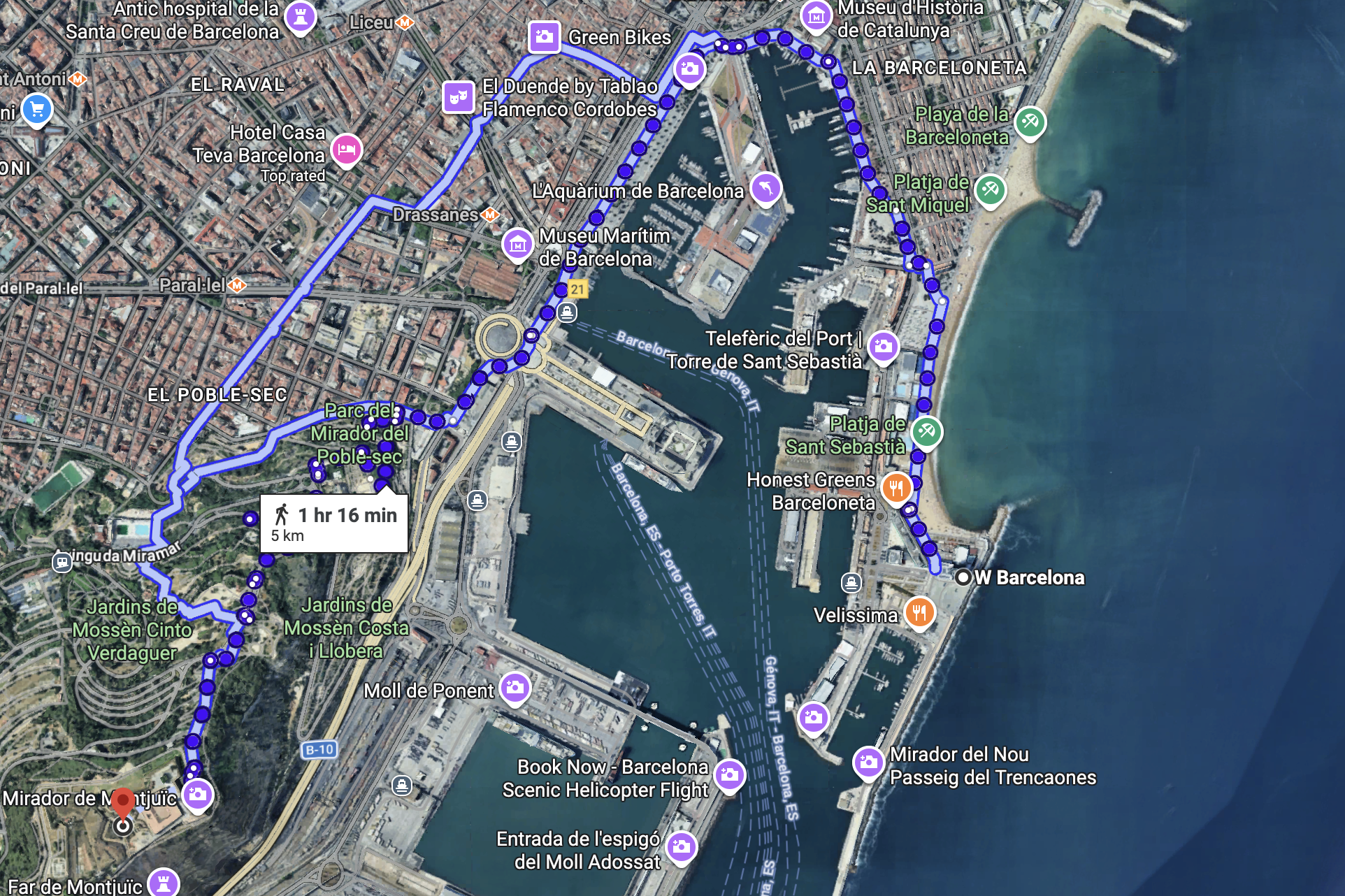
The walk that made these photos. Five kilometers from the W Barcelona, up the Barceloneta beachfront, around Port Vell, through the old city, then a long climb up Montjuïc to the mirador. About an hour and sixteen minutes of walking, plus all the stops.
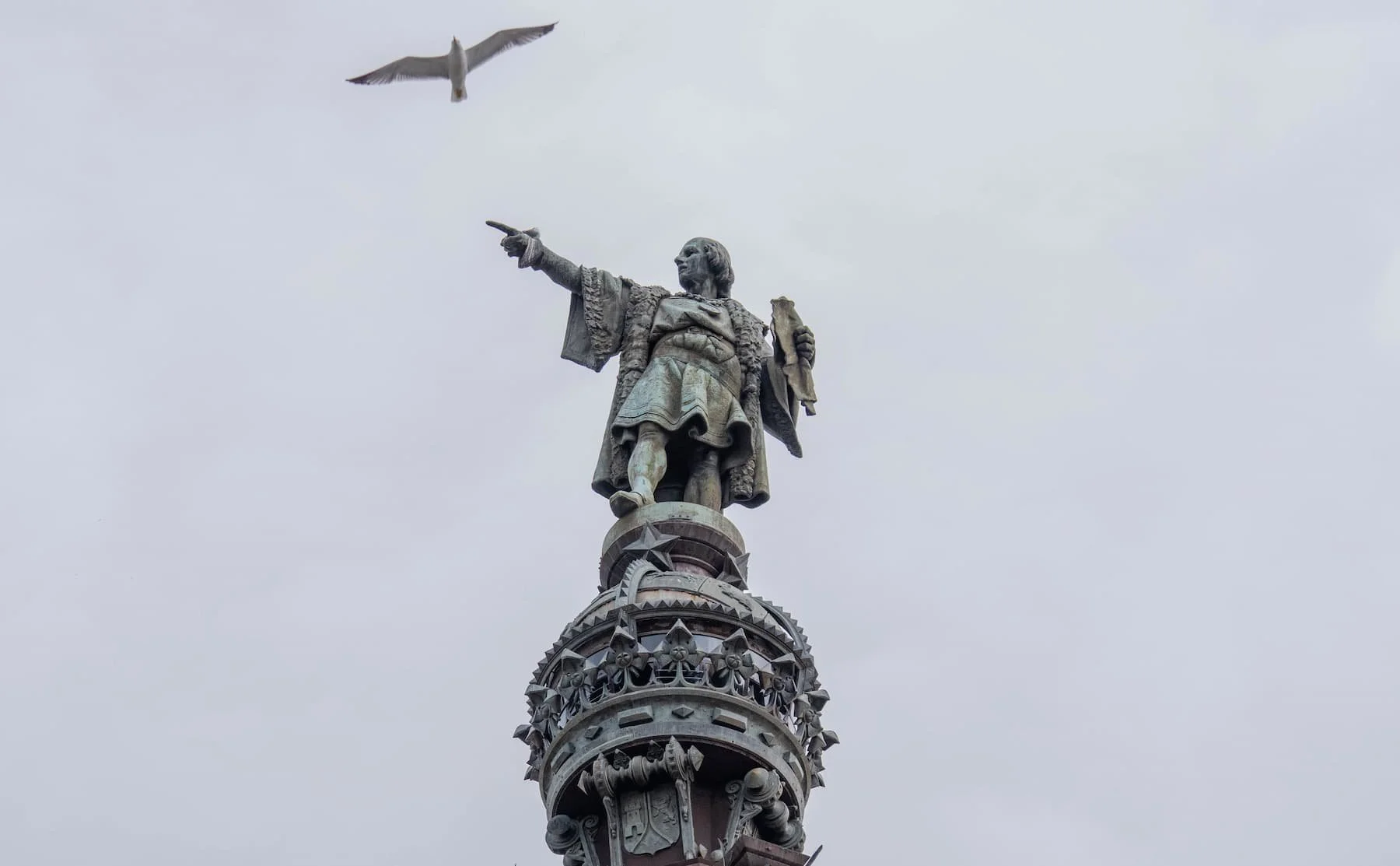
I kept going along the water toward the bottom of La Rambla, where the Columbus monument stands on its column at the edge of the port. Sixty meters of it, put up for an exposition in the 1880s, with Columbus up top pointing out to sea. The sky behind it was still flat and grey, so the whole thing read as a silhouette. Sometimes bad light gives you a better picture than good light does.
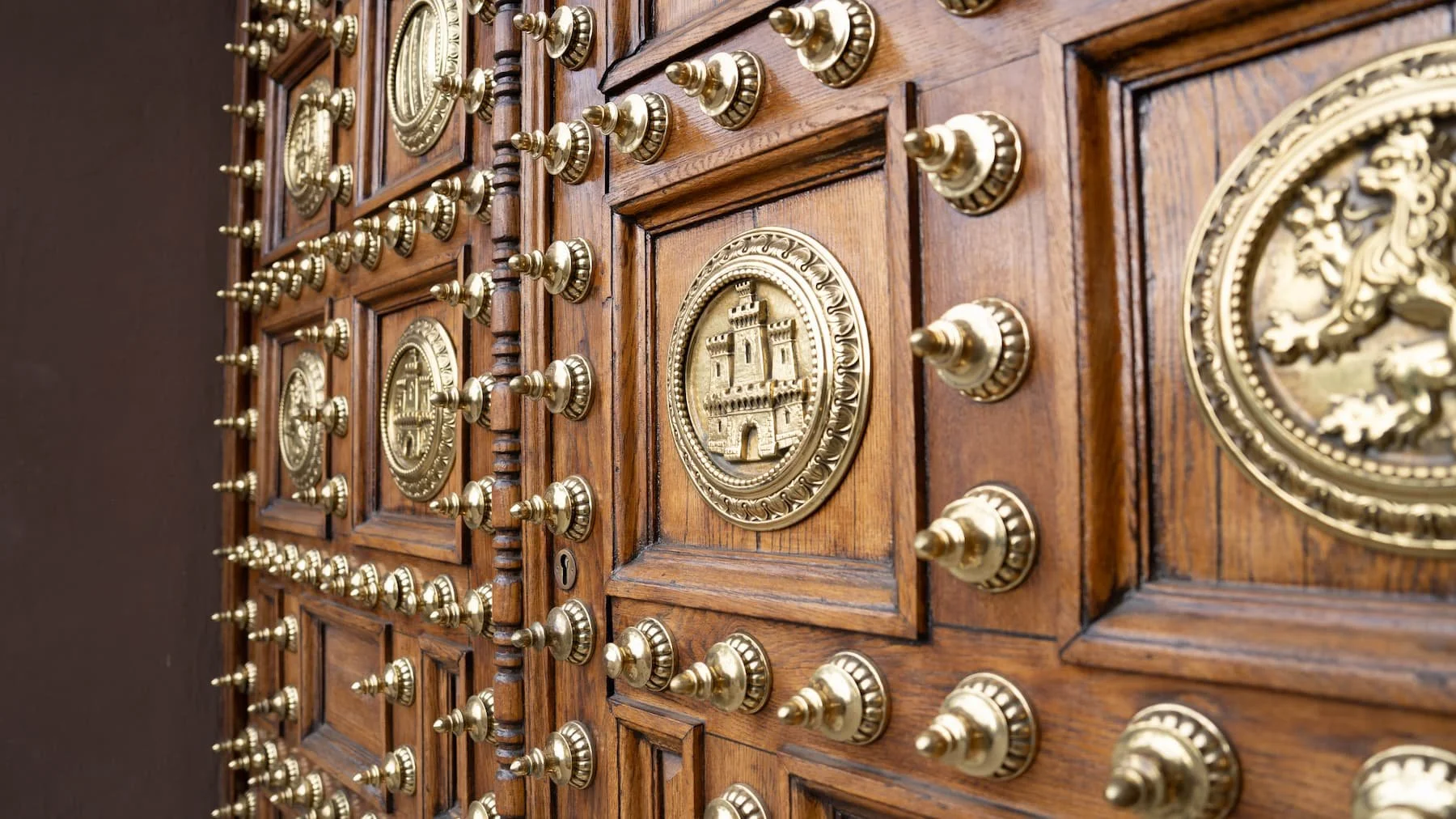
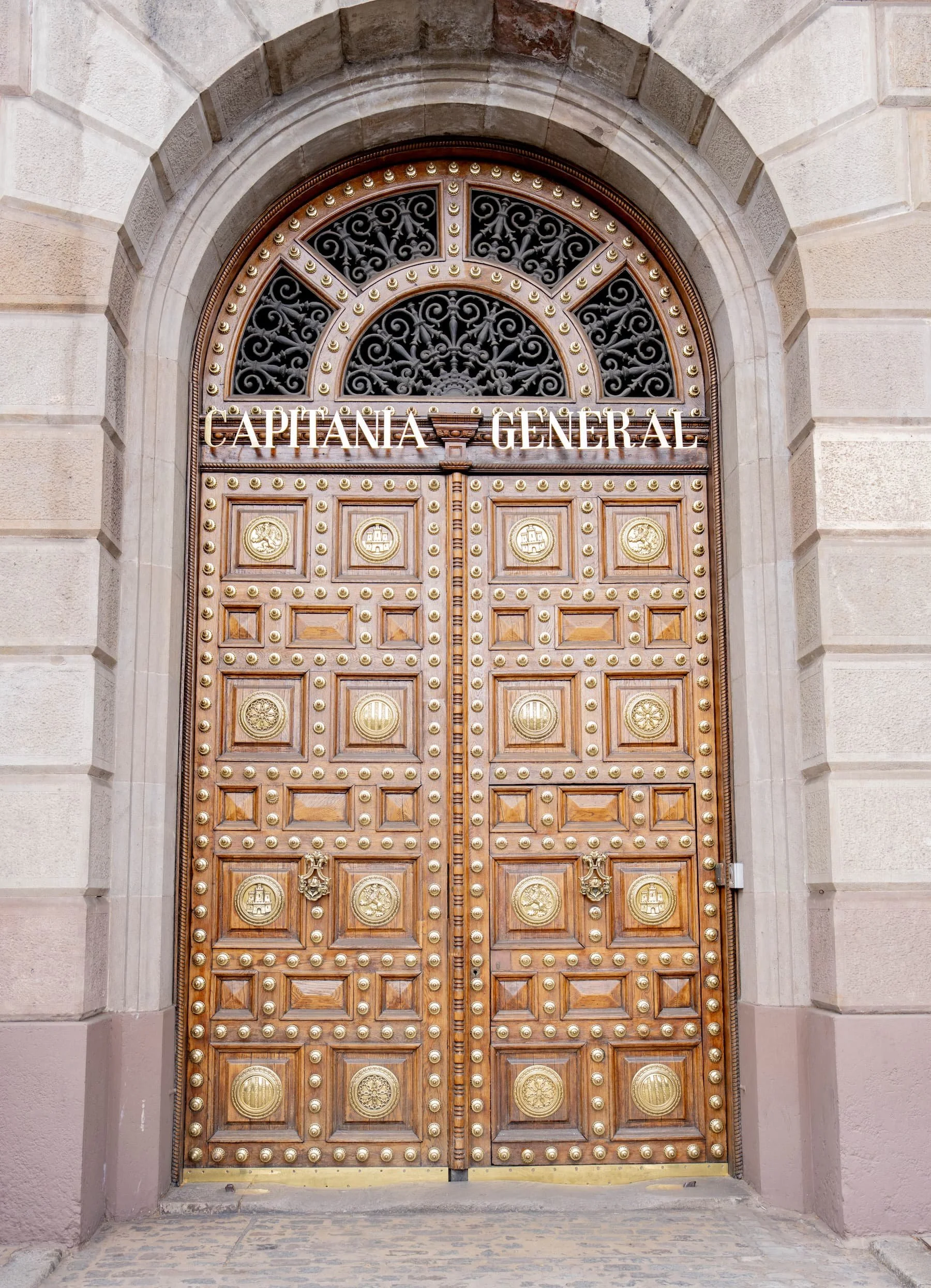
Somewhere along the way I stopped in front of a set of enormous wooden doors. Brass studs in rows, medallions of lions and castles, all of it polished. I stood there a while before I knew what building it was. The Capitania General, headquarters for the Spanish Army in Catalonia.
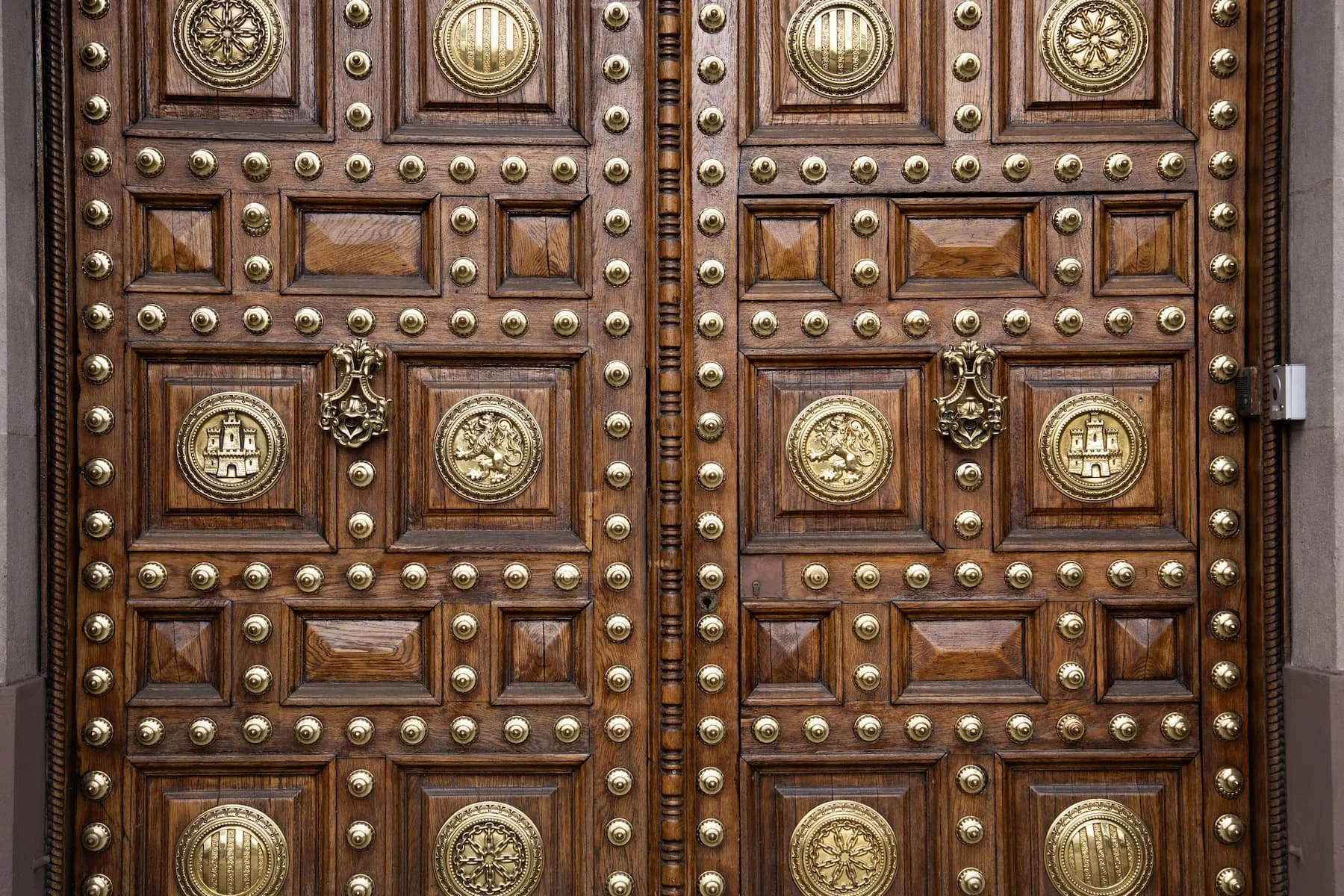
Two leaves of oak, hung so they meet at a center stile. The stile is turned like a column, with ring cuts running top to bottom.
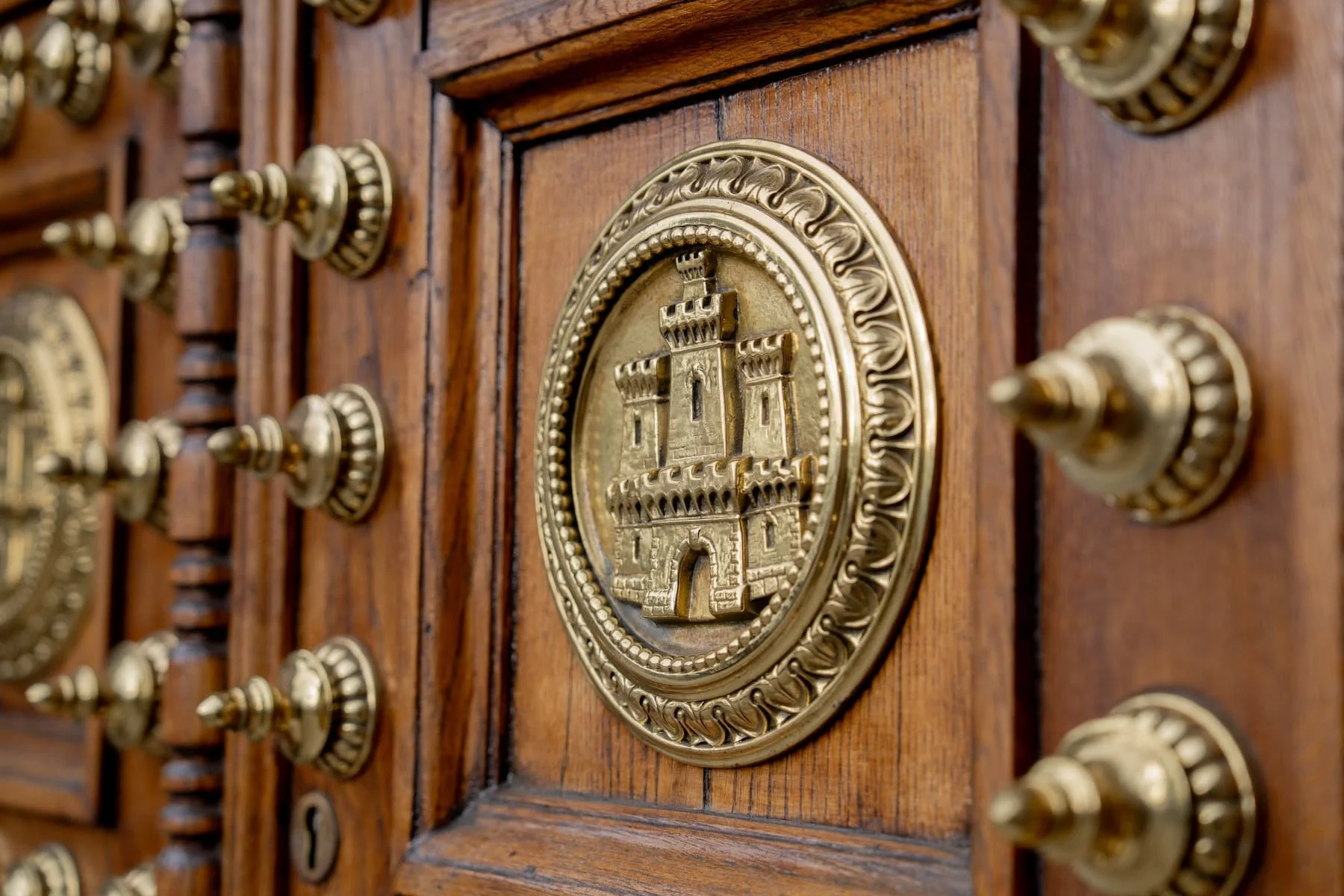
Each leaf is broken into raised rectangular panels with beveled edges. The panels are framed by rows of brass studs. Each stud is a cone rising out of a fluted round base, like a small spike on a gear.
Set into the center of the larger panels are brass medallions. Two designs repeat. One shows a castle with three towers, the arms of Castile. The other shows a lion rearing on its back legs, the arms of León. Both are ringed by a beaded border and a band of carved leaf work.
There is a plain iron keyhole low on the right leaf. No modern hardware in the photo.
On to Montjuïc.
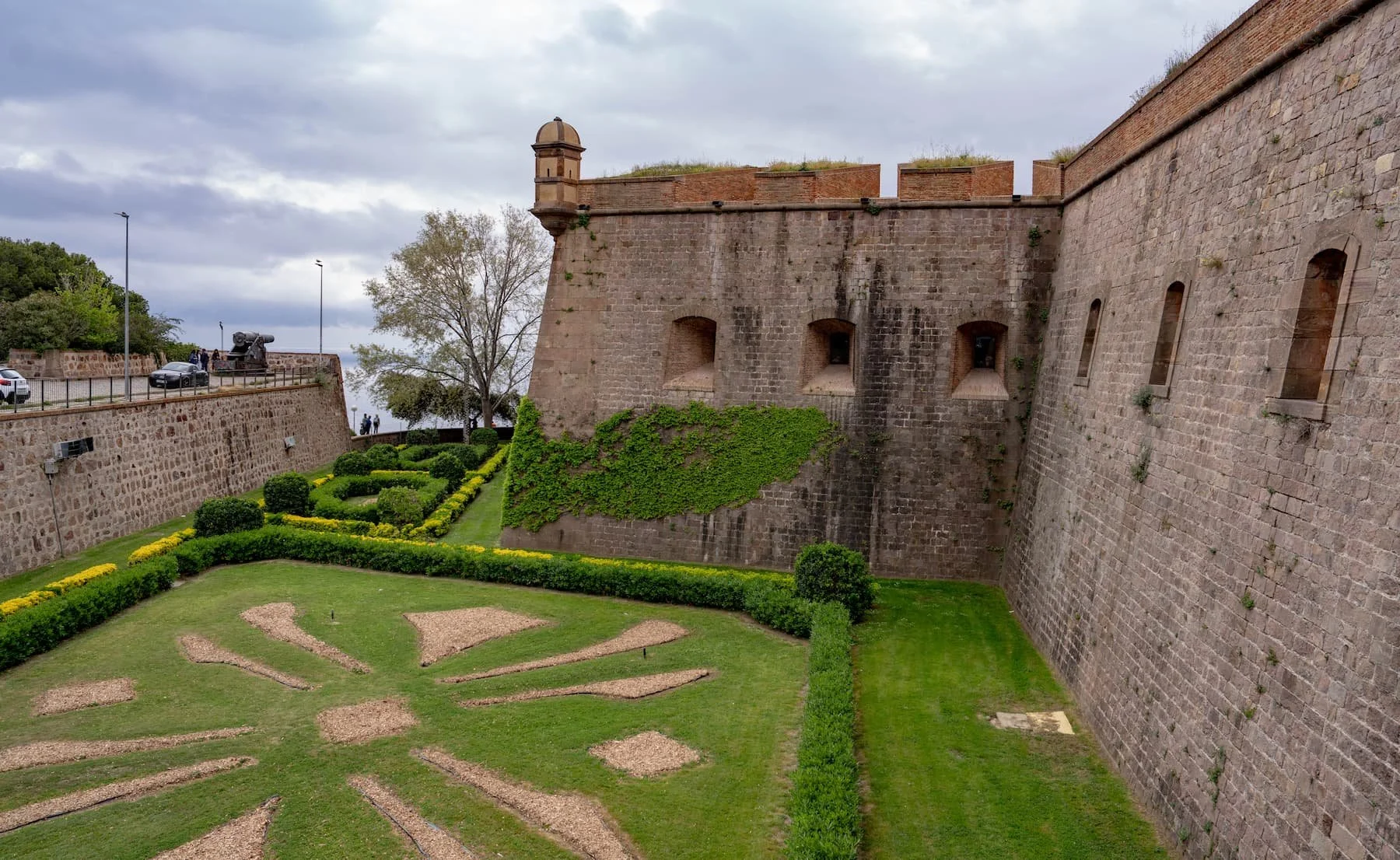
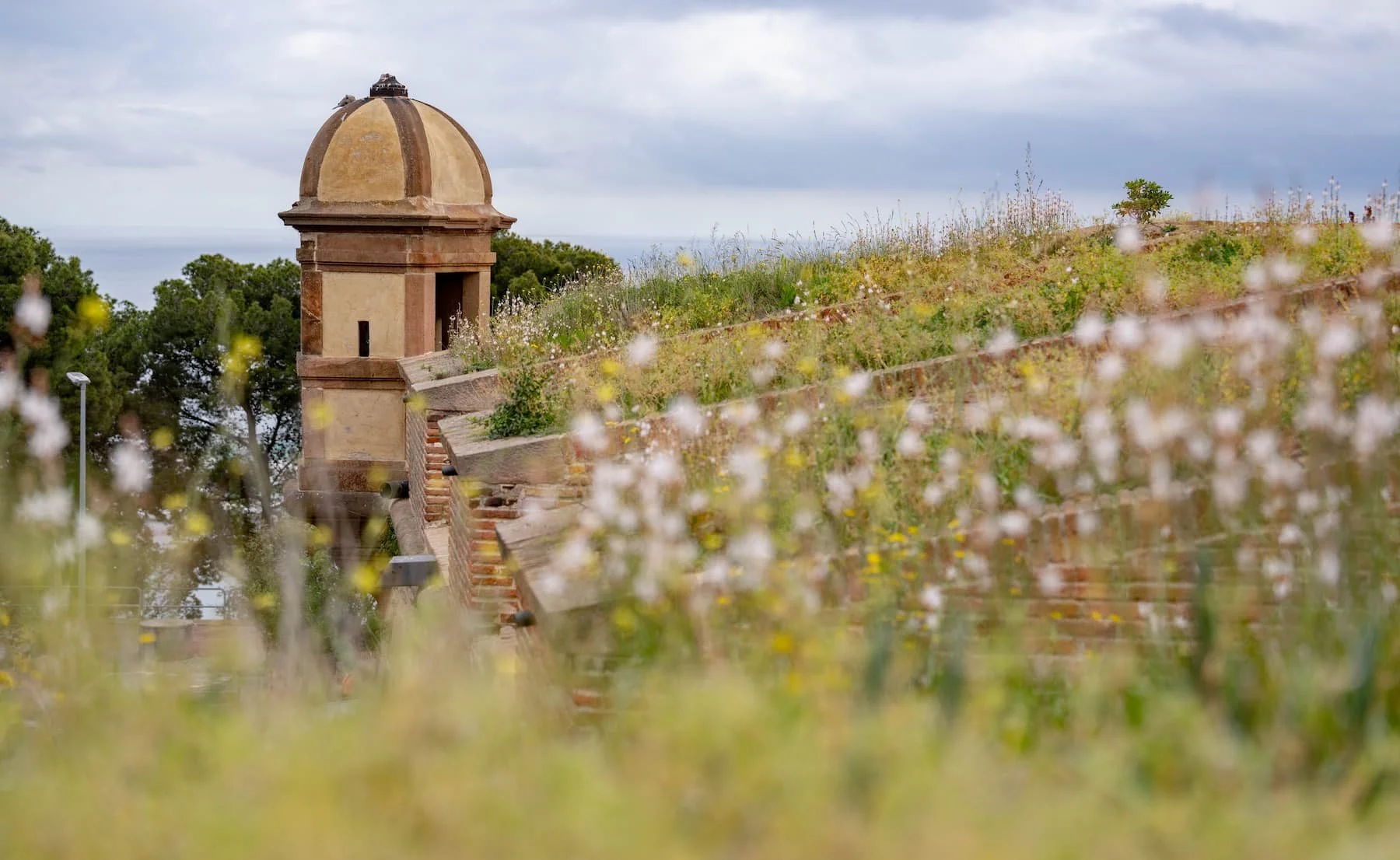
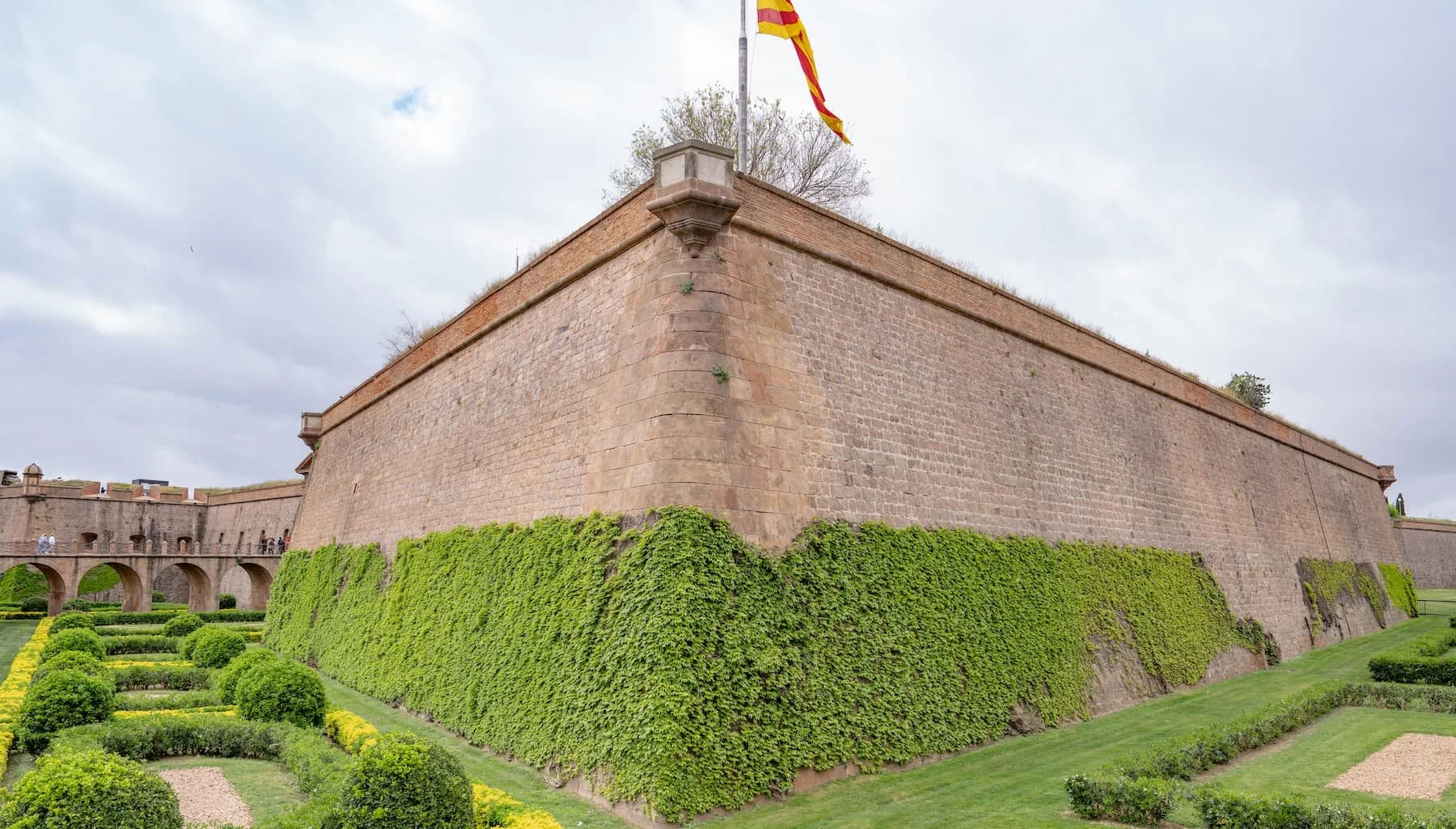
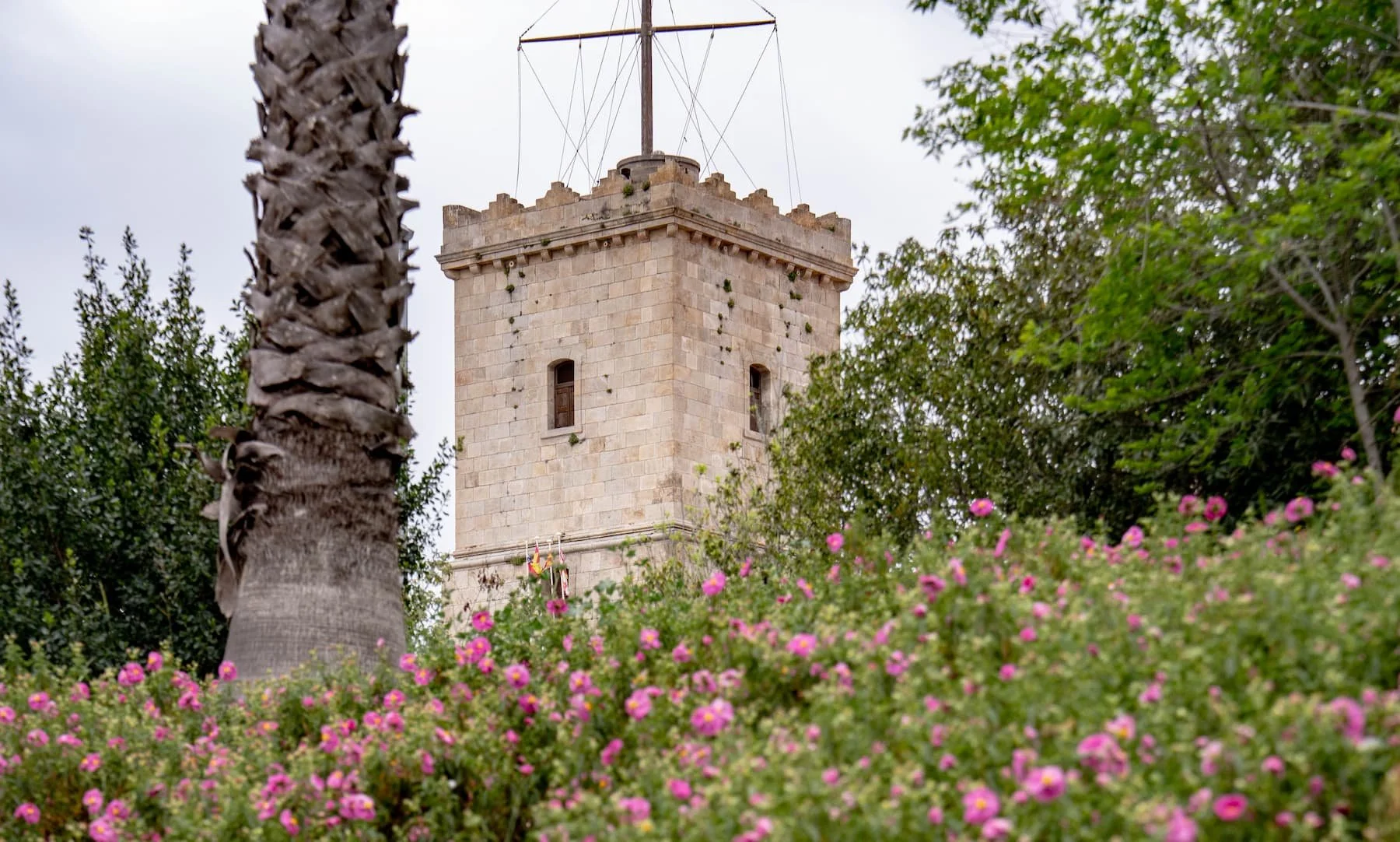
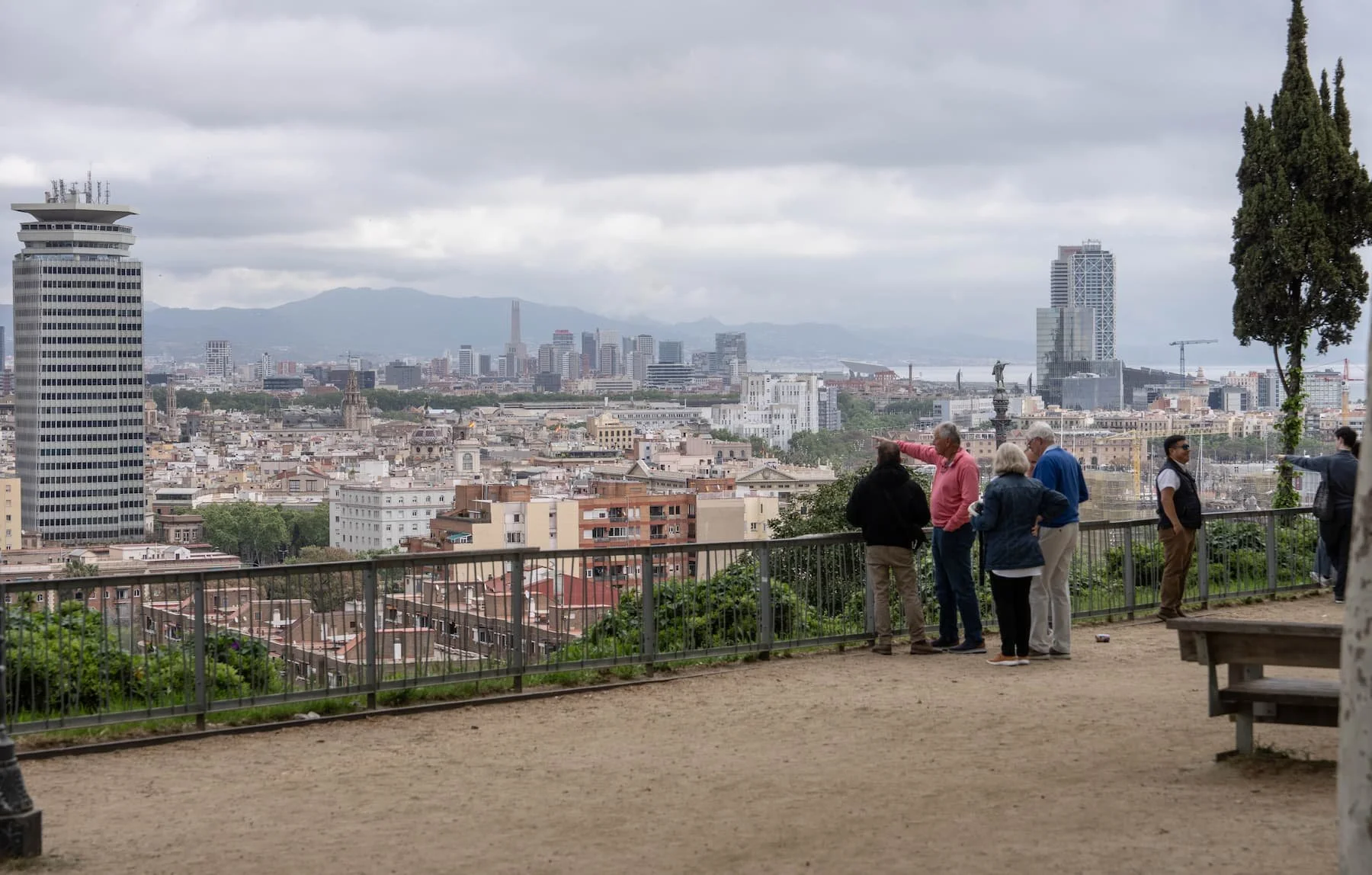
Montjuïc is the hill on the southwest side of the city, and there's a castle rests at the top. When you reach the top, you can see the entire city from one end to the other. The whole city spread out flat between the hills and the sea, the three old smokestacks of the Paral·lel power station standing up out of the middle of it, the Sagrada Família's towers off in the distance, Torre Glòries catching what light there was, and the The Serra de Collserola in the distance.
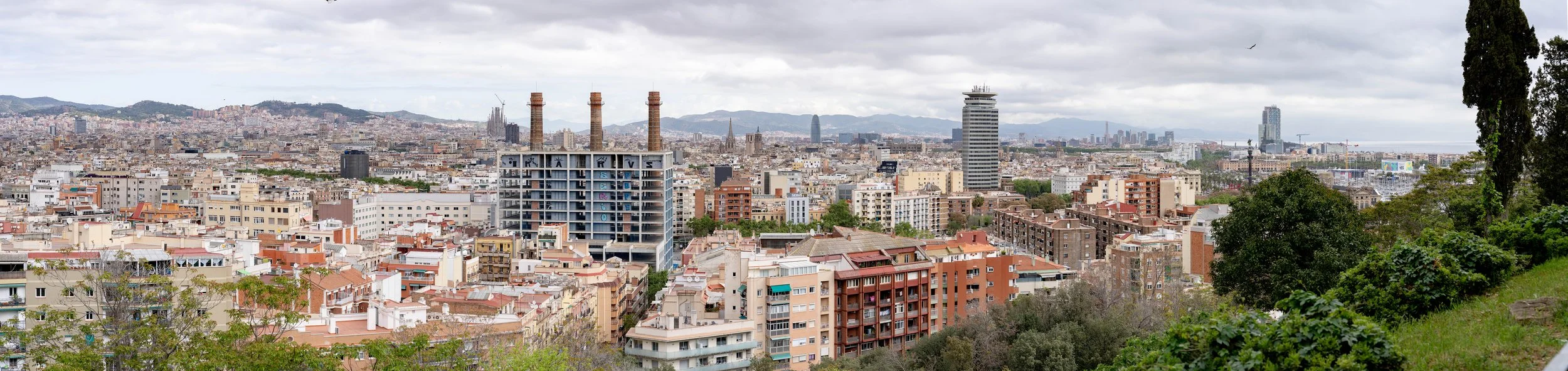
Barcelona from the slope of Montjuïc, looking out over Poble-sec. The three brick chimneys of the old Paral·lel power station rise in the middle of the frame. Sagrada Família sits on the left horizon, Torre Glòries near the center, and Torre Colón stands alone on the right. The Collserola hills close the whole thing in. Photo taken by Anthony Quintano
The castle itself is a proper old fortress, built and rebuilt over centuries, and it's had a heavy history. It was used as a prison and a place of executions, and Catalans have long memories about it. Walking the walls now, it's quiet. Brick ramparts with wildflowers coming up through the paving, a little round sentry box out at the end of a walkway, grass everywhere. You'd never guess what the place was for if nobody told you.
From the seaward wall you look straight down onto the working port. Container stacks, rail lines, truck trailers lined up in rows, ferries at the terminal, and past all of it the Mediterranean going flat out to the horizon. You can pick out the W from up there, the sail-shaped hotel where I'd slept the night before, small and pale against the water.
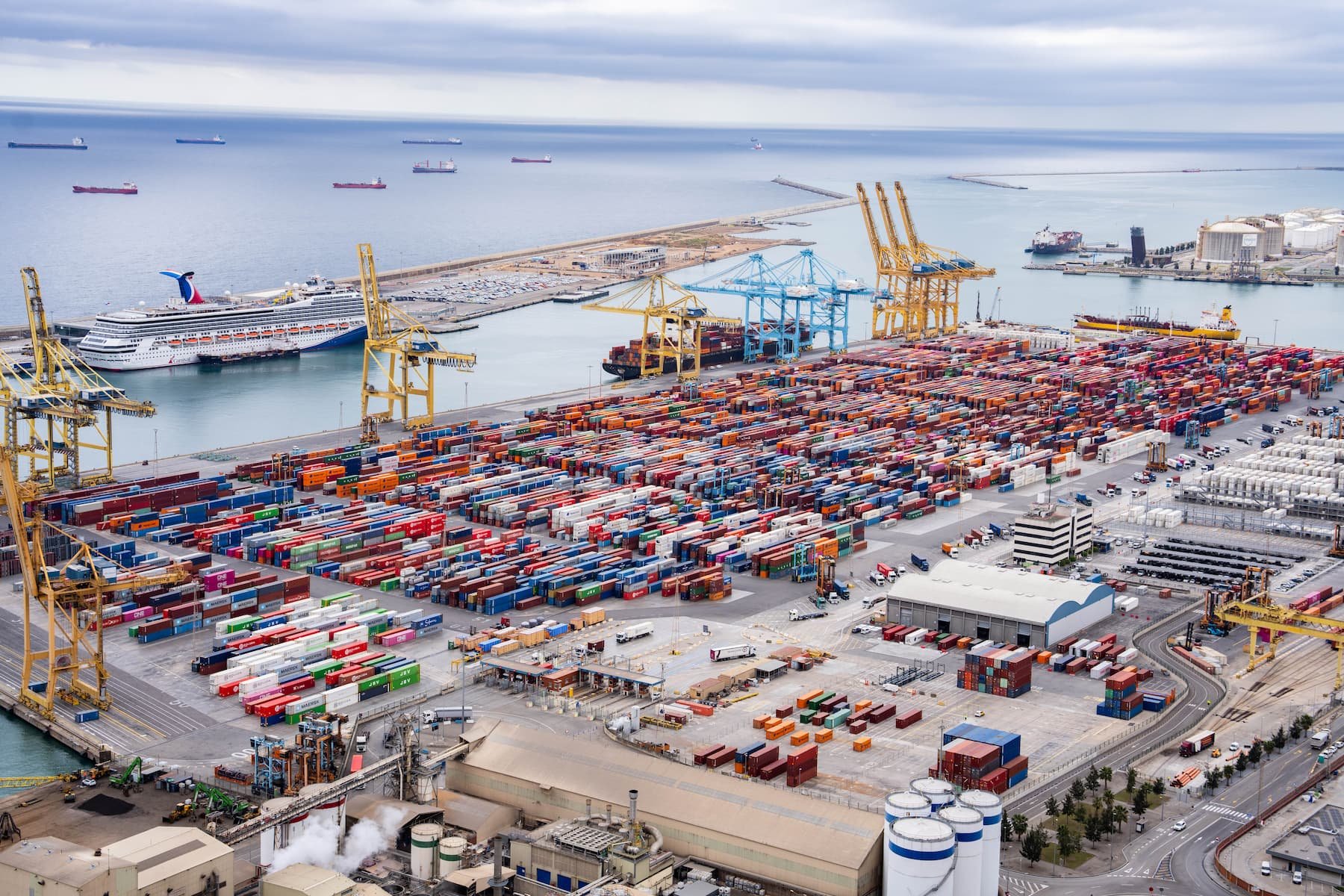
The container terminal at the Port of Barcelona, seen from Montjuïc. Cranes line the quay and containers run in rows toward the water. A Carnival cruise ship sits at the far berth, and cargo ships wait at anchor beyond the breakwater.
After the castle I bought a round trip ticket for the Telefèric de Montjuïc. Sixteen euros, printed on a slip of paper with a QR code, good for a ride down to the Mirador and back. The cabins are small and they run close together, so you watch the one ahead of you swing out over the trees while yours is still climbing. From inside, the city unrolls in a way it never does from the ground. Rooftops, then the port, then the water past all of it. I had walked five kilometers to get up here. The lift covers the same ground in a few minutes and shows you a version of the city you cannot see from the ground.
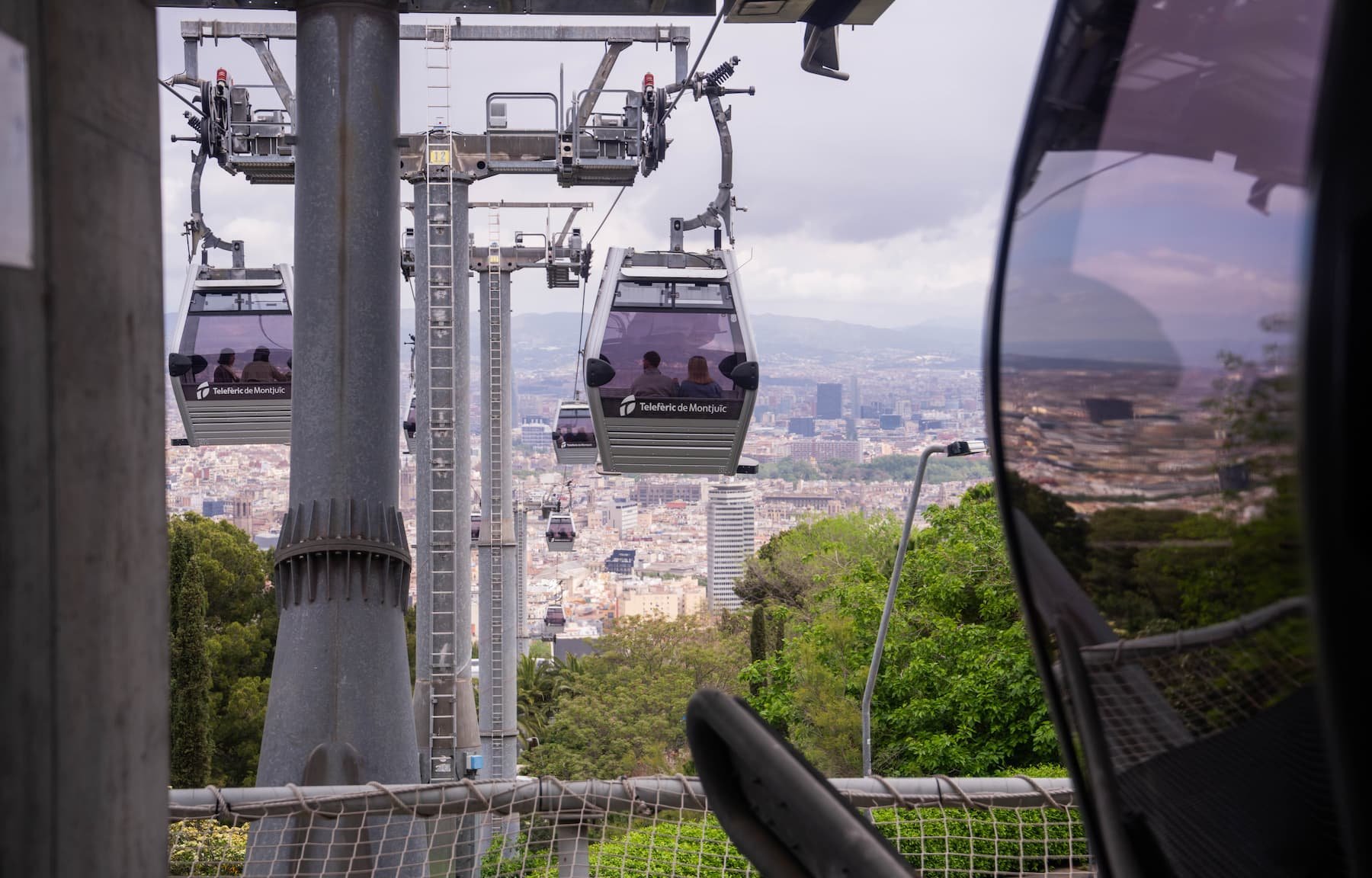
Cabins of the Telefèric de Montjuïc pass on the line above Barcelona. The city sits below through the gap, rooftops running toward the Eixample and the hills behind. Five kilometers of walking to get up here, then a few minutes in the air to see it all at once. Photo taken by Anthony Quintano
I put the drone up that afternoon too, out over the Hospital de Sant Pau on the other side of the city. Sant Pau is a modernist hospital complex of brick pavilions and tiled domes, and there's a diagonal avenue running from its front door straight to the Sagrada Família. It's the one street in that part of Barcelona that ignores the grid, and it exists purely to connect those two buildings. You can only really see that from the air.
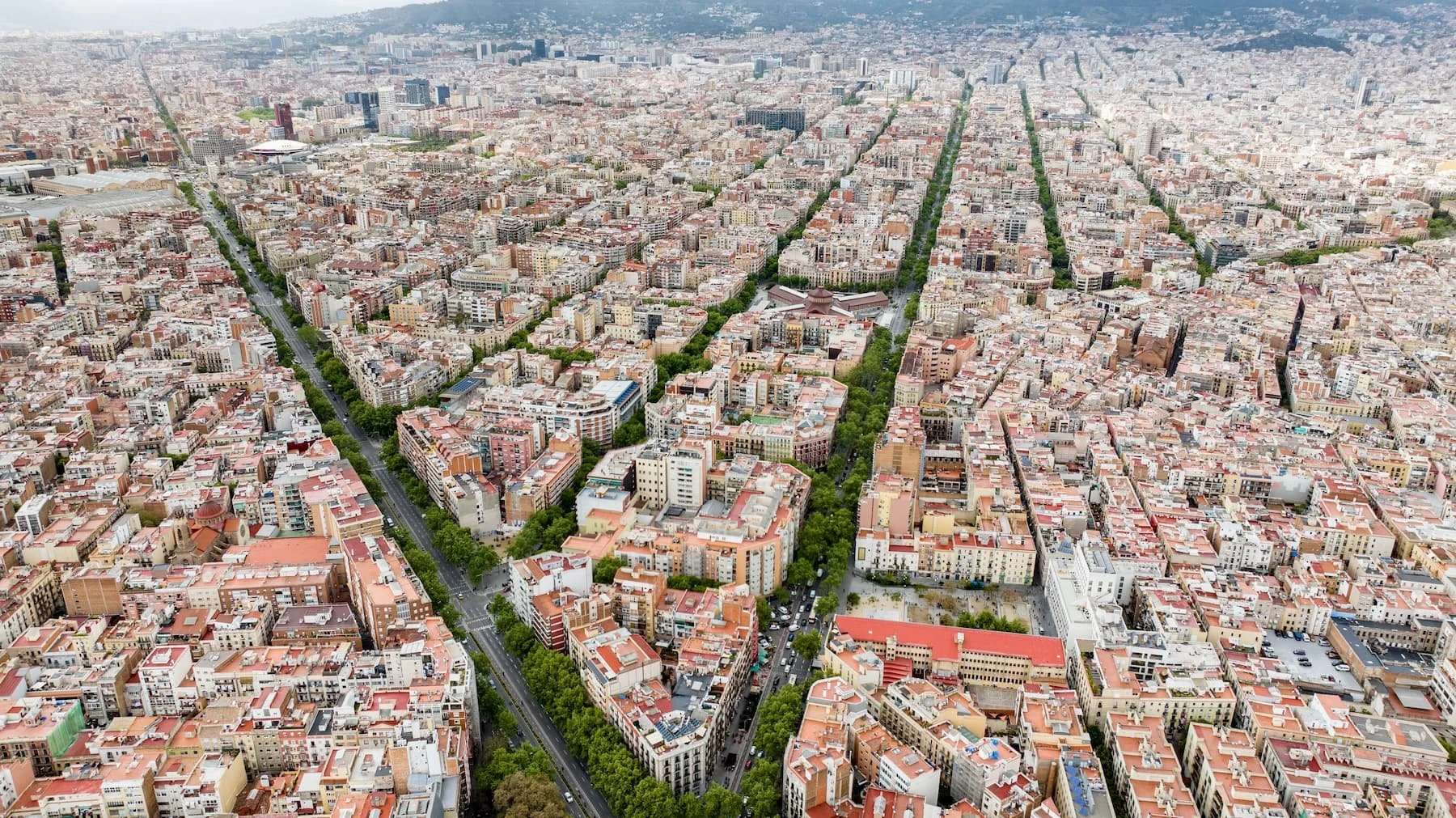
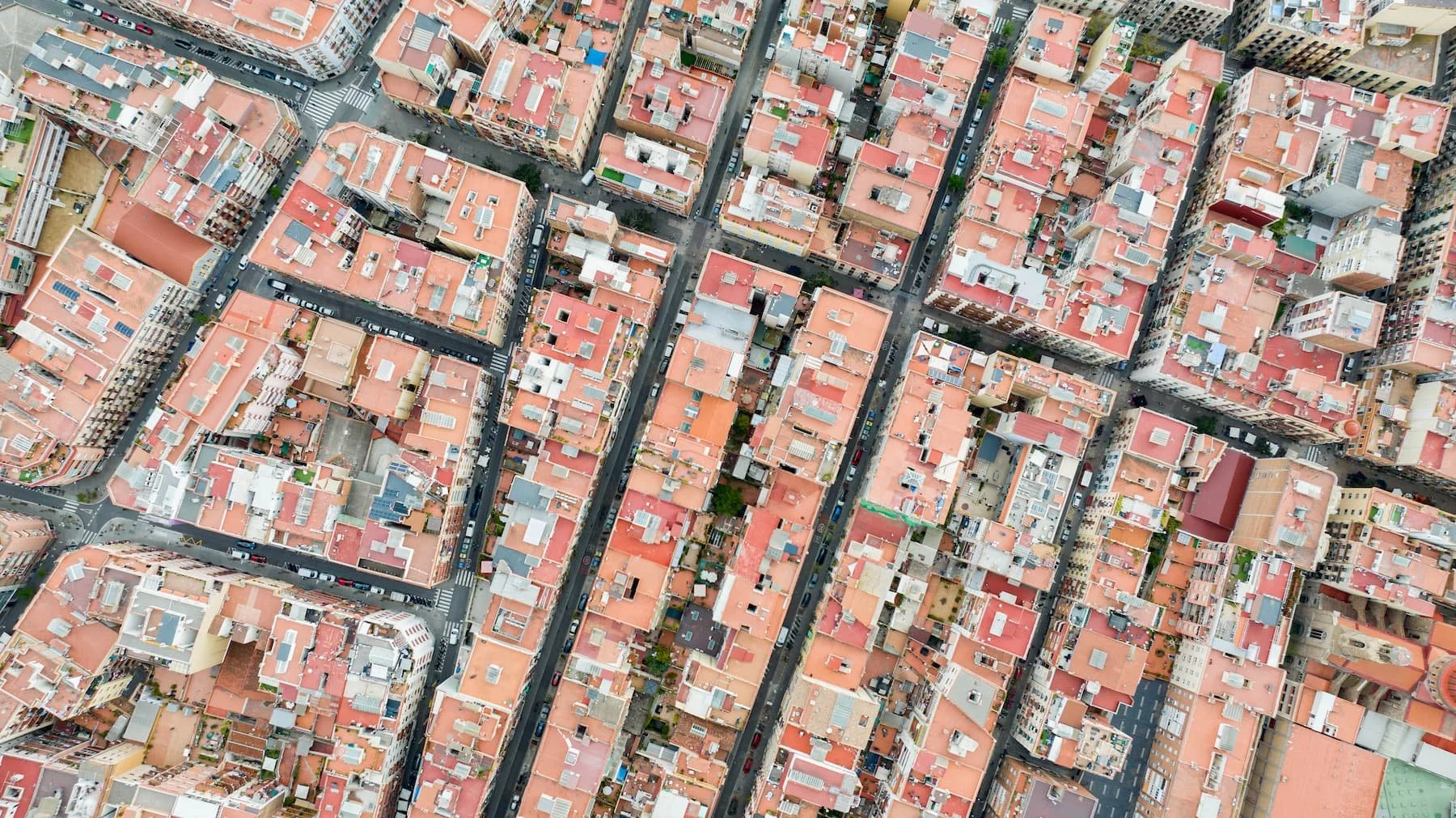
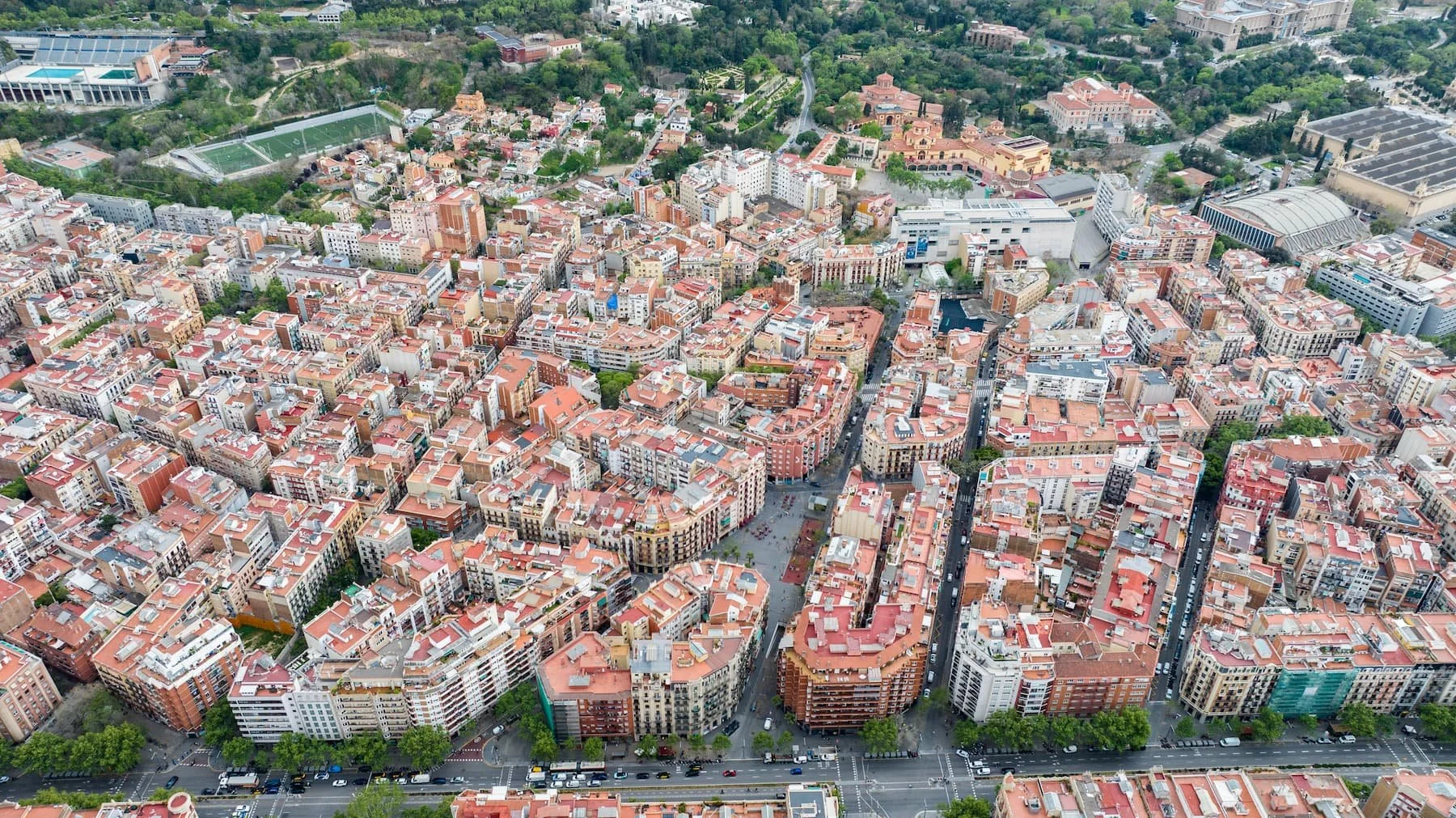
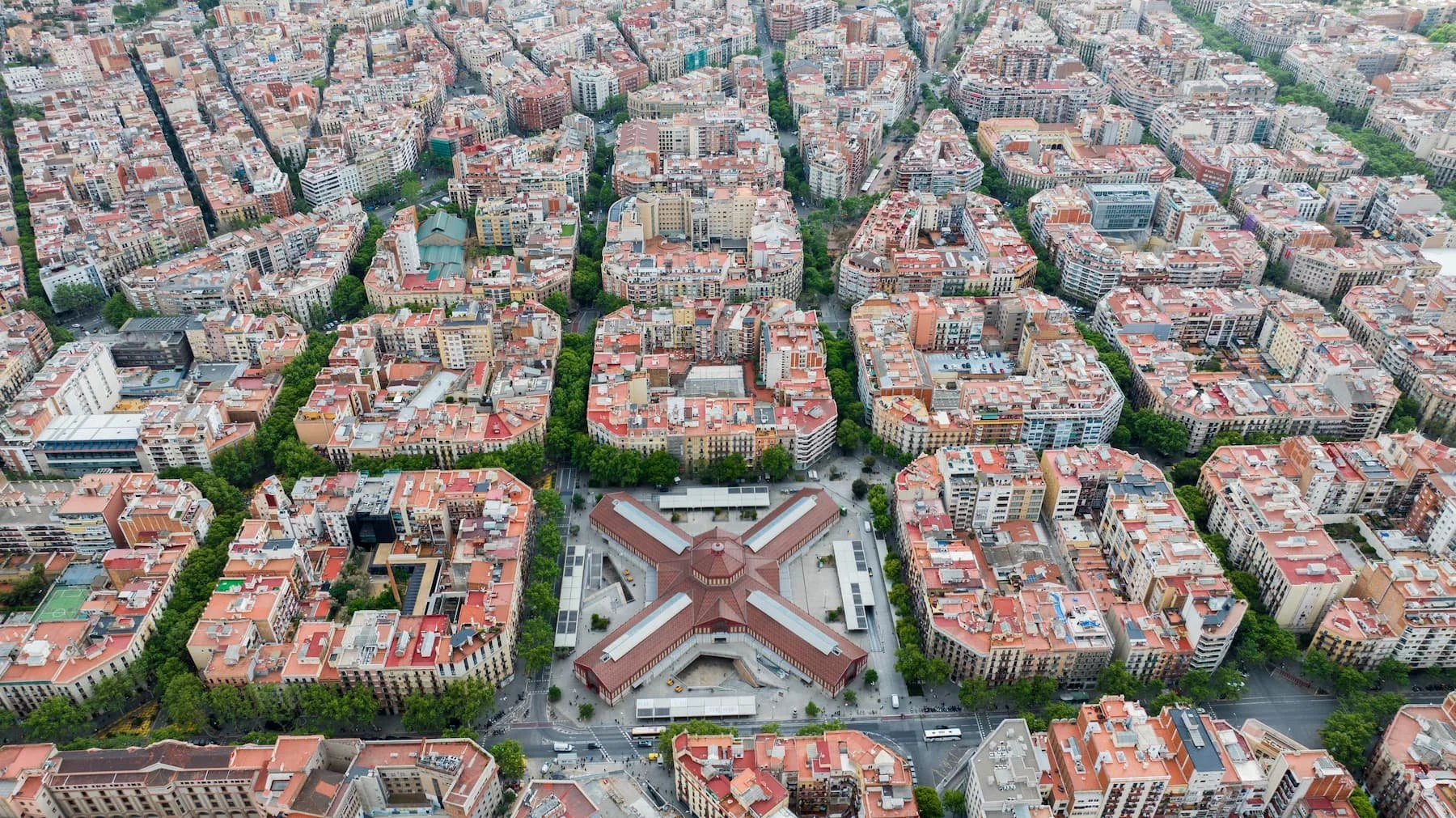
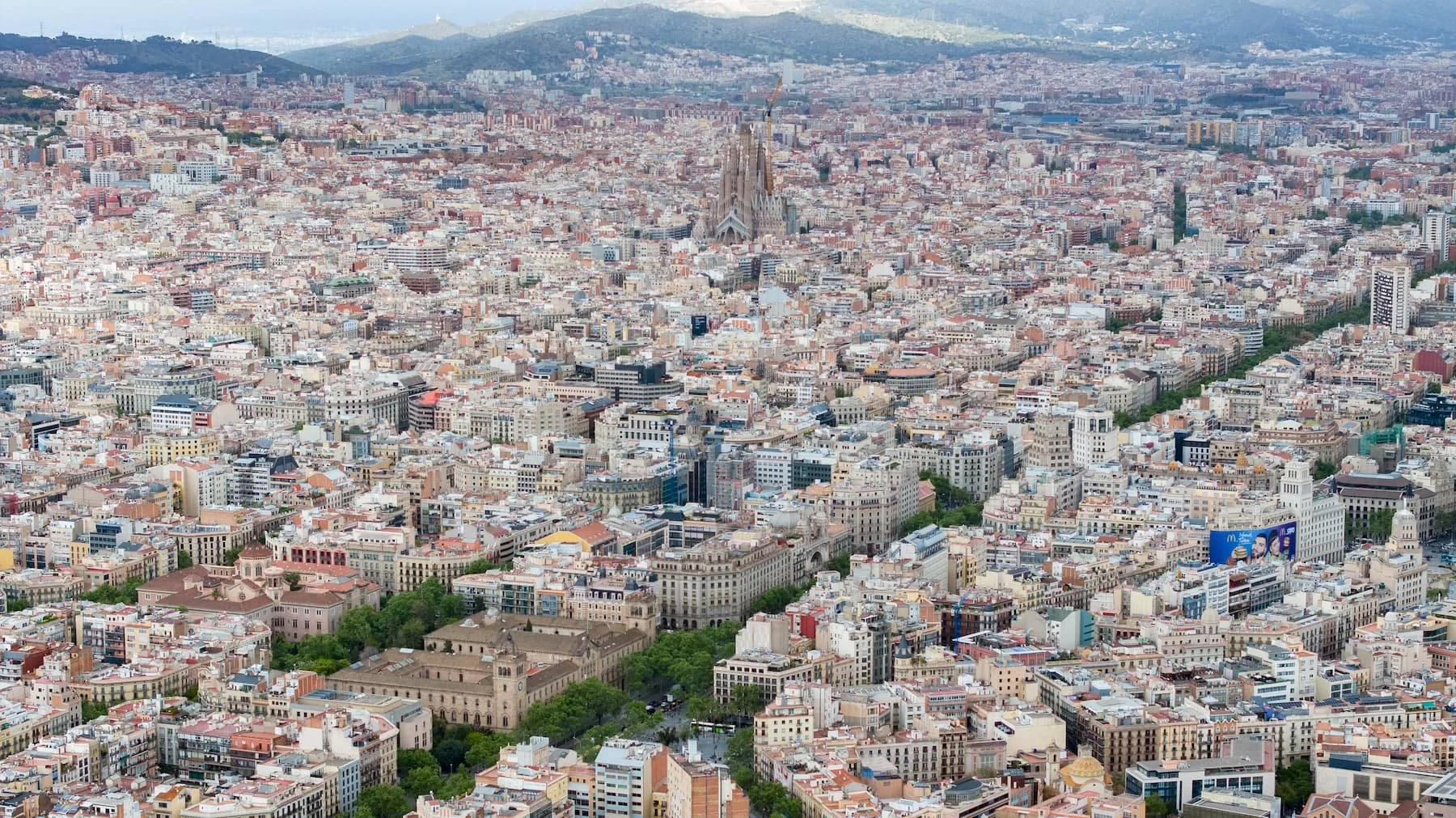
From the lift I walked toward the Magic Fountain of Montjuïc. I had timed it wrong. Sadly, the water was turned off. I took the beauty of the location in and carried on down the street.
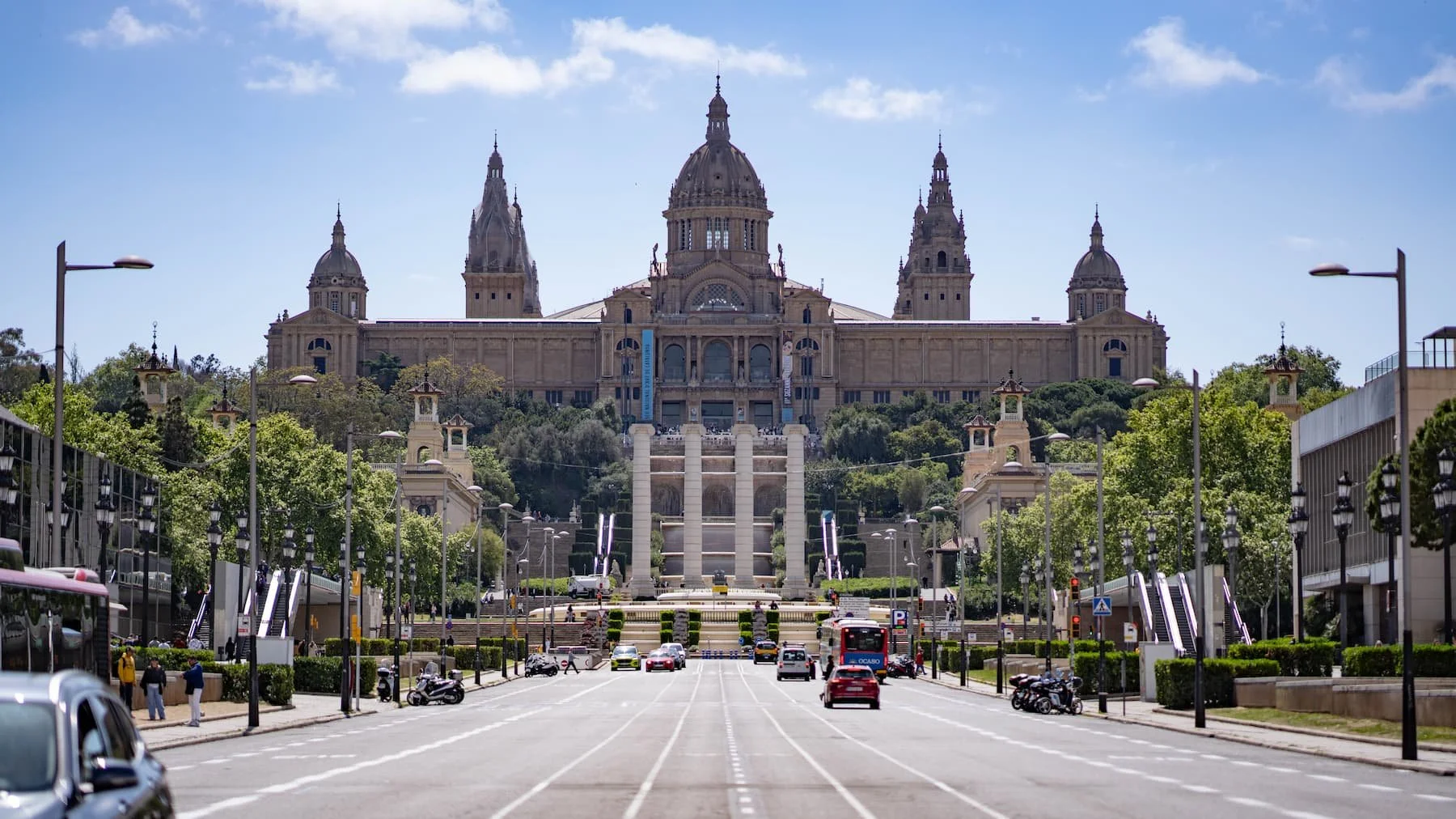
Looking up Avinguda de la Reina Maria Cristina toward the Palau Nacional, home of the National Art Museum of Catalonia. The Magic Fountain sits on the terrace steps between the road and the dome. Photo taken by Anthony Quintano
The Palau Nacional filled the view the whole way down, big and pale on its terrace, with the road running straight at it. Then I came down the steps into something I did not expect.
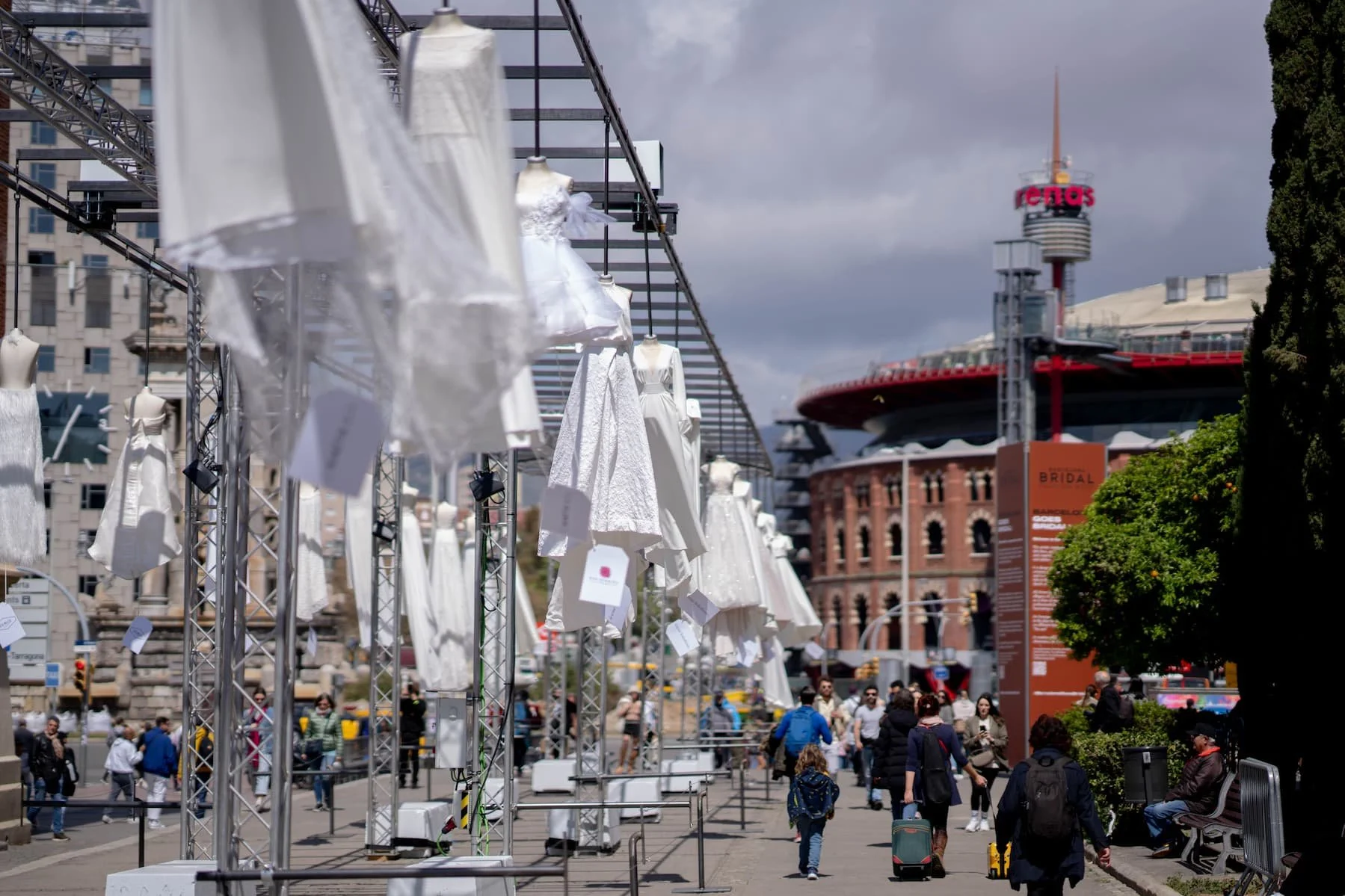
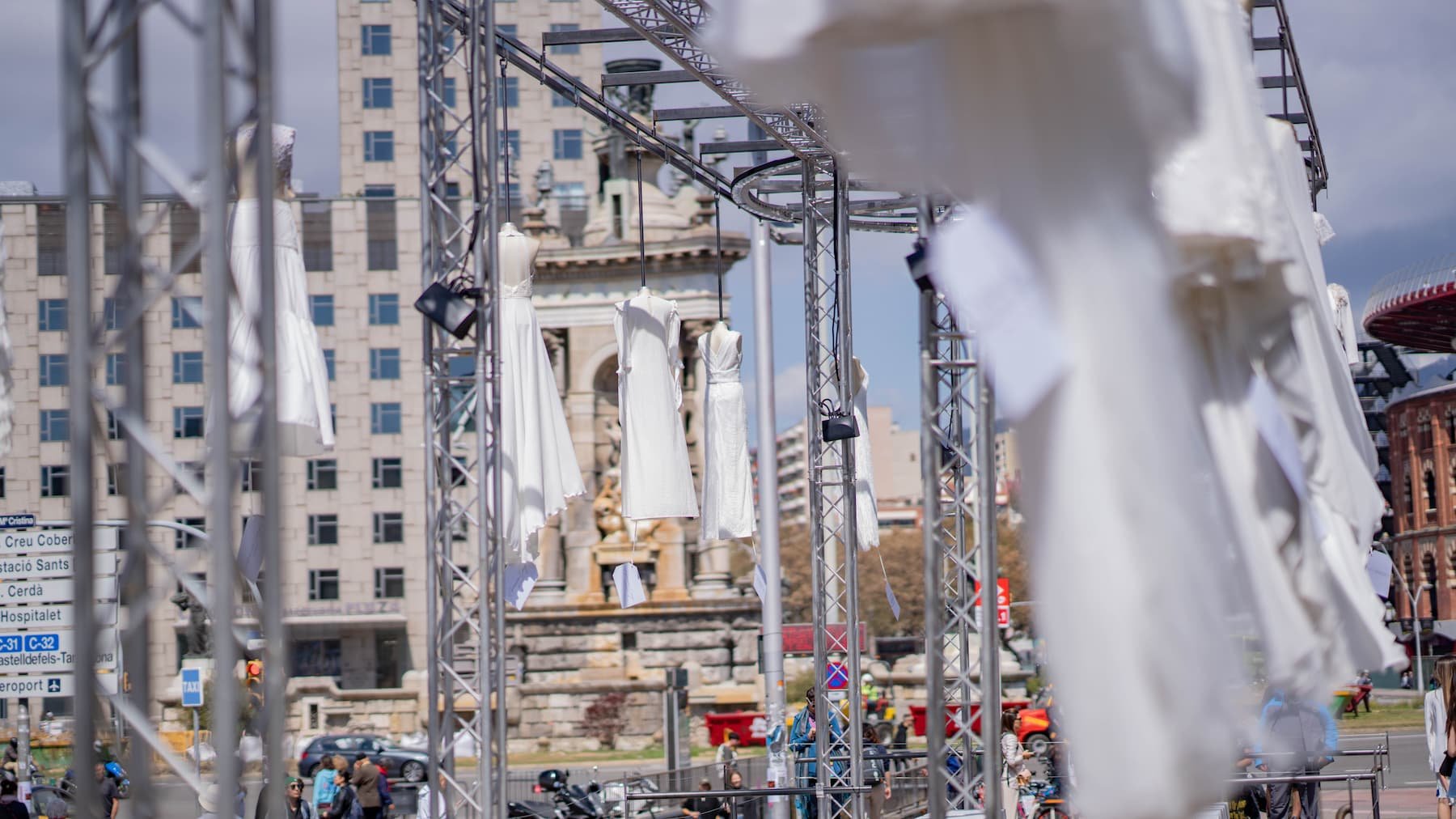
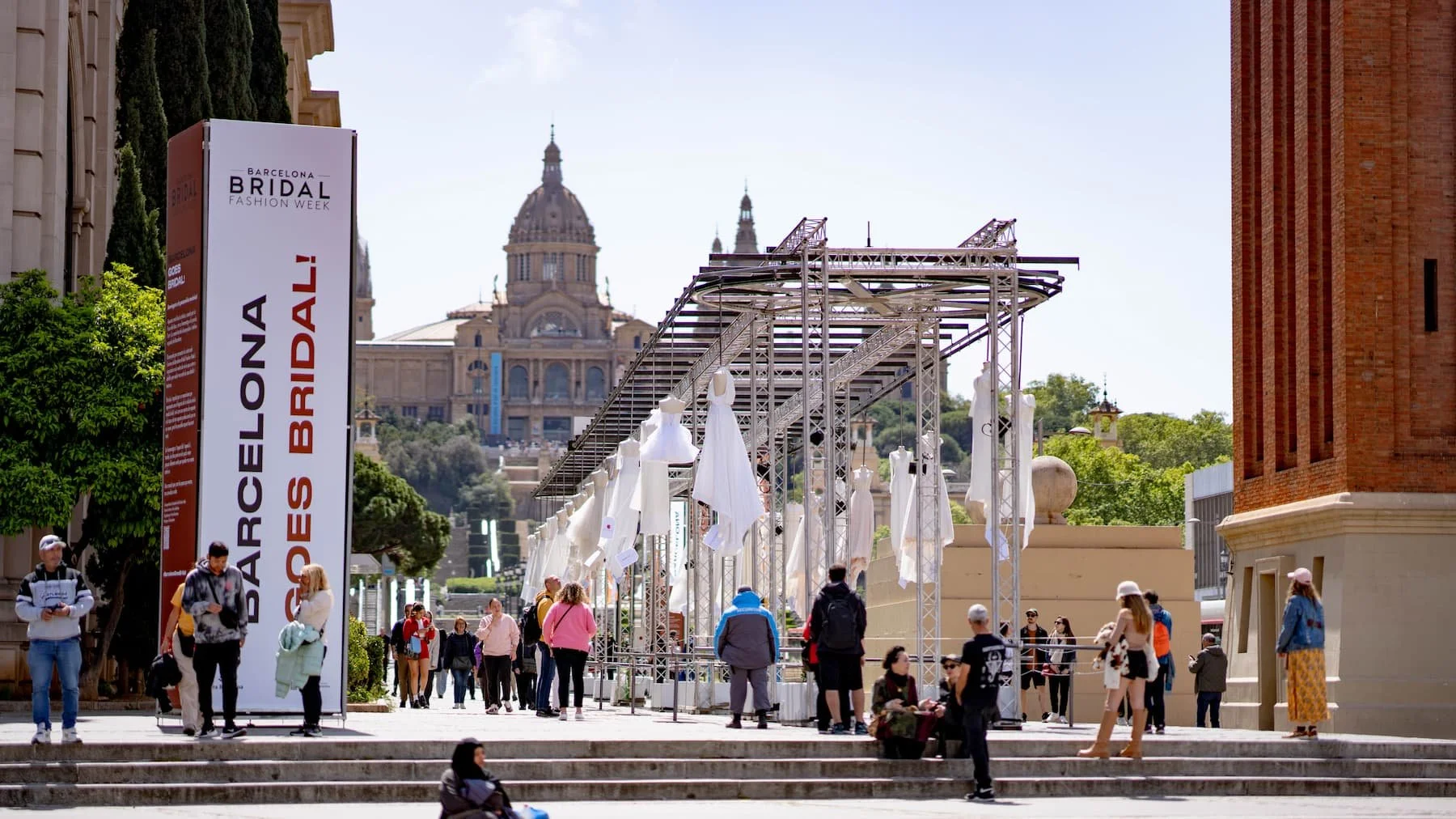
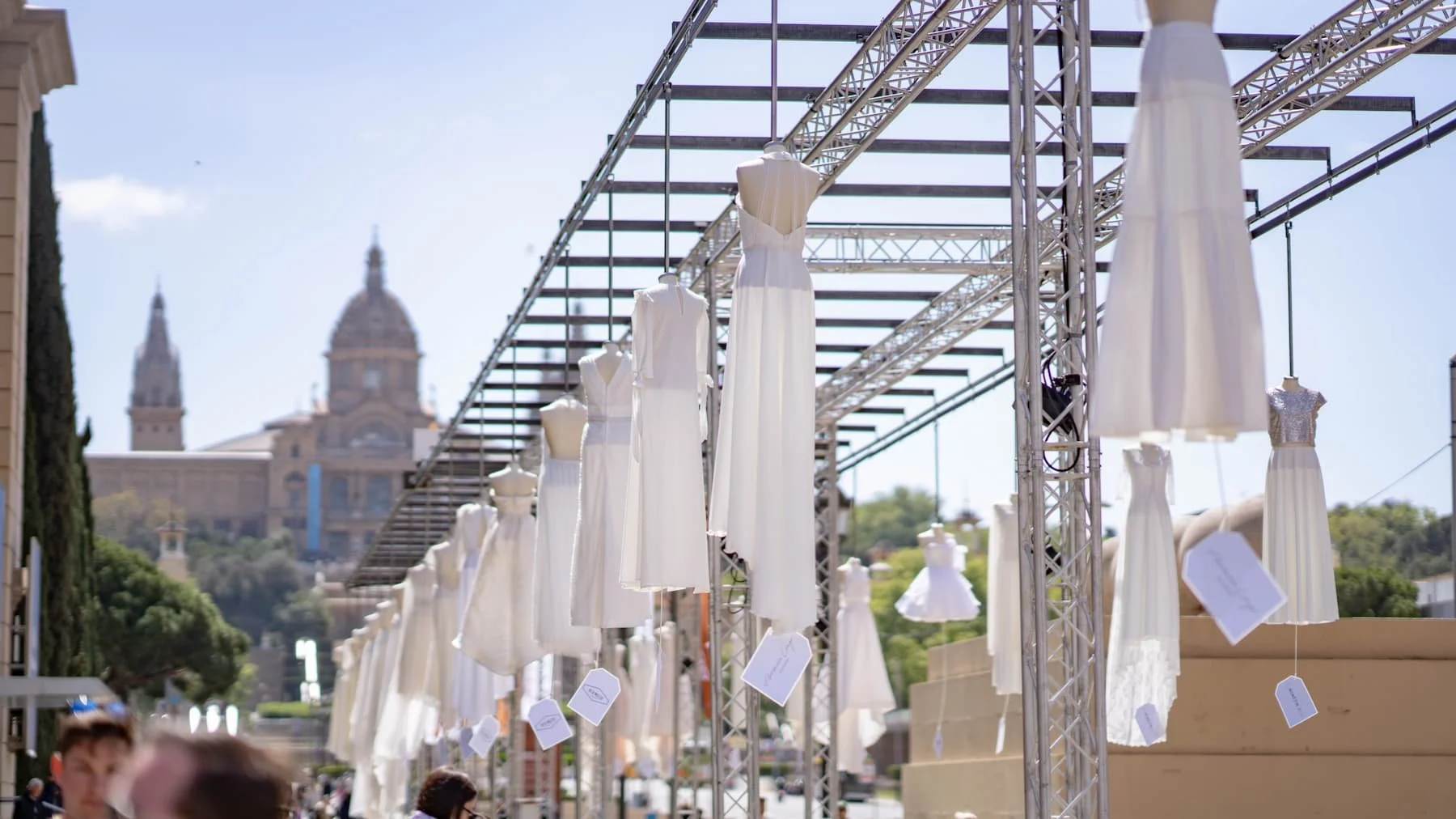
A long steel rig ran down the promenade, and hanging from it, high over the crowd, were dozens of white dresses. Wedding dresses, turning slow in the wind, each one on a headless form with a little paper tag swinging below it. Barcelona Bridal Fashion Week. The whole avenue had been turned into an open-air runway.
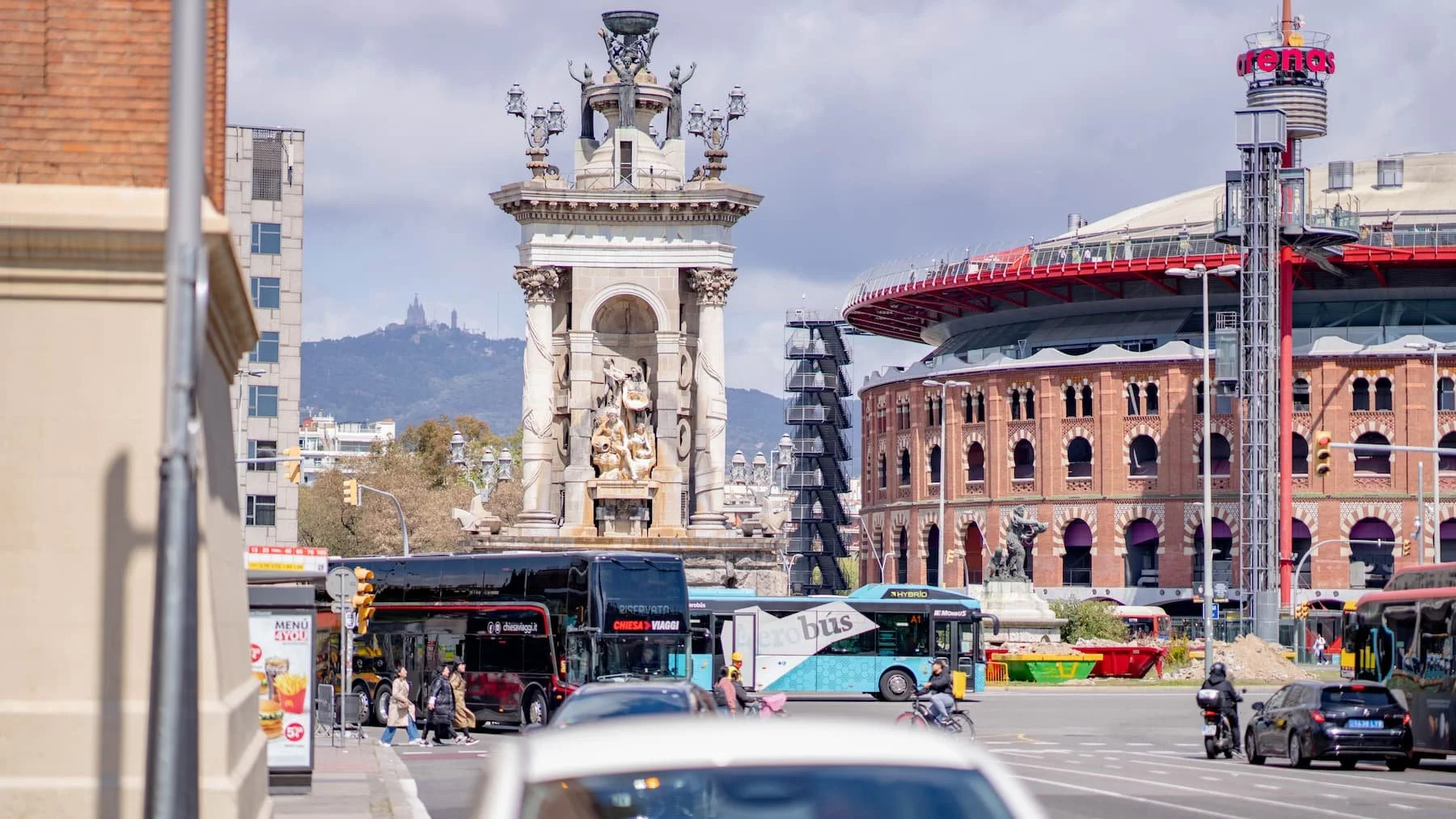
The monumental fountain at the center of Plaça d'Espanya, with the old Las Arenas bullring behind it, now a shopping center under its red rim. Buses and traffic fill the square below. Photo taken by Anthony Quintano
Plaça d'Espanya came next, loud and full of buses. The fountain column at the center, the twin brick towers, the Arenas dome with its red rim. Traffic everywhere. Aerobús, tour coaches, motorbikes threading the gaps. After a quiet morning on the hill it hit like a wall of noise.
I began to people watch in the busy circle, taking some street photography of the world passing around me. I crossed with everyone else, past a woman coming up out of the metro with her phone out, past travelers hauling bags to the station, past a backpacker stopped in the middle of it all with her face turned up to the sun. End of the line. Or the start of somebody else's day. Hard to tell in a busy hub like that.
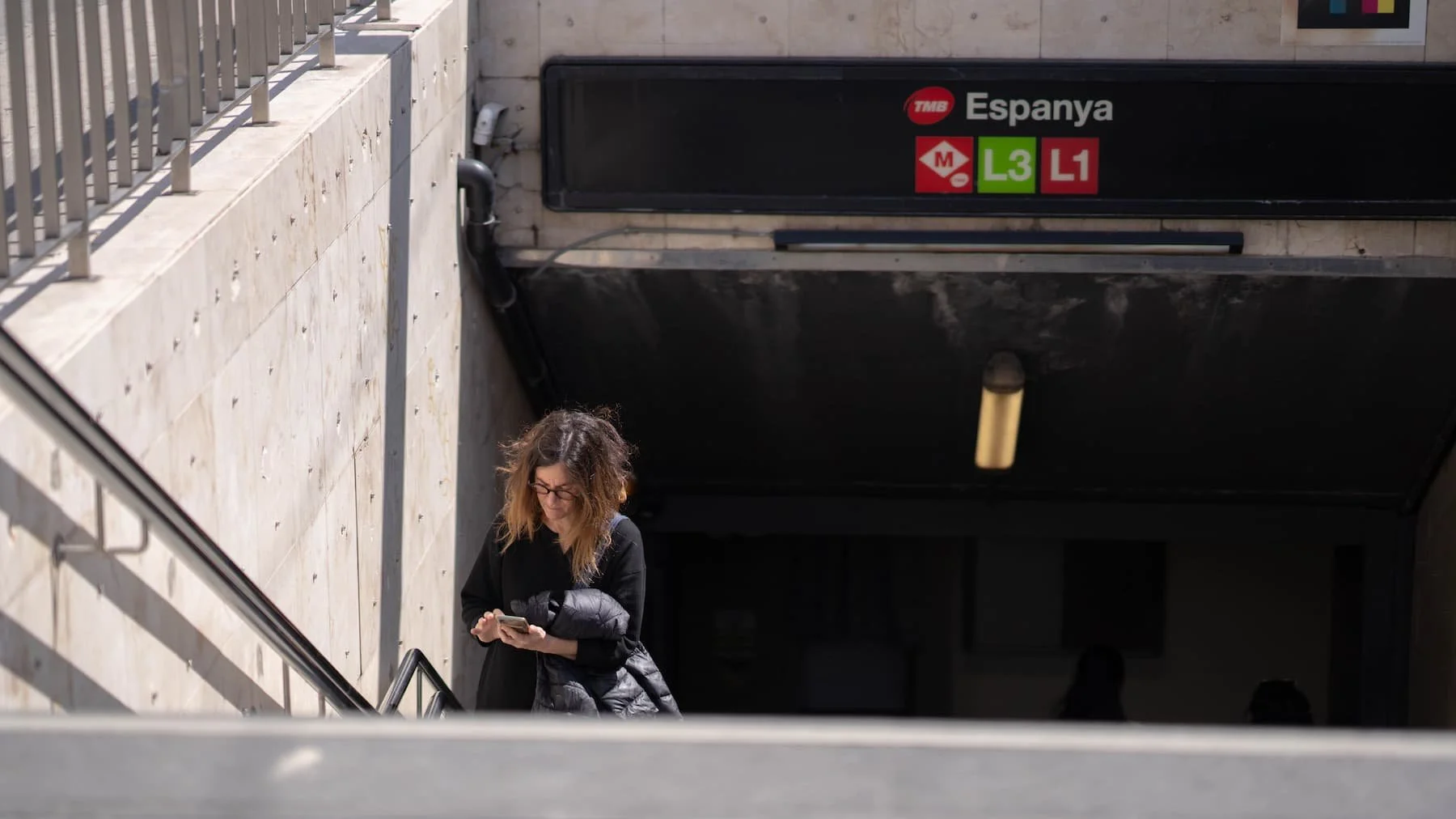
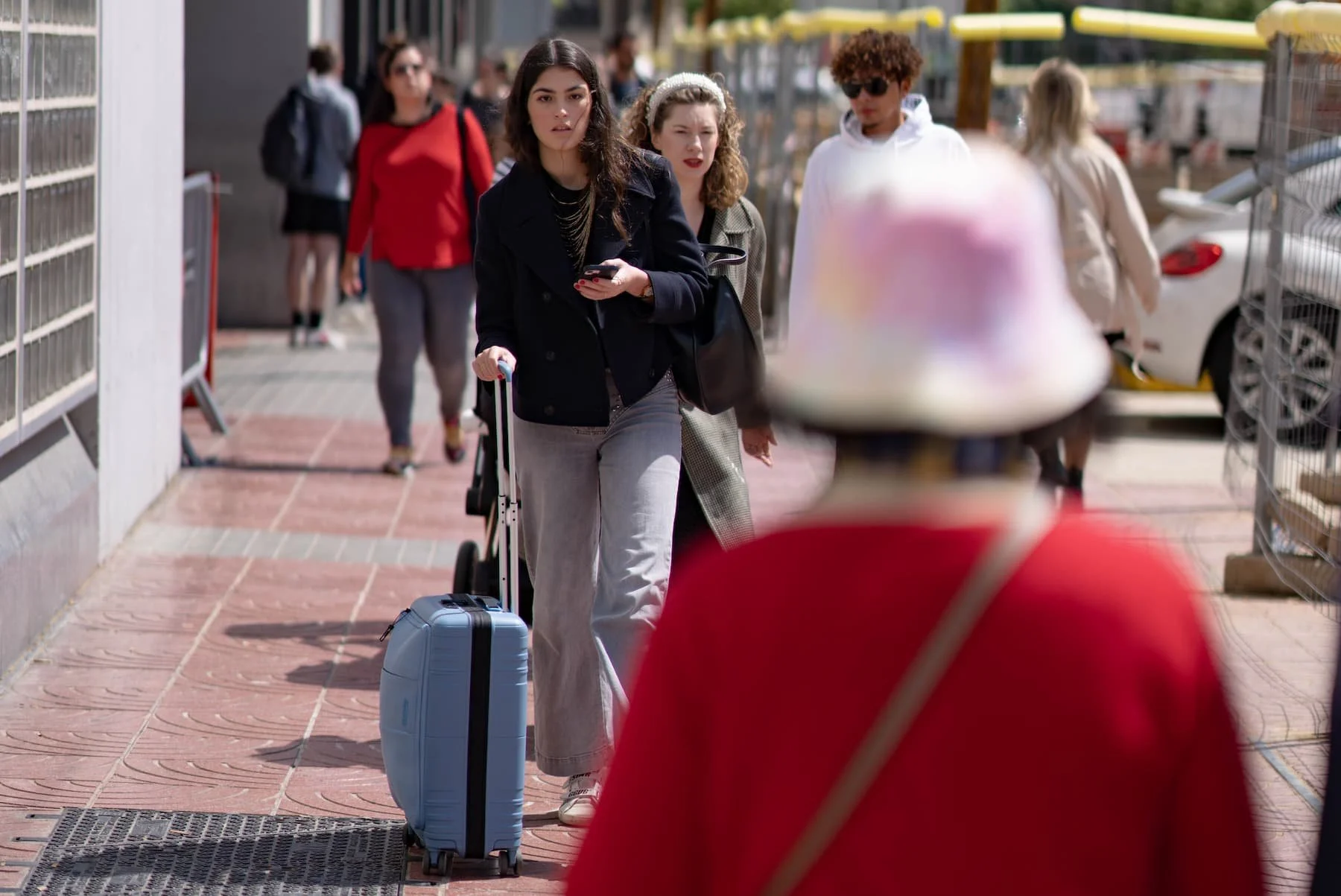
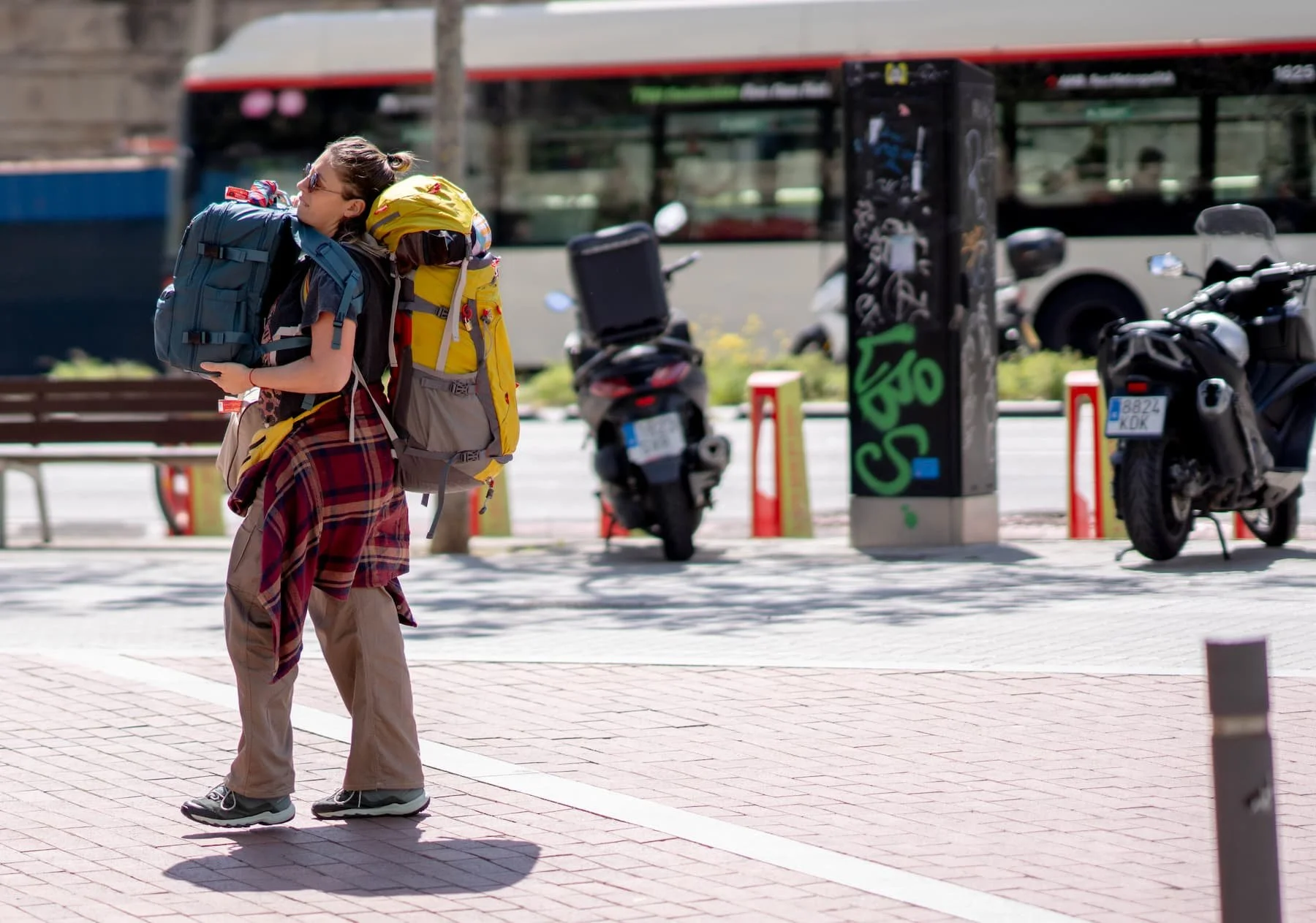
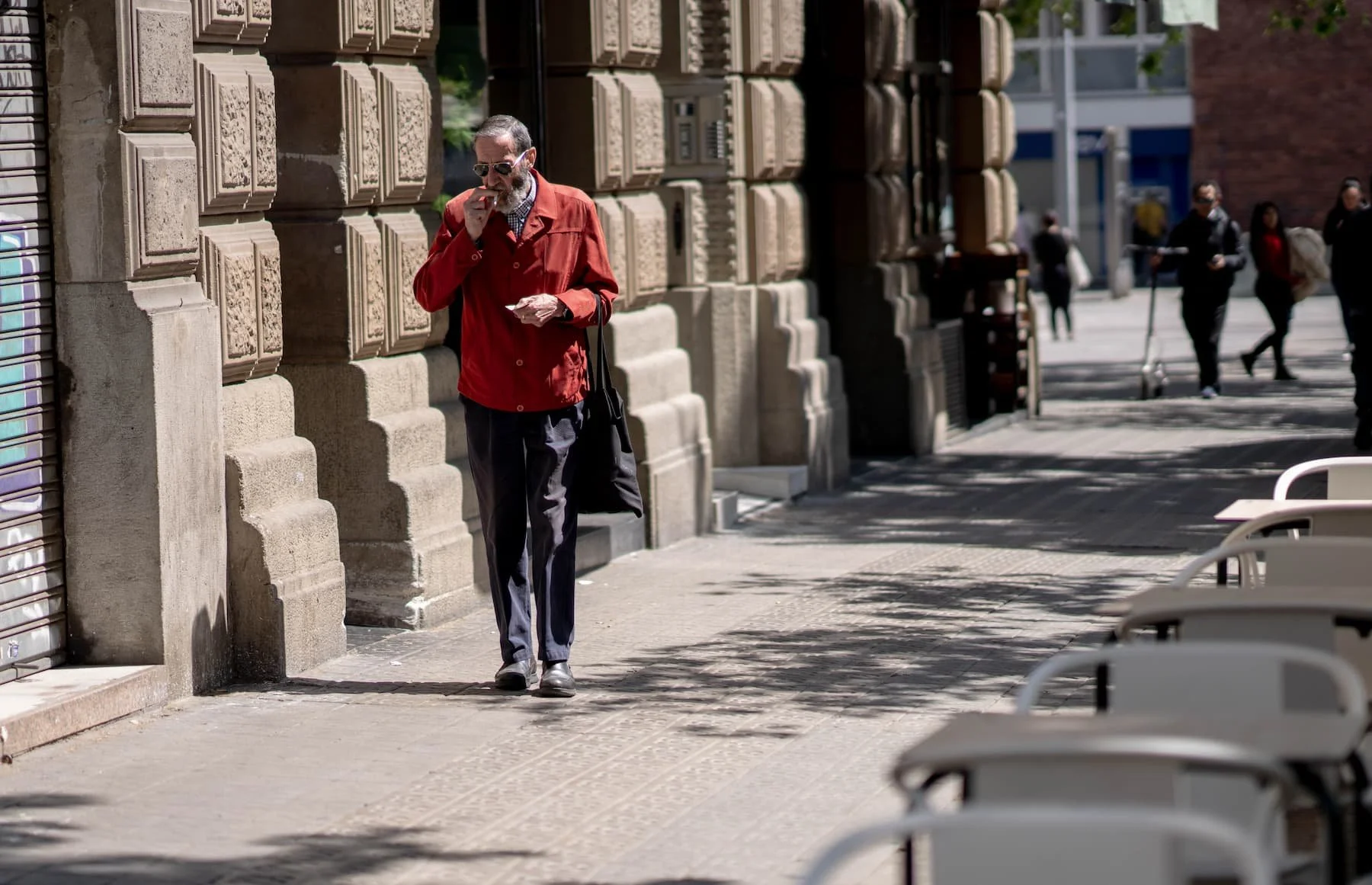
That was the end of my first full day in Barcelona. Sunrise on an empty beach, the back streets of a fishermen's quarter, a monument at the port, and a fortress on a hill, all of it on foot. The next day our adventure takes us to Montserrat.
Day Two
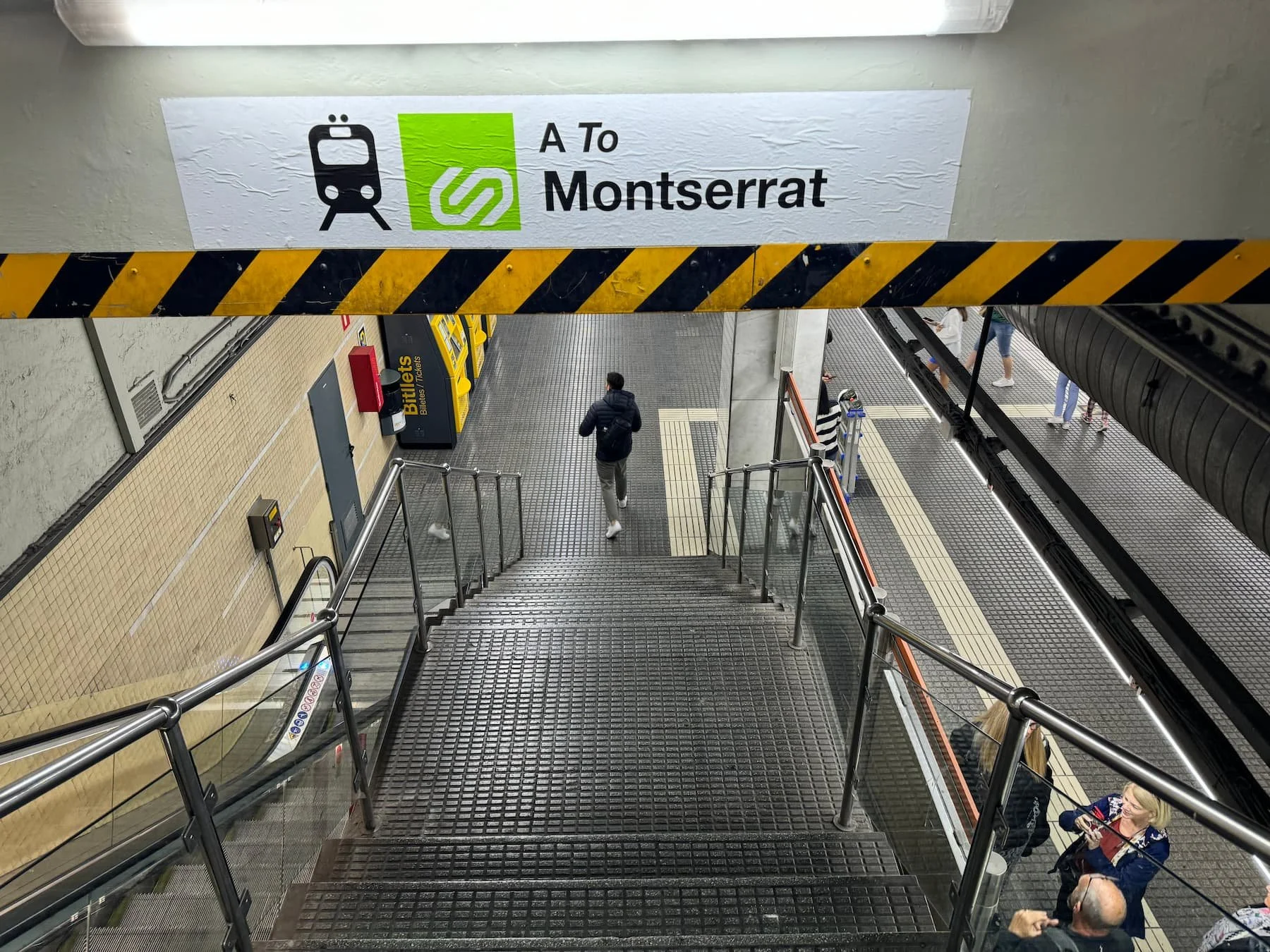
I created a separate blog post on our day trip to Montserrat. Read it here:
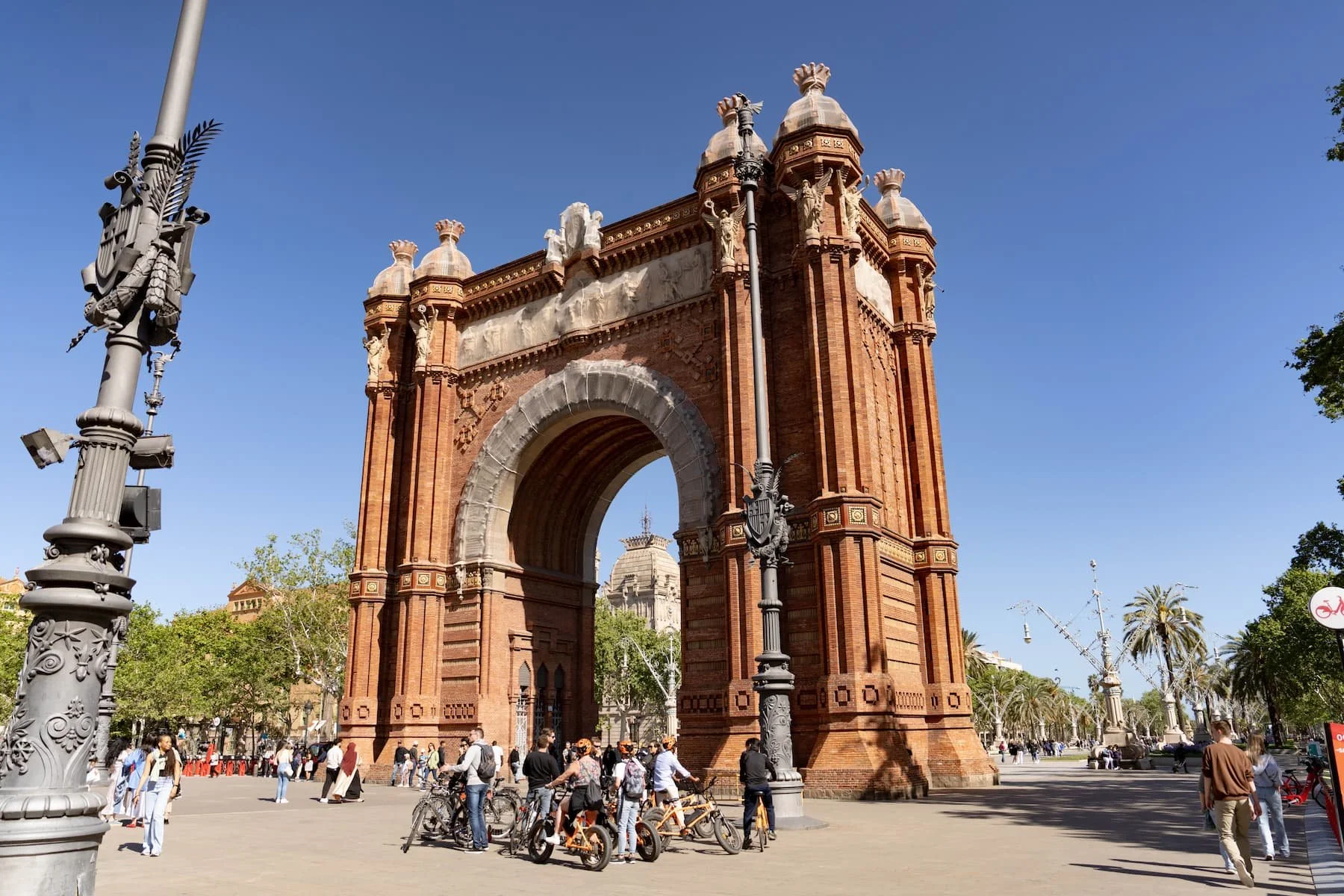
The Arc de Triomf is a triumphal arch in the city of Barcelona, in Catalonia, Spain. It was built as the main access gate for the 1888 Barcelona Universal Exposition and was designed by the architect Josep Vilaseca i Casanovas. The arch is constructed in reddish brick in the Neo-Mudéjar style, a revivalist form that drew on Moorish and Islamic decorative traditions, rather than the stone typically used for triumphal arches in other European cities. It stands at the head of the Passeig de Lluís Companys, a wide promenade lined with palm trees that connects the arch to the Parc de la Ciutadella.
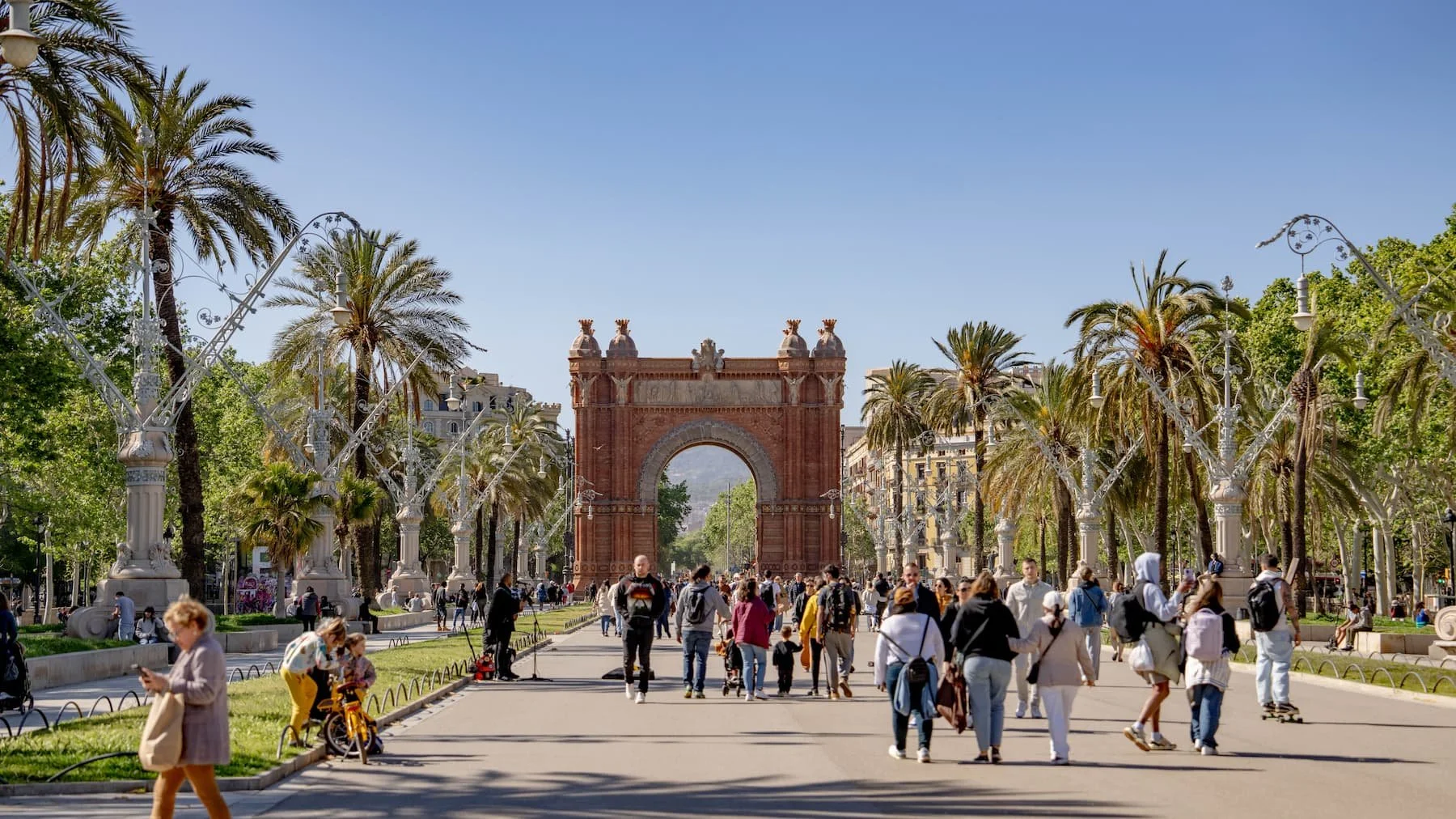
The structure is decorated with an extensive sculptural program by several Catalan artists. The main frieze on the front facade, facing the promenade, represents Barcelona welcoming the nations to the exposition. Additional reliefs and winged figures appear on the upper sections, and the corners are topped with crown-shaped pinnacles. The wrought-iron lampposts along the adjoining promenade incorporate the coat of arms of Barcelona. The Arc de Triomf is considered a notable example of the Catalan Modernisme period and is one of the recognized landmarks of the city.
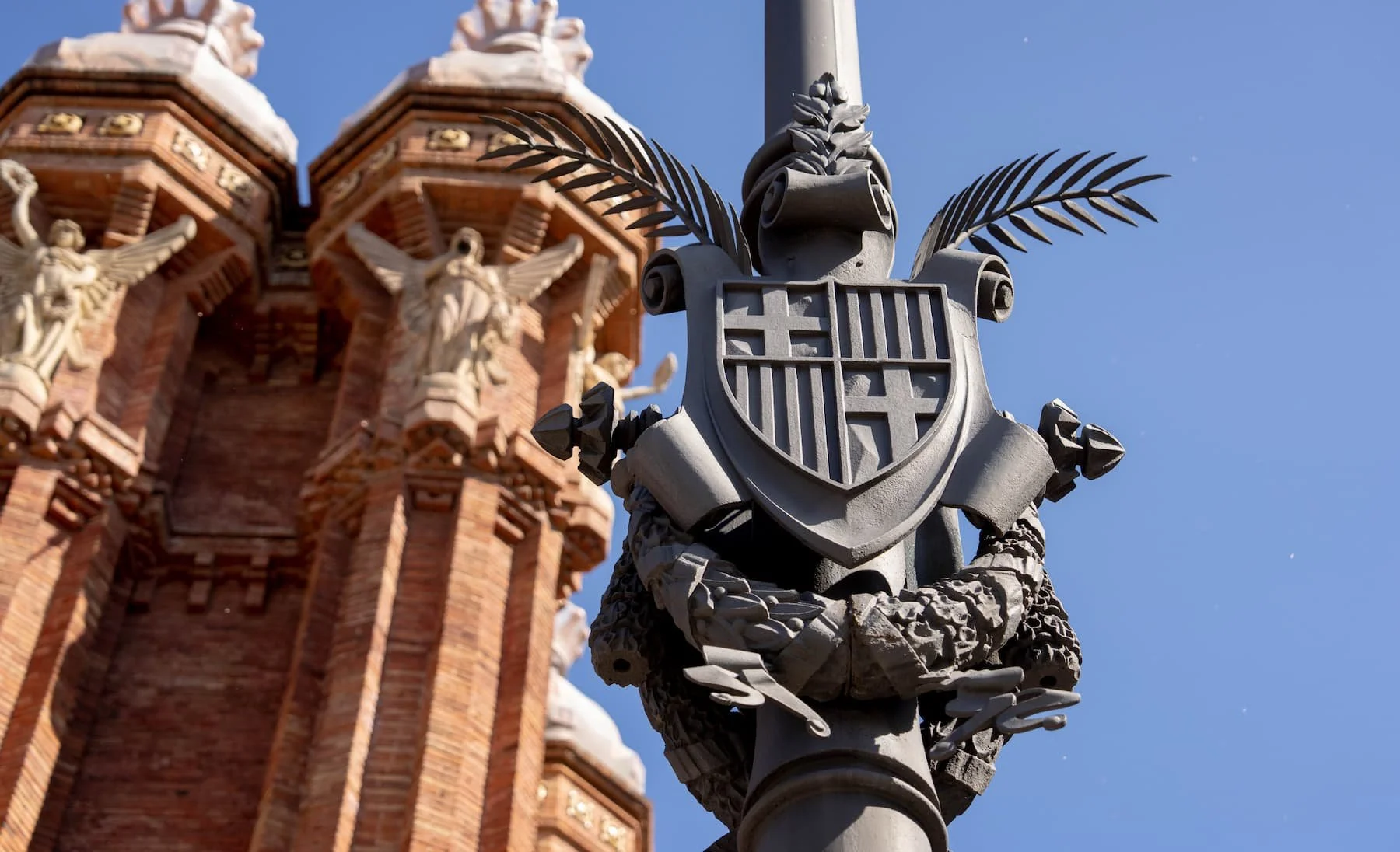
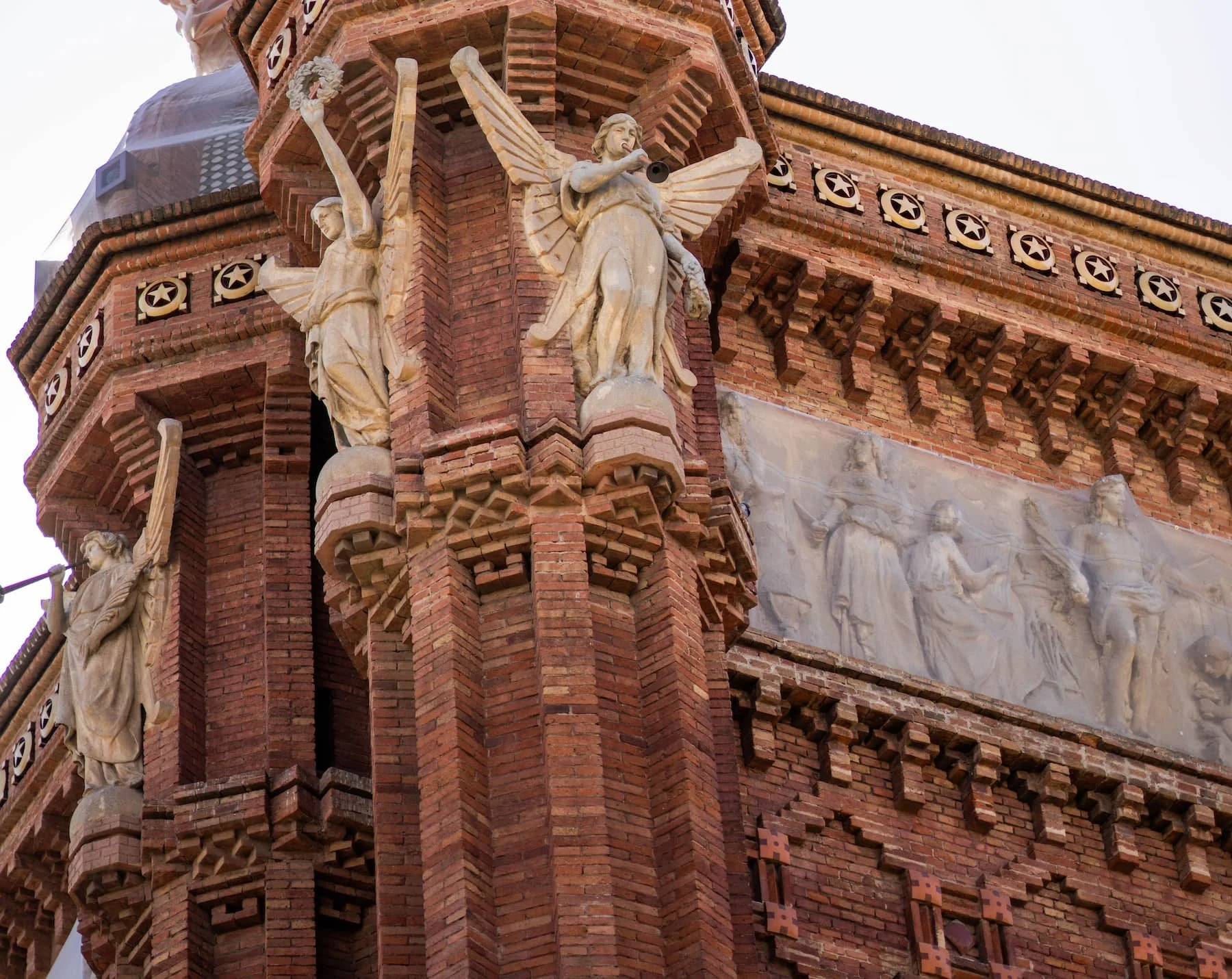
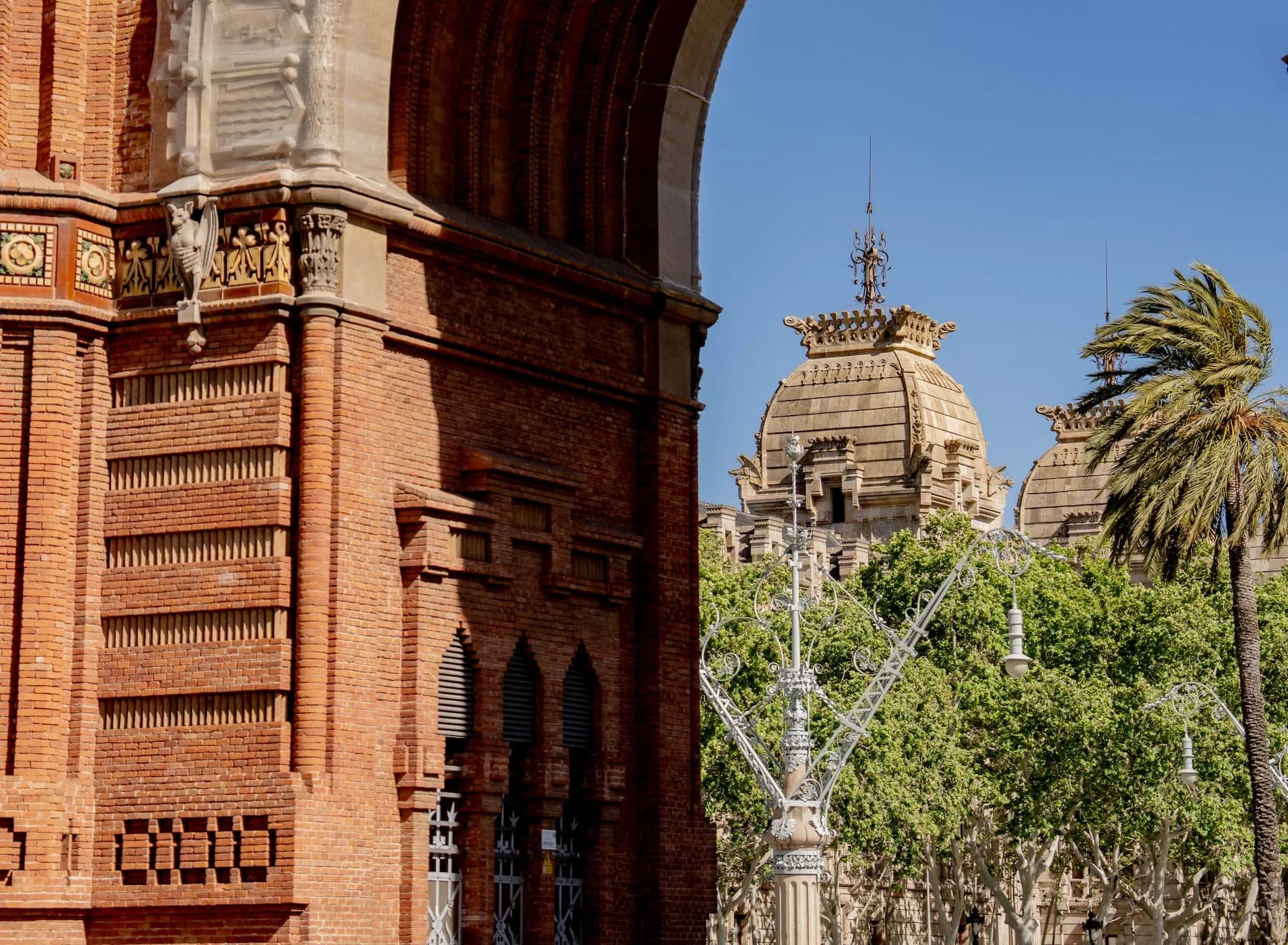
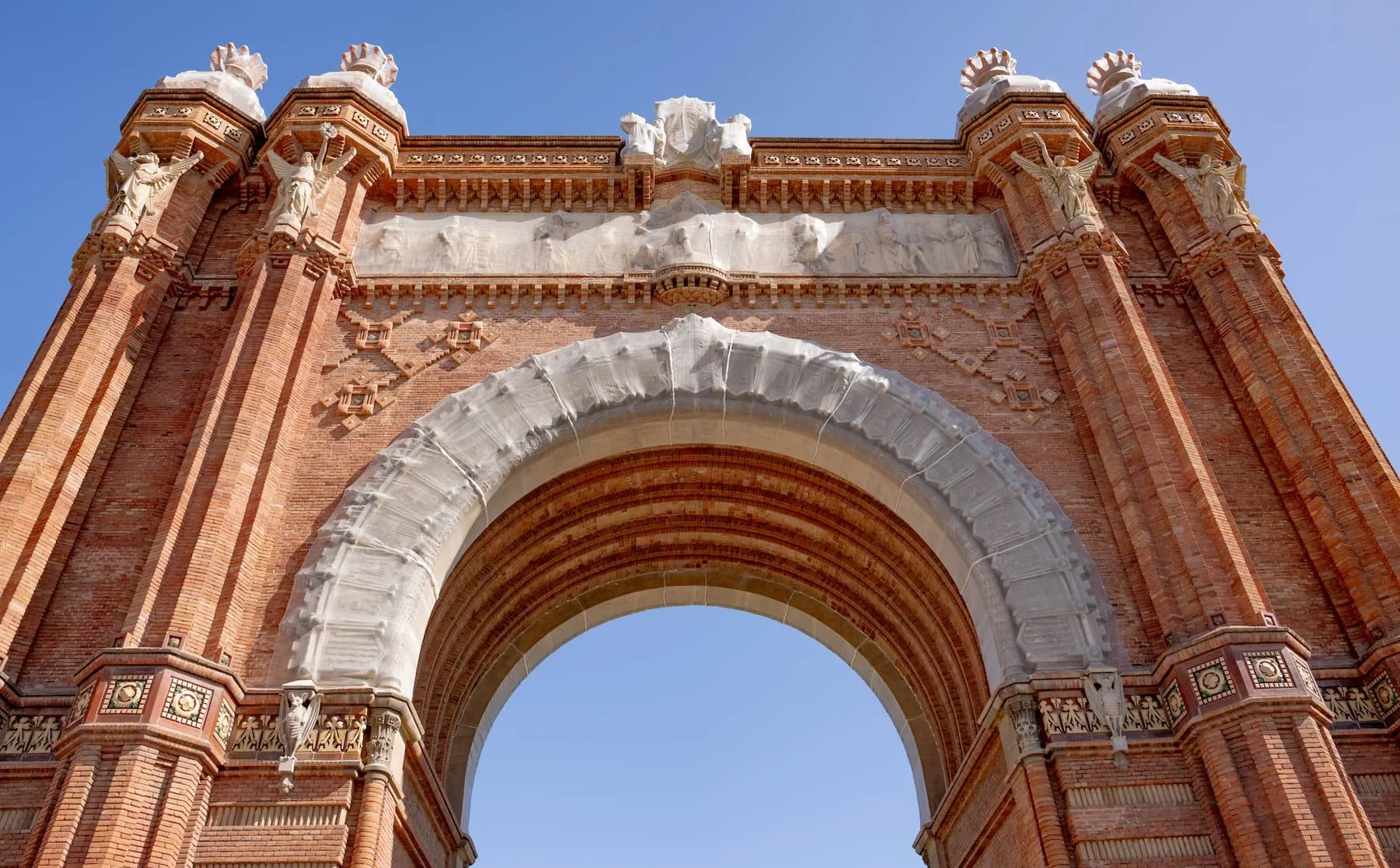
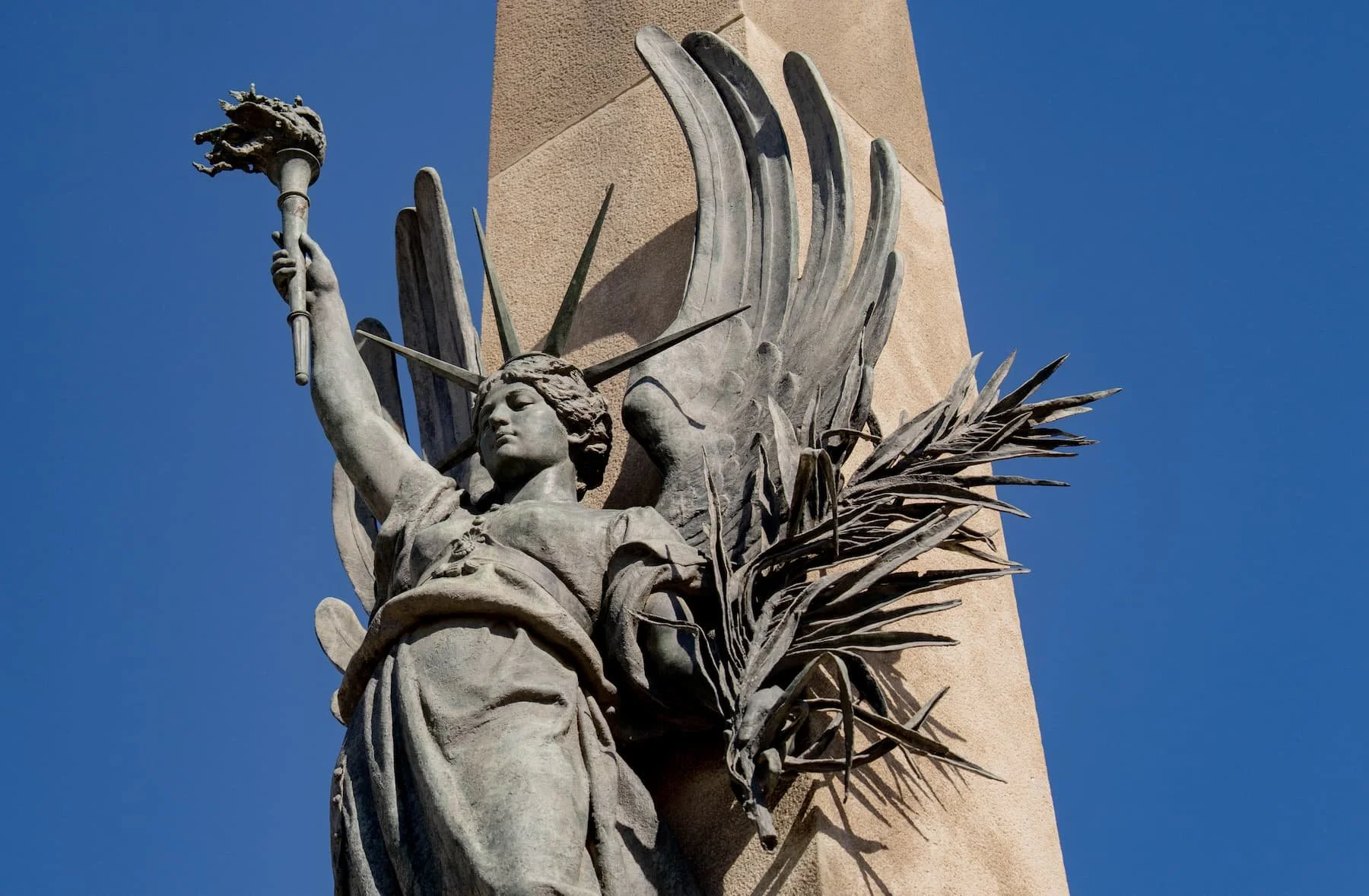
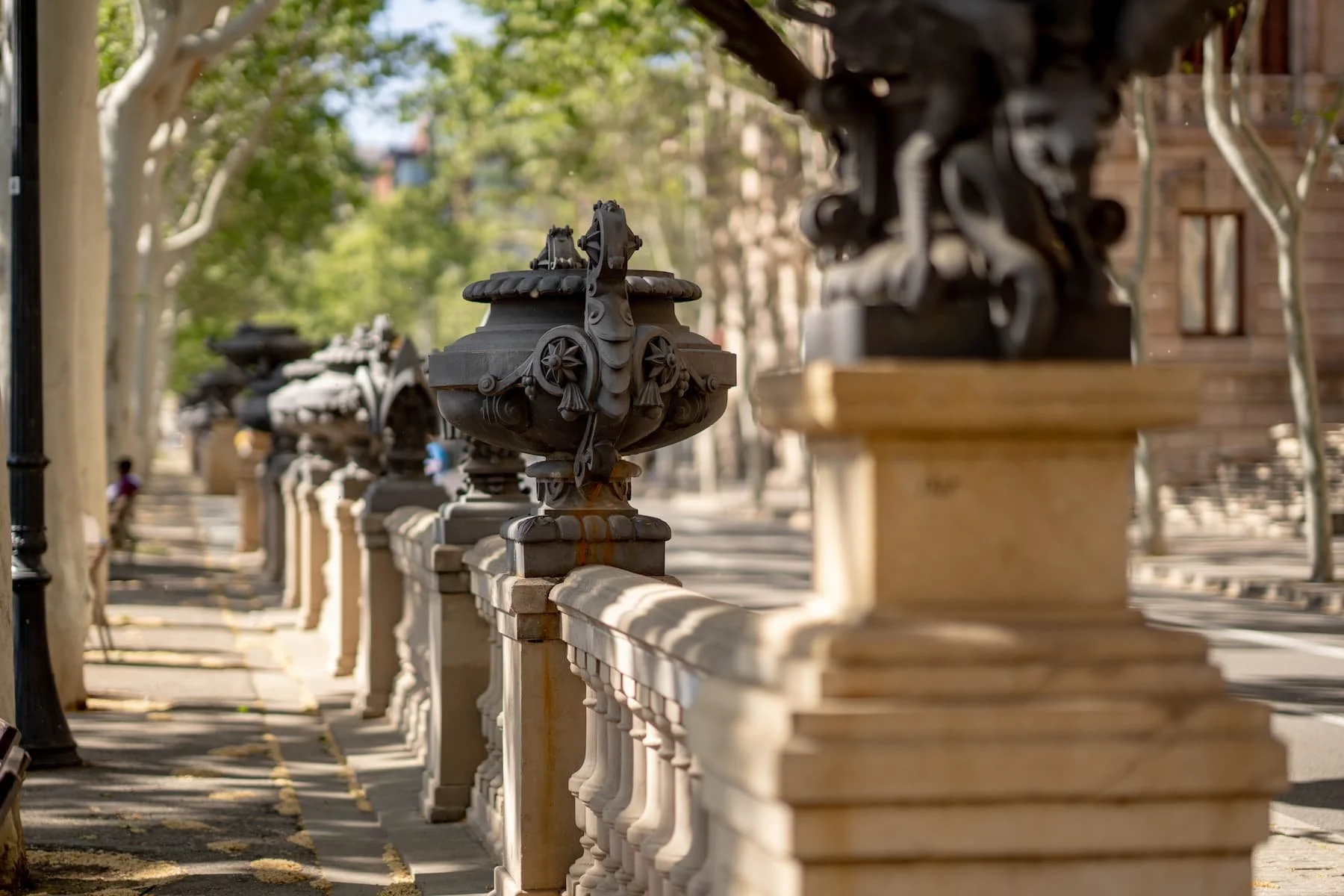
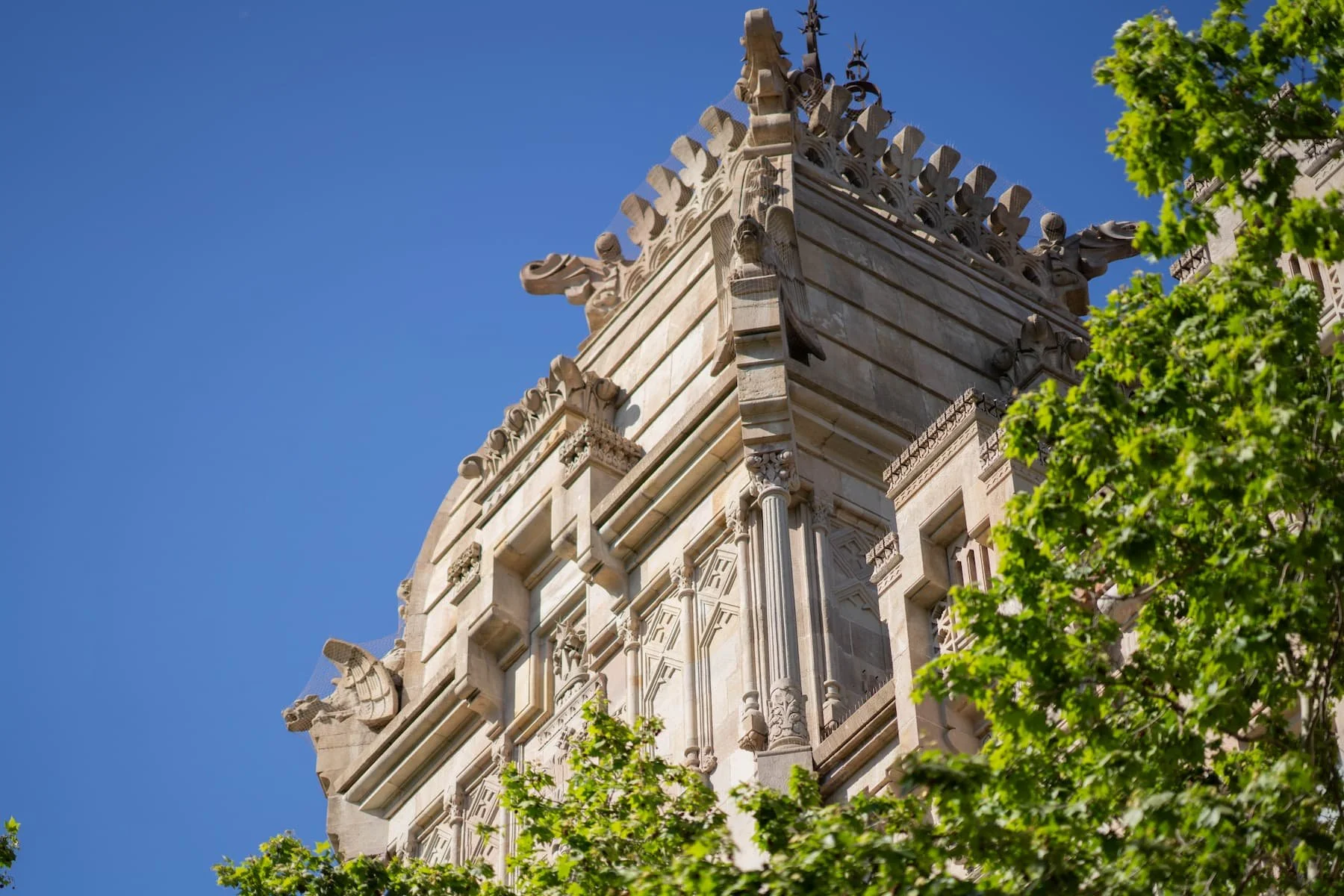
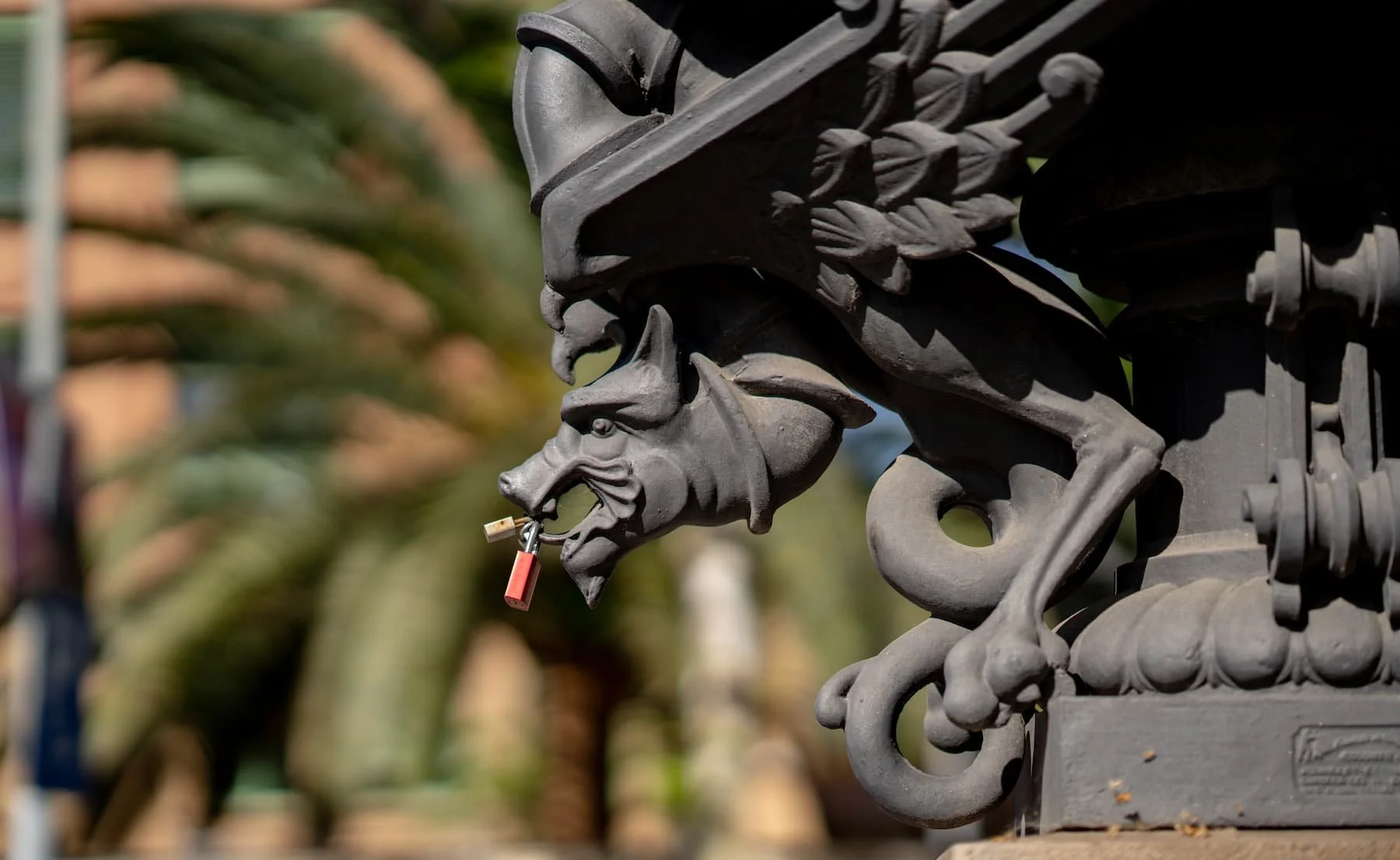
The area surrounding the Arc de Triomf, along the Passeig de Lluís Companys and adjacent to the Parc de la Ciutadella, contains a number of decorative and sculptural elements characteristic of the late 19th-century development of the site. Among them is a bronze allegorical figure, winged and bearing a raised torch with a palm frond across the chest, a motif commonly associated with monuments of the period. The promenade is bordered by a stone balustrade punctuated at intervals by cast-iron urns decorated with coiled dragon forms. Nearby buildings display ornamented upper stories incorporating carved stonework, colonnettes, gargoyles, and wrought-iron cresting. A bronze figure in robes, depicted in an upraised gesture, stands near the base of the arch. The ornamental lampposts along the promenade include cast-iron dragon figures at their bases; one such figure has become the site of a "love lock", a padlock left by visitors, a practice observed at various public landmarks.
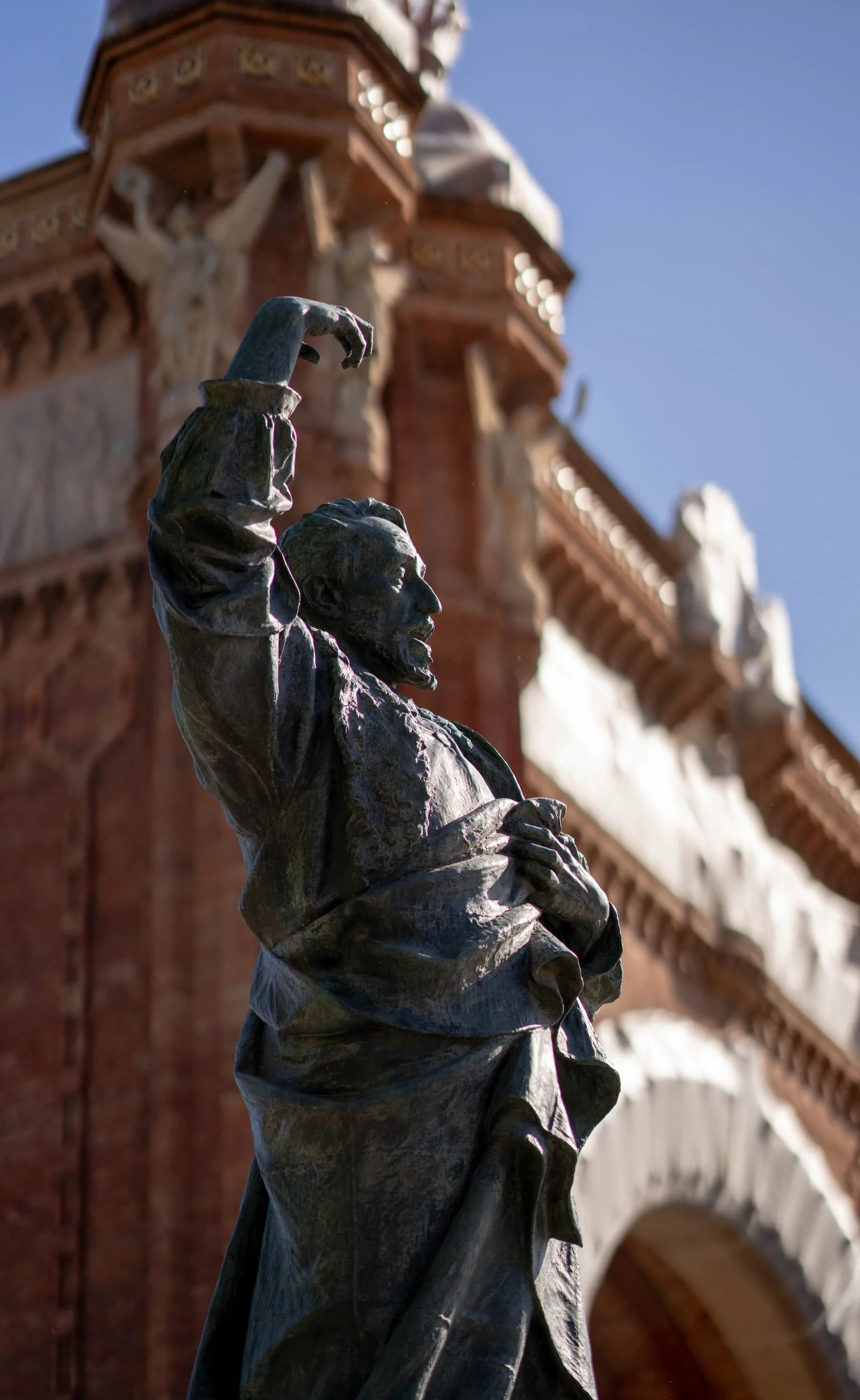
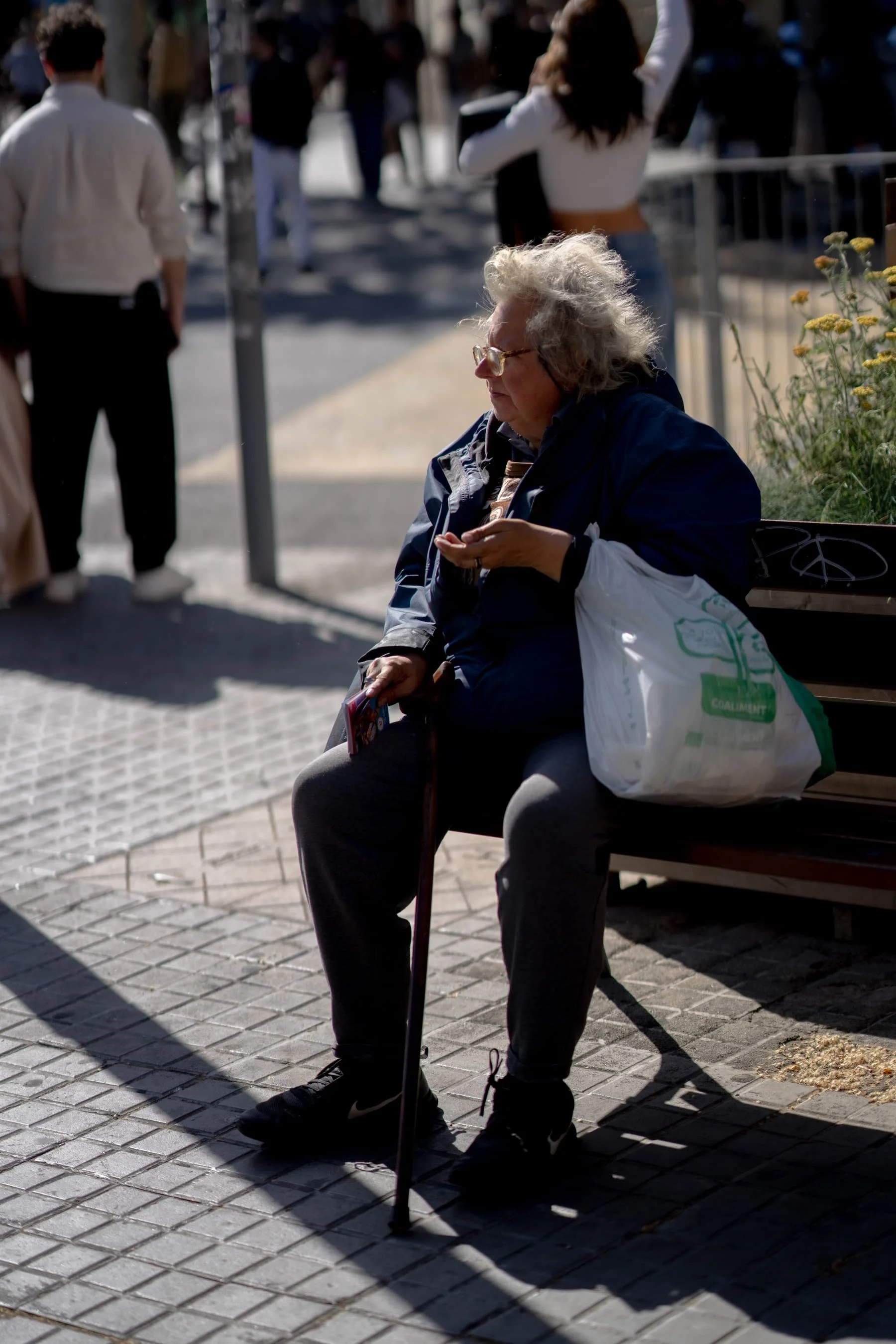
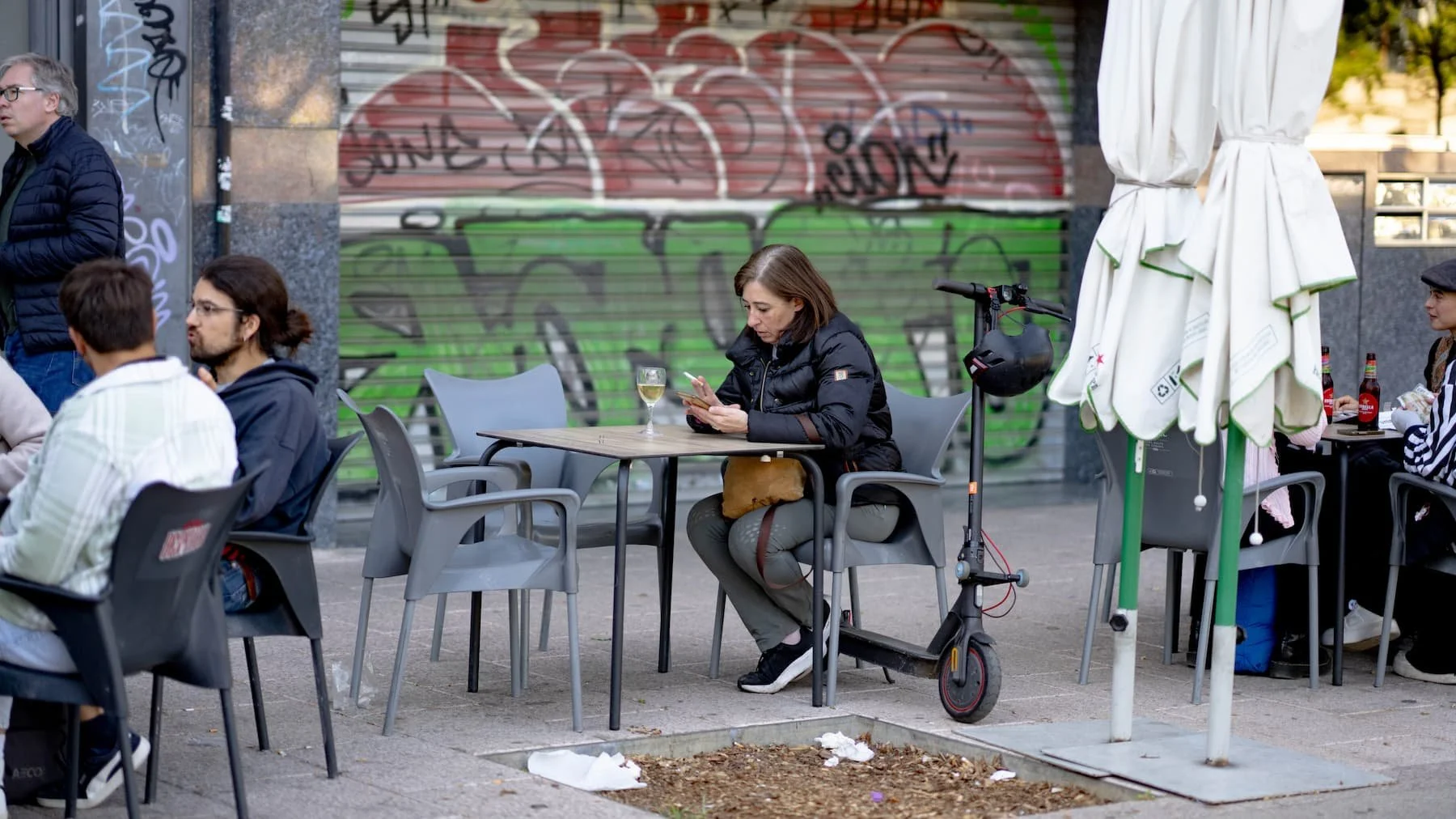
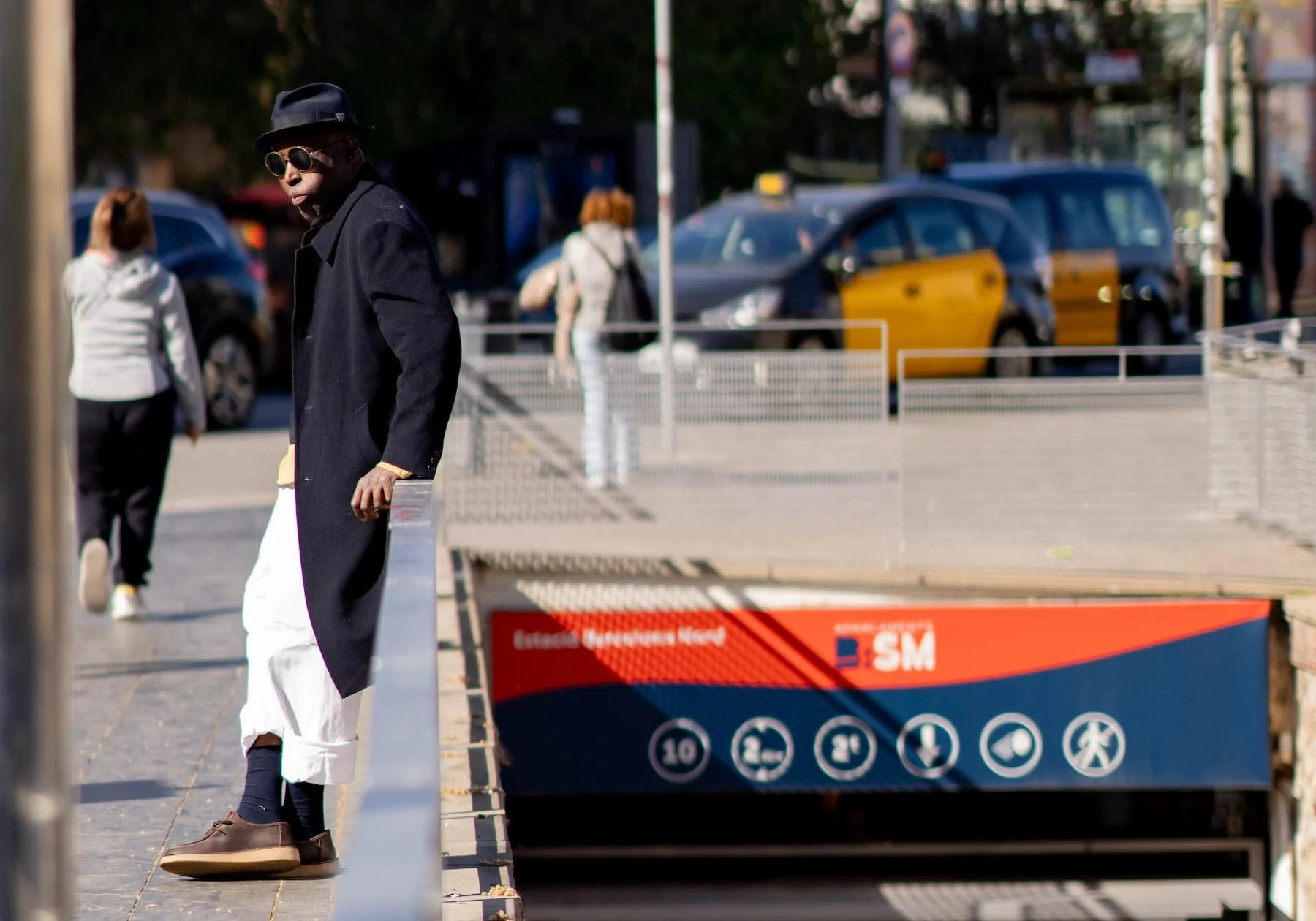
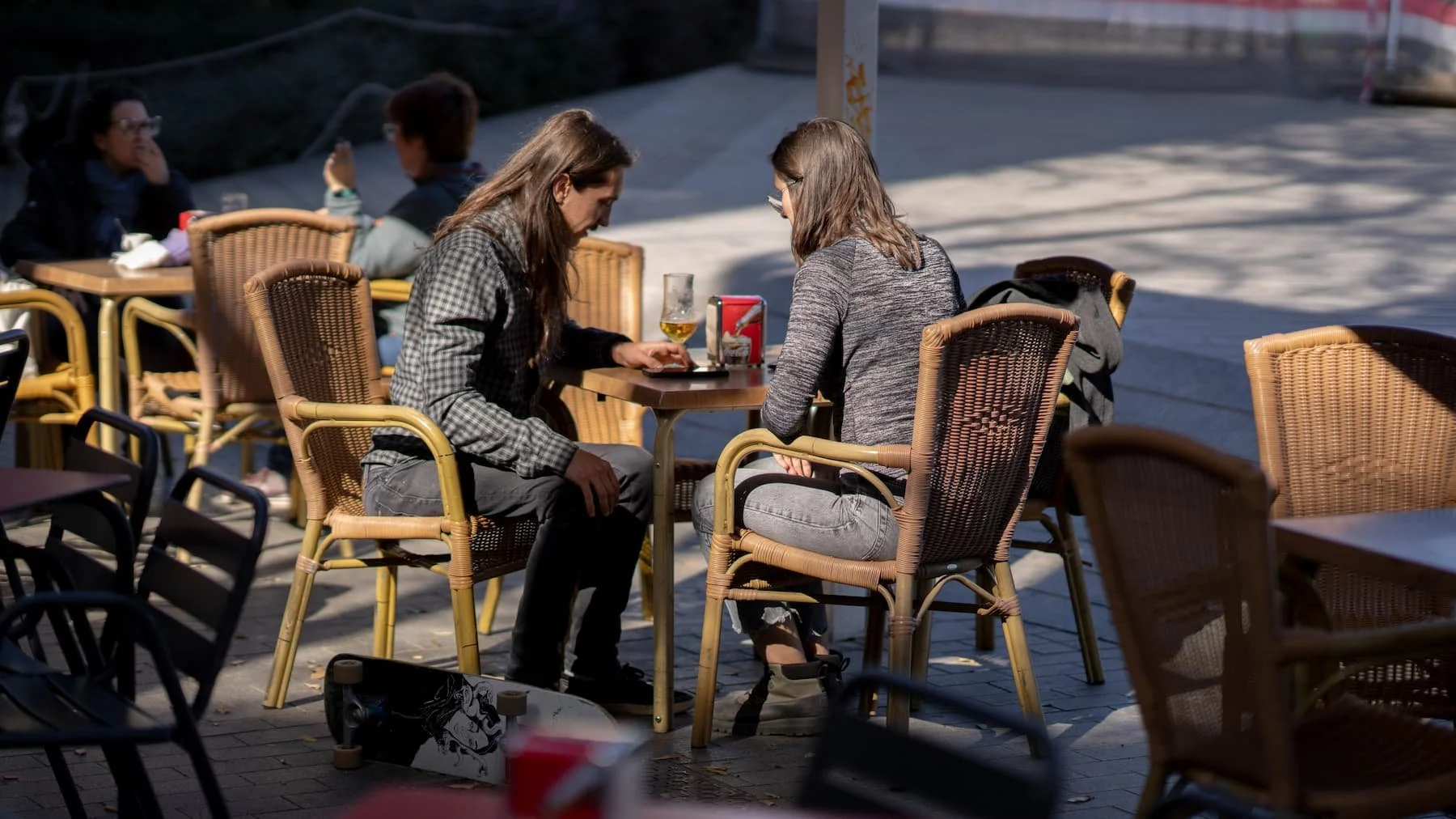
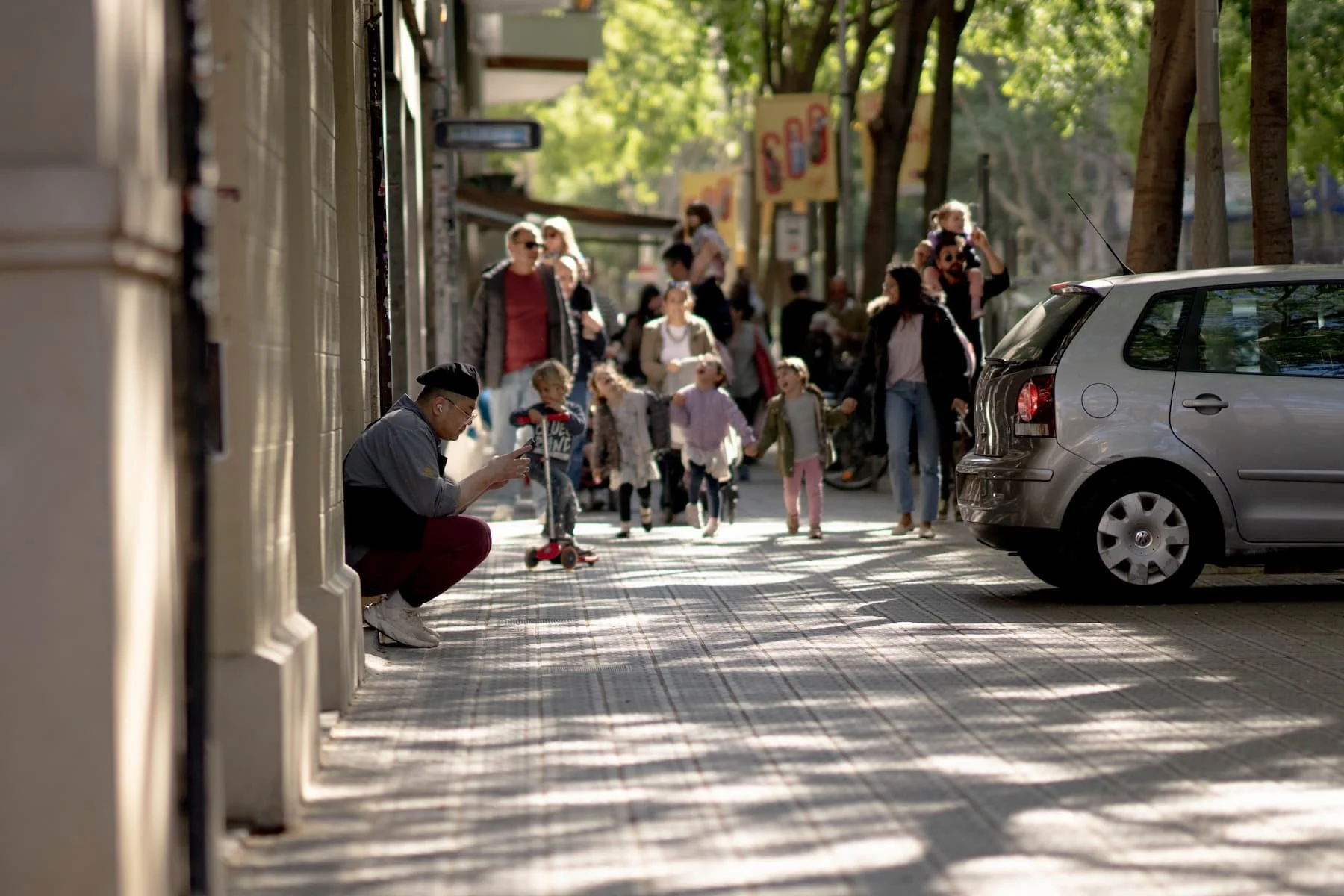
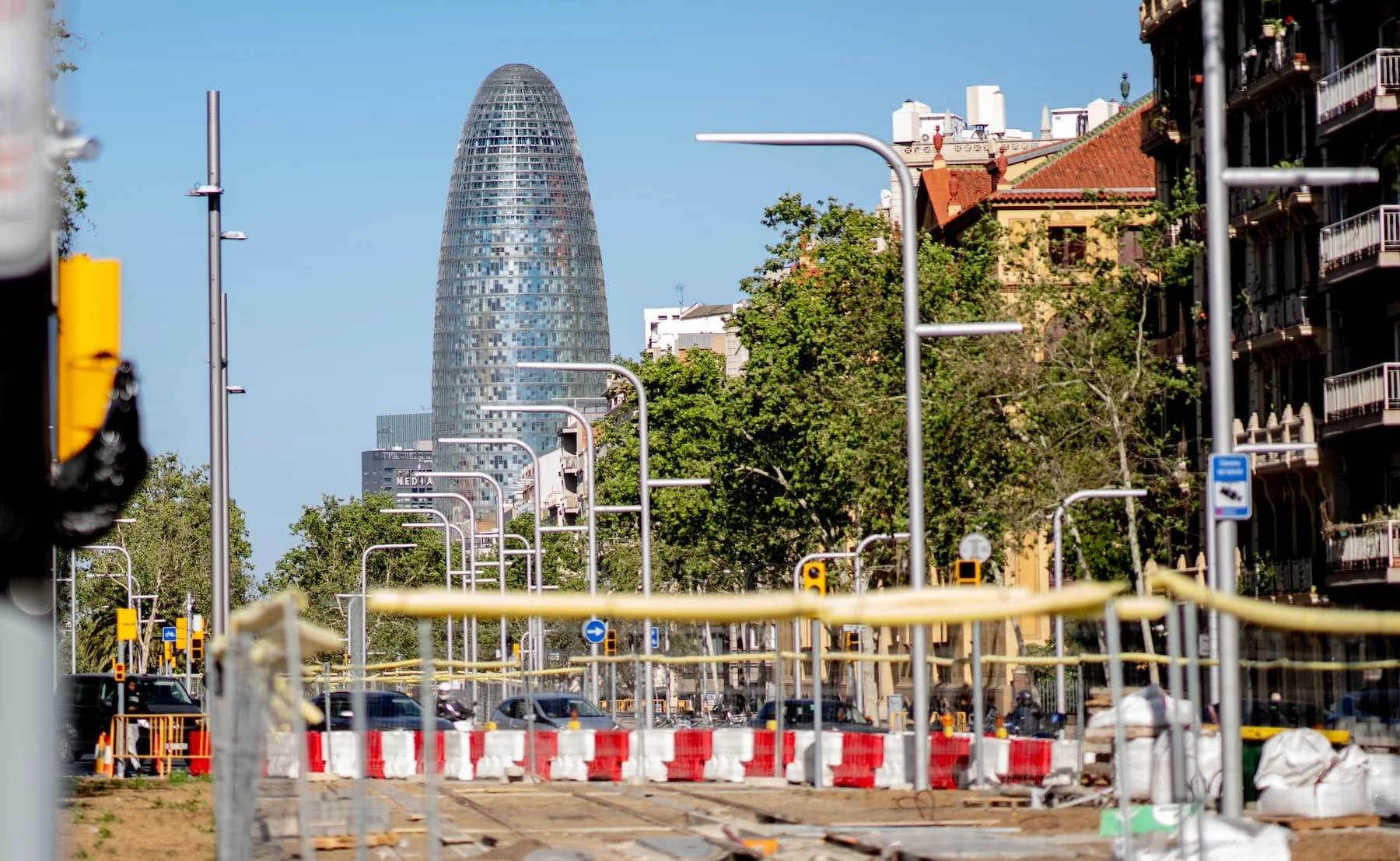
When the monuments are behind you and the light starts to soften, the city itself becomes the subject. I put the wide lens away and just walked. Now is my favorite part, to people watch and capture the personality of the human occupants of this city. An older woman rests on a bench with her cane and a shopping bag, watching the crowd move past. A woman checks her phone at a cafe table with her scooter parked at her knee. A man in a dark coat and hat pauses by the metro stairs, dressed like the whole street is his to own. A couple leans in close over one beer, a skateboard resting under the table. A guy crouches against a wall while a pack of kids comes running down the sidewalk behind him, all noise and motion. And off in the distance, framed by construction fencing and a row of street lamps, the Torre Glòries rises over it all. None of these are the shots people fly to Barcelona for. But this is the stuff I love to capture. The quiet in between moments, where the real life of a place actually lives.
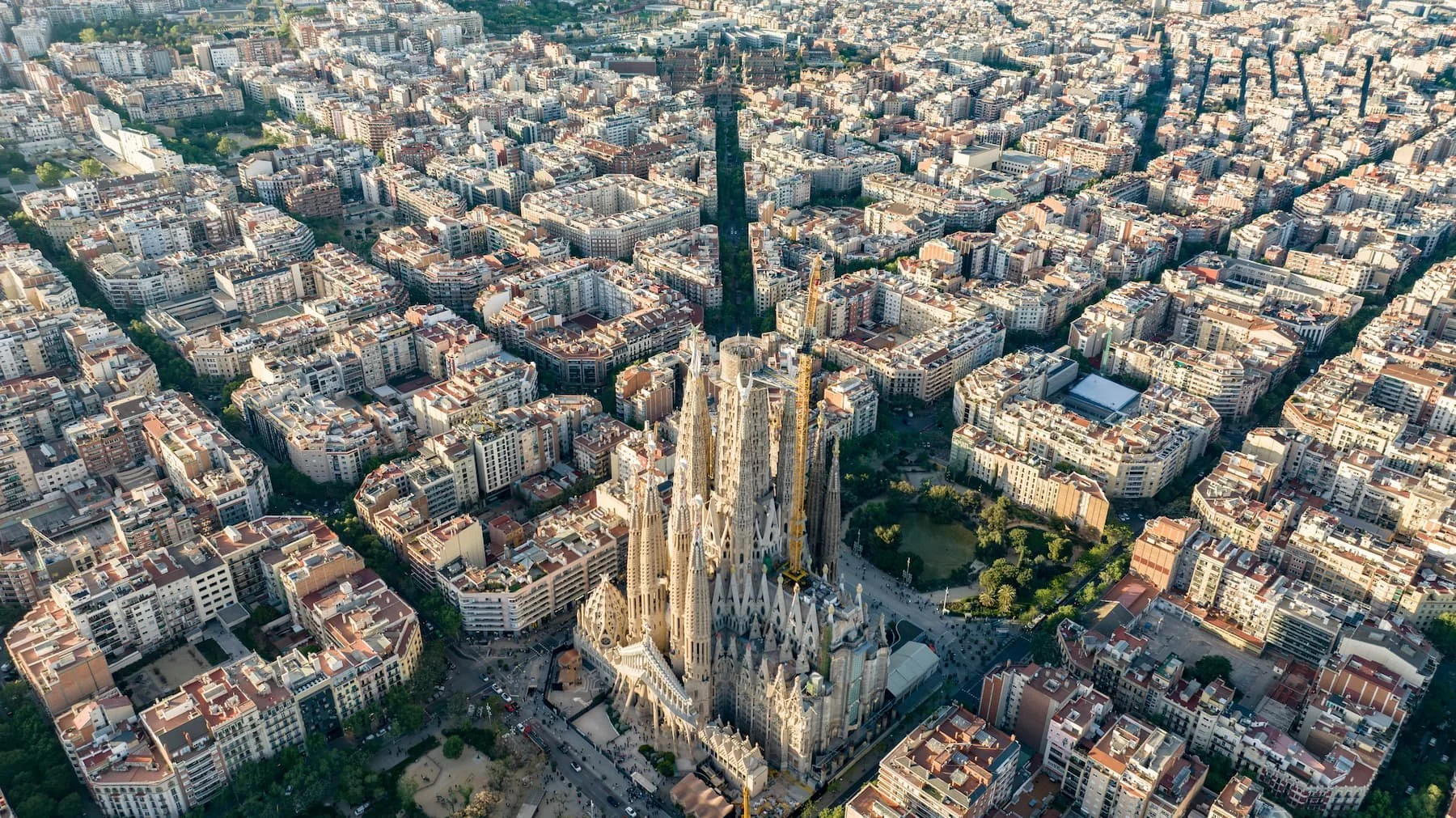
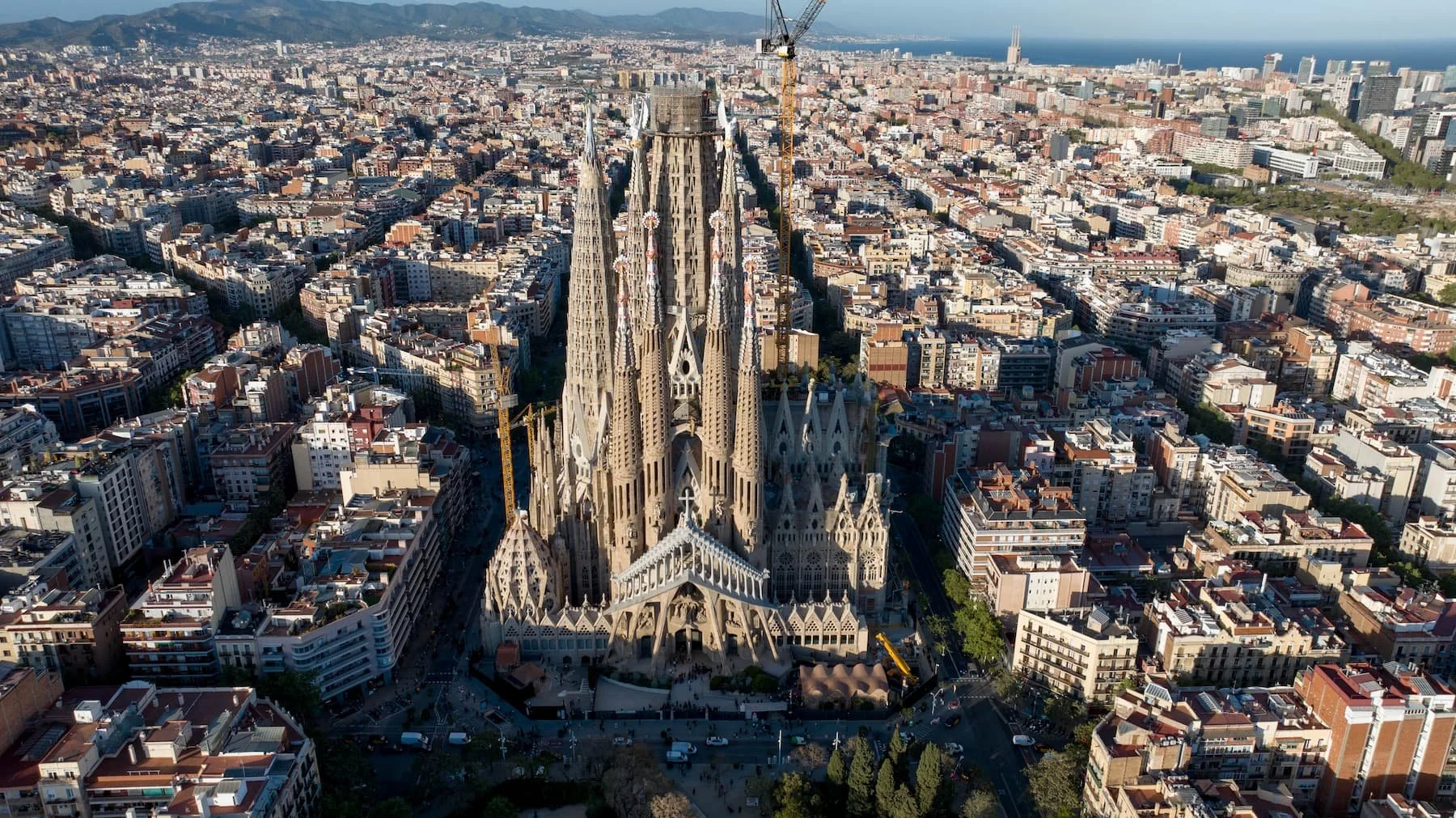
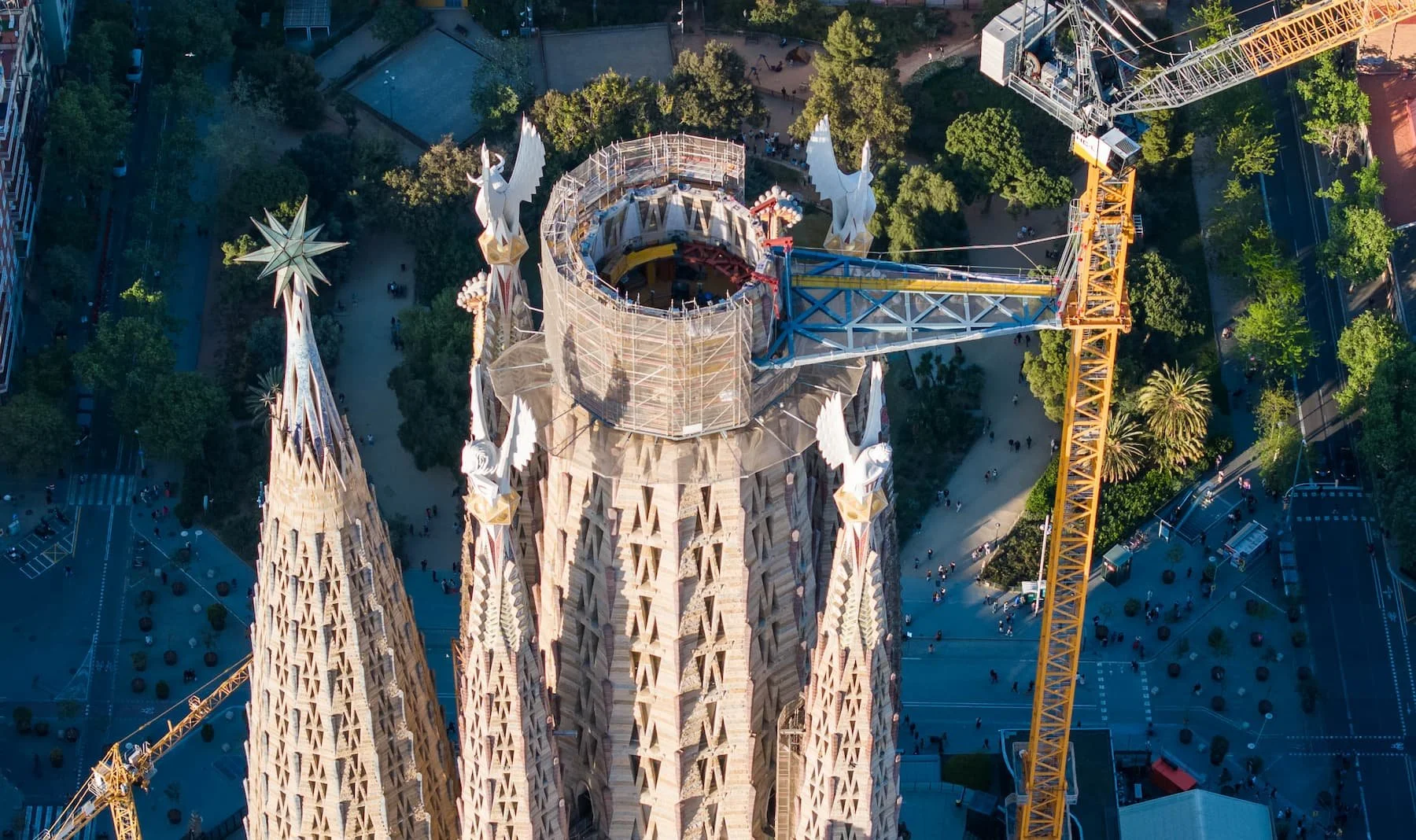
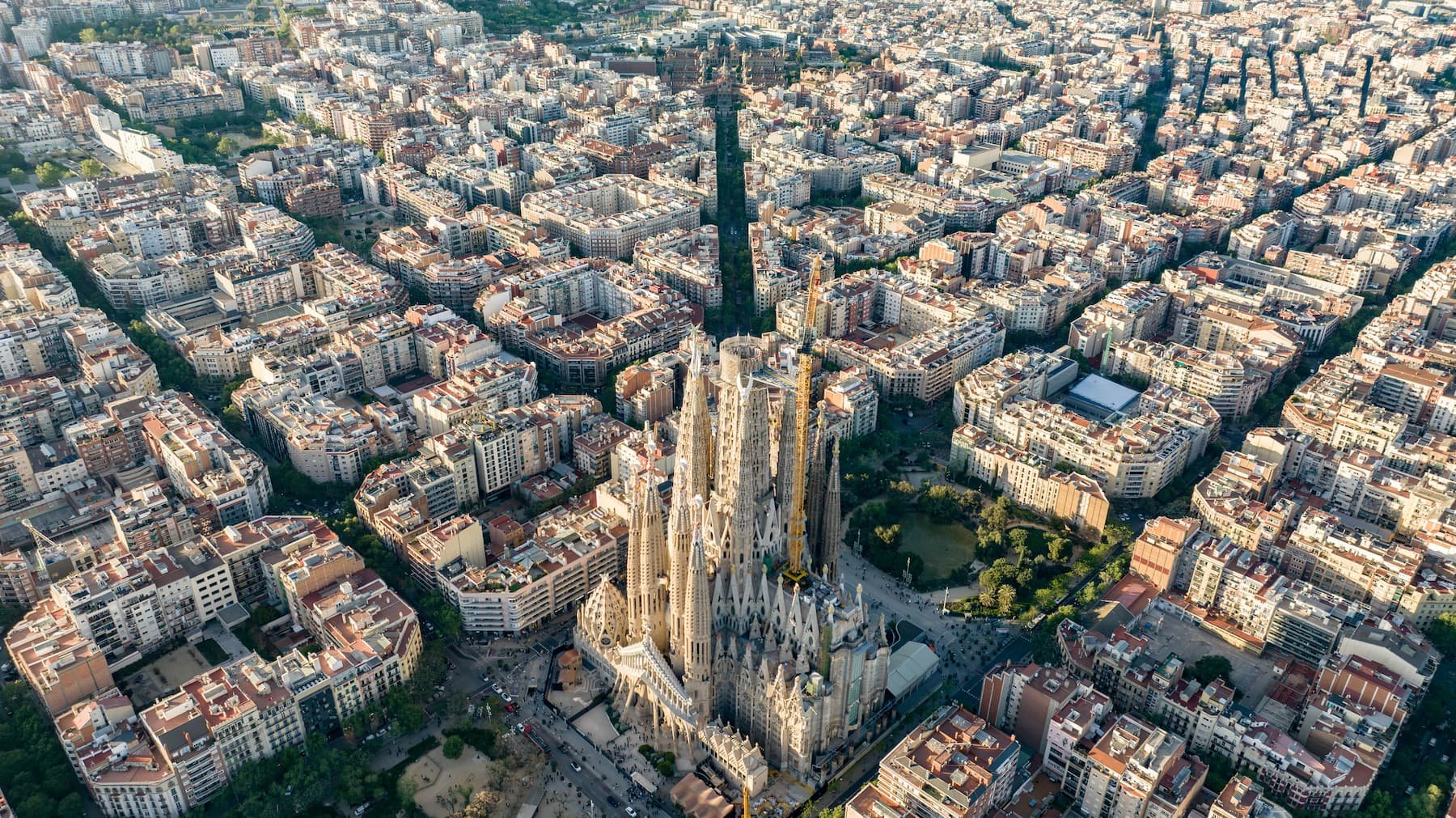
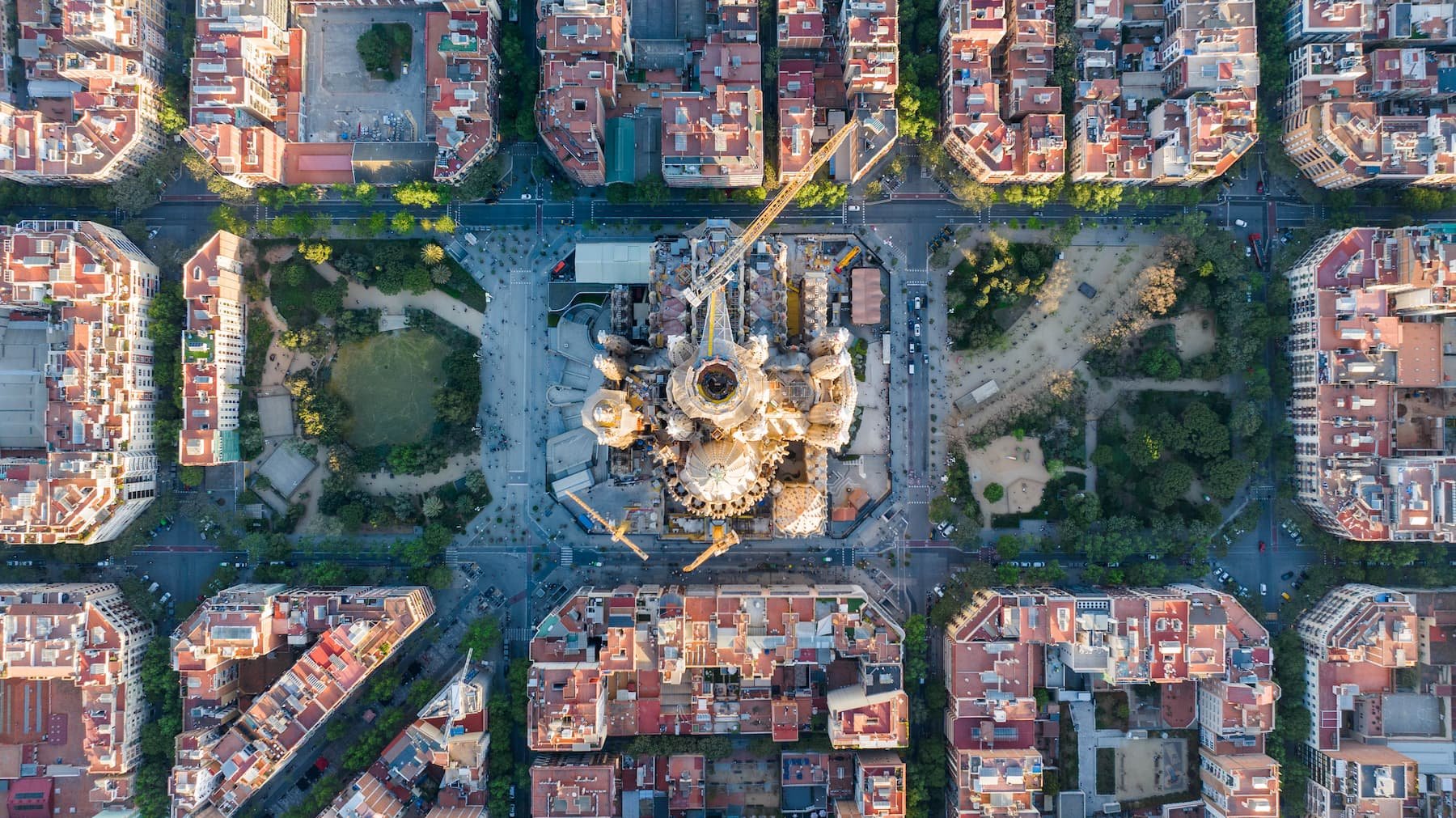
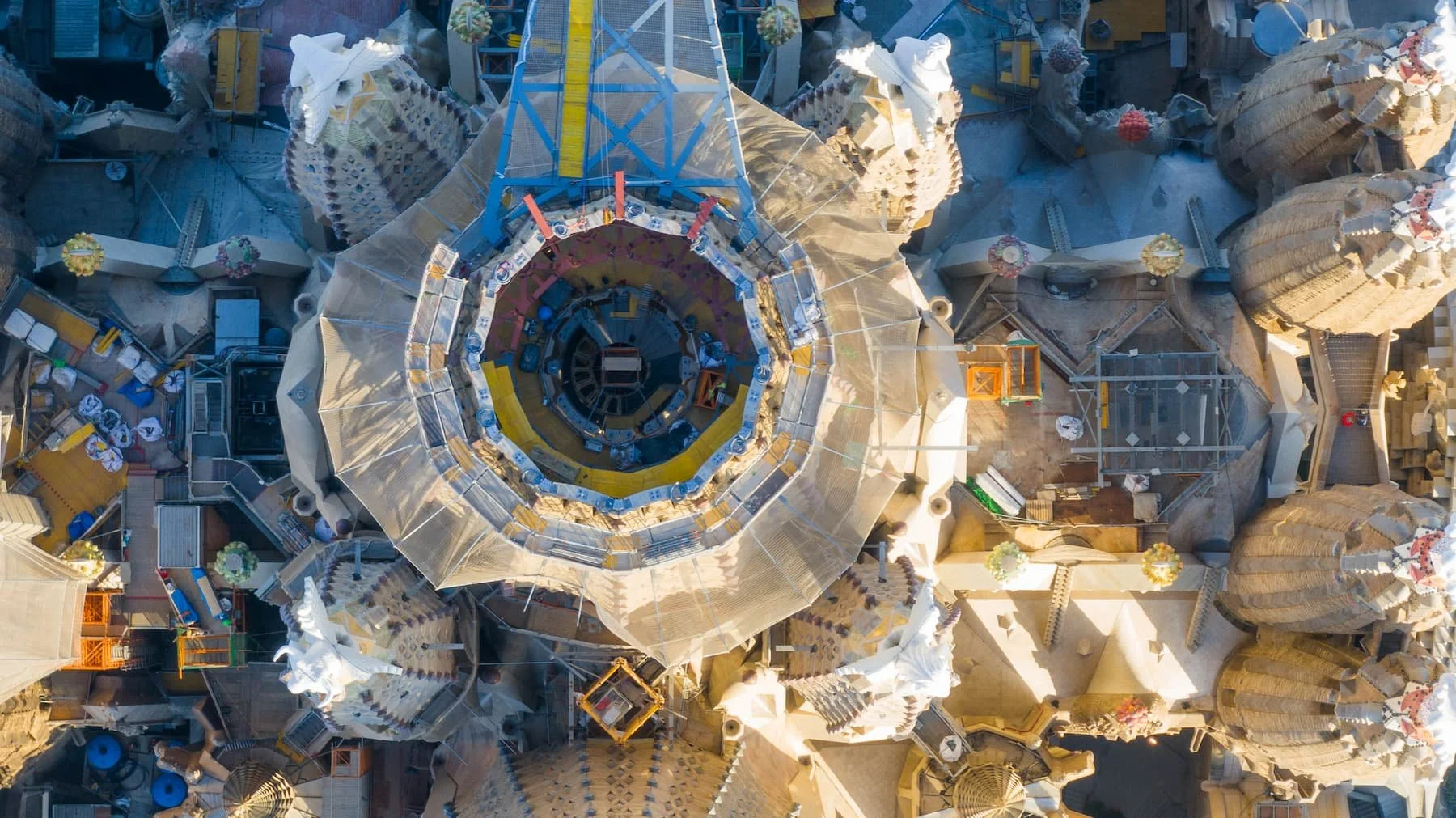
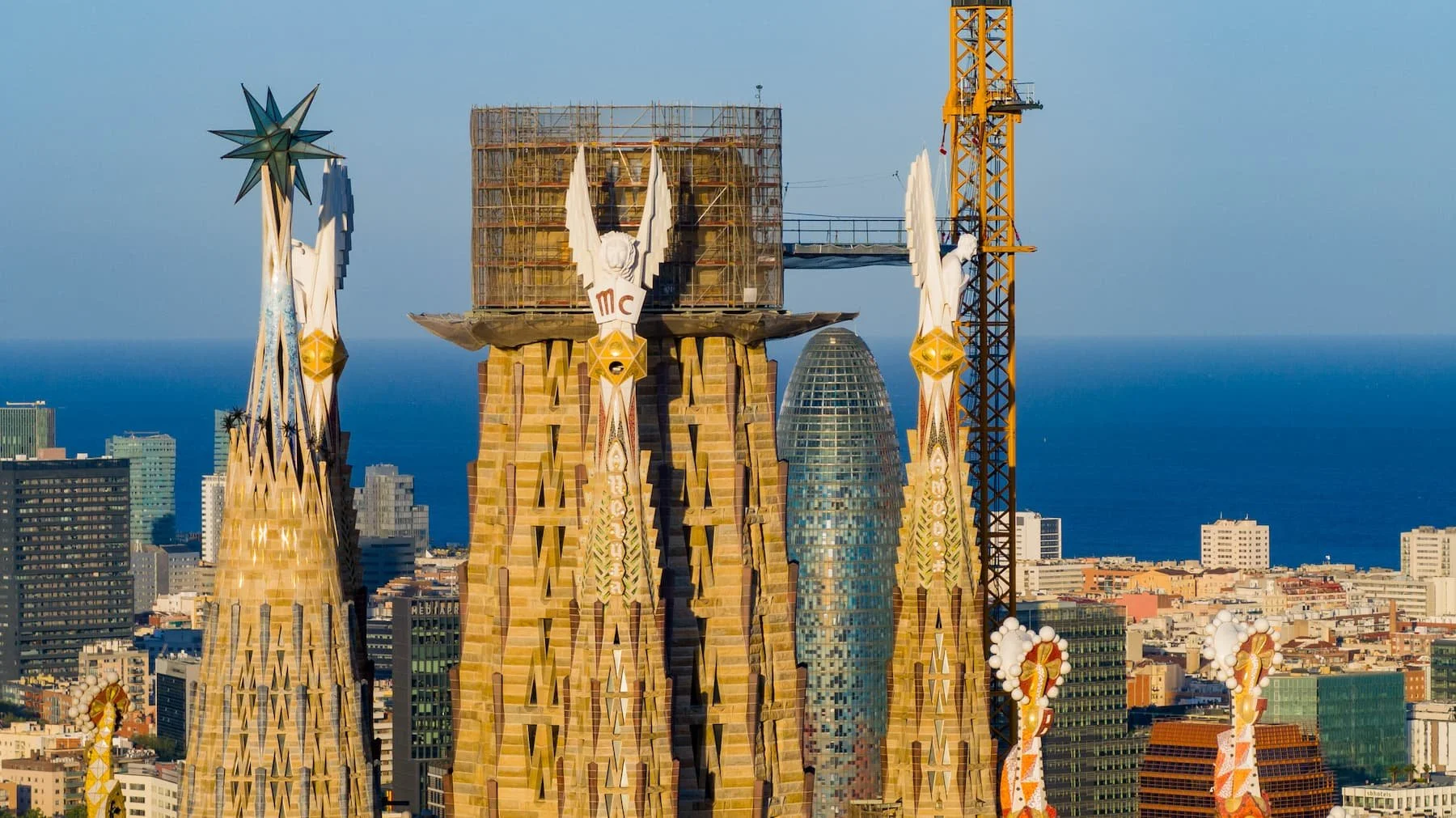
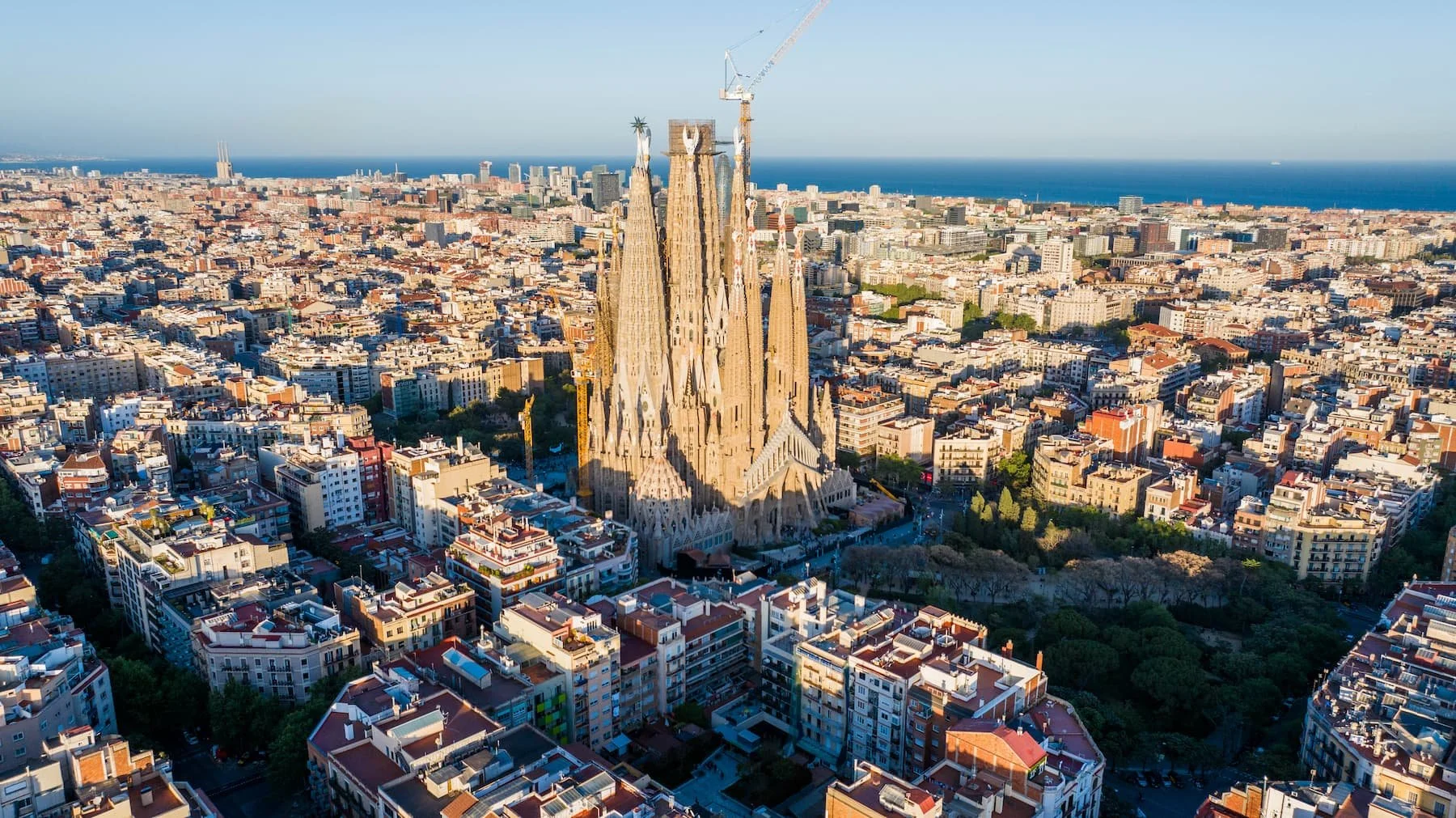
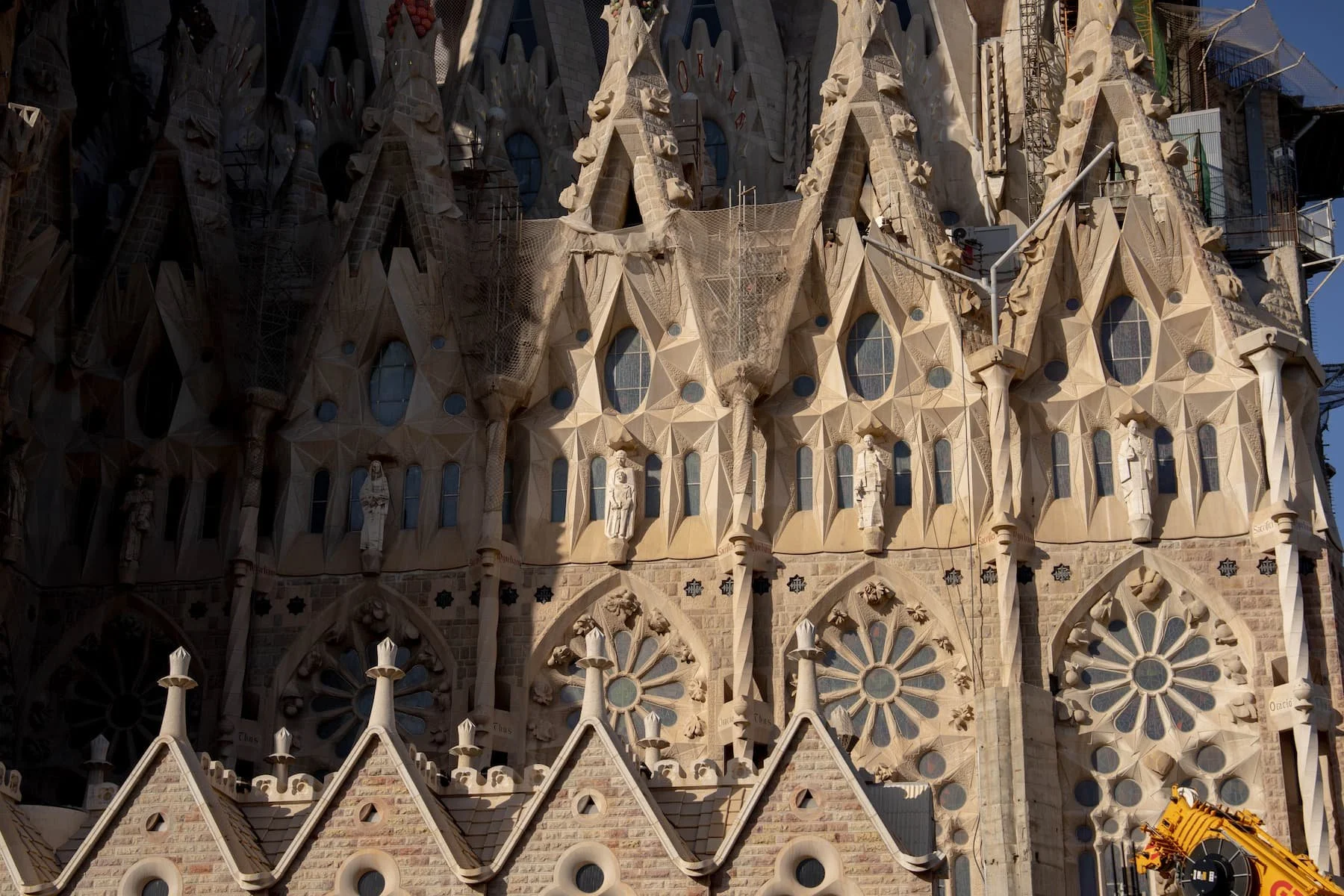
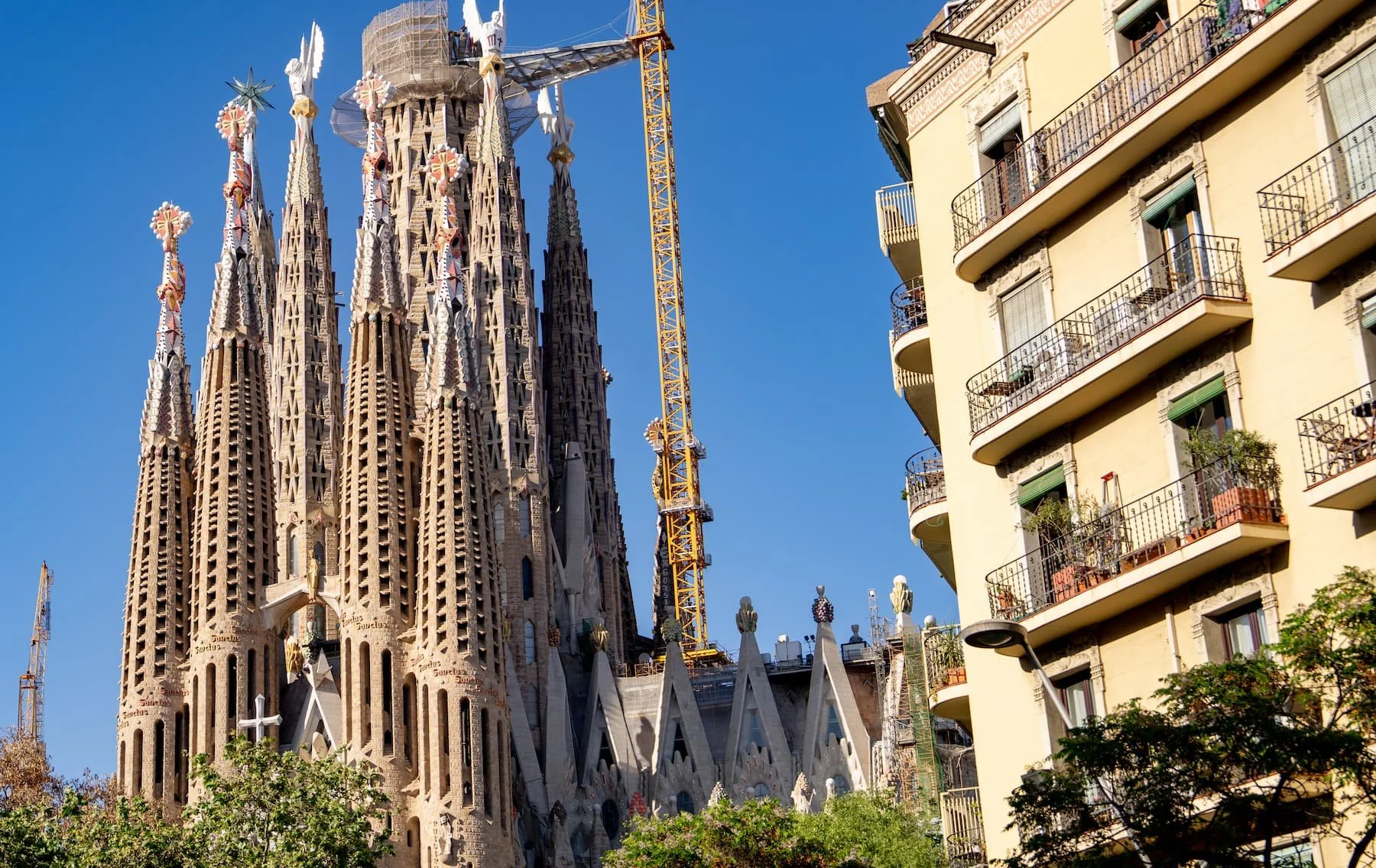
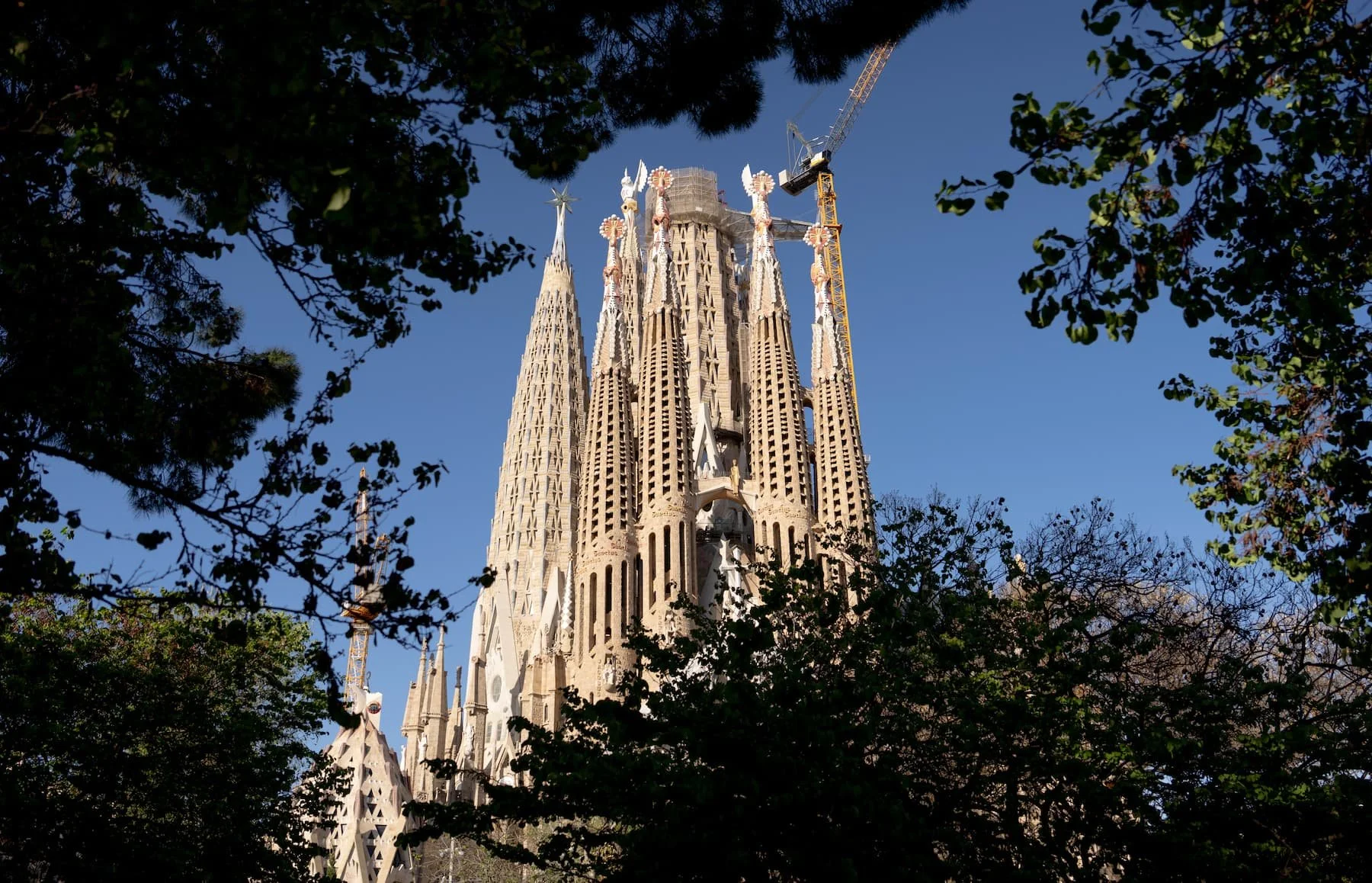
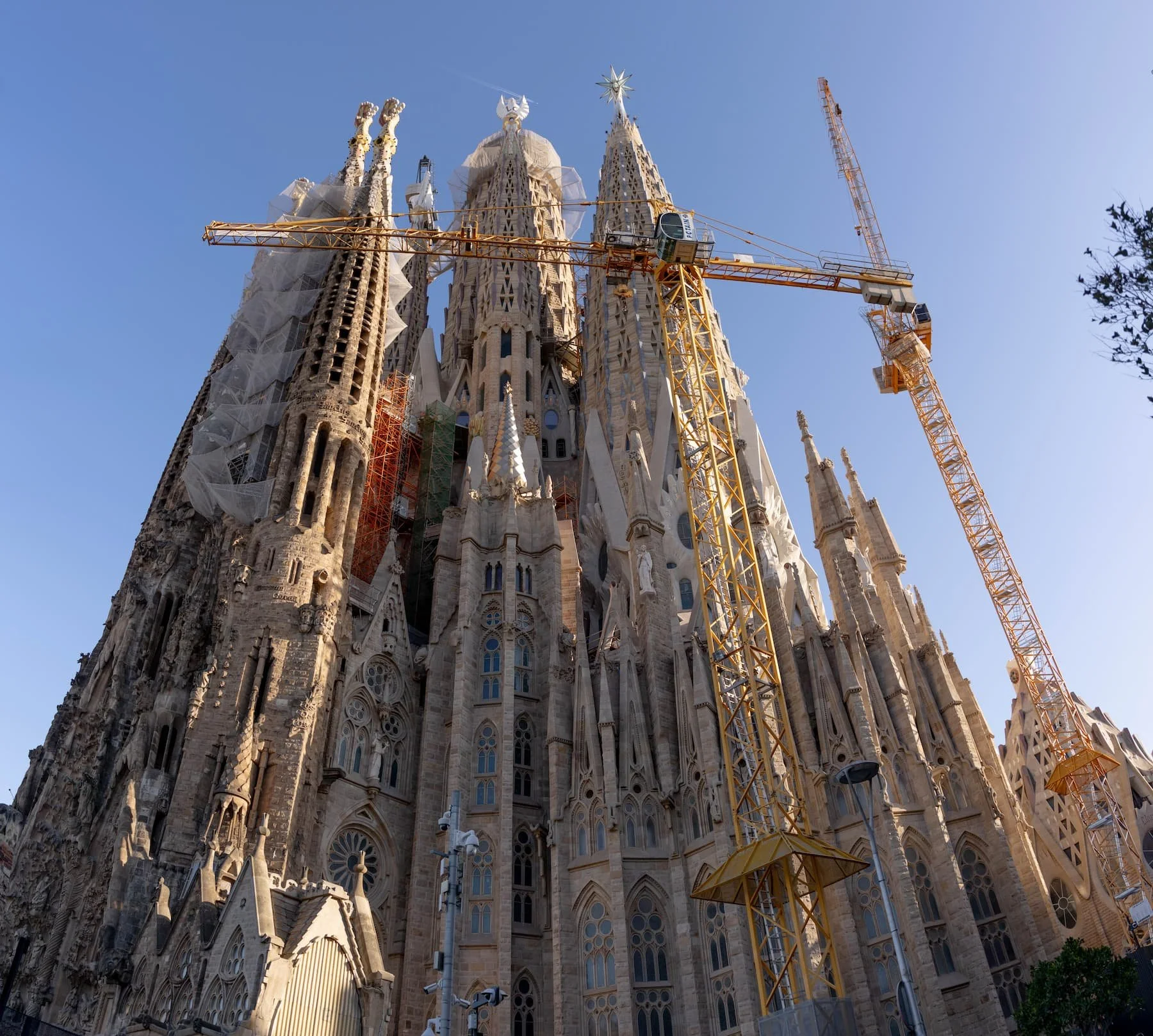
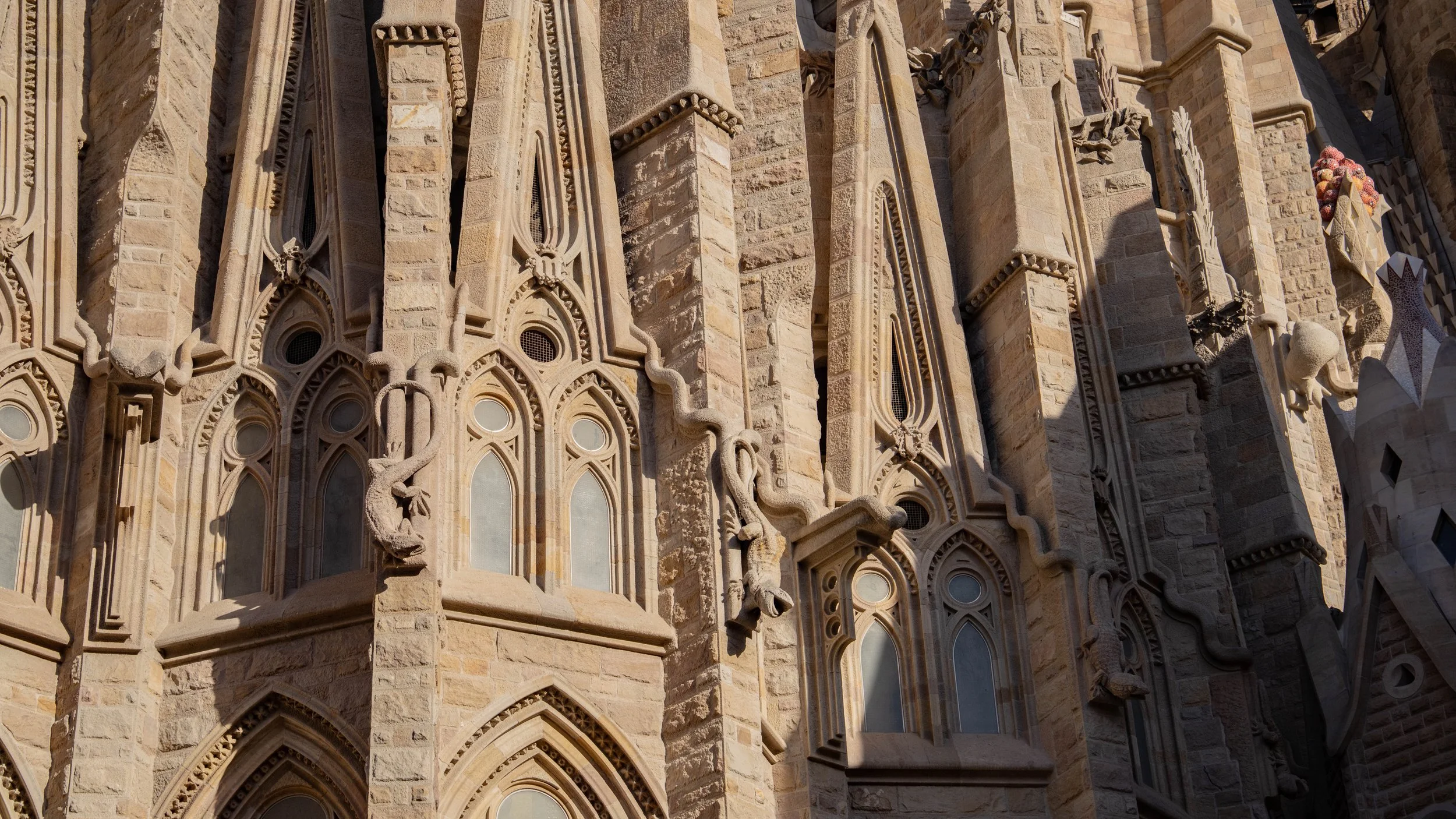
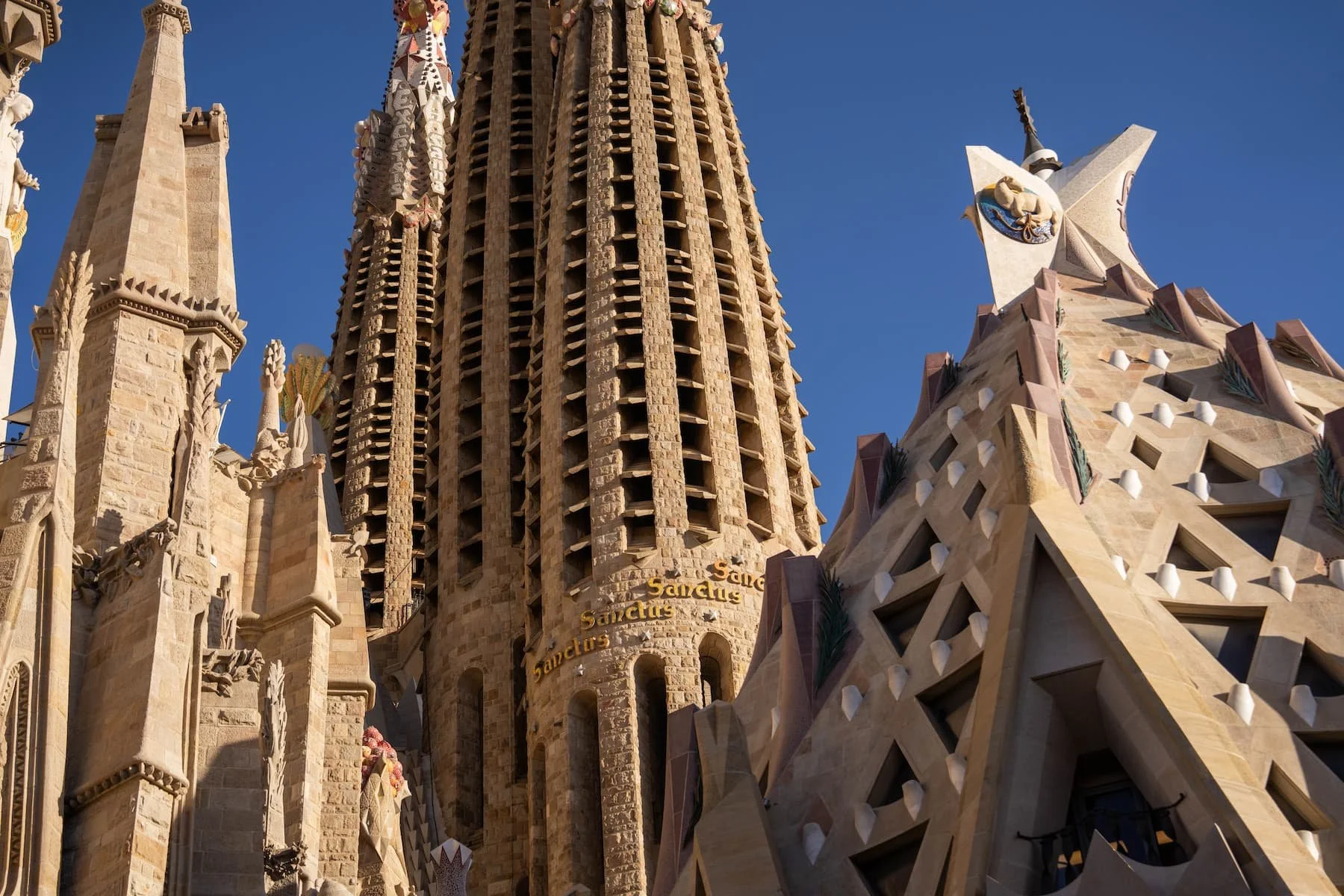
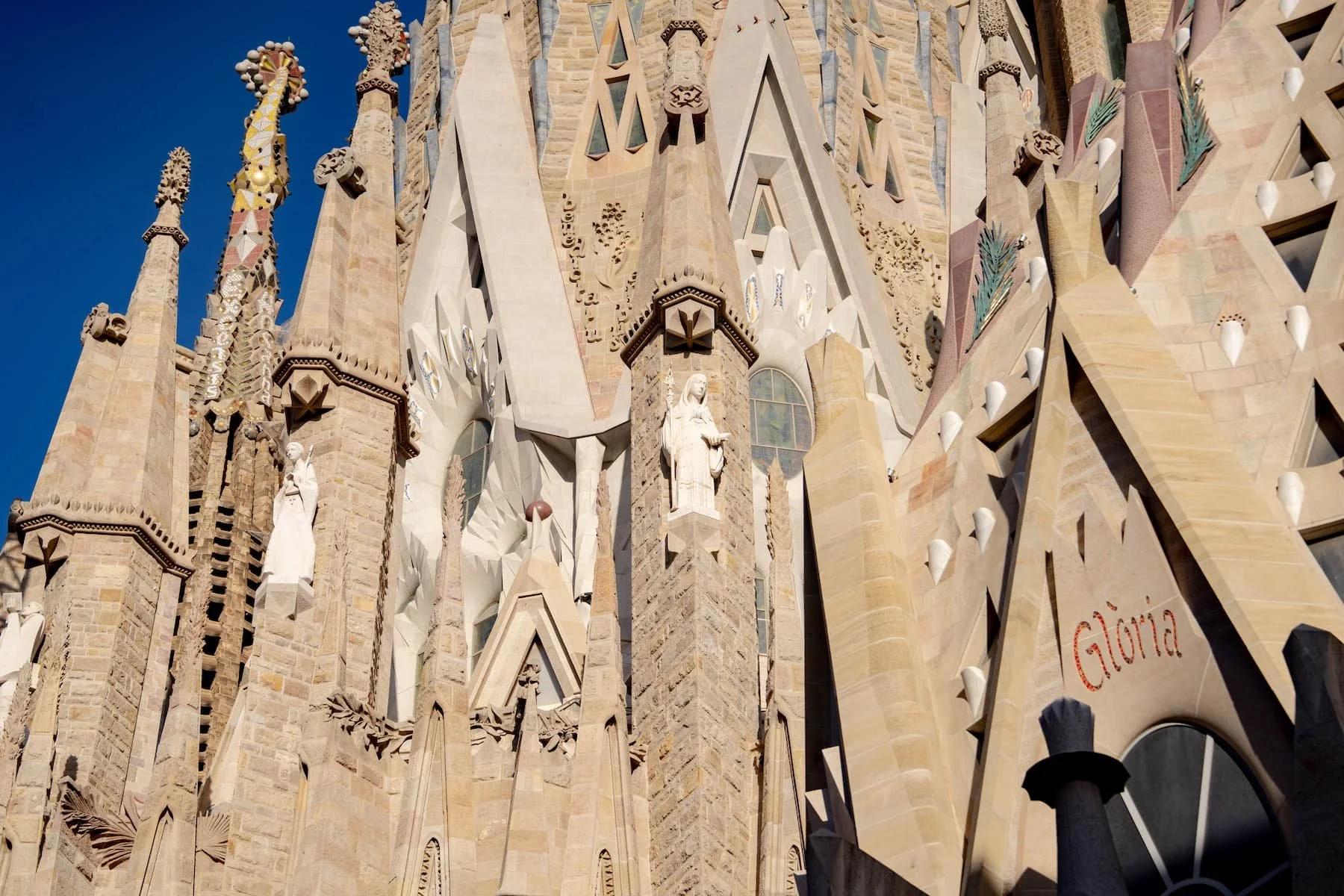
Ground and air on the same visit gave me two versions of the Sagrada Familia. From the street the Sagrada Família comes at you in pieces. Towers rise straight out of the tree line, catching gold light while the lower stone sits in shadow. Cranes crowd in beside the spires, a Liebherr arm swinging over the roofline, orange scaffolding clinging to one flank. Move around the base and the detail takes over. Stone lizards climbing near the windows, the star spire on the Tower of Mary against a hard blue sky, the winged evangelist symbol perched on the roof next to the word Glòria. Framed through the plane trees from a neighboring street, the whole thing glows above the rooftops like it belongs to another century. Then I put the drone up, and the argument settled itself. From overhead the basilica stands alone above a low tide of apartment blocks, taller than anything between here and the sea. Drop in tighter and the summit reveals the work still underway, netting and cranes wrapped around the highest point. Straight down, the building flattens into a drawing, a star-shaped footprint dropped into the center of Cerdà's grid.
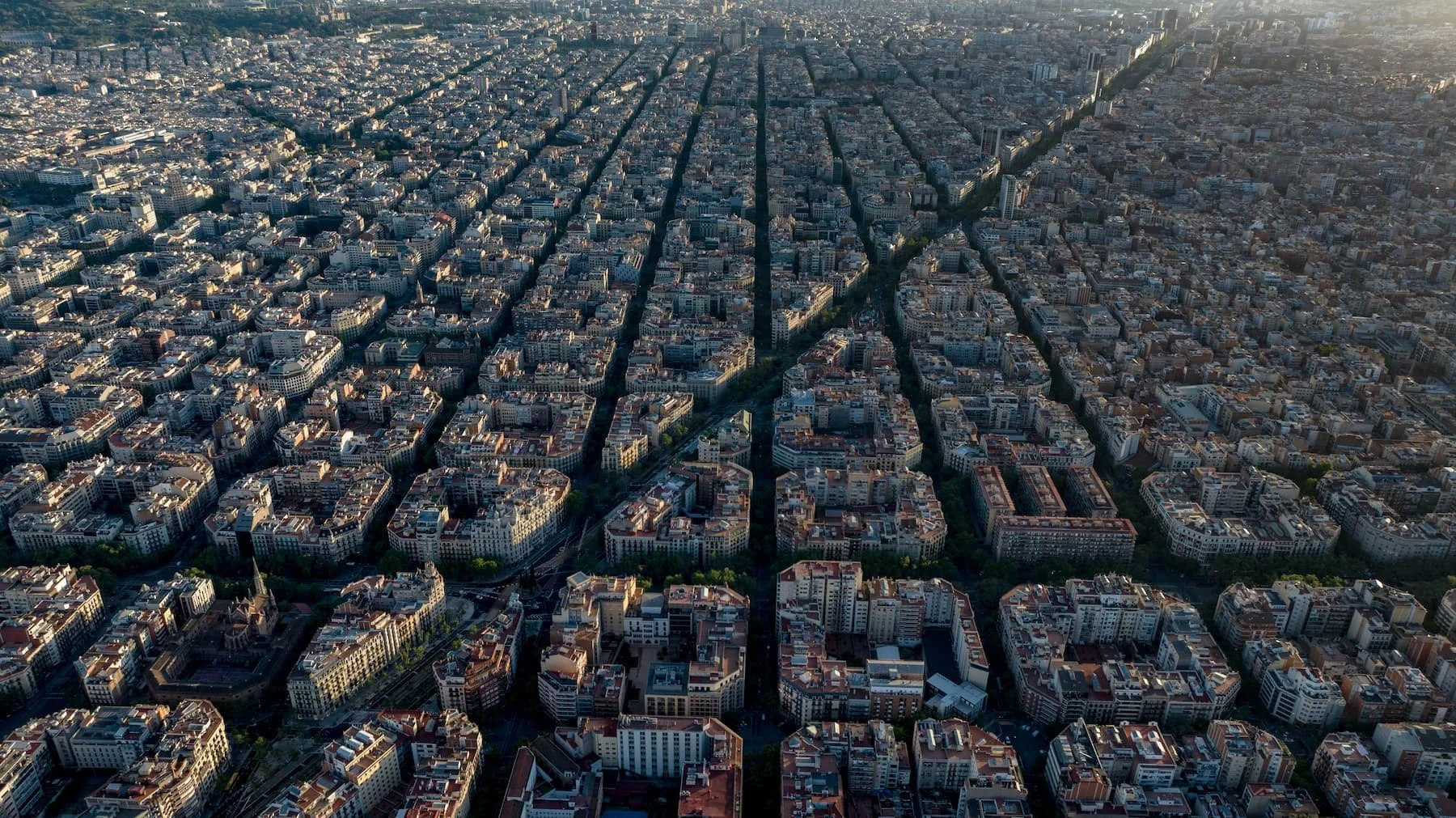
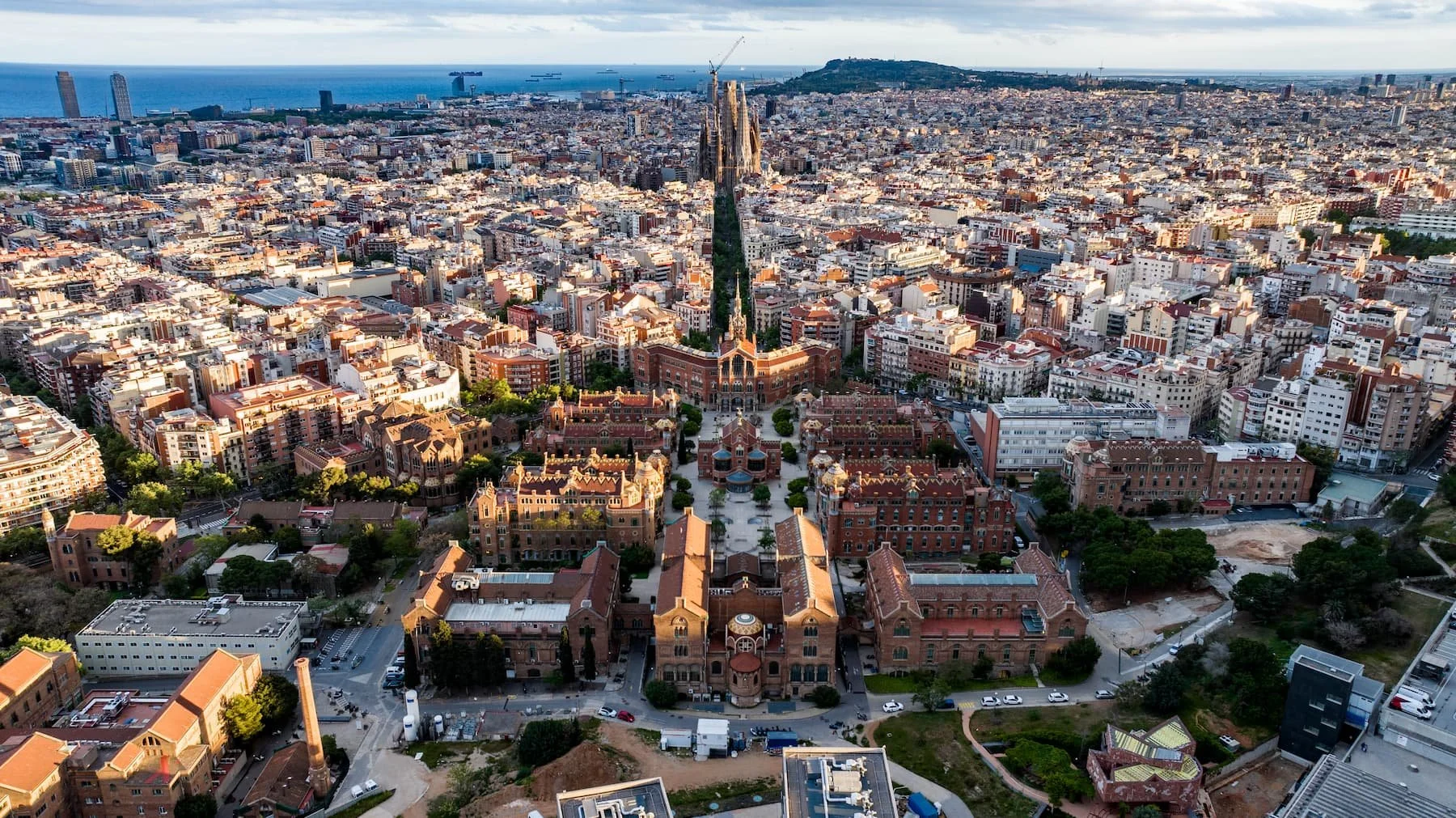
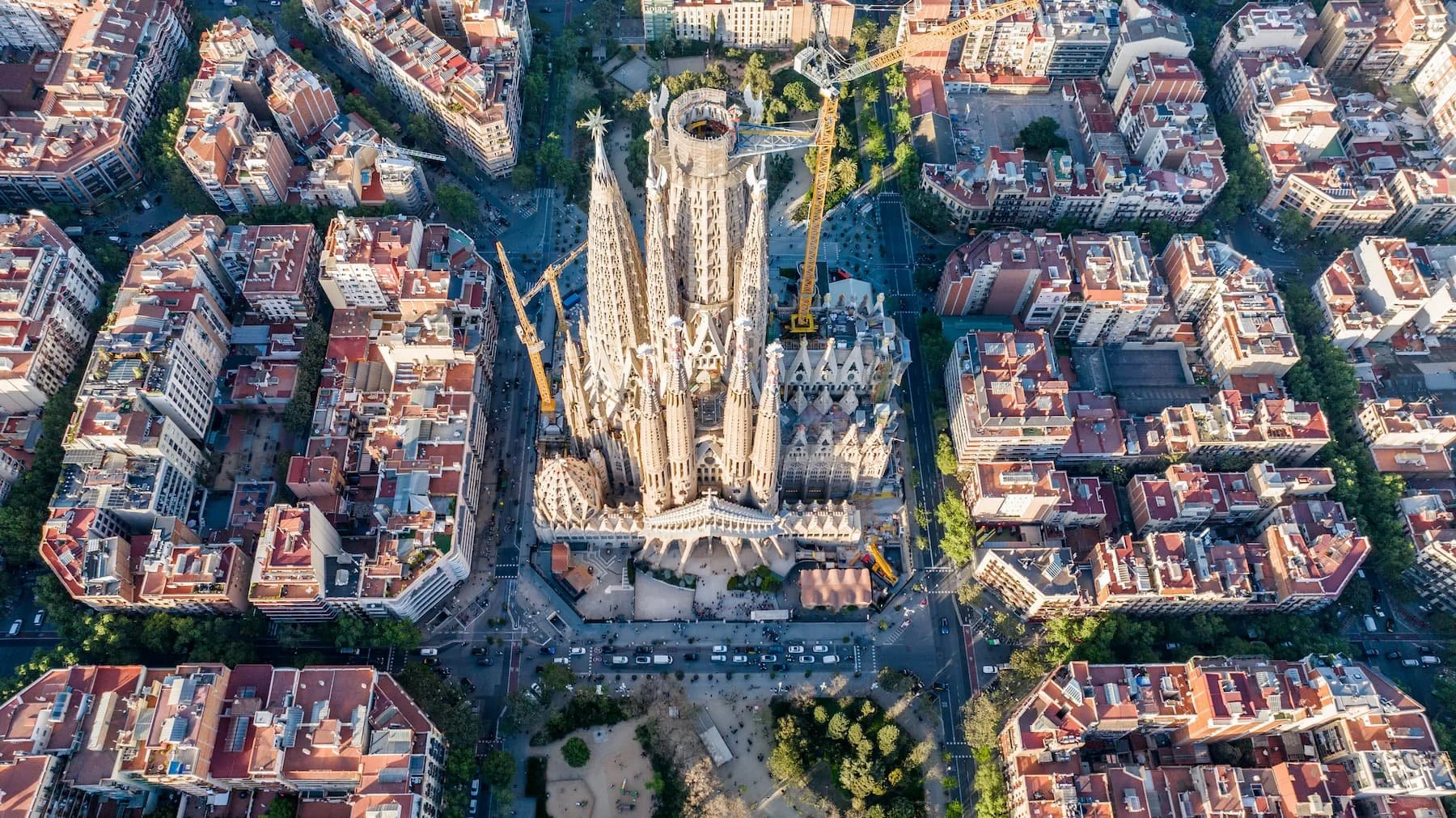
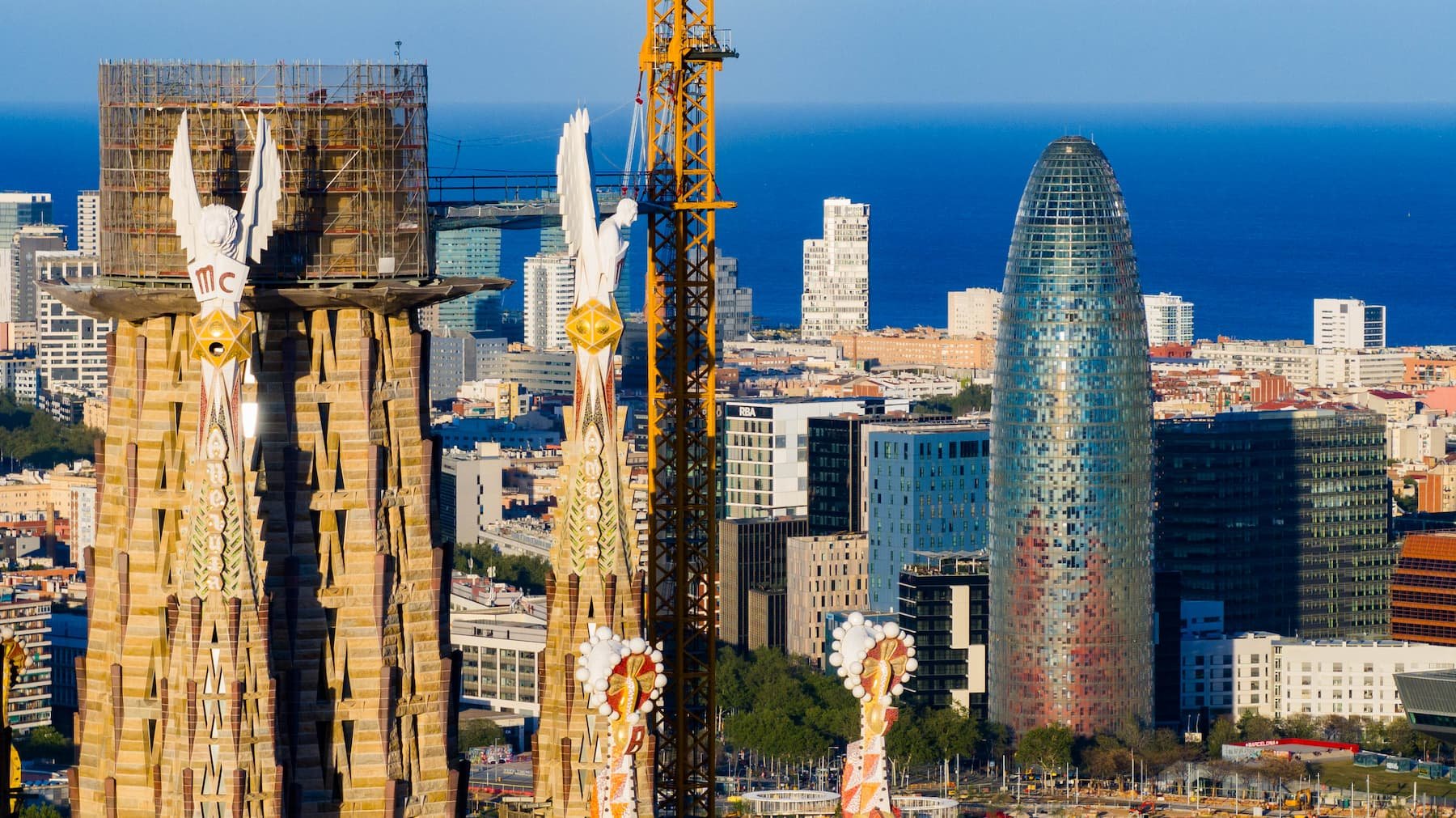
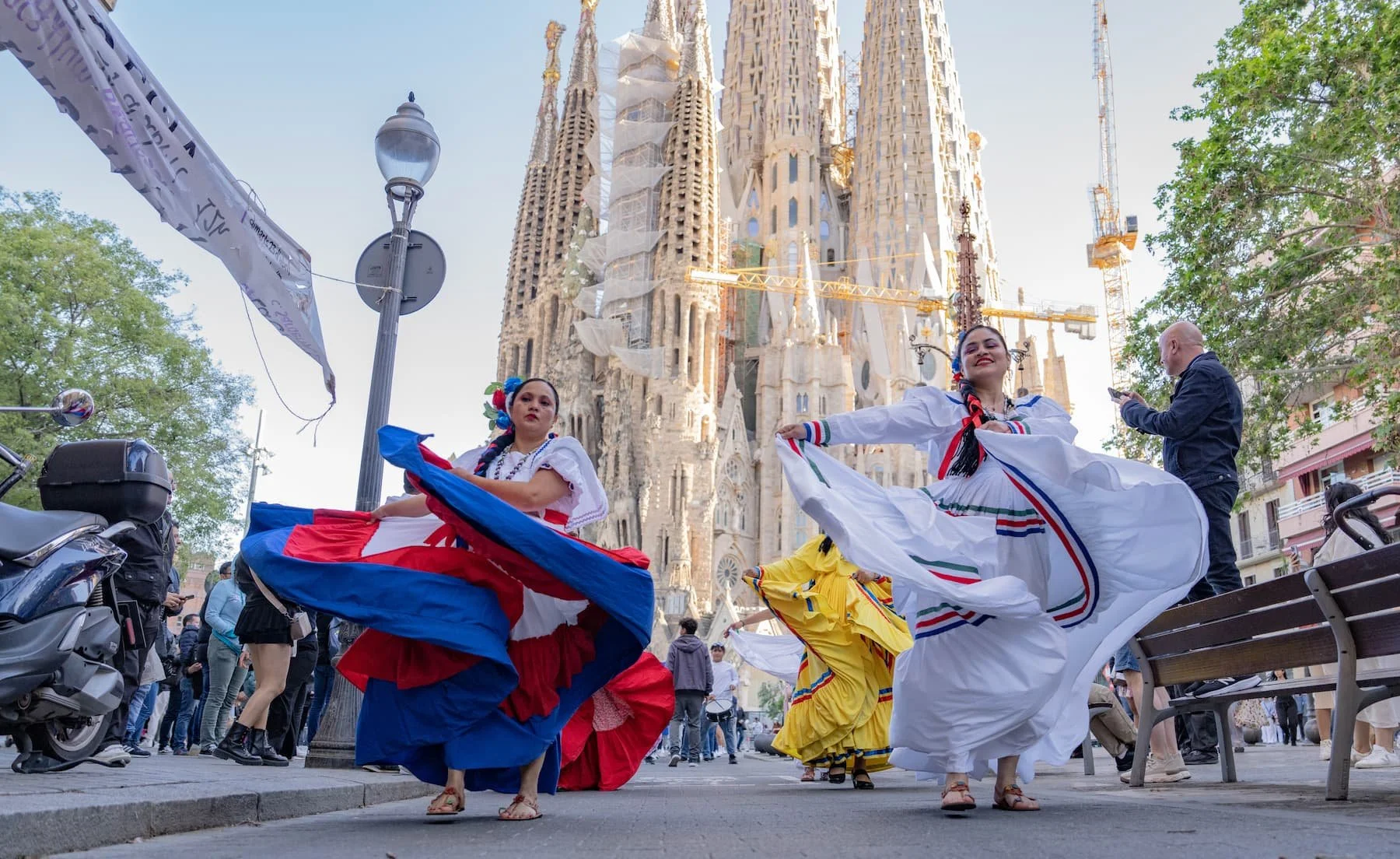
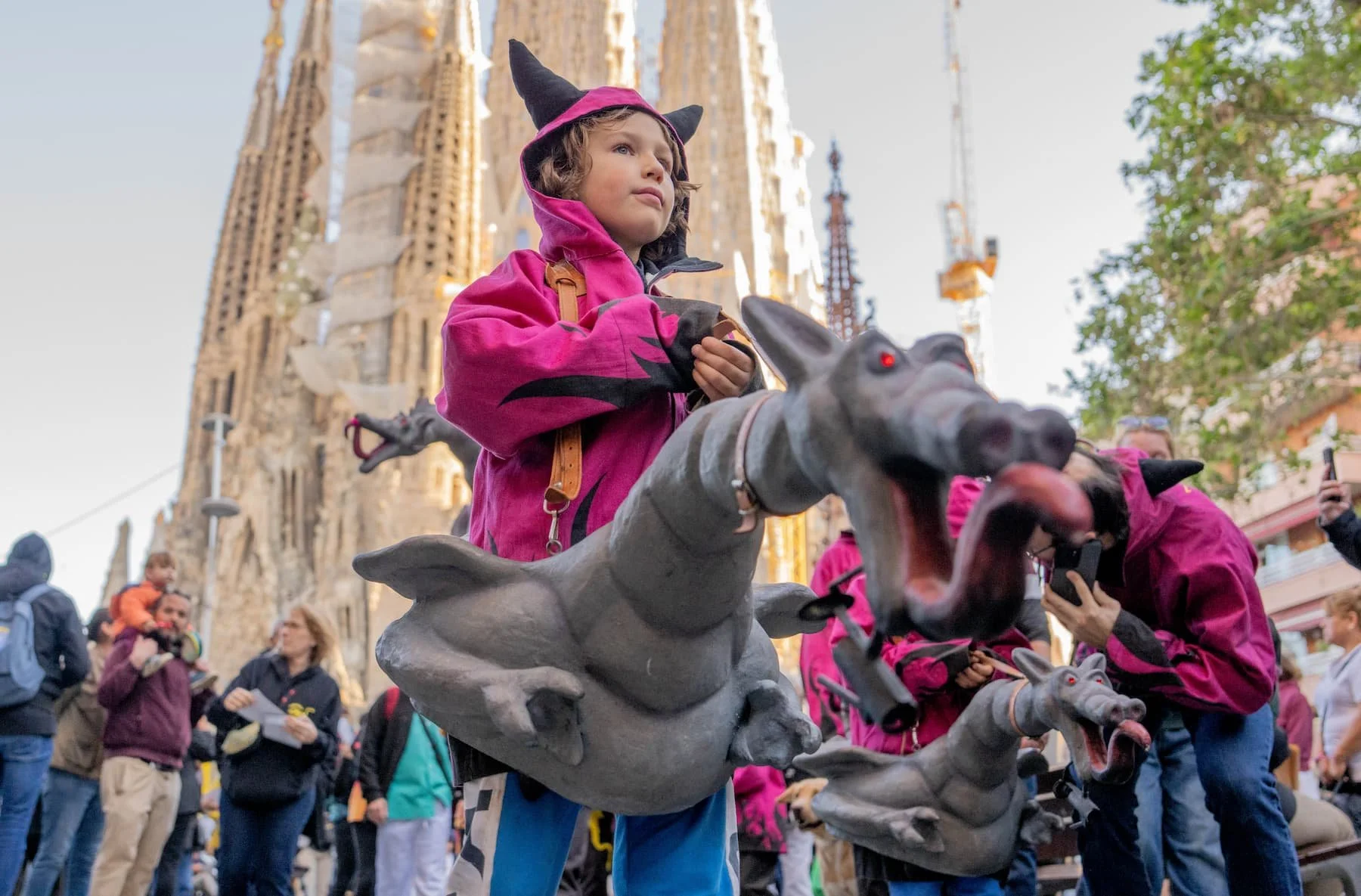
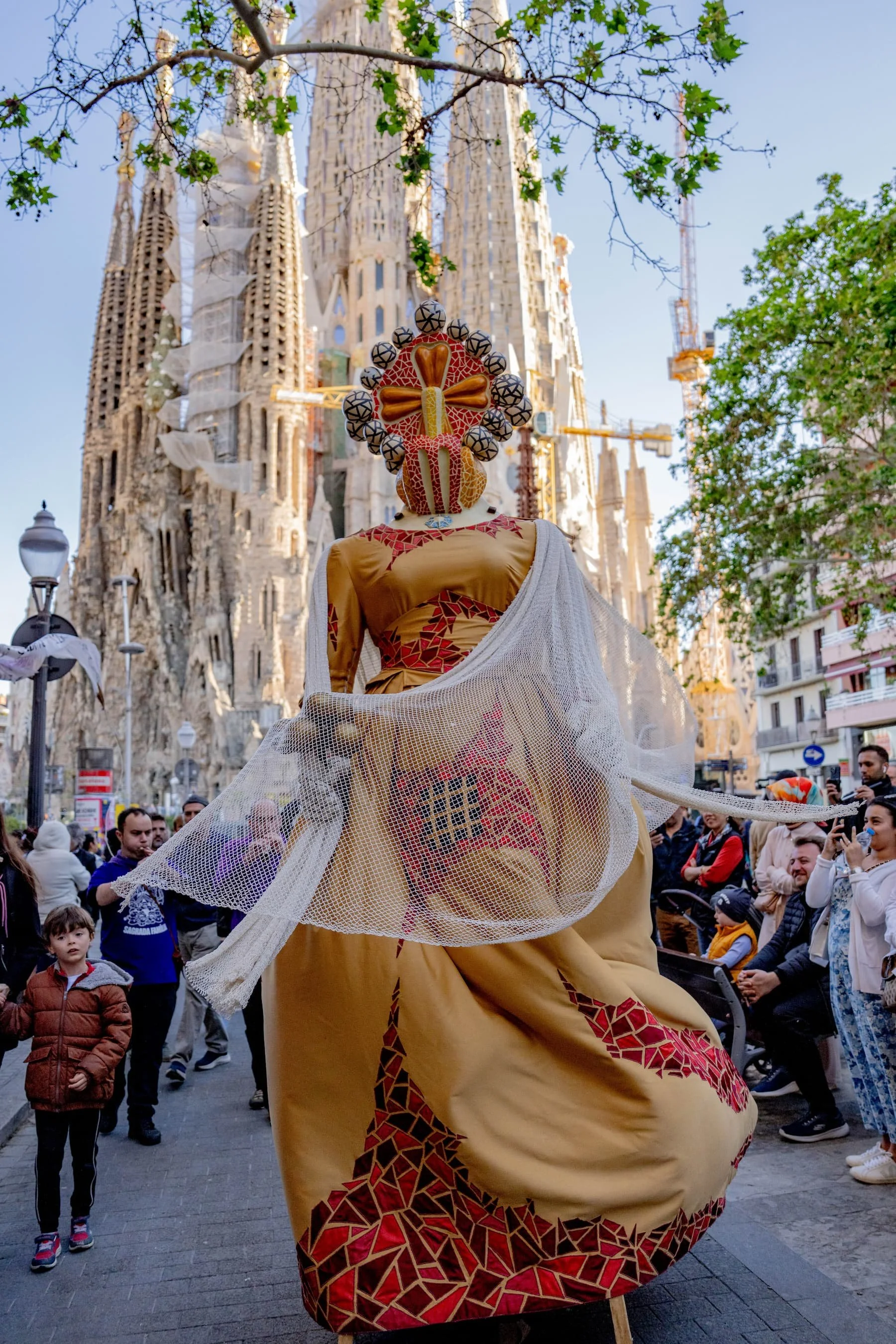
What I did not plan for was the parade. Right in the middle of the shooting, a festival rolled through the streets at the foot of the basilica. A gegant in a gold and red mosaic gown swayed above the crowd, and when I looked at its crown I stopped cold. The headpiece copied the tower tops almost exactly, the same red sunburst ringed with white knobs that Gaudí put on his spires. Somebody had built the church into a costume. A kid in a pink dragon hood stood beside a snarling festival dragon, all red eyes and open jaws, with the towers rising behind him out of focus. This is the part of Barcelona you cannot schedule. I came for a building and walked into a living tradition happening in its shadow, the old stone and the street festival sharing one frame. Landmarks tell you where you stood. The parade told me what the day actually felt like.
Day Three
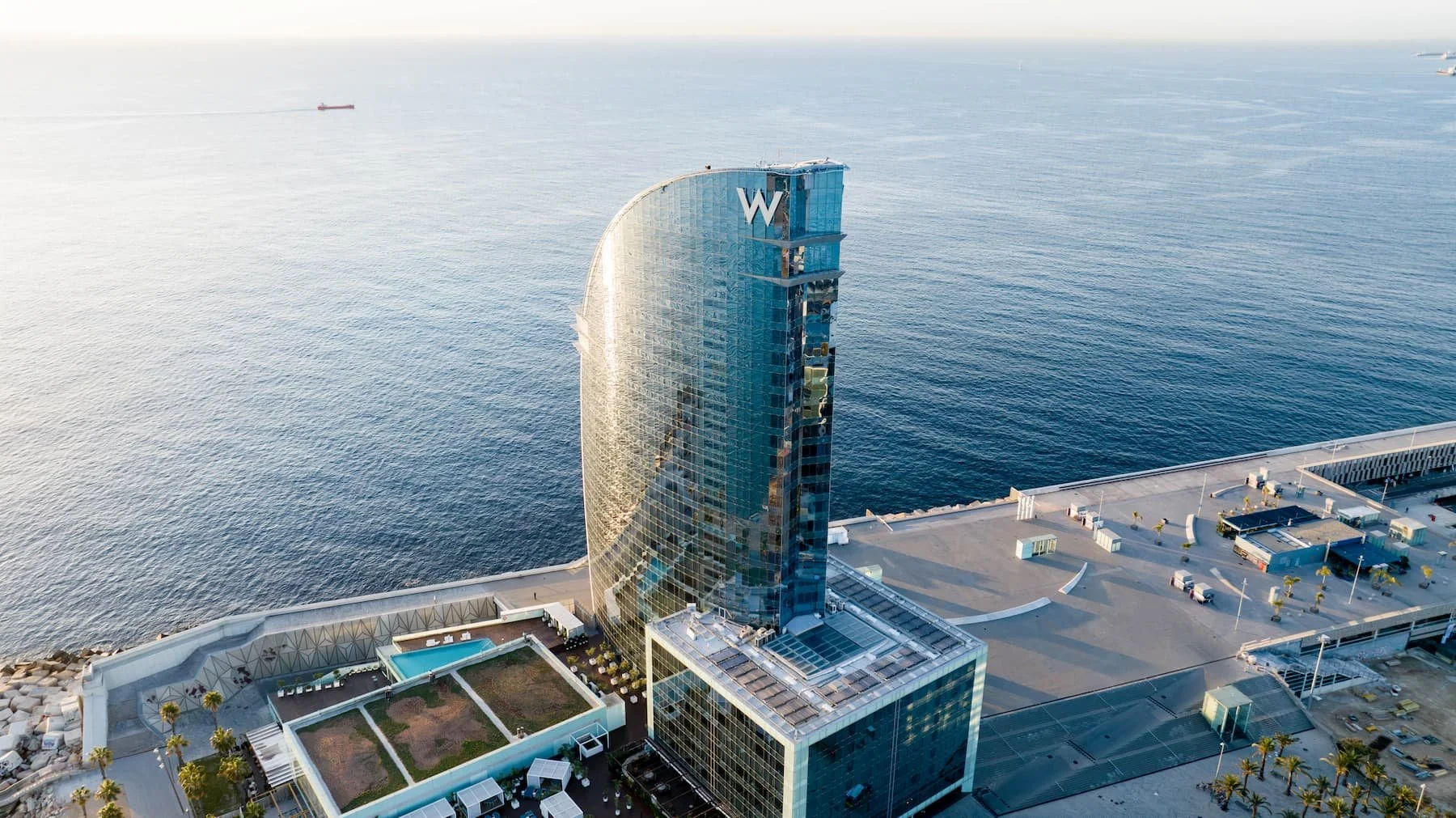
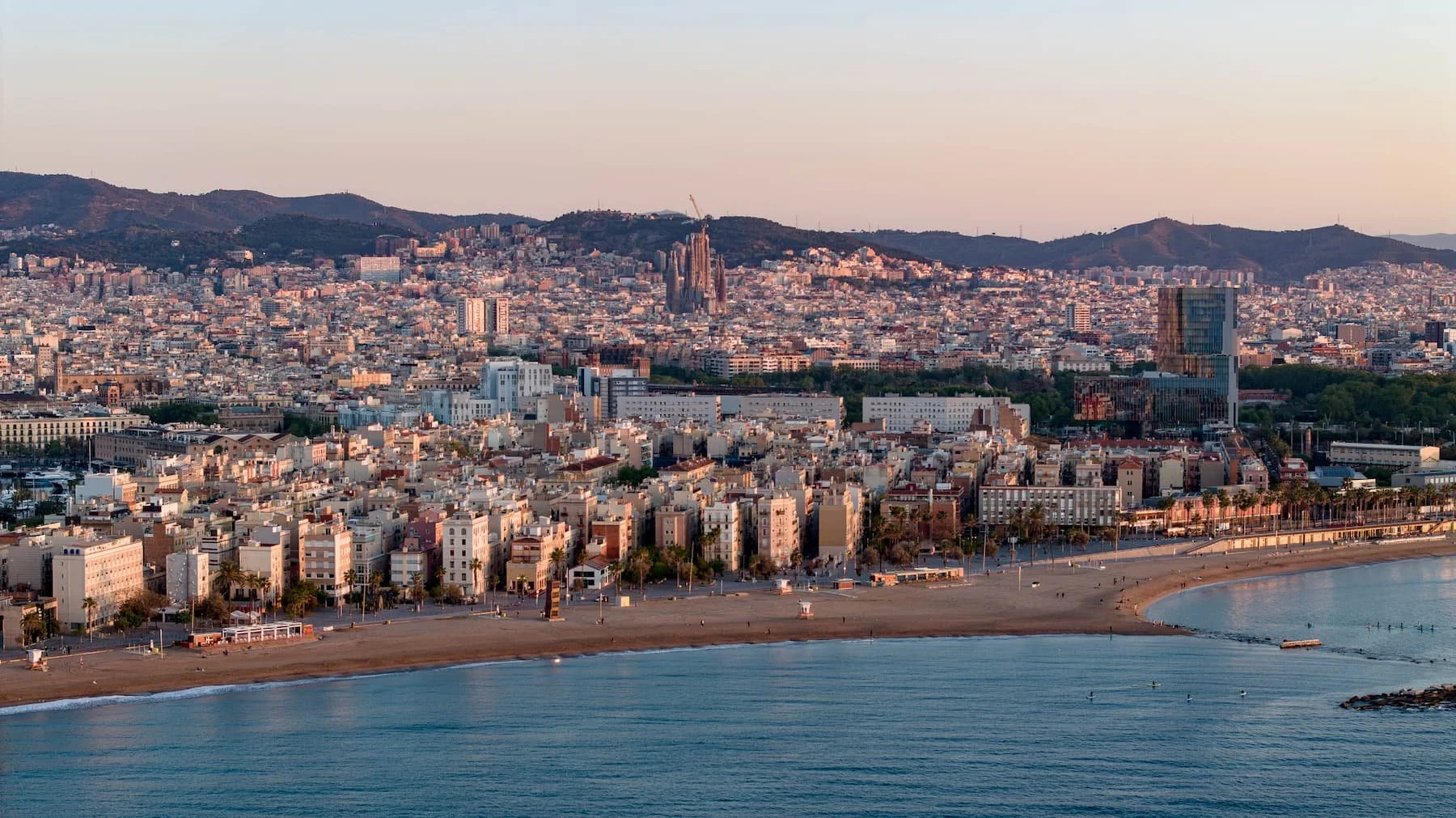
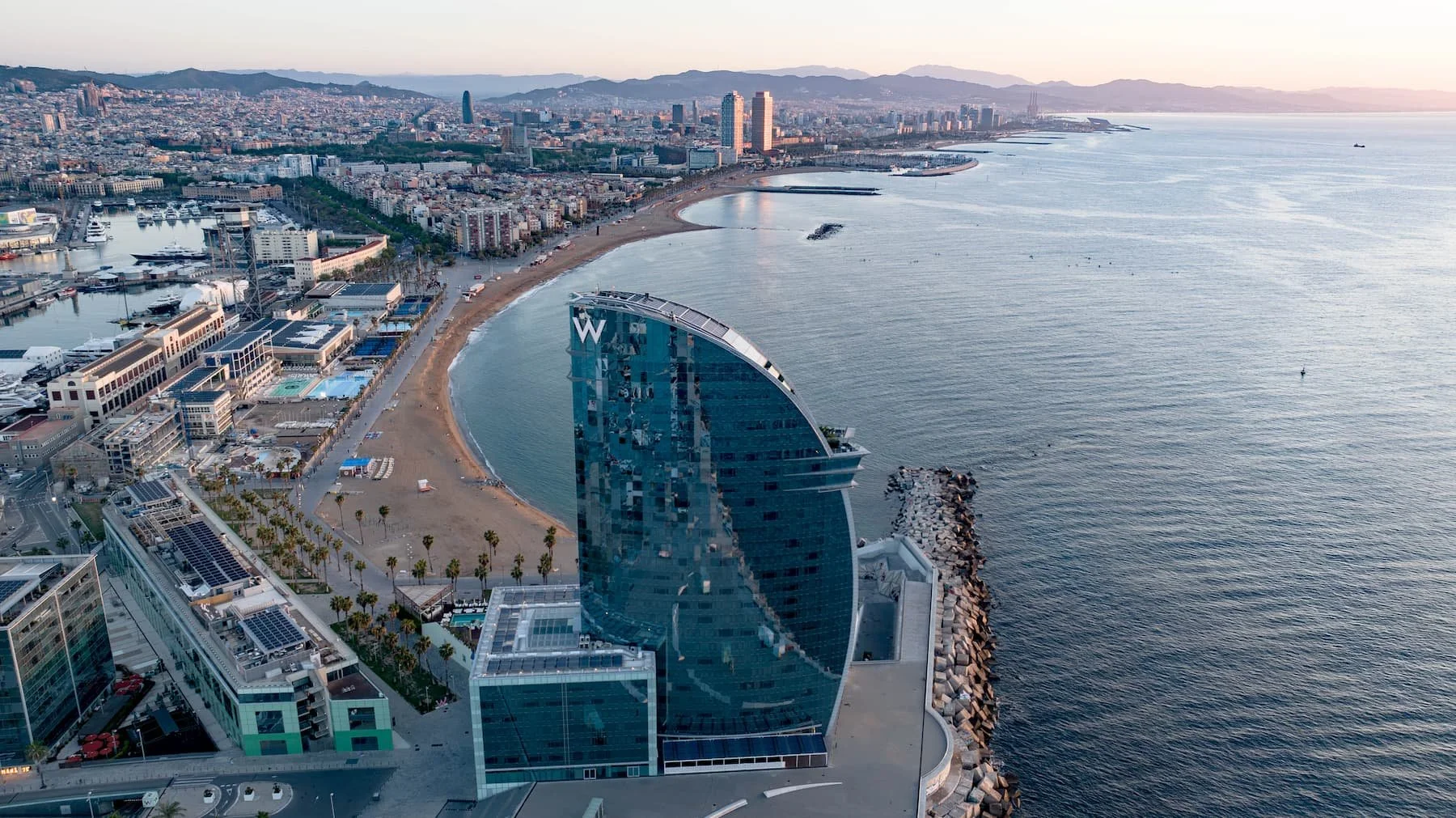
On the last morning I got up before the city did. The drone went up into a quiet sunrise, and Barcelona finally held still. The W hotel stood out first, its glass sail curving against the flat calm water, the whole facade catching the first pink light off the sea. From up there the shape of the city made sense. The port and its yachts on one side, the long clean arc of the Barceloneta beach on the other, and the water going soft and silver all the way to the horizon. A single ship sat far out on the glass. The beach was nearly empty, just a few early swimmers and a couple of paddleboarders cutting slow lines across the bay. This is the hour photographers chase and rarely get. No crowds, no noise, just warm light and a city breathing easy before the day starts.
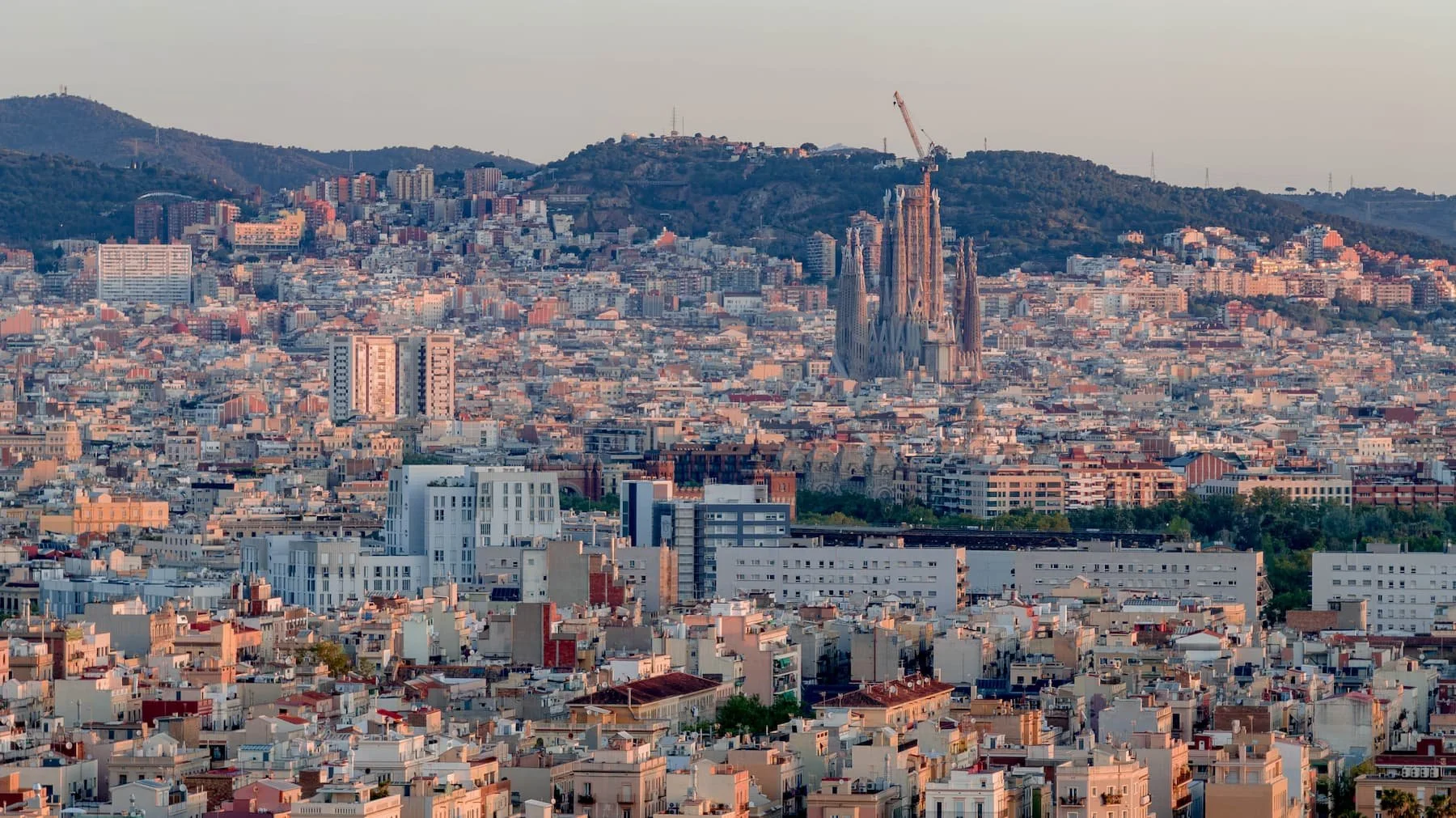
Then I turned the drone inland and there it was again. The Sagrada Família standing up over the rooftops, catching the same morning light, framed by the hills of Barcelona behind it. After three days of chasing that building from the street, from the base, from directly overhead, here it was one more time, small in the distance but impossible to miss, the tallest thing on the skyline. That felt like the right way to end the trip. A city that runs from the mountains down to the sea, packed with life and history and one unfinished church holding the whole view together. Barcelona gave me monuments and quiet streets, a festival I stumbled into, and a sunrise worth waking up for. Next stop, Italy. But this city set a high bar.
The Cathedral of the Holy Cross and Saint Eulalia (Catalan: Catedral de la Santa Creu i Santa Eulàlia), commonly known as Barcelona Cathedral or La Seu, is the seat of the Archbishop of Barcelona and the principal Gothic monument of the city's old quarter. Construction of the present Gothic church began in 1298, during the reign of James II of Aragon, on a site that had held Christian places of worship since the fourth century, including a Romanesque cathedral consecrated in 1058. The main body of the building was carried out over roughly 150 years, reaching effective completion with the cloister around 1448.
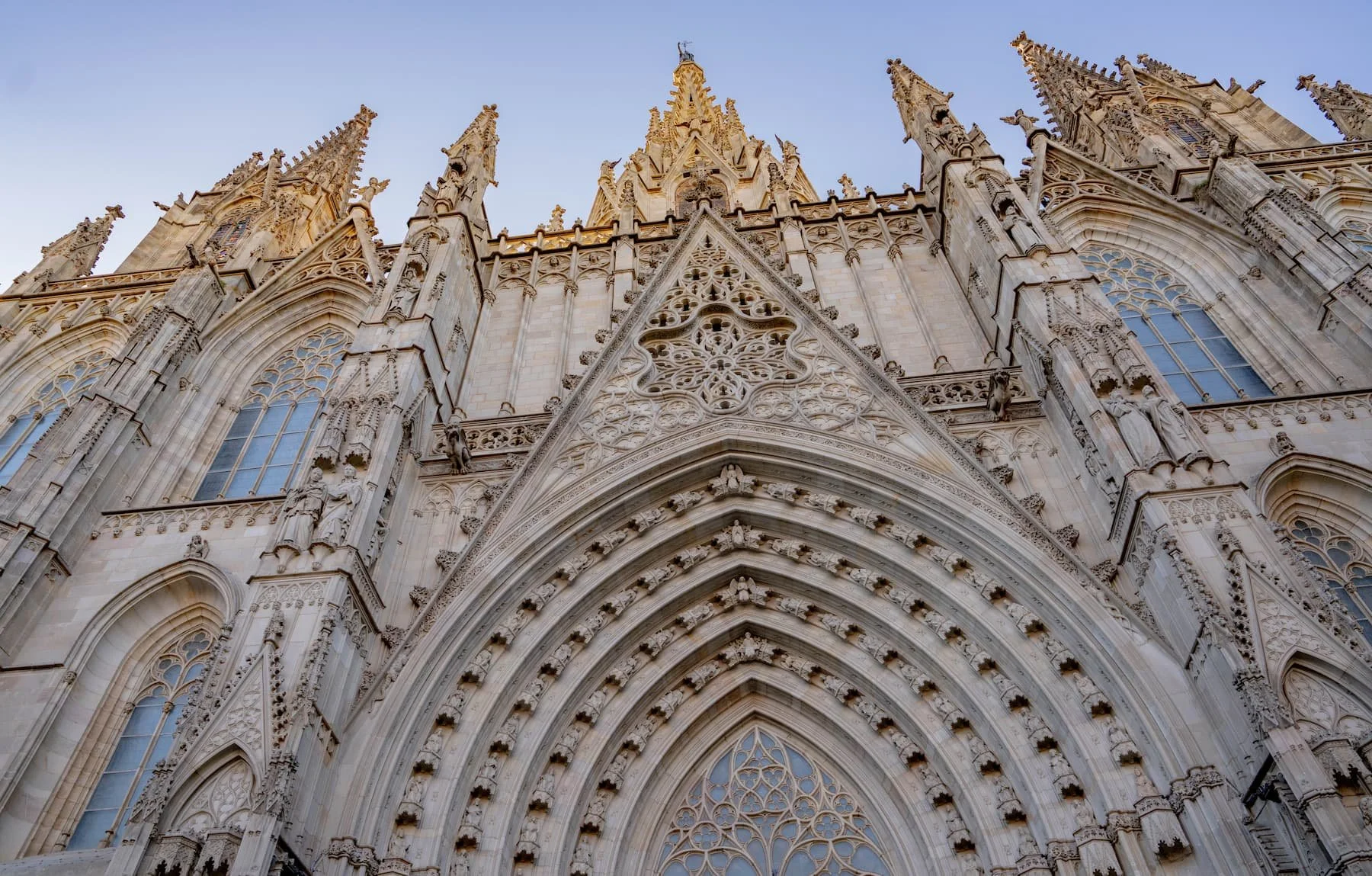
The cathedral is built in the Catalan Gothic style. It has three naves divided into five bays, with a single apse, and its external dimensions are approximately 93 metres long by 40 metres wide, the central nave rising to about 28 metres. In a characteristic feature of Catalan Gothic construction, the space between the buttresses of the aisles is occupied by secondary chapels that ring the building, each bay opening onto two inward-facing chapels. The interior is notable for its ribbed vaulting and large number of carved keystones, and for the crypt beneath the high altar containing the sarcophagus of Saint Eulalia, a co-patron of the city.
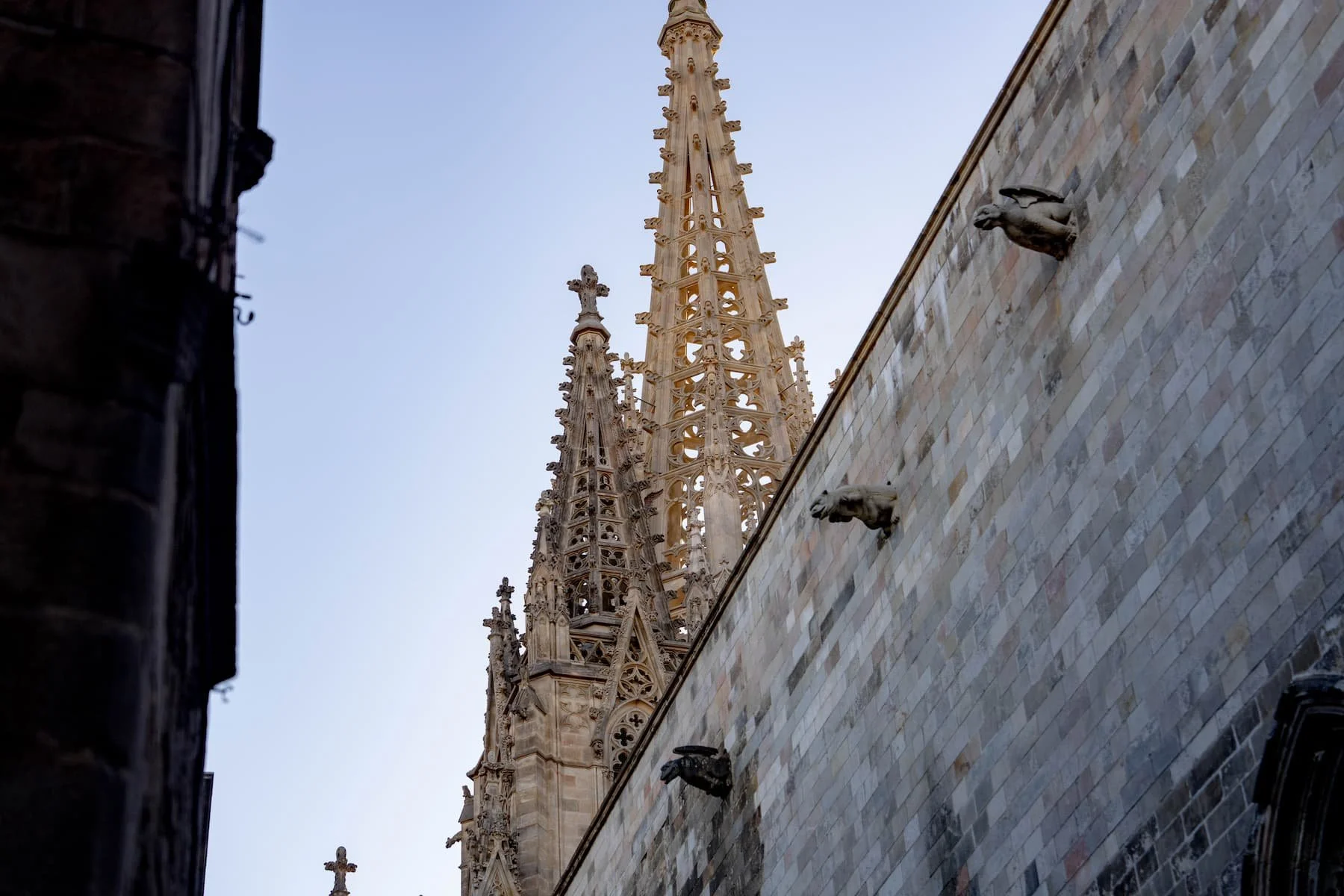
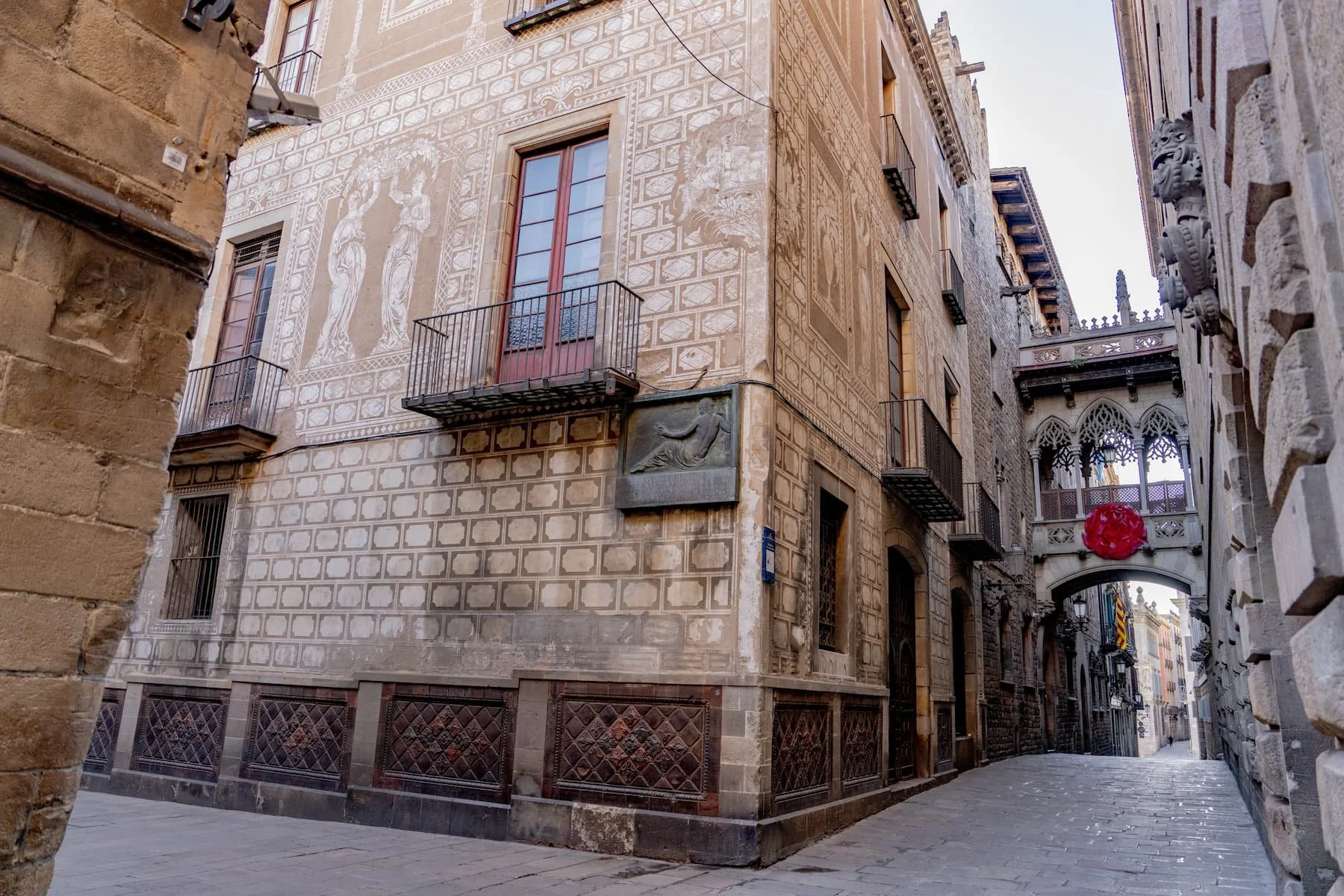
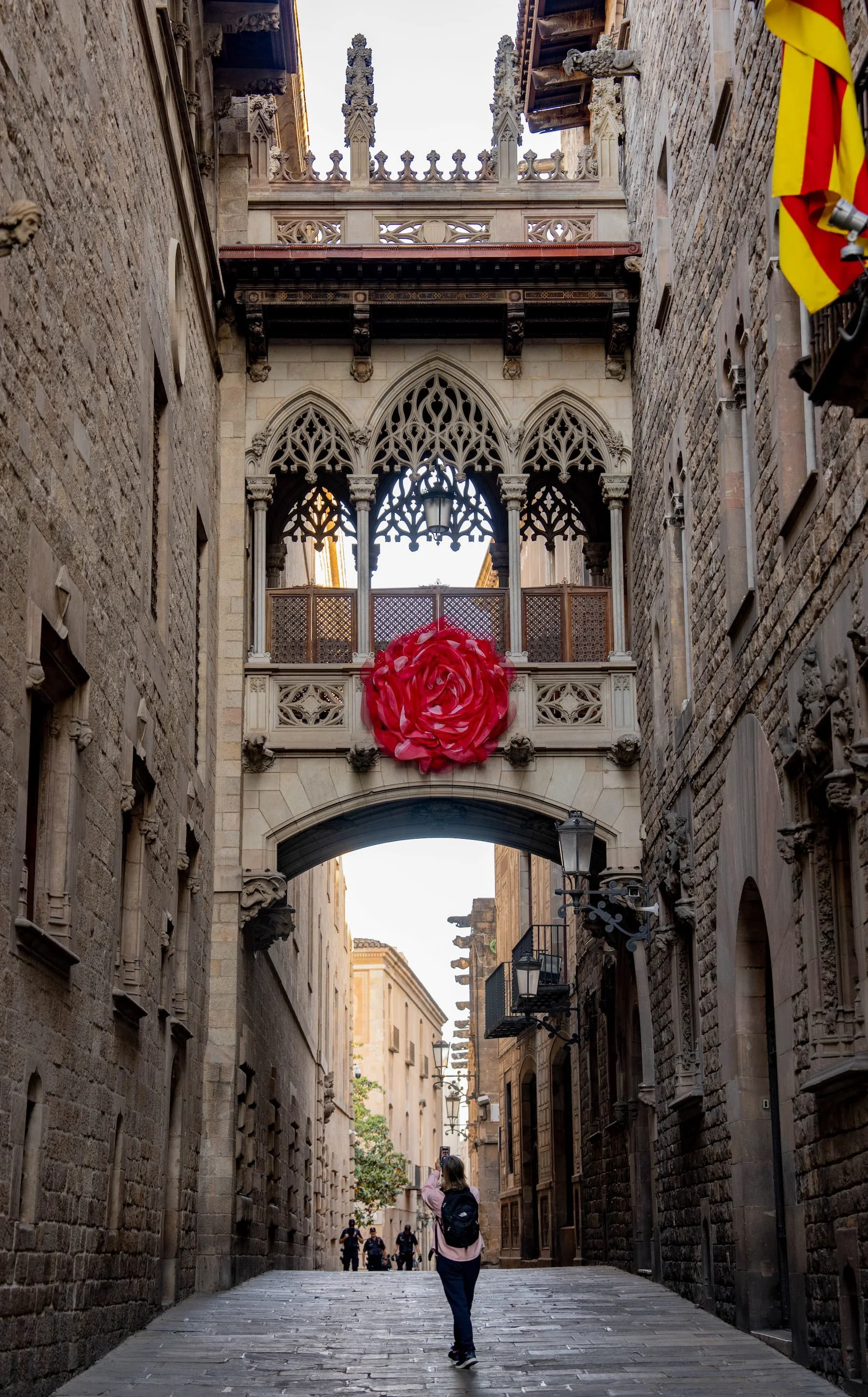
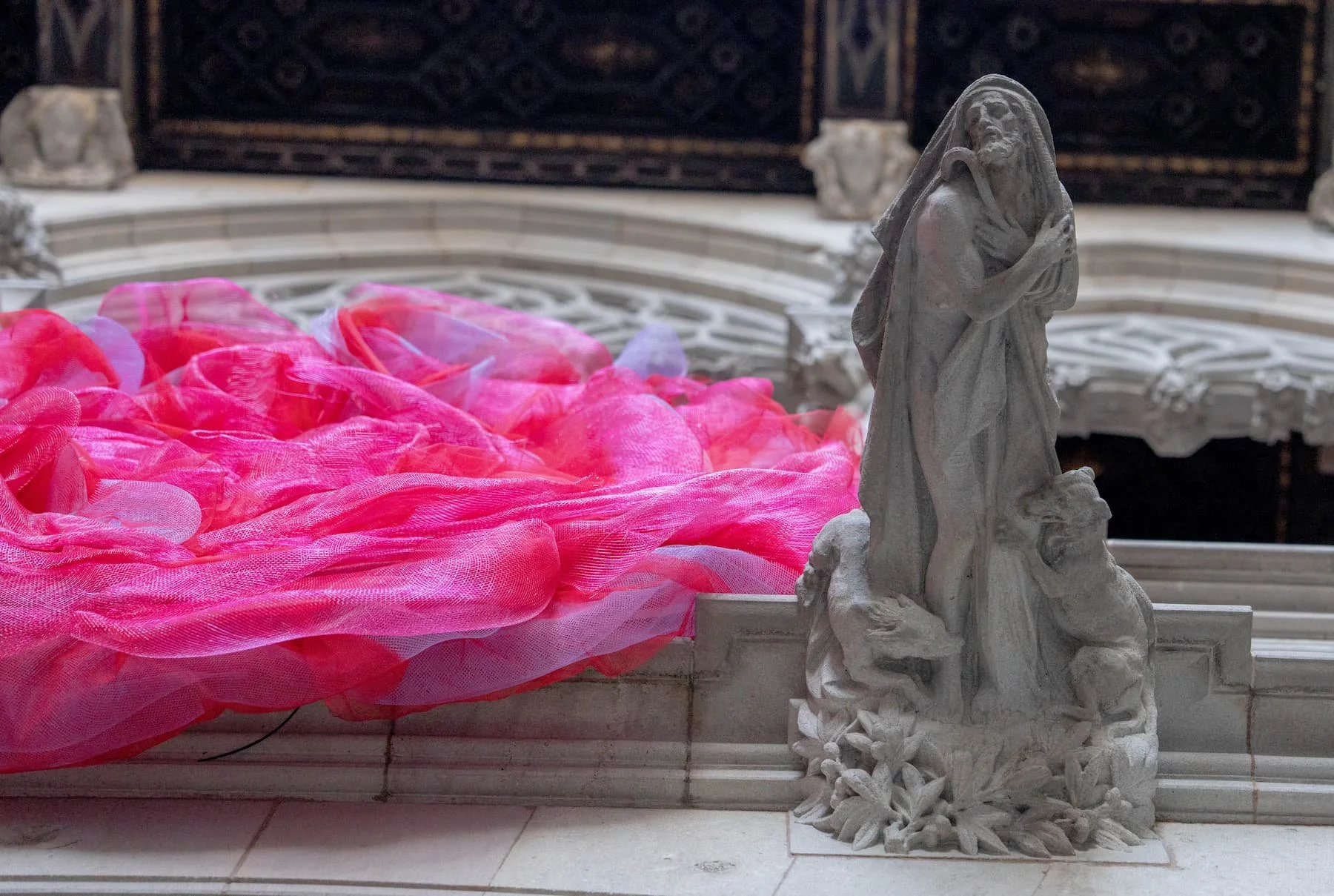
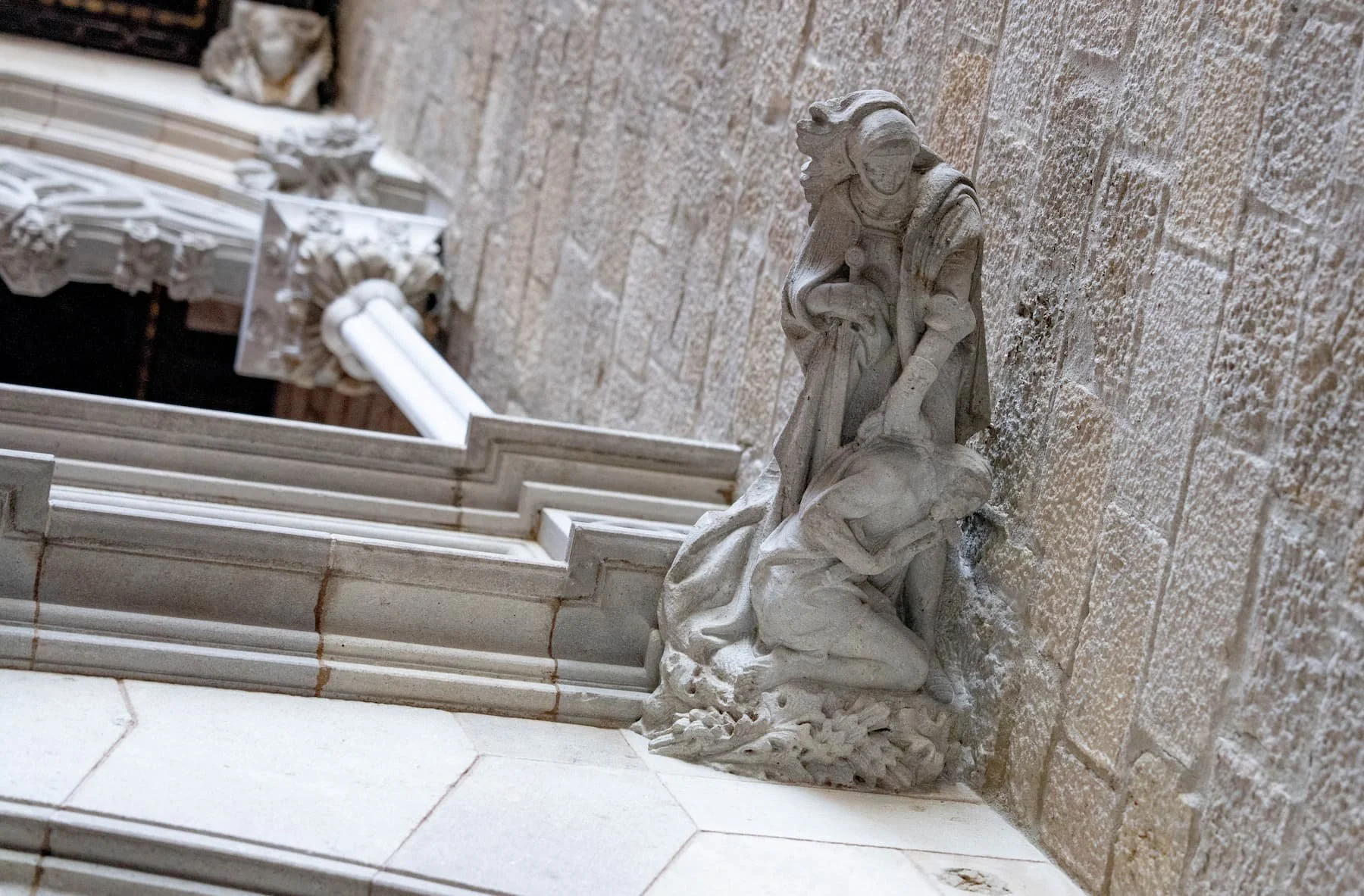
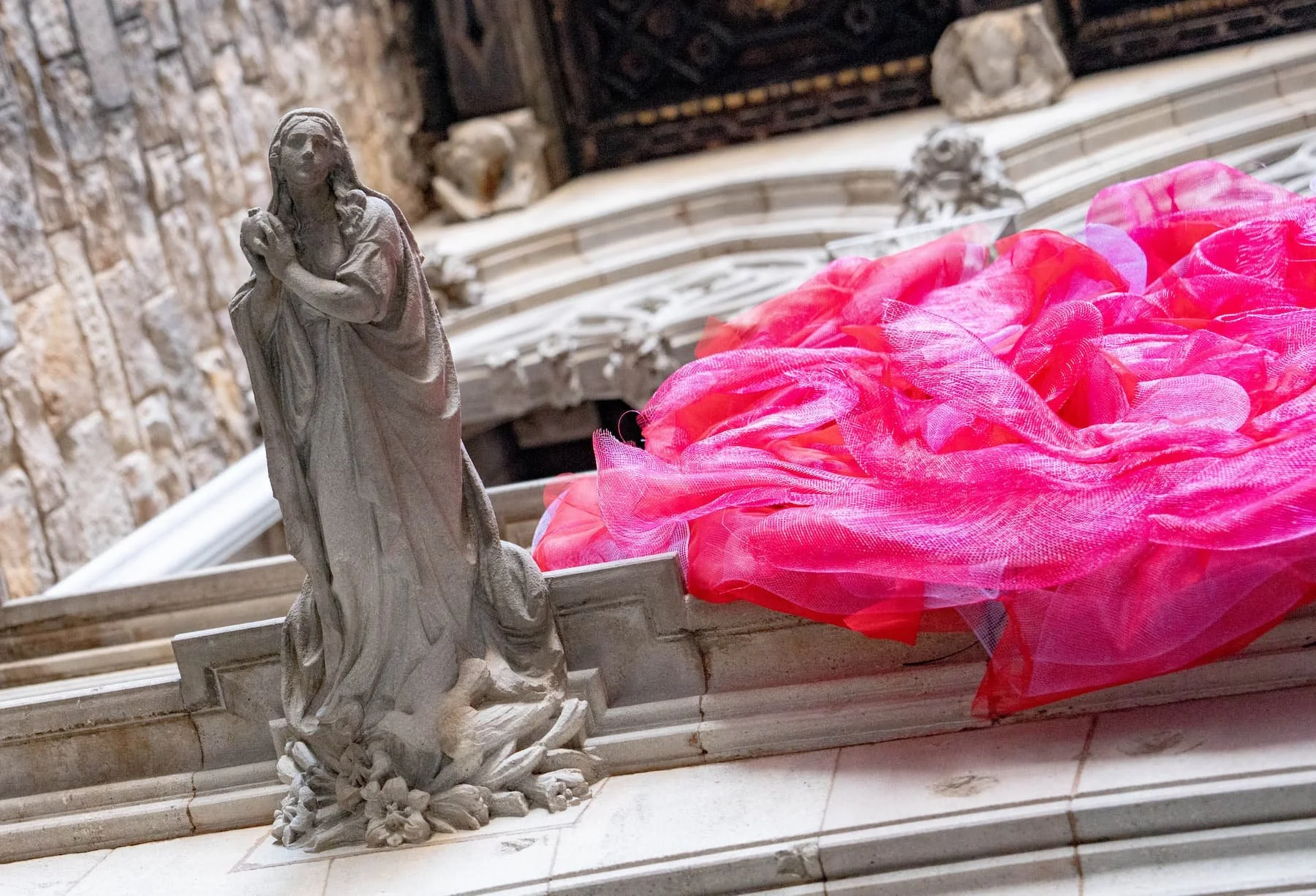
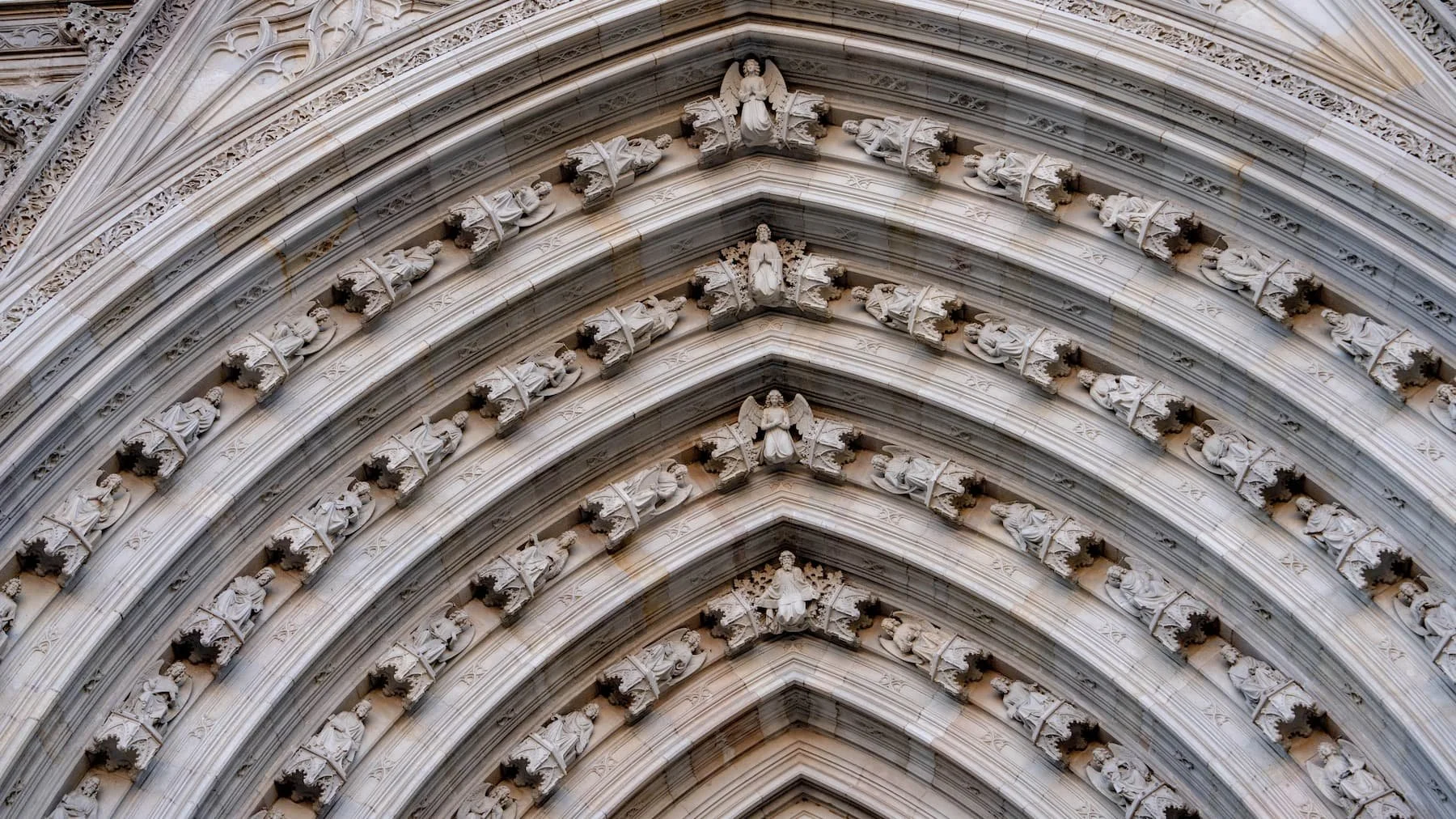
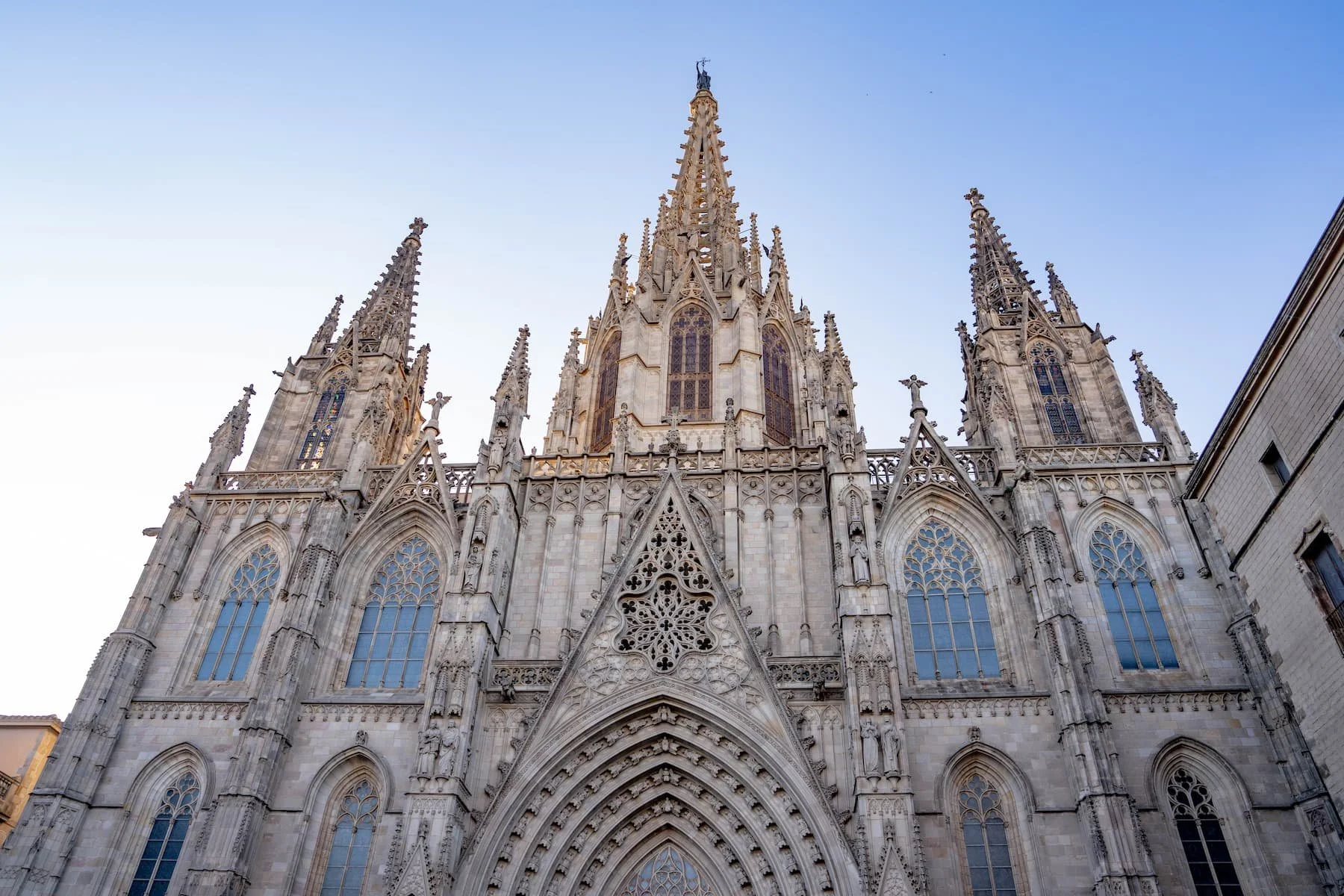
The most prominent element visible from the Pla de la Seu is comparatively modern. The Gothic church stood for some four centuries with a plain, unfinished western front until, at the end of the nineteenth century, the industrialist Manuel Girona i Agrafel funded the completion of a new façade based on earlier plans. The architect Josep Oriol Mestres designed the Neo-Gothic façade with its two lateral pinnacles, and Augusto Font i Carreras added the roughly 70-metre central tower, or cimborio, completed in 1913. Although executed in the Gothic Revival manner, the façade incorporates extensive medieval iconography, including a figure of Christ flanked by the twelve apostles around the central portal, whose deep, banded archivolts are lined with rows of carved figures and angels.
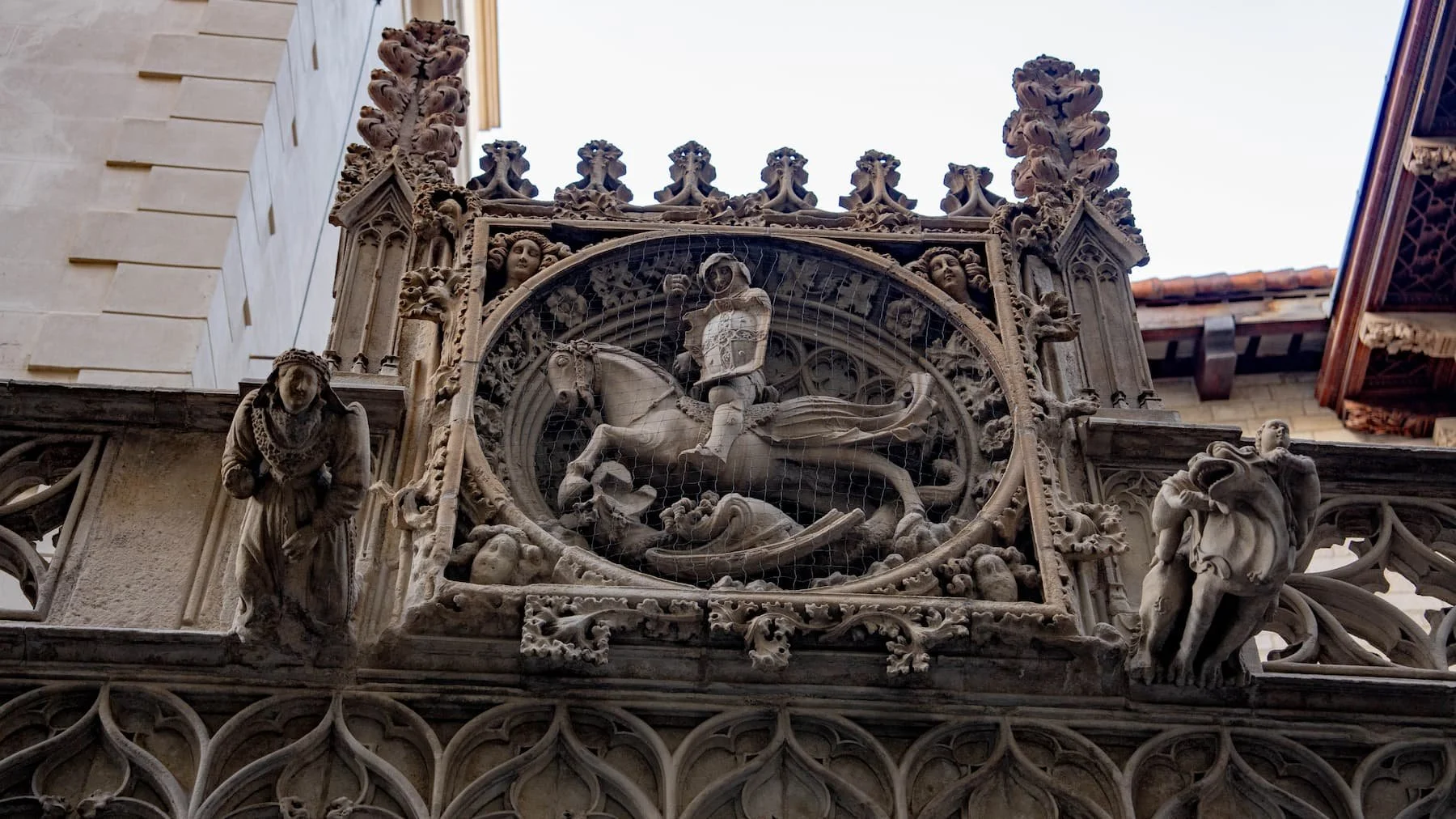
The roofline and cornices carry a menagerie of gargoyles in the form of real and mythical creatures, including dragons, a unicorn, and an elephant, which serve to channel rainwater from the roof. The adjoining cloister has four groin-vaulted galleries enclosing a garden and fountain, and includes a terracotta relief of Saint George by Antoni Claperós. The cloister is traditionally home to thirteen white geese, said to represent the age of Saint Eulalia at her martyrdom.
One image shows a nearby but separate structure often photographed with the cathedral: the Pont del Bisbe (Bishop's Bridge) on Carrer del Bisbe, an ornate covered walkway. Despite its medieval appearance, it is a Neo-Gothic addition designed by Joan Rubió i Bellver and built in 1928, connecting the Palau de la Generalitat with the Canons' House.
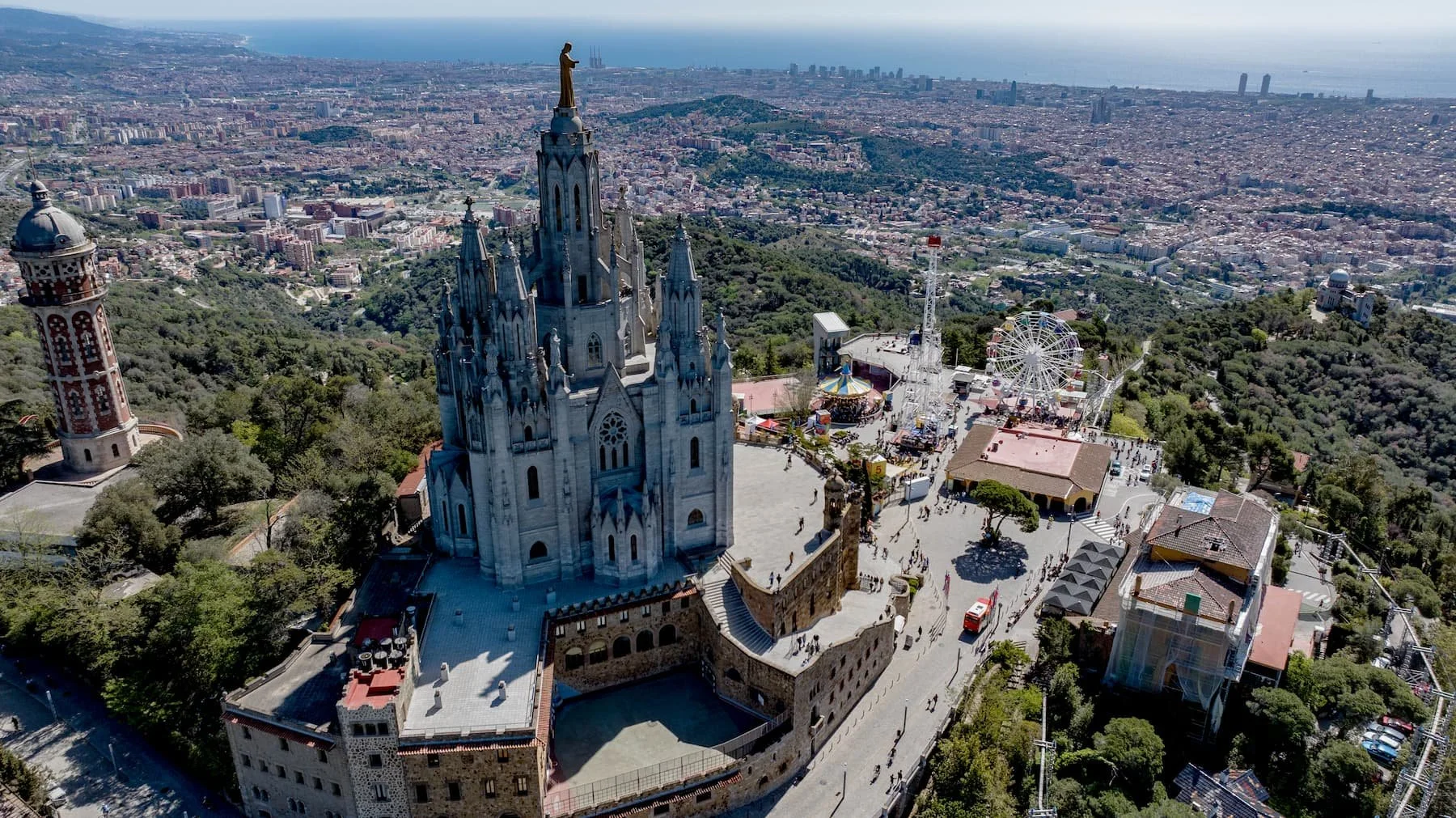
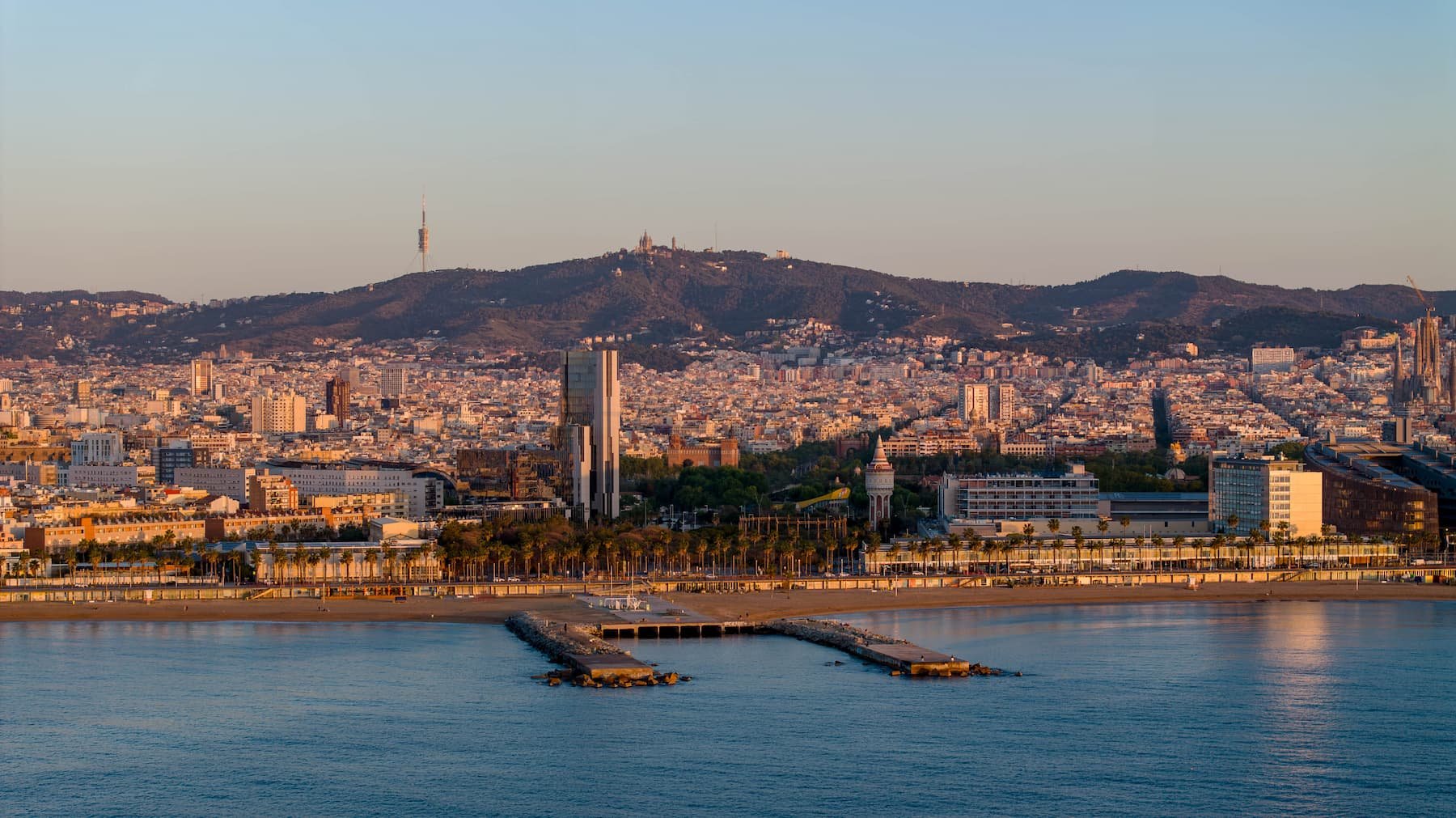
Three days in Barcelona ended the way they should, up high, with the whole city laid out below me. I had spent the trip chasing one building from every angle, and on the last morning I went looking for the two landmarks that crown the Collserola ridge. Both sit on the green spine of hills that walls Barcelona off from the interior, and both are visible from almost anywhere in the city. Getting up close to them, by drone and on foot, felt like the right way to say goodbye.
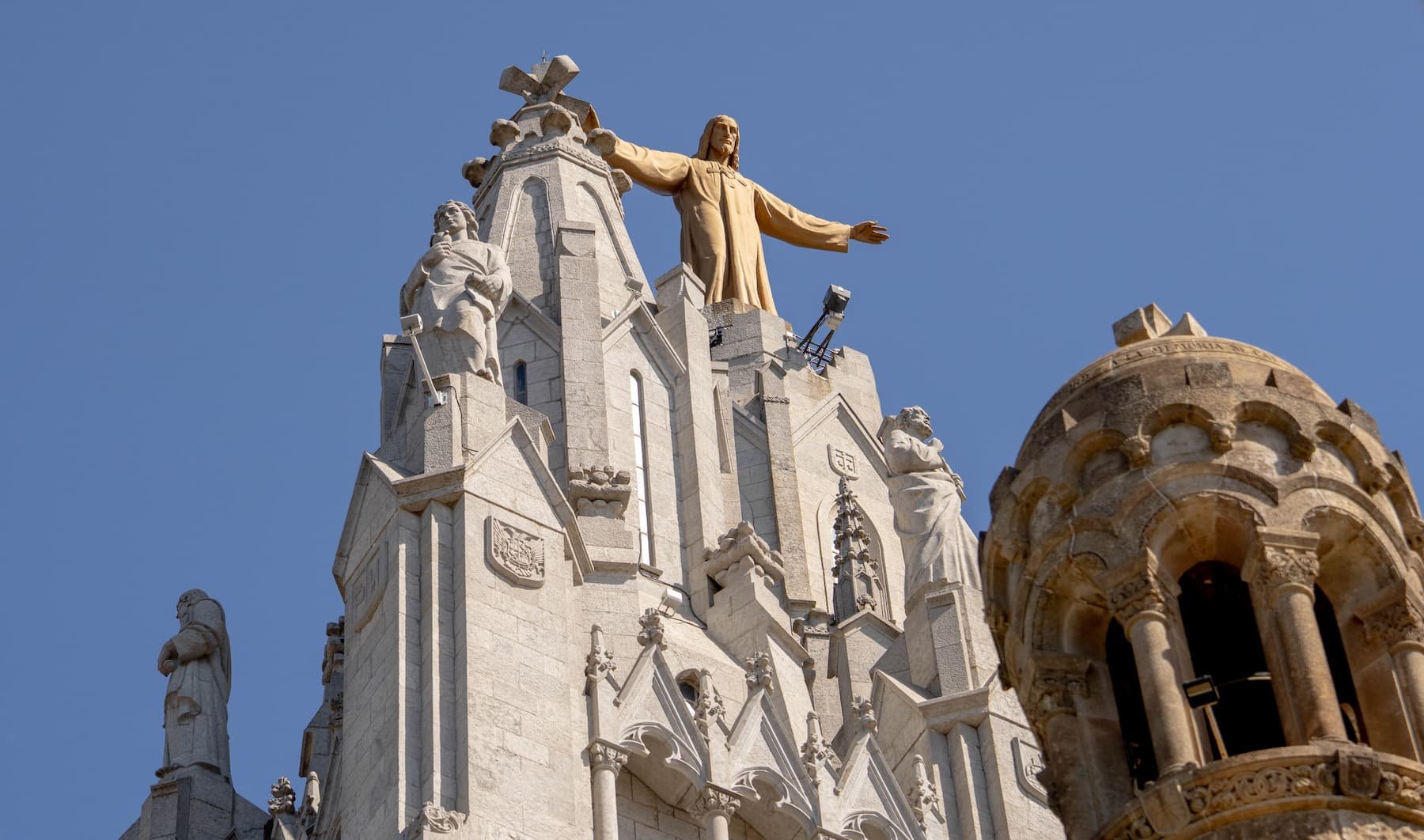
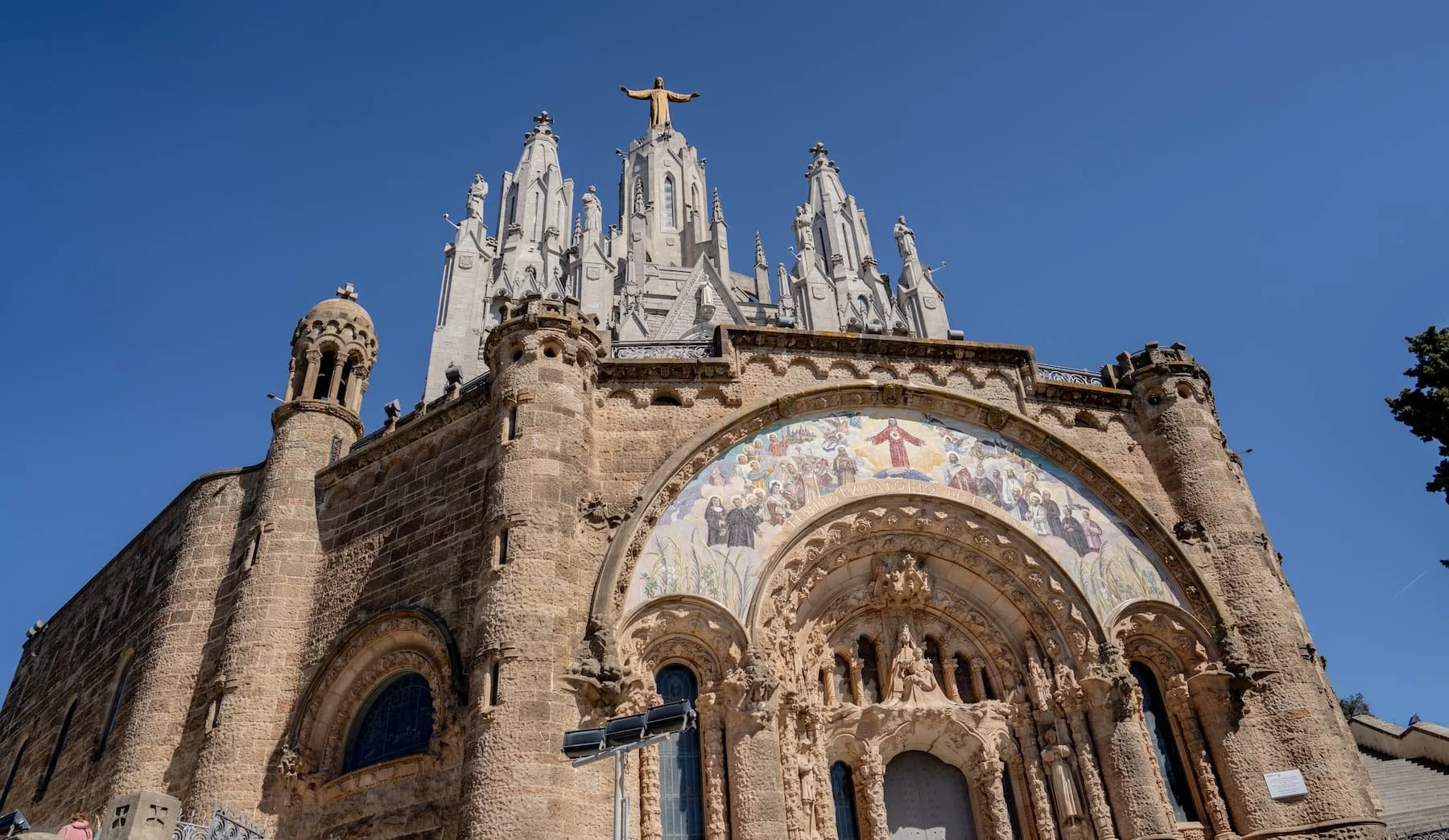
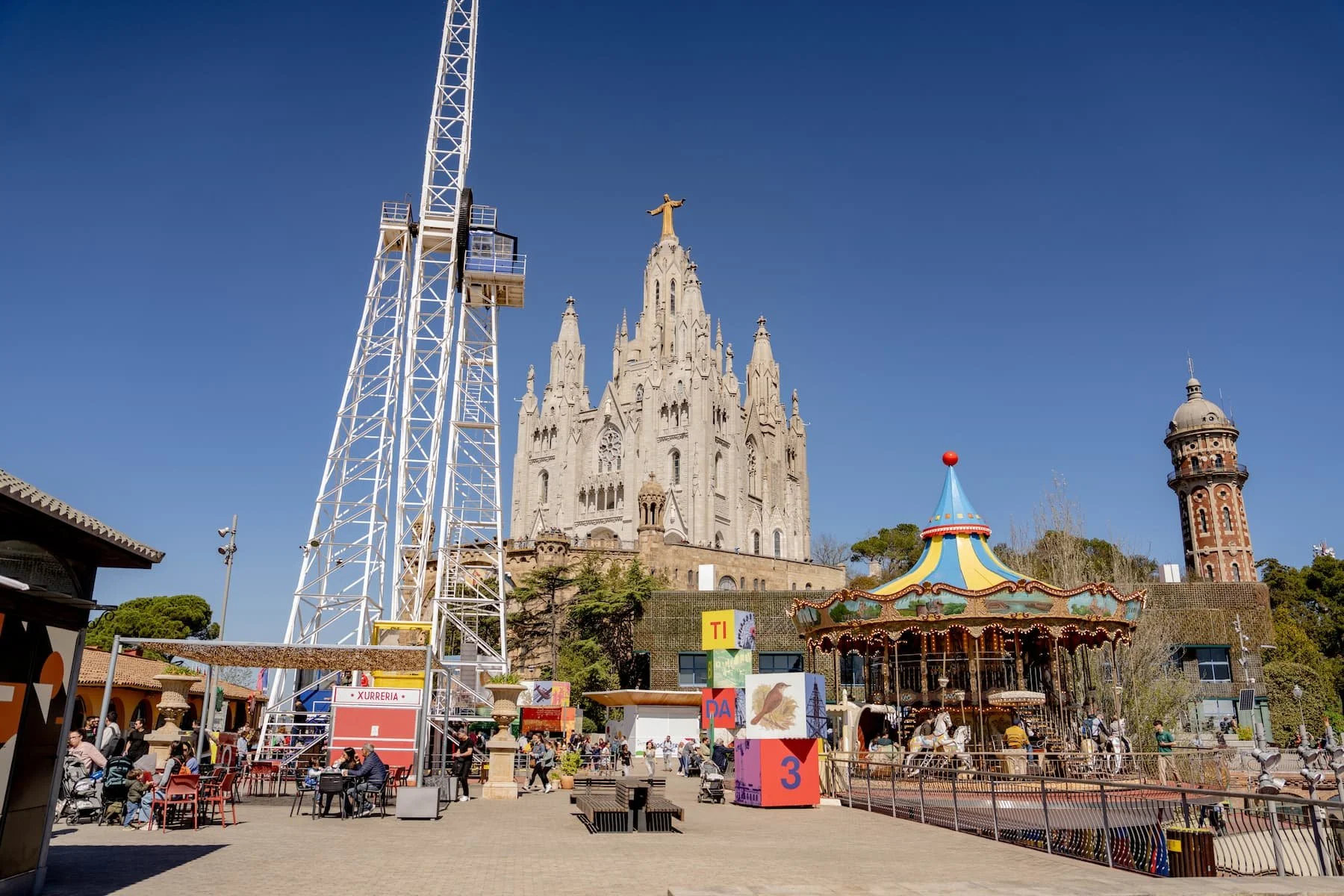
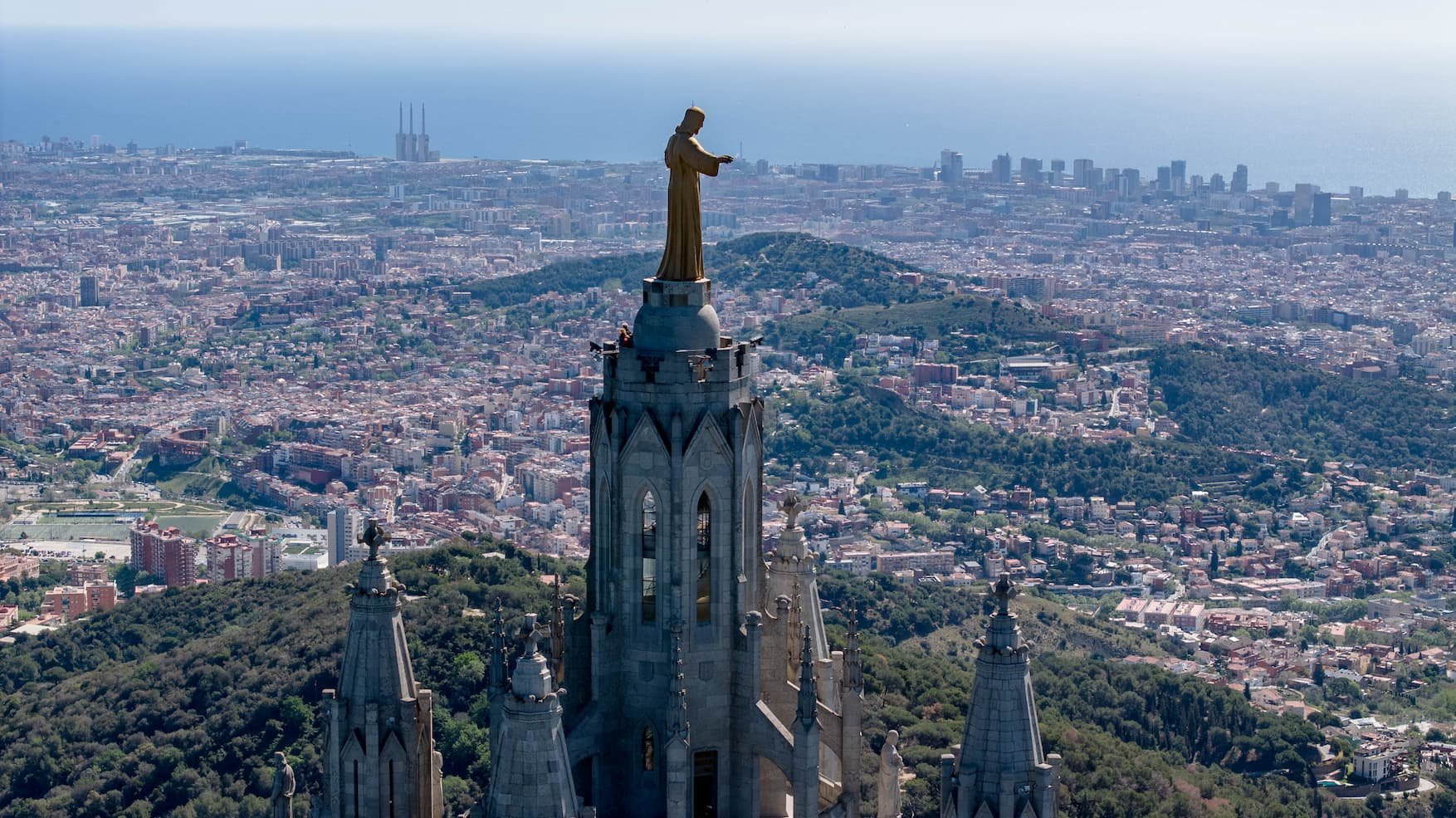
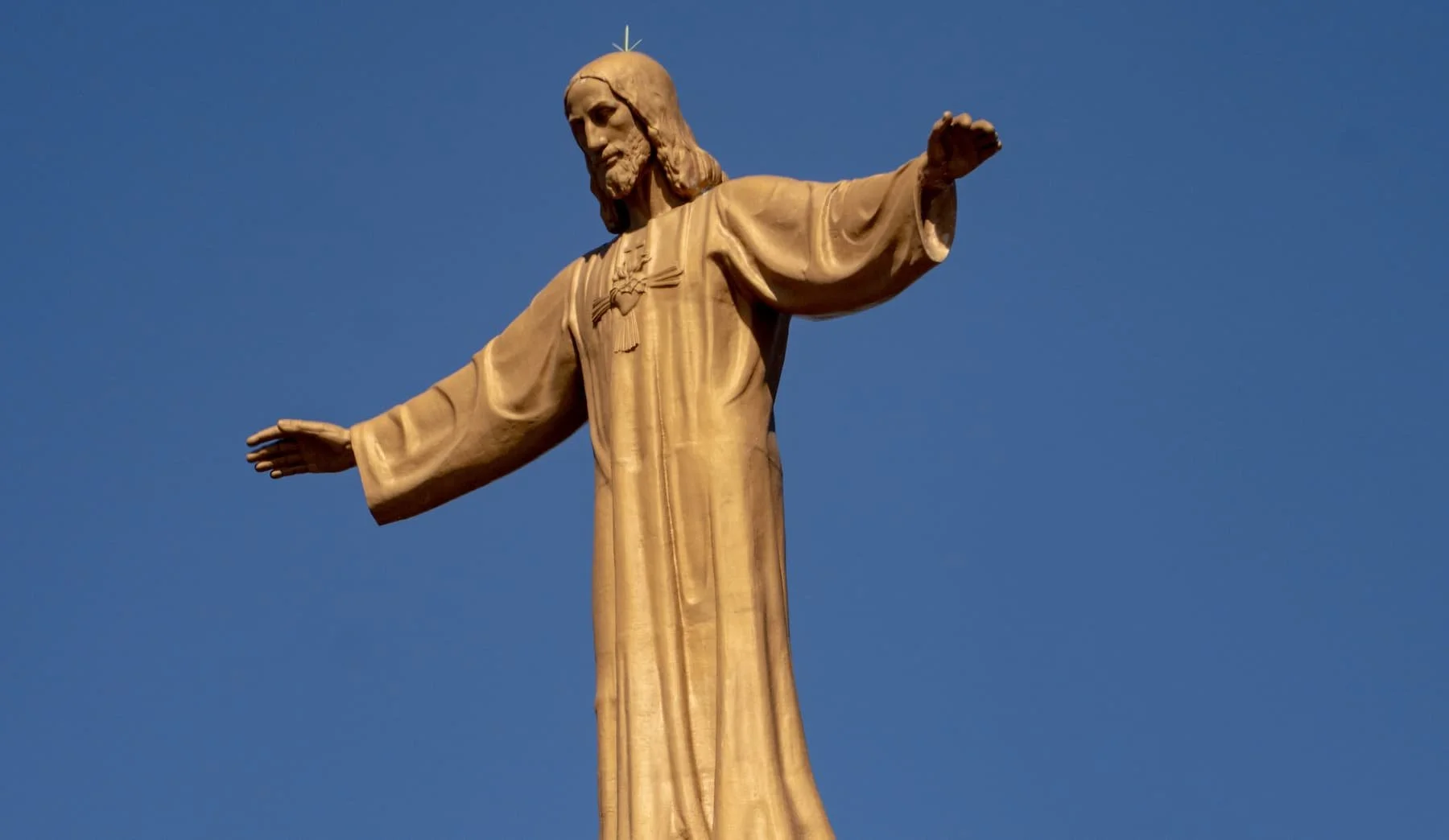
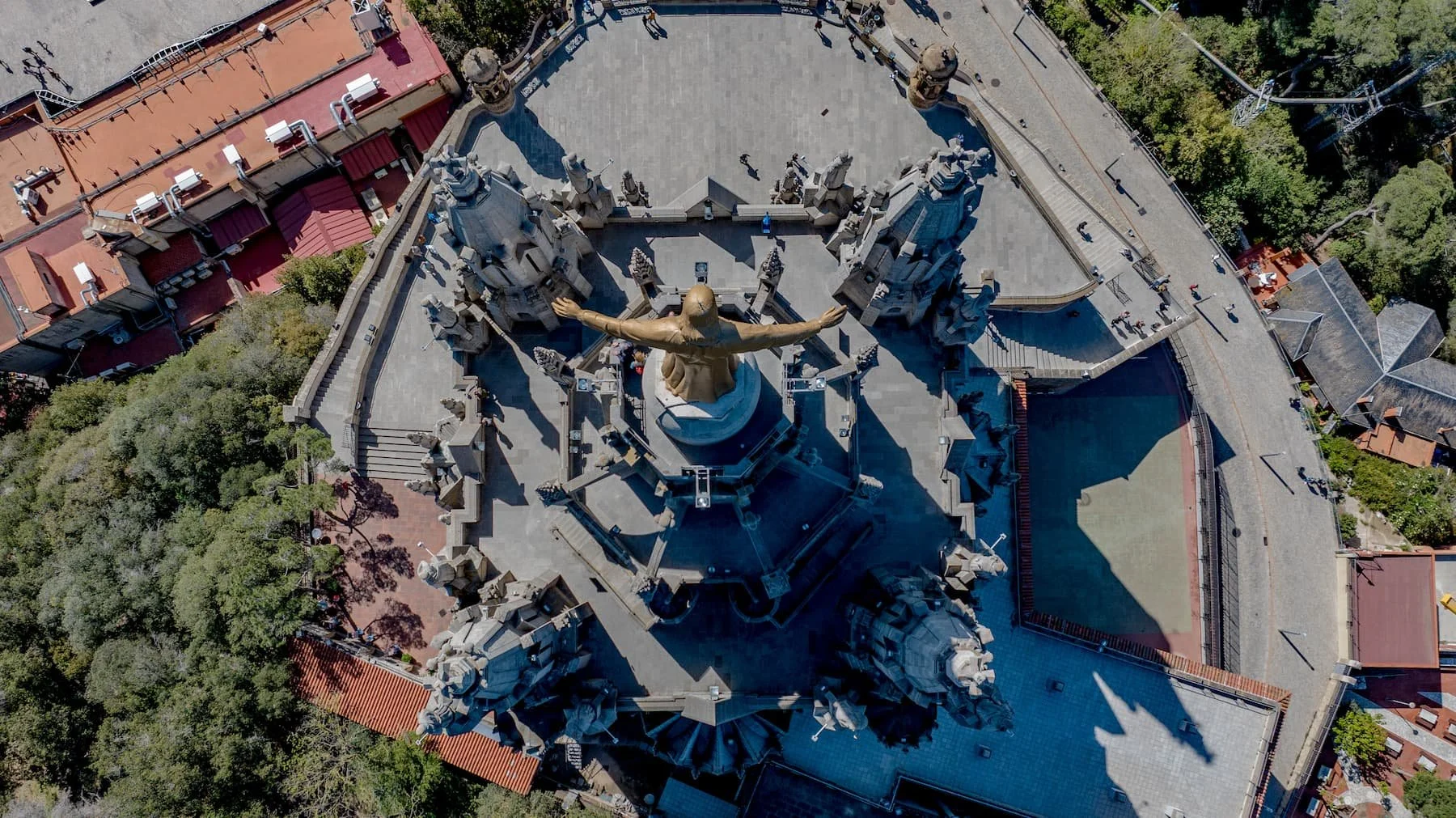
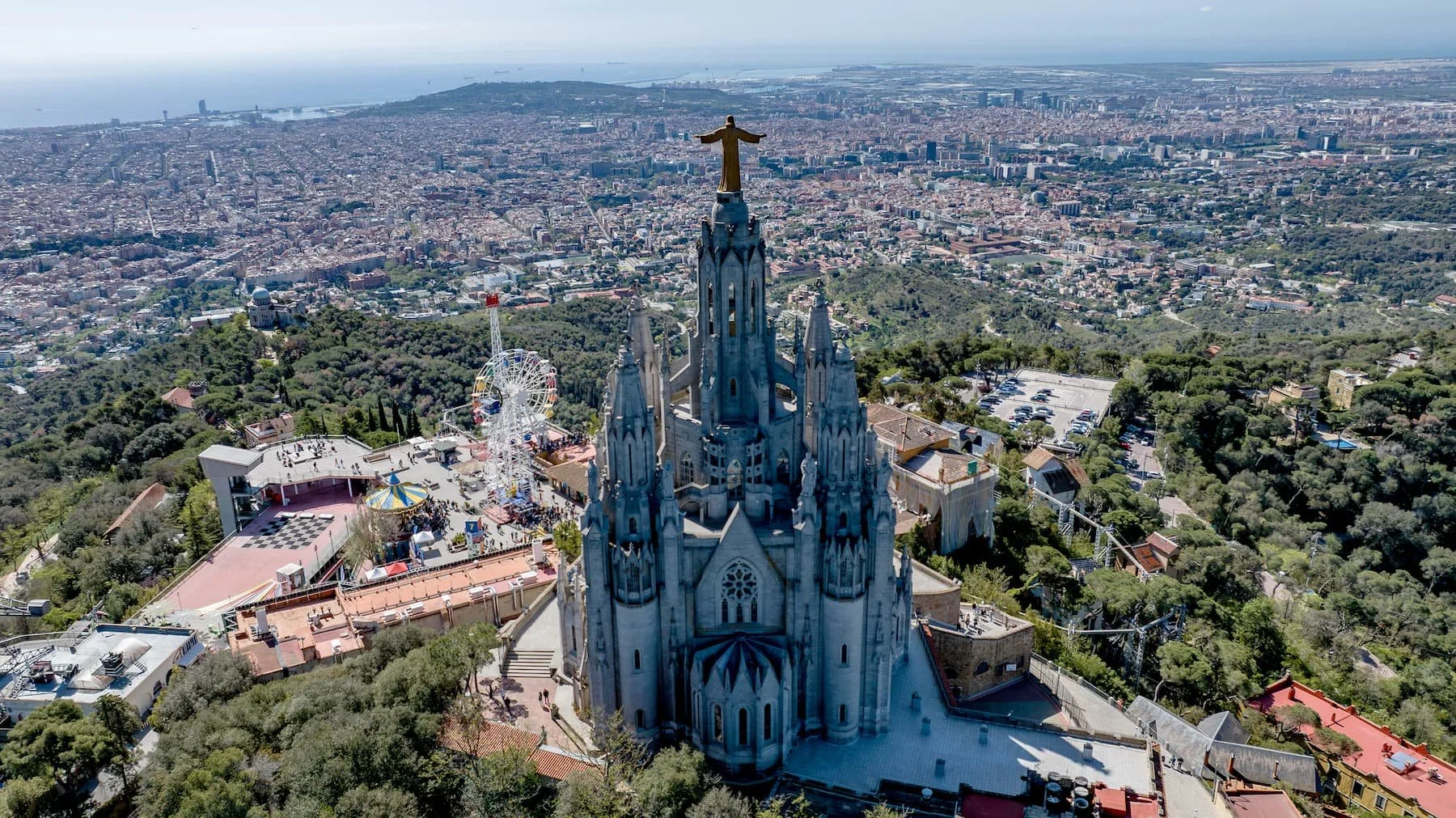
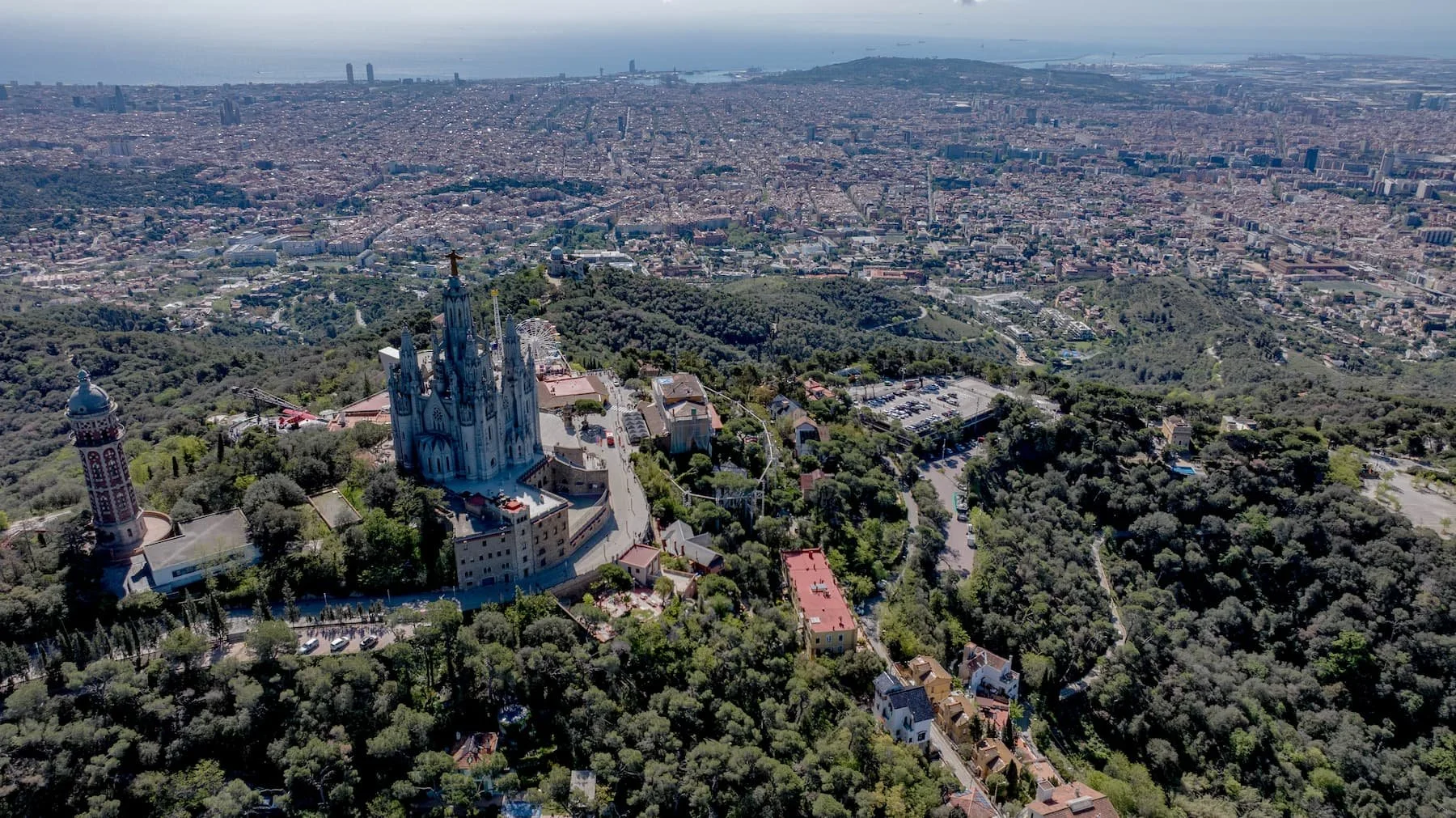
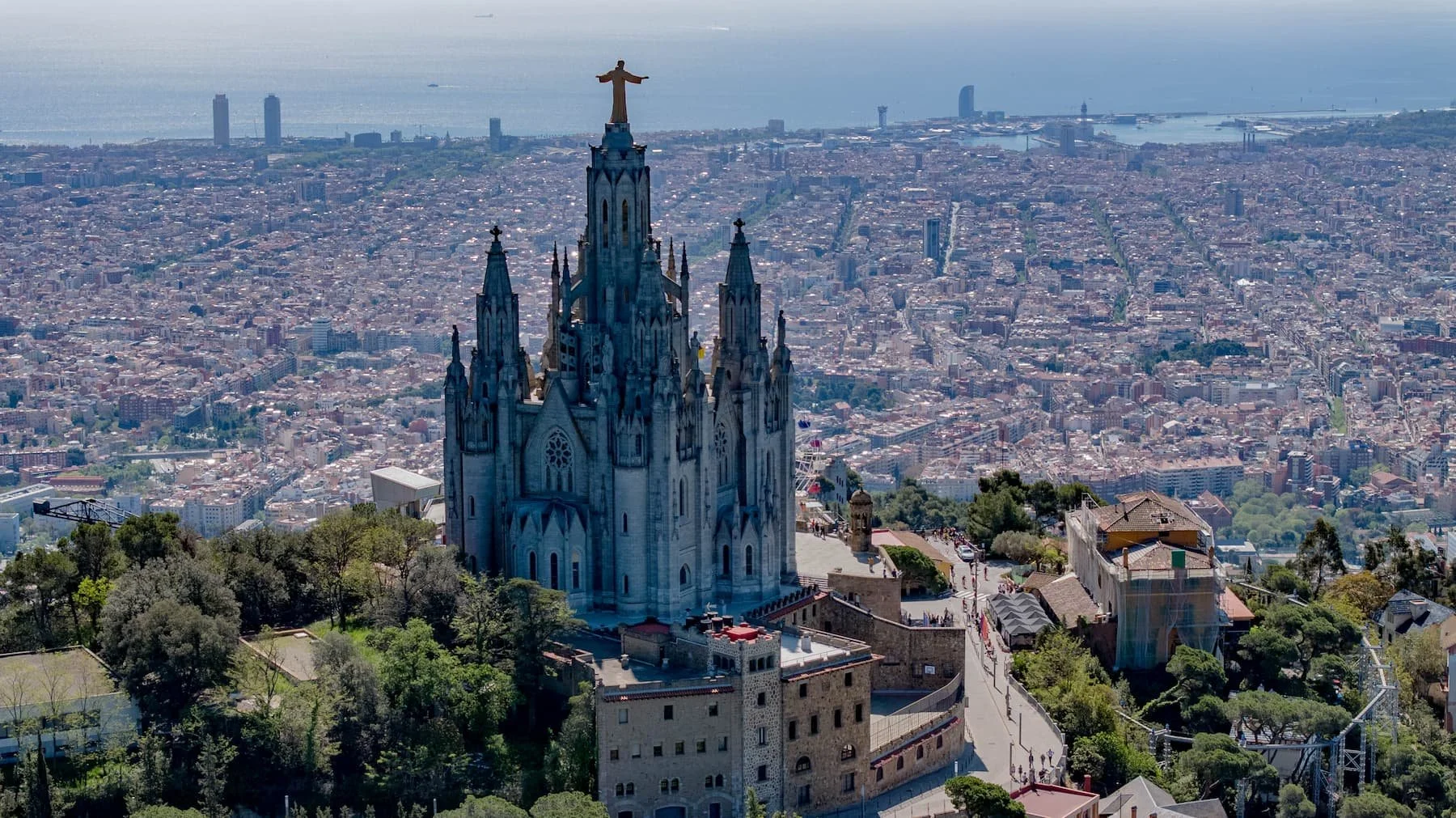
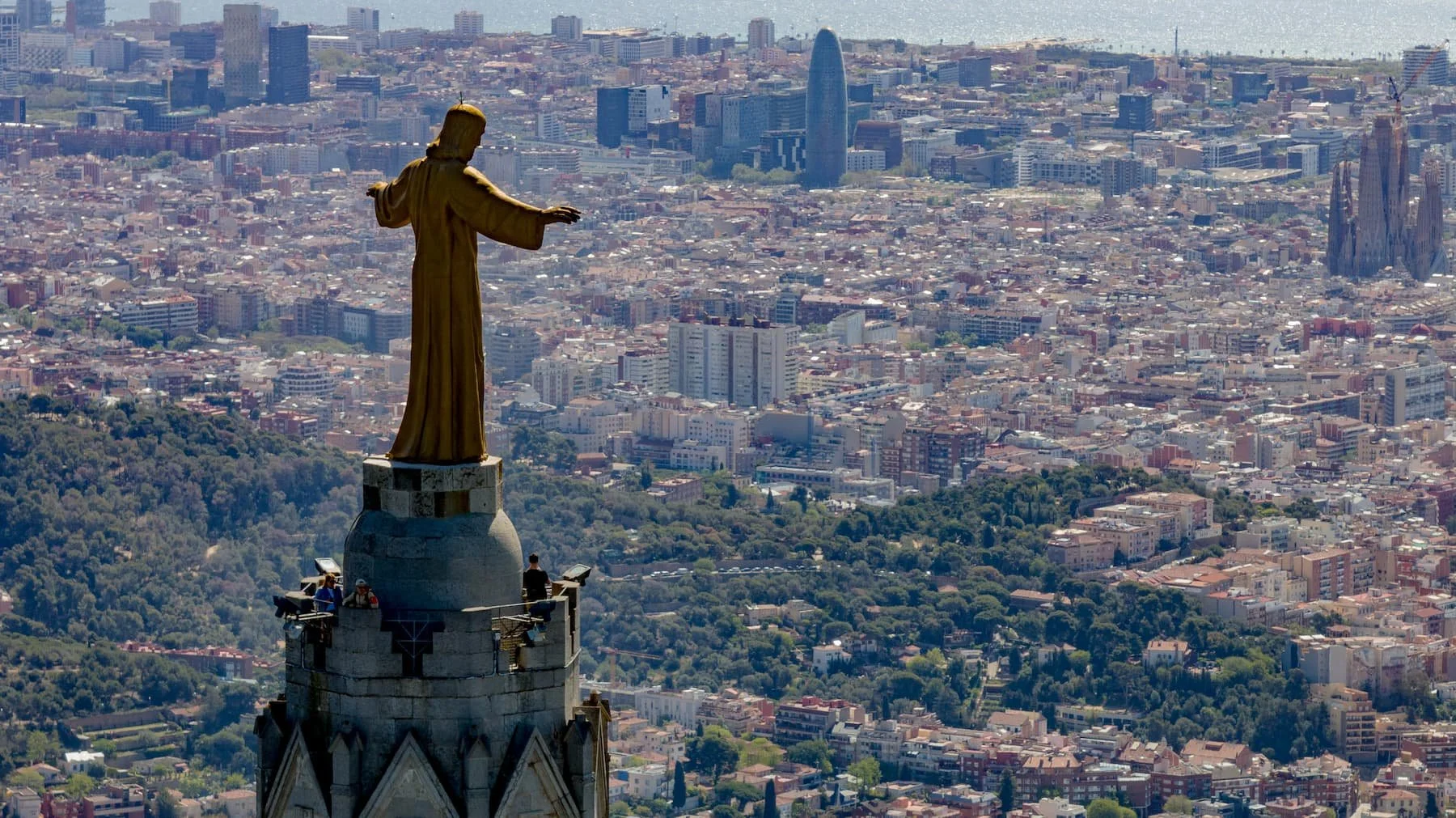
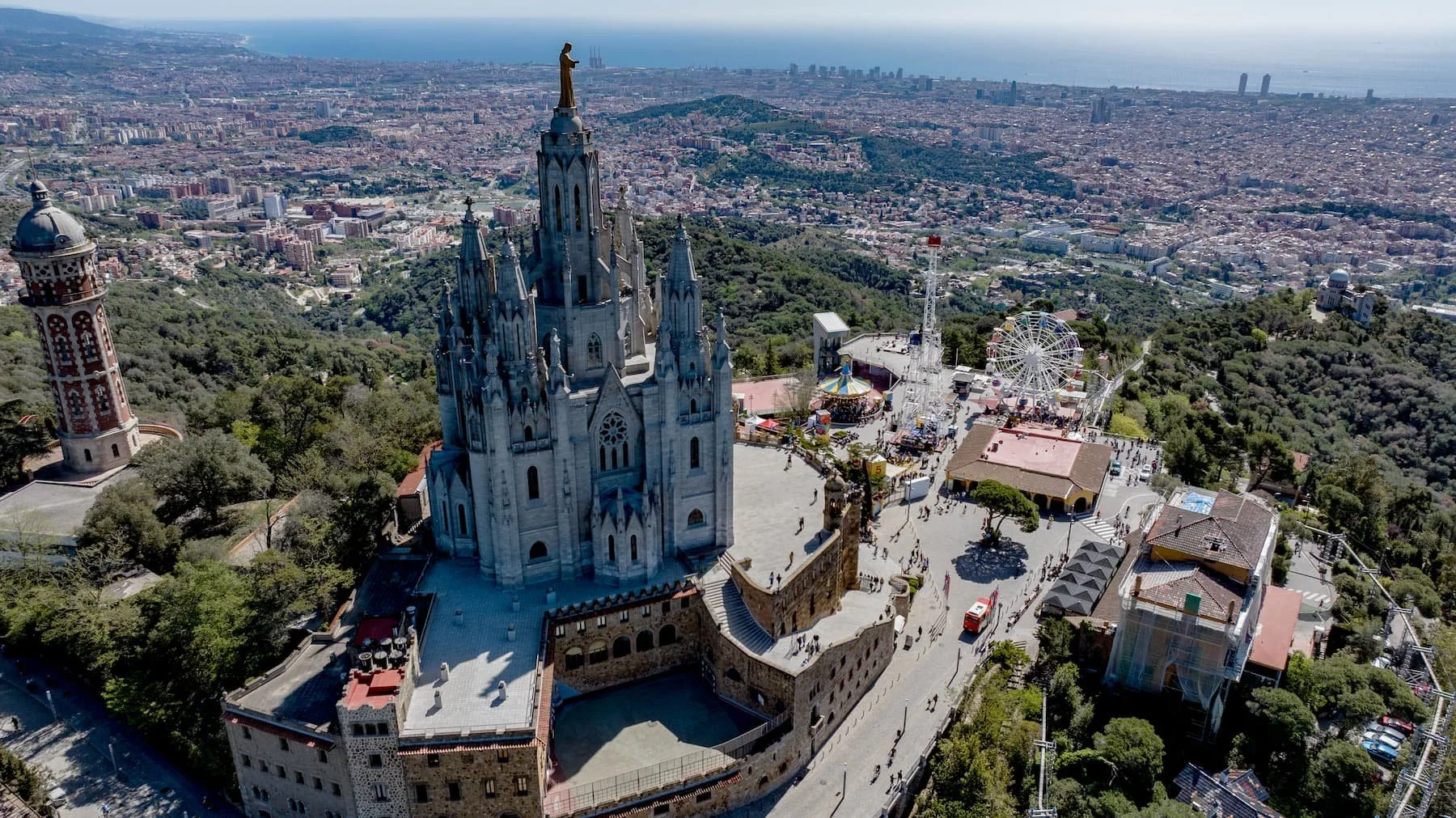
First was the Temple Expiatori del Sagrat Cor, the church that sits on the summit of Tibidabo, the highest point over the city. From the air the scale finally landed. A neo-Gothic upper church rising off a fortress-like stone base, crowned by the gilded statue of the Sacred Heart with its arms thrown open toward the sea. Straight down from above, the building opens into a strange and perfect symmetry, the statue at the center of a stone star, the shadow of the spire thrown long across the terrace. And right next door, a Ferris wheel and an old funfair, because only in Barcelona does a holy mountain come with an amusement park bolted to its side. The gold figure looks out over an endless grid of rooftops running all the way down to the Mediterranean.
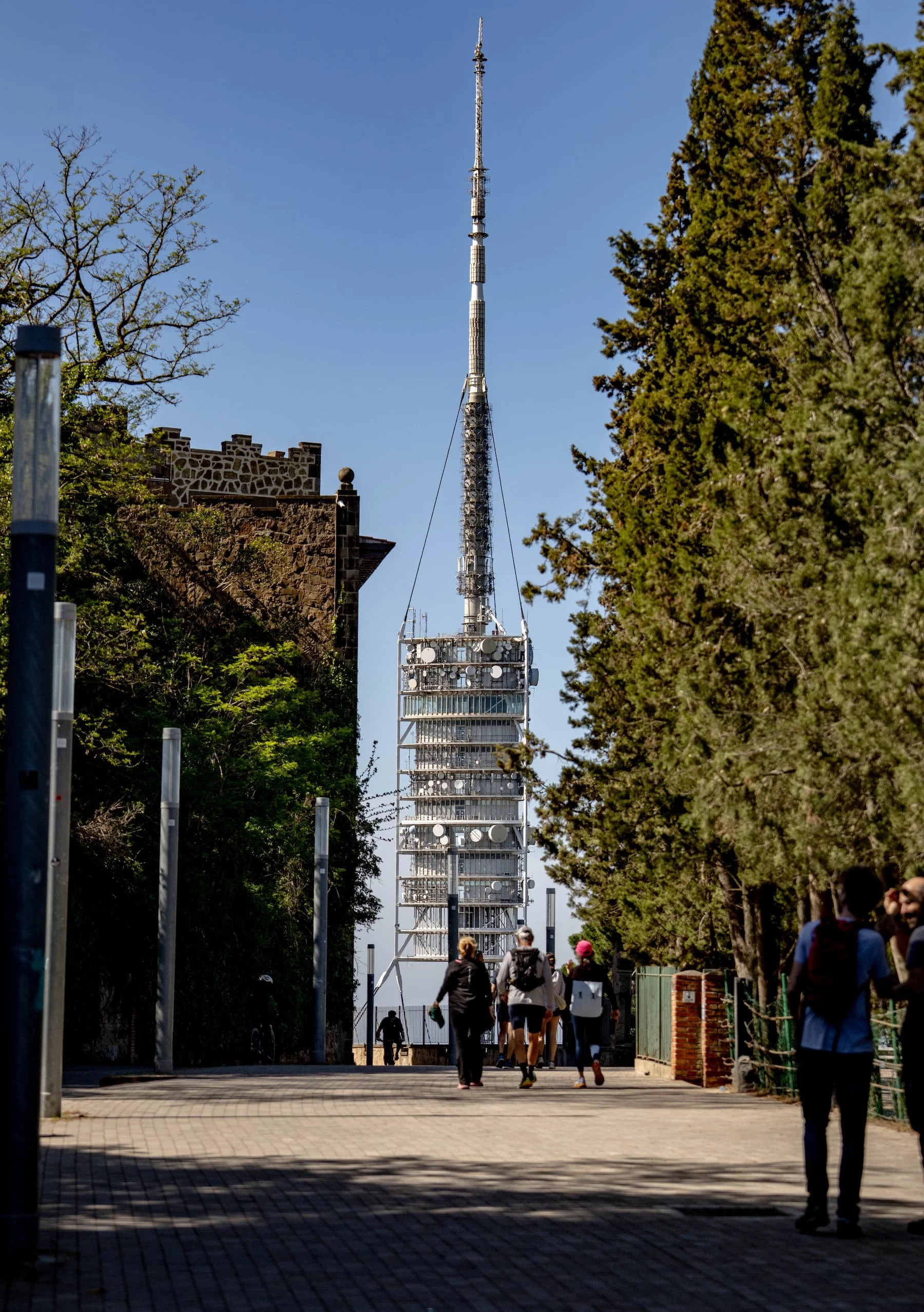
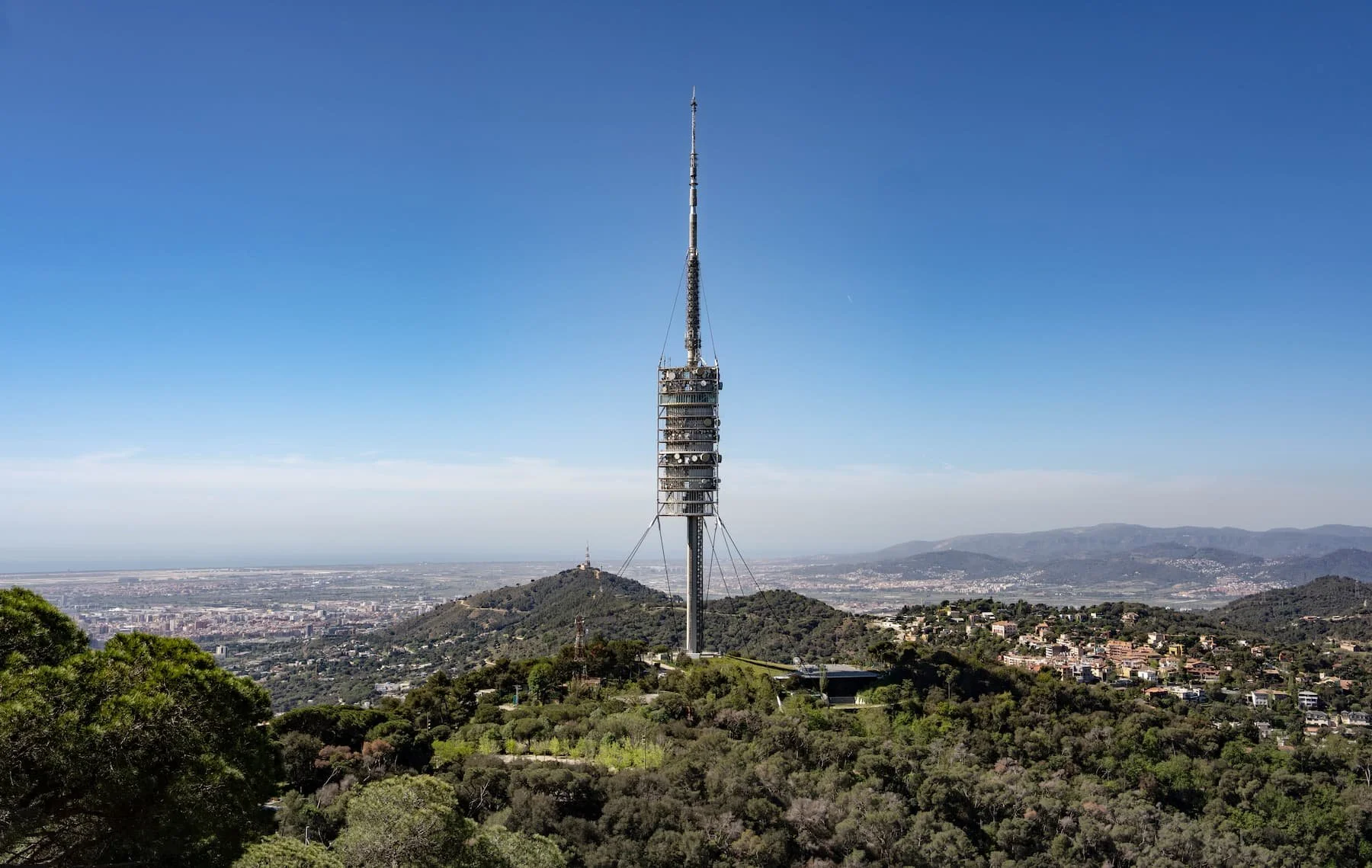
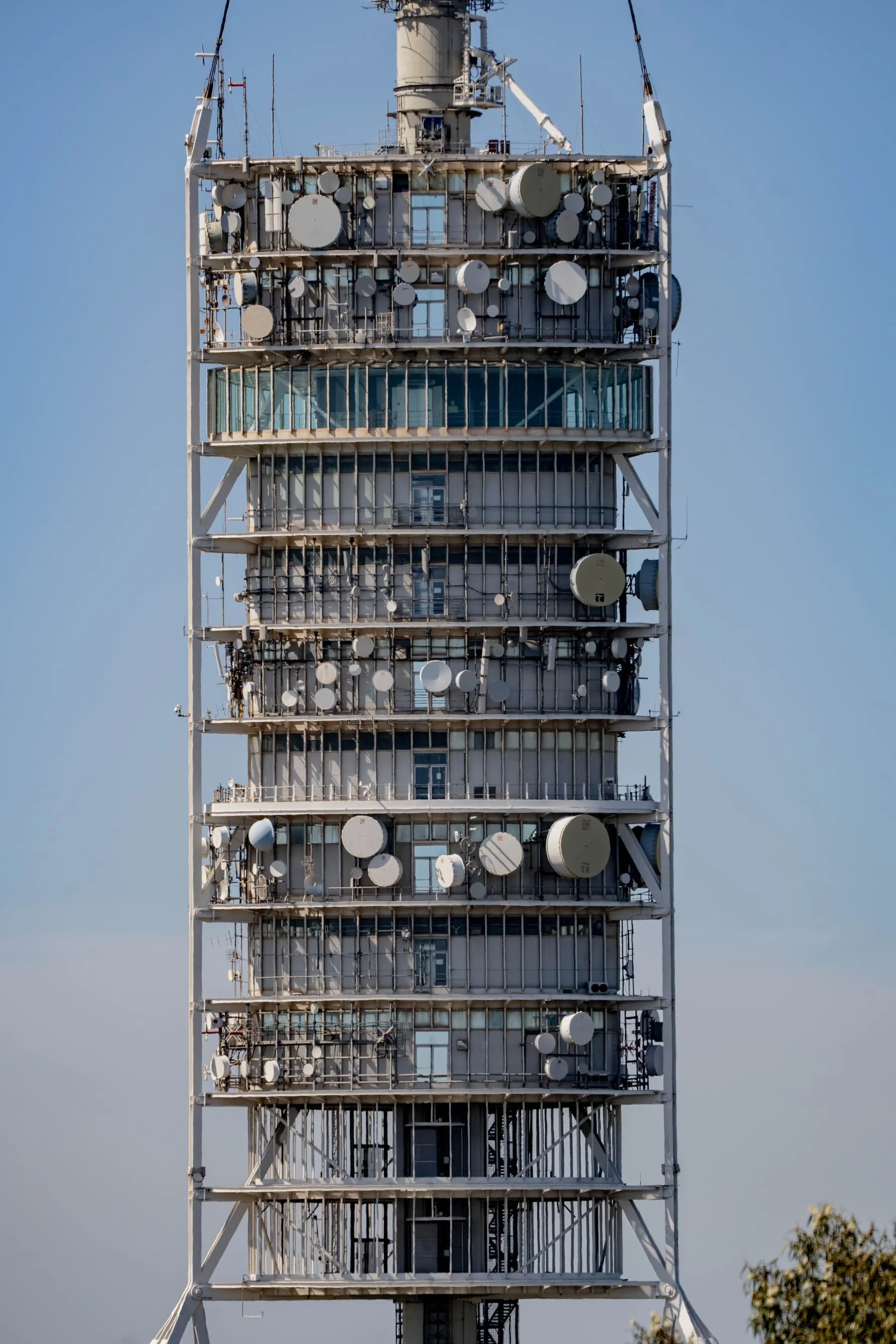
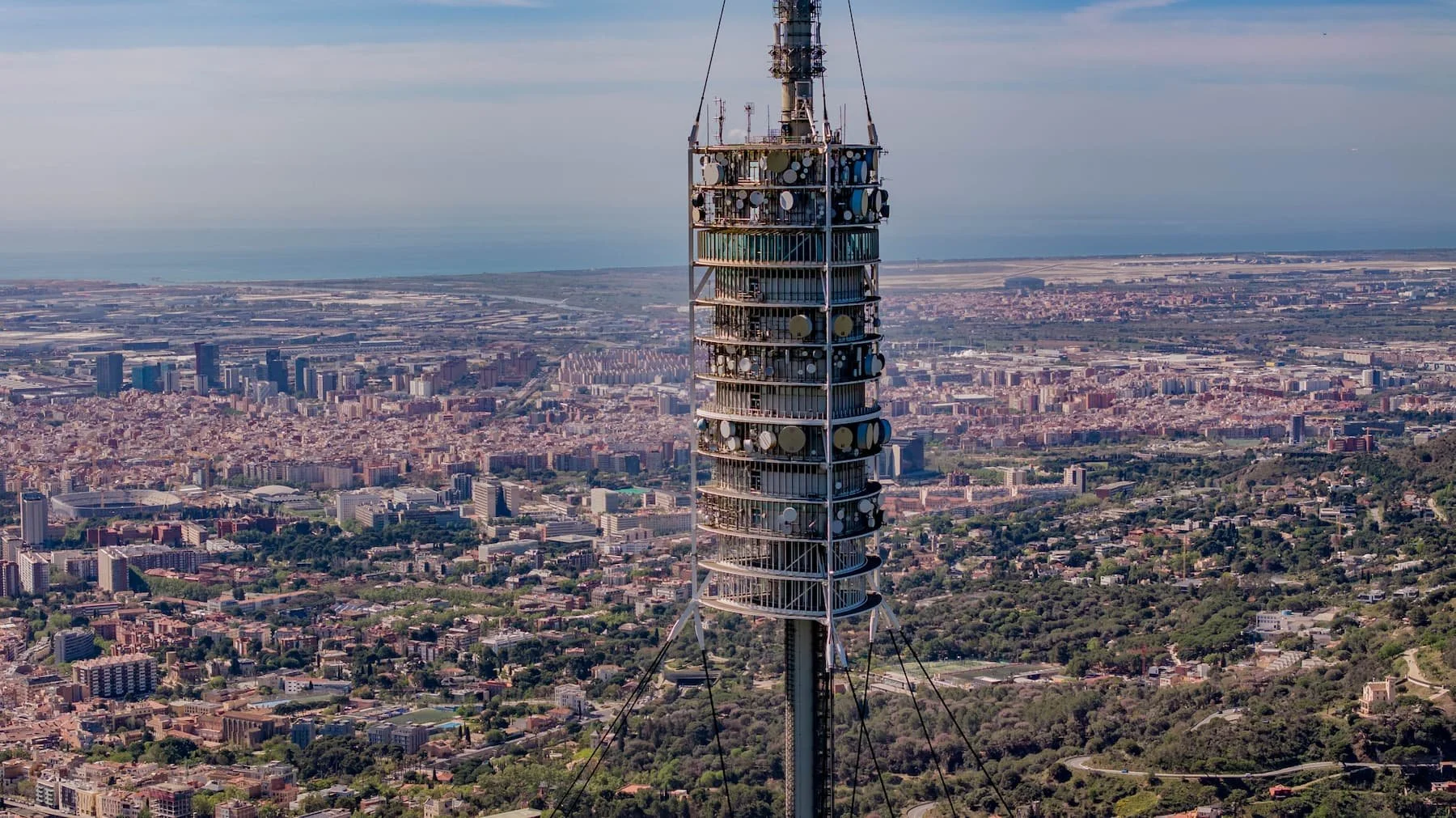
Then came the Torre de Collserola on the next hill over, and it could not be more different. Where the basilica is stone and devotion and a hundred years of slow building, the tower is Norman Foster's clean answer to a single question, how to put a communications mast on a mountain without ruining the mountain. A needle-thin white shaft, decks of dishes and drums hung off it on cables, a spike of antenna reaching almost 300 meters into the sky. From below, walking up the path with everyone else, it looks like something dropped in from the future. From the air, it stands alone over the trees, the tallest thing in Barcelona.
That contrast is the whole city in a single view. Old and new, sacred and technical, hand-carved stone and engineered steel, all sharing the same skyline and somehow all belonging together. Gaudí's unfinished basilica, a Gothic cathedral, a red brick arch, a beach at sunrise, a festival in the street, and two landmarks watching over it all from the hills. Three days was not enough. It never is. But I flew to Italy with a full card and a short list of reasons to come back. Stay tuned for full blog posts from Montserrat and my time in Italy.
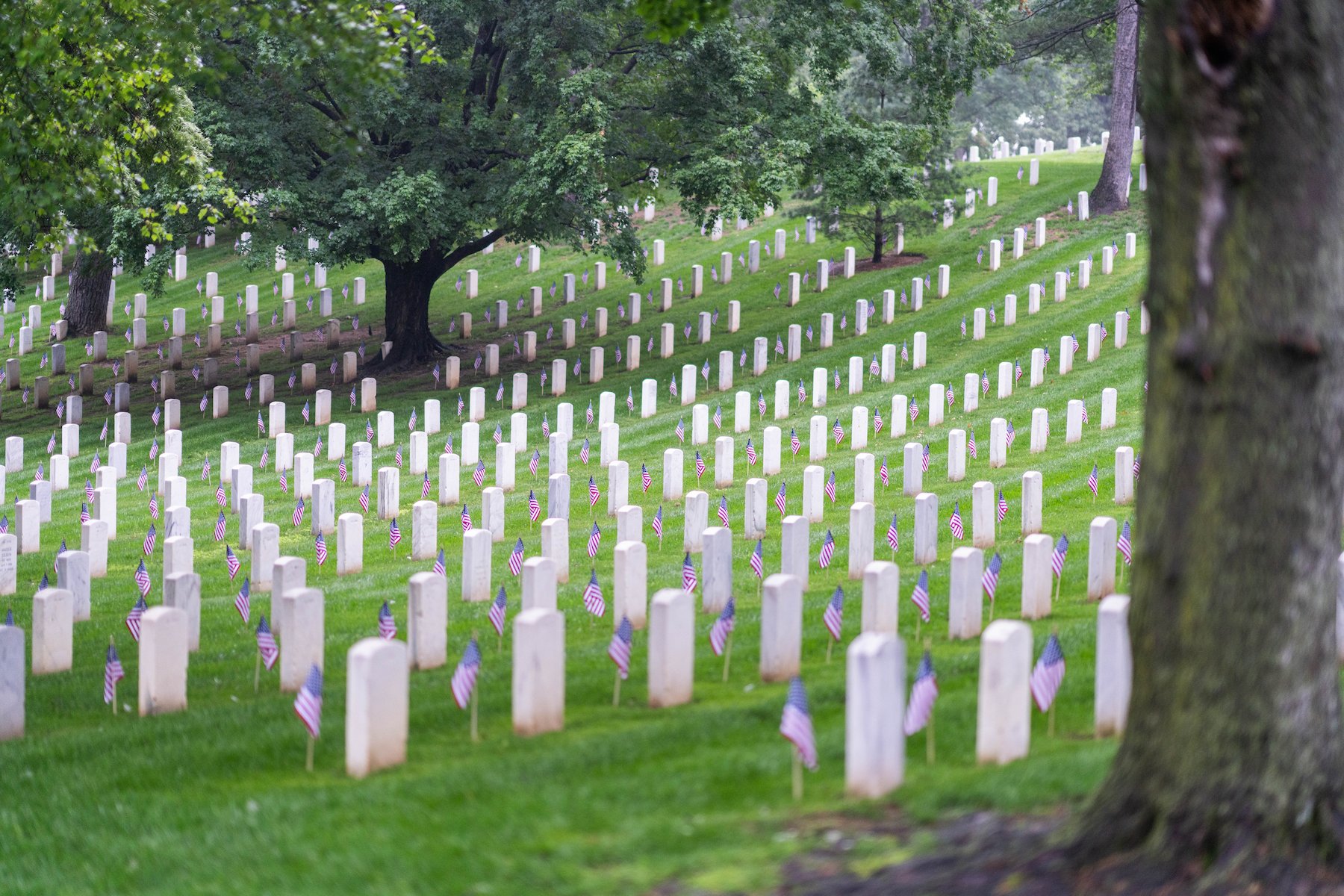
Soldiers Place Flags at 260,000 Graves at Arlington Ahead of Memorial Day
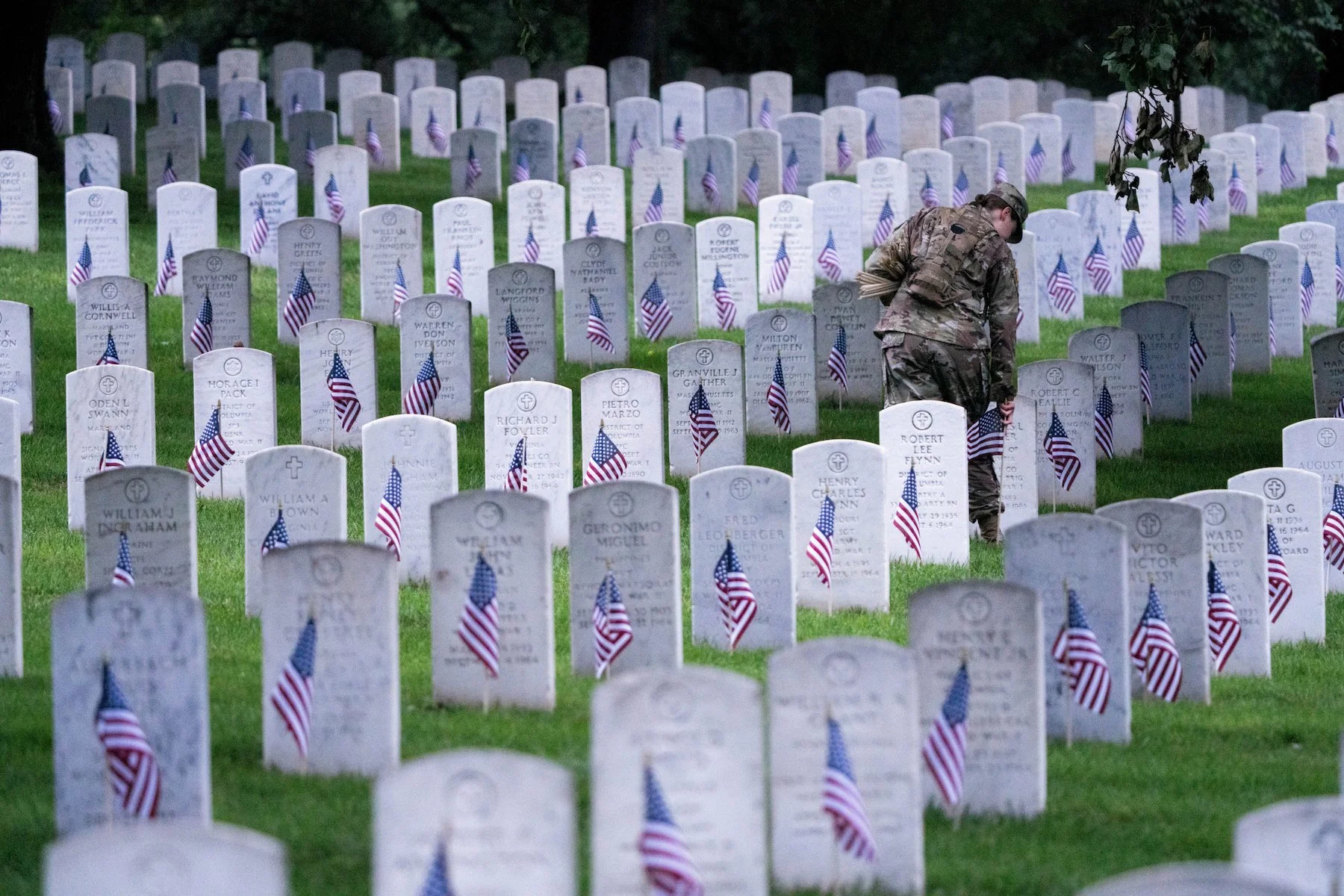
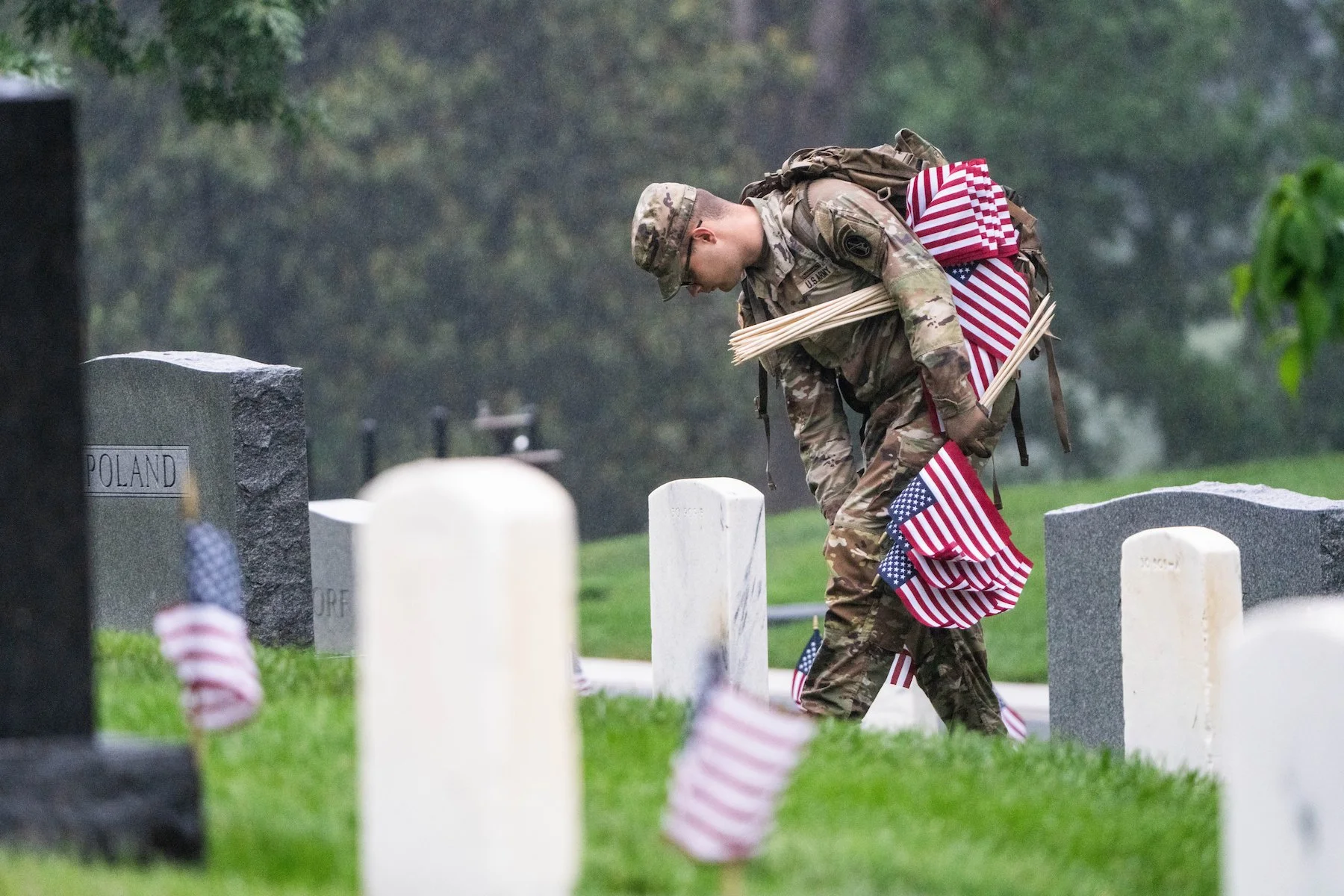
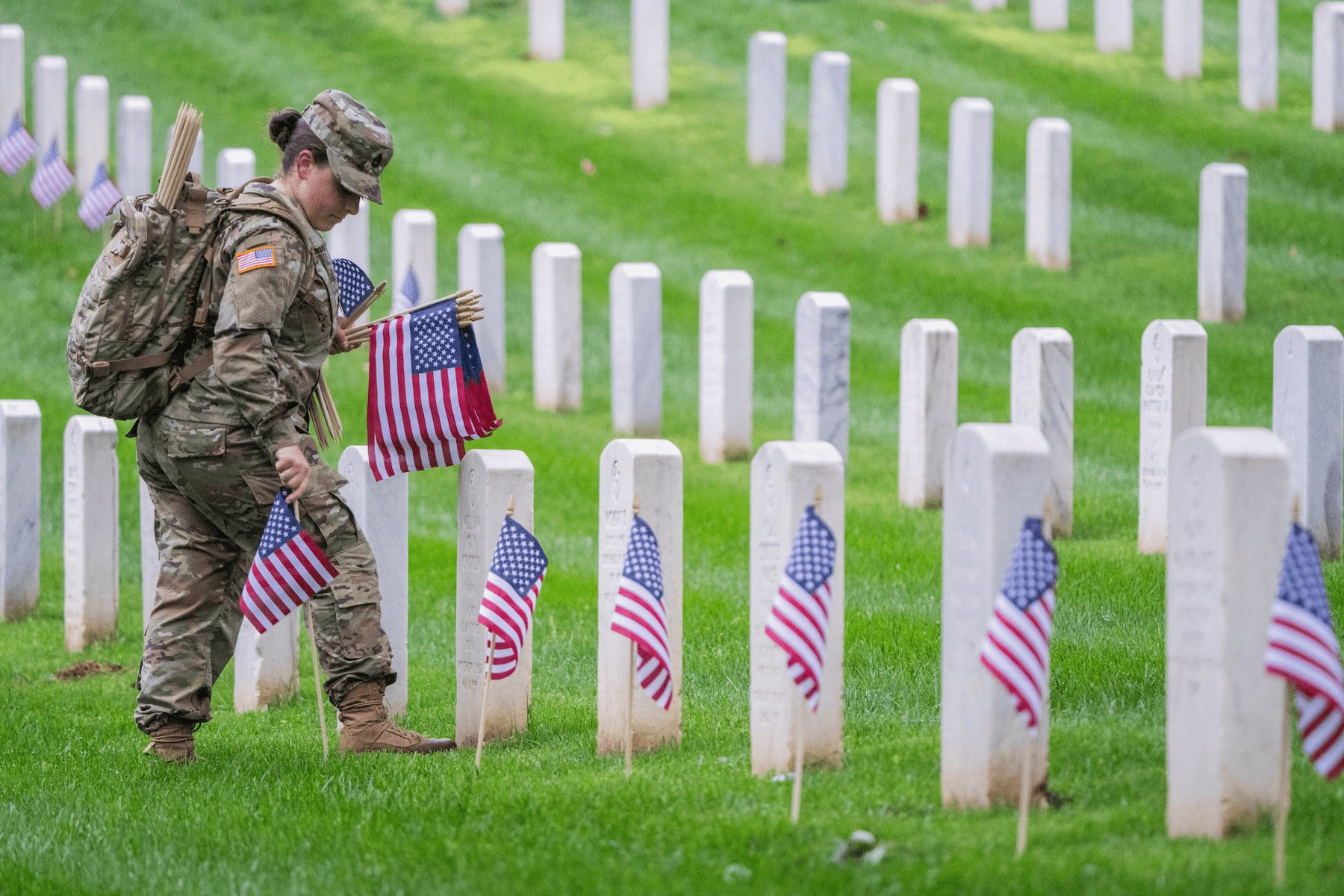
A soldier places a small American flag at a headstone during the annual Flags-In ceremony at Arlington National Cemetery, Thursday, May 22, 2025, in Arlington, Va. More than 1,000 service members placed flags at approximately 260,000 graves ahead of Memorial Day. (Photo/Anthony Quintano)
ARLINGTON, Va. — Before most of Washington woke up, more than 1,000 soldiers were already at work.
In the rain and early morning darkness of May 22, 2025, service members from the 3d U.S. Infantry Regiment, known as "The Old Guard," fanned out across Arlington National Cemetery. Their mission was simple but significant. Place a small American flag at every headstone before Memorial Day weekend.
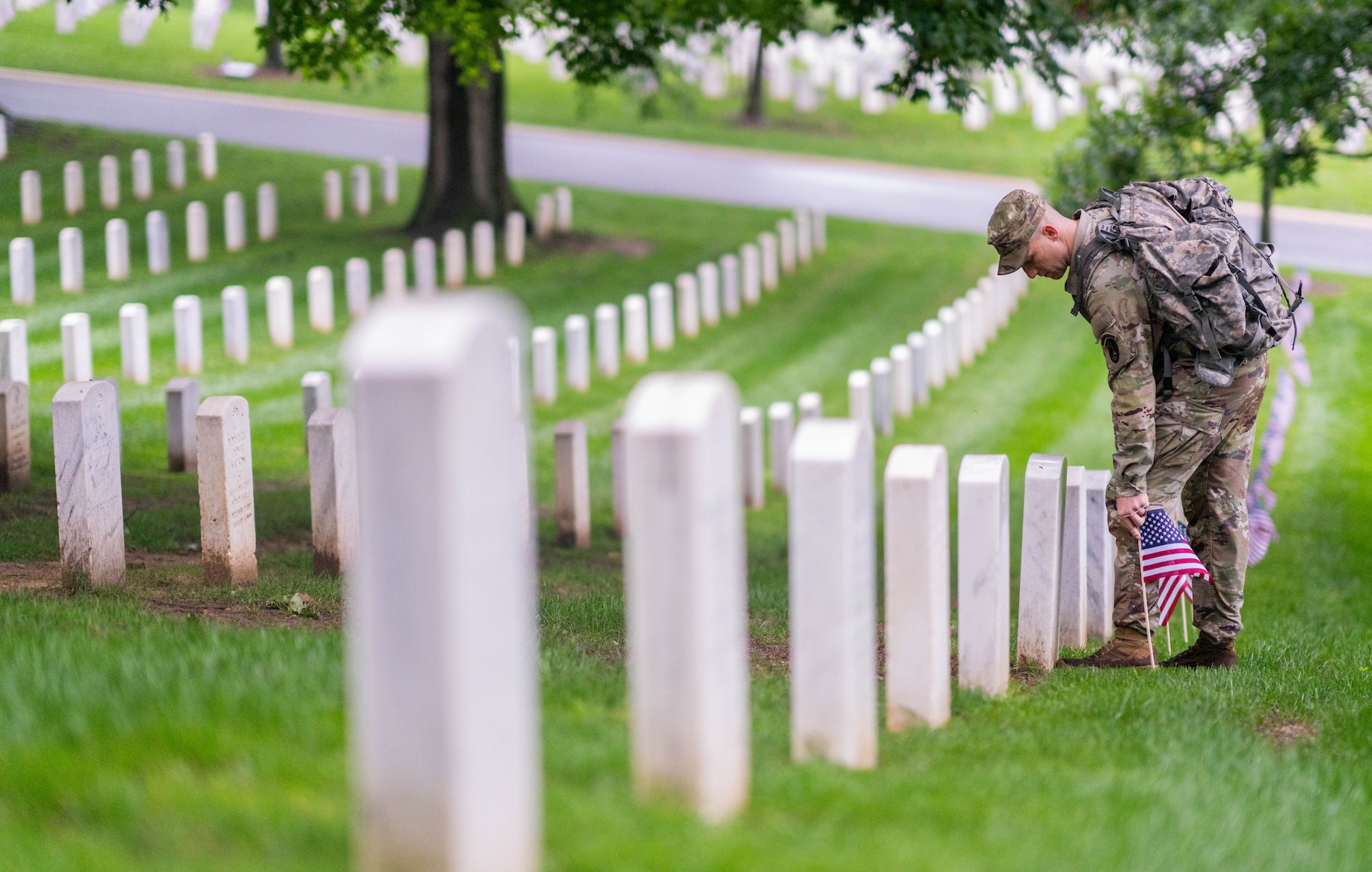
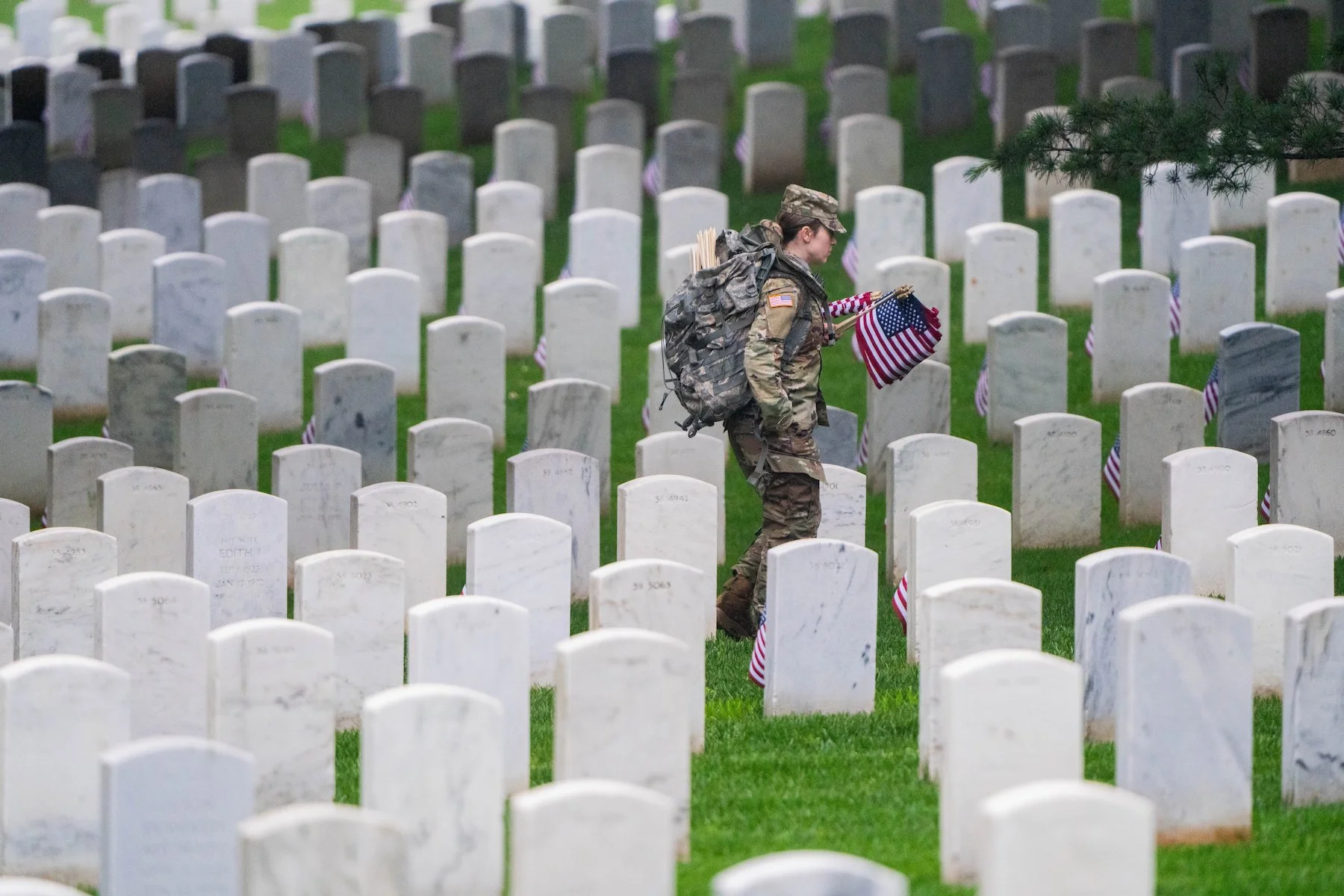
A soldier places a small American flag at a headstone during the annual Flags-In ceremony at Arlington National Cemetery, Thursday, May 22, 2025, in Arlington, Va. More than 1,000 service members placed flags at approximately 260,000 graves in under four hours ahead of Memorial Day. (Photo/Anthony Quintano)
They had four hours to do it.
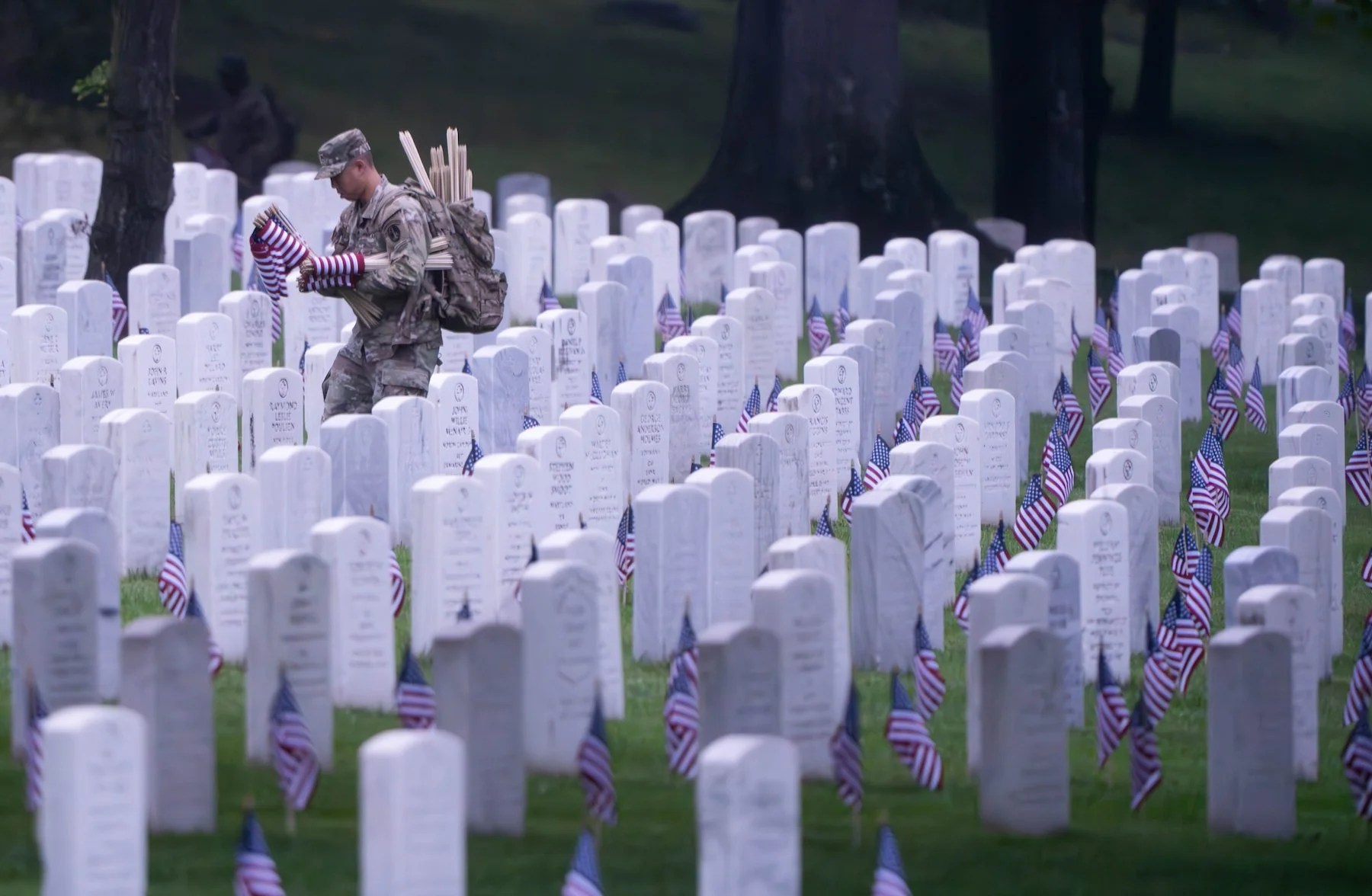
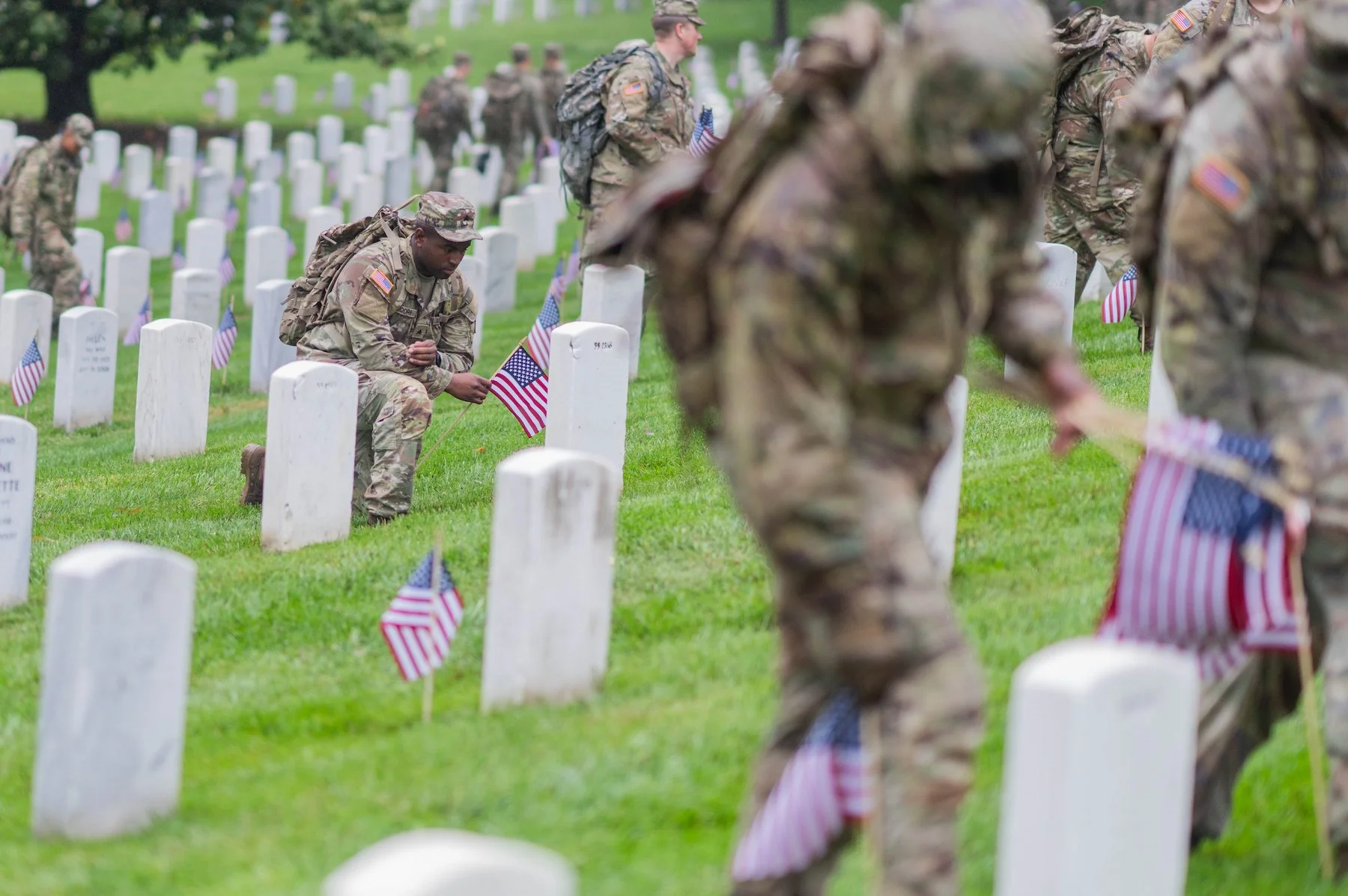
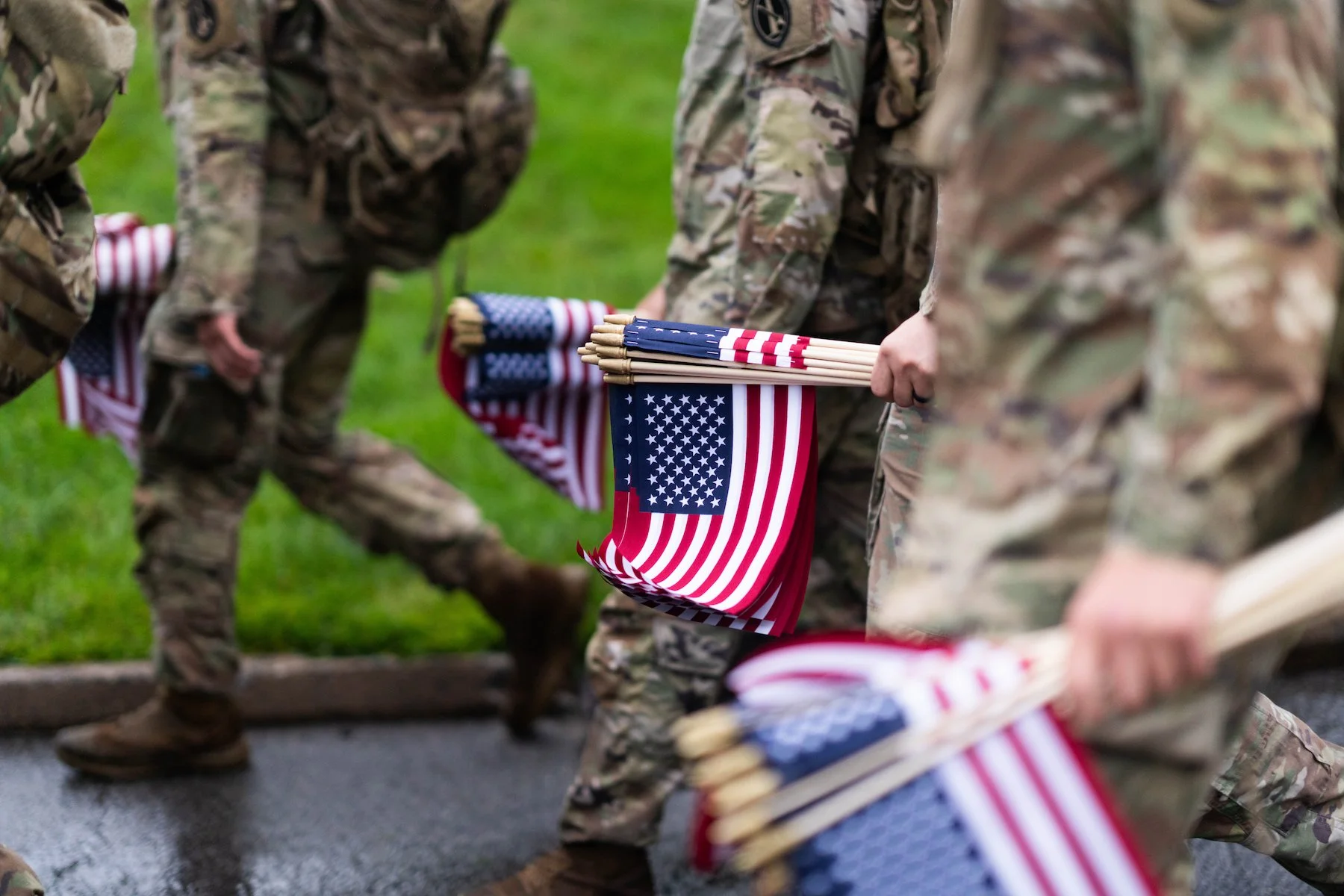
Soldiers carried bundles of flags on their backs and in their hands, moving row by row through the cemetery's rolling hills. Some worked alone. Others worked in pairs. By the time they were done, flags stood at approximately 260,000 headstones and 7,000 niche rows in the cemetery's Columbarium Courts.
The annual ceremony, known as Flags-In, is a tradition carried out each year in the days before Memorial Day. It is one of the most visible ways the military honors those buried at Arlington, the country's most recognized national cemetery.
Joint service members from the U.S. Marine Corps, U.S. Navy, U.S. Air Force and U.S. Coast Guard participated alongside Army soldiers.
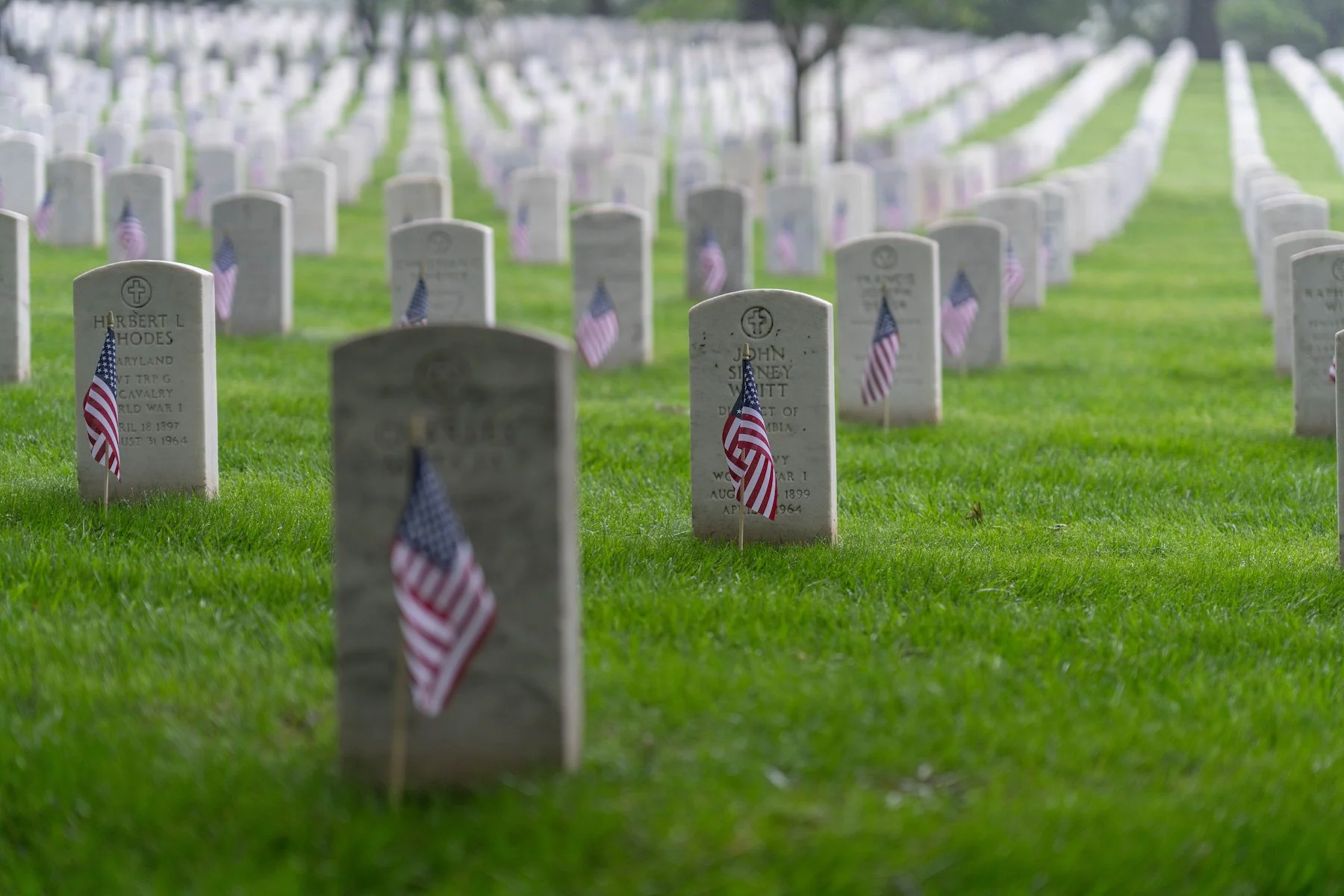
The flags will remain at each grave through Memorial Day.
Mount Washington Snow in May 2026: Late Season Snowstorm Photos from Bretton Woods, New Hampshire
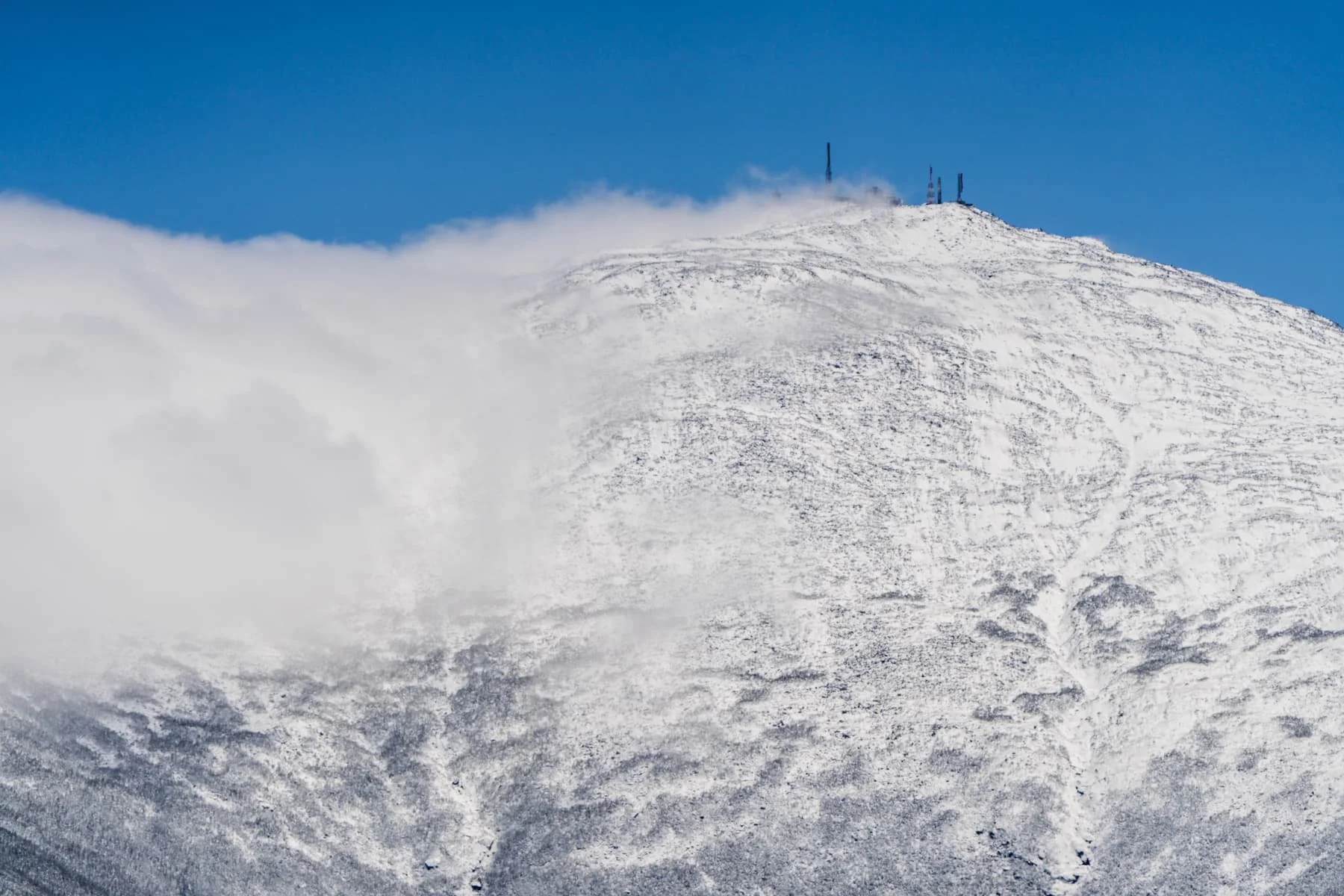
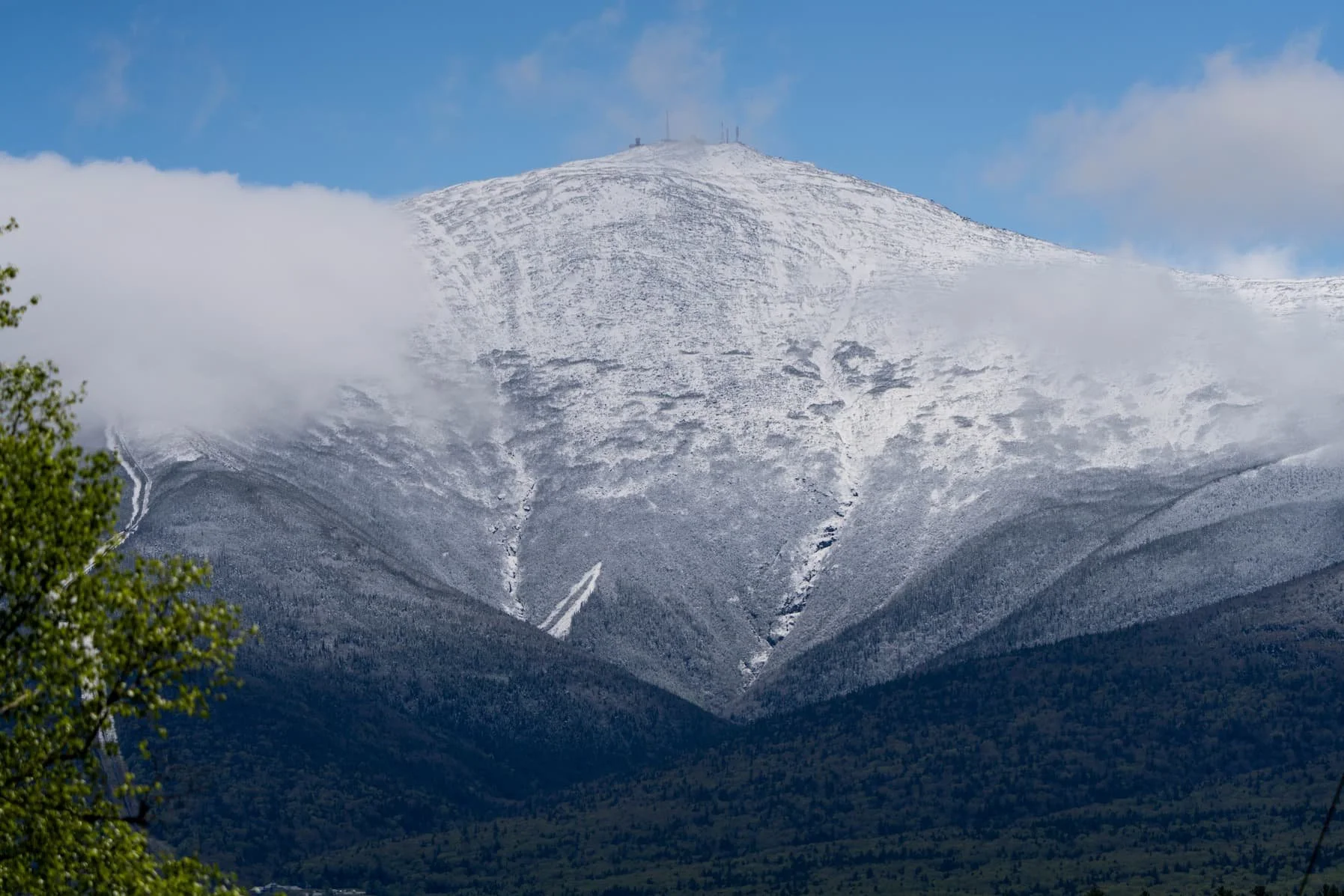
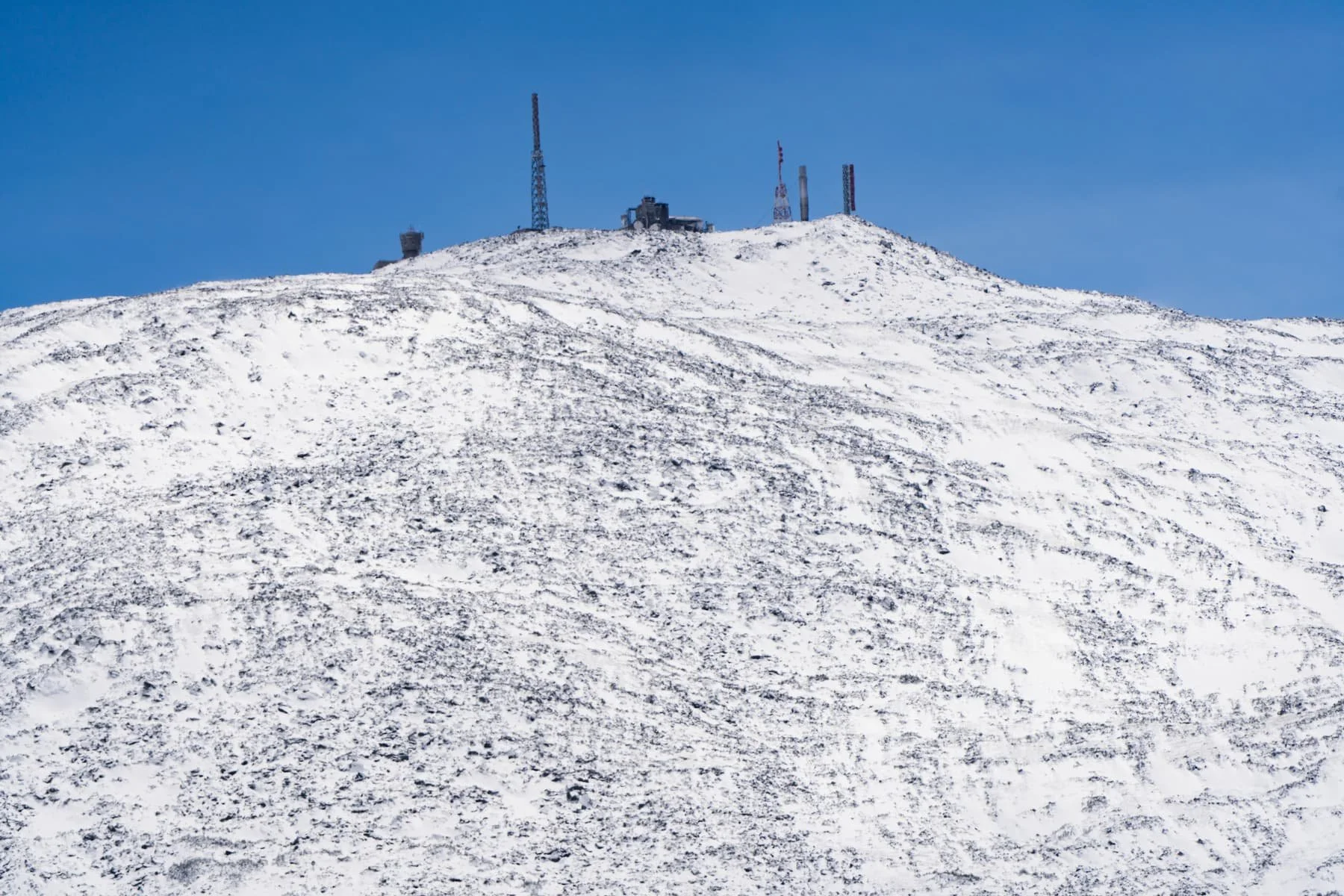
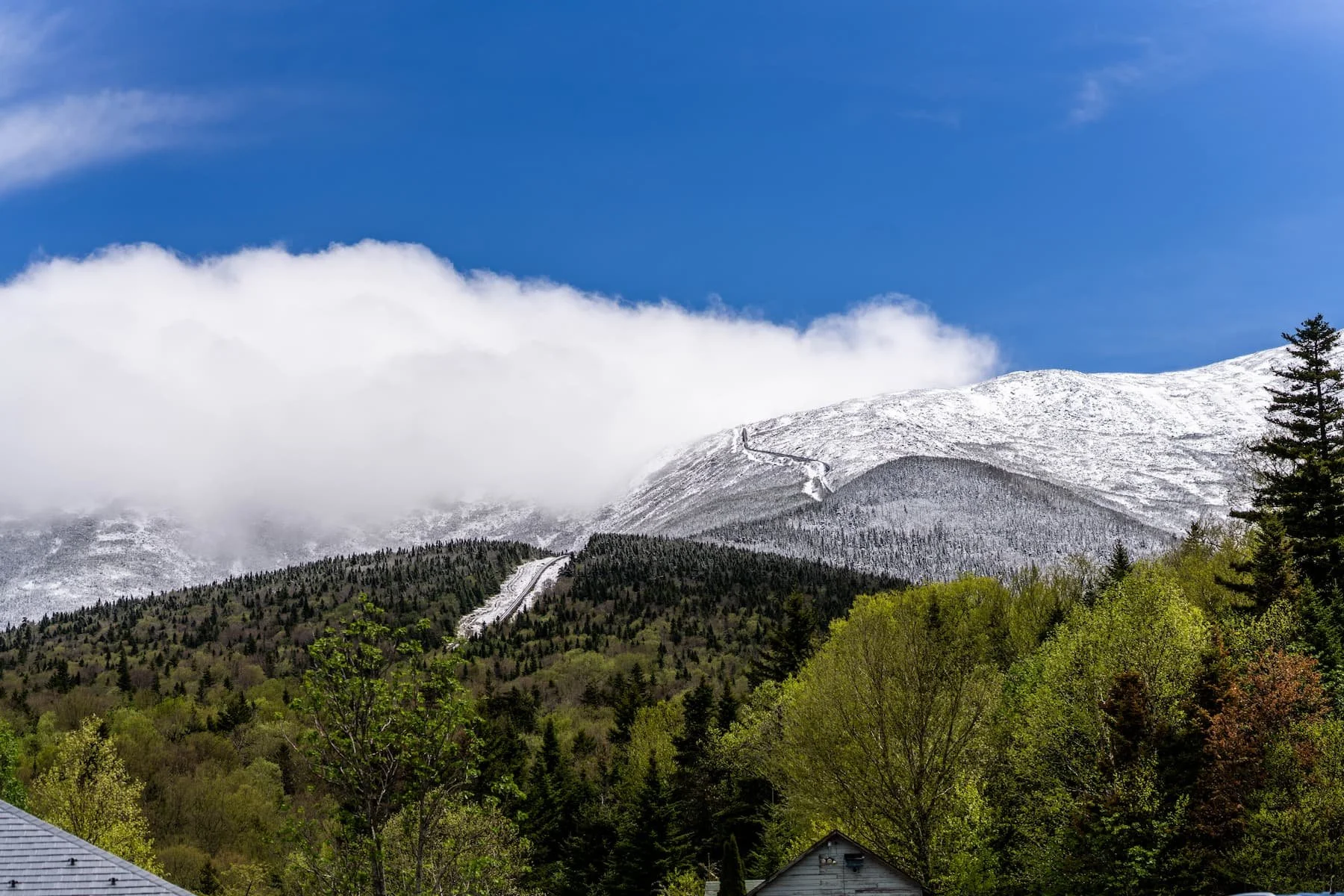
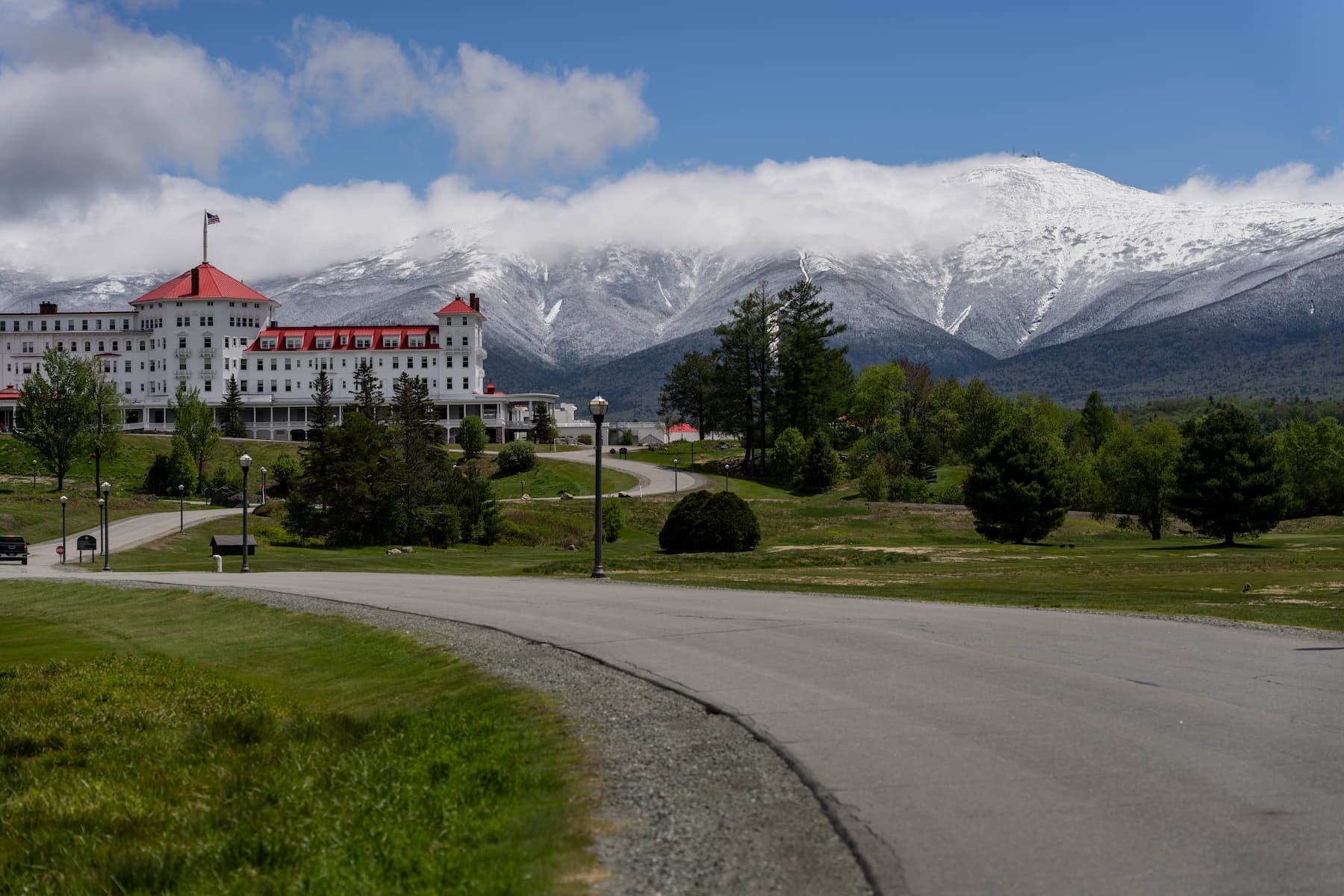
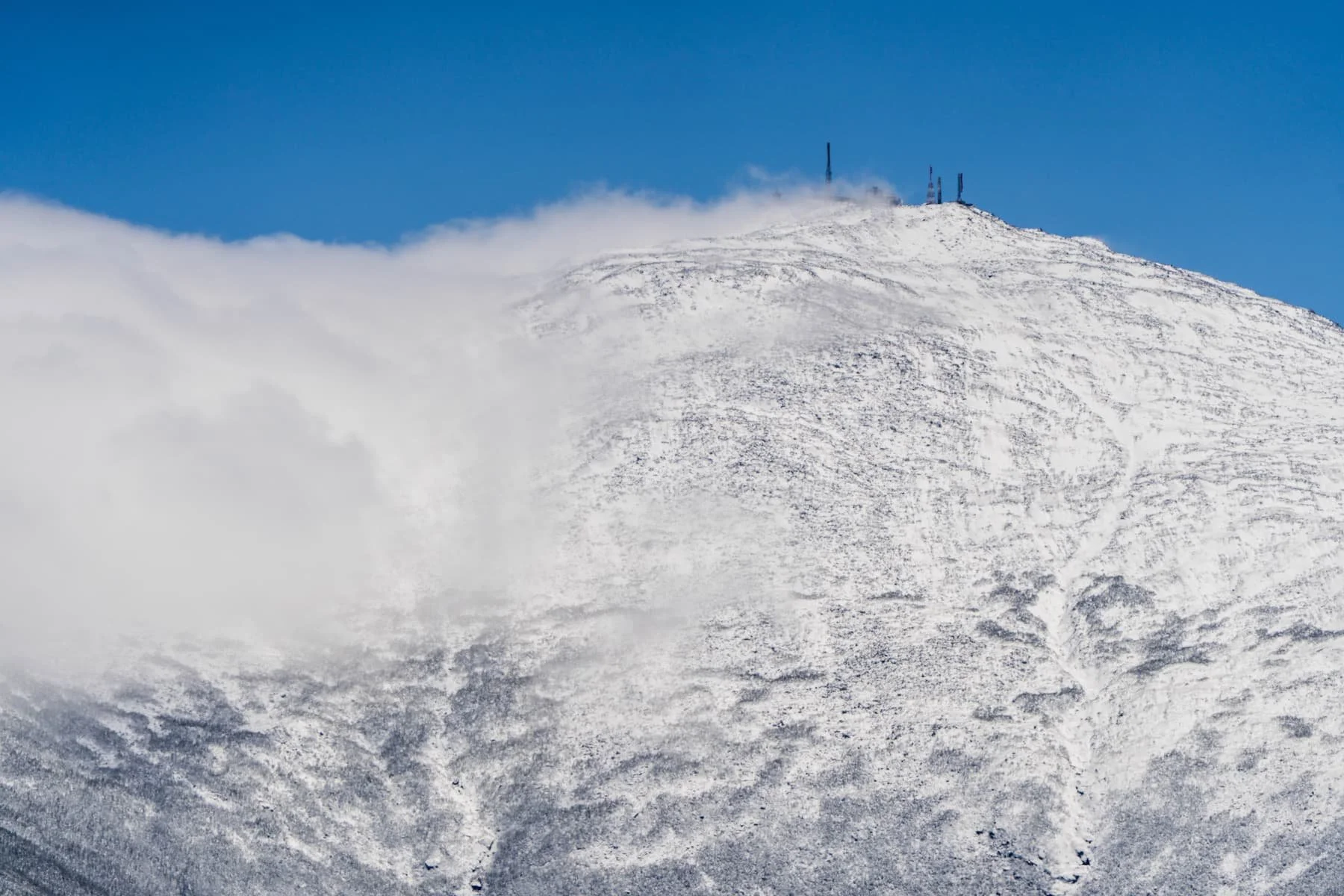
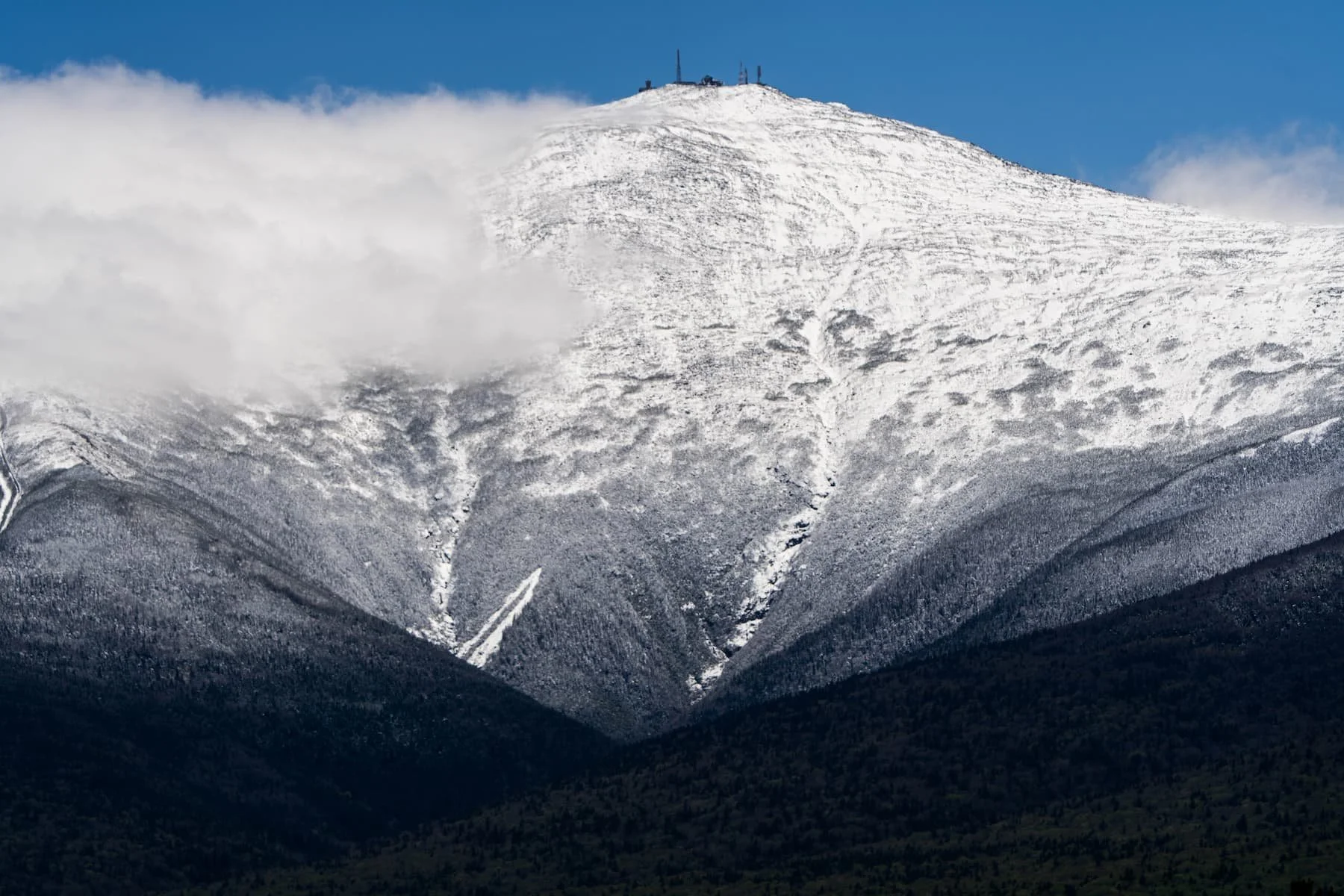
Storm clouds clear the summit of Mount Washington Observatory in New Hampshire on Saturday, May 30, 2026, a day after a late season storm dropped 8 to 10 inches of snow on the highest peak in the Northeast. (Anthony Quintano)
Mount Washington Snow in May 2026: Late Season Snowstorm Photos from Bretton Woods, New Hampshire
Some moments choose you before you choose them.
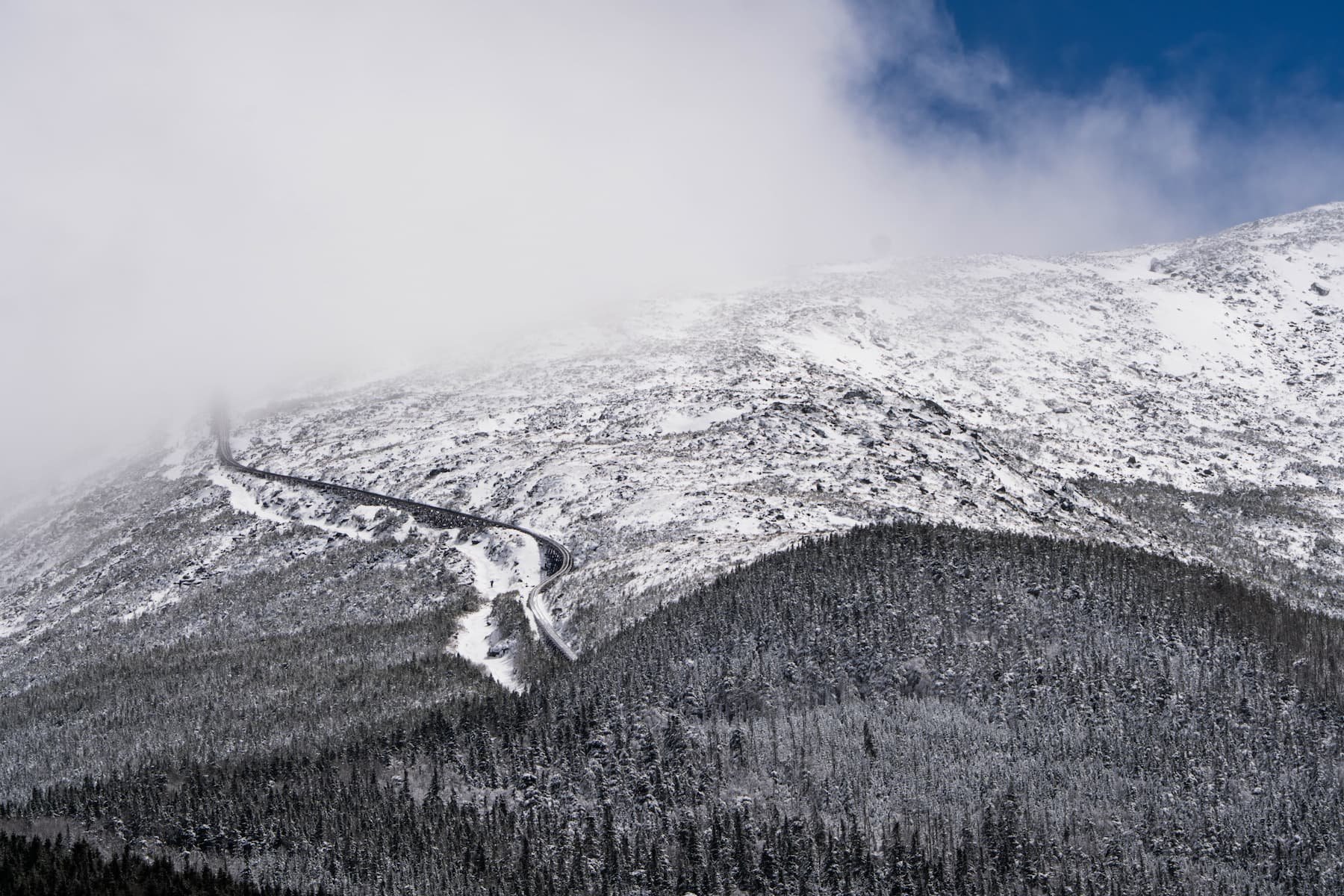
I had barely settled into my new life in New Hampshire when the forecast stopped me cold. A late May storm had just dropped 8 to 10 inches of fresh snow on the summit of Mount Washington and the surrounding peaks of the White Mountains. The kind of snow that doesn't belong in May. The kind that makes a photographer reach for their keys before the coffee finishes brewing.
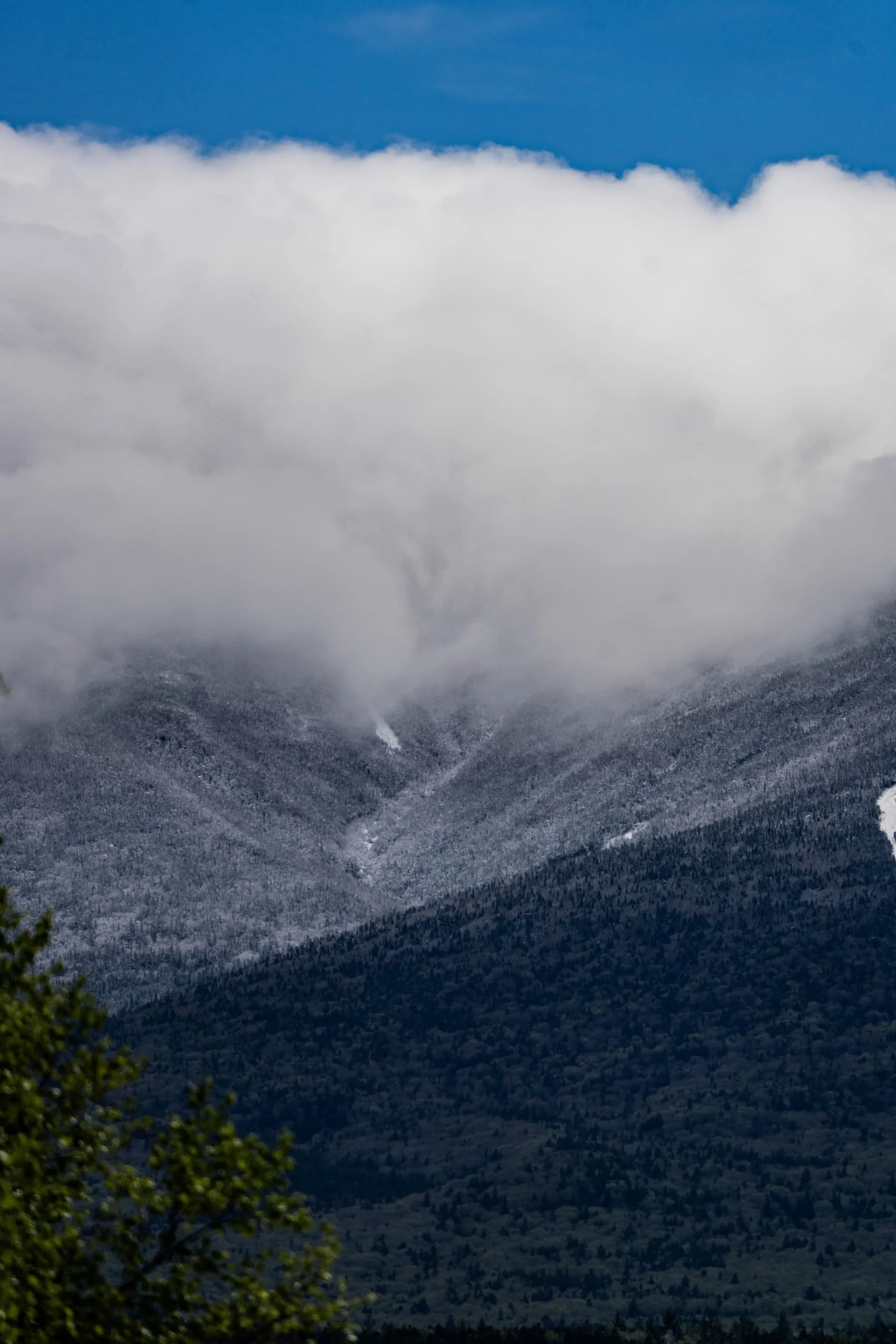
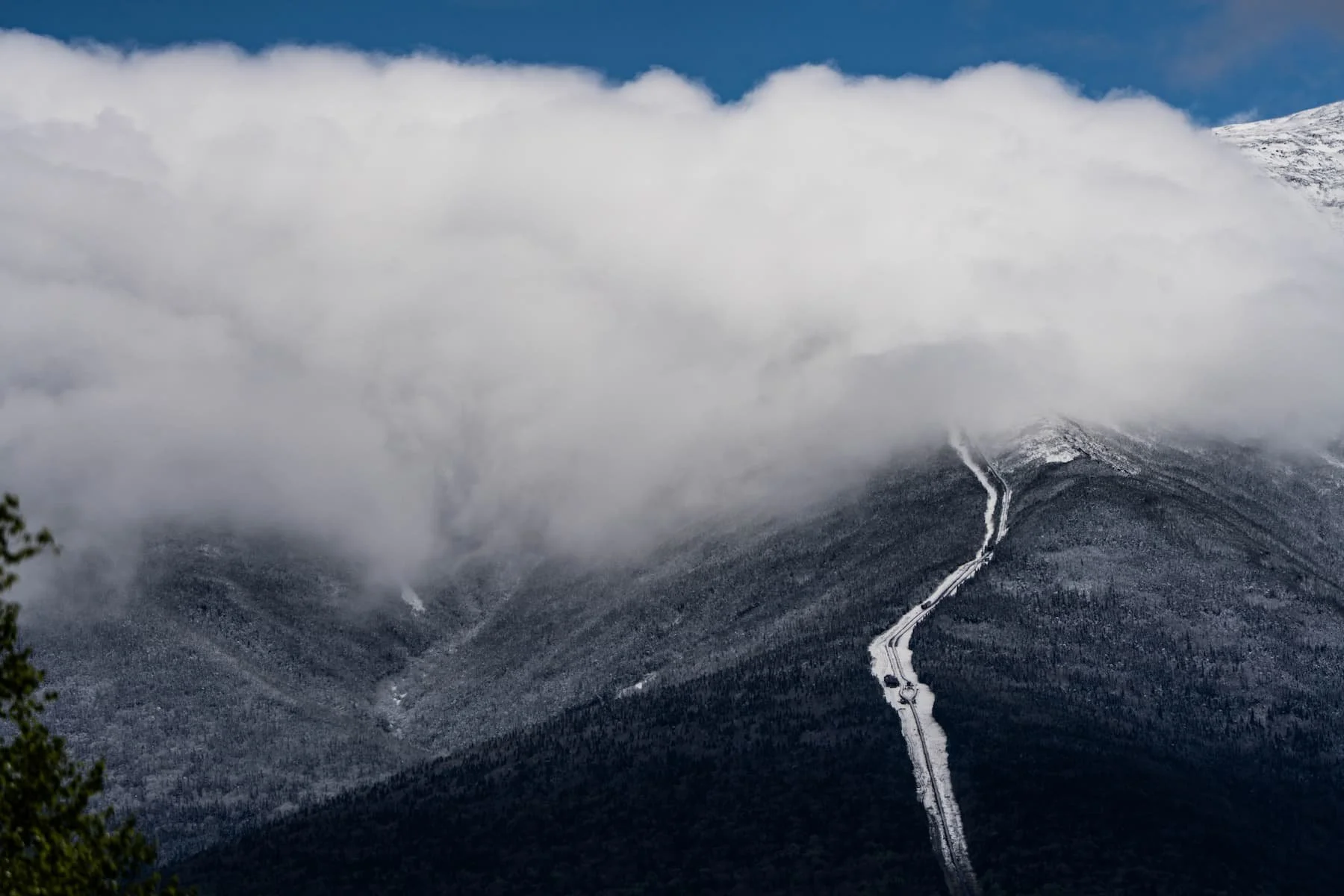
The storm was set to clear in the early morning hours, and I knew exactly what that meant — golden light breaking through lifting clouds, spilling onto newly fallen snow, the whole mountain world quiet and clean and waiting. I had one shot at this window. I took it.
There was just one problem. I was new here. I didn't know the roads, the viewpoints, or the hidden corners that locals know by heart. So I did what any photographer does when the map runs out — I drove, I explored, and I trusted the light to lead me somewhere worth stopping.
It did.
Base Station Road and the Shot I Won't Forget
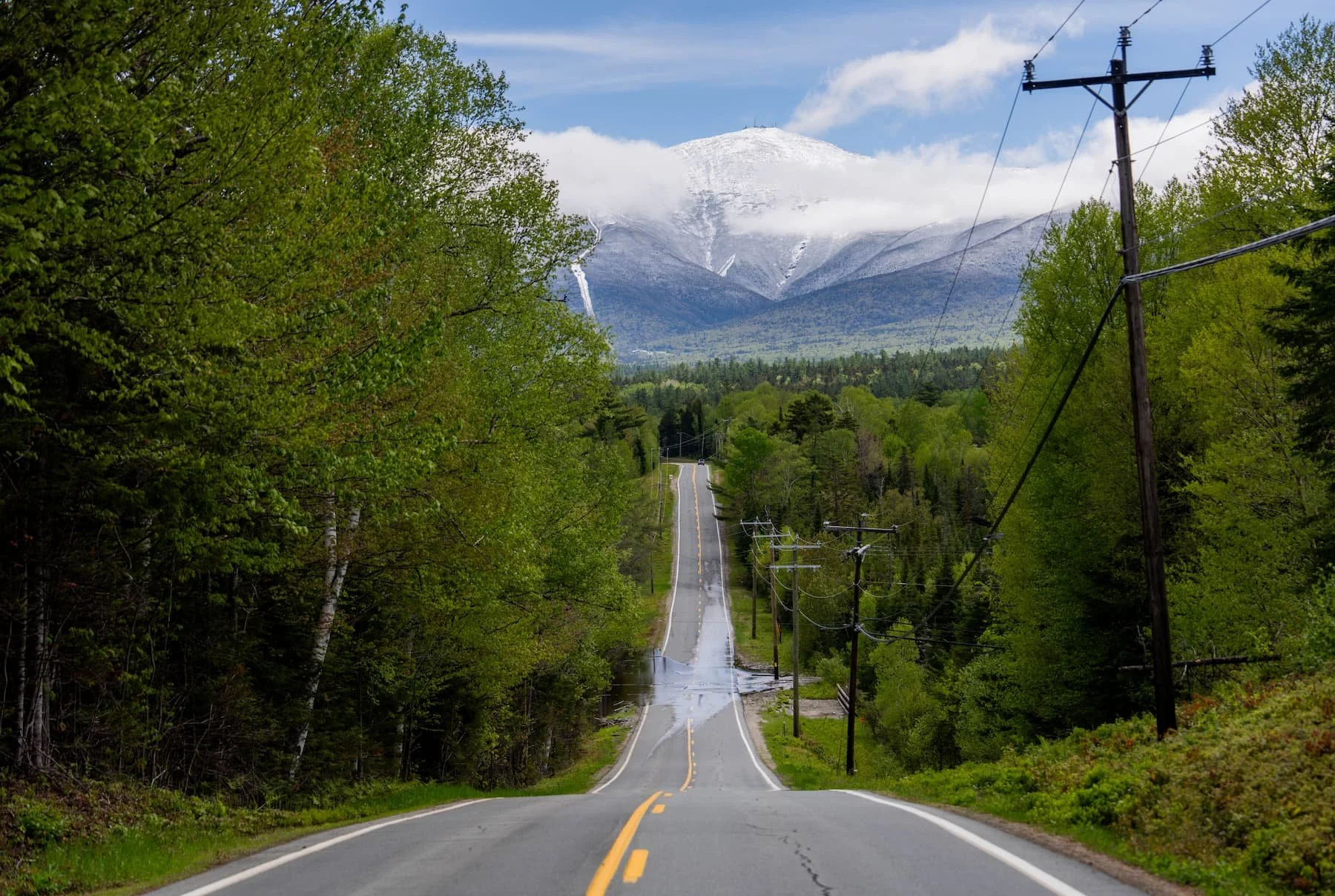
Winding through Bretton Woods, I found Base Station Road almost by accident. What stopped me was the view — a long, straight stretch of road drawing your eye like an arrow directly toward the Mount Washington Observatory sitting high on the snow-covered summit. It was the kind of natural composition that makes you feel like the landscape is posing for you. I pulled over and let it happen.
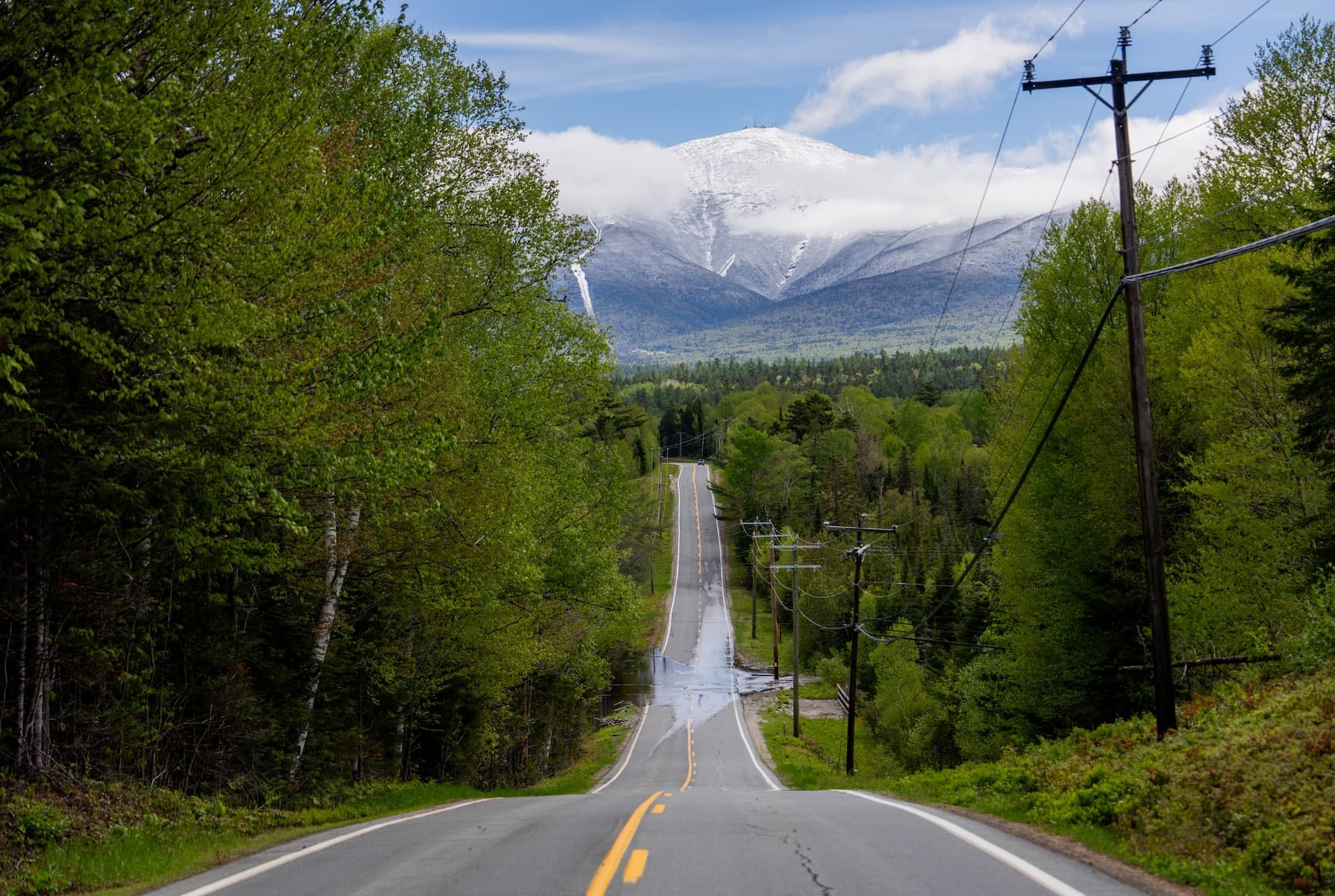
Base Station Road stretches toward the snow-covered summit of Mount Washington in Bretton Woods, N.H. on Saturday, May 30, 2026, a day after a late season storm dropped 8 to 10 inches of snow on the highest peak in the Northeast. (Anthony Quintano)
That leading line, that white peak against the clearing sky — it became one of my favorite images I've ever made in New England.
The Omni Mount Washington Resort View
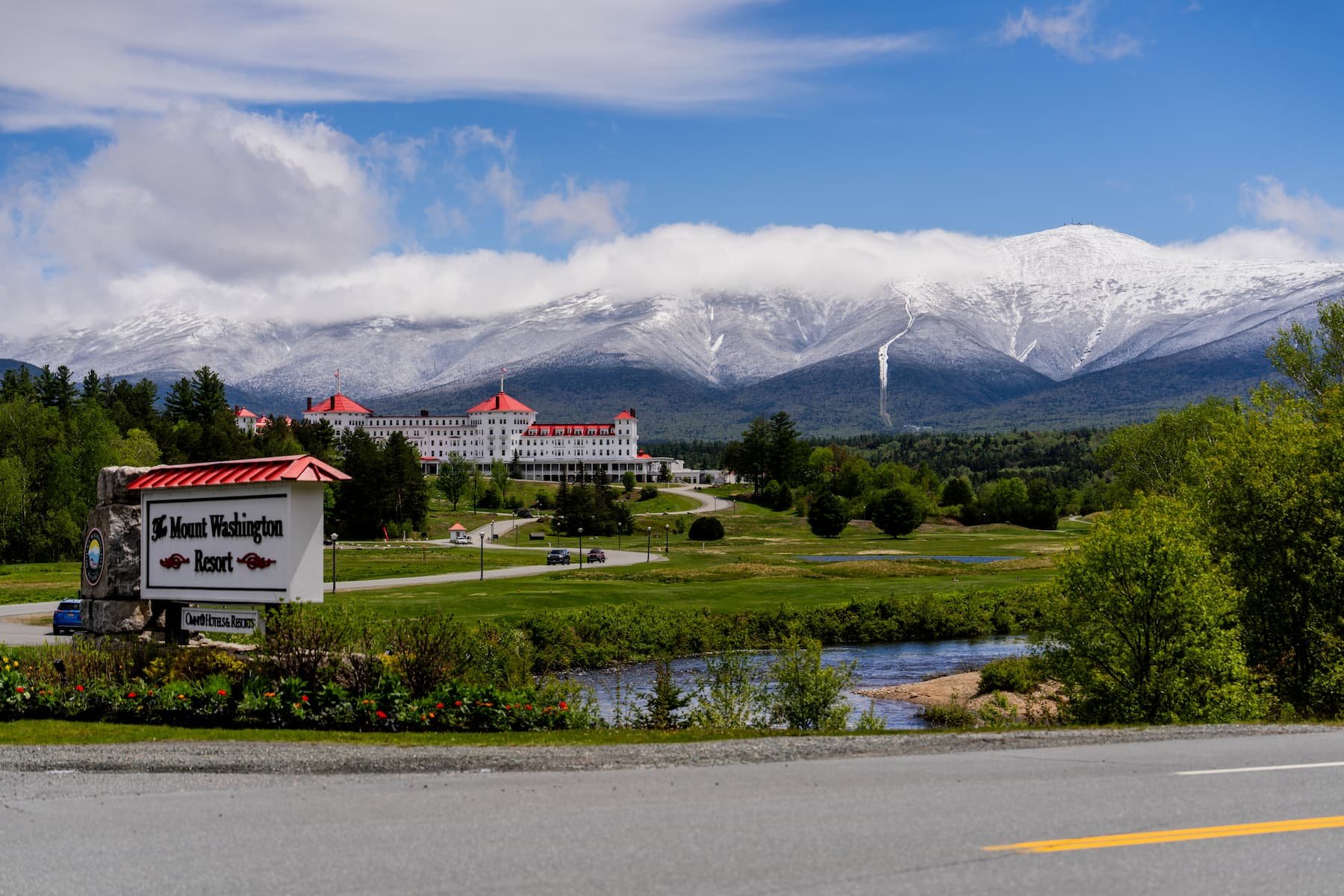
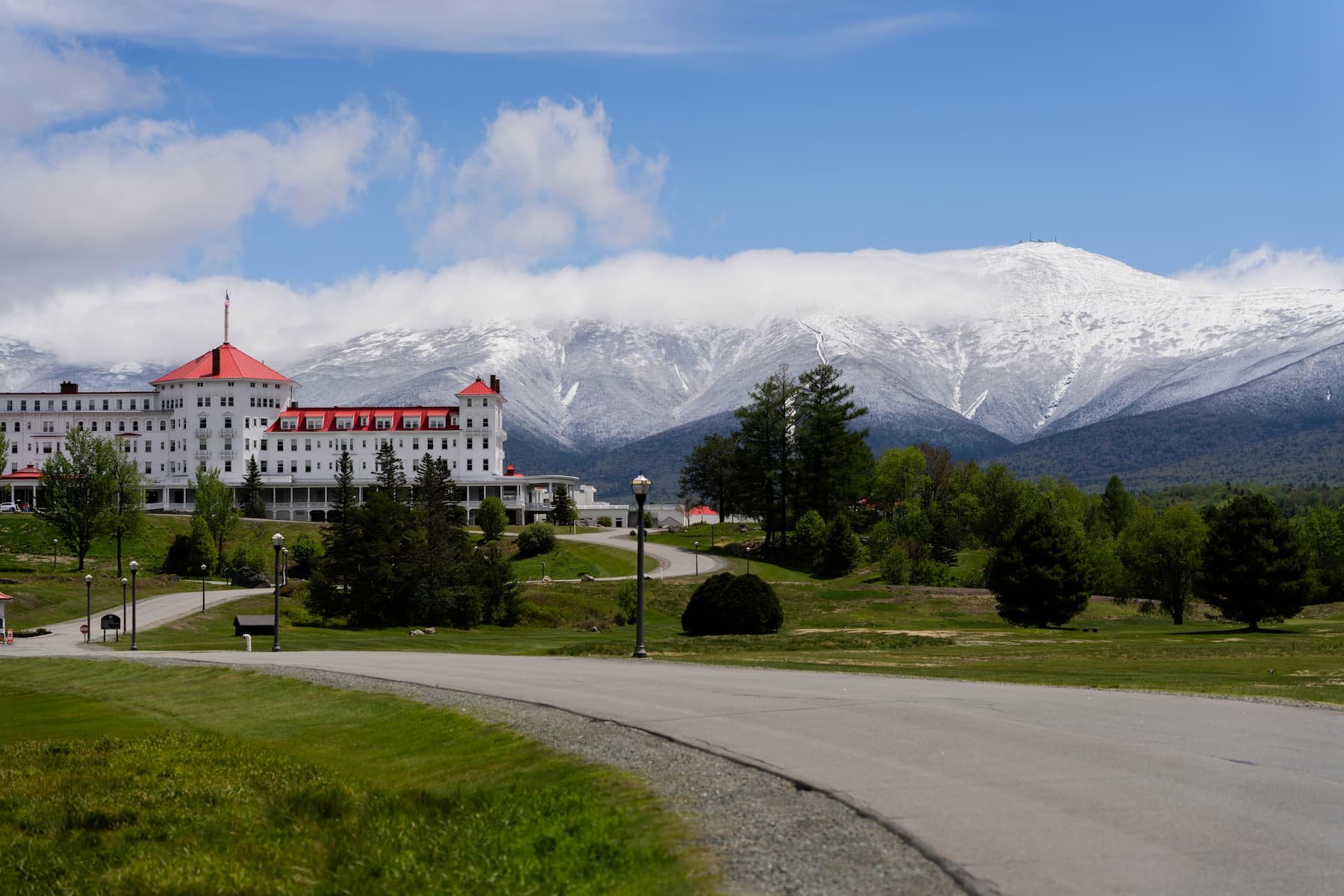
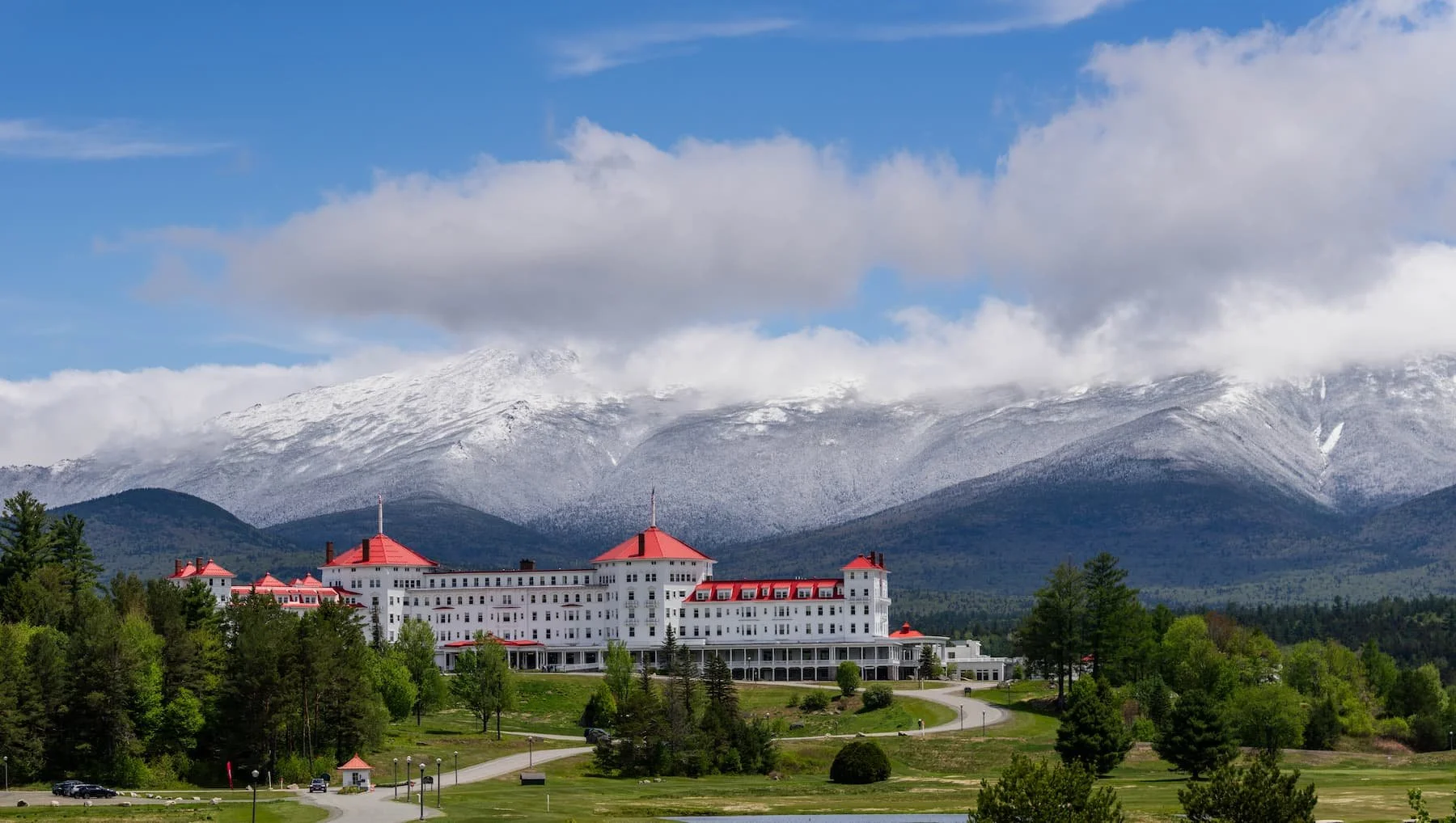
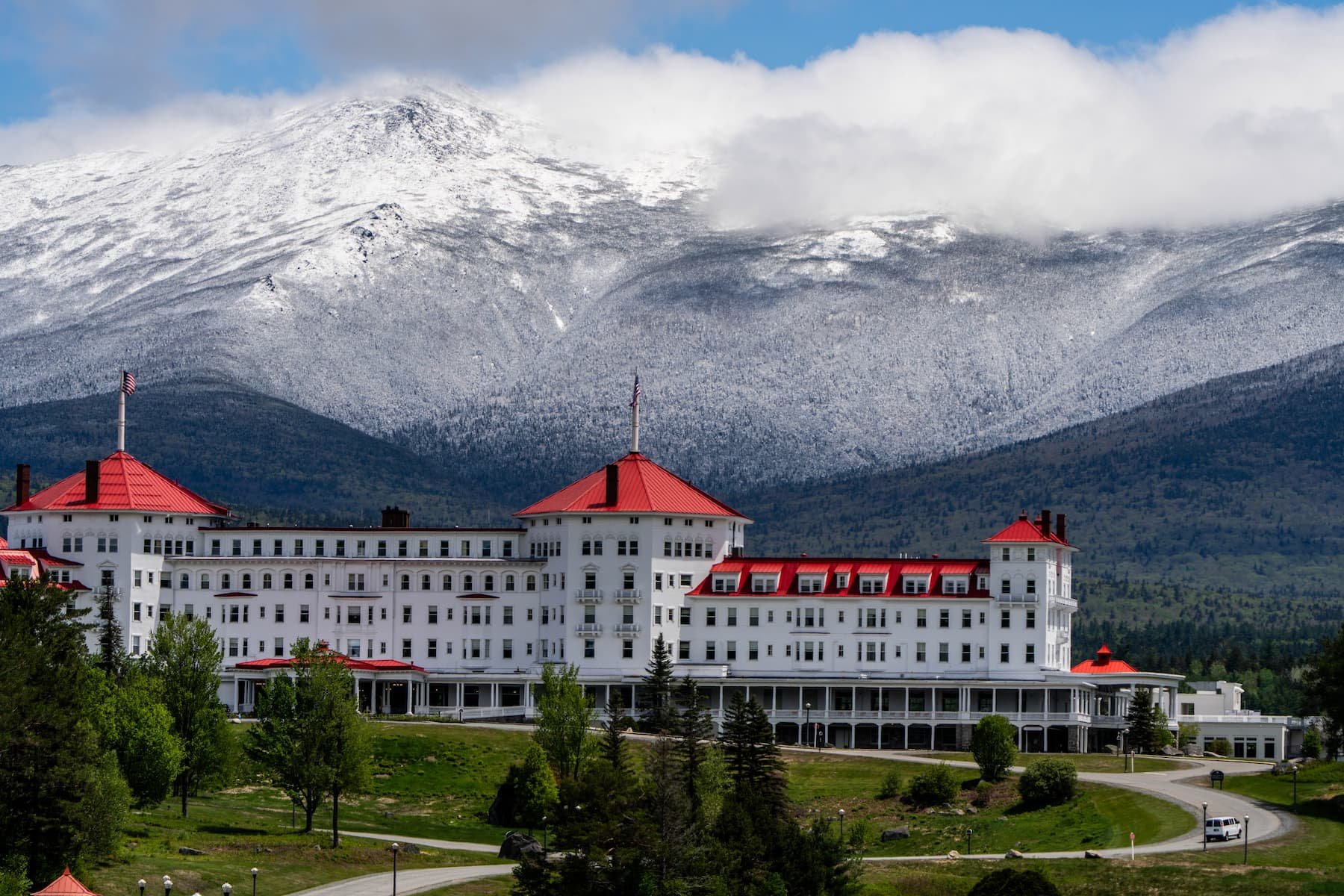
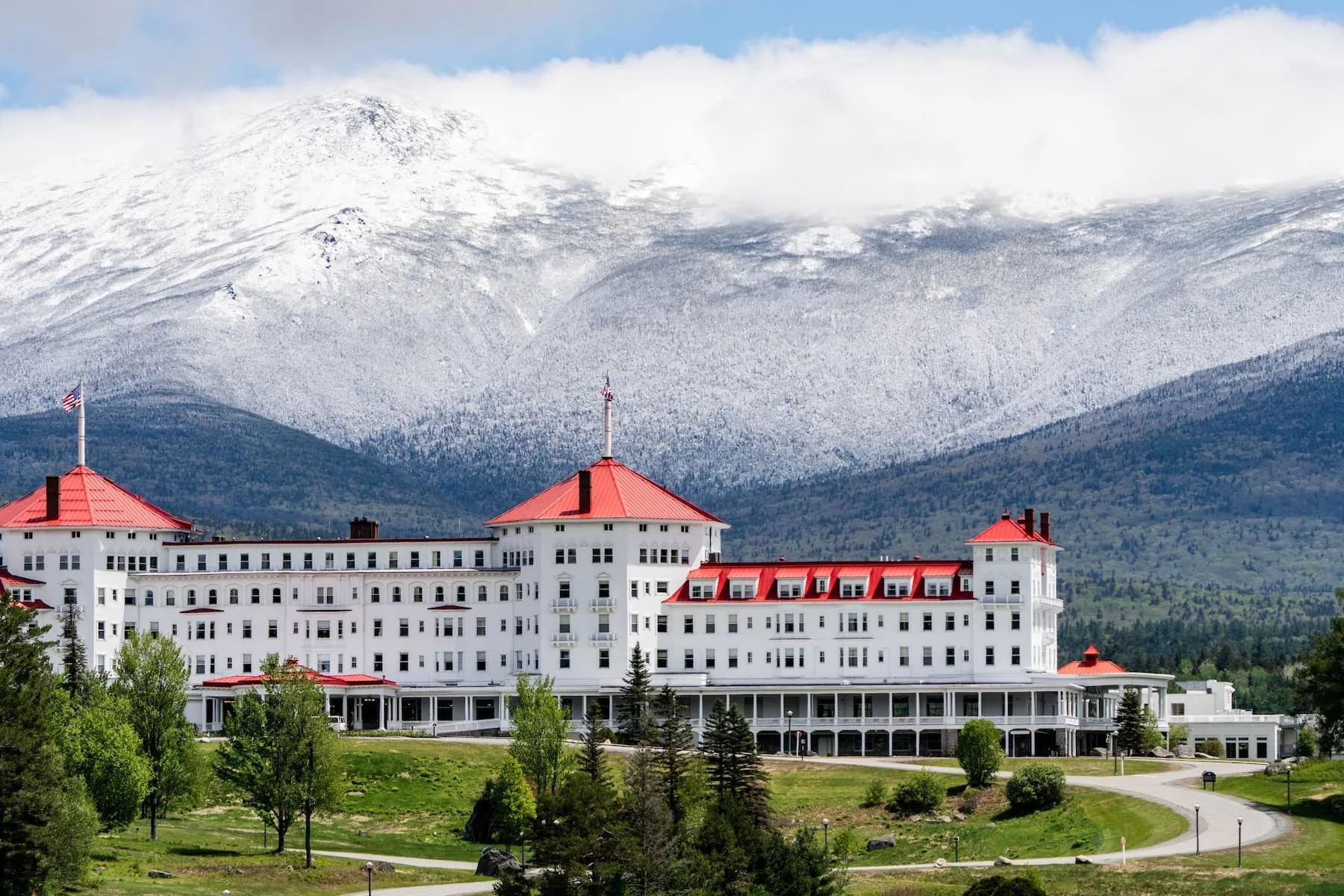
Just across from the historic Omni Mount Washington Resort and Spa, a scenic overlook opens up to a sweeping view of the mountain. With the grand resort framing one side and the summit rising behind it, the scene felt like something from another era — elegant, vast, and untouched by the busyness of the world below.
The fresh snow made everything quieter. More still. More itself.
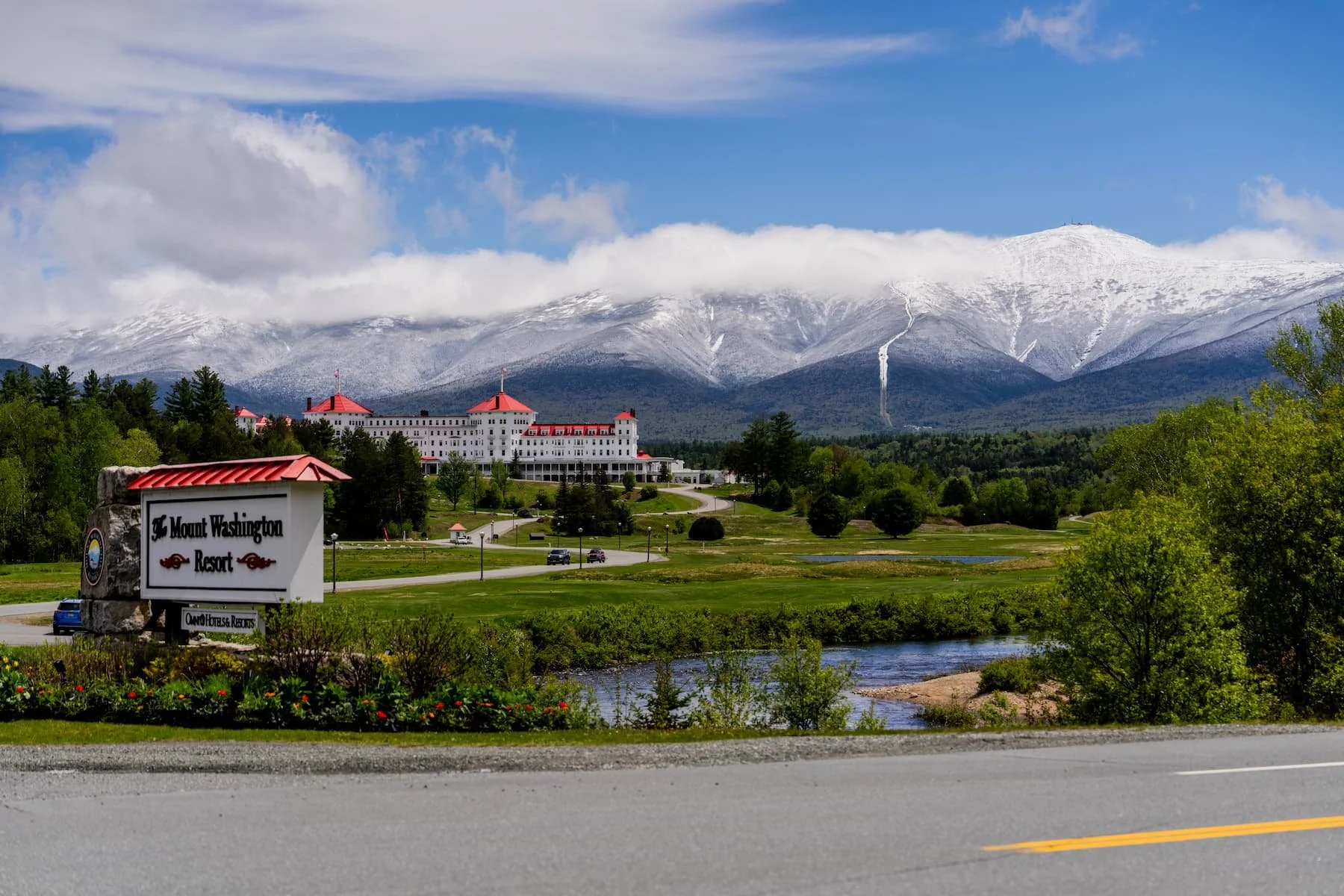
The historic Omni Mount Washington Resort stands against the snow-covered peaks of the White Mountains in Bretton Woods, N.H. on Saturday, May 30, 2026, a day after a late season storm dropped 8 to 10 inches of snow on the summit of Mount Washington, the highest peak in the Northeast. (Anthony Quintano)
A Beautiful Day, A New Beginning
By the time the clouds fully lifted, the White Mountains had turned into something luminous. Sunny skies, clean air, and snow on the peaks in late May — a combination that felt almost impossible and absolutely New Hampshire.
I wasn't alone for any of it. Our new puppy Shadow came along for the ride, keeping me company on the drive up and soaking in the mountain air once the camera work was done. It felt right — a new dog, a new state, a new chapter, all on one mountain morning.
This was my first photo adventure as a New Hampshire resident. It will not be my last.
Reimagining Engagement: How I Helped Transform NBC’s TODAY Show’s Digital Presence
Discover how Anthony Quintano transformed the TODAY Show’s digital strategy by pioneering behind-the-scenes content, launching concert series social campaigns, and helping create the show’s “Orange Room.” His grassroots approach to audience engagement reshaped how NBC connected with fans on social media.
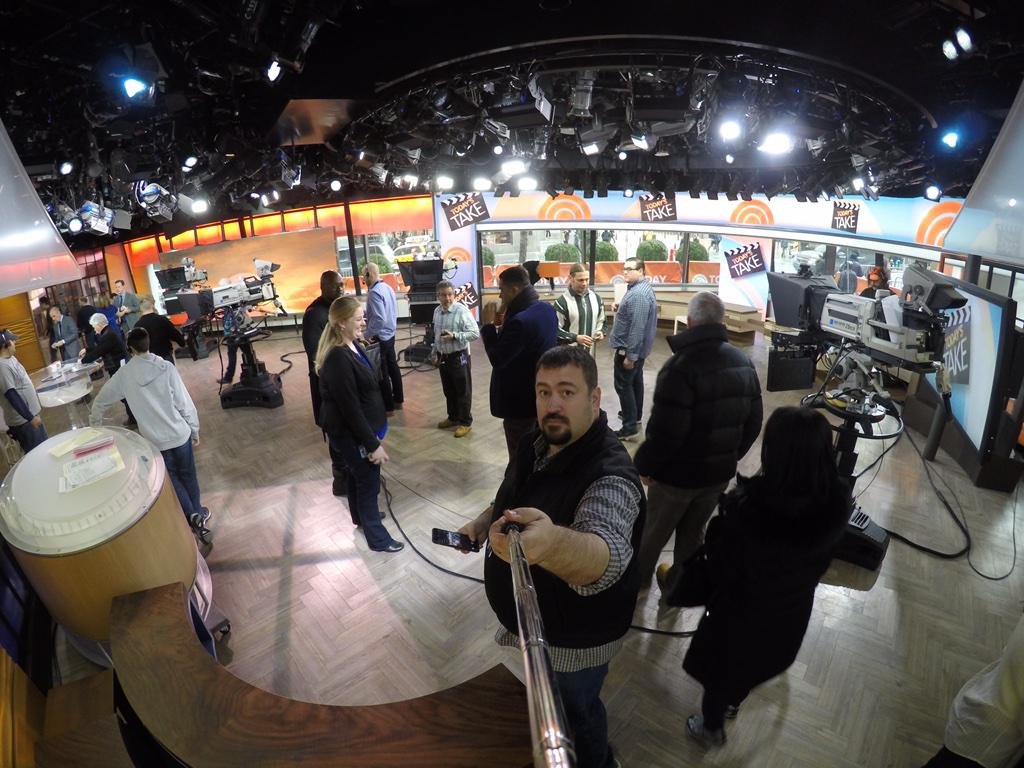
When I joined NBC News in 2010, I immediately recognized a missed opportunity to build social engagement around the TODAY Show. At the time, the digital team was primarily posting article links and quotes from the broadcast. Meanwhile, celebrity guests were tucked away in a cramped green room with little more than a television playing the show. On some days, multiple guests would gather, casually taking selfies and chatting while they waited to go on air. I remember thinking, “How are we not capitalizing on this?”

To fill that gap, I began arriving at the studio early, often before my official workday began, just to be on set capturing behind-the-scenes photos. This was exactly the kind of authentic, engaging content made for social media. However, traditional show policies at the time discouraged photography on set. I believed that mindset had to change.
Another opportunity we were missing was on the plaza during our summer concert series. Thousands of passionate fans would show up, yet hardly anyone tagged our accounts or used hashtags, mainly because they didn’t know what they were. Back then, social handles and hashtags weren’t as easily discoverable, and our ability to post signage was limited due to landlord restrictions.

A family arrives a full 24 hours early to be first in line for the Justin Bieber concert on the TODAY Show Plaza. This was one of the first photos I started the TODAY Show Instagram with.
After repeatedly raising this with leadership, I decided to take action myself. I began showing up at 3 AM, hours before the show, to meet the fans lining up for concerts. I brought handmade poster boards displaying our social handles and personally introduced myself to the crowd as the show’s social media manager. I took photos of the fans and shared them on our platforms as a way to acknowledge and thank them. This simple gesture sparked a ripple effect of reposts and comments like, “OMG, the show featured us!” Our social following grew, and eventually, there was an expectation that I would always be there to greet and document the fan experience.
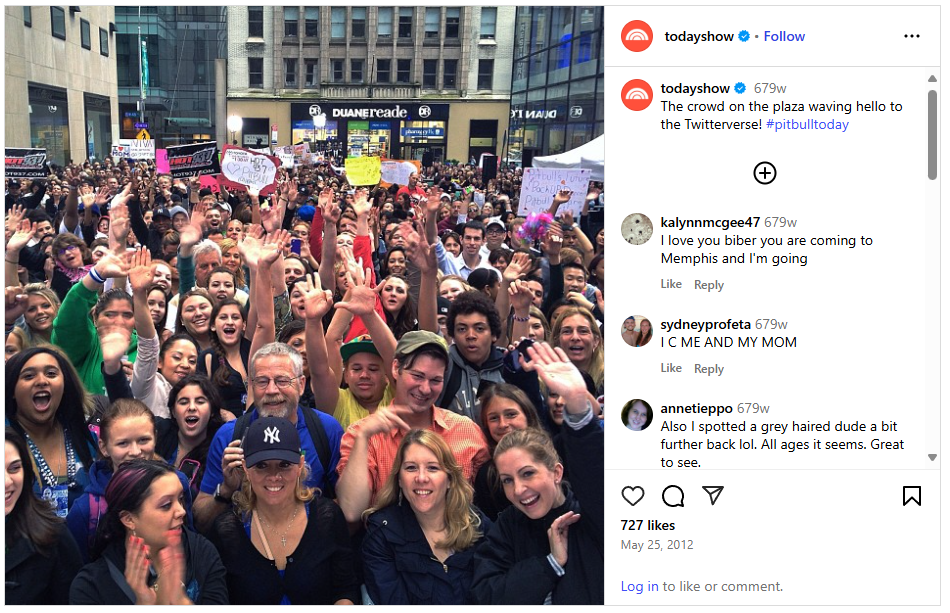


From that foundation, we launched custom hashtags for each concert to help track performance and drive engagement. My colleague Melissa Blum later proposed custom VIP lanyards that included our social handles and hashtags. Fans wore them proudly, and they became a massive hit.

My colleague Melissa Blum and I are engaging with the TODAY Show crowd on the plaza before the Coldplay concert.
Eventually, the TODAY Show redesigned the studio and installed a large digital display facing the plaza to showcase hashtags and social handles to the crowd. I collaborated directly with the NBC Graphics Team on the display design and partnered with a company called Mass Relevance (now Spredfast) to enable real-time curation of social content. This allowed our control room graphics producers to feature live tweets and photos during the broadcast, making us one of the earliest adopters of this approach in live television.

The new digital display outside of Studio 1A on the TODAY Show Plaza to display social to the crowd. I worked directly with our internal graphics department and a company called Mass Relevance (Spredfast) to build this functionality.
Following our momentum on Instagram and the concert series, our social growth accelerated. When the show’s Instagram account first launched, no one wanted to take on yet another platform. But I noticed the stage manager frequently capturing beautiful photos behind the scenes. He had unmatched access and understanding of the show, so I recruited him to manage the account. His contributions helped ensure a steady stream of authentic content.
All of this progress eventually caught the attention of the show’s executive producer, who invited me into strategy meetings to reimagine the green room experience. From my very first month at NBC, I had been advocating for a more modern, content-focused space where digital creators could collaborate with guests and capture behind-the-scenes moments. This idea ultimately evolved into the “Orange Room.”

I was the original brainchild behind the TODAY Show’s Orange Room.
Although the concept shifted from its original vision, the Orange Room became a visible extension of the set with a dynamic LED wall, designed to integrate digital elements into the show. Initially intended as a vibrant hub for live streams and interactive content, it was later used more as a cutaway segment space. Occasionally, it fulfilled its purpose by featuring spontaneous guest interactions or behind-the-scenes moments, but it never fully realized the creative potential we had envisioned.

I worked with the Snapchat team and TODAY Show producers to coordinate the first-ever partnership with a major broadcast media organization to exclusively announce the TODAY Show Concert Series lineup on Snapchat.
While the Orange Room is no longer in use today and now serves as a storage area, I am still proud of the cultural and creative impact it made. It led to some of the most memorable moments in the show's digital evolution. More importantly, it proved what could happen when we challenged traditional boundaries and created space for innovation.

The sad state of the Orange Room which is now used as storage for set pieces behind the main show set.

Photographing Midnight Madness: A Lunar New Year Experience in Chinatown, New York City 2025
Discover the magic of Midnight Madness in New York City's Chinatown, an electrifying Lunar New Year tradition filled with lion dances, firecrackers, and vibrant street parades. Follow my journey as I capture the breathtaking midnight festivities, from the spontaneous procession of Chinese Freemasons' lion dancers to the confetti-filled streets echoing with drums and cymbals. Whether you're a photographer, traveler, or culture enthusiast, this guide will help you experience and document one of the best Lunar New Year events in NYC!
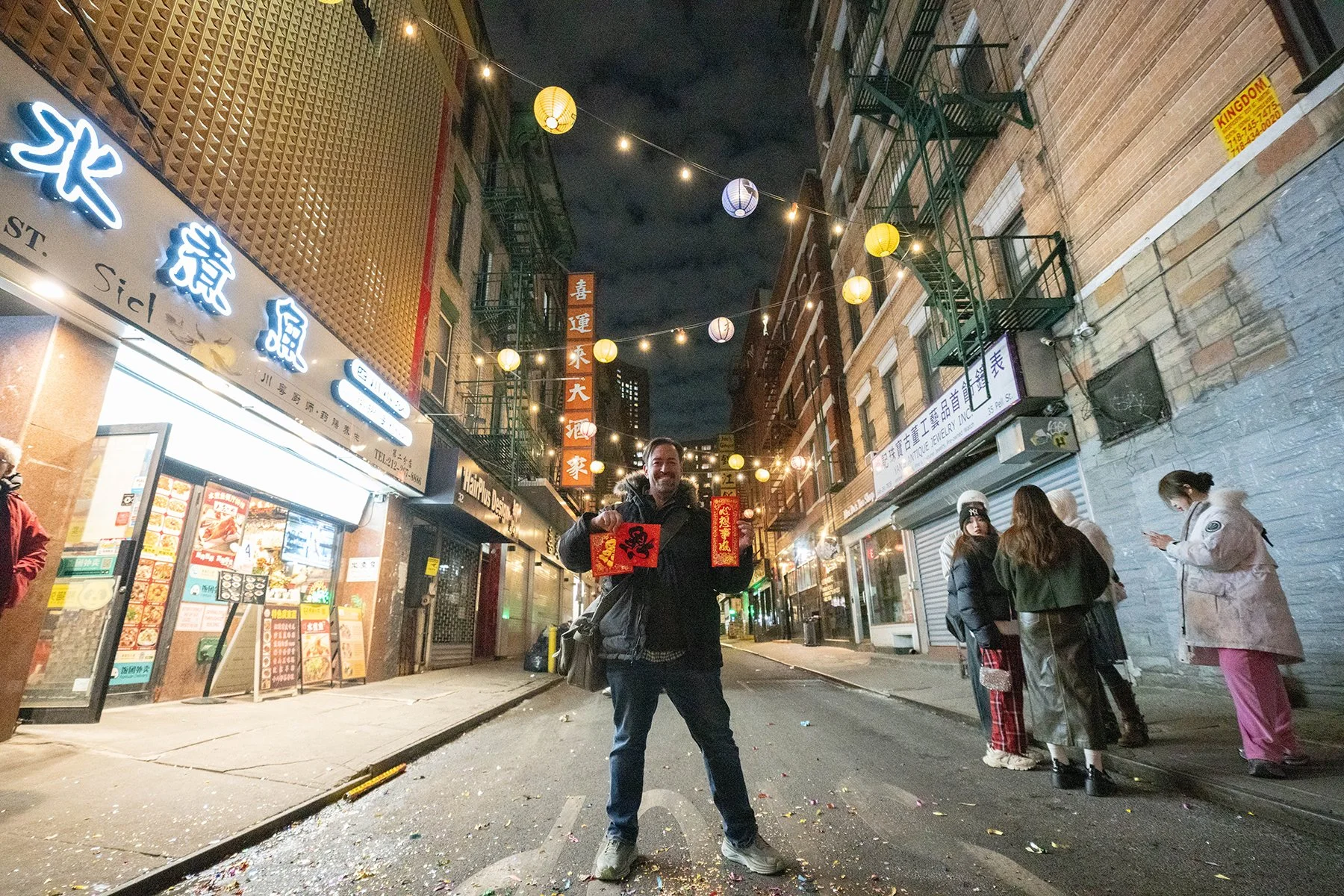
This year, I set out to capture the Chinese Lunar New Year celebrations in New York City's Chinatown—an event I had never covered before but always wanted to experience. While I had heard of something called Midnight Madness on the 29th, I wasn’t entirely sure what it was or where it would take place. But with my camera in hand and a sense of curiosity, I decided to find out.
The Search for Midnight Festivities
Earlier that evening, on January 28th, I was attending an event when I had the idea to drive through Chinatown to see if there was any kind of “stroke of midnight” moment to mark the new year. When I arrived on Mott Street, I stepped out of my car and wandered into a local shop filled with Lunar New Year decorations, lucky trinkets, and red envelopes. I grabbed a few confetti poppers and a Year of the Snake envelope, hoping to add a little more color to my photos.
Outside, small groups of people were lighting sparklers and setting off confetti cannons, but when I asked around about a formal celebration at midnight, no one seemed certain if anything was happening. I met a group of Chinese kids, handed them the confetti poppers, and captured some joyful shots of them celebrating.


Stumbling Into the Real Midnight Madness
After snapping a few photos and shooting some fun videos, I figured that might be all for the night and started heading back to my car. But as I began driving away, I noticed a small crowd gathering outside a building. Something told me to stop and check it out. I quickly parked, grabbed my camera bag, and ran toward the crowd—just in time to see a lion dancer emerge from the building’s doorway.
This had to be it!
And sure enough, it was. The Chinese Freemasons were kicking off Midnight Madness. One by one, four lion dancers stepped out, their elaborate costumes swaying with each movement. The energy in the air shifted as more people gathered, and soon, a spontaneous parade was underway.

The Parade Through Chinatown
With the NYPD escorting the crowd, the four lions led the way through the streets of Chinatown, trailed by a booming procession of drums and cymbals—all played from the back of a Cybertruck. Firecrackers exploded along the route, filling the air with smoke and the scent of burnt paper, while confetti rained down with each pop of a celebratory cannon.

Traffic came to a standstill as the parade moved toward the Freemasons Association on Mott Street, where the lions performed their traditional dance, weaving through the crowd as cheers erupted all around. Just before midnight, a small ceremony took place in which the lions were fed oranges and then tossed them back into the crowd—a symbolic act believed to bring good fortune.
After the ceremony, the lions led the parade back to its starting point, marking the end of a celebration I had only accidentally stumbled upon but was so glad to witness and document.




Tips for Photographing Lunar New Year Events
If you’re planning to attend Midnight Madness or any outdoor Lunar New Year celebrations, here are some tips to make the most of your experience:
🔴 Wear safety goggles and earplugs – Firecrackers are everywhere, and they can go off right at your feet without warning. The noise is deafening, and flying debris can be hazardous to your eyes.
🔴 Bring a face mask – The combination of firecracker smoke and confetti dust can be overwhelming, making it difficult to breathe at times.
🔴 Use a fast lens or a flash – Many parts of the parade route are dimly lit, so having a lens with a wide aperture (f/1.8 or lower) or an external flash will help capture sharp images.
🔴 Be ready to move – This is not a stationary event! The parade moves quickly, and you'll need to adjust your position often to get the best shots.
Capturing Midnight Madness in Chinatown was an unforgettable experience, and if you ever get the chance to witness it, be ready for the unexpected—because that’s where the magic happens. ✨
Ramping Up My YouTube Efforts

Back in July I shared a video letting people know i’m going to start focusing my efforts with video content there. Since i’m no longer searching for full-time work, i’m putting all my focus towards creating the content i’ve been making for my employers, work for me.
Since this YouTube channel trailer I have since been very busy with freelance work with travel from Florida, Bahamas, Los Angeles and soon San Diego. I have also launched a Patreon. This is something that allows people who love and support my work to contribute money to help me continue my efforts to create my own content full-time. There is no pressure to contribute financially. Simply viewing my YouTube videos, commenting and liking them as well as subscribing to my channel also helps me grow. I appreciate all who help me achieve my dream of working for myself.
I’m in the process of shooting as much video and photos as possible before winter moves into Colorado. I also have a few more freelance jobs in the works before the year end. I hope you enjoy what I share of my travels.

Photographing The Welcome To Colorado Signs
I’ve started a personal project to photograph all 41 of the Welcome to Colorful Colorado signs surrounding the state of Colorado.

I have set out on a personal project to capture all 41 of the Welcome to Colorful Colorado signs at the border crossings around the state. I didn’t want to wait to publish this because i want you the reader to follow me along on this journey as i visit each of these sign locations around the Rocky Mountain State. I will be keeping track of each sign i capture on this custom Google map below. The red dots with the camera icon are the locations i have documented.
Western Border

Southern Border

I-25 CDOT Sign Shop 12-13-17 sn: 2 DS Taken at 2:00pm Mountain Time on March 15, 2019
Northern Border

Colorado/Nebraska border in Peetz, CO (CDOT Sign Shop 11-7-16 sn: 44 DS)
My first stop in Peetz, Colorado. One of my goals on this project was to try and find a unique angle at each location. This sign happened to be located near windmills so i decided to include them in this shot.

CDOT Sign Shop 1-18-18 sn: 6 DS
Sedgwick, Colorado CO-385

CDOT Sign Shop 12-10-15 sn: 43 DS
Ovid, Colorado CO-11

CDOT Sign Shop 07-31-15 sn:39 BY DS
Julesburg, Colorado US-138

CDOT Sign Shop 12-8-15 sn: 42 DS
Julesburg, Colorado I-76
Eastern Border

CDOT Sign Shop 1/23/09 RS/CM S/N 18
Amherst, Colorado CO-23

CDOT Sign Shop 11-1-18 SN: 3 DS WRC
Holyoke, Colorado US-6

CDOT Sign Shop 12/15/11 sn: 31 CM
Wray, Colorado US-34

CDOT Sign Shop 9-27-11 sn: 26 DS AL
Wray, Colorado US-36

CDOT Sign Shop 12-6-16 sn: 45 AM
Burlington, Colorado I-70

CDOT Sign Shop 07-21-15 sn: 38 AM DS
Arapahoe, Colorado US-40

CDOT Sign Shop 8-23-17 sn: 51 AM
Sheridan Lake, Colorado CO-96

CDOT Sign Shop 7-18-17 sn: 50 DRS
Holly, Colorado US-400

CDOT Sign Shop 4-7-17 sn: 47 DS
Lycan, Colorado CO-116

CDOT Sign Shop 7-12-17 sn: 49 DRS
Walsh, Colorado US-160

How To Survive SXSW

This will be my fourth year at SXSW in Austin, Texas. I wanted to share some tips for 1st timers from my experiences attending the festival.
Try to get to Austin a day before SXSW Interactive starts. This gives you a chance to explore the area and get your bearings, especially if you're attending for your first time.

Use Social Media
Many of you have announced digital detoxes or protesting Facebook and Twitter. Time to kiss those goodbye if you want to have a successful SXSW. The only way to keep up with what's going on at SXSW is through social media, particularly Twitter.

2. Be Prepared For The Weather
Pack for both cold and warm weather as the days usually start off chilly but warm up real quick midday. Be prepared for rain because more often than not, it will be raining during the conference at some point.

3. Power Strip
Bring a power strip to charge your devices at your hotel or airbnb. It also definitely helps to carry that power strip with you when you're out and about. SXSW is like any airport terminal, everyone is gunning for an outlet. This way you can at least make room for your charging cable without interfering with a camper.

4. Portable Power Bank
You absolutely need a power bank for your mobile device. Most of the time you do not have time to sit down at an outlet and charge your phone enough to walk away. You want a power bank that is at least 20,000 mah. I prefer Anker or Mophie.
5. Business Cards
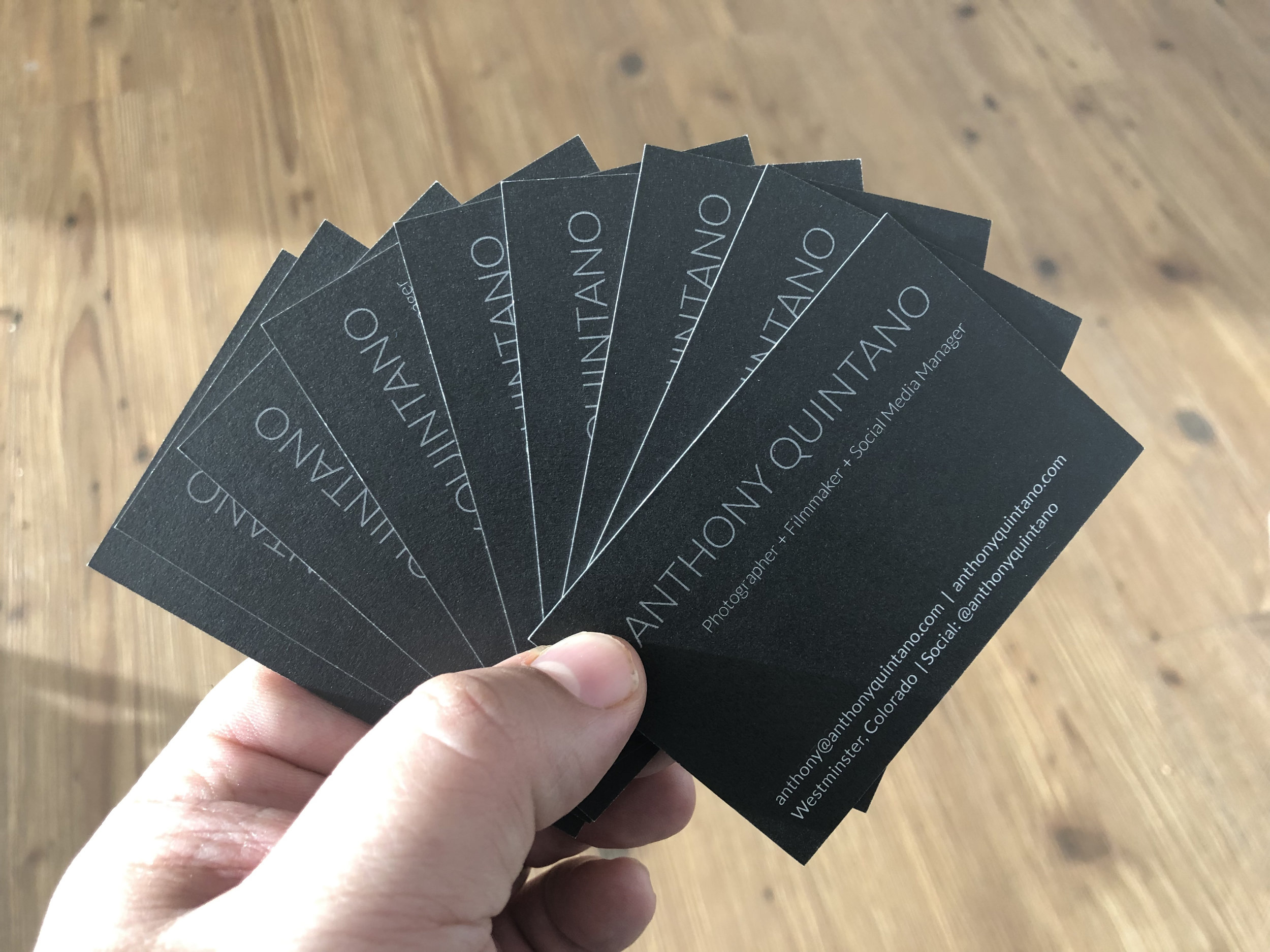
Definitely bring business cards or come up with another creative way to deliver your information when networking. You will be meeting a lot of new people as well as others, make your card or whatever you use stand out in a pile. I typically photograph every business card i get with my phone because i tend to either lose or ruin a card i receive.

6. Don’t Go To Panels
Don't fill your schedule up with panels. The most value i've had at SXSW has been just being out and about near the convention center, either running into people you already know or being visible for someone who was looking to network with you. Meetings have been the reason why i attend. If you miss a panel you wanted to attend, check the official hashtag for that panel. I promise you the highlights of that panel were live-tweeted.

7. Modify Your Twitter Display Name
Change your twitter display name (not your username) to incorporate SXSW so your profile comes up when people search 'SXSW'

8. Snacks
Bring snacks. Yes there is lots of food at SXSW but you will most likely have to wait in line or pay for the food. Having snacks will definitely help you get through those times that you don't have time to wait in line or go out of the way to get food.

9. Carry Water
Bring a hydro flash. There will be plenty of places in and around the convention center where you will be able to fill up and keep yourself hydrated.

10. RSVP Everything
RSVP to everything. We're less than five days out from SXSW so if you haven't RSVP'ed by now, you might be screwed. Just because you rsvp, does not mean you have to attend.
11. Meet New People
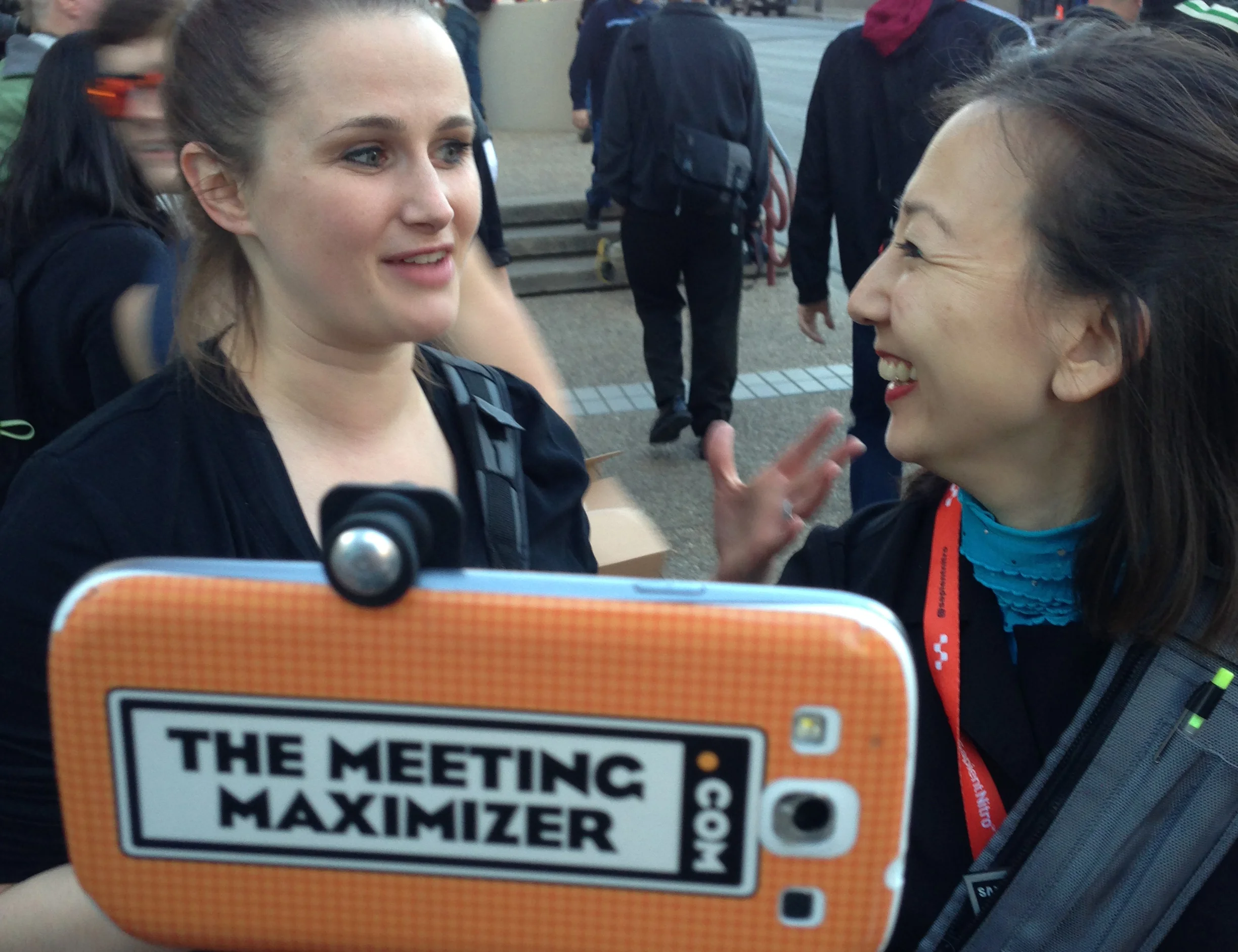
Spend more time meeting new people than hanging out with your friends. This is what SXSW is about and what ends up leading to new relationships, partnerships and even new jobs.

12. Comfortable Shoes
Bring comfortable shoes. You will be walking a lot!

13. Backpack. No Tote.
Bring a backpack. There will be swag and you want something to carry those snacks and hydroflask. You do not want to be stuck walking around with a tote bag.

14. Swarm!
Use Foursquare's Swarm App to check-in to restaurants and other locations. This has helped for two reasons. I typically want people to know where i am so if they wanted to meet me, it gives them a chance to swing by. If you don't want to be bothered, feel free to not do this. The second reason is, it helps you remember all the places you visited for your notes if you plan to attend next year.

15. Try Going Badgeless
I typically attend SXSW now without buy a badge. Most people who attend have their employers cover their expenses but this year i'm attending on my own dime and simply can't afford one. Not having badge can be slightly tough because most people connect or hangout within the conference center. A lot of official SXSW events also require the badge to rsvp or attend, even outside the convention center. You can survive without purchasing a badge. Just make sure to hang out near the conference center, especially around lunch when everyone escapes to eat or simply get some fresh air.

16. Use Twitter Lists
Build a Twitter list of people you meet. It helps you keep track and it doesn't hurt to put out a tweet after you meet someone. Typically at the end of the day i put a tweet out thanking someone for their time or saying it was nice to meet them. This allows for relationship building beyond SXSW.

17. Stay Organized
Keep track of all your RSVP's and event links. I use Evernote to store anything i RSVP to or links of events i want to be aware of. Google Calendar helps but can get congested because many events at SXSW overlap. Sometimes a simple excel sheet helps organize info.

18. Saving Tweets
There will be tweets you will want to save when SXSW is all said and done with. Many of the panels at the conference get live-tweeted and this comes in very handy when you have to return to the office to present your learnings from the festival. There are a few ways to save tweets. Saving tweets is always helpful when you’re on the run and don’t have time to read them or click through to the link that is embedded. You can simply like the tweet, you can use Twitter’s bookmarking tool which is only available on the mobile app. You have more options when using Twitter on the web. You can add to a Twitter Moment, If using Tweetdeck, you can add to a collection.

19. Recap your trip
When it’s all over with, you will want to make sure you organize the pile of business cards you’ve collected and collect all the selfies you took. Take the time to save this information while it’s still fresh. I typically do this each night after a busy day of meeting tons of people.

20. What have you learned
Take notes on all that you did from the positives and negatives. SXSW is a great conference to learn from especially if you attend other events throughout the year. This also helps if you plan on returning the following year. Meeting new people may prompt you to maybe go in on renting a house to save costs on hotels, car pooling to the convention center if you’re not staying nearby.
If you have some good tips to share, please post them below or Tweet them at me and I will add them to this post.
20 Locations To Photograph New York City
Statue Of Liberty And The NYC Skyline

2. Lower Manhattan Skyline From Jersey City

3. Lower Manhattan From Brooklyn Bridge Park

4. New York City Skyline With Brooklyn Bridge

5. NYC Skyline From The Staten Island Ferry

6. Midtown and Lower Manhattan View From Hamilton Park Weehawken, New Jersey

7. River Level View of The New York City Skyline

8. George Washington Bridge Sunrise On Pedestrian Walkway

9. George Washington Bridge From Fort Lee Historic Park

10. George Washington Bridge with NYC Skyline

11. Lower Manhattan Seen From The Top Of Rockefeller Center

12. Lower Manhattan From The Empire State Building

13. Sunset From Bow Bridge In Central Park

14. Brooklyn Bridge and Lower Manhattan Over The FDR

15. A Silhouette Of The NYC Skyline From Hunters Point State Park

16. Lower Manhattan At Sunset From The Brooklyn Bridge

17. One World Trade At Sunrise From Liberty State Park

18. Fulton Center Station

19. The Oculus

20. Flatiron Building With The 5th Ave Clock

Ishimoto Blog:
Integer posuere erat a ante venenatis dapibus posuere velit aliquet. Fusce dapibus, tellus ac cursus commodo, tortor mauris condimentum nibh, ut fermentum massa justo sit amet risus.


Donec id justo non metus auctor commodo ut quis enim. Mauris fringilla dolor vel condimentum imperdiet.