Three Days in Barcelona: Sagrada Família, Montjuïc, and Walking the City Without a Plan
Day One
My brother Christopher gave me the opportunity of a lifetime to join him a trip he was awarded by his employer. He was allowed to bring a guest and he chose me. I was excited to get to spend time with him and travel overseas which is something I do not get to do often, mostly because I can’t afford it. Especially at this moment in time because I had just left a toxic work environment and was unemployed.
My brother had some obligations on the trip with his employer that he had to attend to while there so that left me time to explore Barcelona on my own. I went with some locations I wanted to see but did my best to not get tied to any schedule or plan. I was also training to run a marathon so I was looking forward to getting extra steps in walking around the city.
I always make sure to book a window seat when flying somewhere new and I’m glad I did. I had an incredible view as we approached Barcelona.
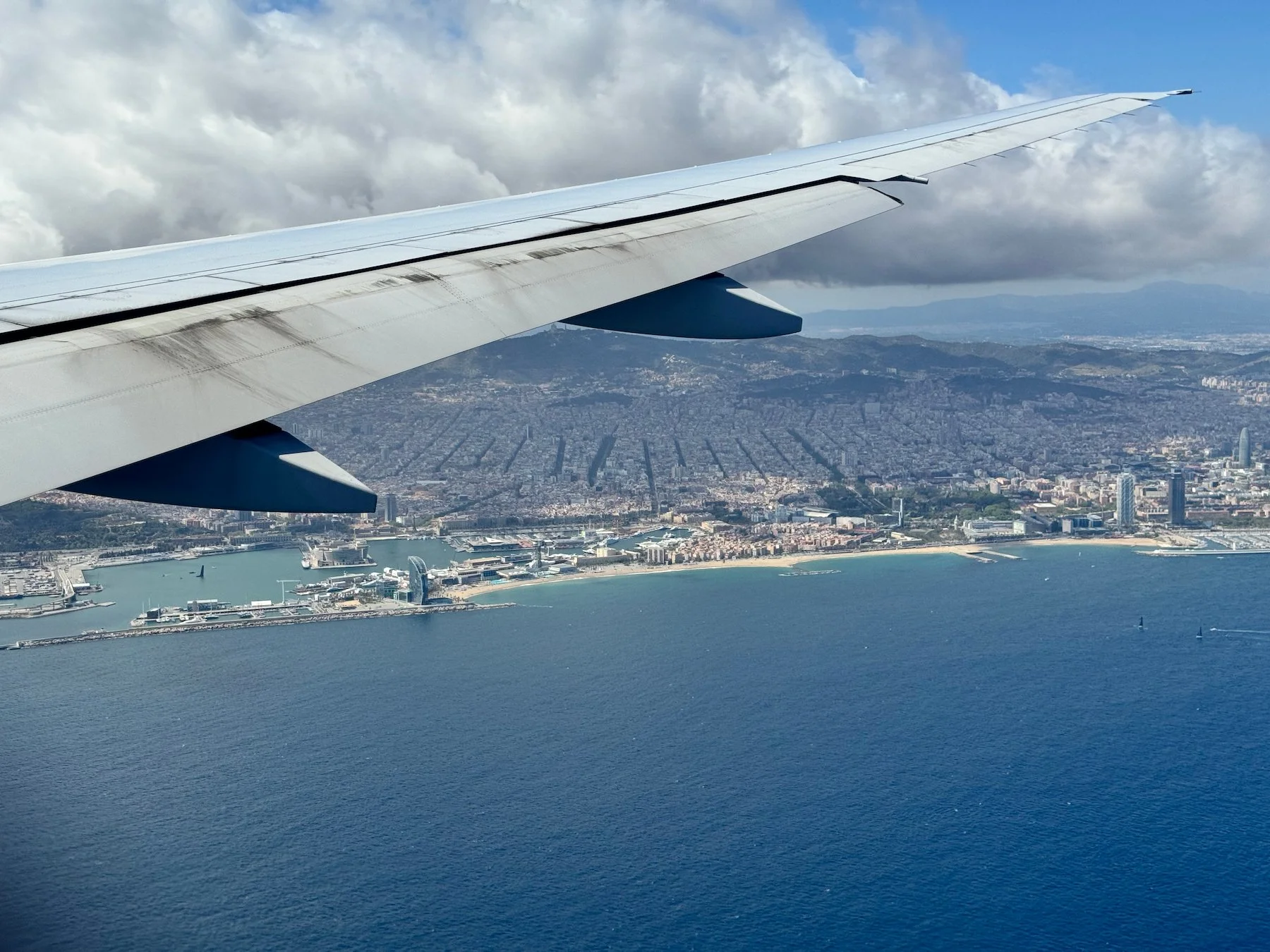
Our first look at Barcelona, shot out the window on final approach with my iPhone 15 Pro Max. That's Barceloneta along the beach, and the sail shaped hotel on the point is the W Barcelona, where we stayed for the trip.
Here's the thing about the Sagrada Família. It's the one place on this whole trip I bought a ticket for in advance, and I did it six days before we flew, on April 11th. Entry is timed and same-day slots are basically gone by the time you'd think to ask. If I hadn't booked it, there was a real chance I'd fly all the way to Barcelona and never get inside the one building I most wanted to see. So I picked a slot for 17:45 on our arrival day and hoped the flight cooperated.
Booking a timed ticket for the same day you land is a gamble, and I'd tell anyone reading this to know what they're risking. Our flight out of Newark had already been pushed back a couple of hours before we ever left the gate. If that delay had run any longer, I'd have been sitting on a runway in New Jersey watching a nonrefundable entry time tick past. It worked out, but it was tighter than I'd like.
So we checked in, and then I turned right back around and headed out on my own to make my slot.
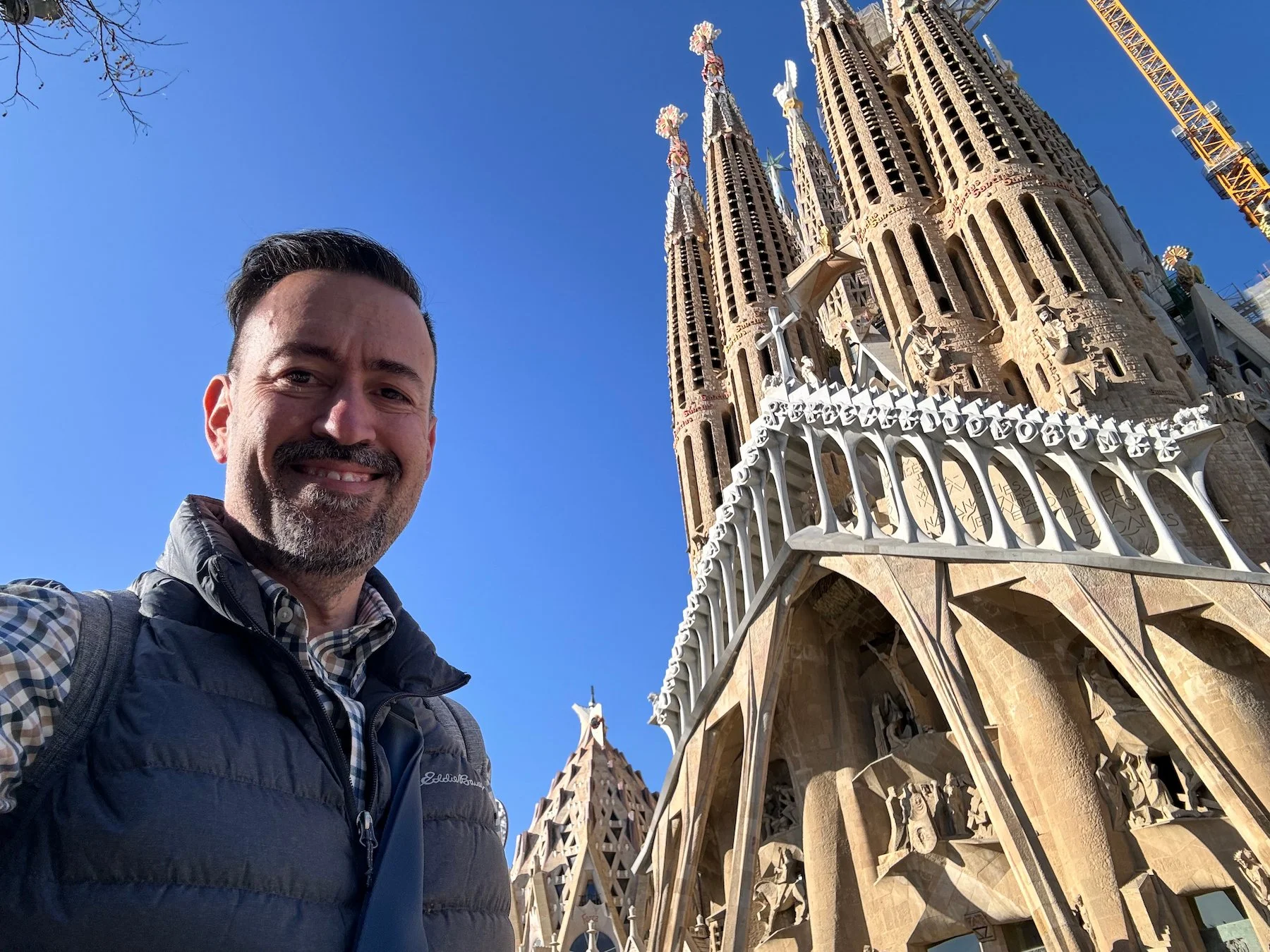
Selfie taken with my Apple iPhone 15 Pro Max in front of the Sagrada Familia in Barcelona.
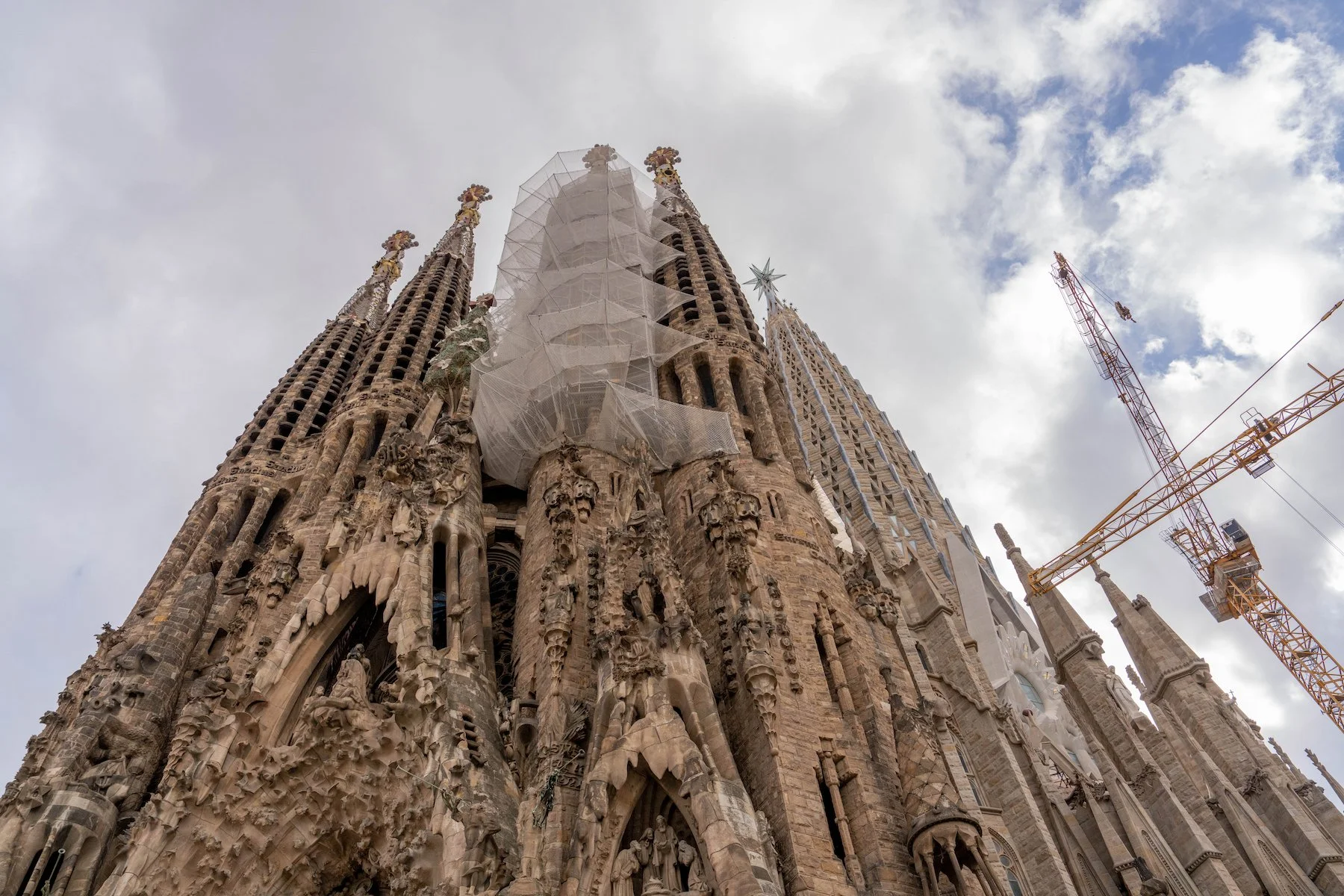
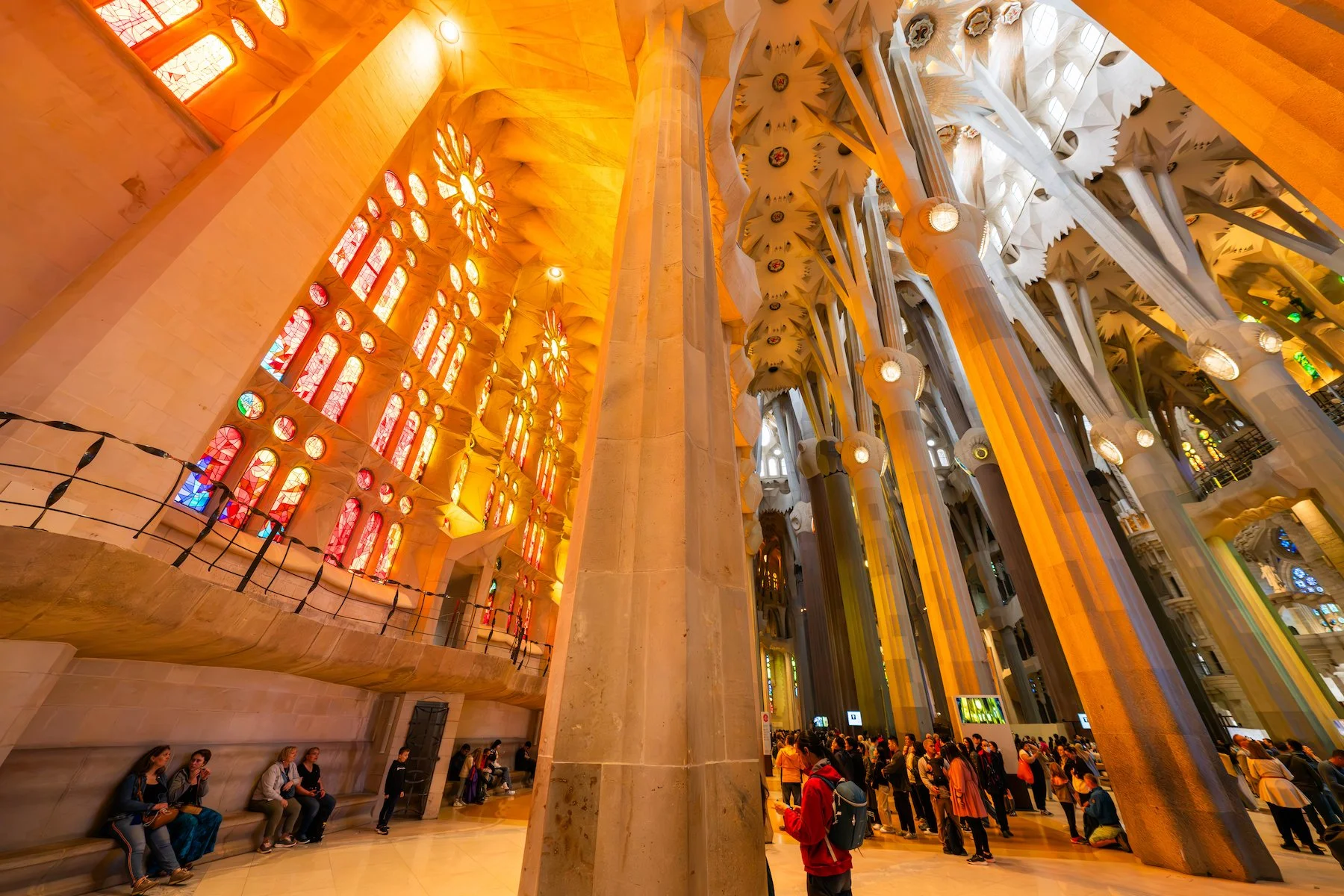
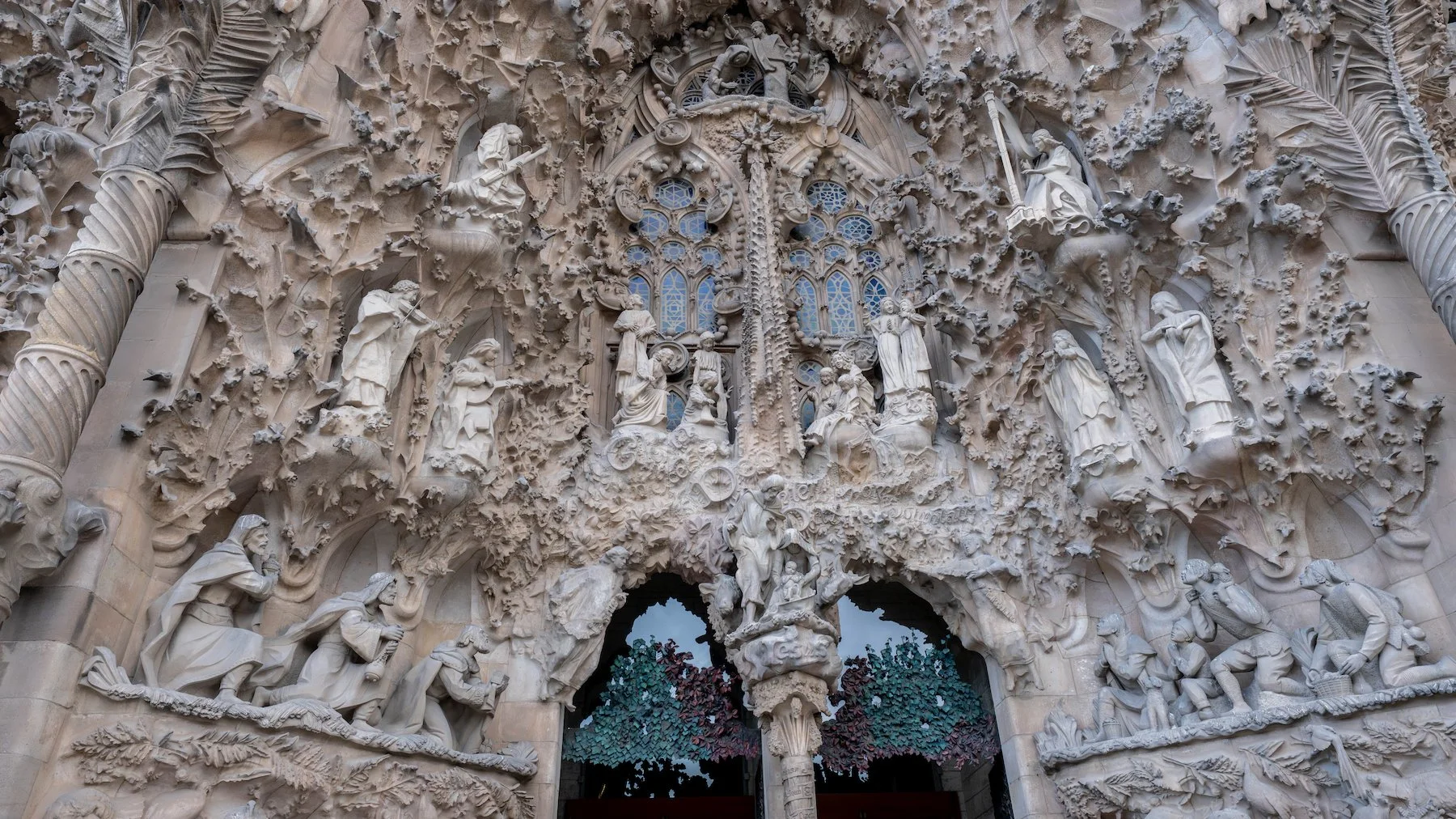
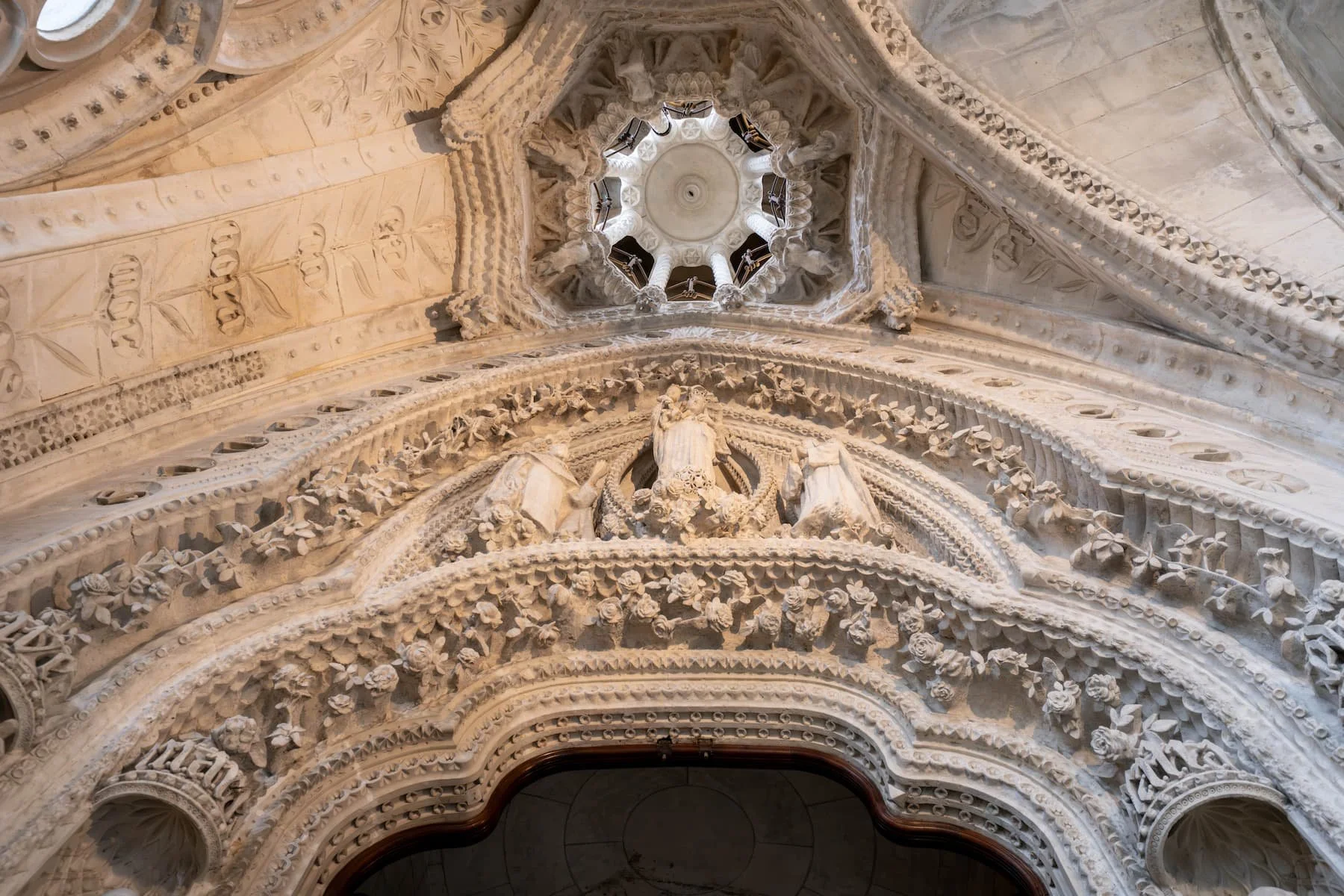
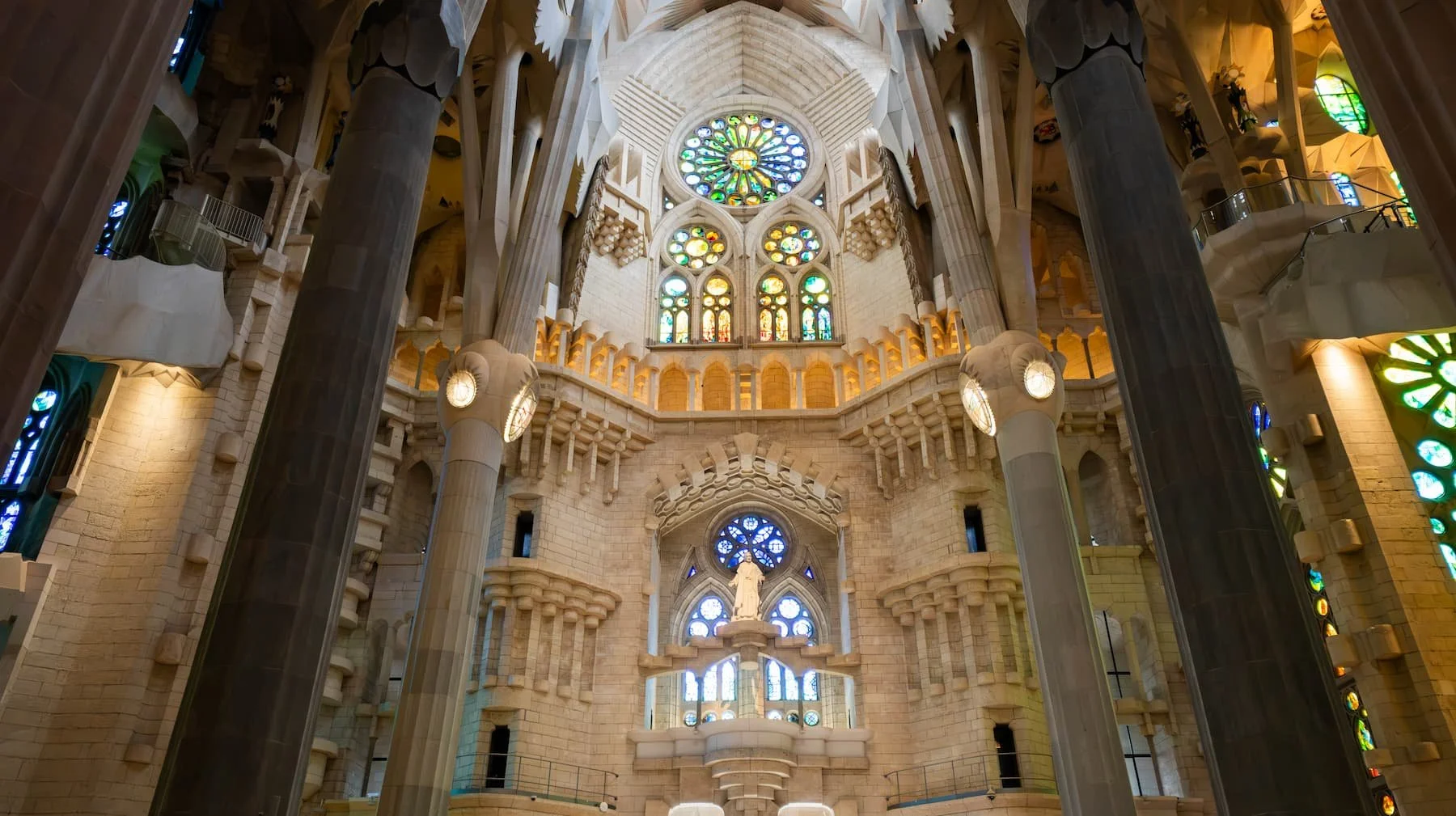
I came around the corner and just stopped. There's no other word for it than awe, and I'm not a guy who typically uses that word. You tip your head back and run out of neck before you run out of building. It's still under construction and has been for well over a century, so there are cranes bolted to the sides and scaffolding running up the towers. You're not looking at a finished monument behind glass, you're looking at a job still in progress that outlived the man who started it.
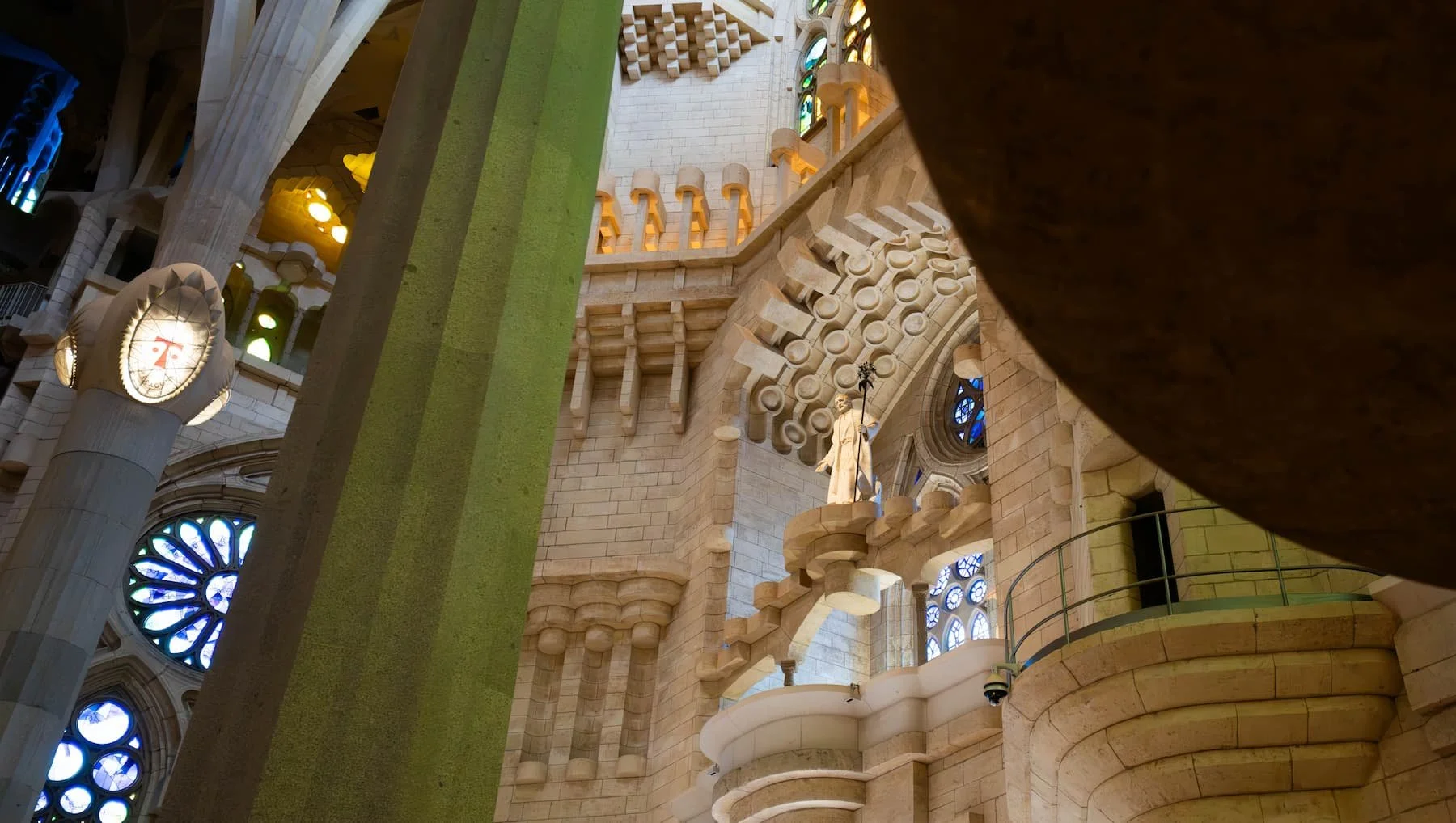
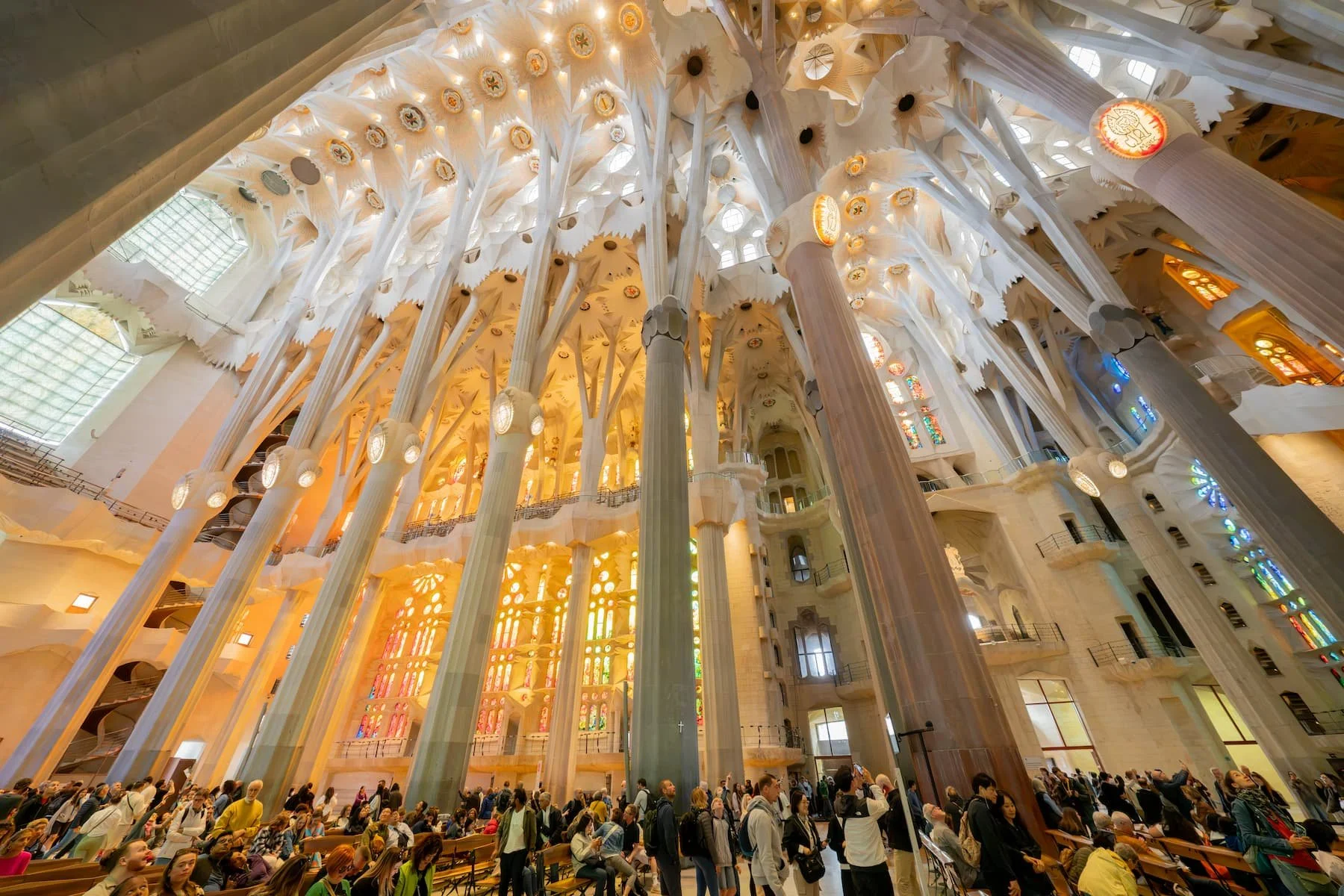
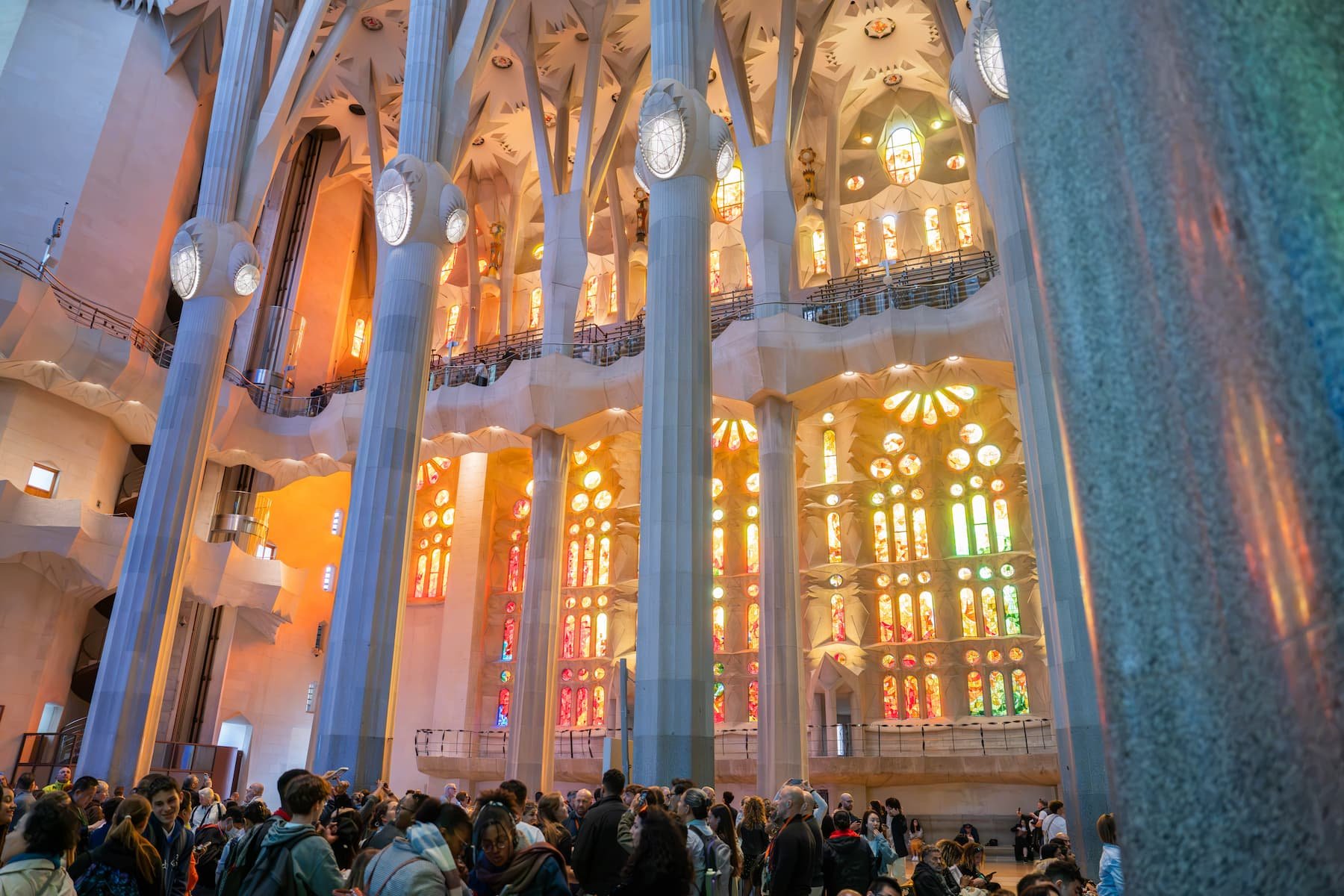
Gaudí ran the stained glass cool on one side for morning light and warm on the other for the afternoon. Late in the day, the Passion side windows were burning orange and red across the stone while the other side sat quiet in blues and greens. Go in the morning and it's a completely different room. Pick your time based on which one you want.
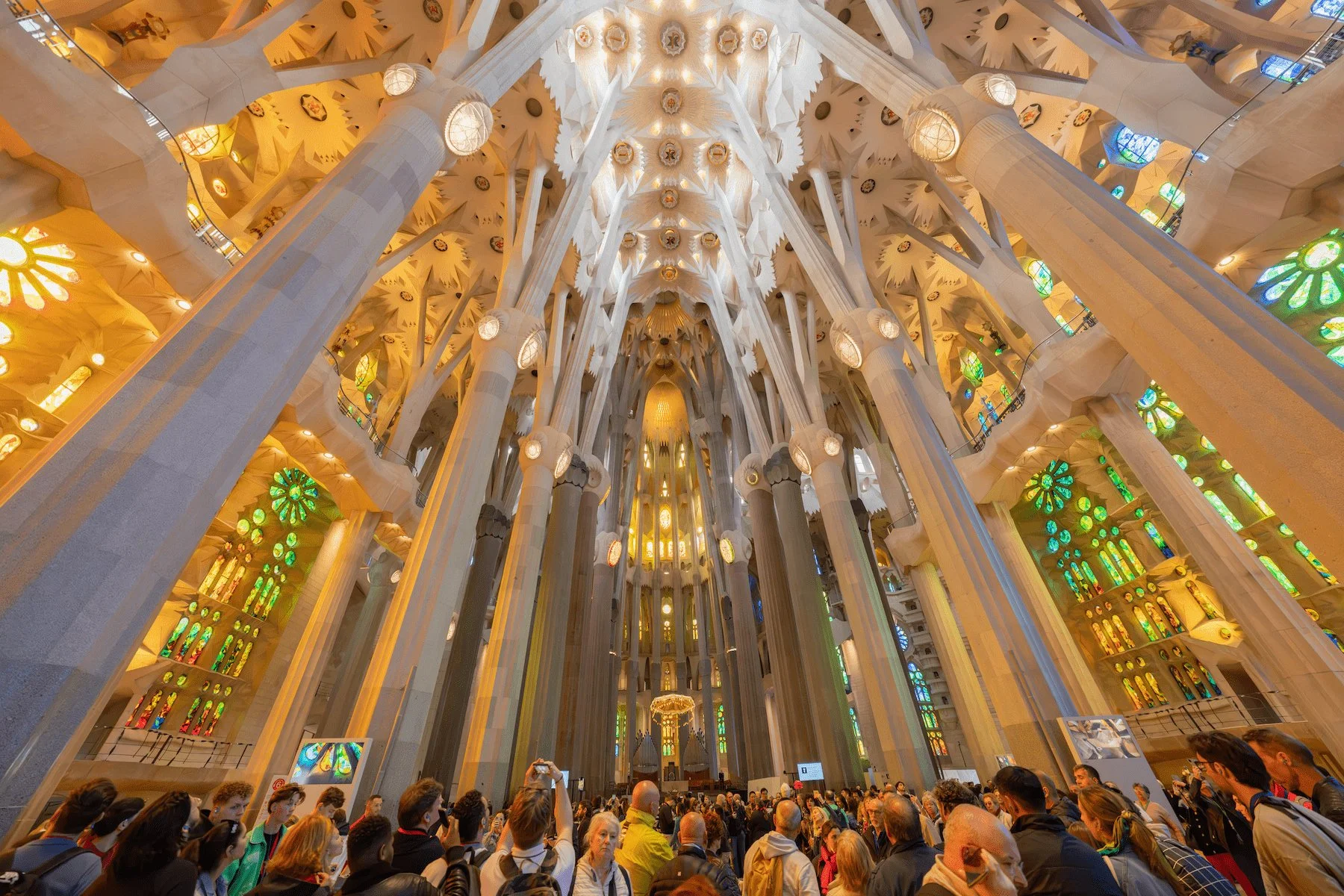
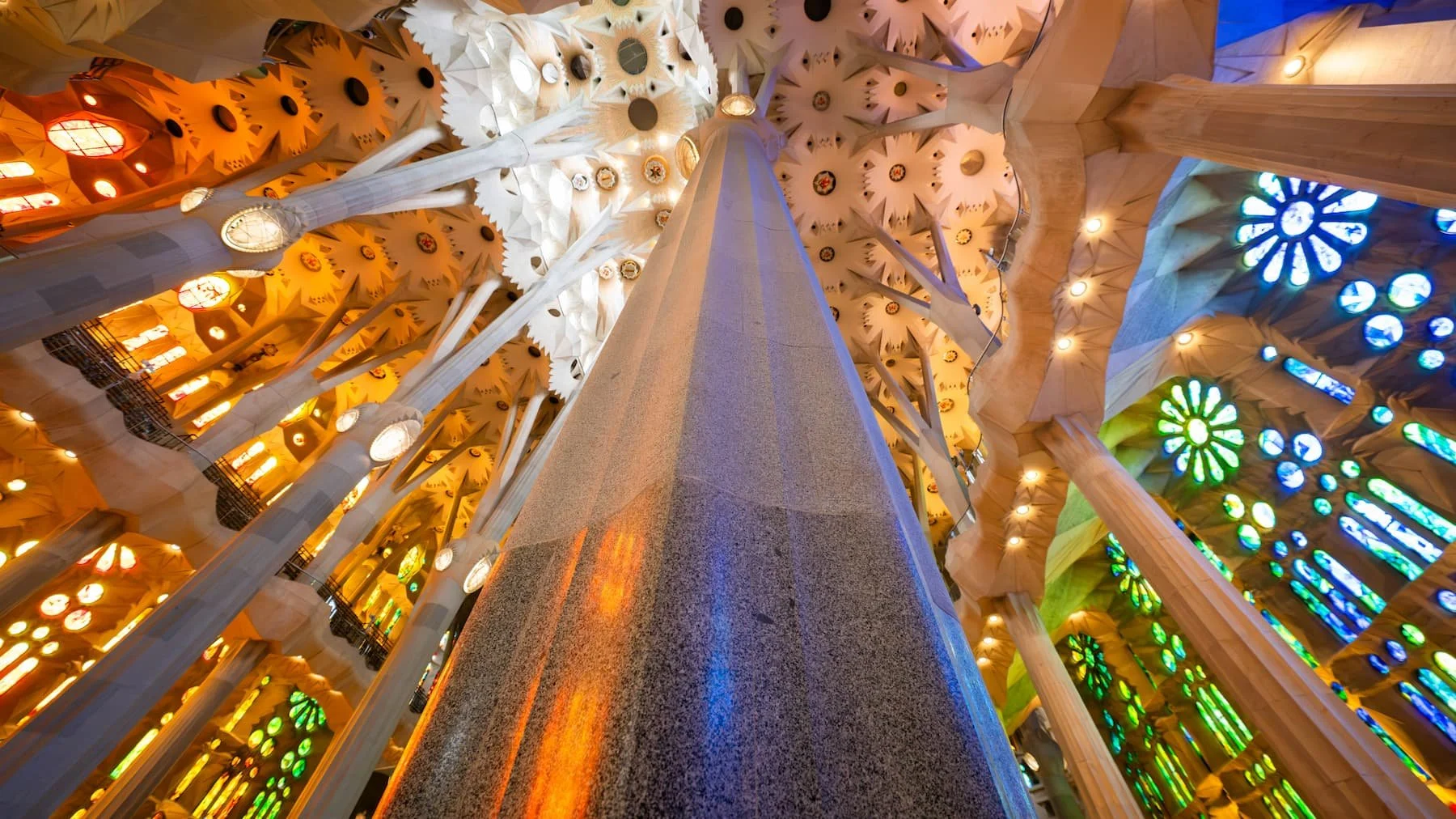
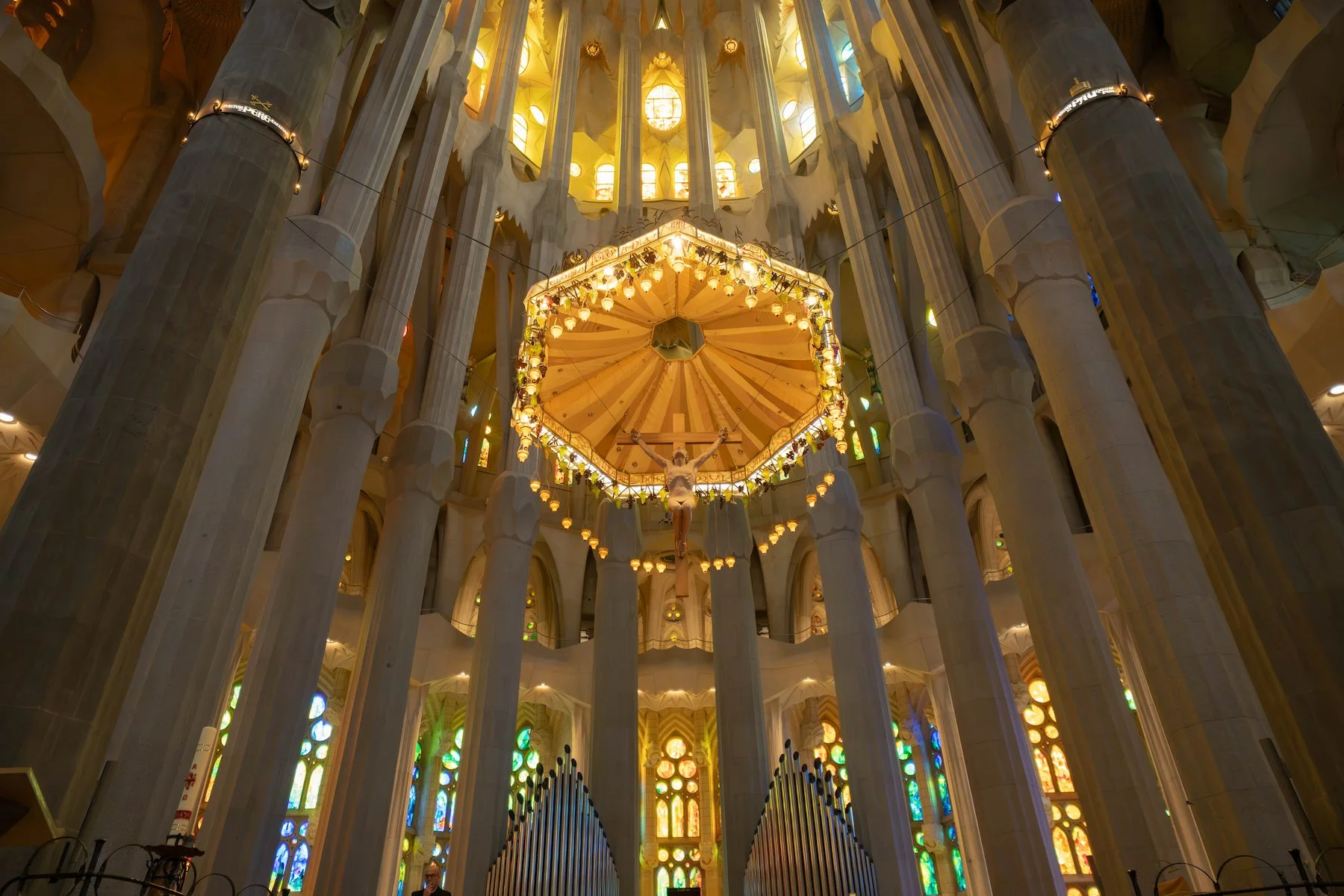
The thing that really got me was the scale and the design. The columns branch as they rise, splitting into limbs before they meet the vault, so the whole interior reads like standing in a stone forest and looking up through the canopy. A wide photo of the nave shows you a big room. No photo can really replace the feeling you get when you’re standing inside experiencing this for yourself.
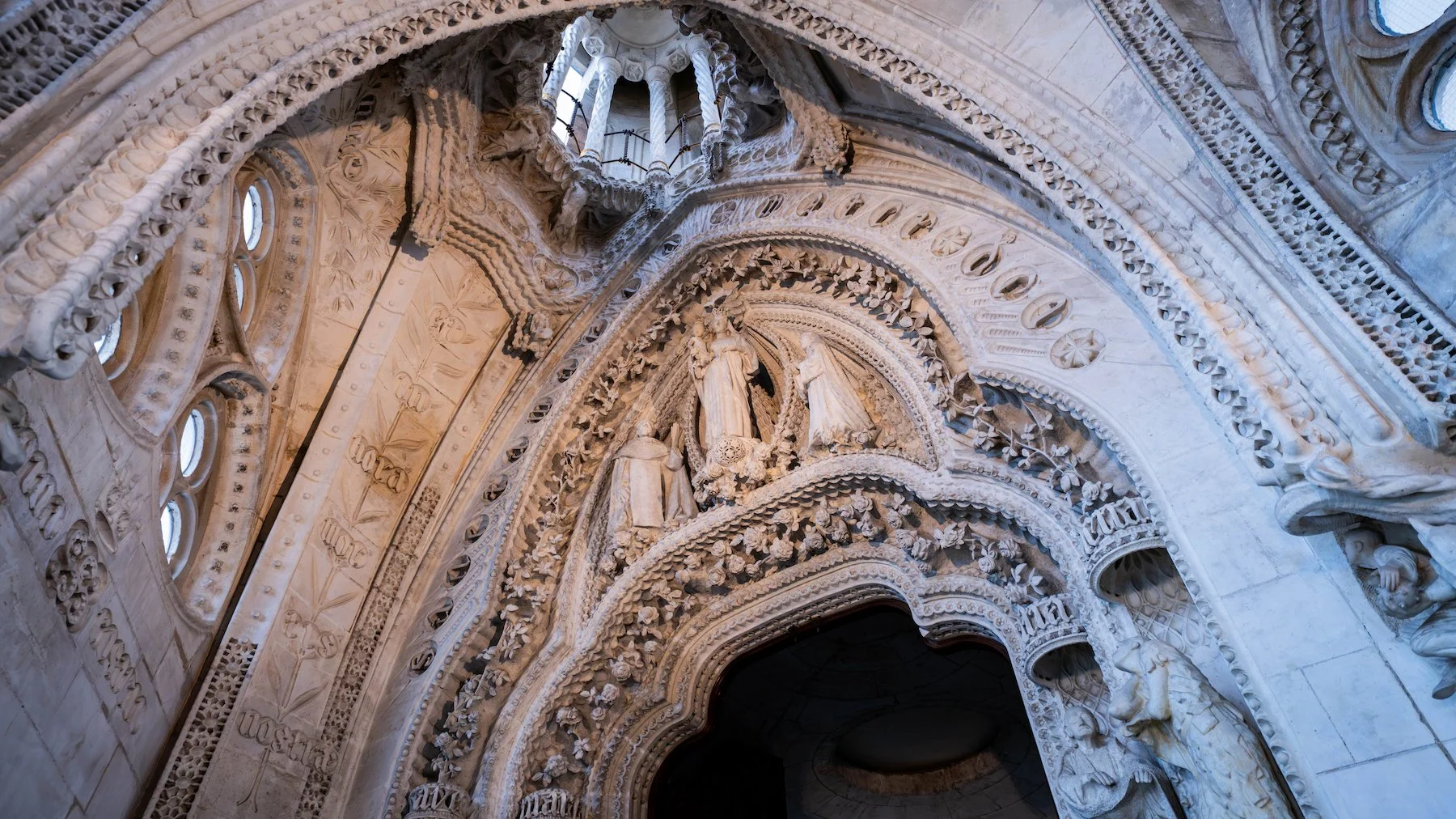
I shot it from every angle I could find. Straight up into the vault, along a single column into its branches, down the nave toward the altar, the wall of warm glass with people sitting on the bench beneath it. I usually pace myself. Not here. I wanted to document all of it.
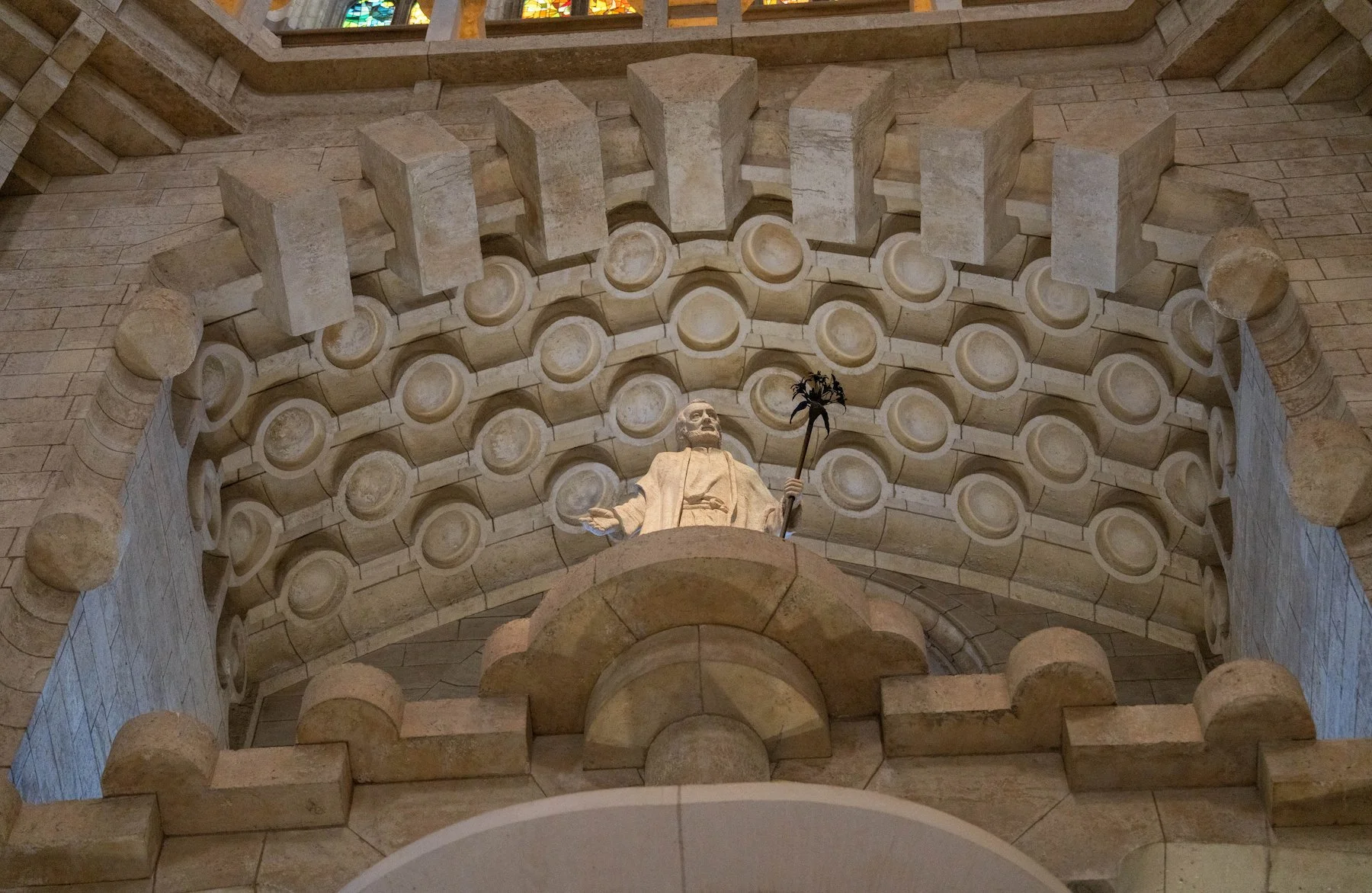
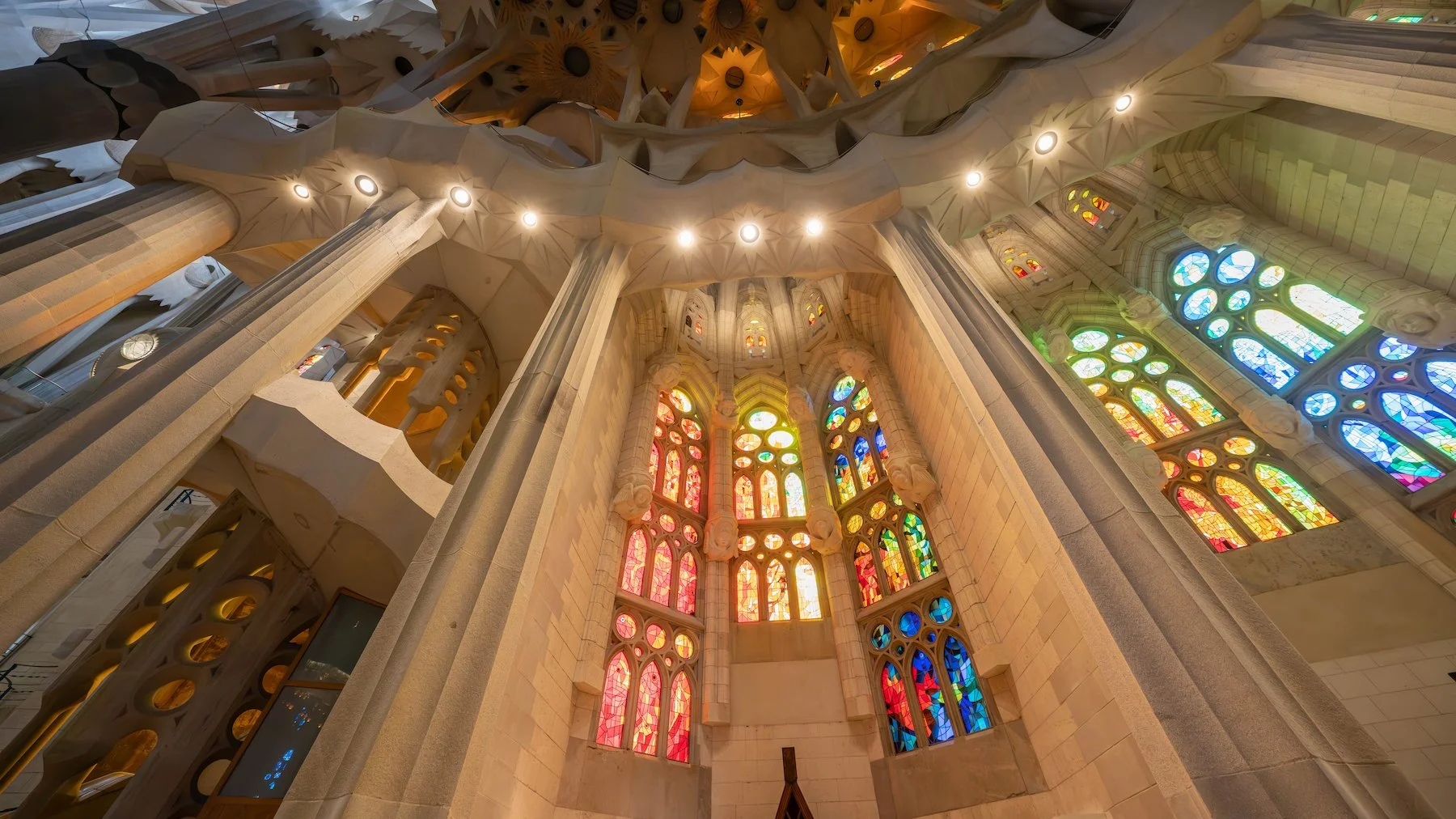
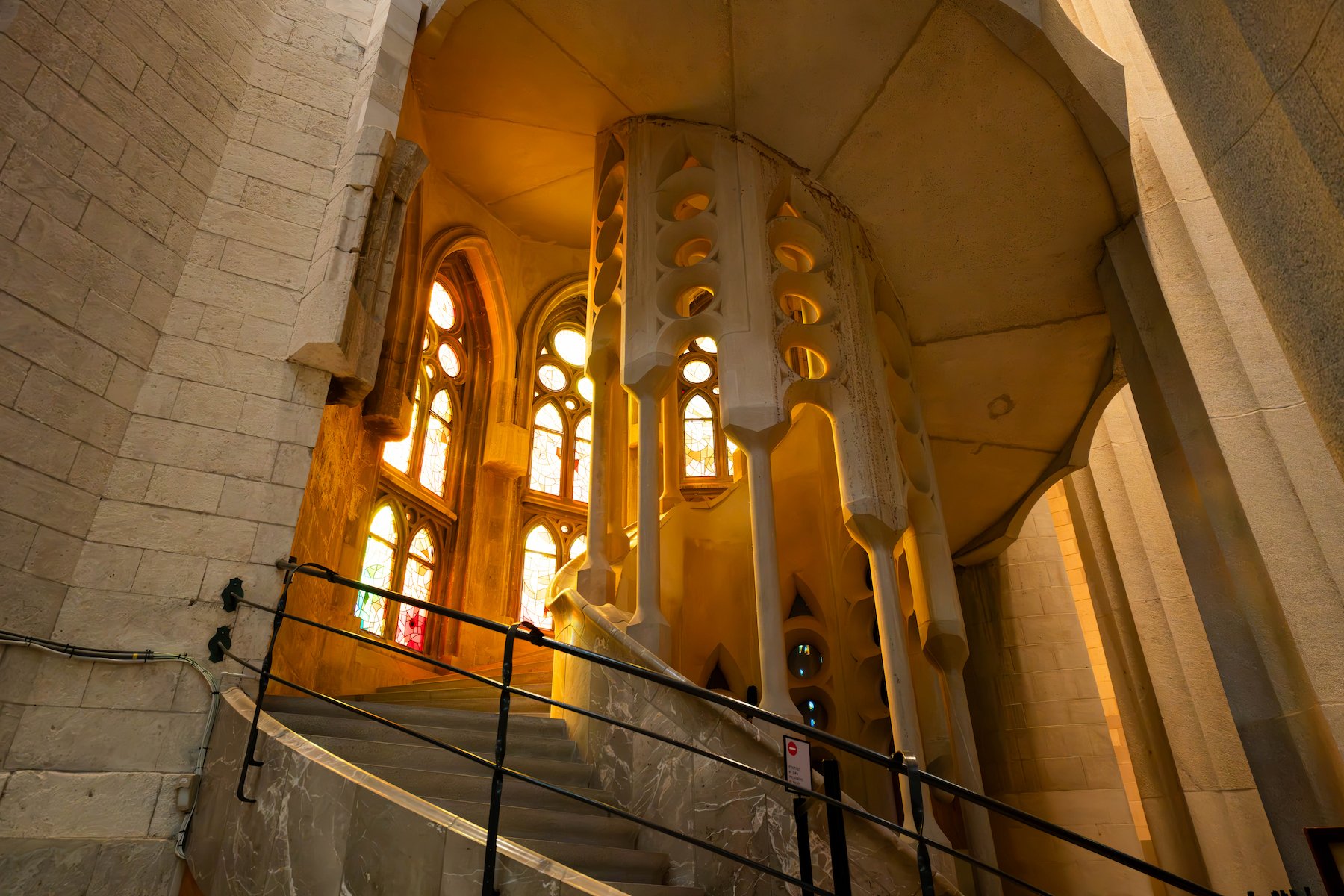
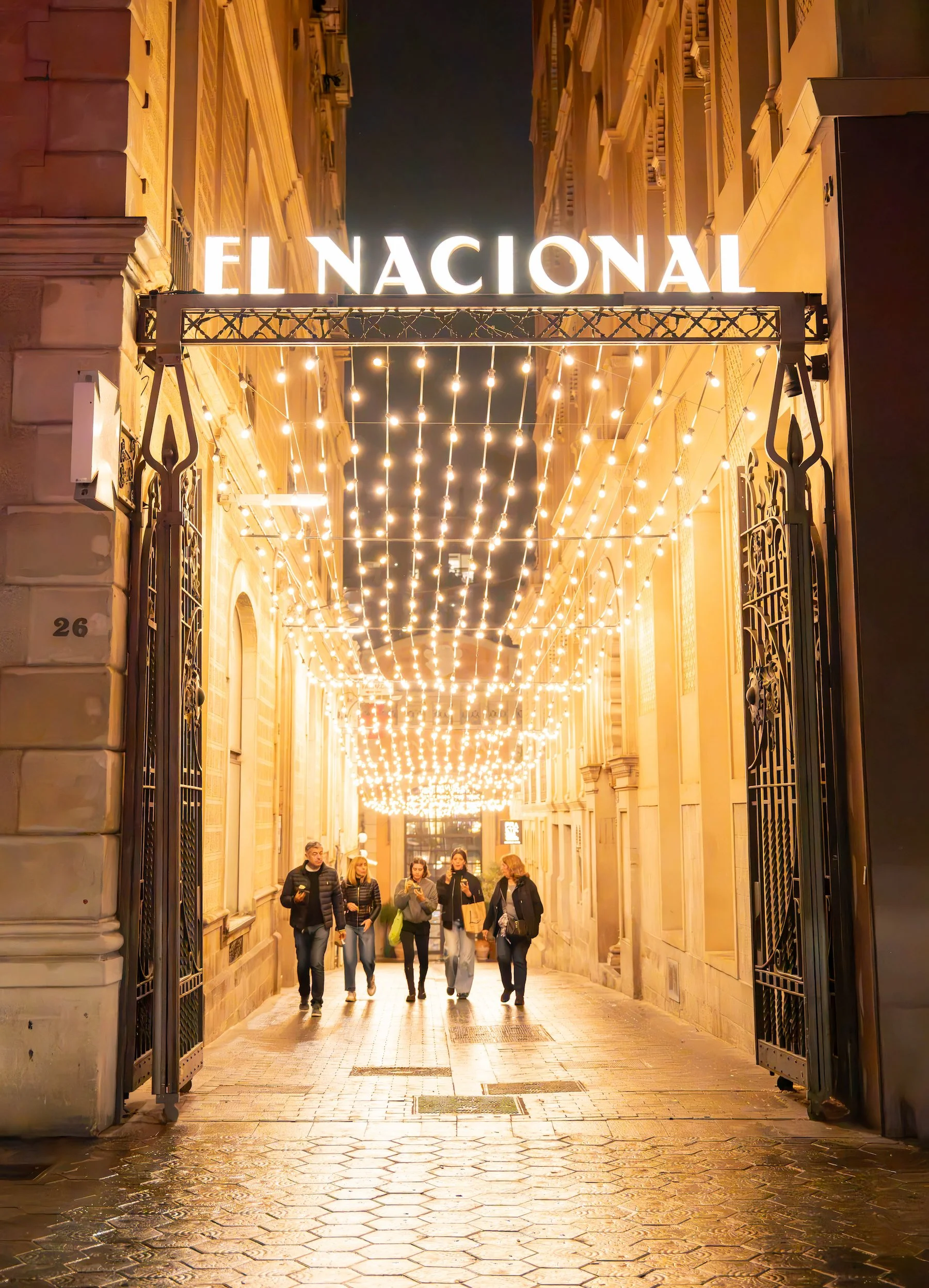
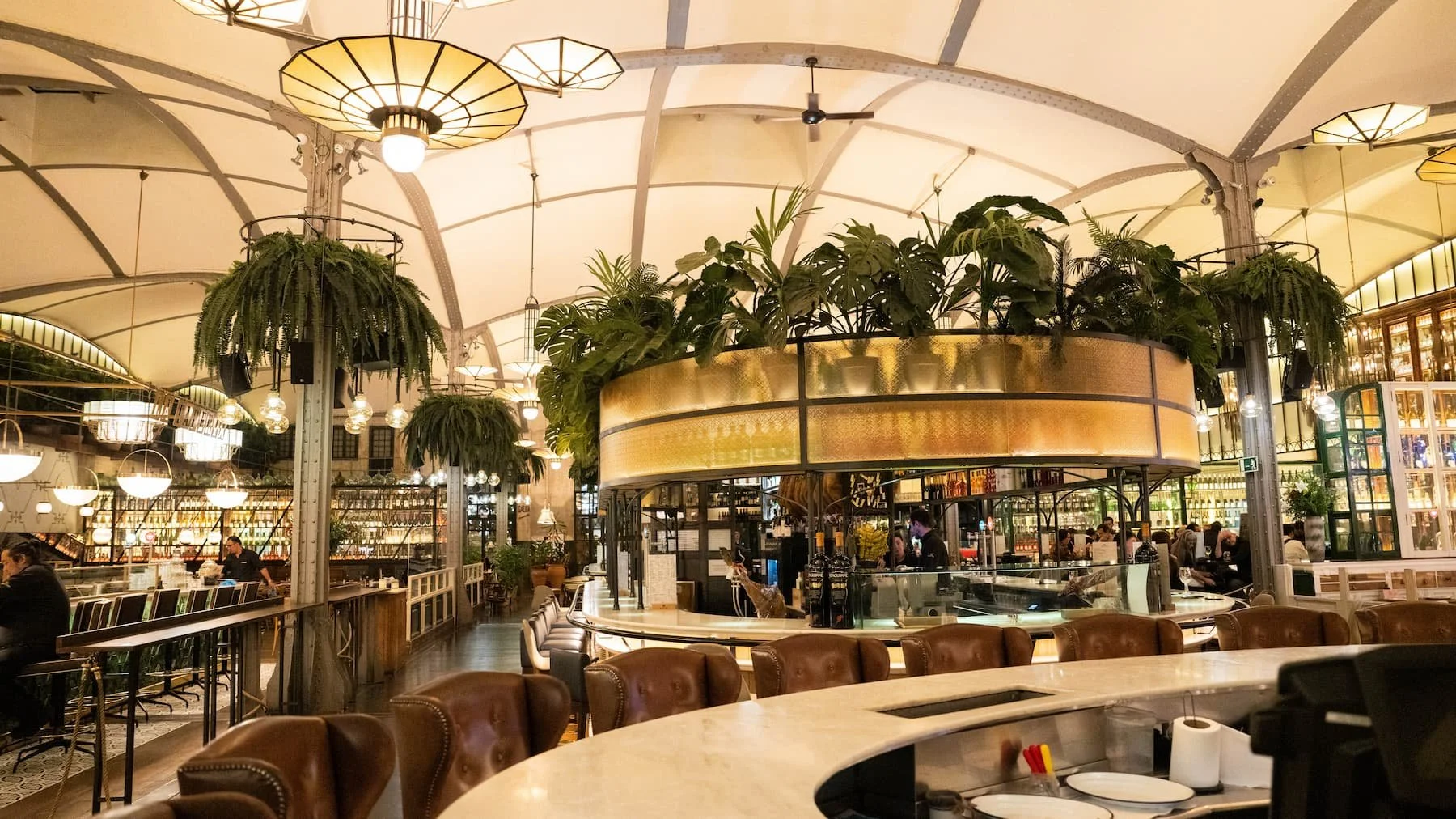
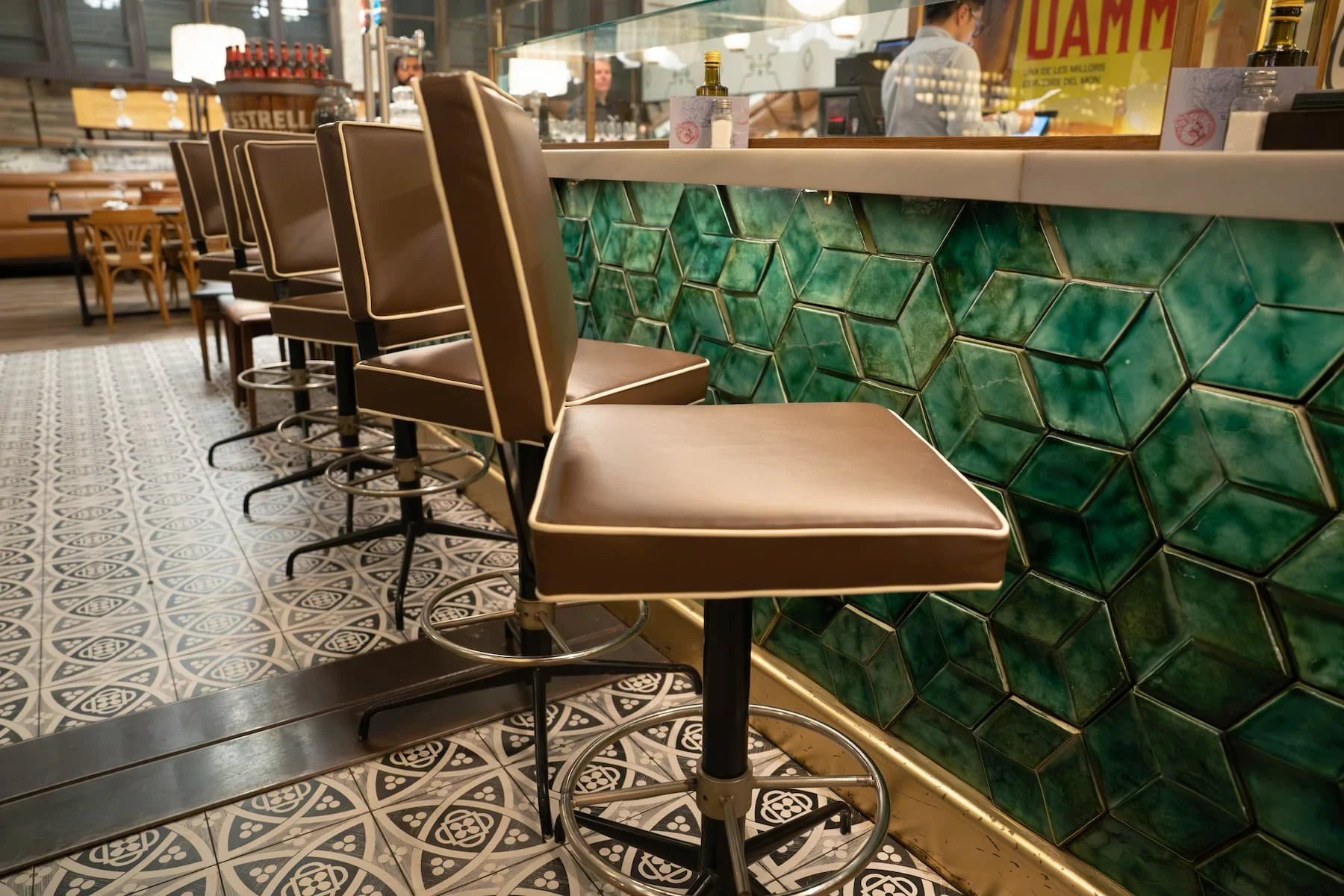
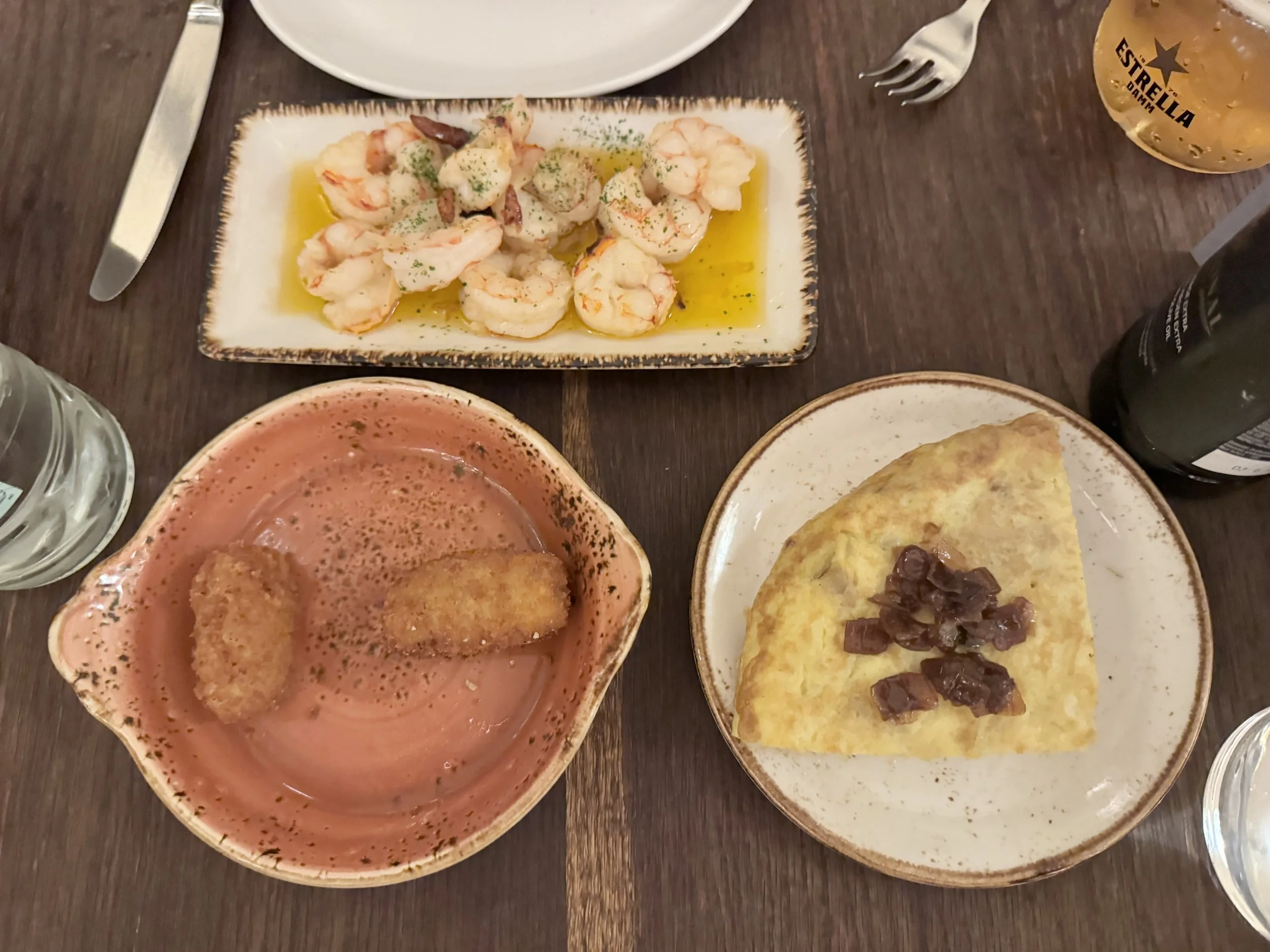
I got back to the W Barcelona in time for the group's welcome dinner, which was your typical company party. After that, Chris and I went out and walked into the old city, ended up at El Nacional over by the Ciutadella park, and had a drink and a plate of croquetas before calling it.
The next morning, Chris had his group's Gaudí activity, the whole day booked out from a quarter to nine until three in the afternoon. Which meant April 18th was mine.
I woke up at sunrise and went straight out to the beach.
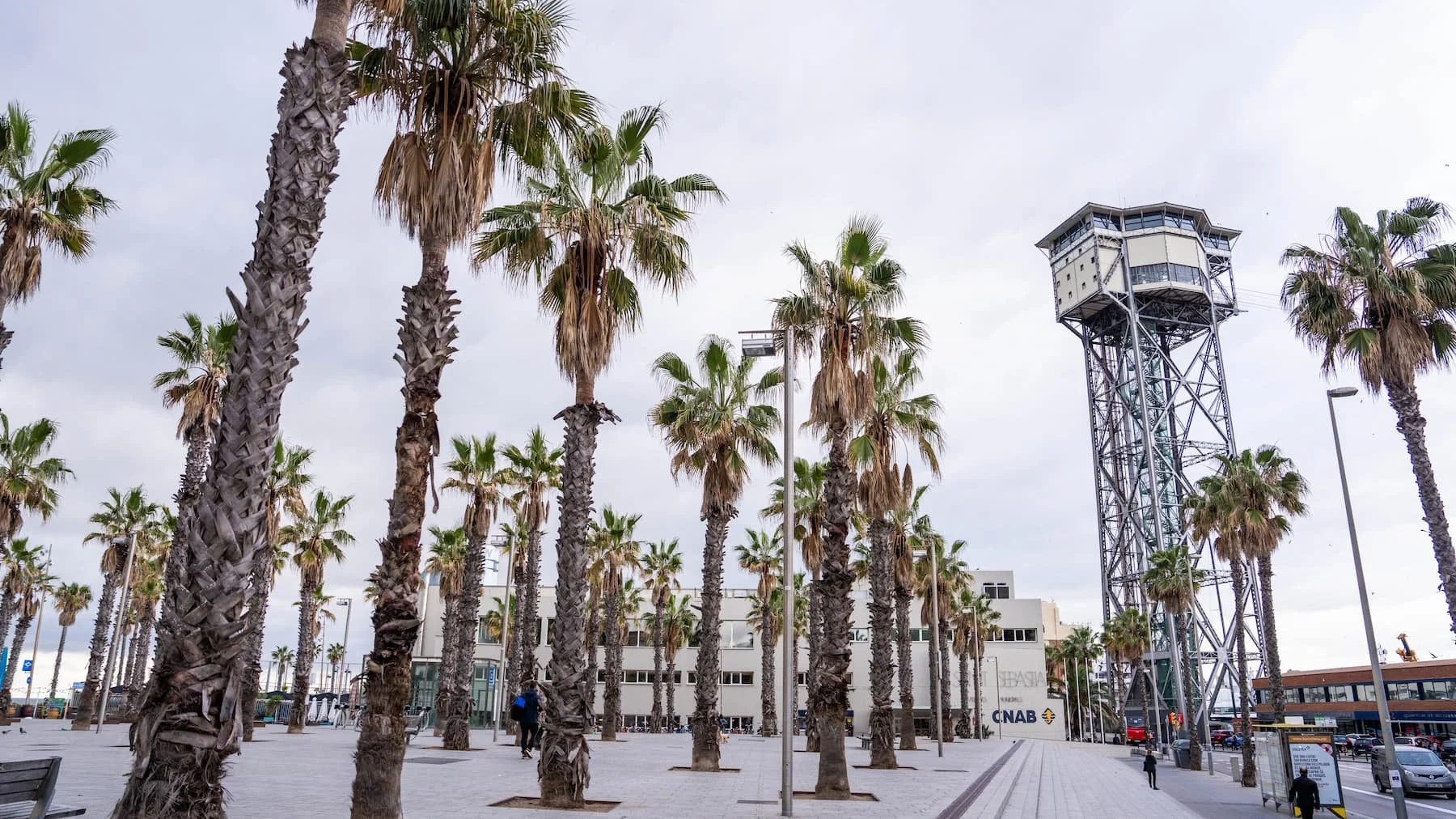
It was grey. Low cloud sitting over the whole waterfront, no color in the sky except one thin yellow band way out on the horizon where the sun was trying to get through. I walked out past the palms on the promenade with nobody around but a couple of joggers. I love quiet, peaceful walks without sirens, crowds or car horns honking. You feel like you have the world to yourself for a brief moment.
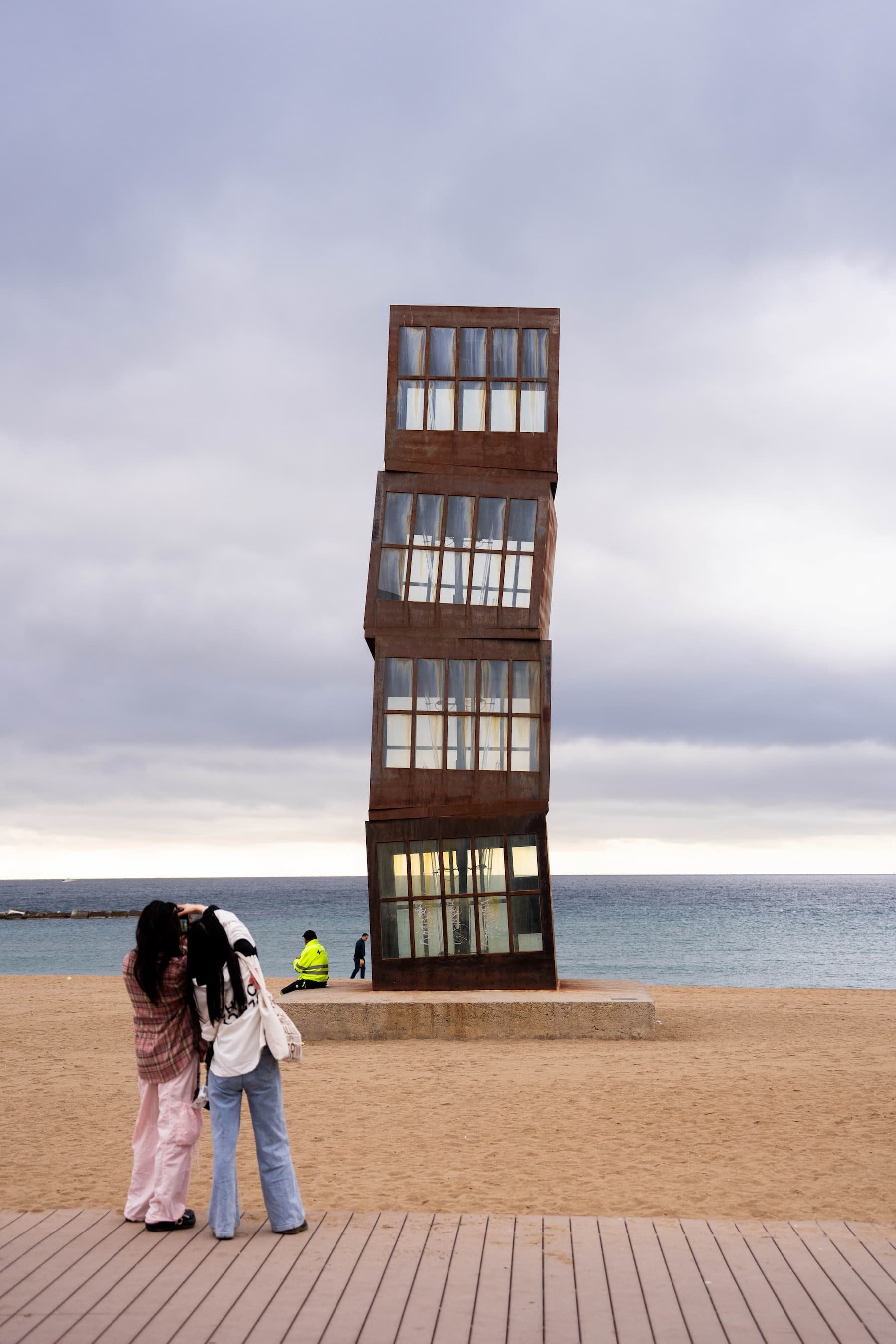
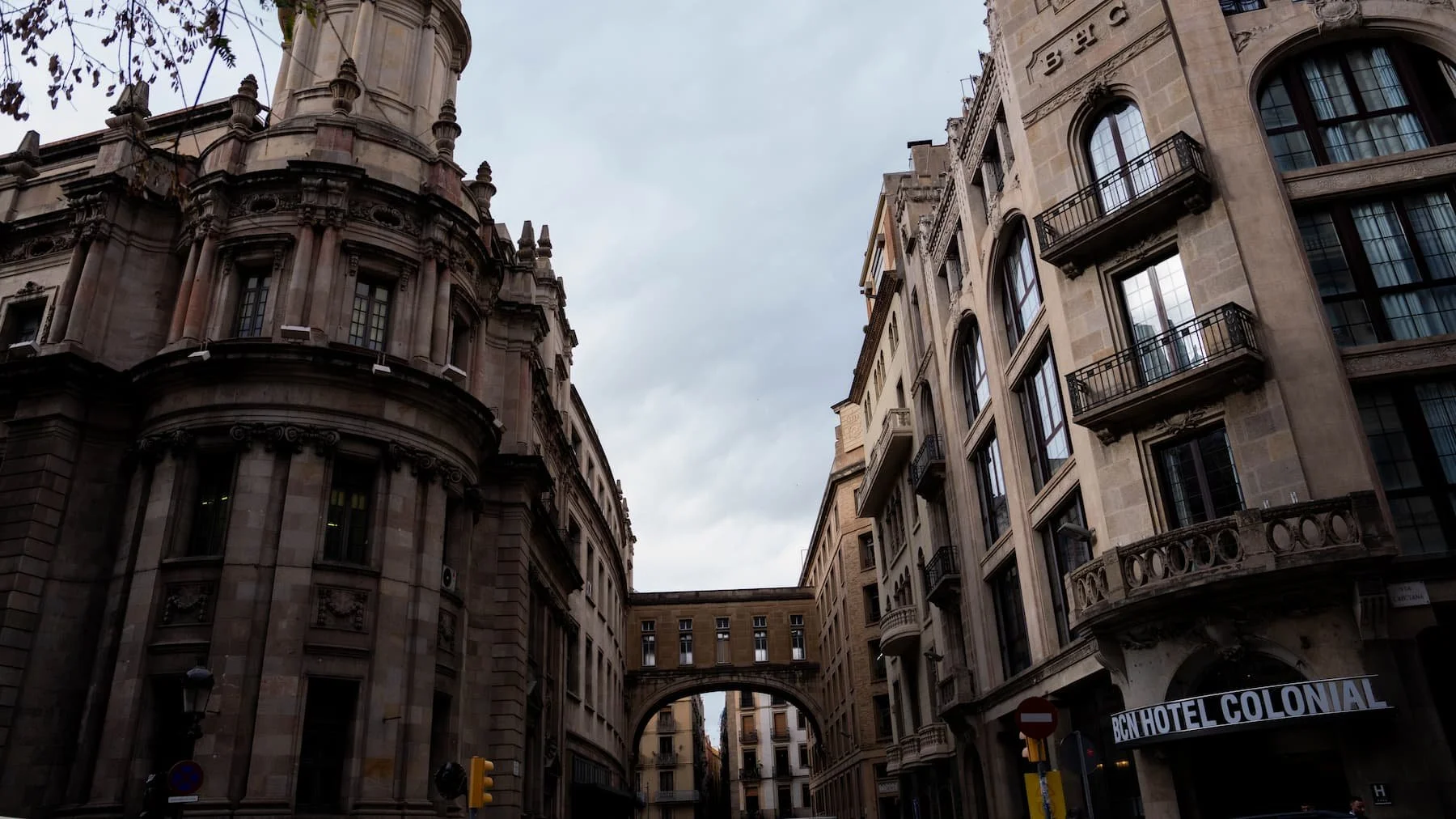
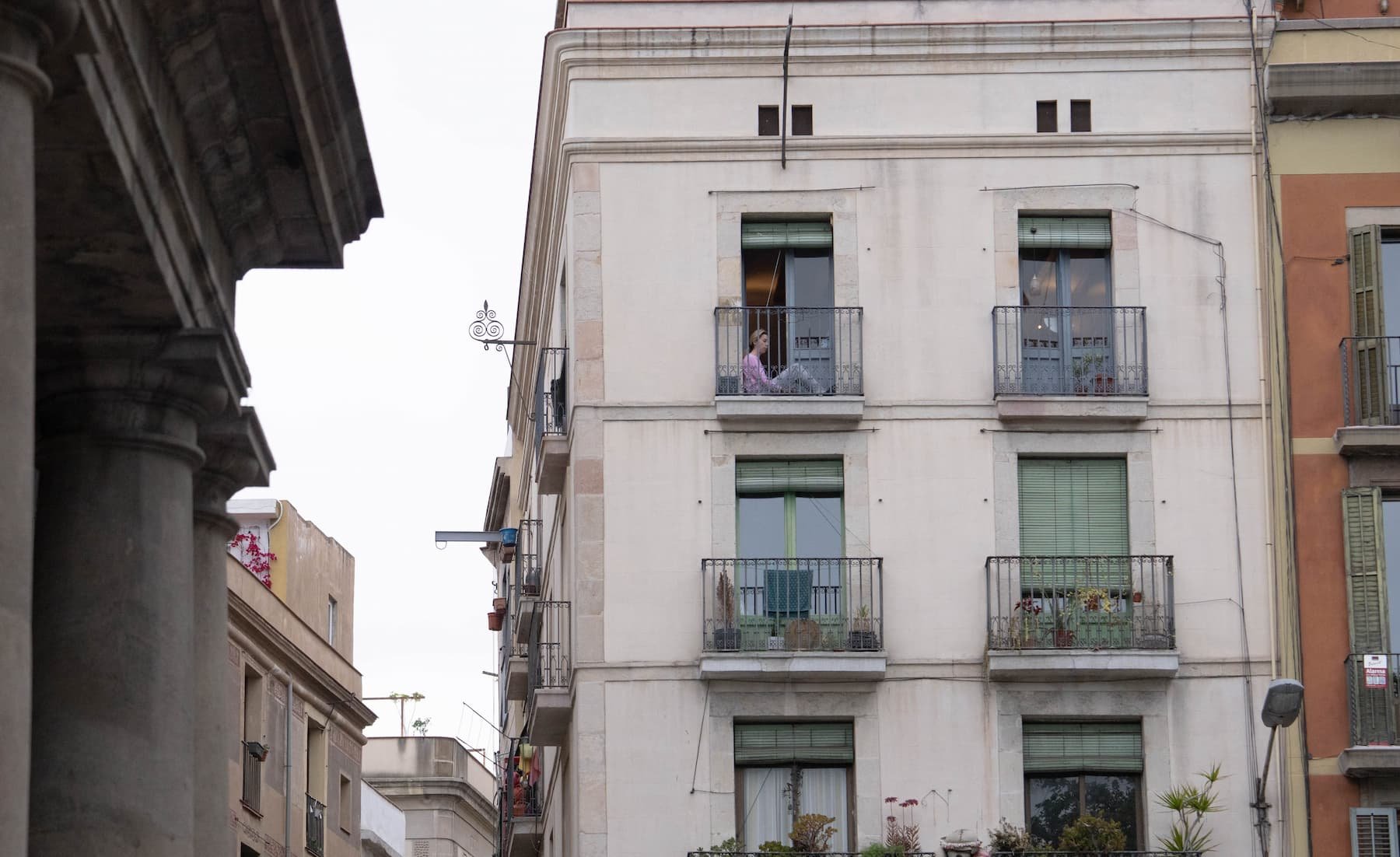
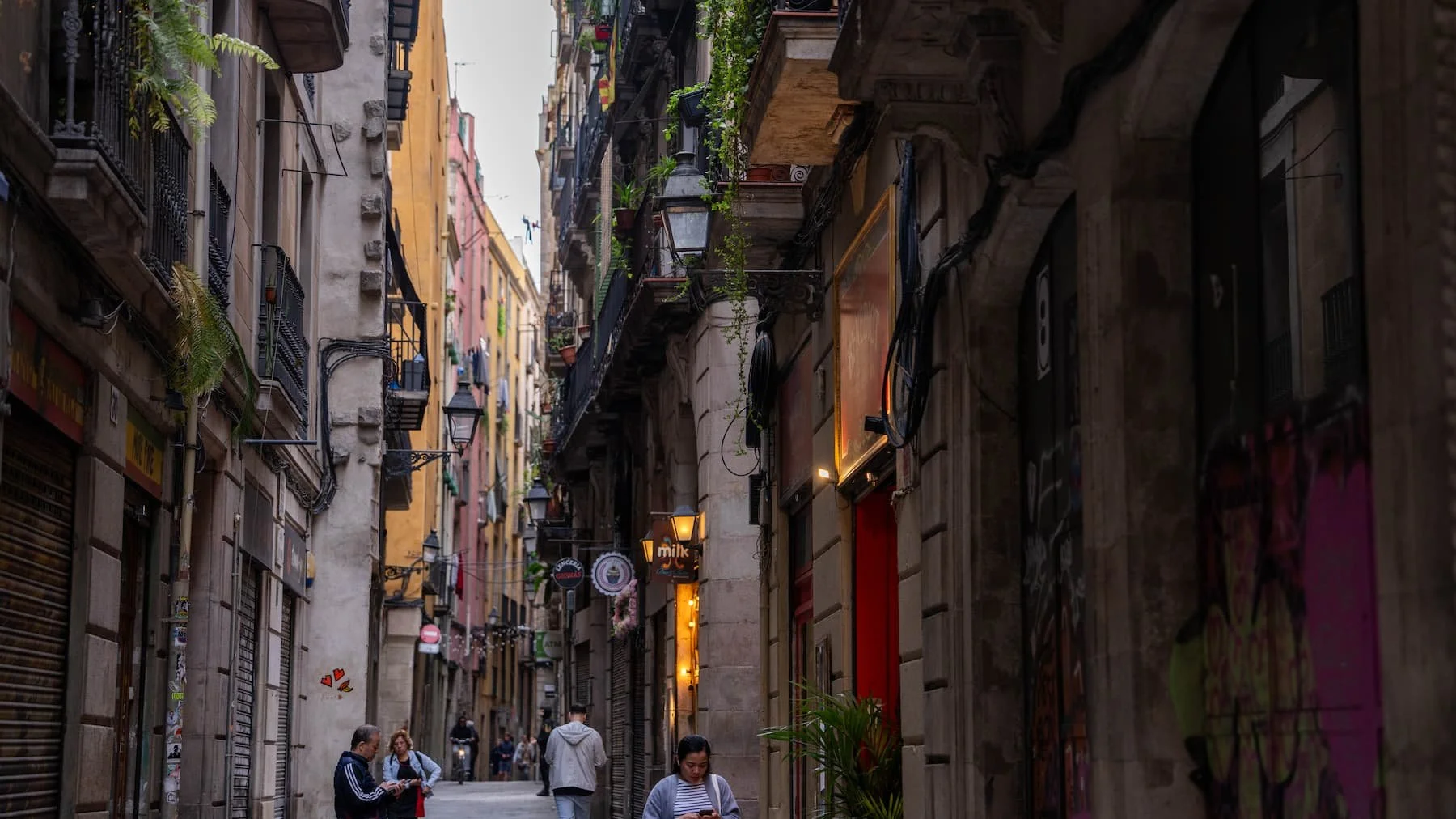
Then I just started walking, which is what I did most of this trip. No plan, only a general sense of where I wanted to end up.
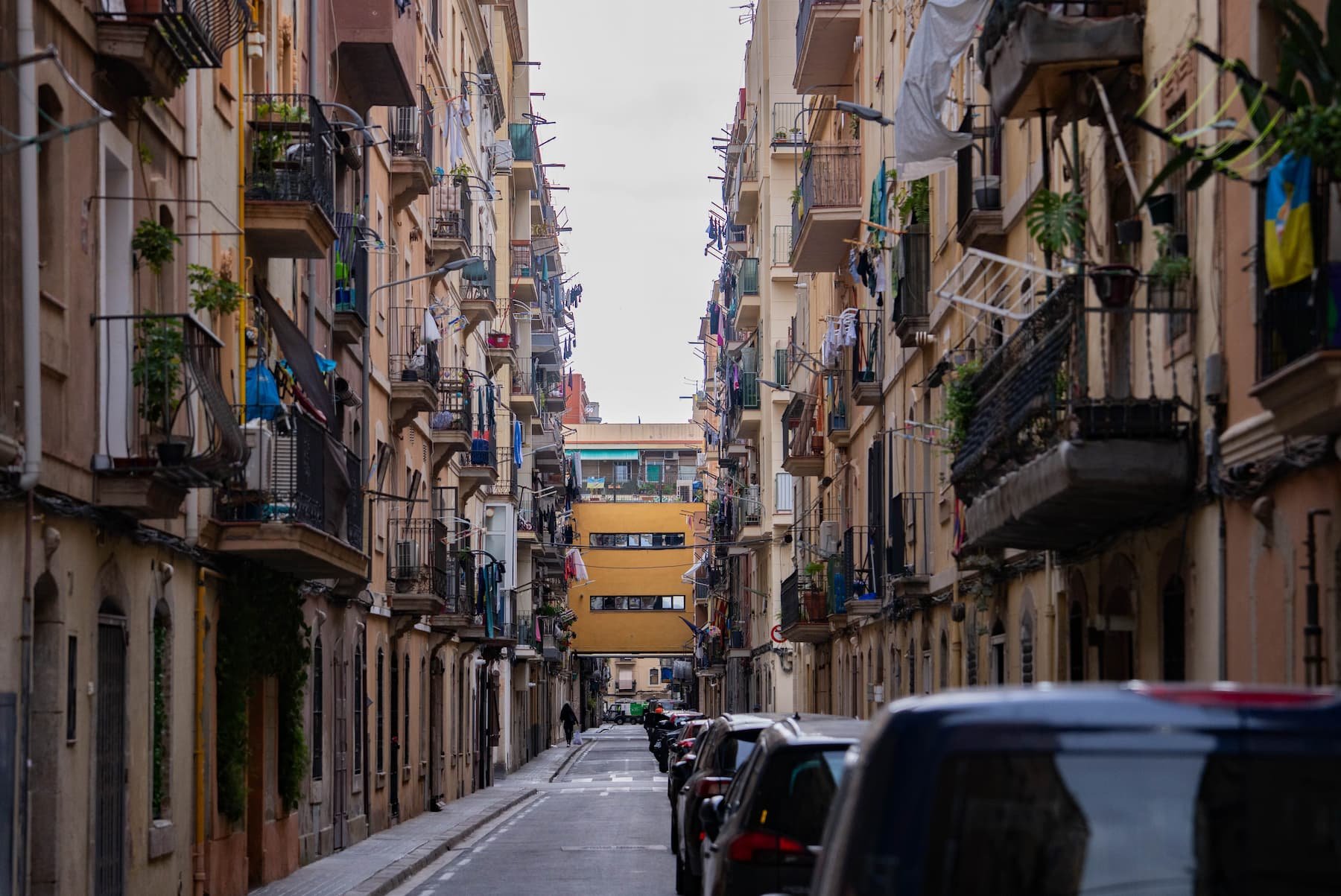
Barceloneta first, the old fishermen's quarter behind the beach. It's a tight grid of narrow streets with laundry strung across the balconies, and at that hour it belongs to the people who live there. I passed a paddleboard shop with two boards standing up against the wall by the door and a hand-painted sign offering rentals. That's the version of a beach town most visitors miss because they never get more than a block off the sand.
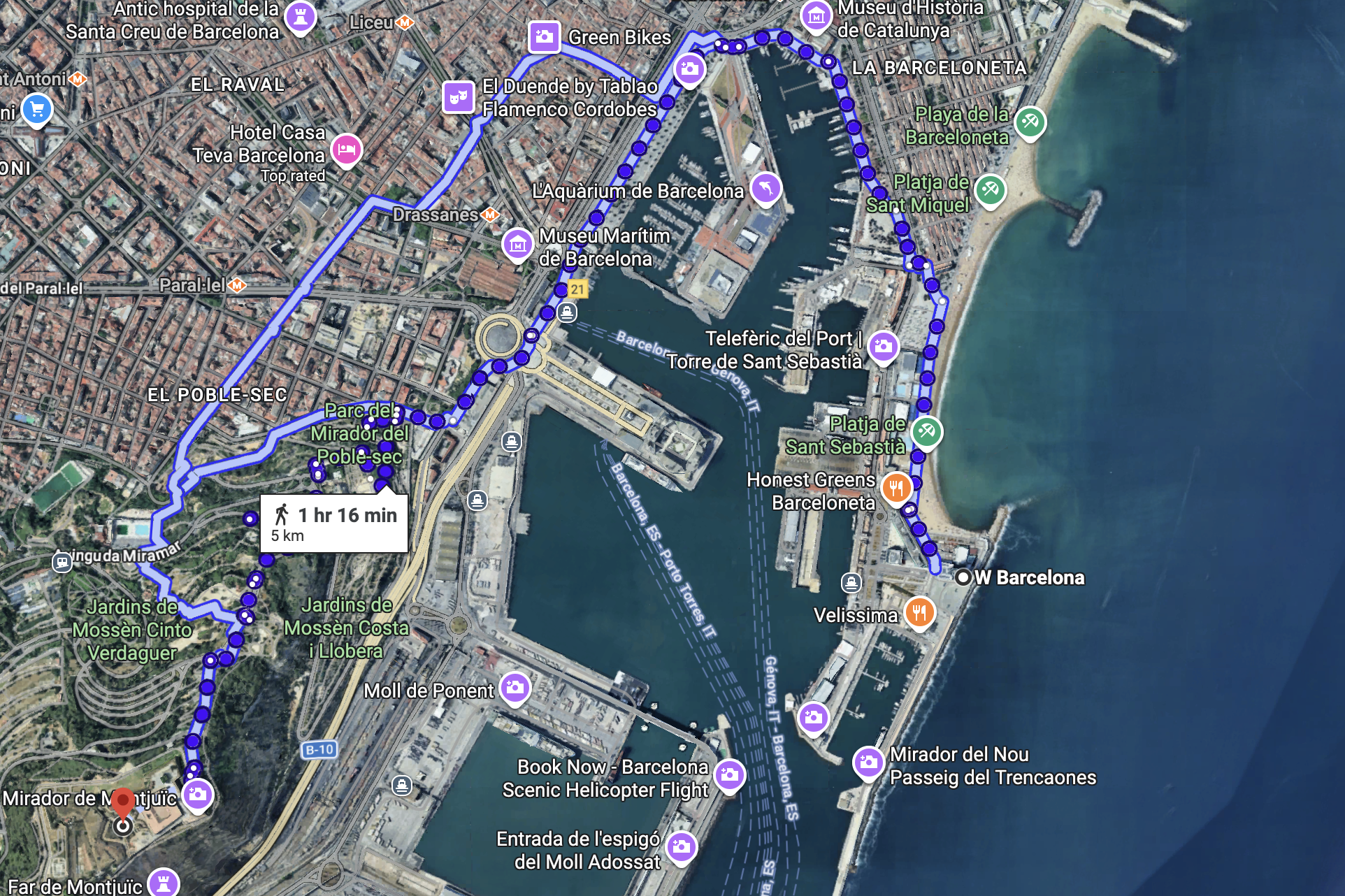
The walk that made these photos. Five kilometers from the W Barcelona, up the Barceloneta beachfront, around Port Vell, through the old city, then a long climb up Montjuïc to the mirador. About an hour and sixteen minutes of walking, plus all the stops.
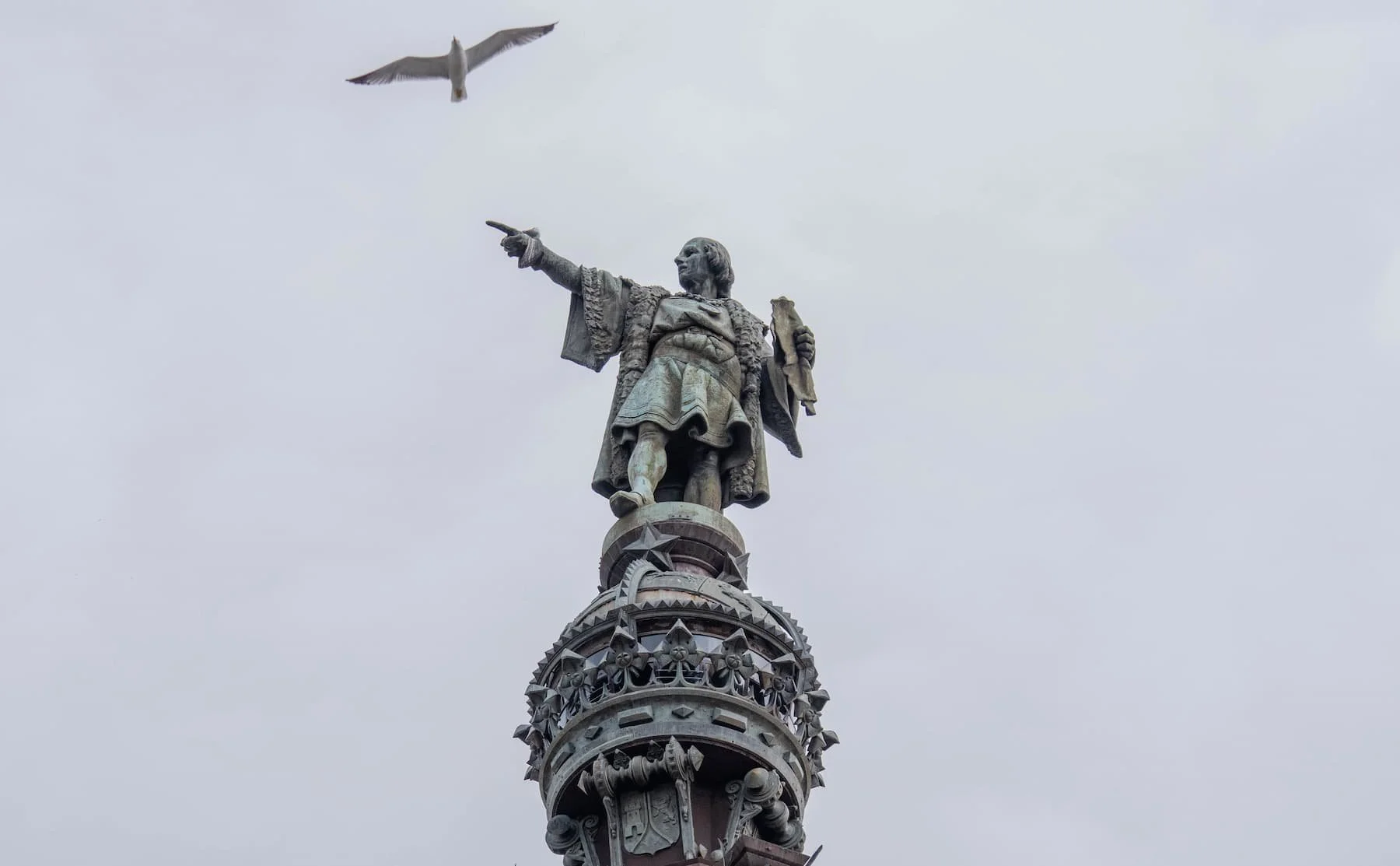
I kept going along the water toward the bottom of La Rambla, where the Columbus monument stands on its column at the edge of the port. Sixty meters of it, put up for an exposition in the 1880s, with Columbus up top pointing out to sea. The sky behind it was still flat and grey, so the whole thing read as a silhouette. Sometimes bad light gives you a better picture than good light does.
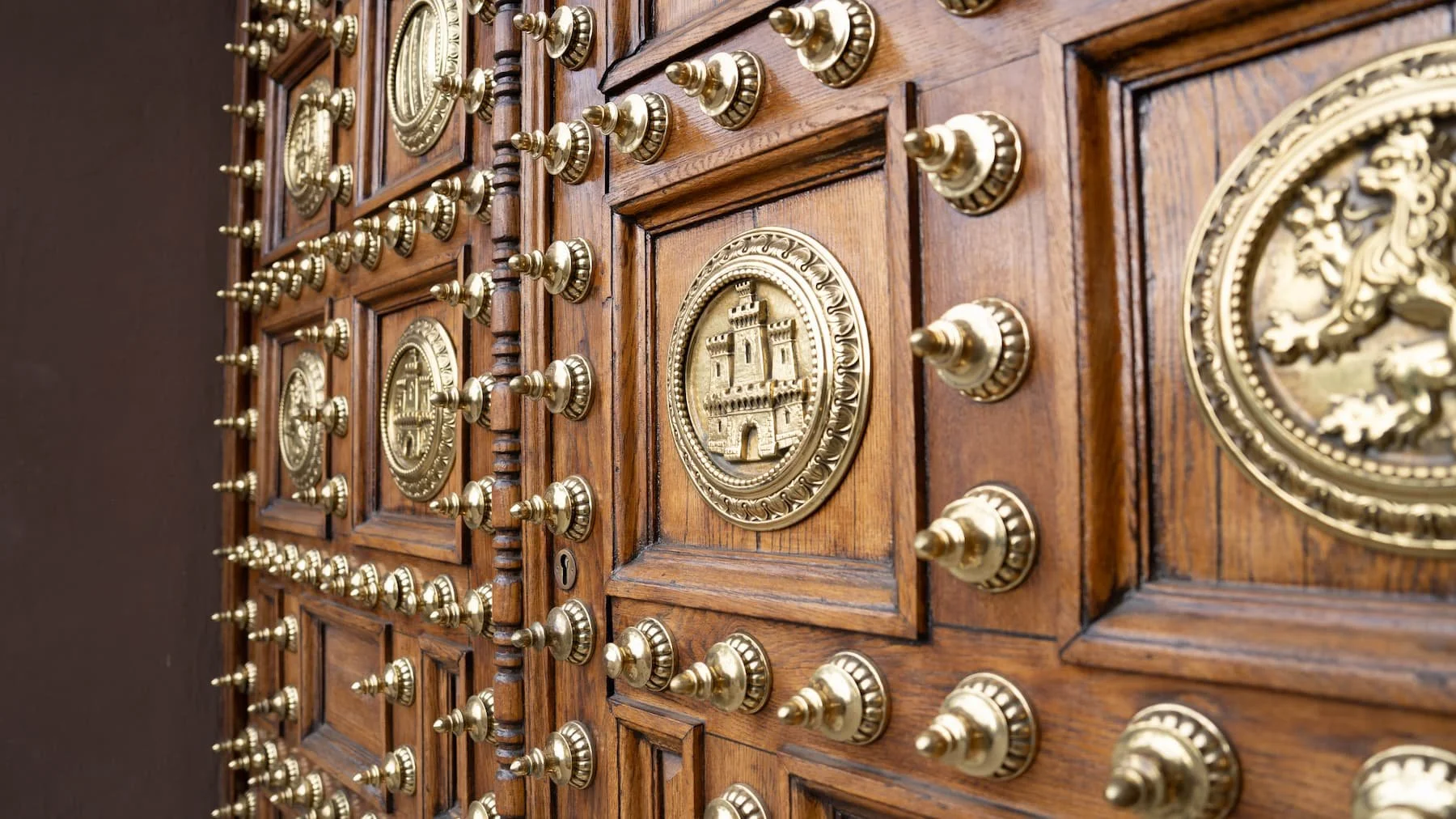
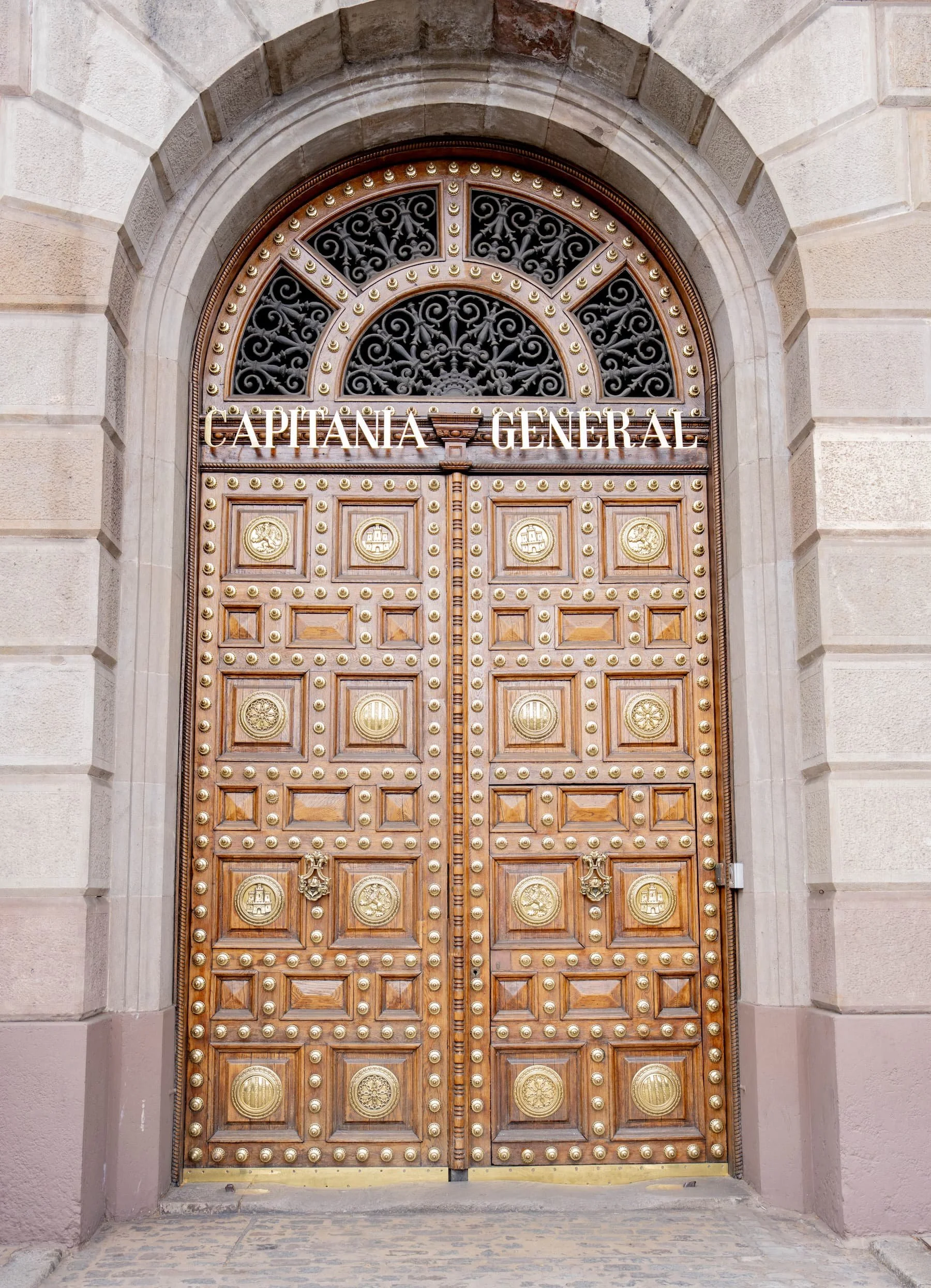
Somewhere along the way I stopped in front of a set of enormous wooden doors. Brass studs in rows, medallions of lions and castles, all of it polished. I stood there a while before I knew what building it was. The Capitania General, headquarters for the Spanish Army in Catalonia.
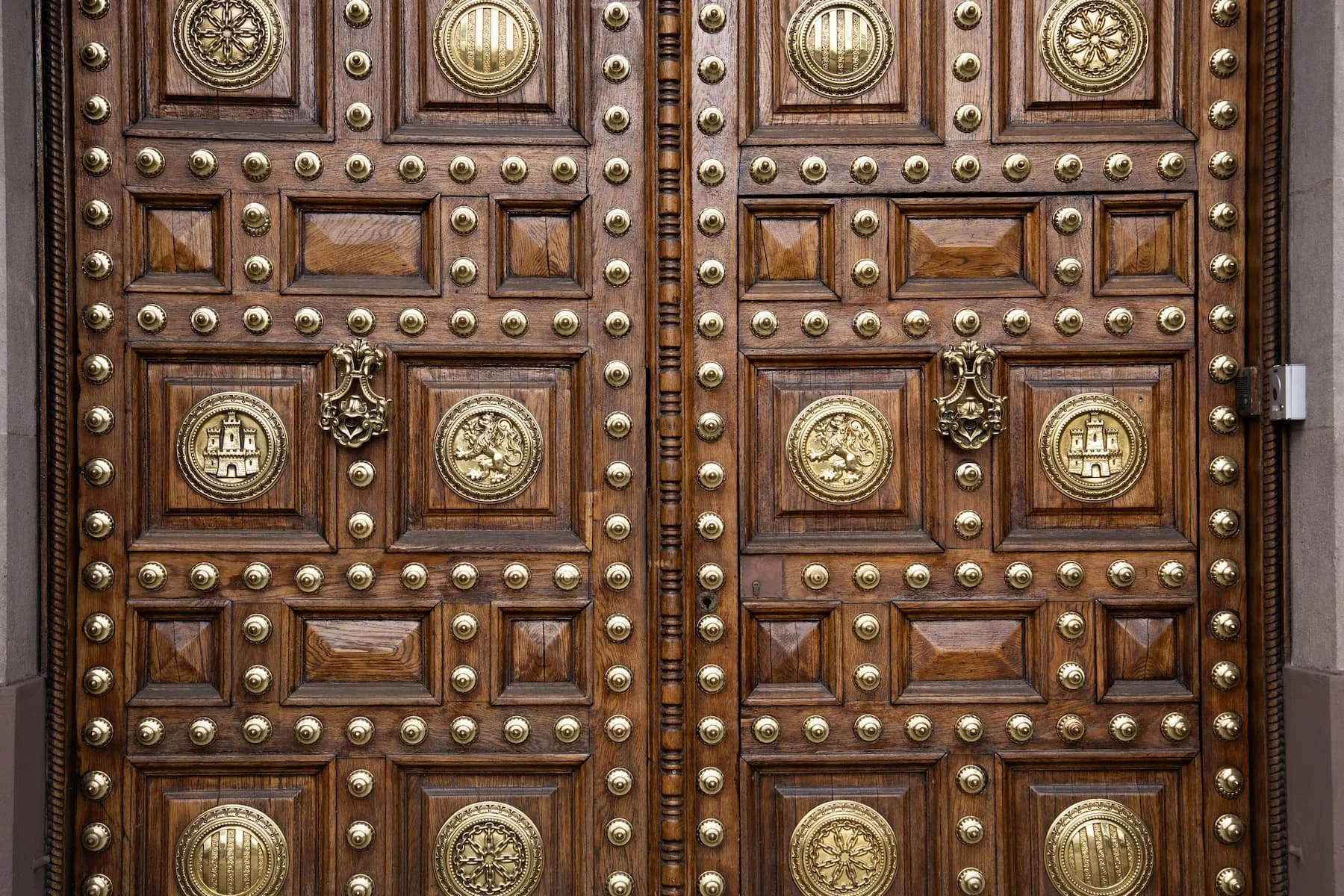
Two leaves of oak, hung so they meet at a center stile. The stile is turned like a column, with ring cuts running top to bottom.
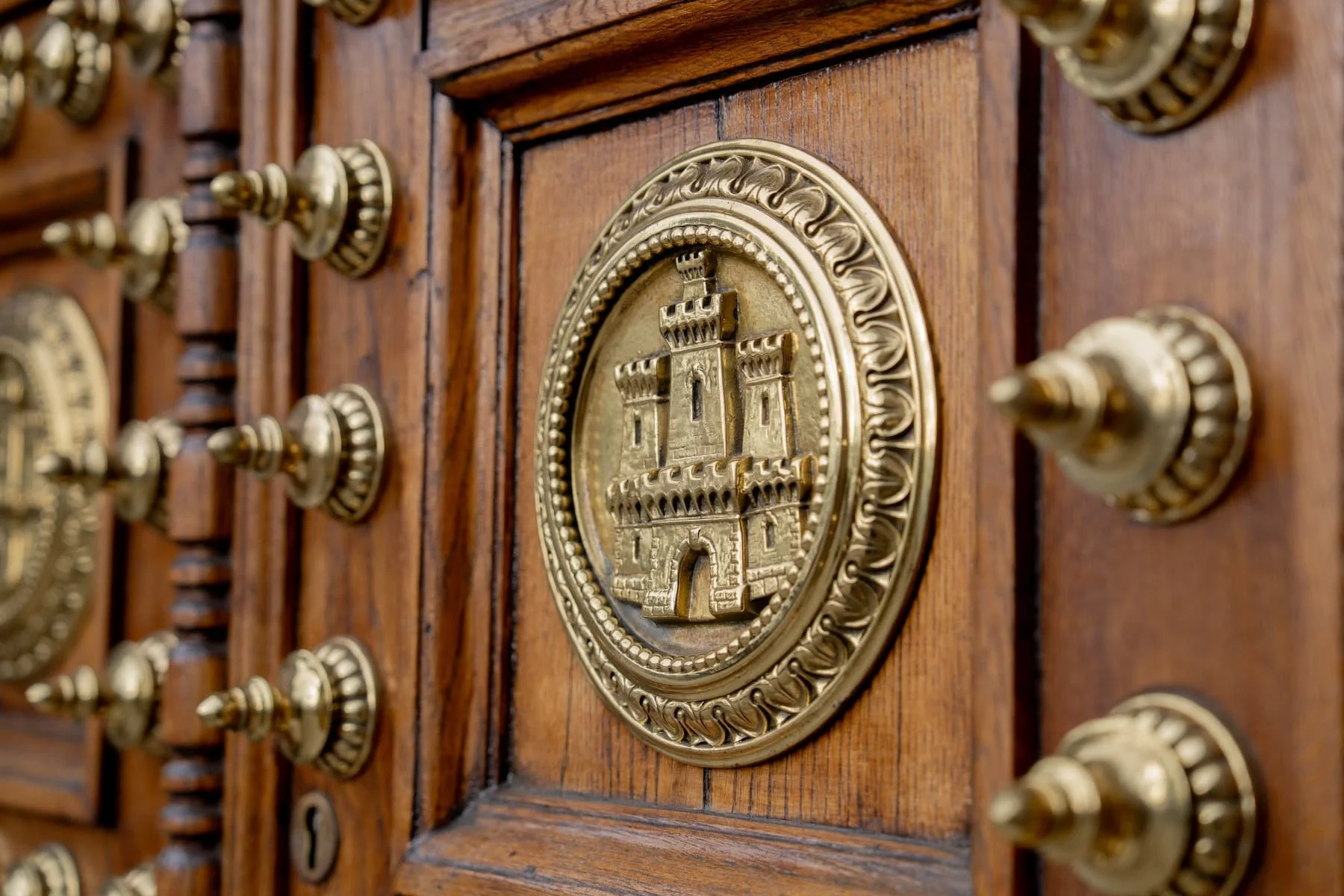
Each leaf is broken into raised rectangular panels with beveled edges. The panels are framed by rows of brass studs. Each stud is a cone rising out of a fluted round base, like a small spike on a gear.
Set into the center of the larger panels are brass medallions. Two designs repeat. One shows a castle with three towers, the arms of Castile. The other shows a lion rearing on its back legs, the arms of León. Both are ringed by a beaded border and a band of carved leaf work.
There is a plain iron keyhole low on the right leaf. No modern hardware in the photo.
On to Montjuïc.
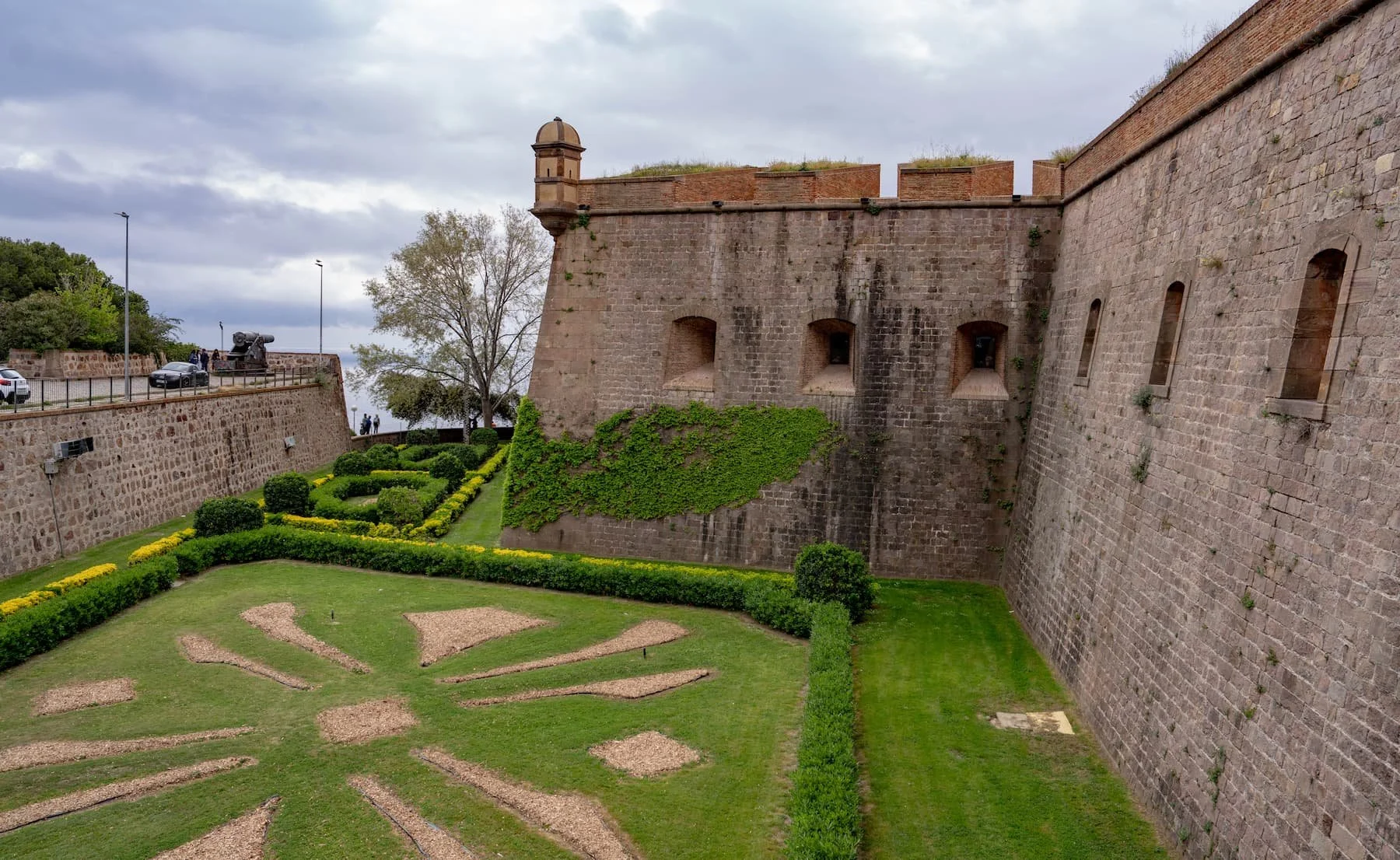
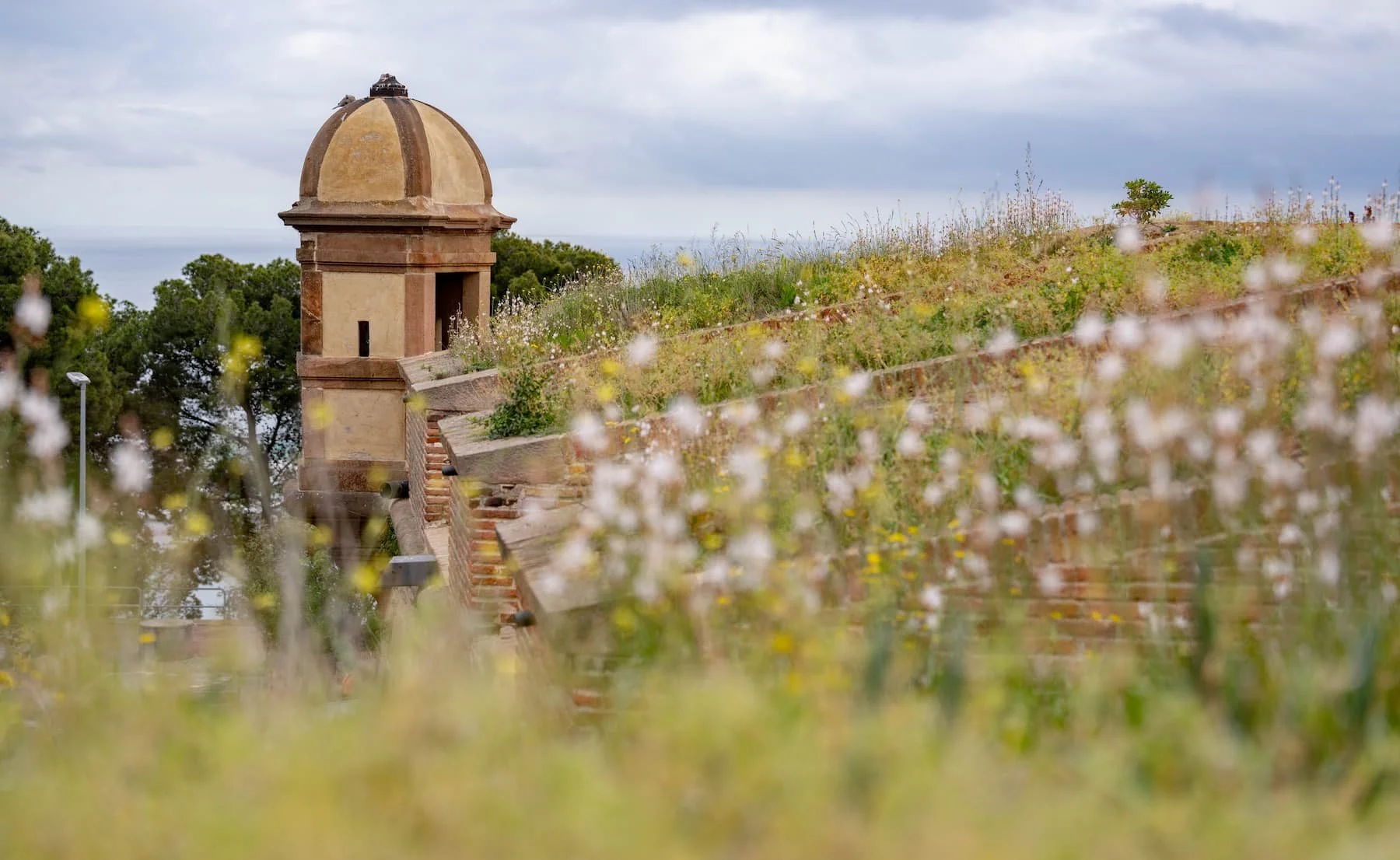
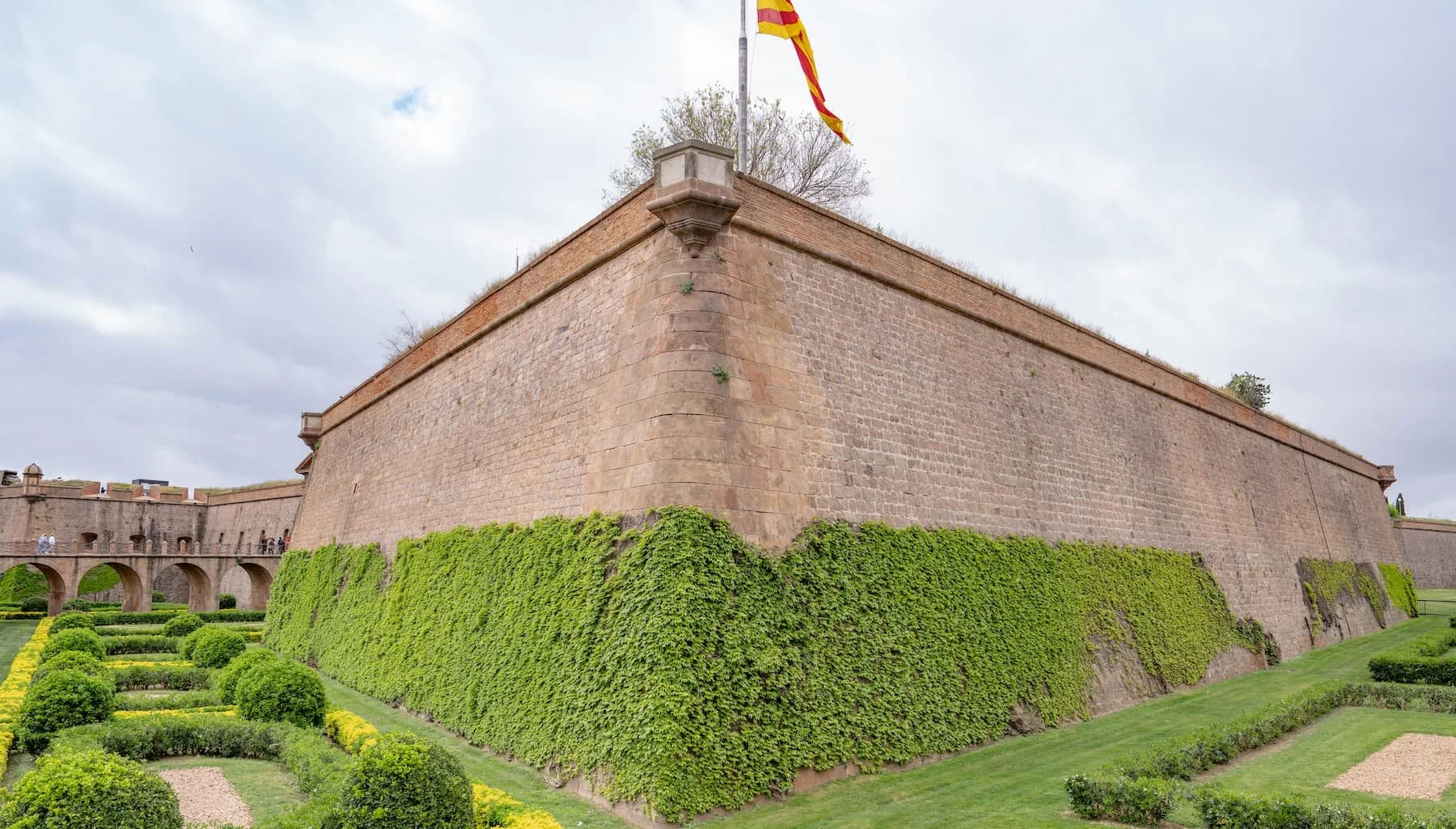
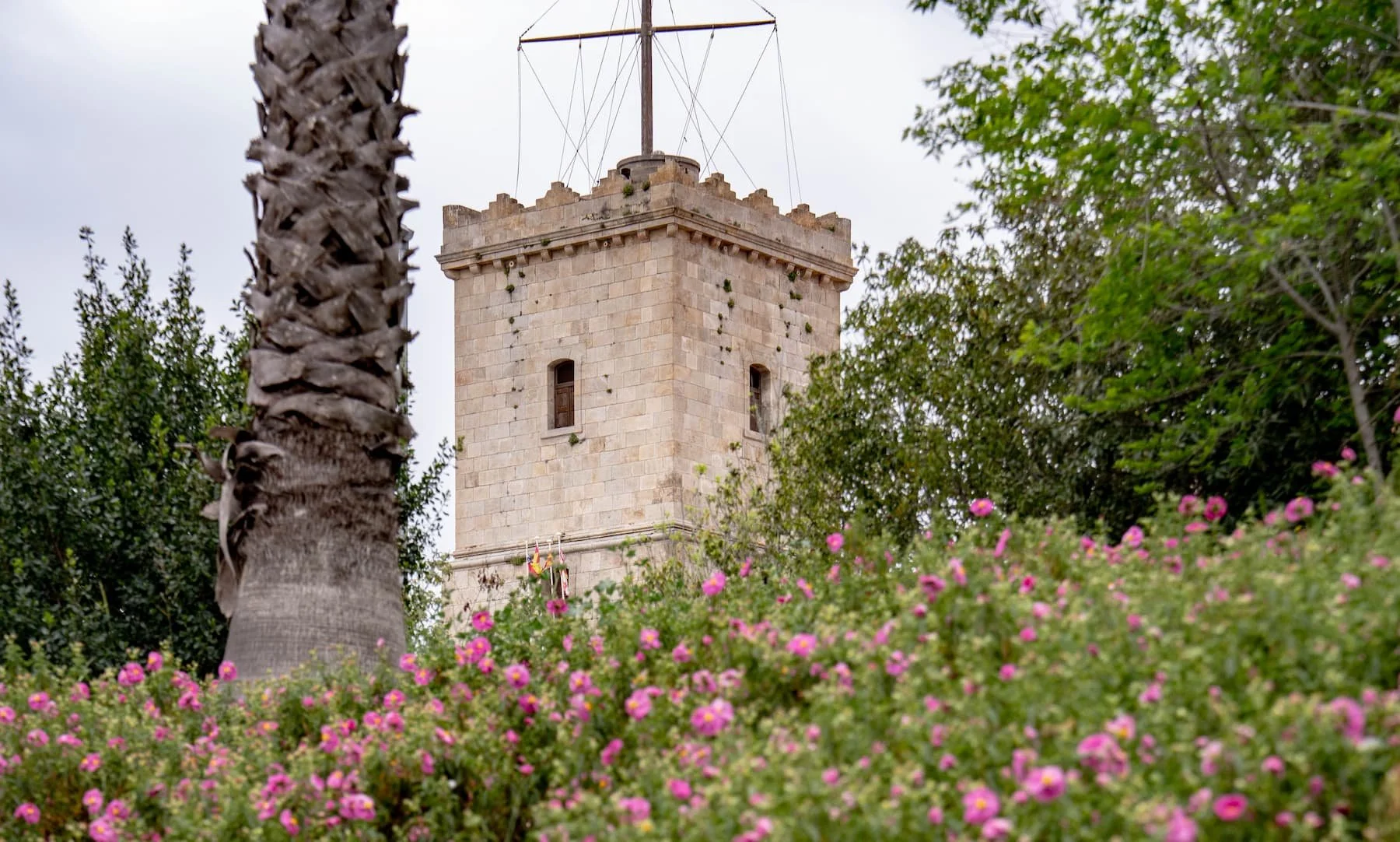
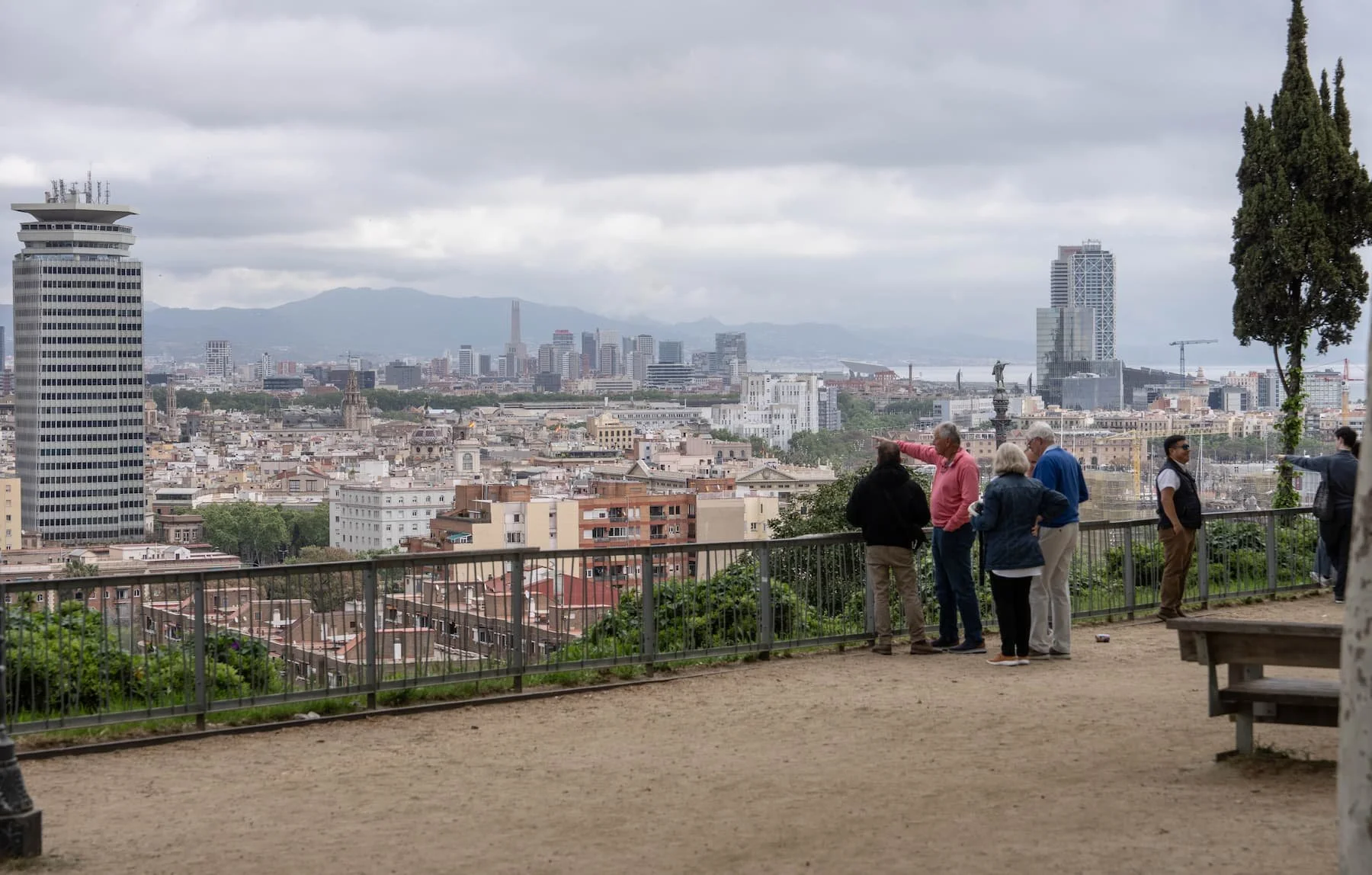
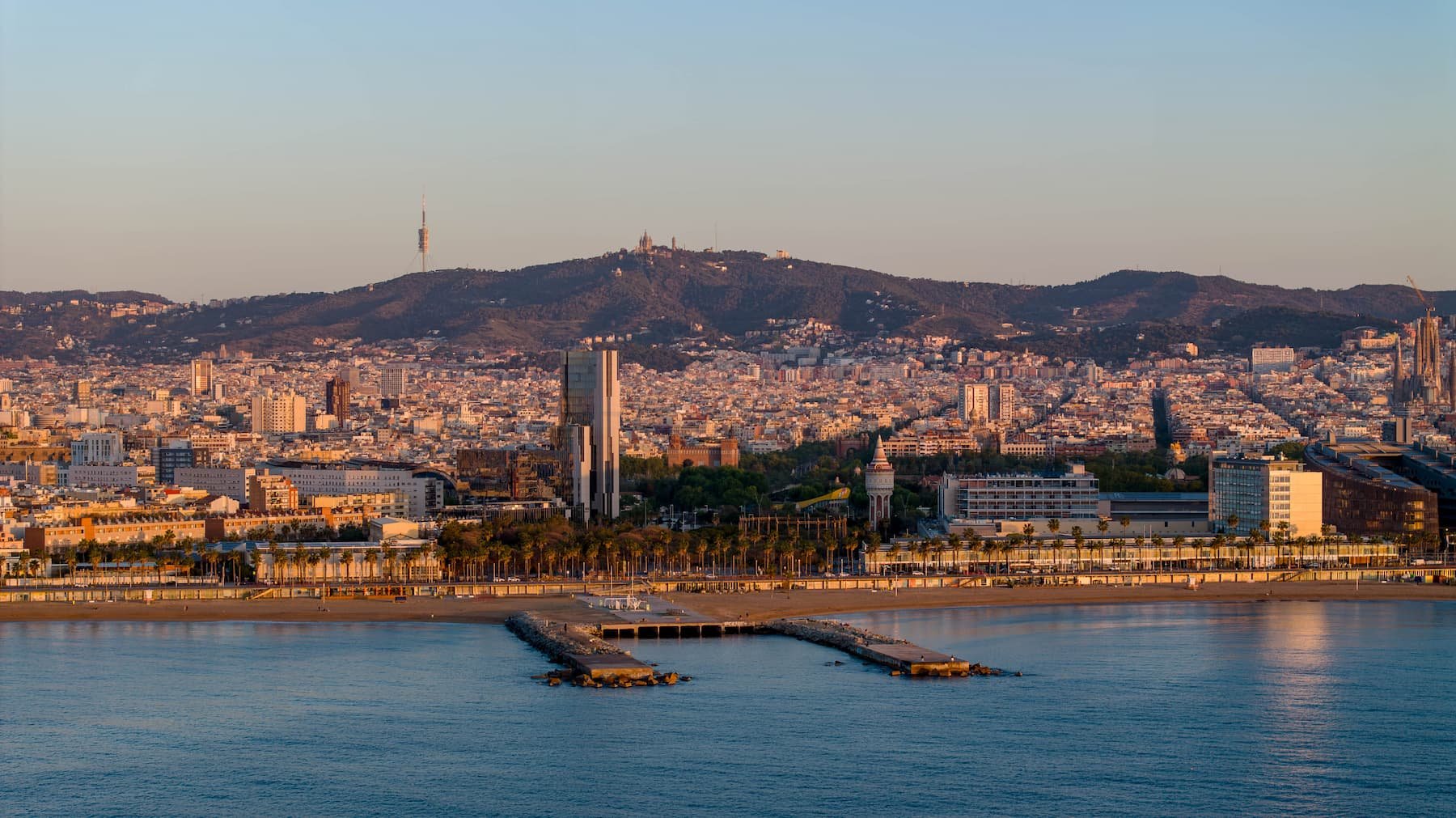
Montjuïc is the hill on the southwest side of the city, and there's a castle rests at the top. When you reach the top, you can see the entire city from one end to the other. The whole city spread out flat between the hills and the sea, the three old smokestacks of the Paral·lel power station standing up out of the middle of it, the Sagrada Família's towers off in the distance, Torre Glòries catching what light there was, and the The Serra de Collserola in the distance.
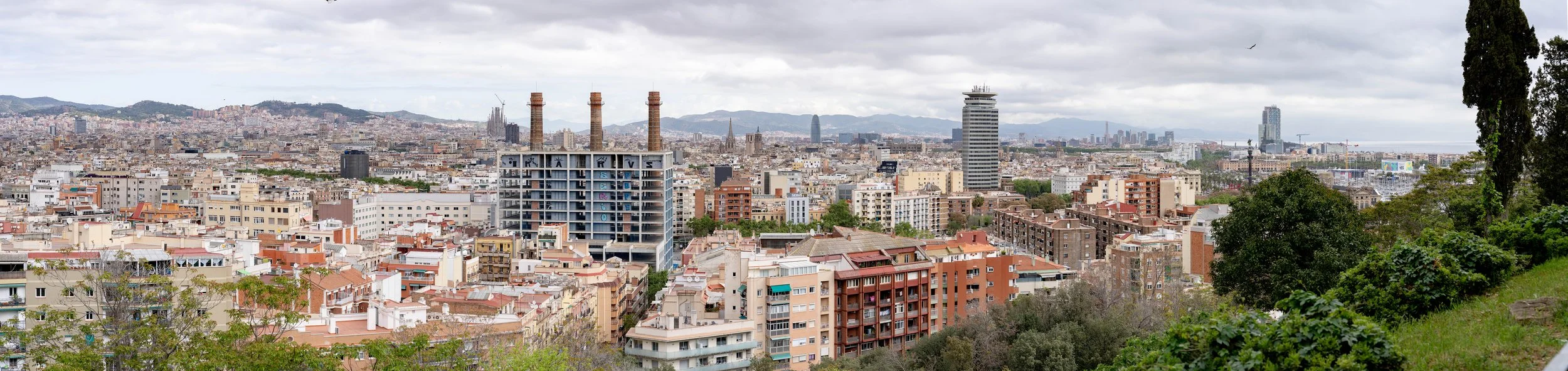
Barcelona from the slope of Montjuïc, looking out over Poble-sec. The three brick chimneys of the old Paral·lel power station rise in the middle of the frame. Sagrada Família sits on the left horizon, Torre Glòries near the center, and Torre Colón stands alone on the right. The Collserola hills close the whole thing in. Photo taken by Anthony Quintano
The castle itself is a proper old fortress, built and rebuilt over centuries, and it's had a heavy history. It was used as a prison and a place of executions, and Catalans have long memories about it. Walking the walls now, it's quiet. Brick ramparts with wildflowers coming up through the paving, a little round sentry box out at the end of a walkway, grass everywhere. You'd never guess what the place was for if nobody told you.
From the seaward wall you look straight down onto the working port. Container stacks, rail lines, truck trailers lined up in rows, ferries at the terminal, and past all of it the Mediterranean going flat out to the horizon. You can pick out the W from up there, the sail-shaped hotel where I'd slept the night before, small and pale against the water.
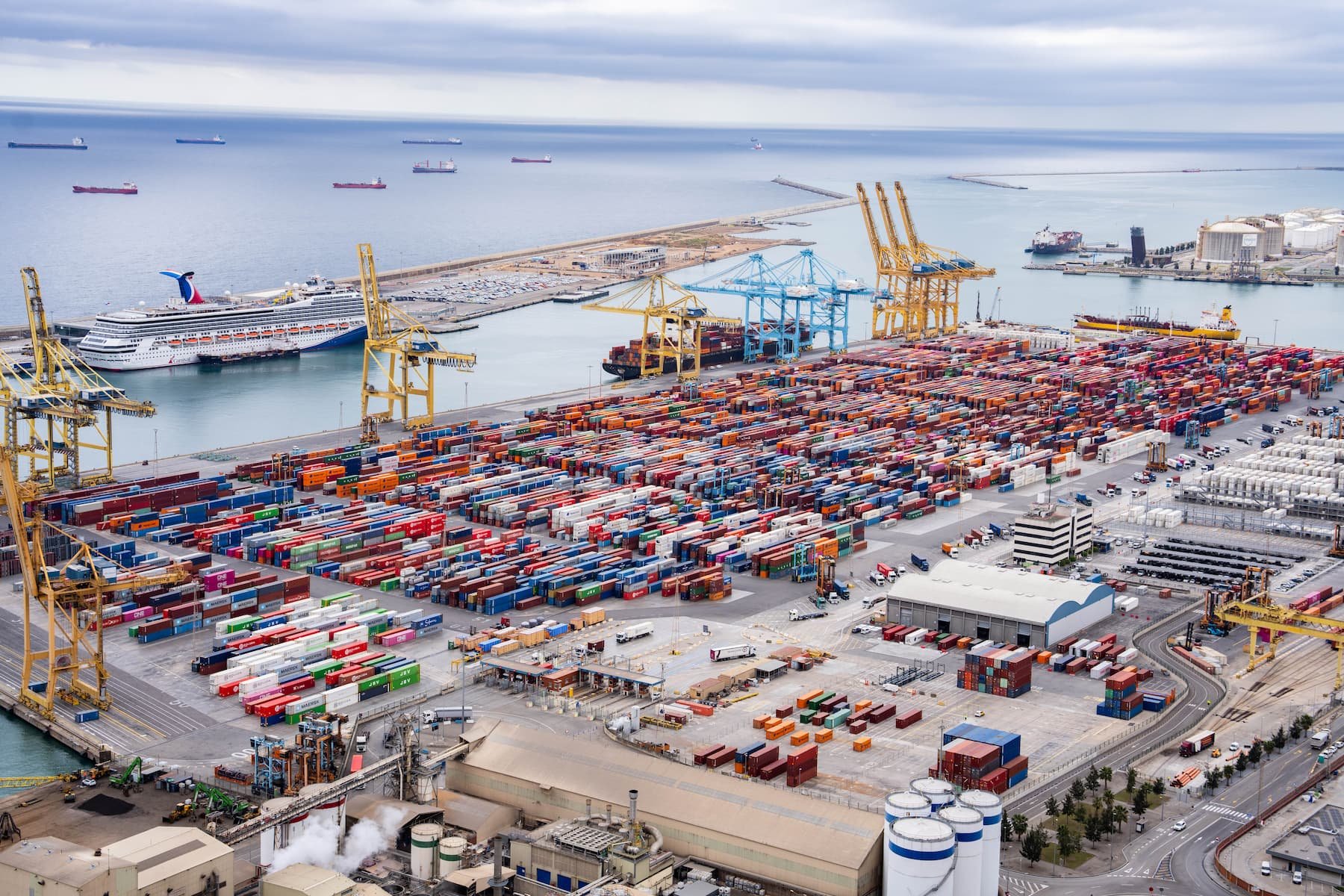
The container terminal at the Port of Barcelona, seen from Montjuïc. Cranes line the quay and containers run in rows toward the water. A Carnival cruise ship sits at the far berth, and cargo ships wait at anchor beyond the breakwater.
After the castle I bought a round trip ticket for the Telefèric de Montjuïc. Sixteen euros, printed on a slip of paper with a QR code, good for a ride down to the Mirador and back. The cabins are small and they run close together, so you watch the one ahead of you swing out over the trees while yours is still climbing. From inside, the city unrolls in a way it never does from the ground. Rooftops, then the port, then the water past all of it. I had walked five kilometers to get up here. The lift covers the same ground in a few minutes and shows you a version of the city you cannot see from the ground.
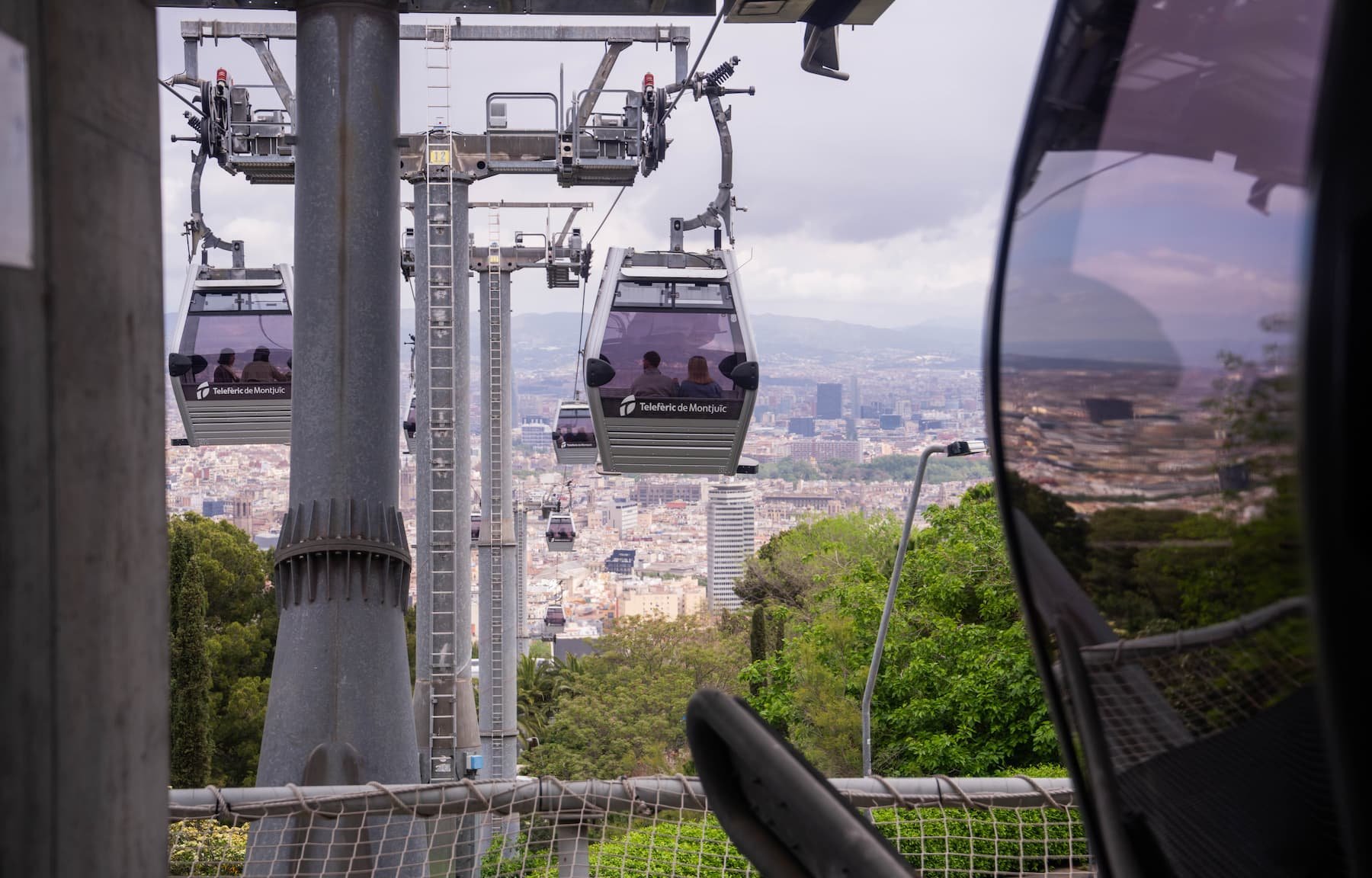
Cabins of the Telefèric de Montjuïc pass on the line above Barcelona. The city sits below through the gap, rooftops running toward the Eixample and the hills behind. Five kilometers of walking to get up here, then a few minutes in the air to see it all at once. Photo taken by Anthony Quintano
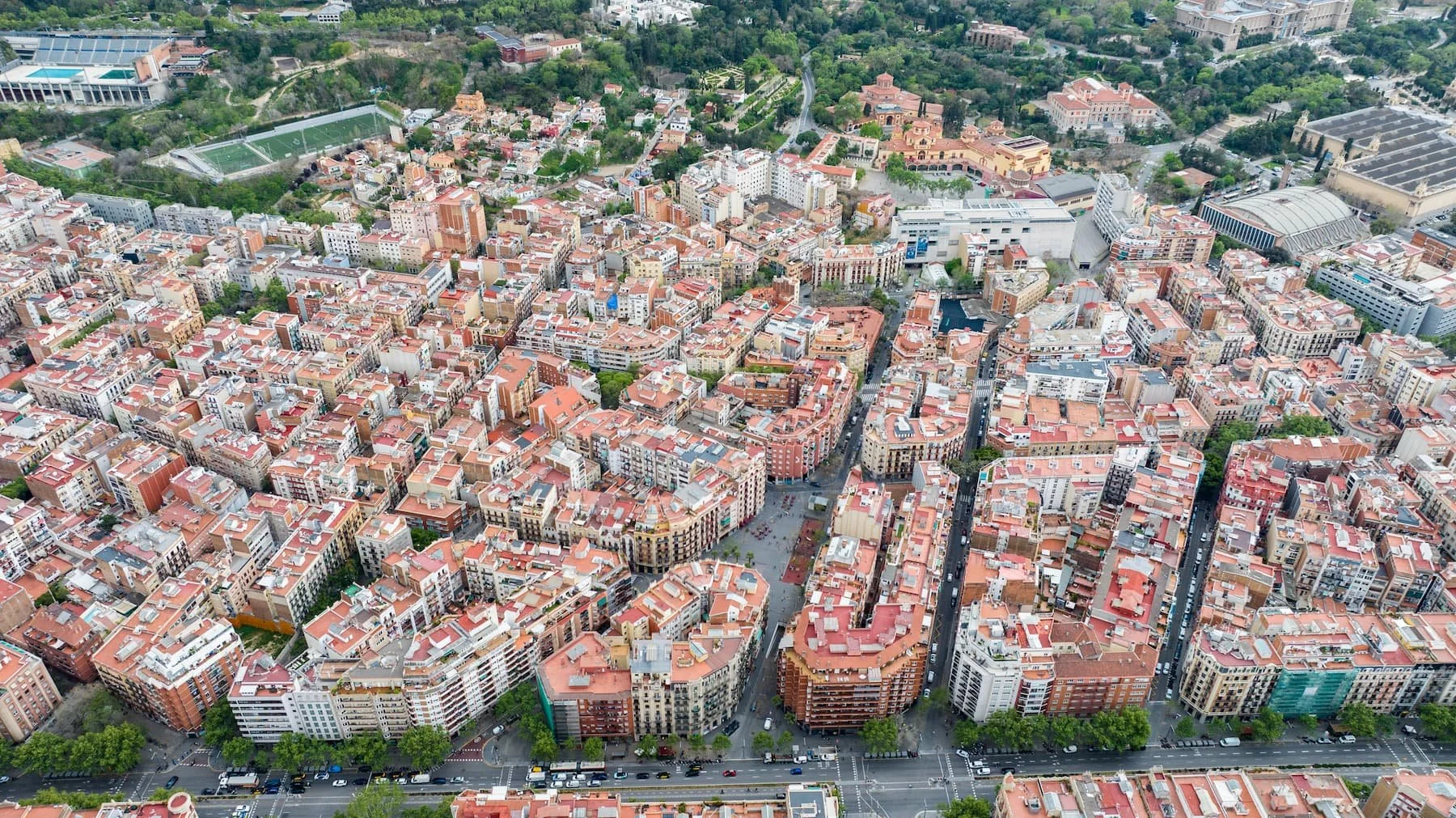
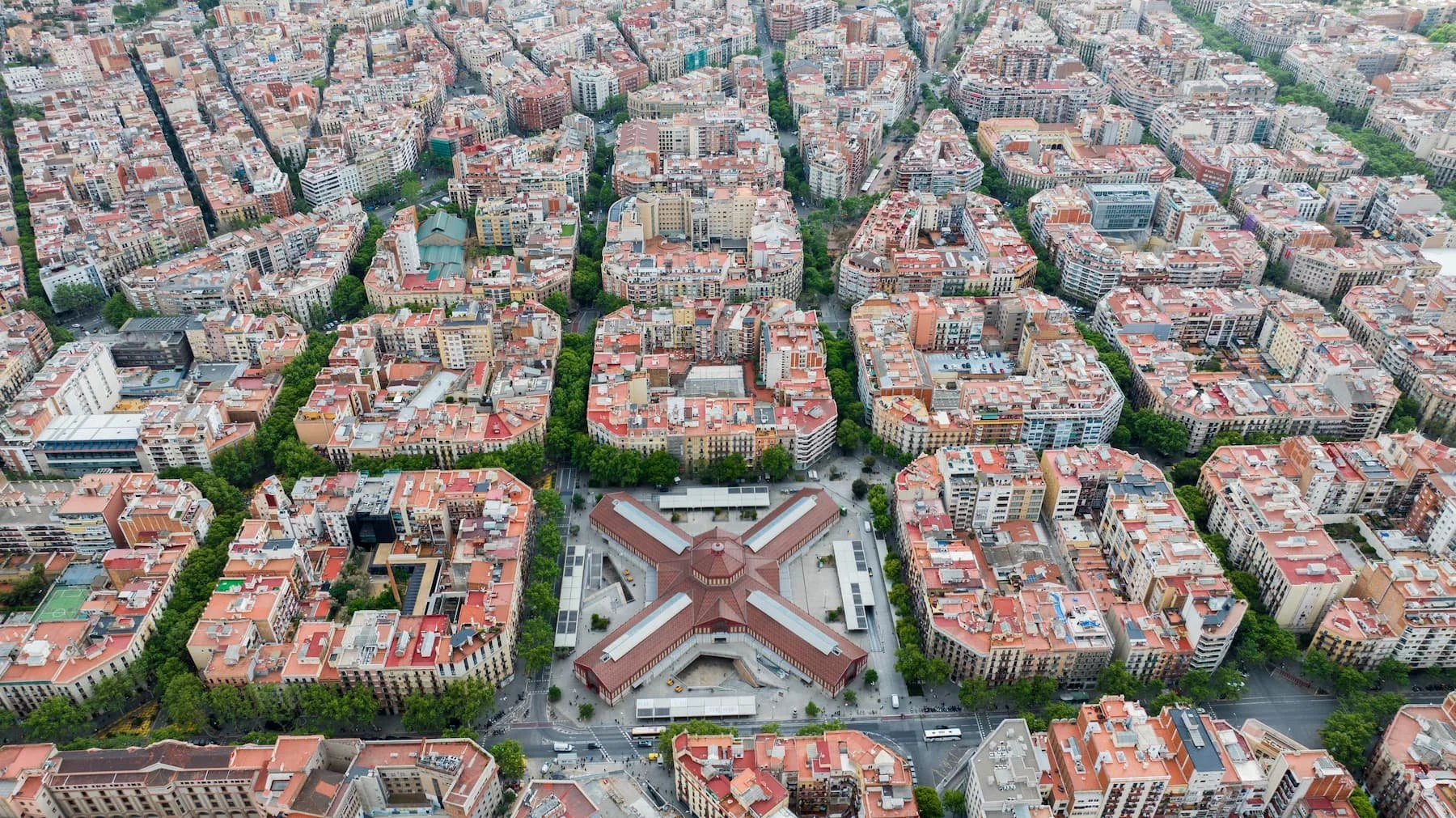
I put the drone up that afternoon too, out over the Hospital de Sant Pau on the other side of the city. Sant Pau is a modernist hospital complex of brick pavilions and tiled domes, and there's a diagonal avenue running from its front door straight to the Sagrada Família. It's the one street in that part of Barcelona that ignores the grid, and it exists purely to connect those two buildings. You can only really see that from the air.
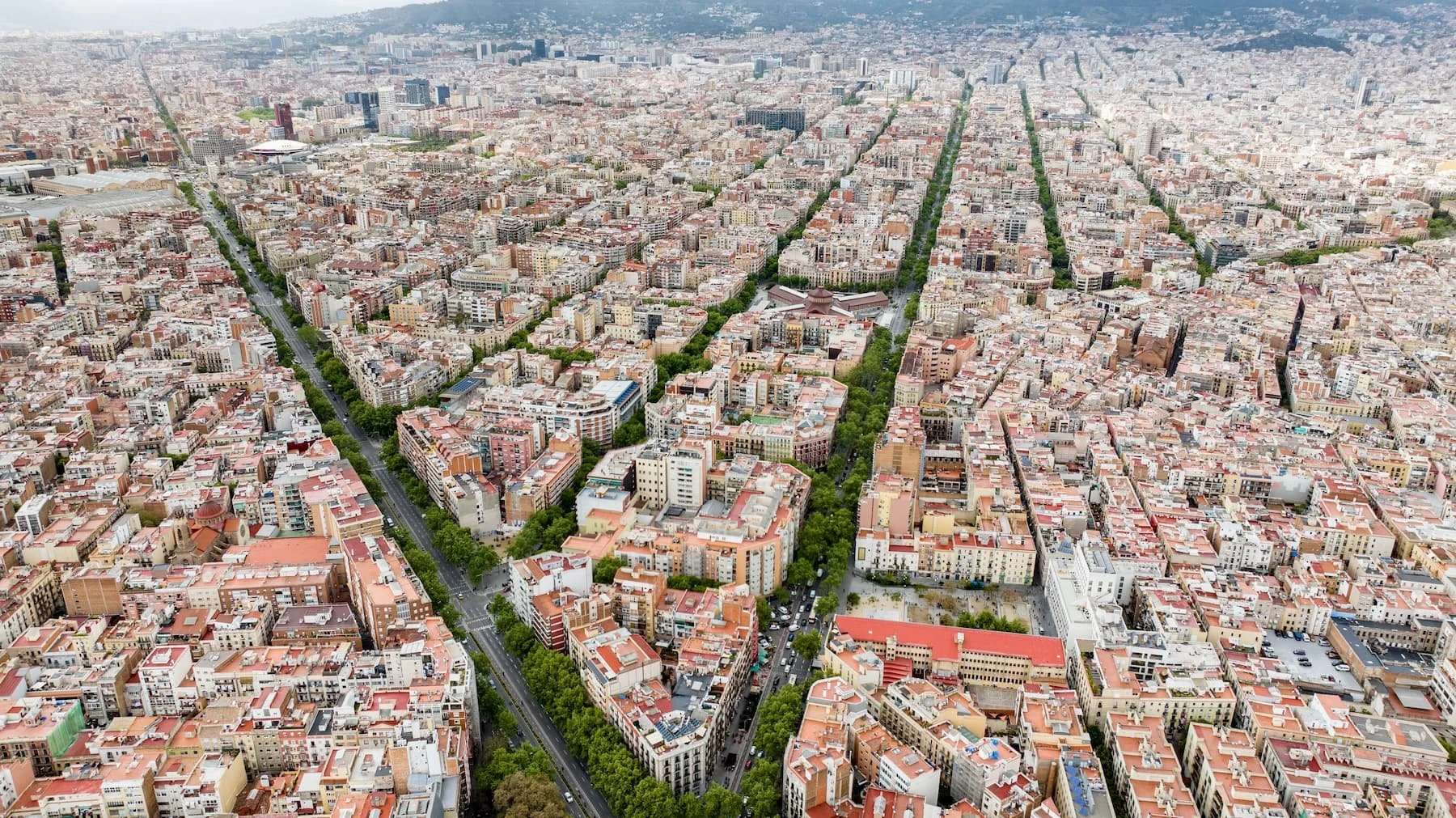
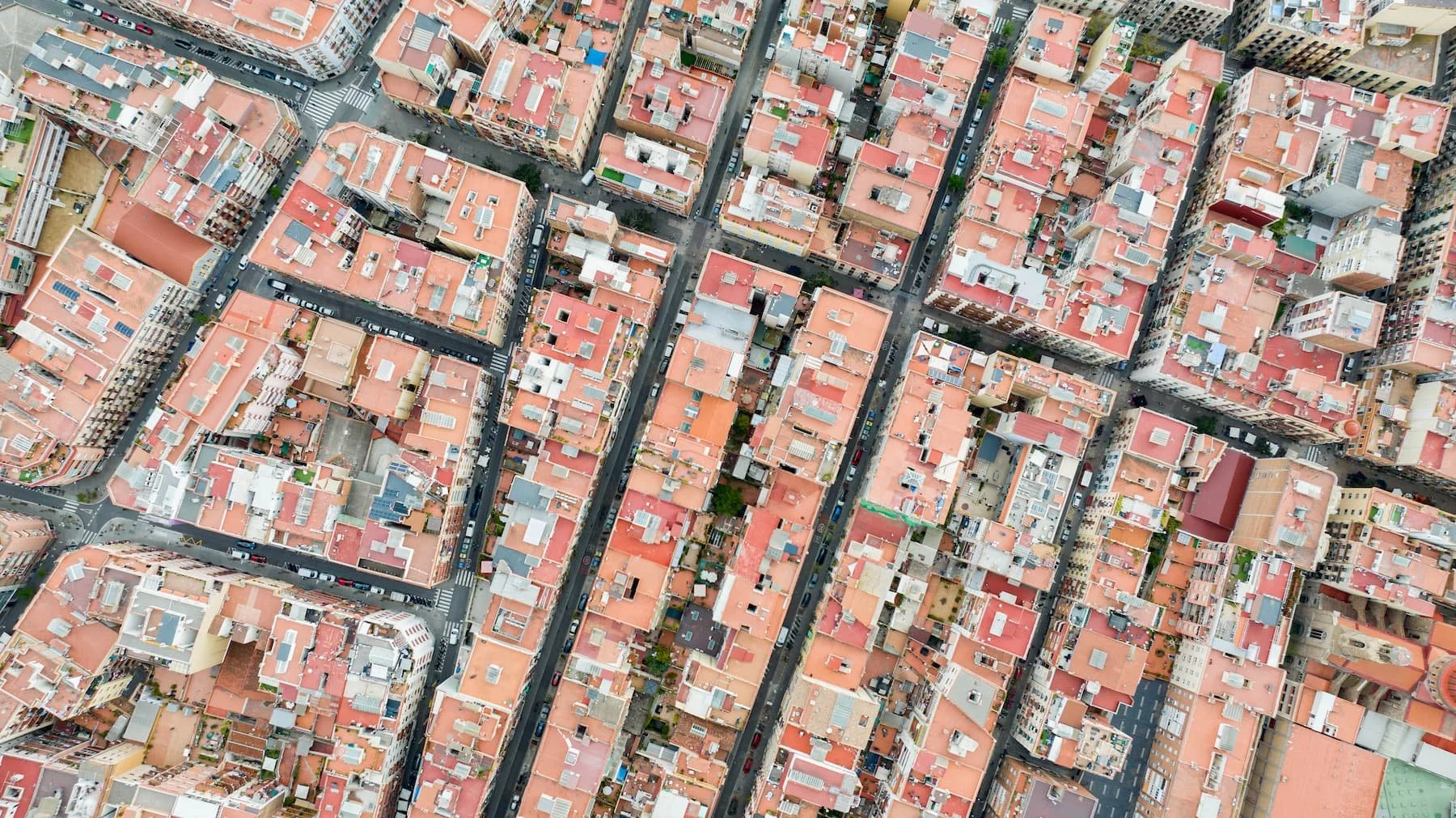
From the lift I walked toward the Magic Fountain of Montjuïc. I had timed it wrong. Sadly, the water was turned off. I took the beauty of the location in and carried on down the street.
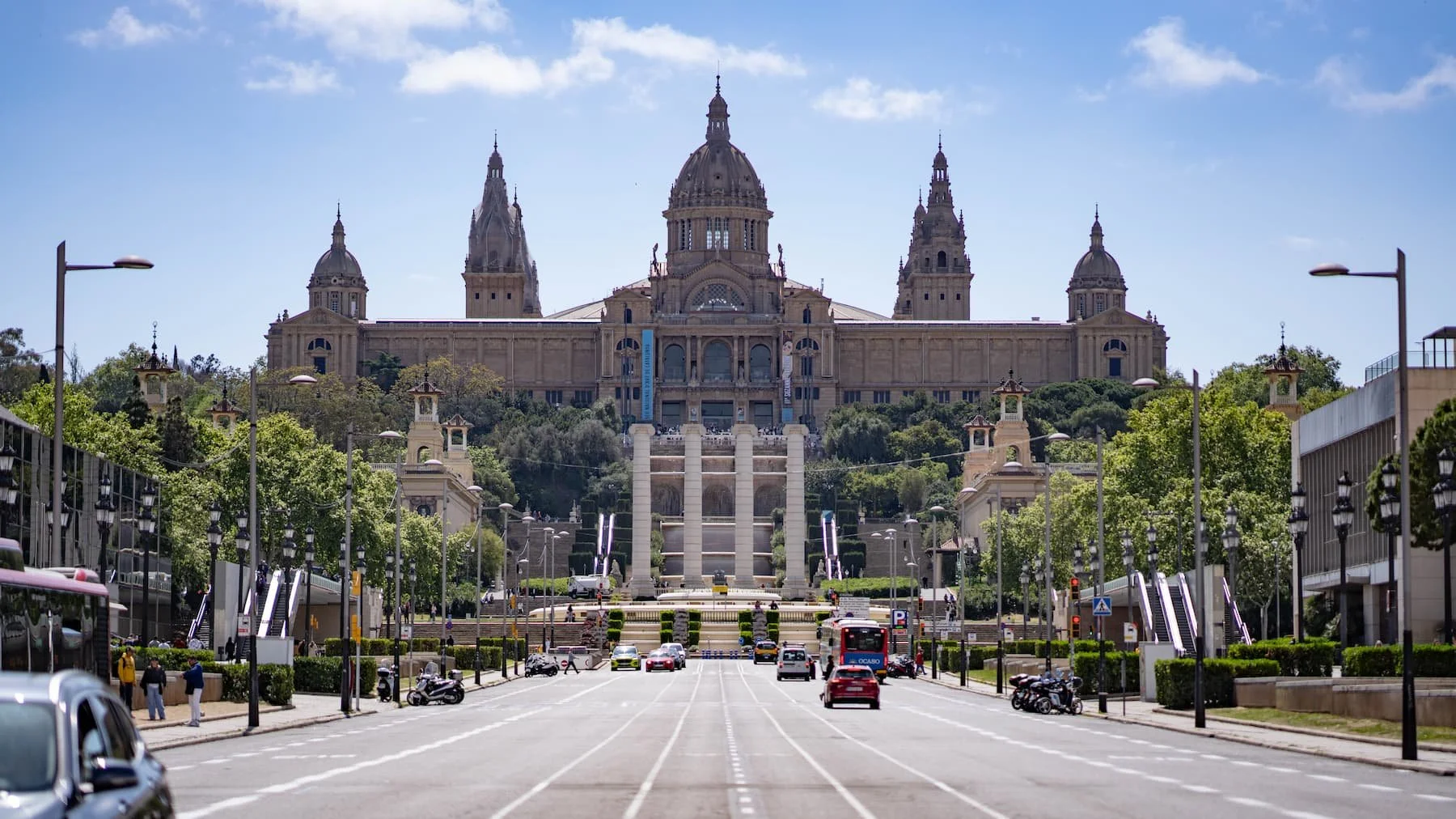
Looking up Avinguda de la Reina Maria Cristina toward the Palau Nacional, home of the National Art Museum of Catalonia. The Magic Fountain sits on the terrace steps between the road and the dome. Photo taken by Anthony Quintano
The Palau Nacional filled the view the whole way down, big and pale on its terrace, with the road running straight at it. Then I came down the steps into something I did not expect.
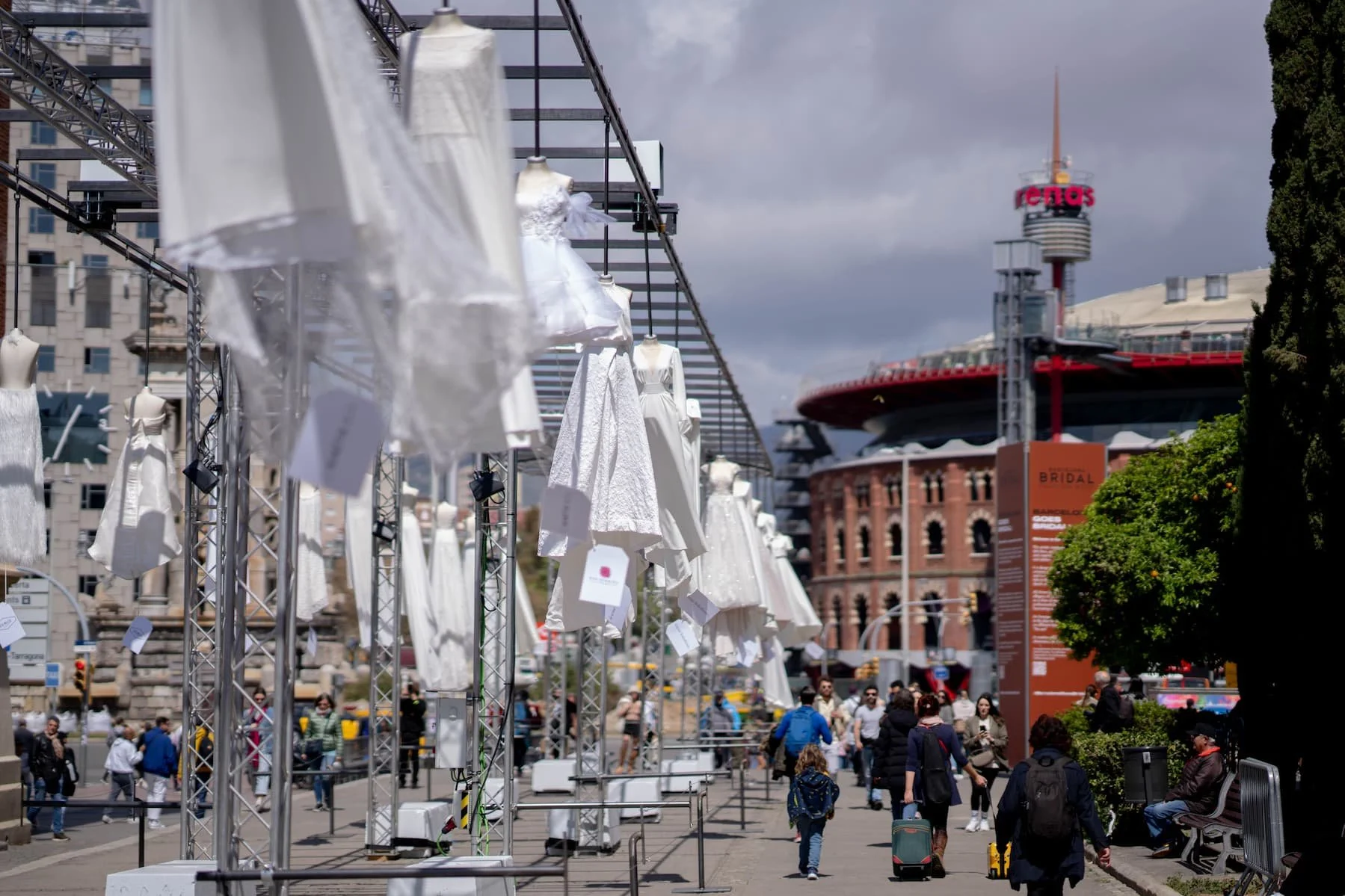
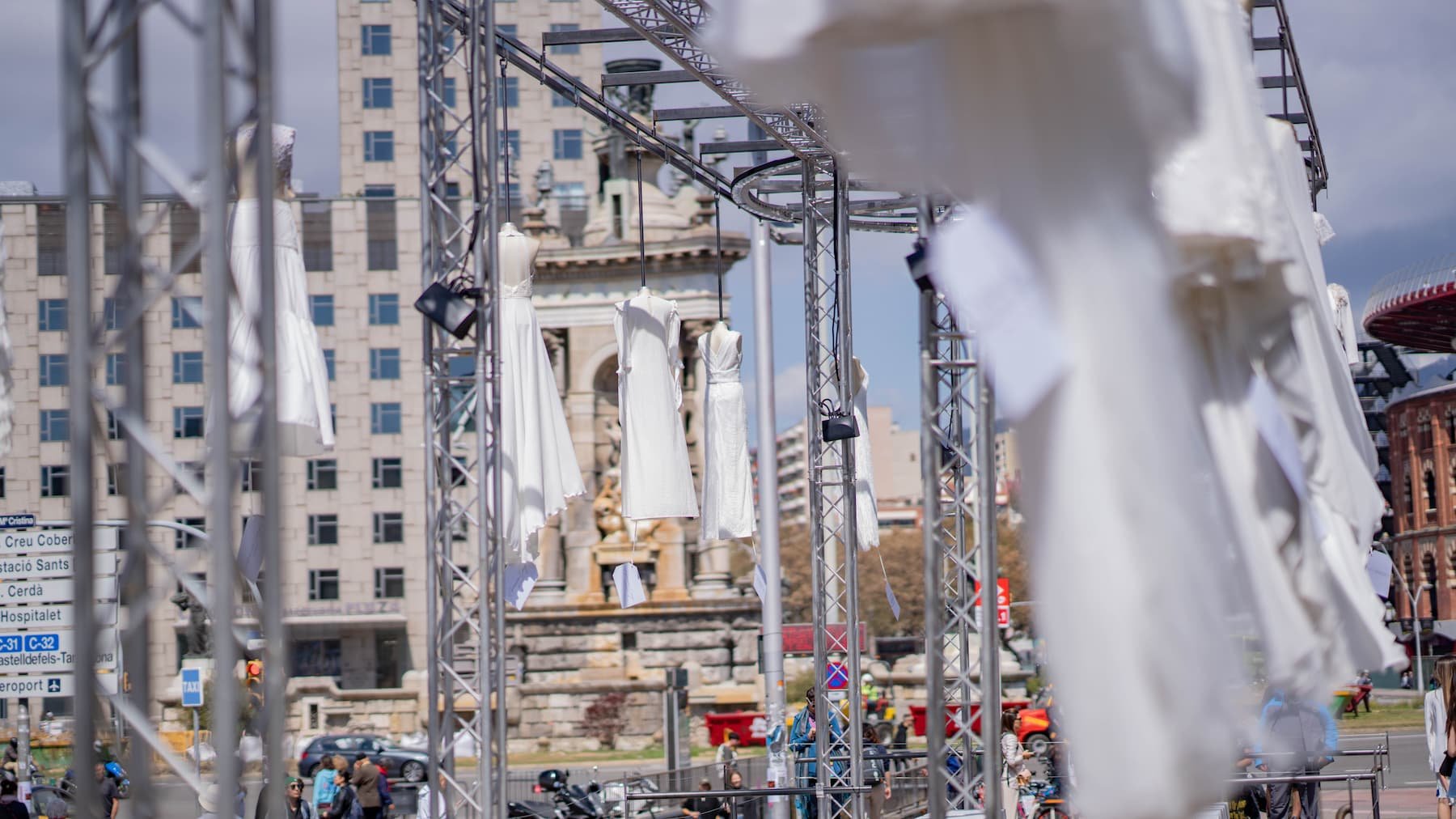
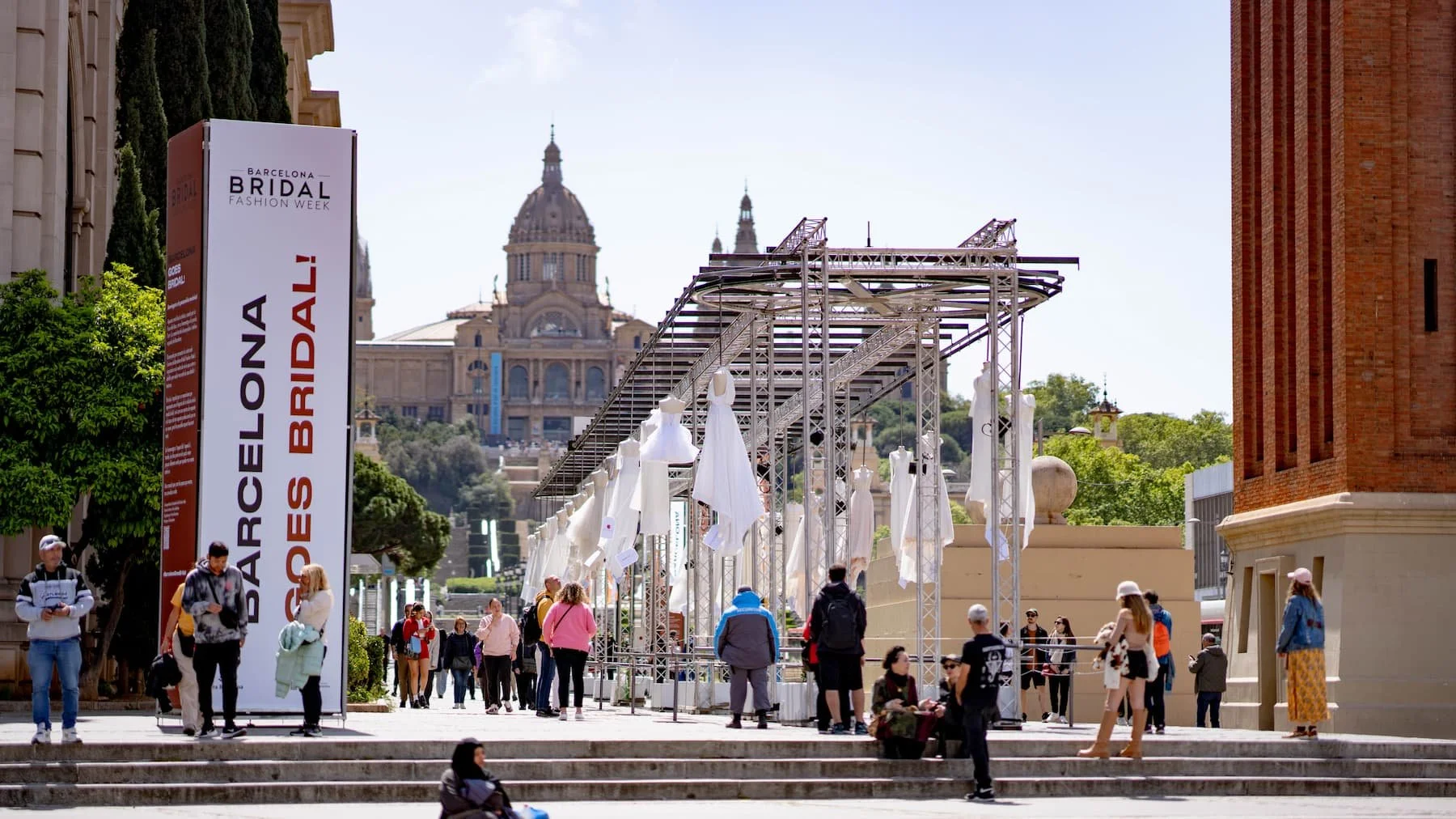
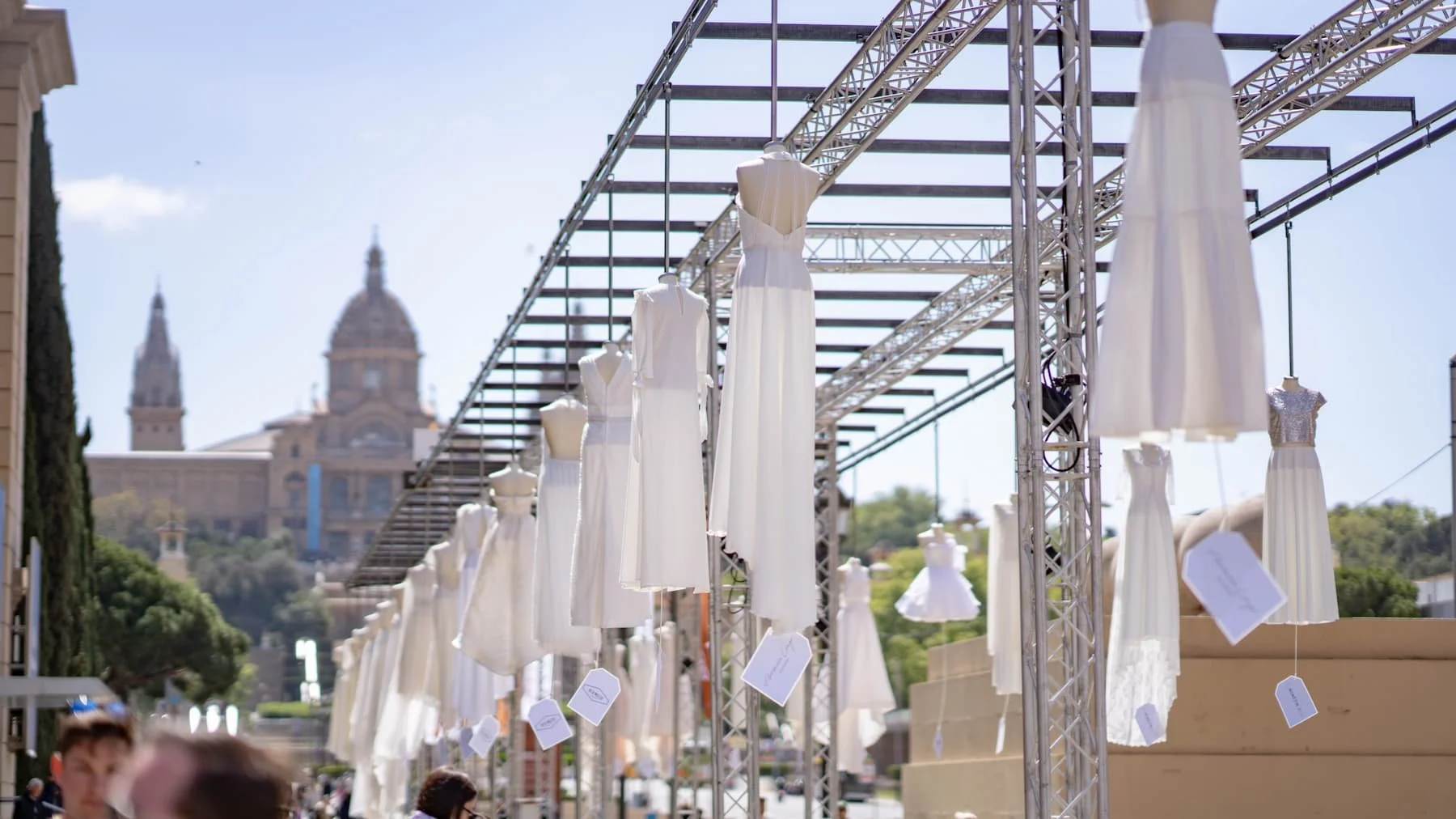
A long steel rig ran down the promenade, and hanging from it, high over the crowd, were dozens of white dresses. Wedding dresses, turning slow in the wind, each one on a headless form with a little paper tag swinging below it. Barcelona Bridal Fashion Week. The whole avenue had been turned into an open-air runway.
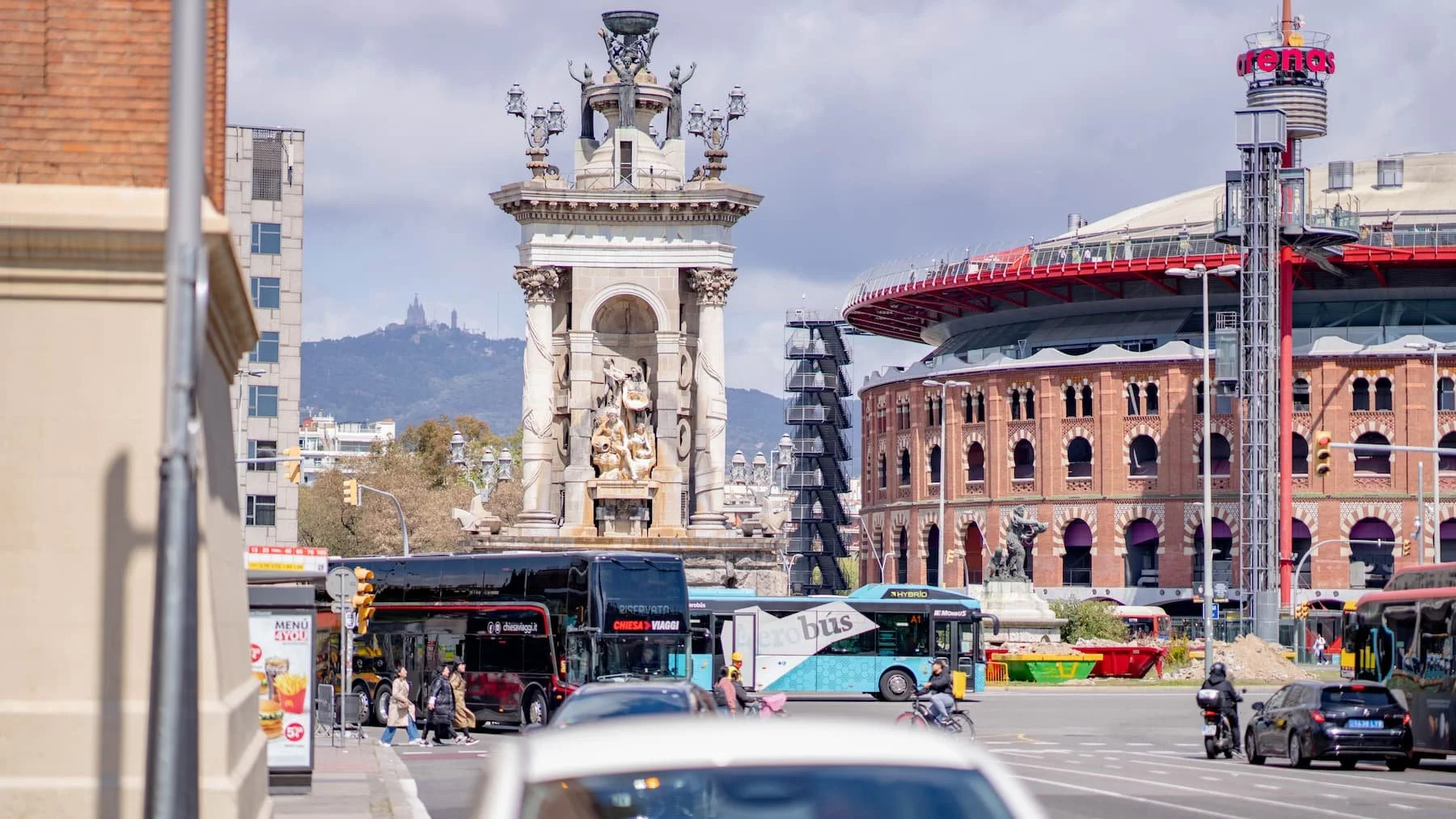
The monumental fountain at the center of Plaça d'Espanya, with the old Las Arenas bullring behind it, now a shopping center under its red rim. Buses and traffic fill the square below. Photo taken by Anthony Quintano
Plaça d'Espanya came next, loud and full of buses. The fountain column at the center, the twin brick towers, the Arenas dome with its red rim. Traffic everywhere. Aerobús, tour coaches, motorbikes threading the gaps. After a quiet morning on the hill it hit like a wall of noise.
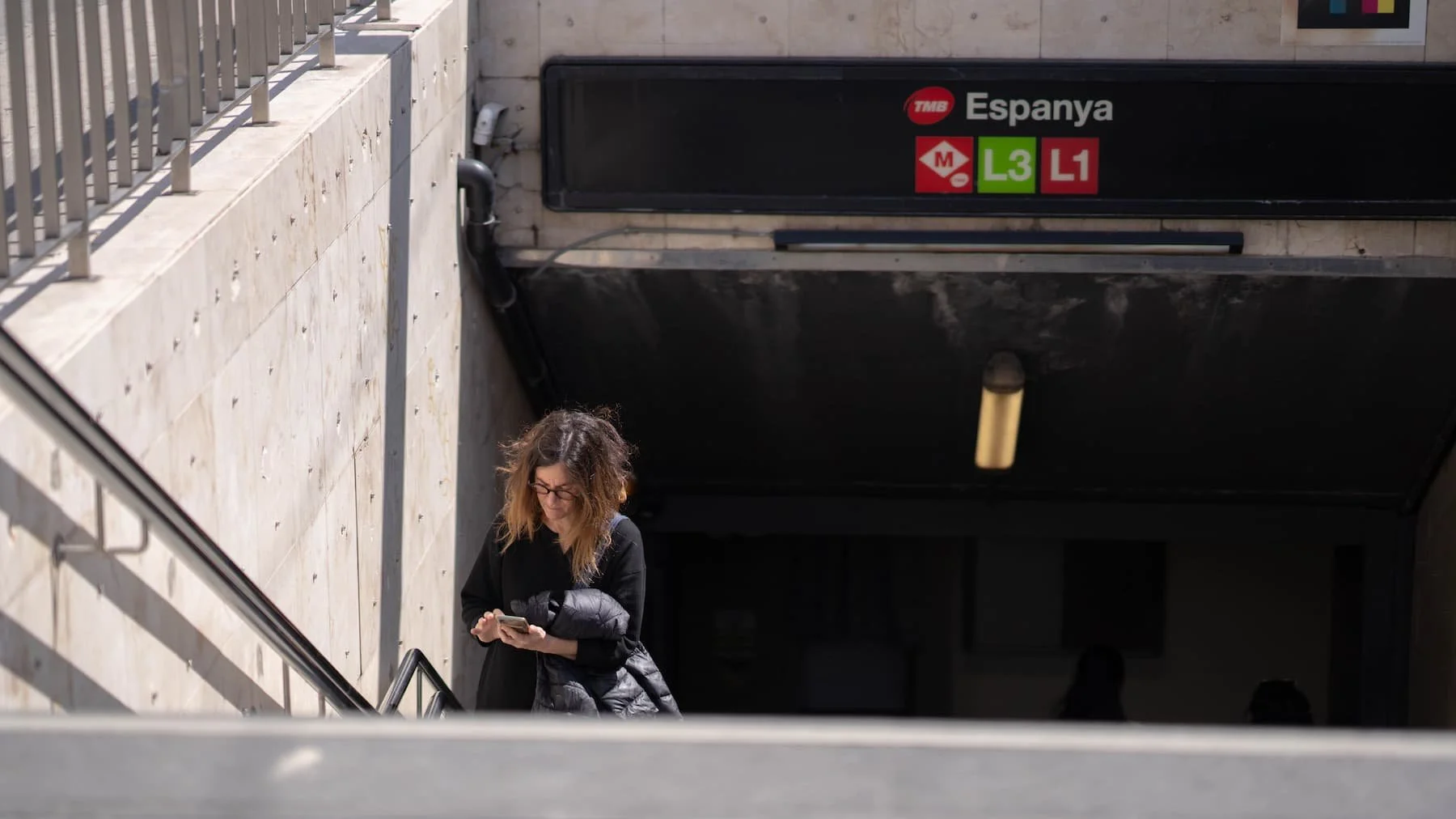
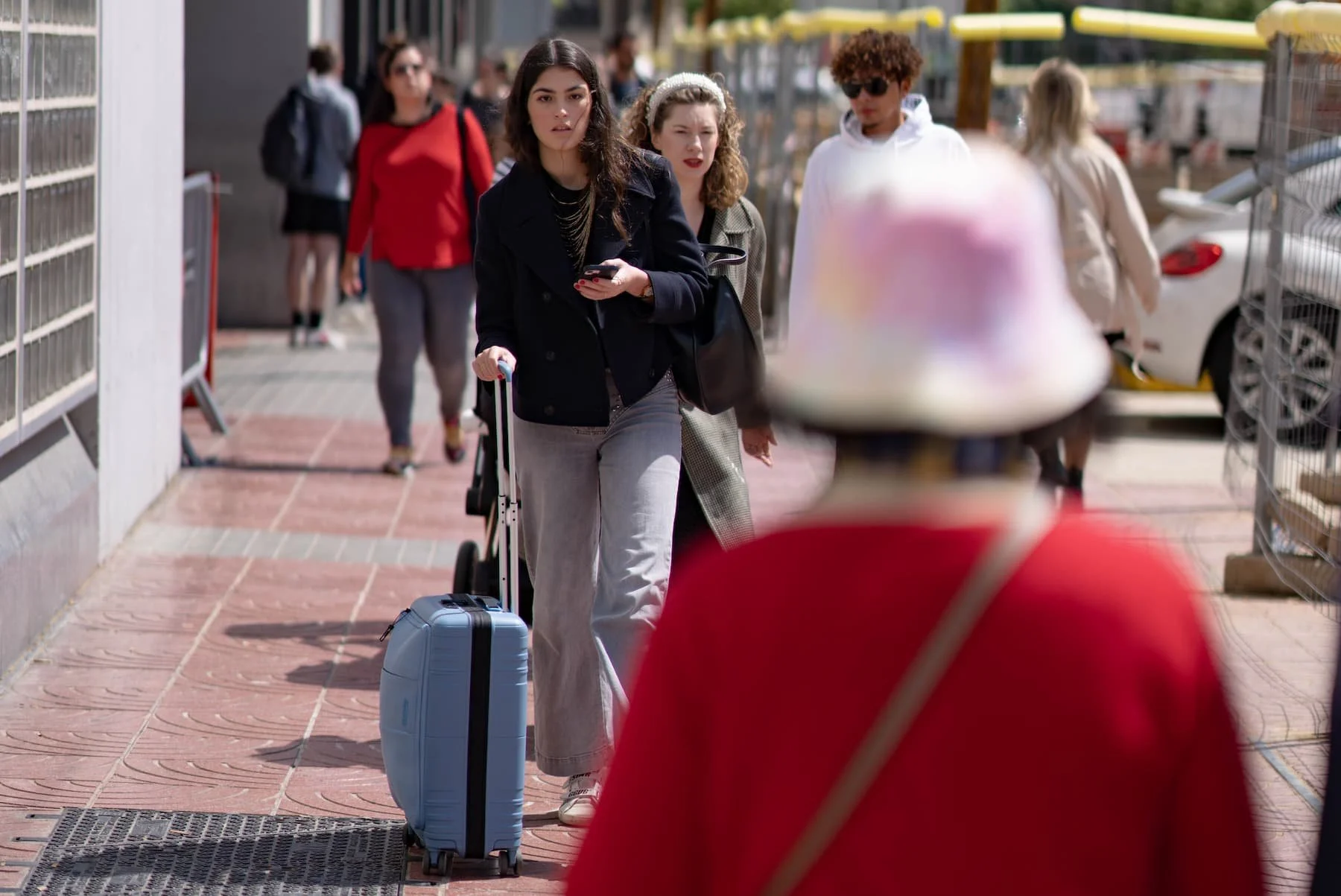
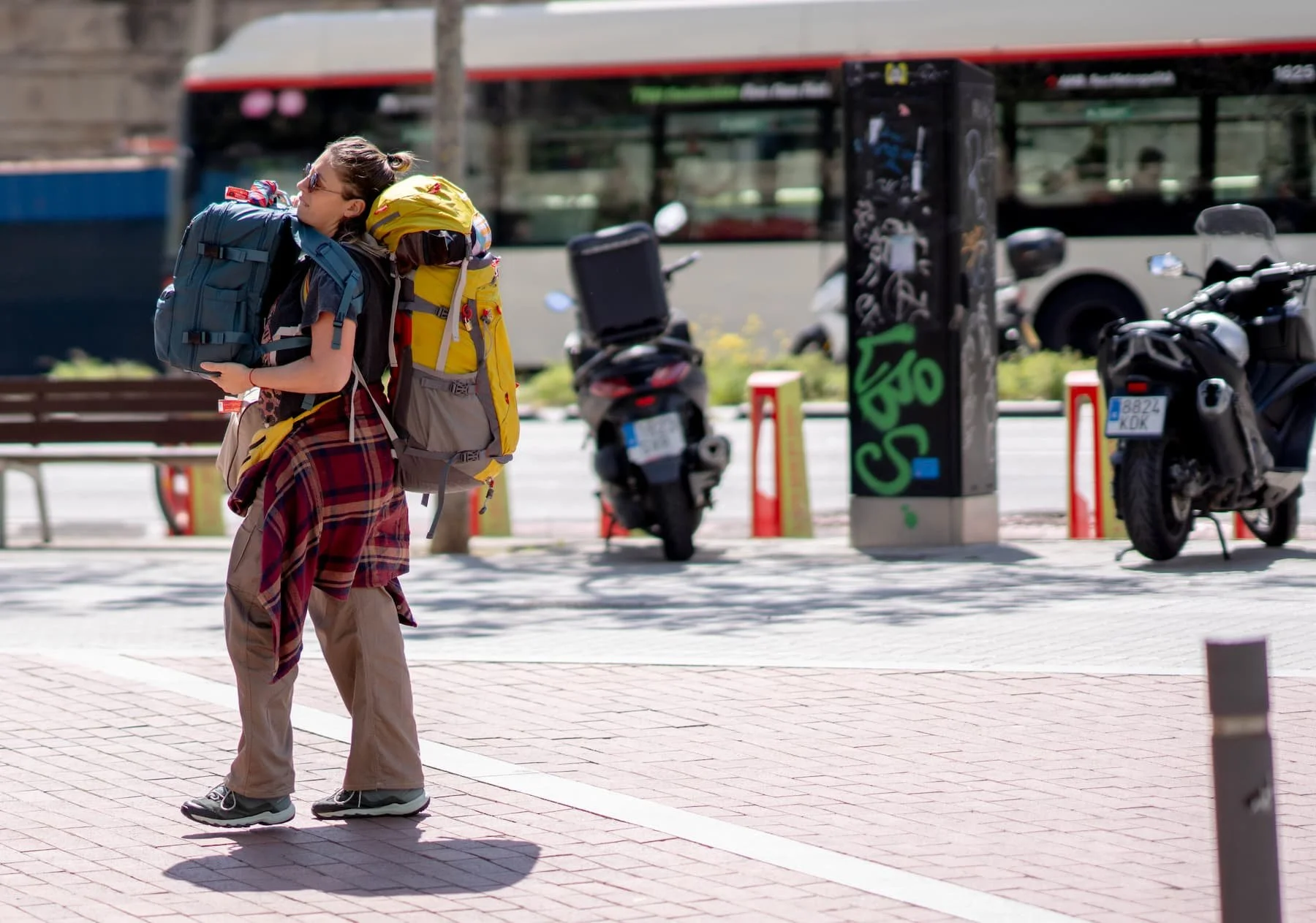
I began to people watch in the busy circle, taking some street photography of the world passing around me. I crossed with everyone else, past a woman coming up out of the metro with her phone out, past travelers hauling bags to the station, past a backpacker stopped in the middle of it all with her face turned up to the sun. End of the line. Or the start of somebody else's day. Hard to tell in a busy hub like that.
That was the end of my first full day in Barcelona. Sunrise on an empty beach, the back streets of a fishermen's quarter, a monument at the port, and a fortress on a hill, all of it on foot. The next day our adventure takes us to Montserrat.
Day Two
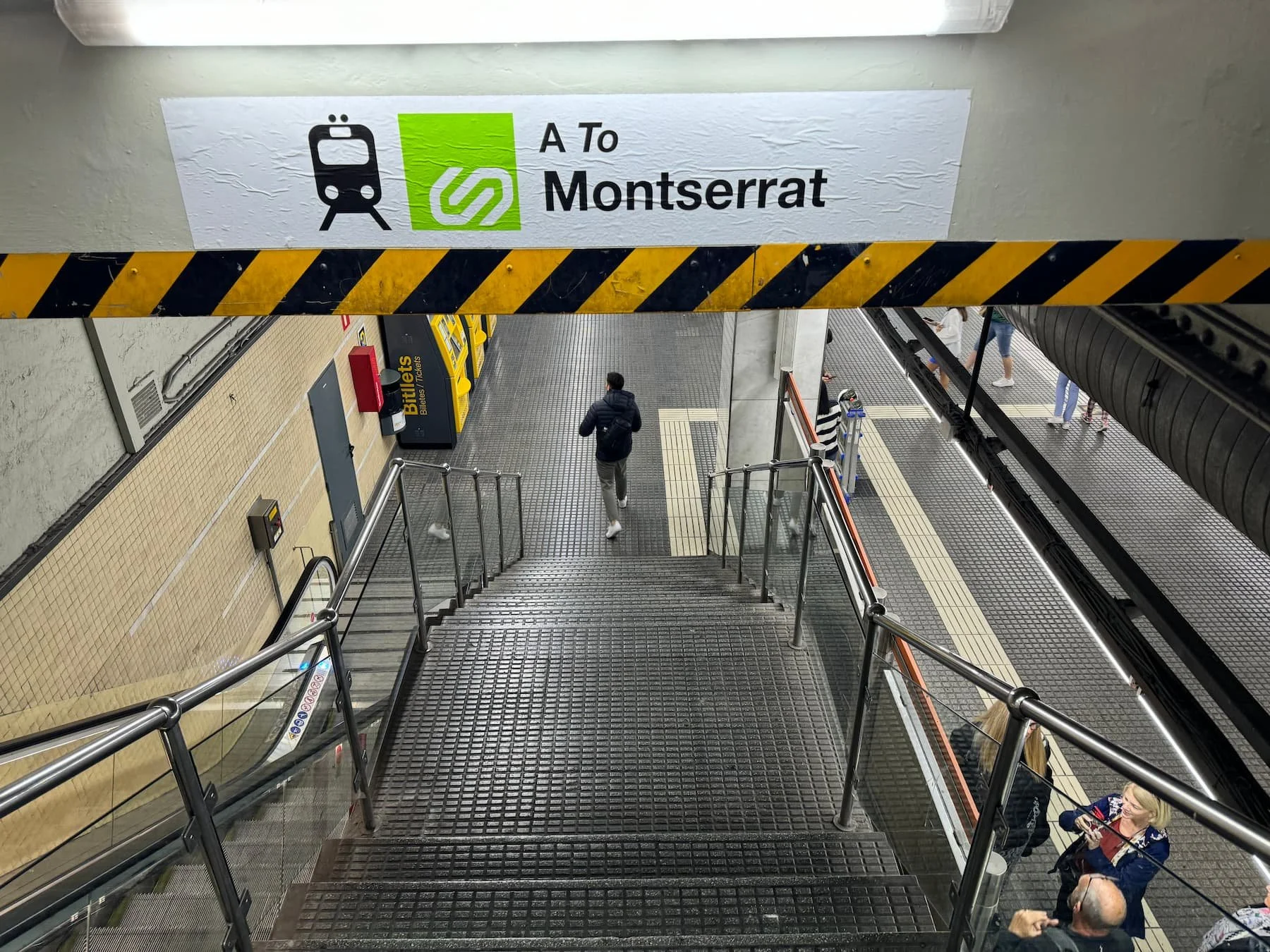
I created a separate blog post on our day trip to Montserrat. Read it here:
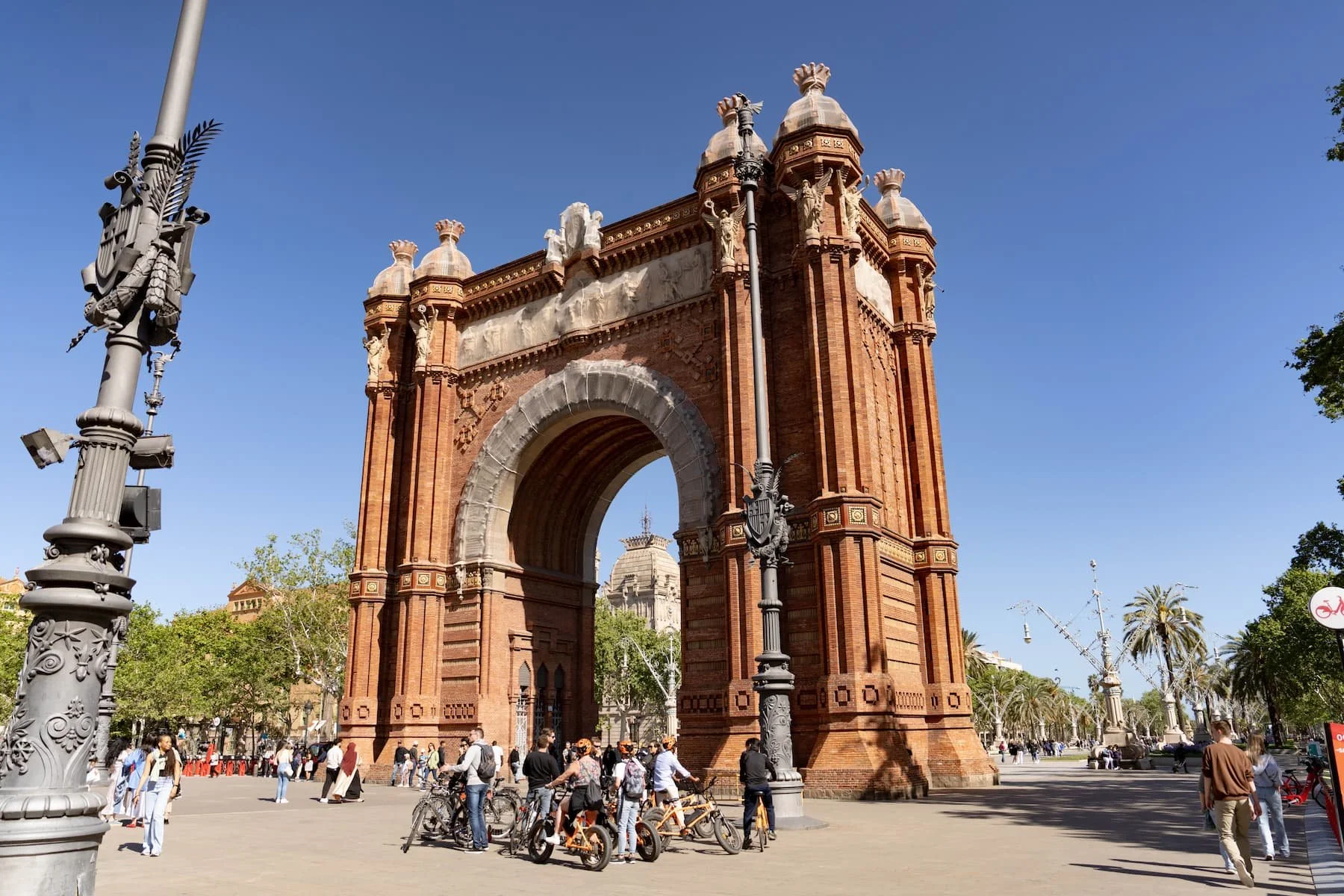
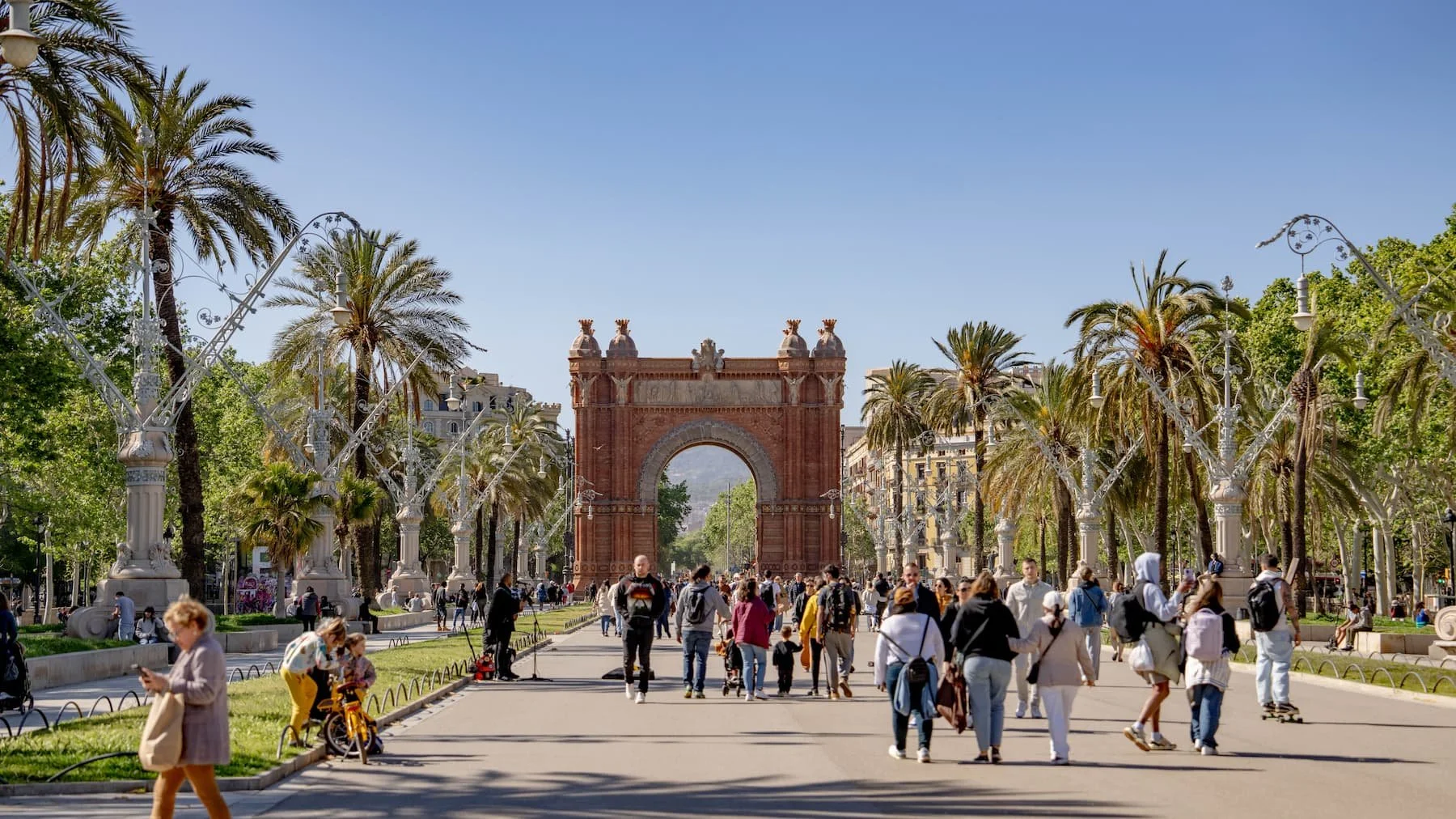
The Arc de Triomf is a triumphal arch in the city of Barcelona, in Catalonia, Spain. It was built as the main access gate for the 1888 Barcelona Universal Exposition and was designed by the architect Josep Vilaseca i Casanovas. The arch is constructed in reddish brick in the Neo-Mudéjar style, a revivalist form that drew on Moorish and Islamic decorative traditions, rather than the stone typically used for triumphal arches in other European cities. It stands at the head of the Passeig de Lluís Companys, a wide promenade lined with palm trees that connects the arch to the Parc de la Ciutadella.
The structure is decorated with an extensive sculptural program by several Catalan artists. The main frieze on the front facade, facing the promenade, represents Barcelona welcoming the nations to the exposition. Additional reliefs and winged figures appear on the upper sections, and the corners are topped with crown-shaped pinnacles. The wrought-iron lampposts along the adjoining promenade incorporate the coat of arms of Barcelona. The Arc de Triomf is considered a notable example of the Catalan Modernisme period and is one of the recognized landmarks of the city.
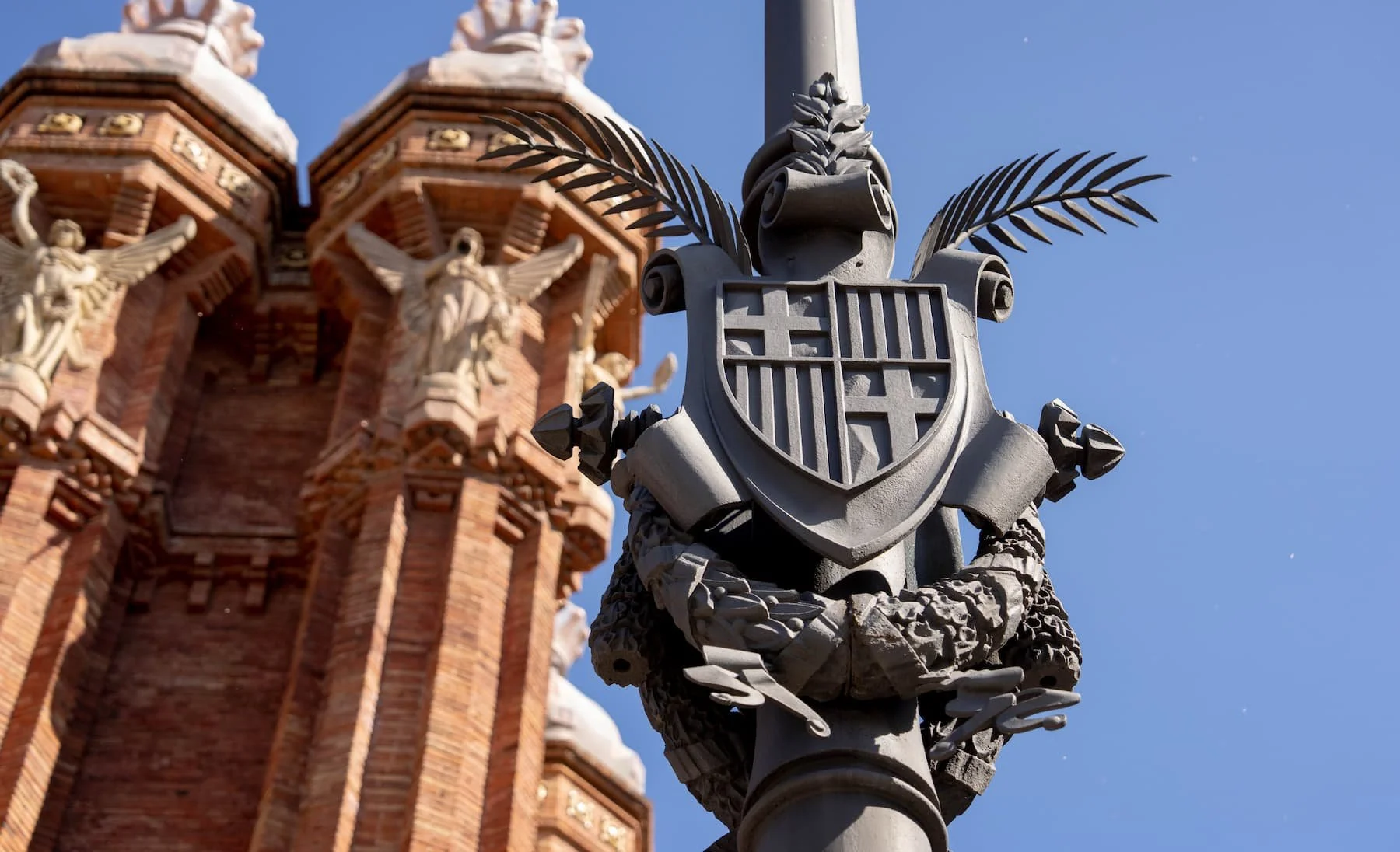
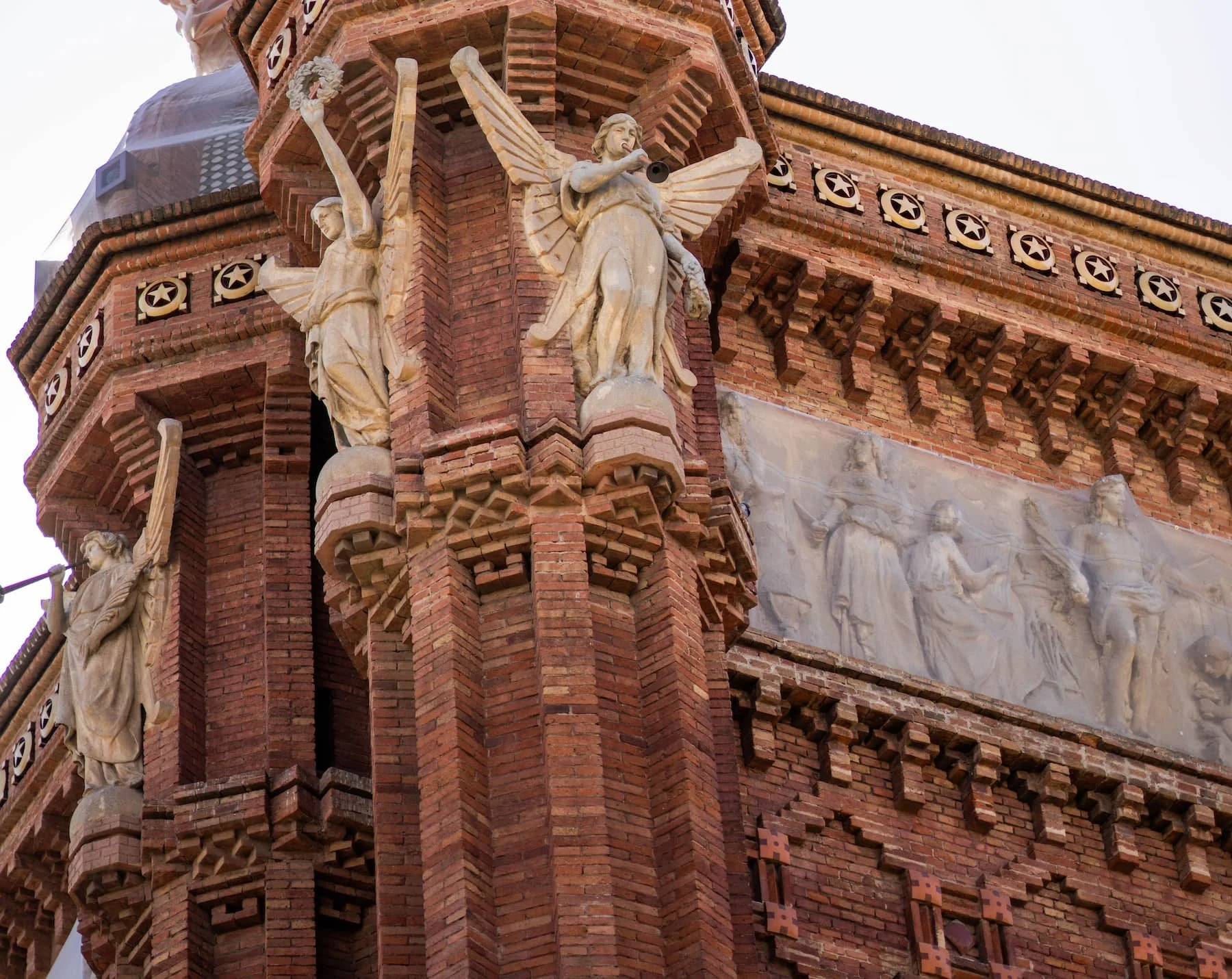
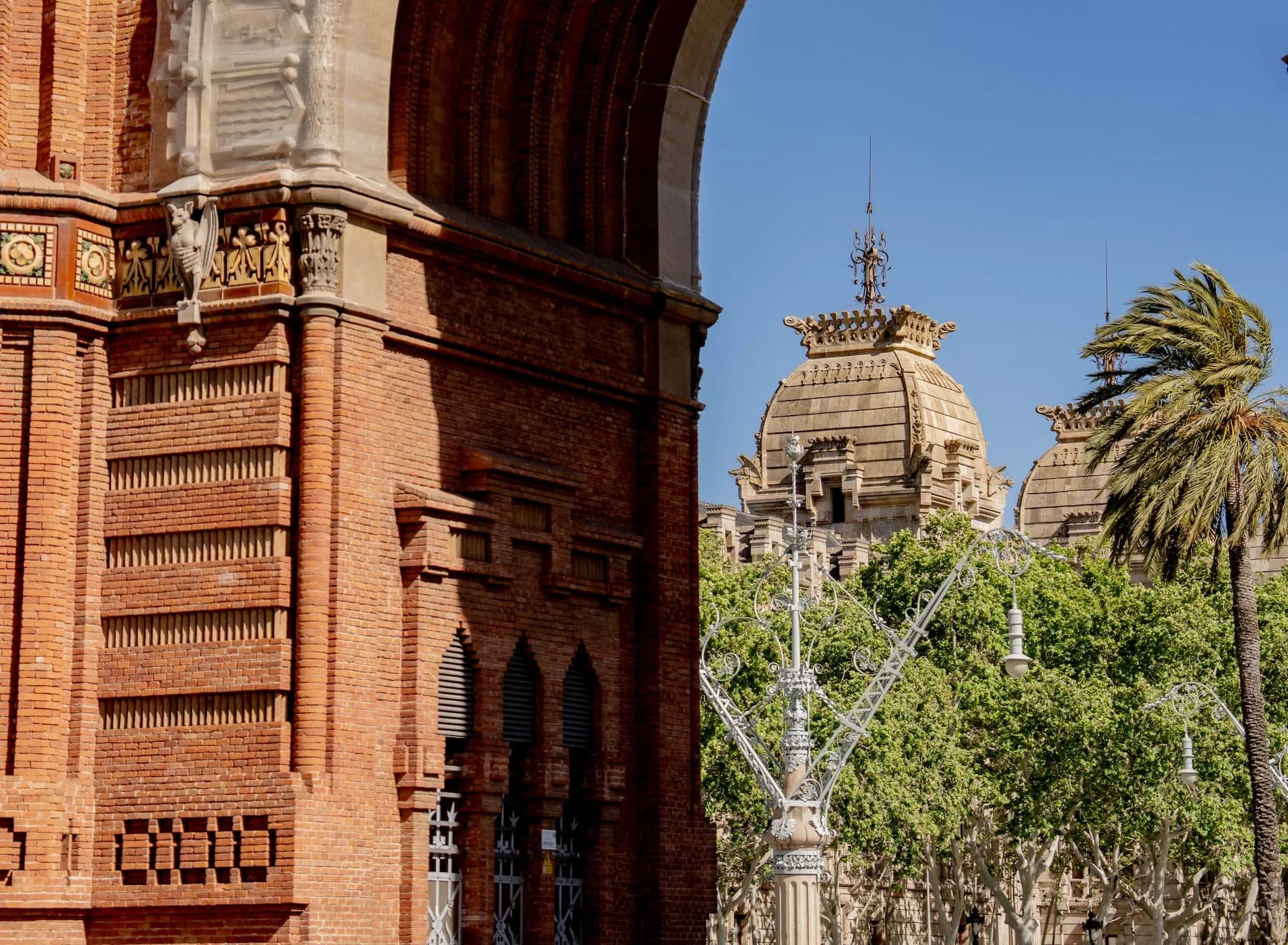
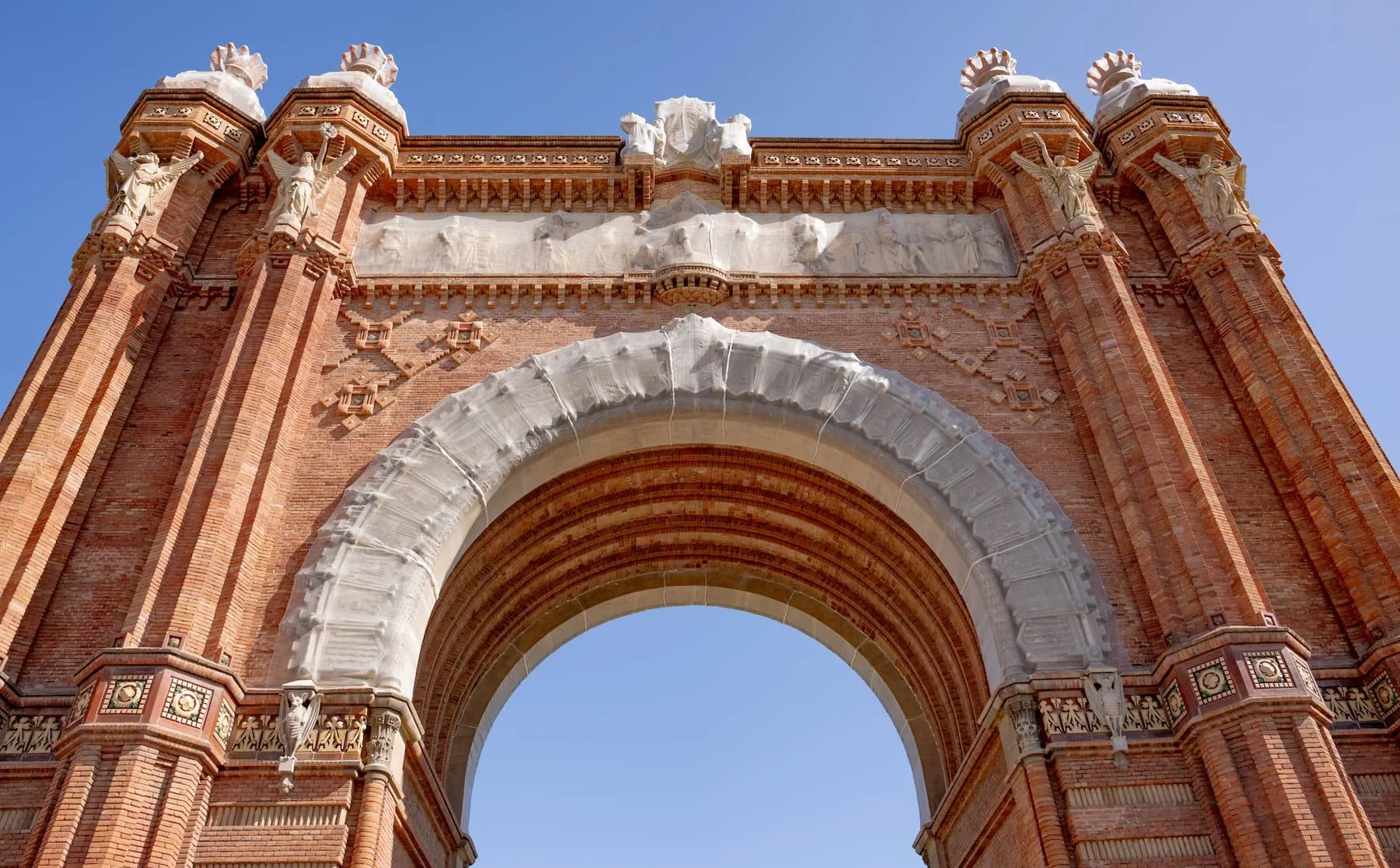
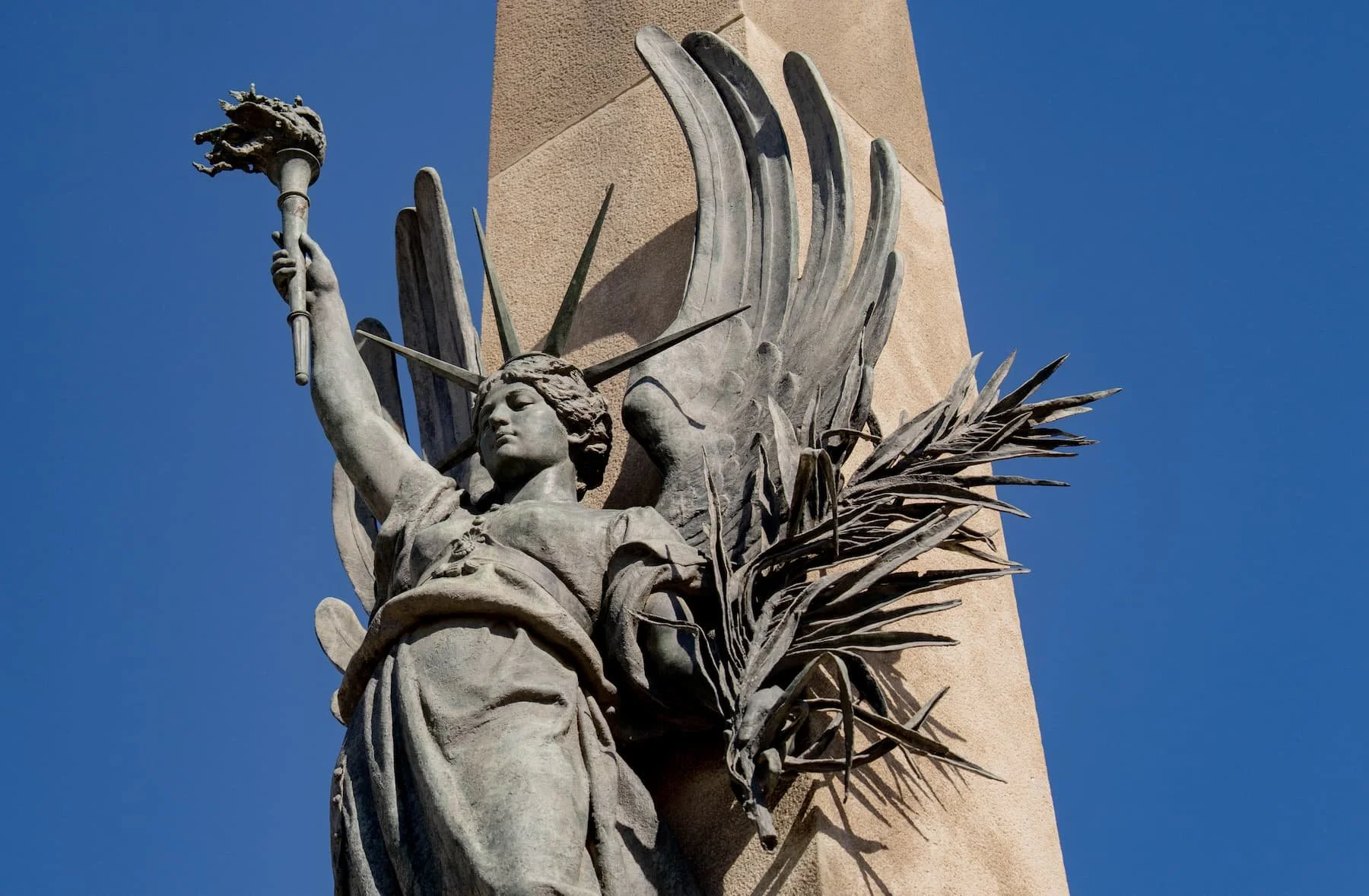
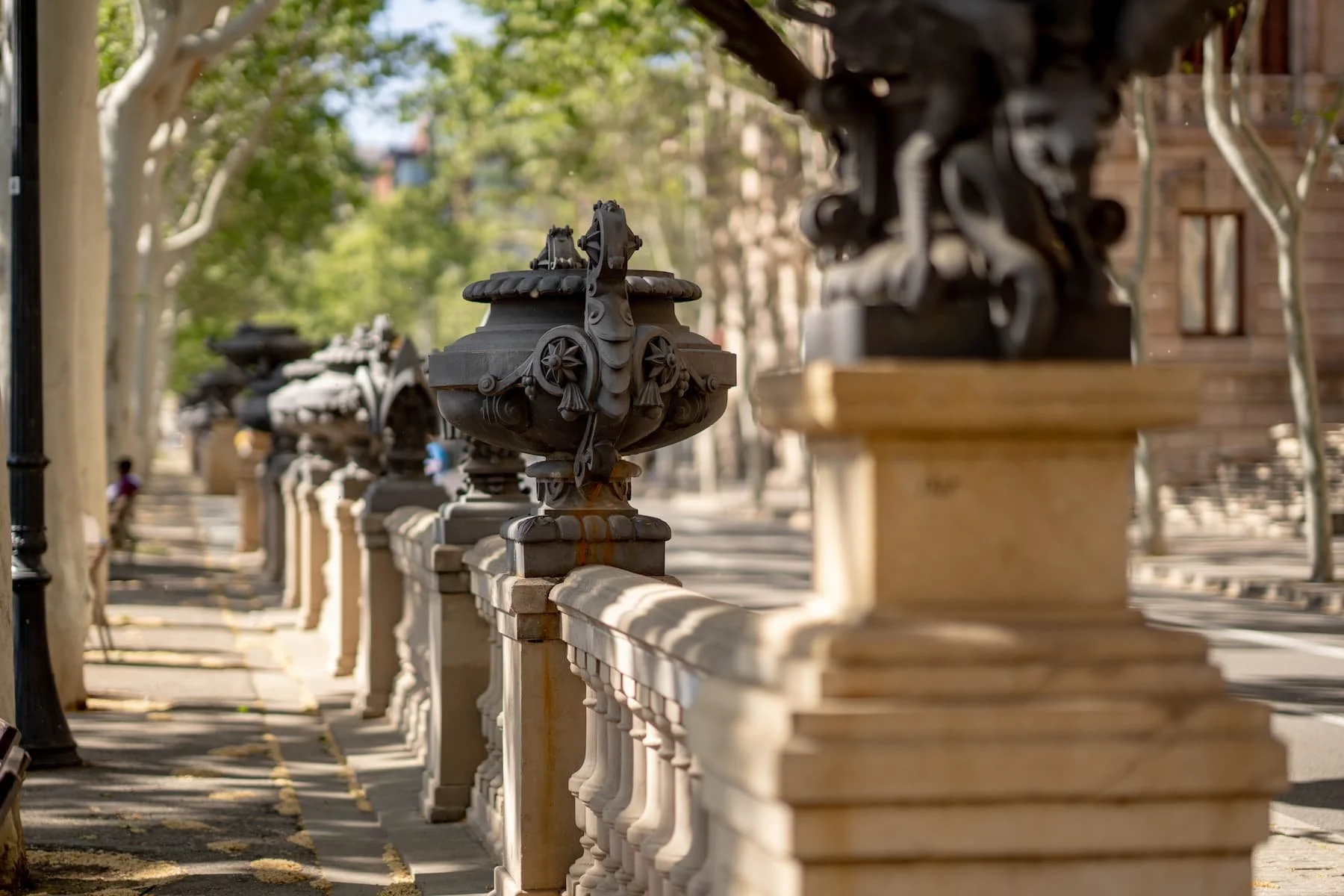
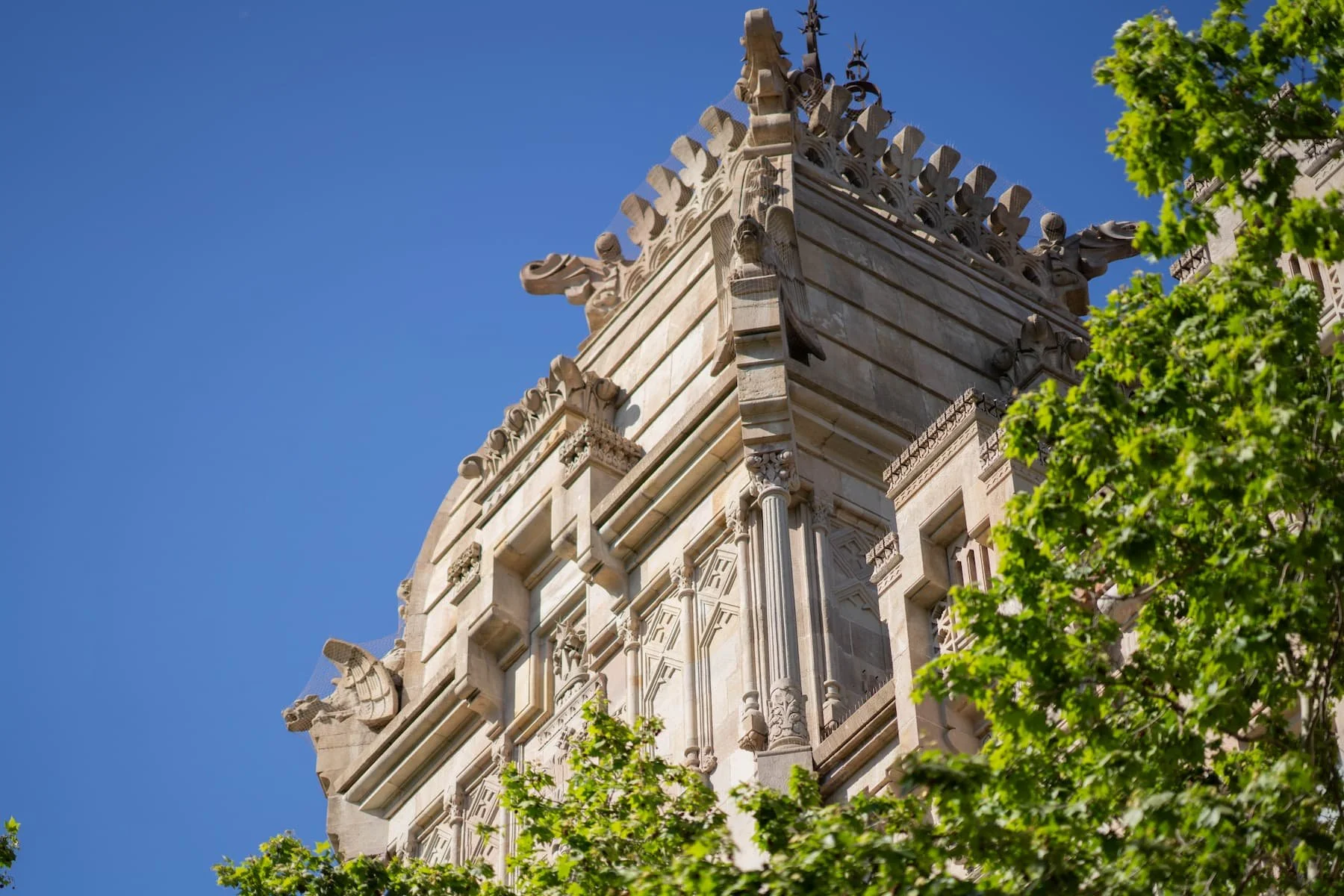
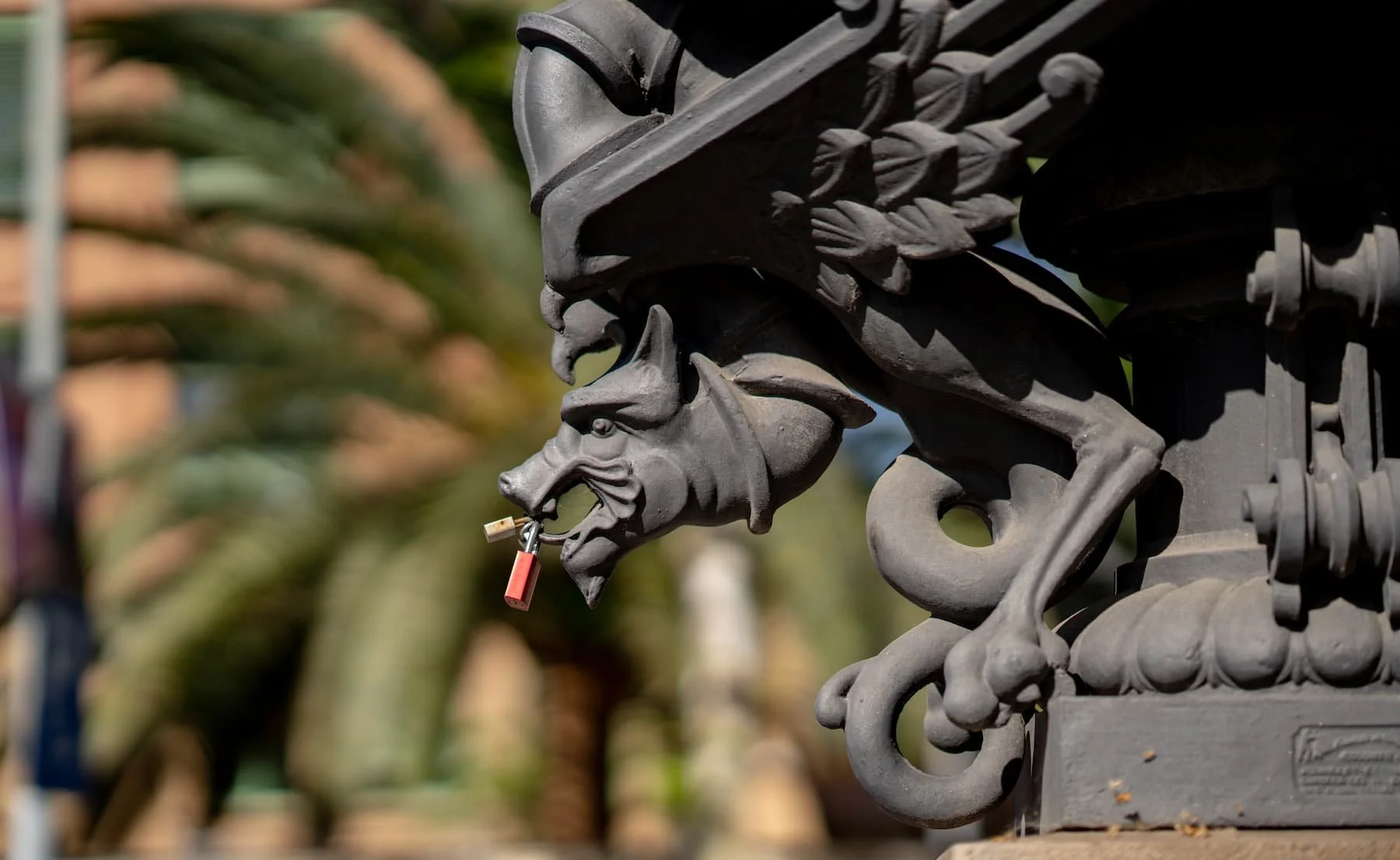
The area surrounding the Arc de Triomf, along the Passeig de Lluís Companys and adjacent to the Parc de la Ciutadella, contains a number of decorative and sculptural elements characteristic of the late 19th-century development of the site. Among them is a bronze allegorical figure, winged and bearing a raised torch with a palm frond across the chest, a motif commonly associated with monuments of the period. The promenade is bordered by a stone balustrade punctuated at intervals by cast-iron urns decorated with coiled dragon forms. Nearby buildings display ornamented upper stories incorporating carved stonework, colonnettes, gargoyles, and wrought-iron cresting. A bronze figure in robes, depicted in an upraised gesture, stands near the base of the arch. The ornamental lampposts along the promenade include cast-iron dragon figures at their bases; one such figure has become the site of a "love lock", a padlock left by visitors, a practice observed at various public landmarks.
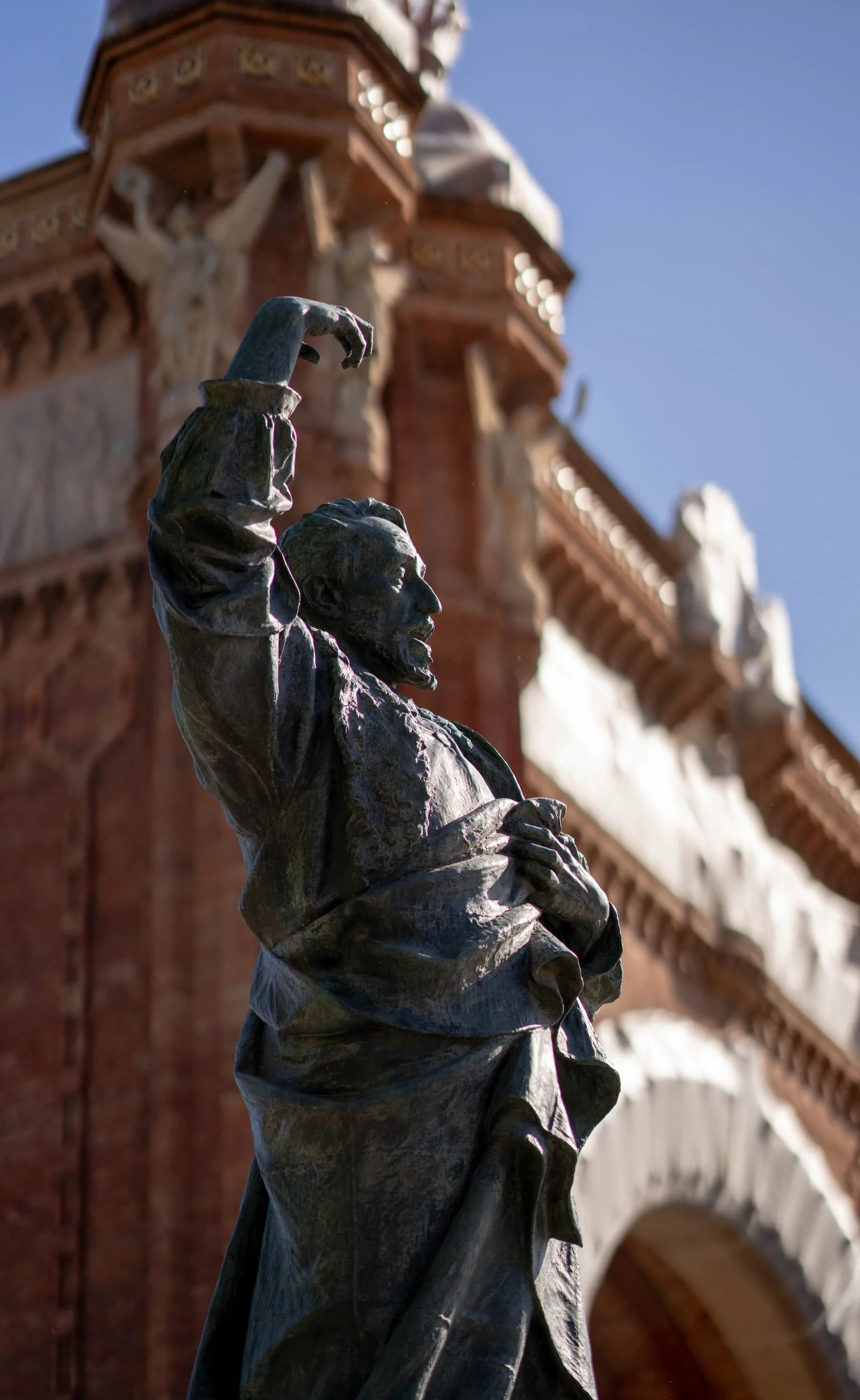
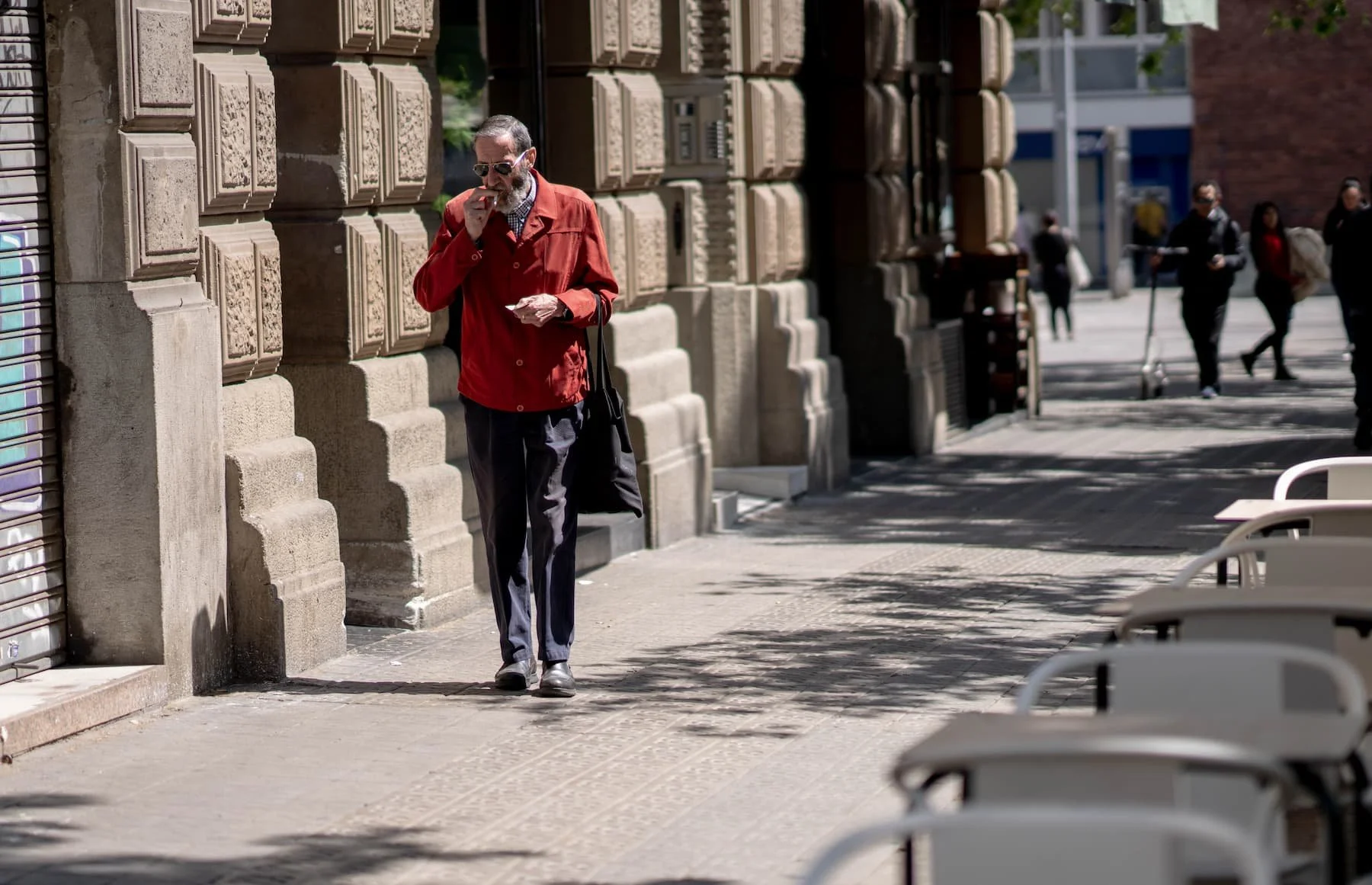
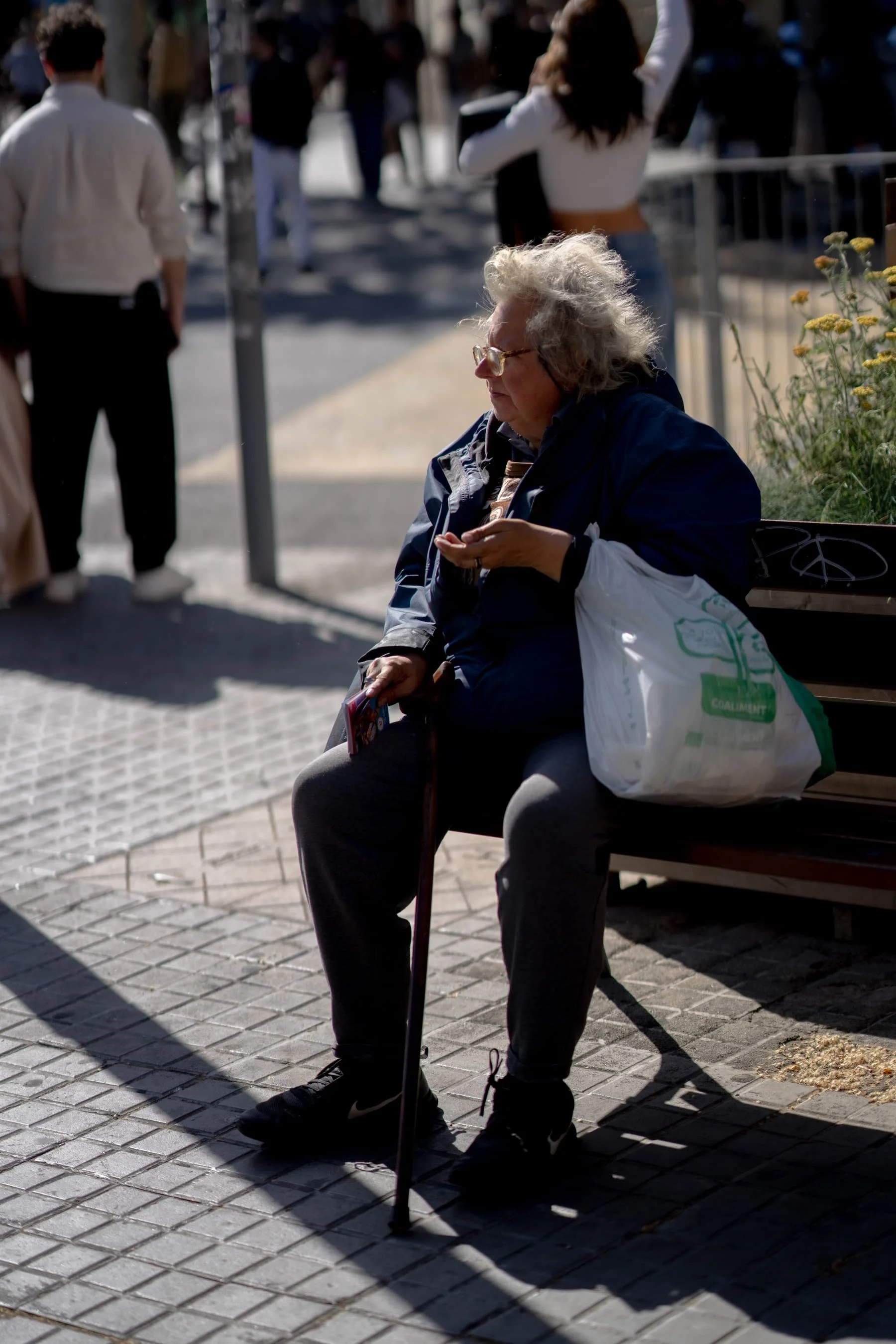
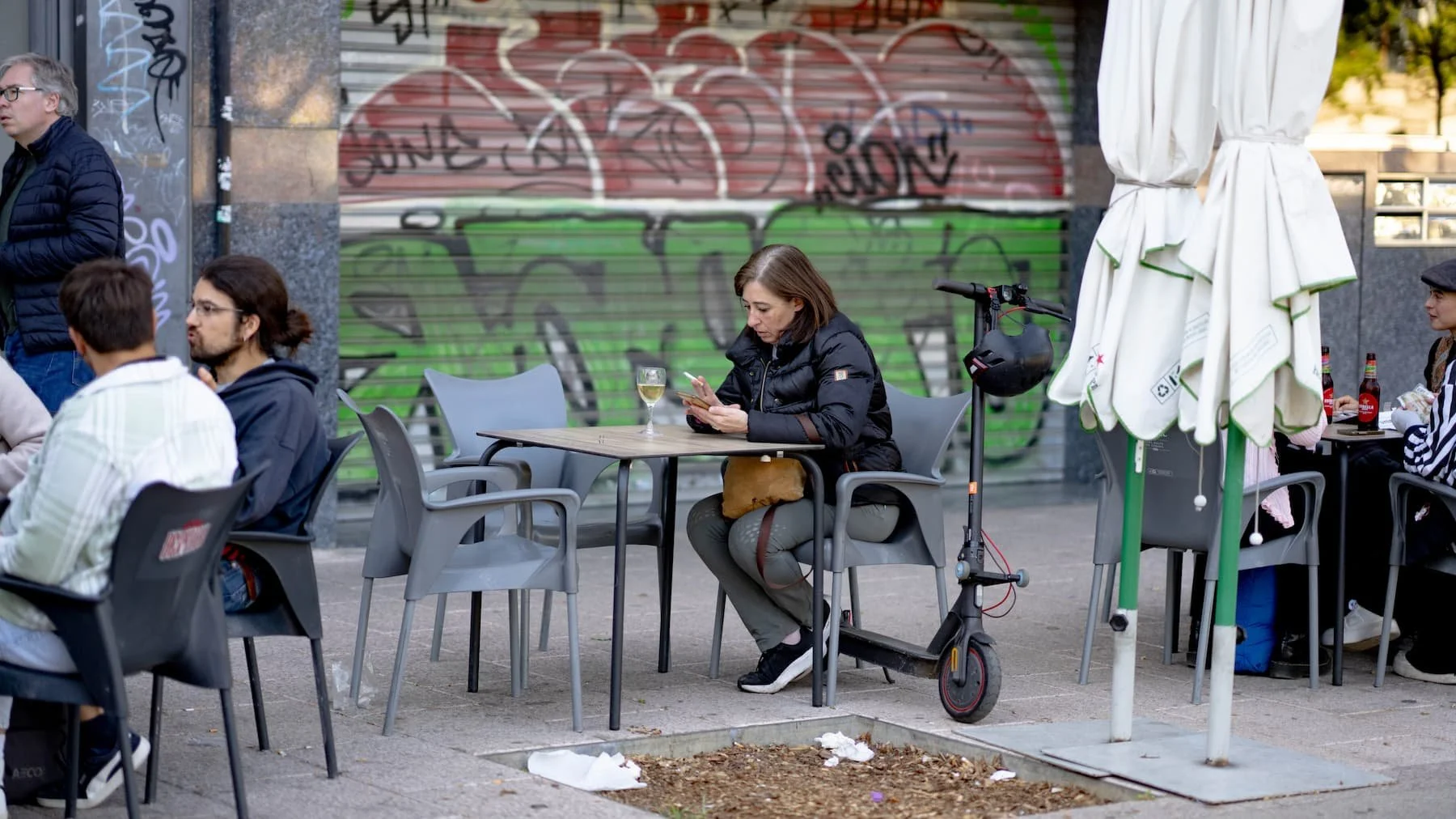
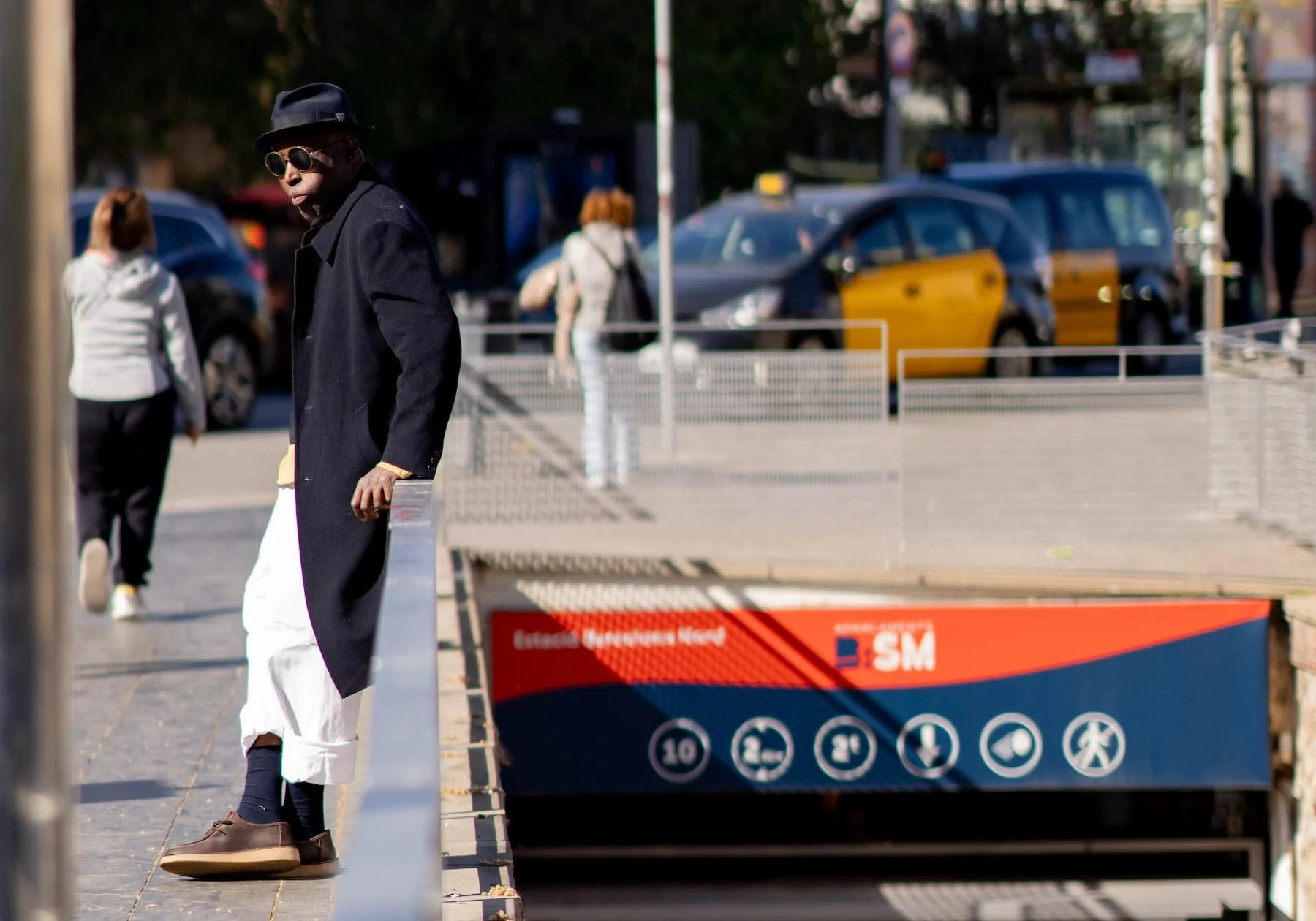
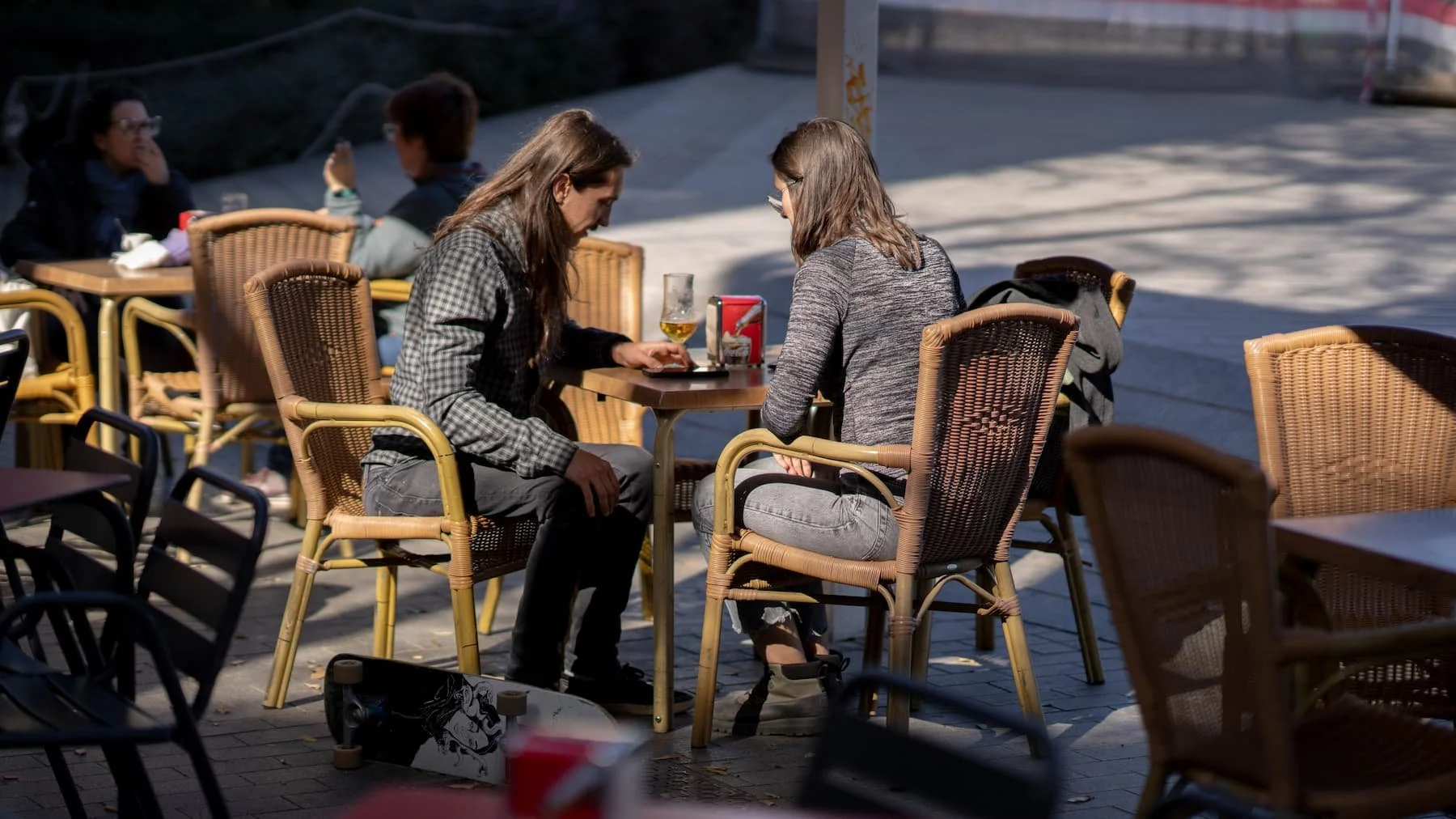
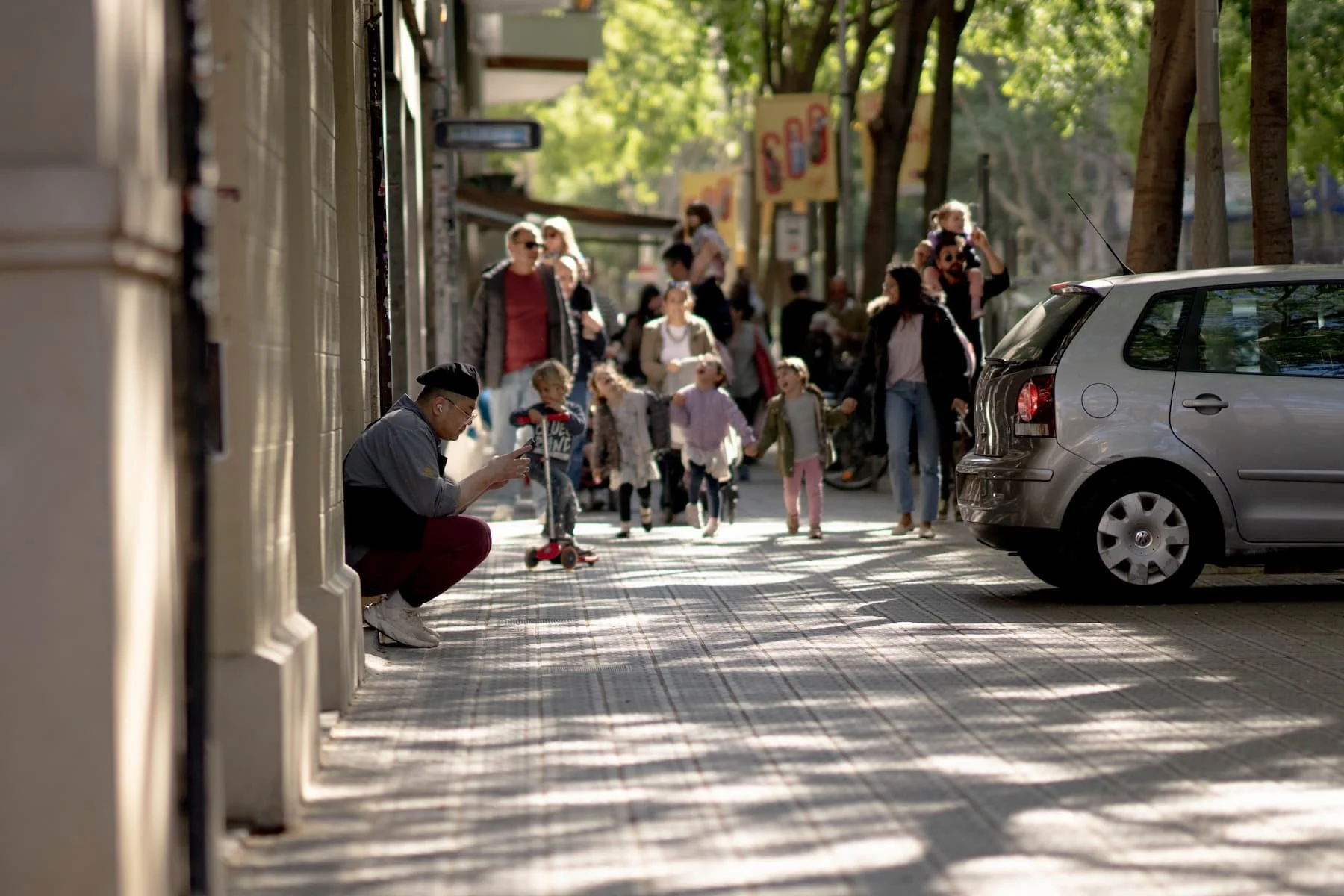
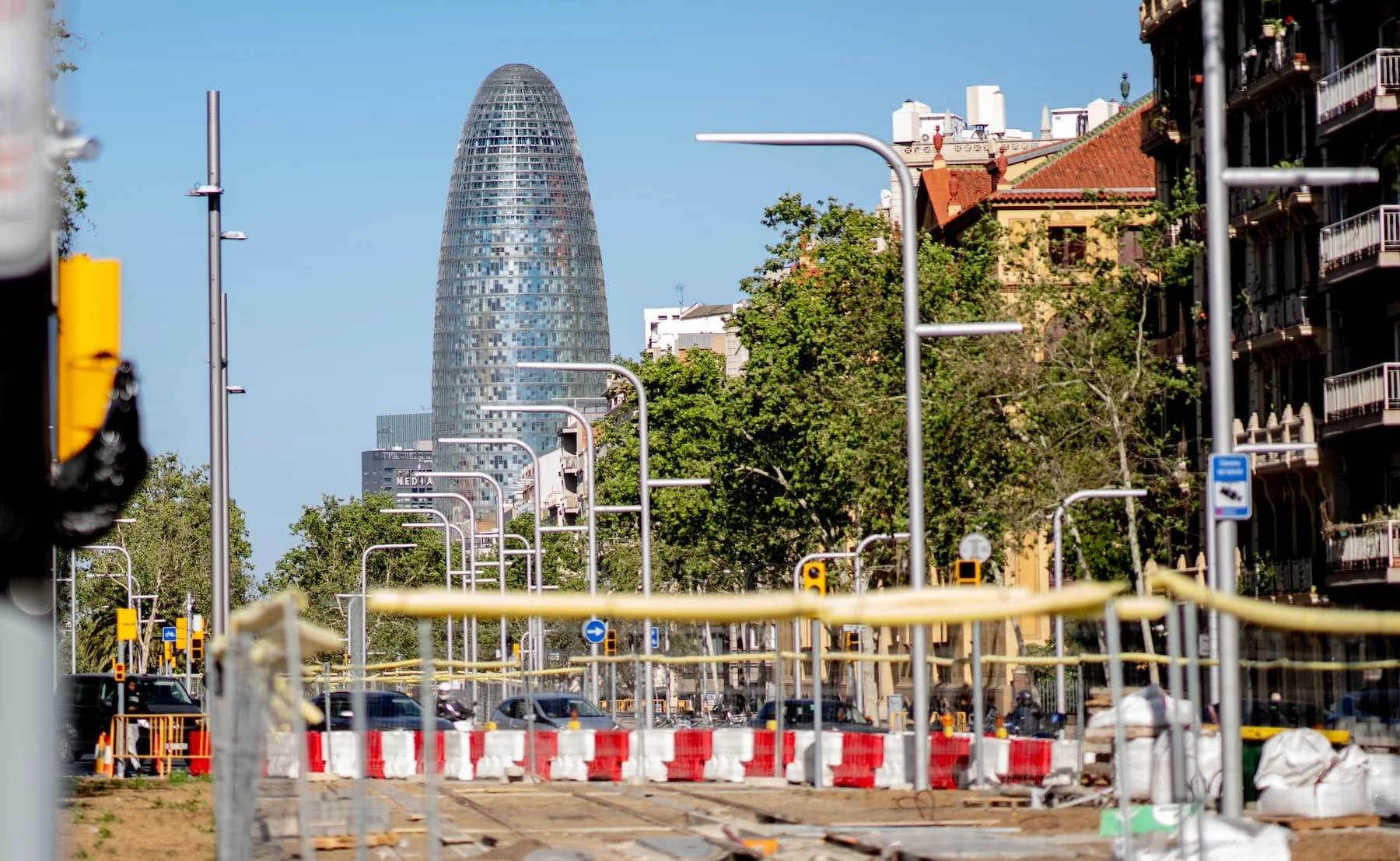
When the monuments are behind you and the light starts to soften, the city itself becomes the subject. I put the wide lens away and just walked. Now is my favorite part, to people watch and capture the personality of the human occupants of this city. An older woman rests on a bench with her cane and a shopping bag, watching the crowd move past. A woman checks her phone at a cafe table with her scooter parked at her knee. A man in a dark coat and hat pauses by the metro stairs, dressed like the whole street is his to own. A couple leans in close over one beer, a skateboard resting under the table. A guy crouches against a wall while a pack of kids comes running down the sidewalk behind him, all noise and motion. And off in the distance, framed by construction fencing and a row of street lamps, the Torre Glòries rises over it all. None of these are the shots people fly to Barcelona for. But this is the stuff I love to capture. The quiet in between moments, where the real life of a place actually lives.
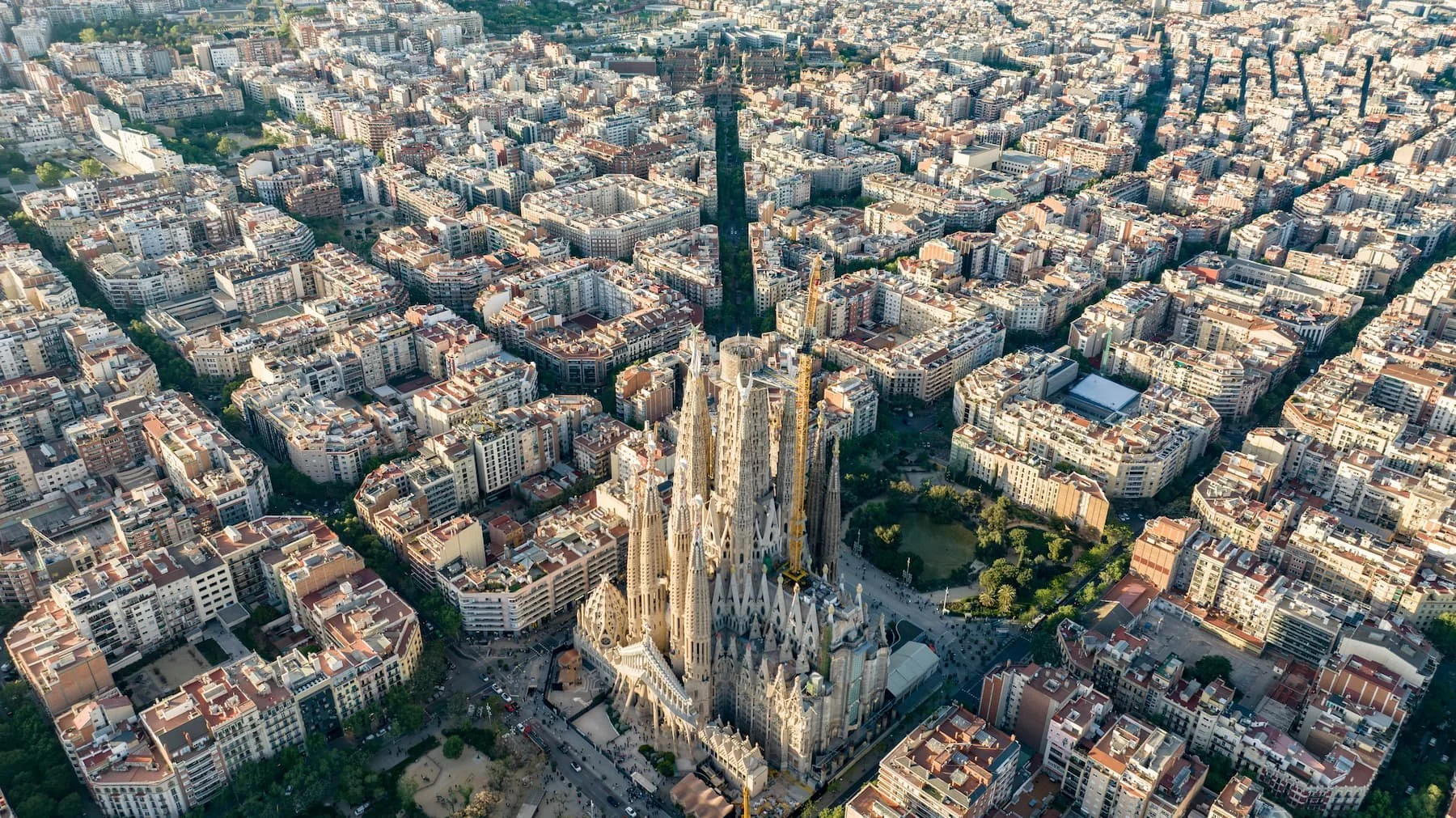
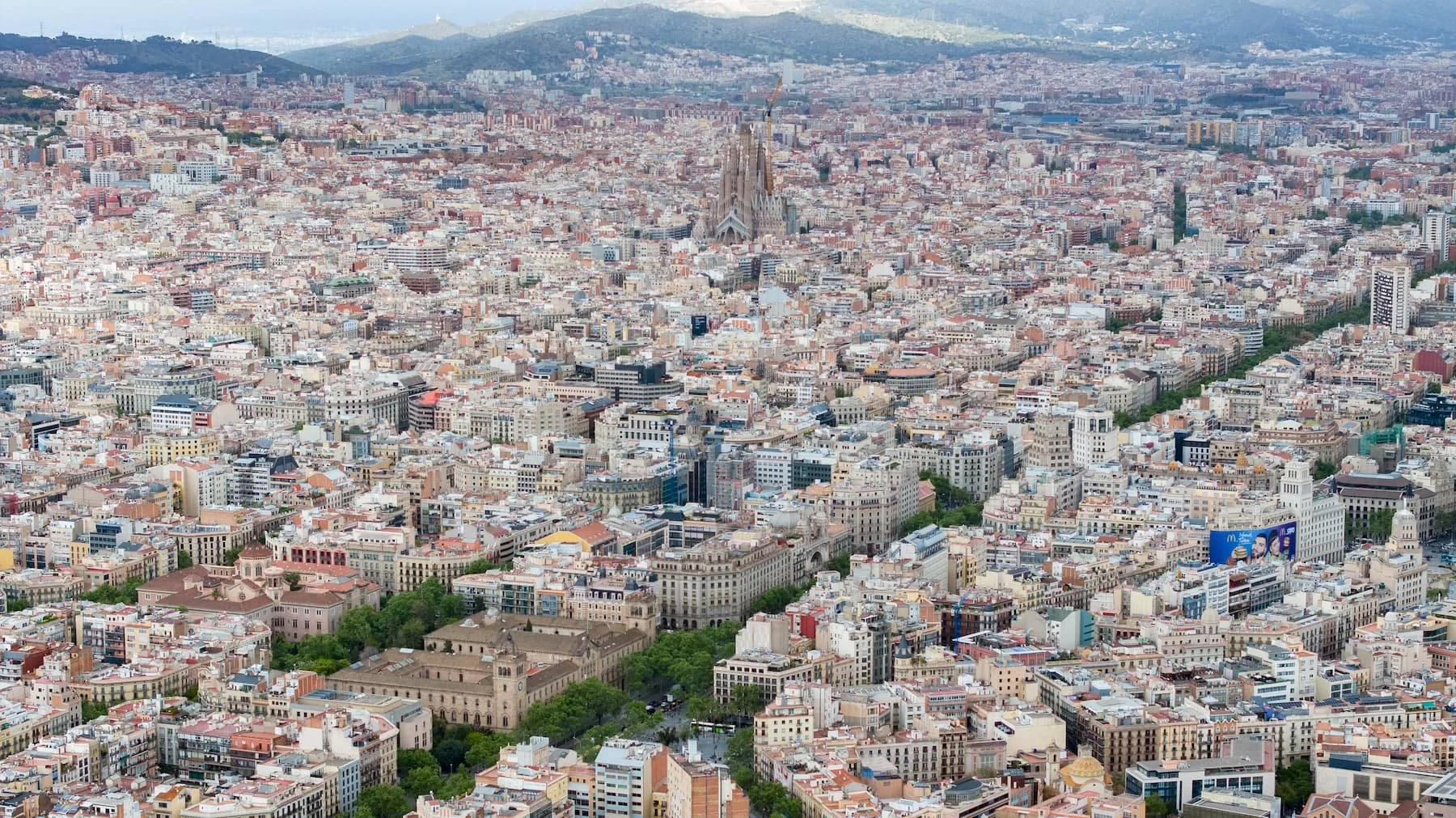
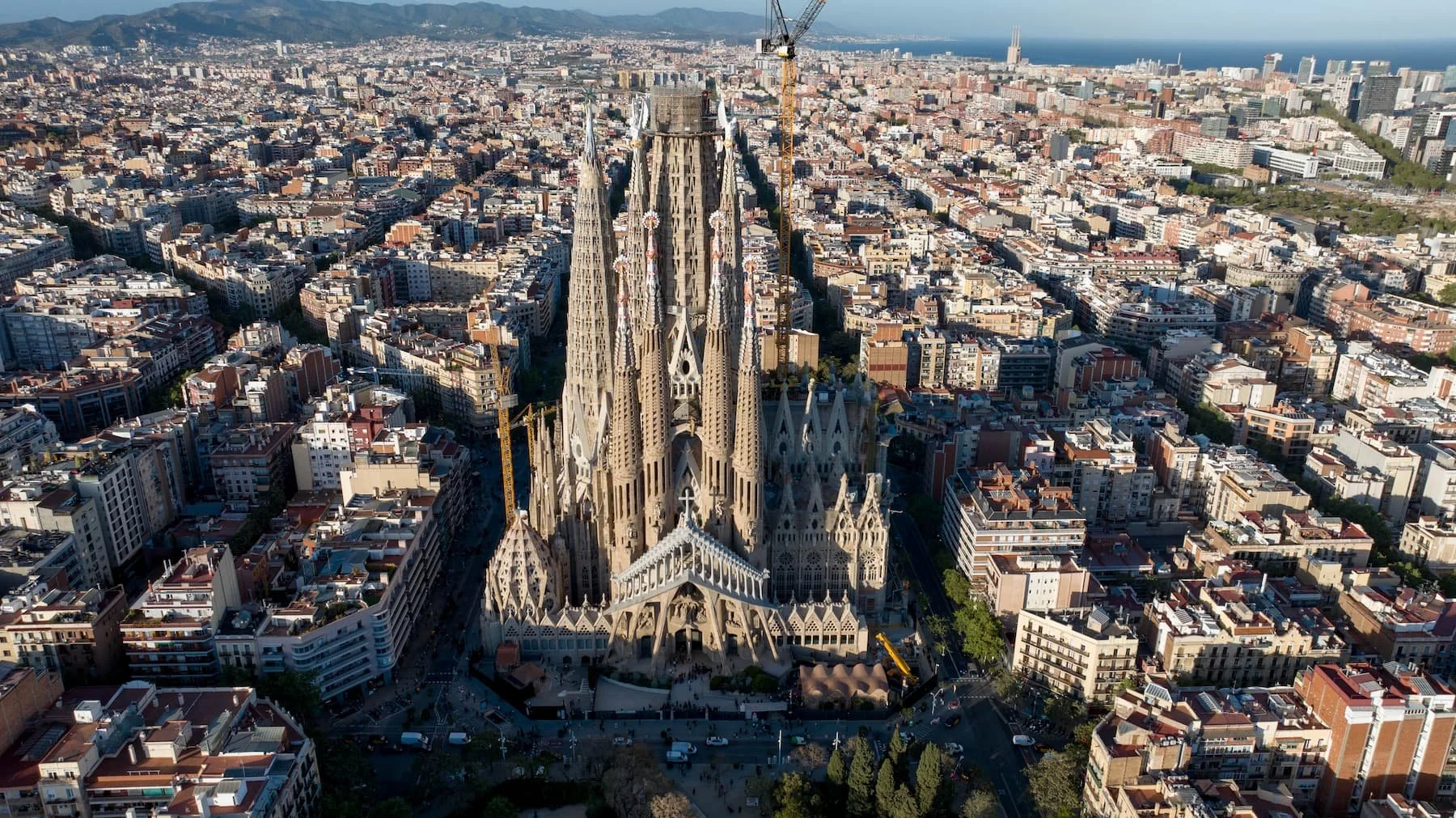
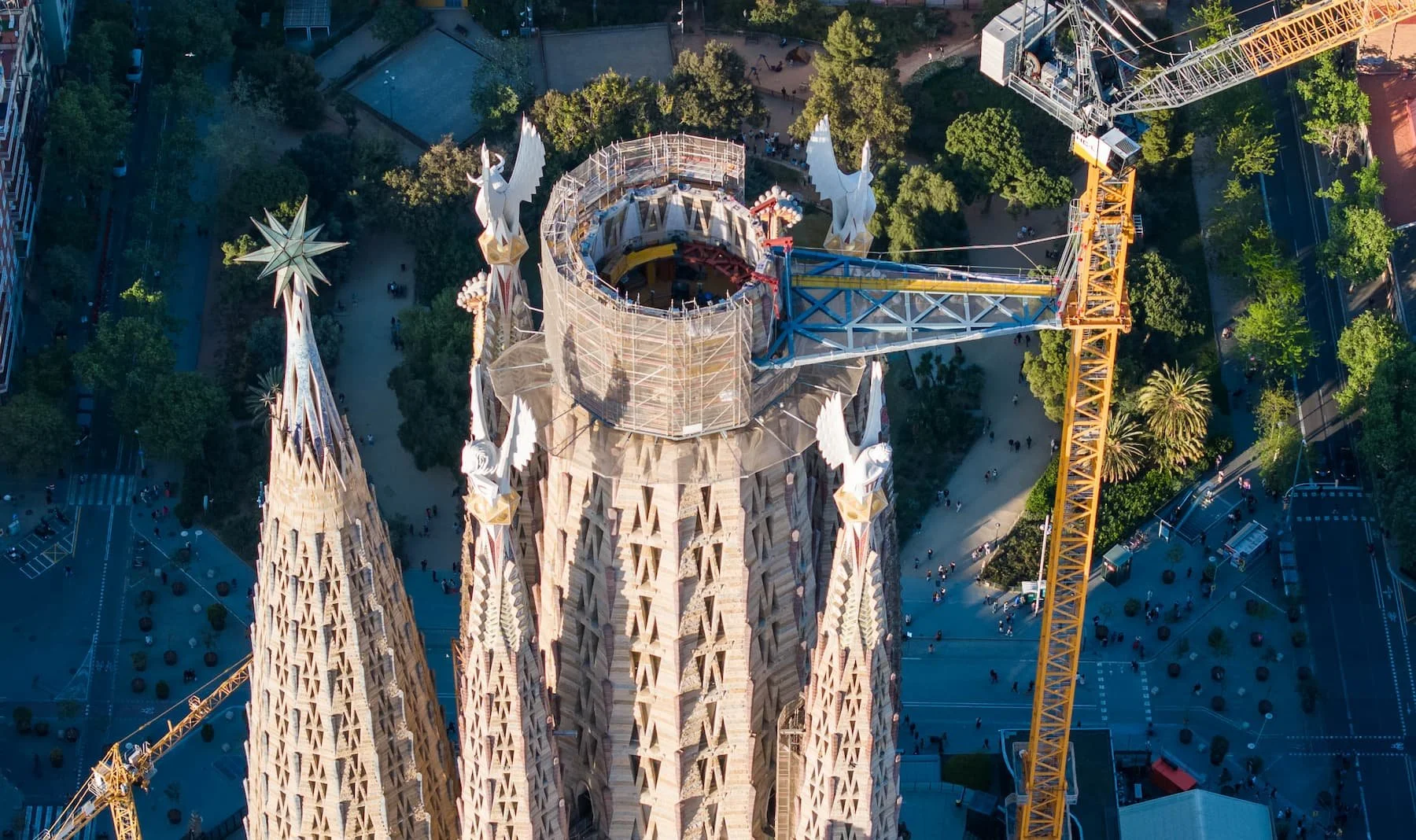
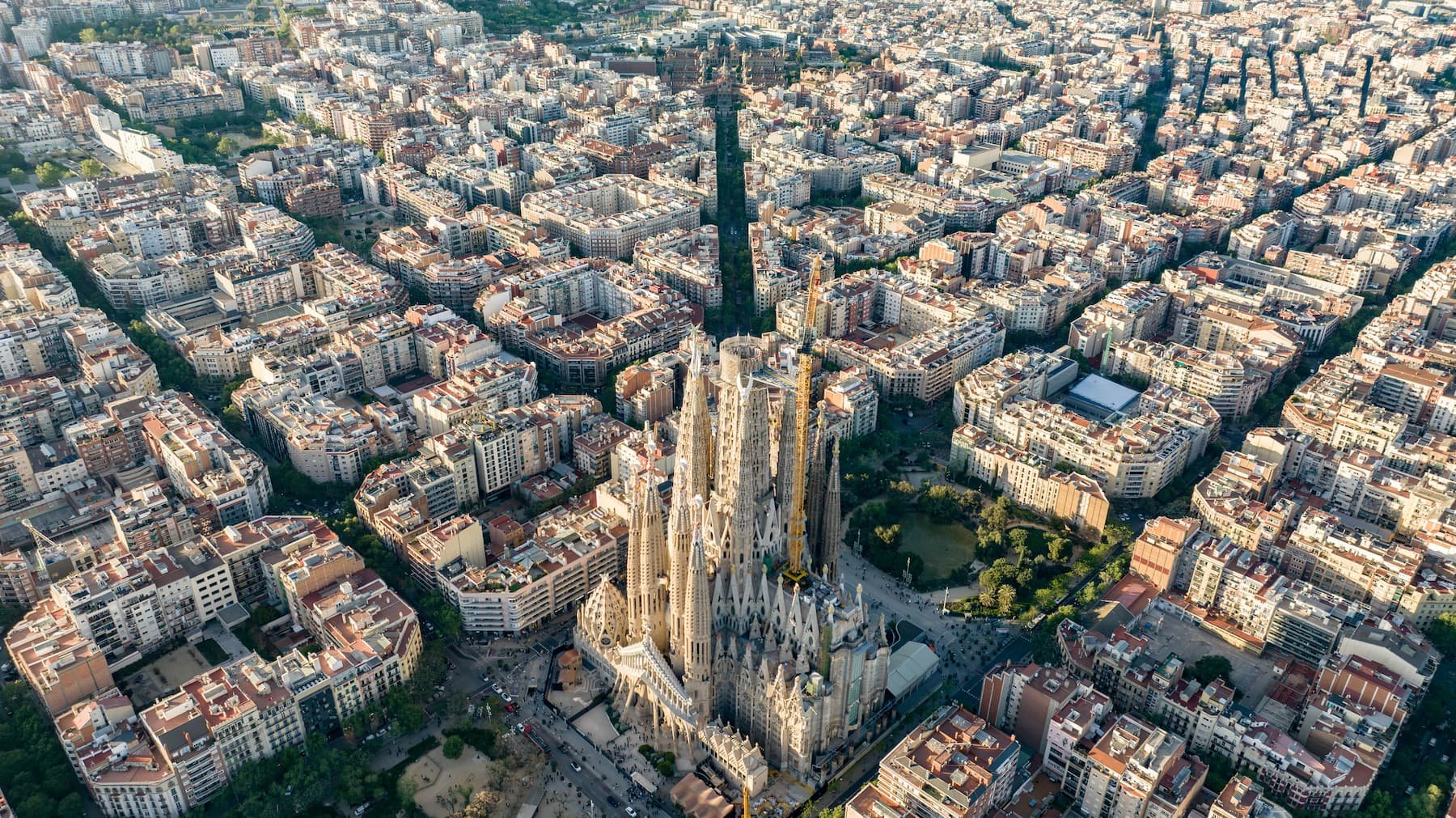
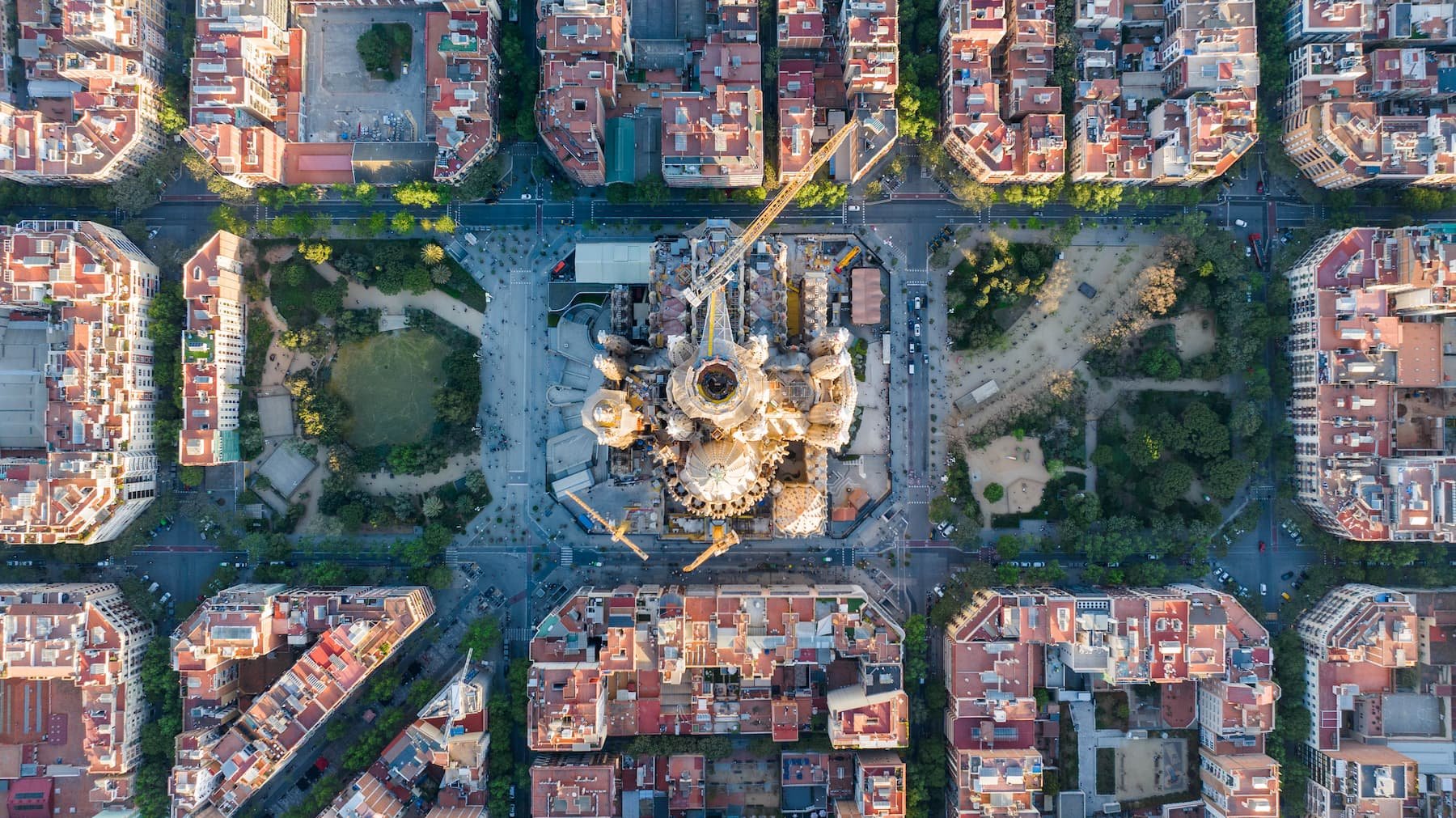
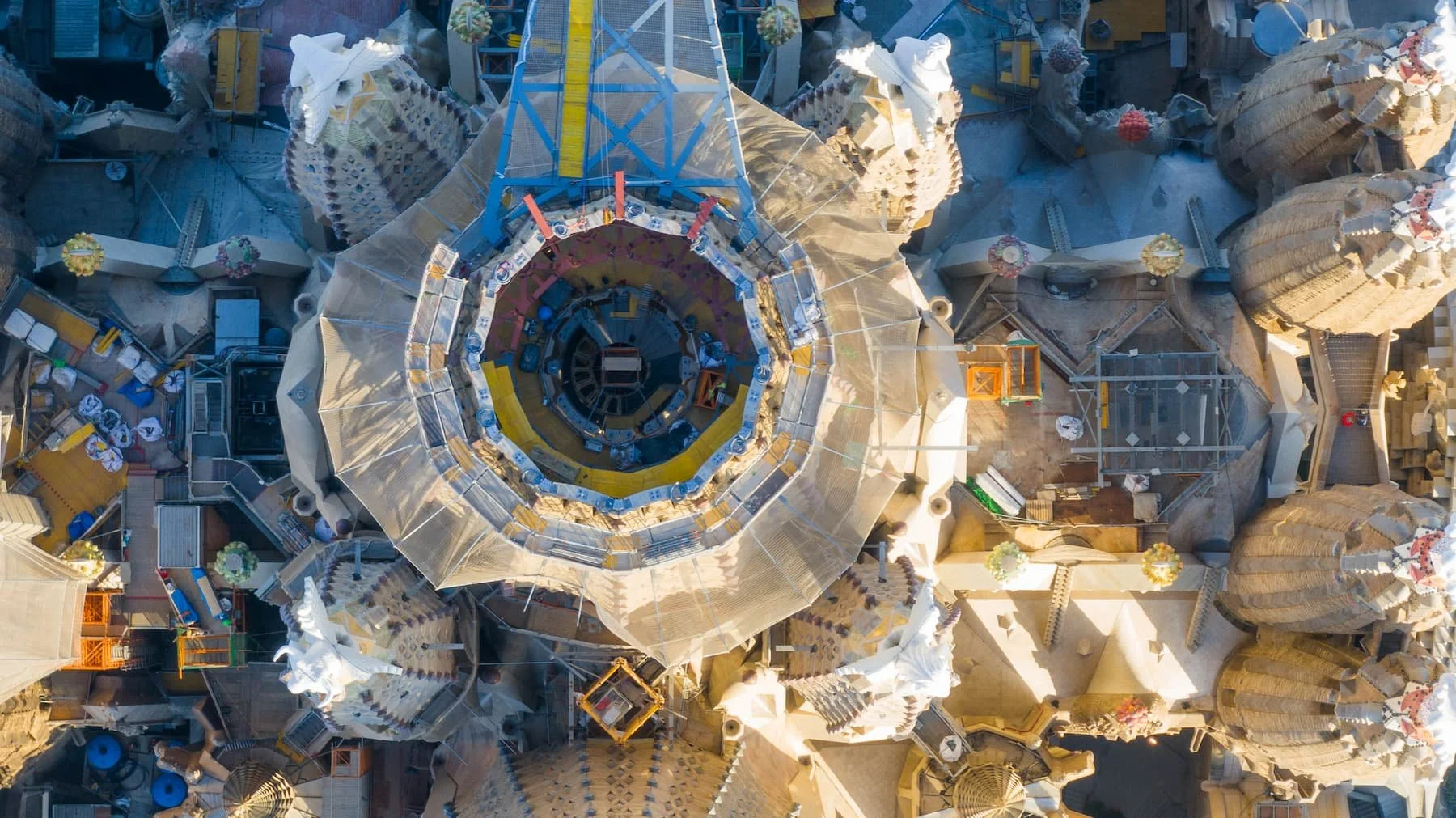
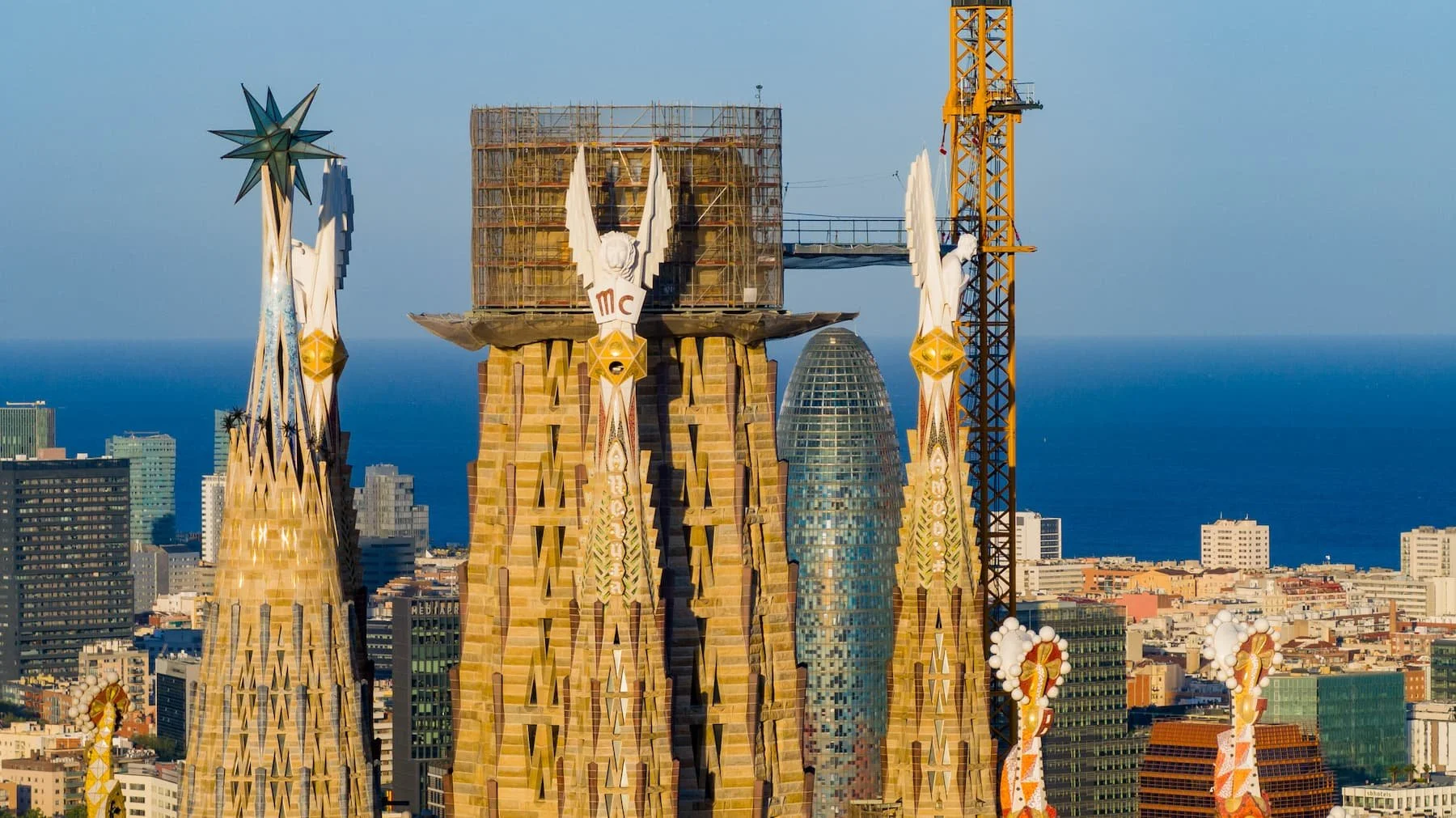
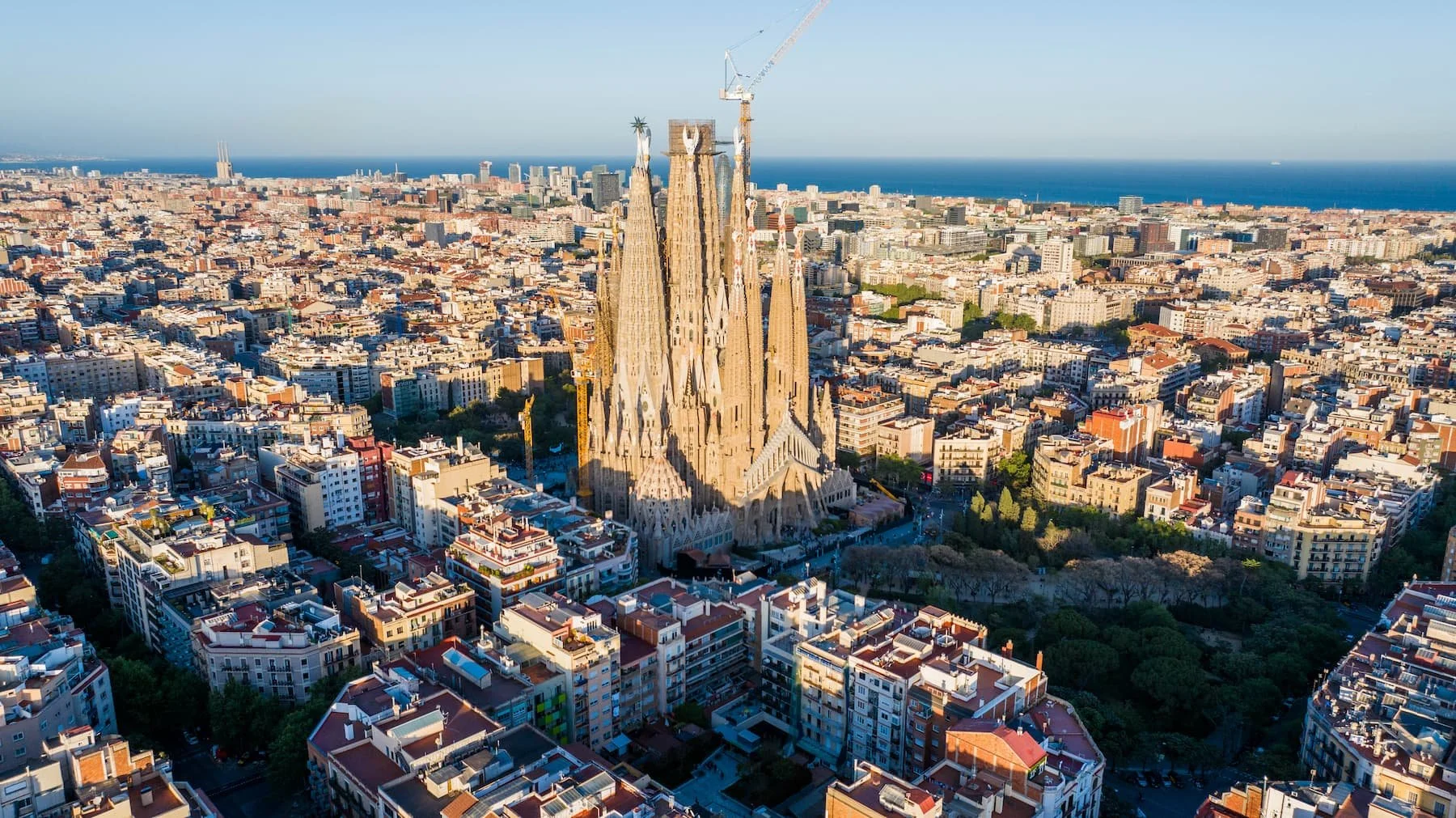
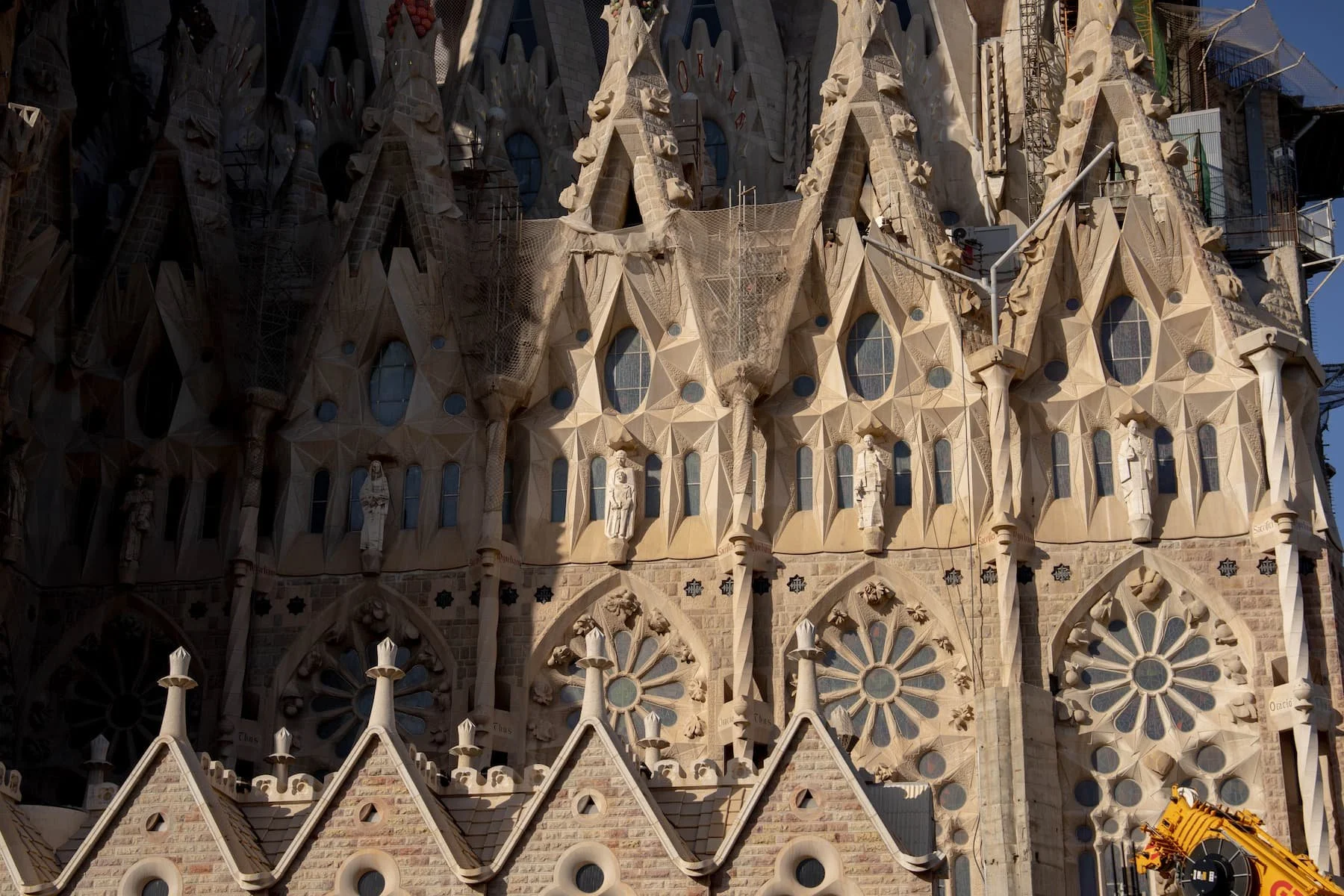
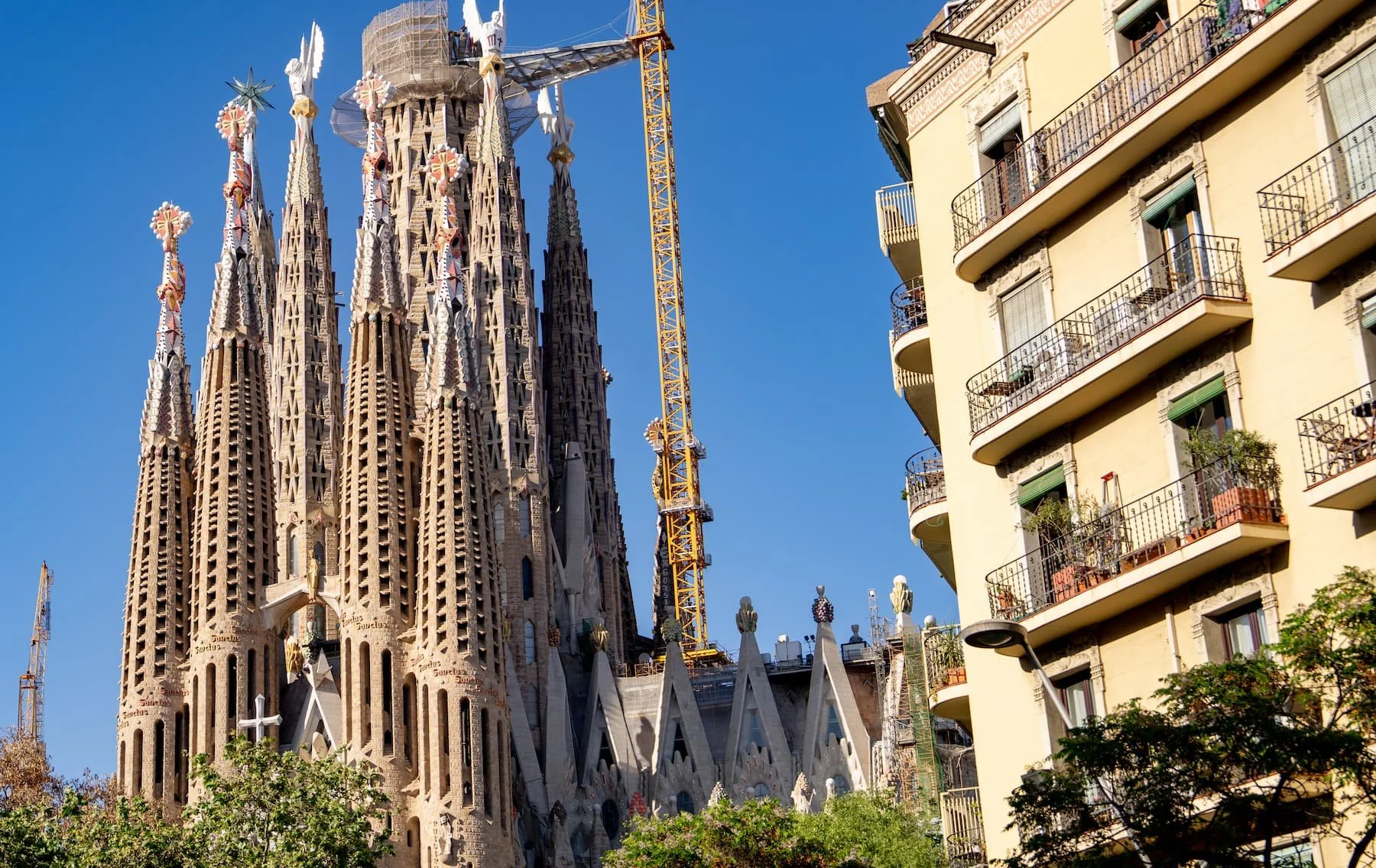
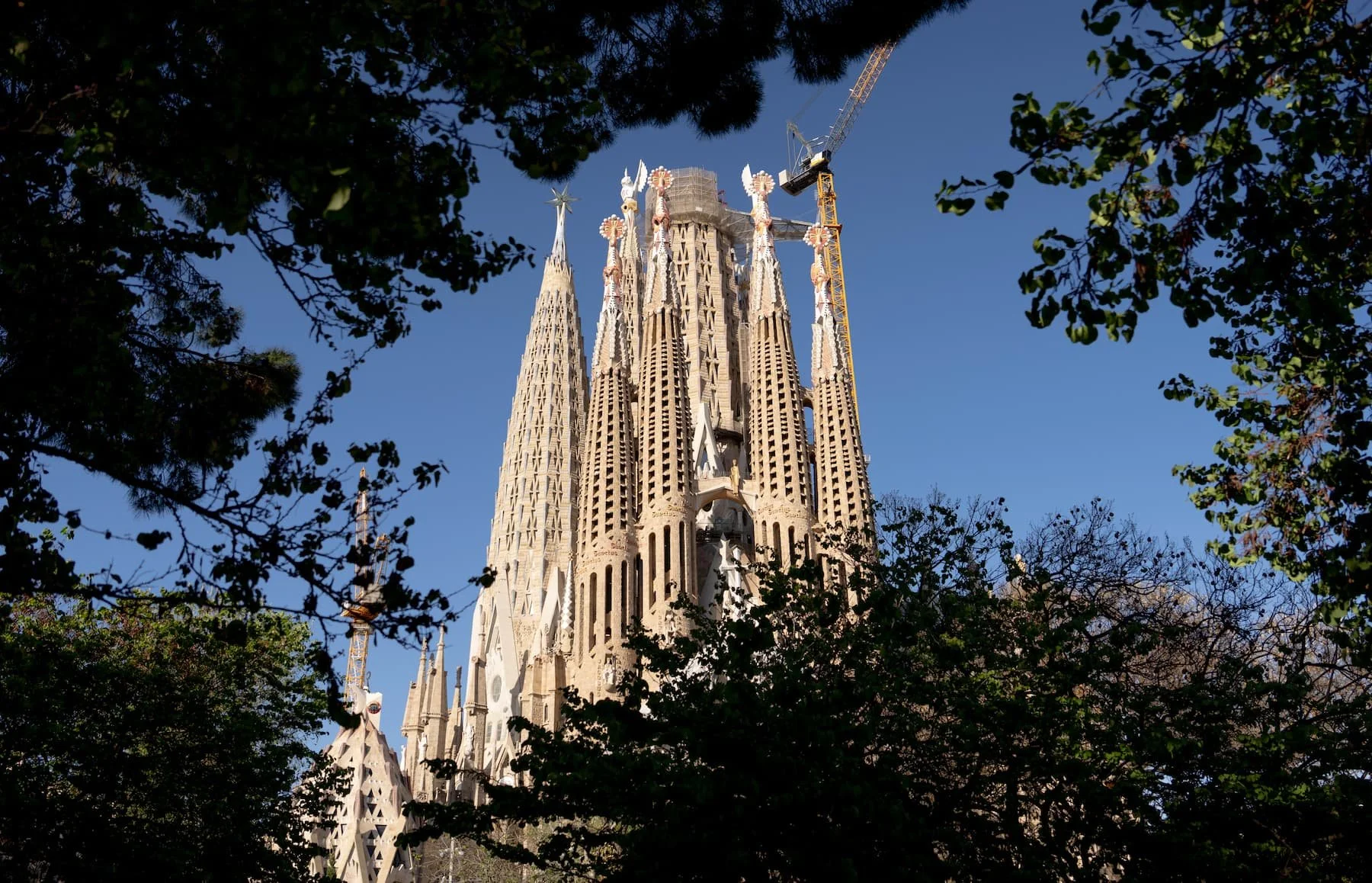
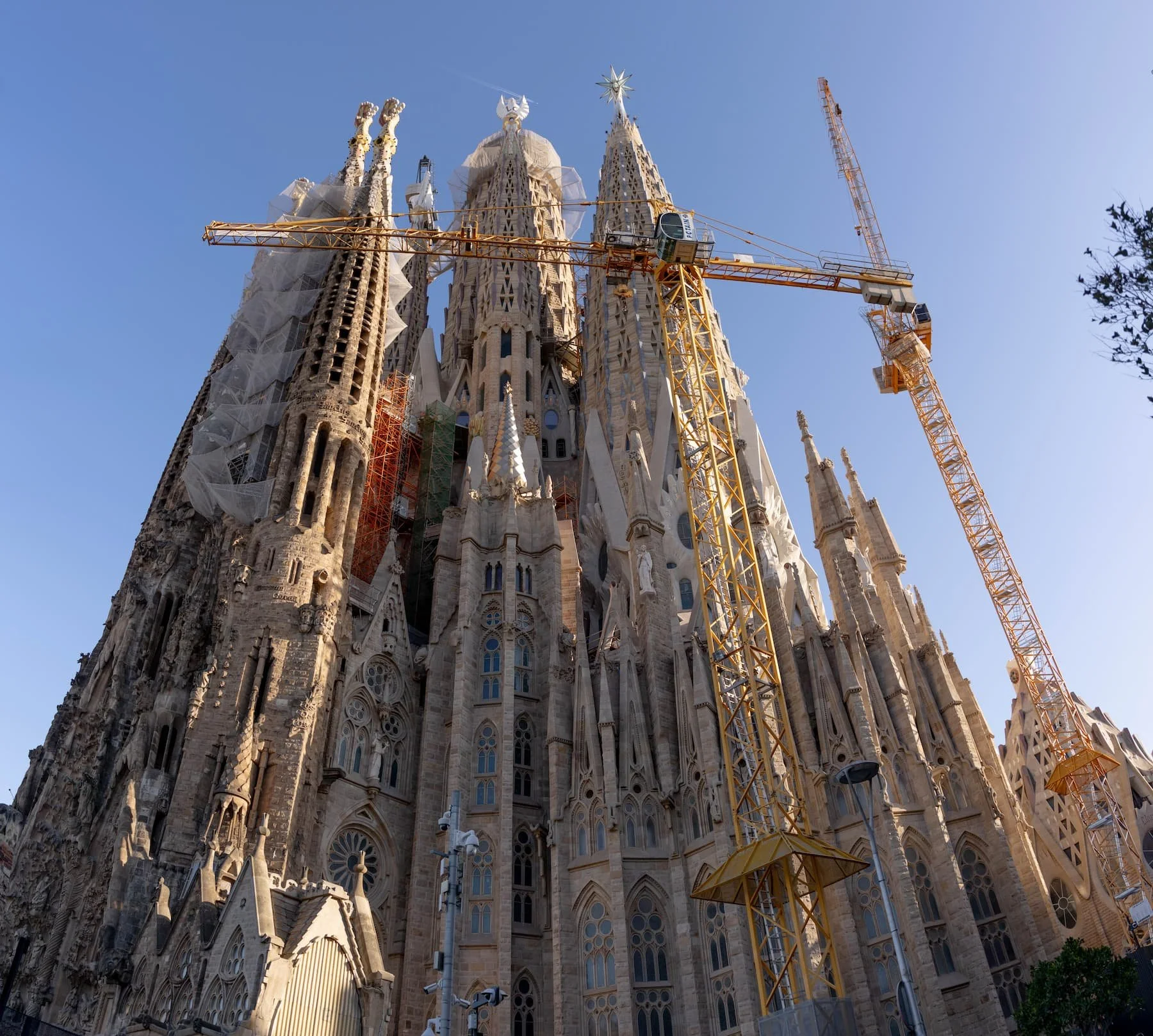
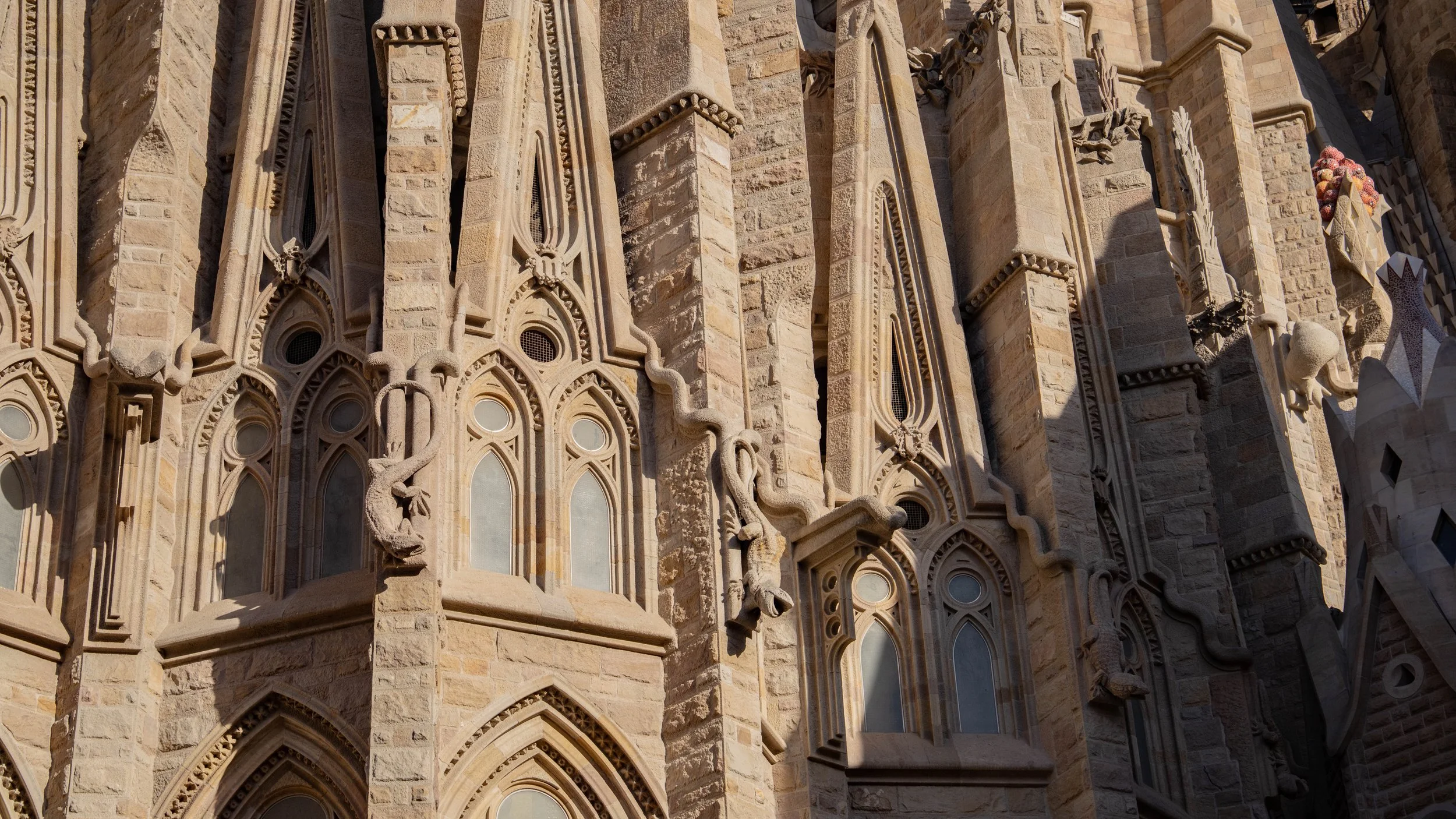
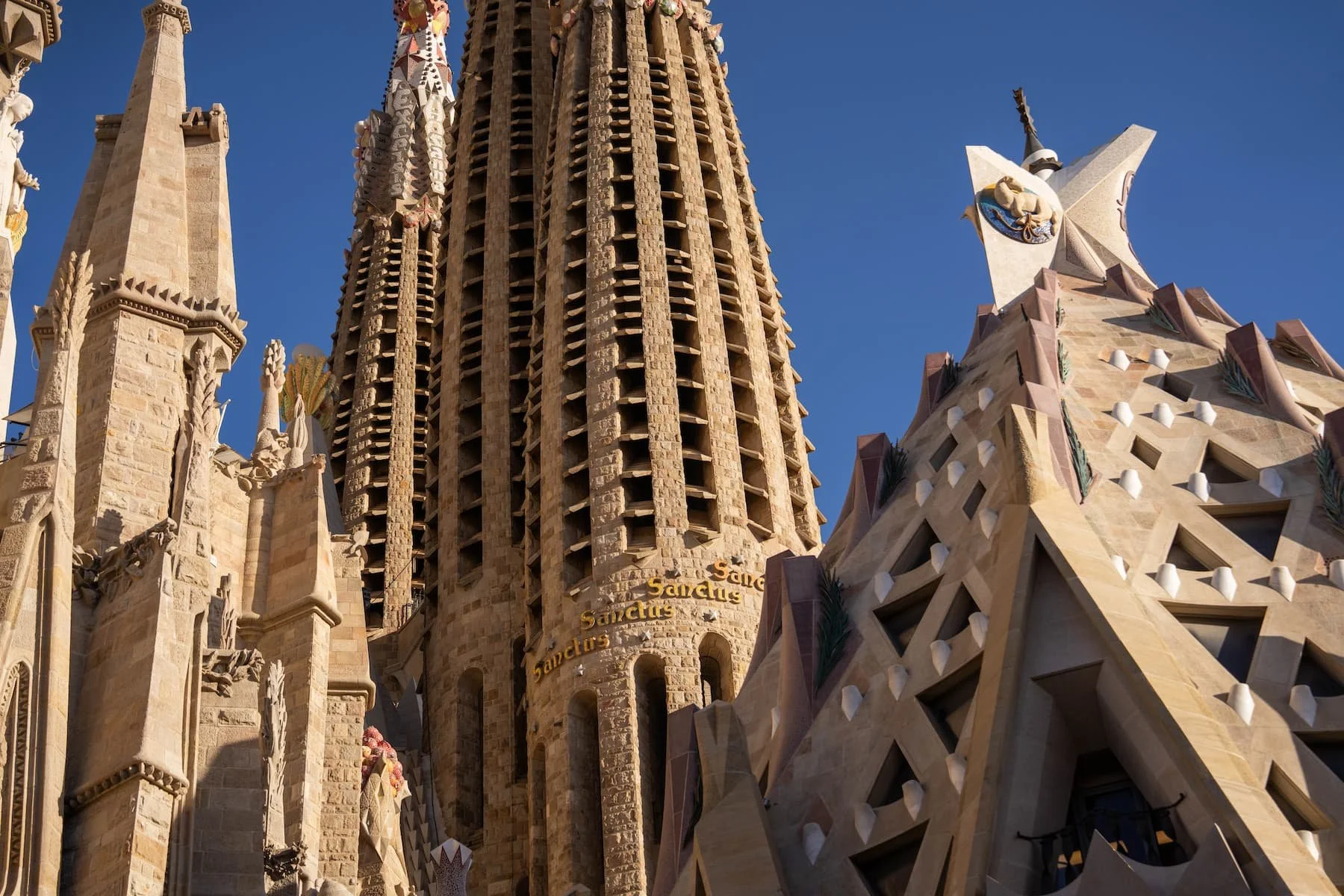
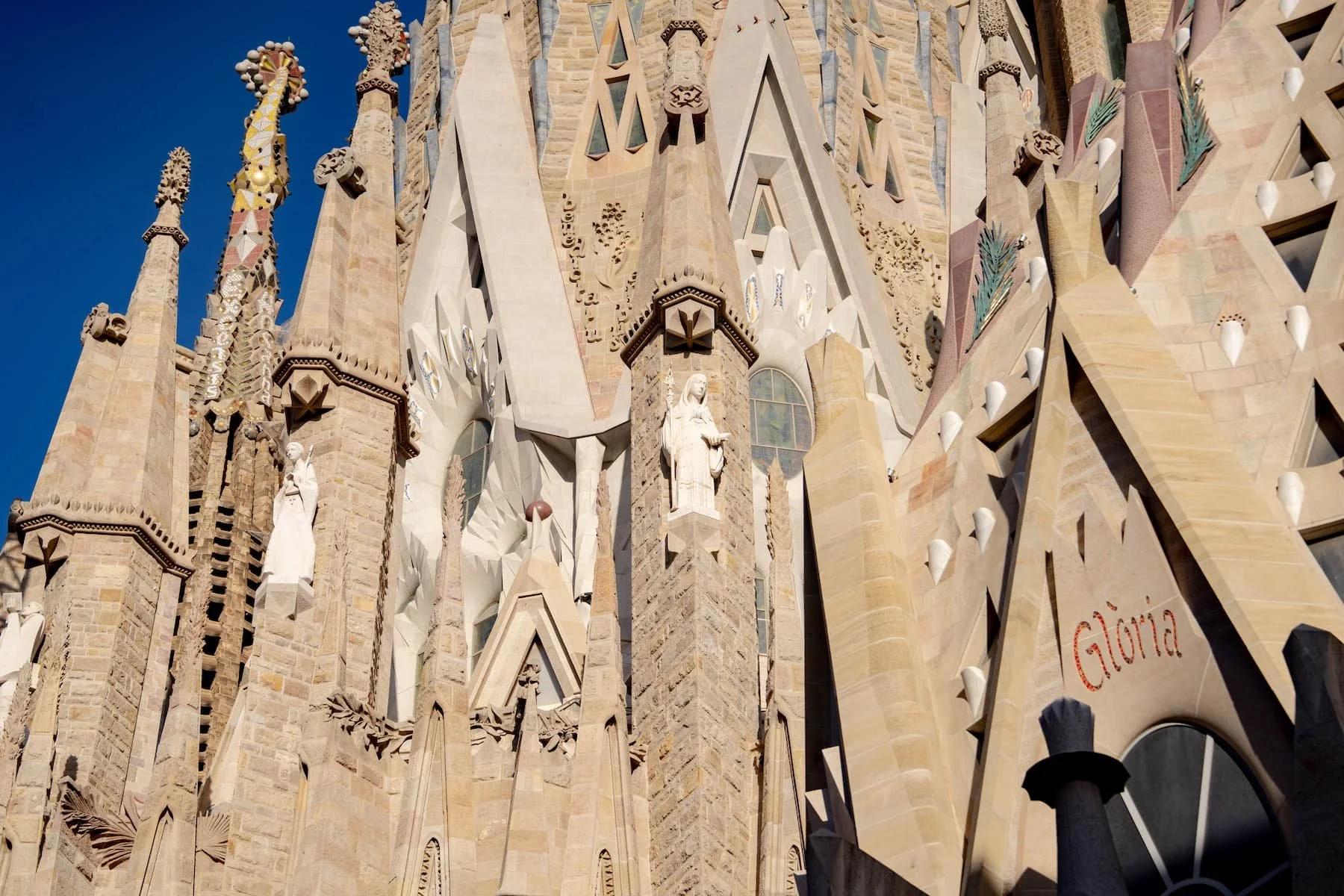
Ground and air on the same visit gave me two versions of the Sagrada Familia. From the street the Sagrada Família comes at you in pieces. Towers rise straight out of the tree line, catching gold light while the lower stone sits in shadow. Cranes crowd in beside the spires, a Liebherr arm swinging over the roofline, orange scaffolding clinging to one flank. Move around the base and the detail takes over. Stone lizards climbing near the windows, the star spire on the Tower of Mary against a hard blue sky, the winged evangelist symbol perched on the roof next to the word Glòria. Framed through the plane trees from a neighboring street, the whole thing glows above the rooftops like it belongs to another century. Then I put the drone up, and the argument settled itself. From overhead the basilica stands alone above a low tide of apartment blocks, taller than anything between here and the sea. Drop in tighter and the summit reveals the work still underway, netting and cranes wrapped around the highest point. Straight down, the building flattens into a drawing, a star-shaped footprint dropped into the center of Cerdà's grid.
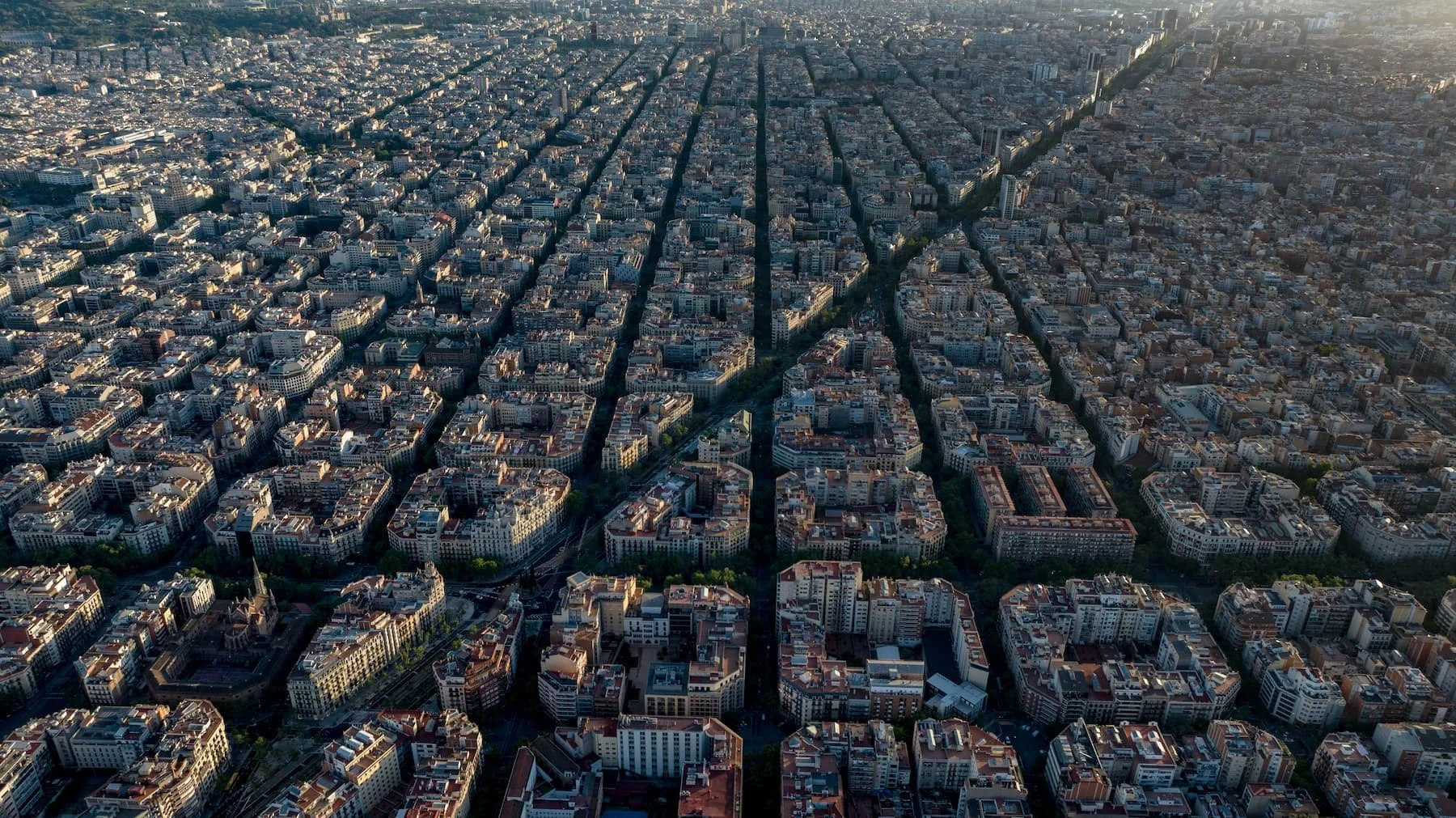
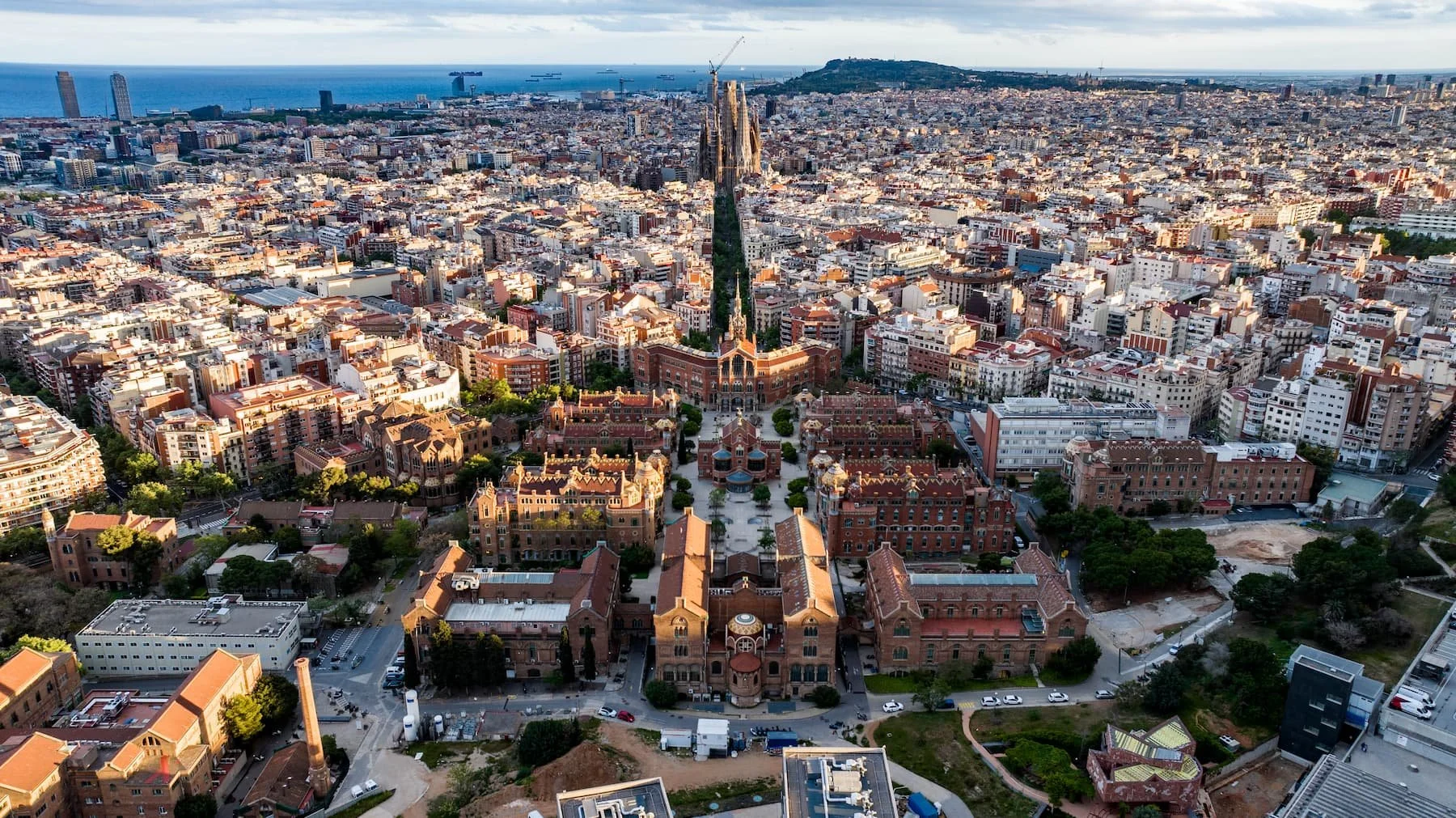
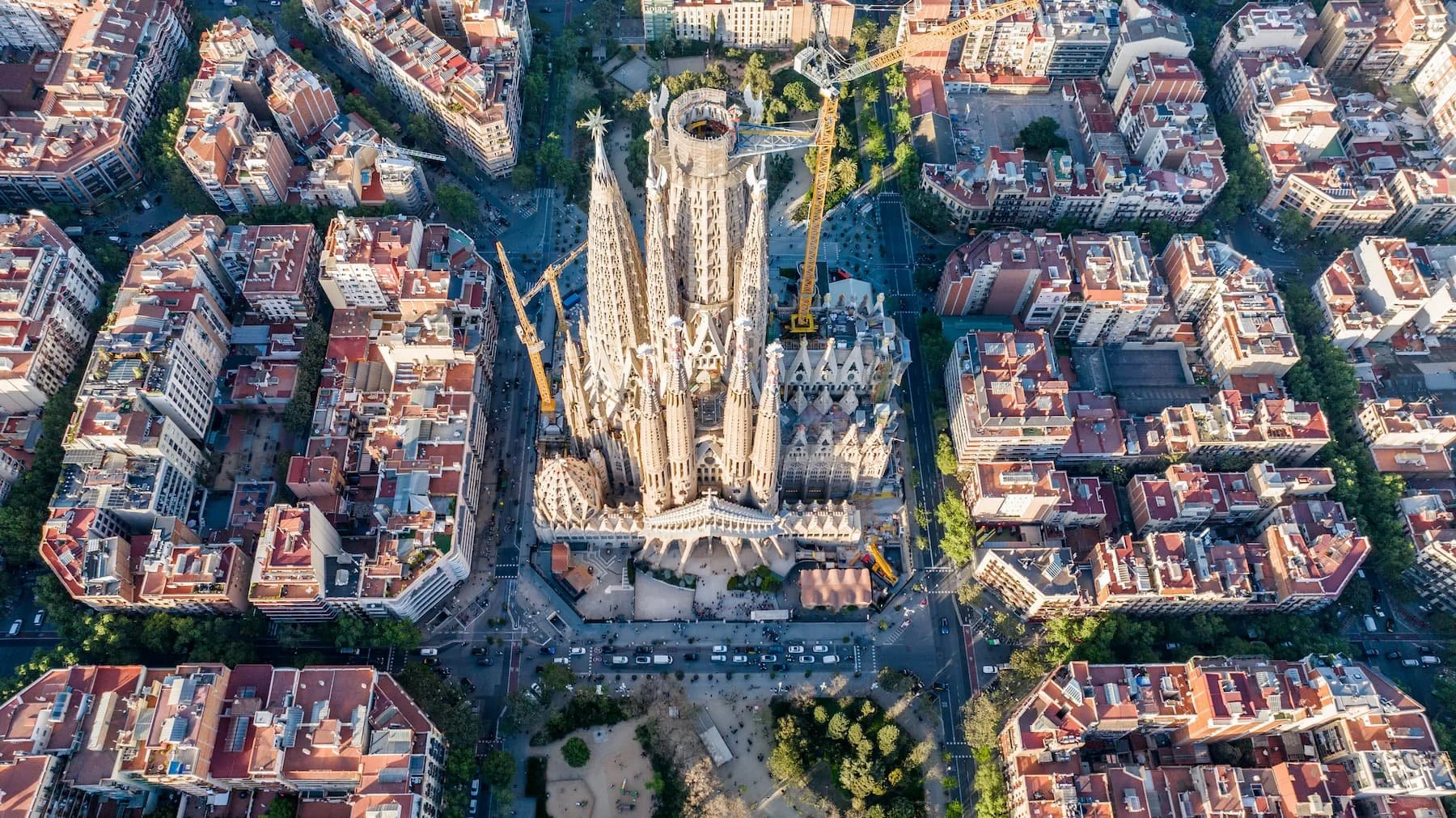
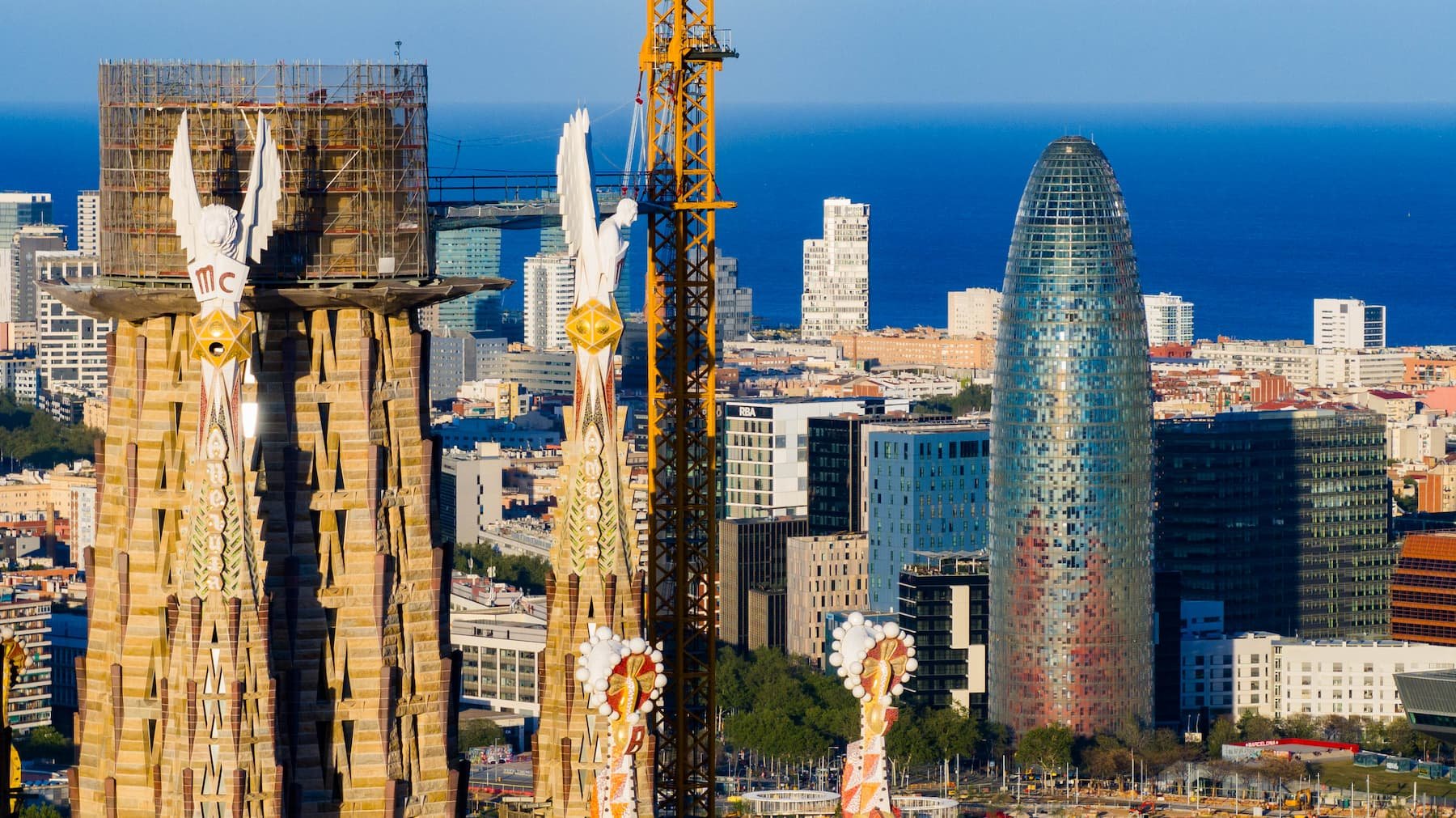
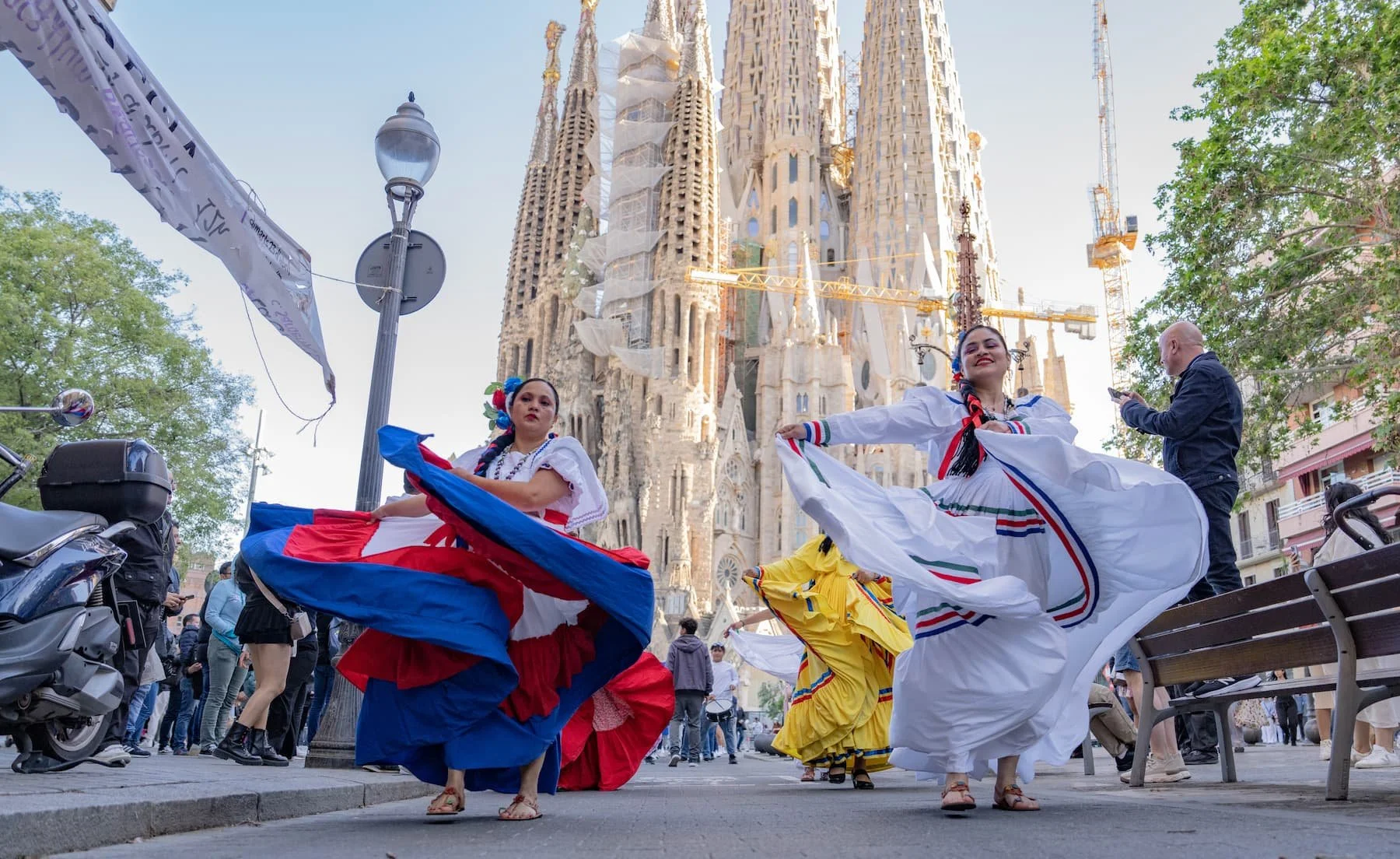
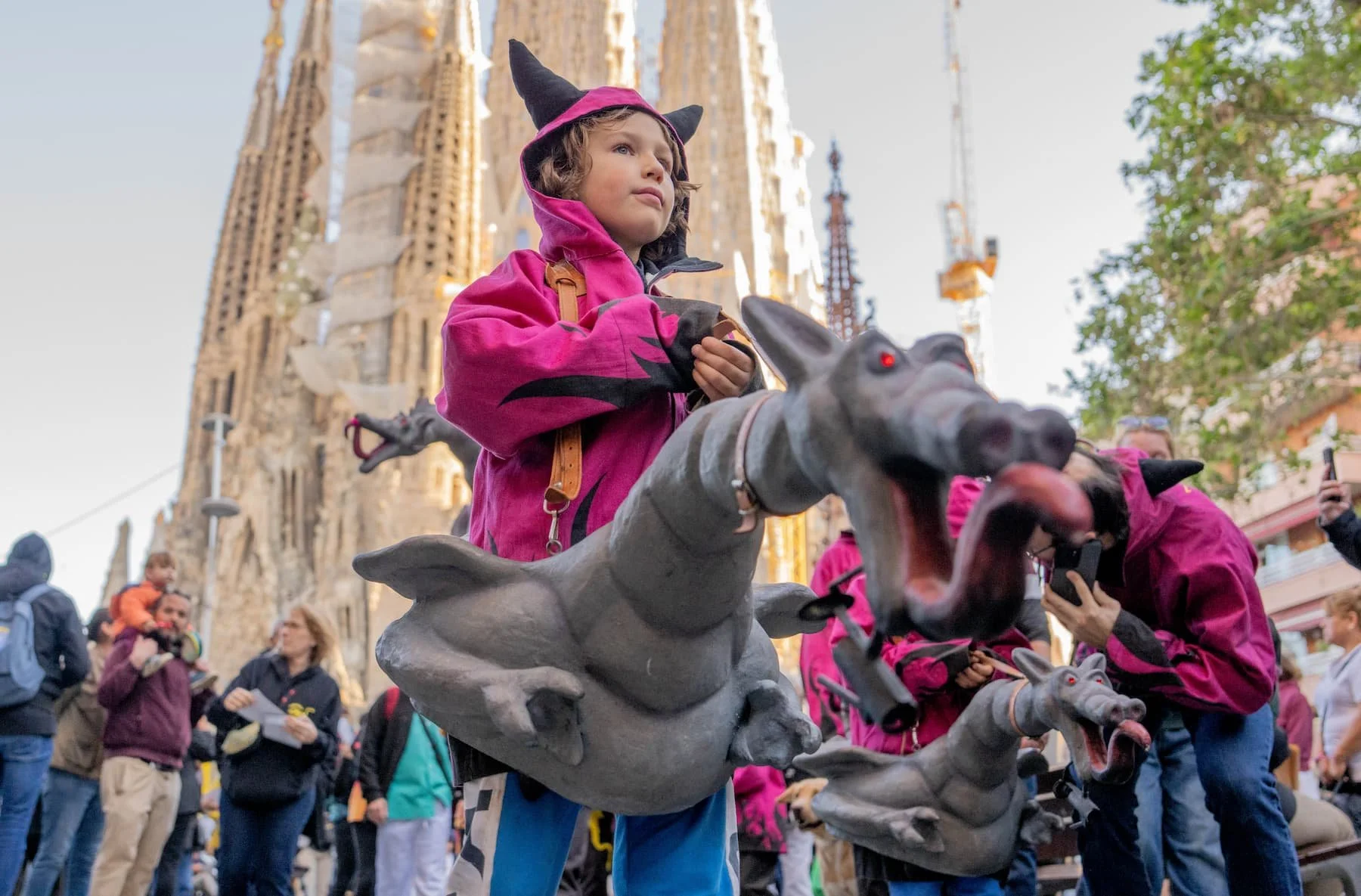
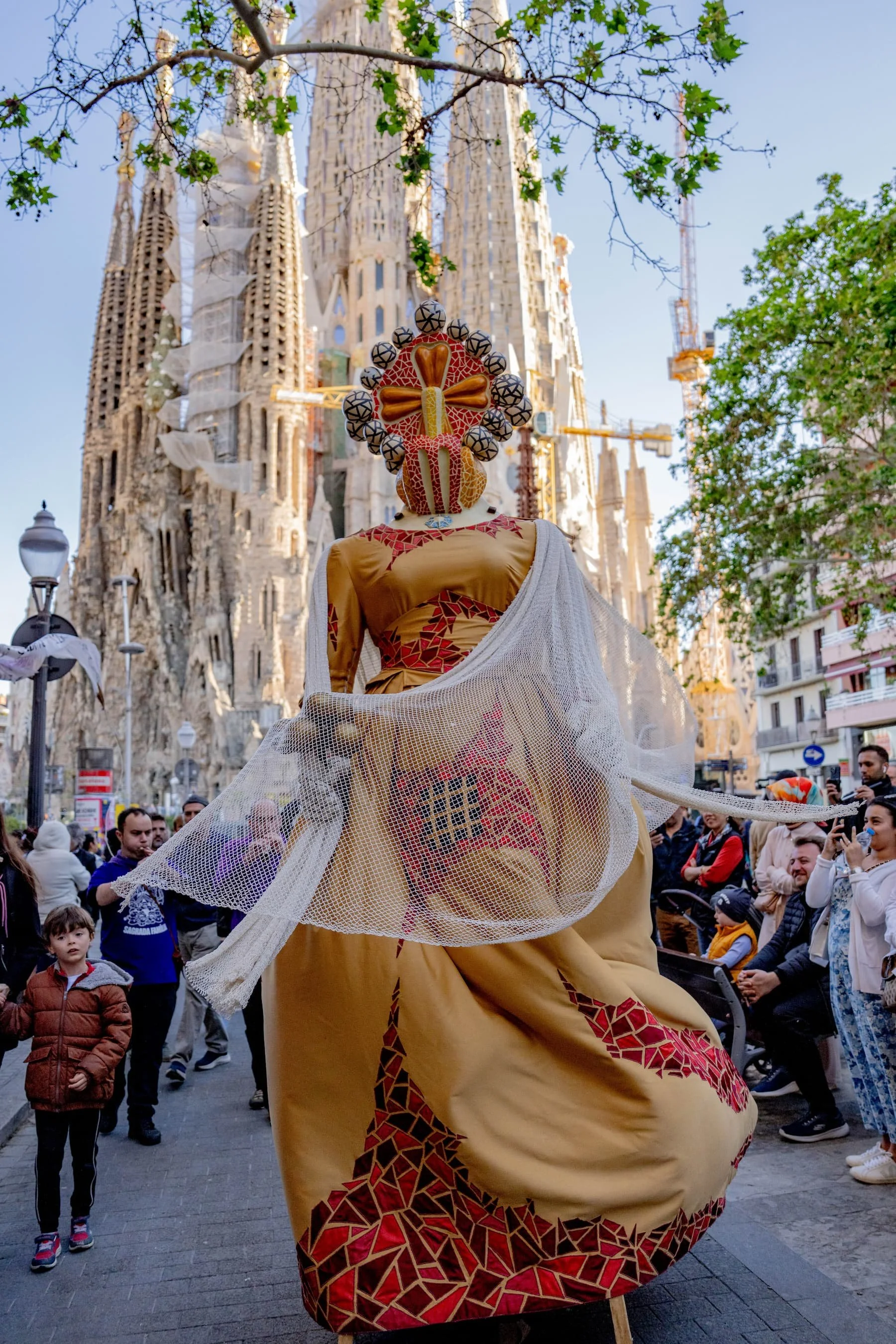
What I did not plan for was the parade. Right in the middle of the shooting, a festival rolled through the streets at the foot of the basilica. A gegant in a gold and red mosaic gown swayed above the crowd, and when I looked at its crown I stopped cold. The headpiece copied the tower tops almost exactly, the same red sunburst ringed with white knobs that Gaudí put on his spires. Somebody had built the church into a costume. A kid in a pink dragon hood stood beside a snarling festival dragon, all red eyes and open jaws, with the towers rising behind him out of focus. This is the part of Barcelona you cannot schedule. I came for a building and walked into a living tradition happening in its shadow, the old stone and the street festival sharing one frame. Landmarks tell you where you stood. The parade told me what the day actually felt like.
Day Three
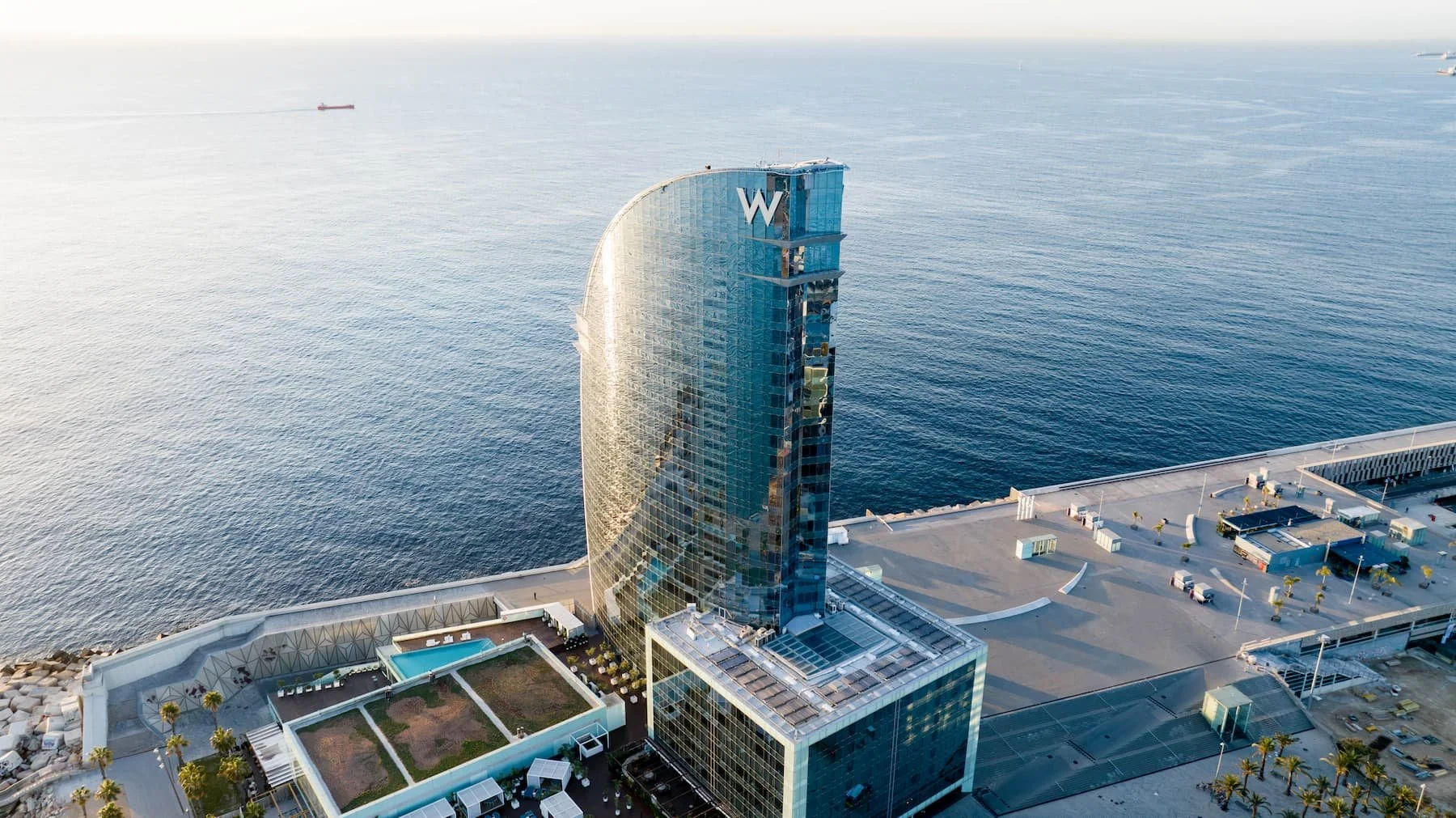
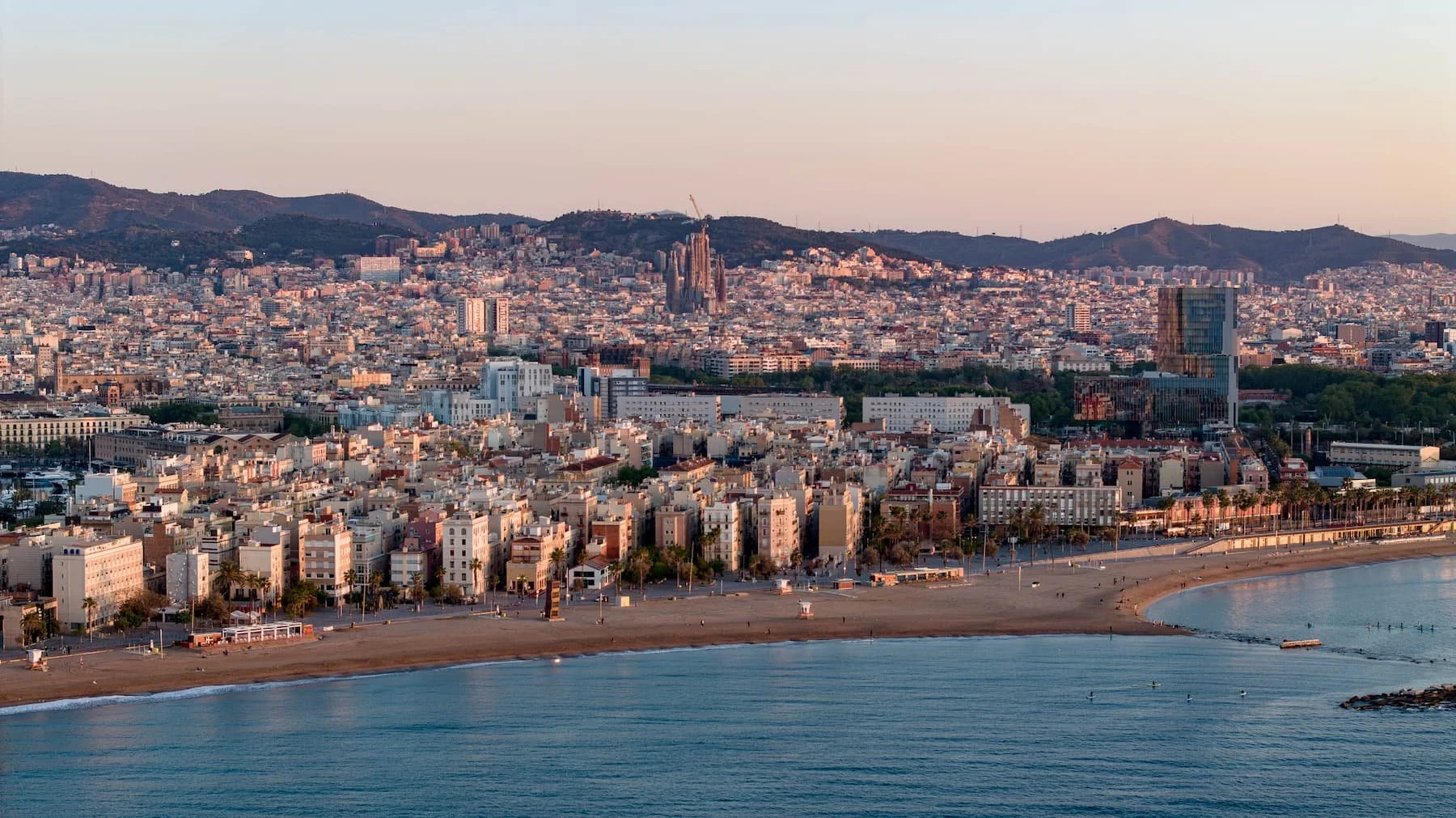
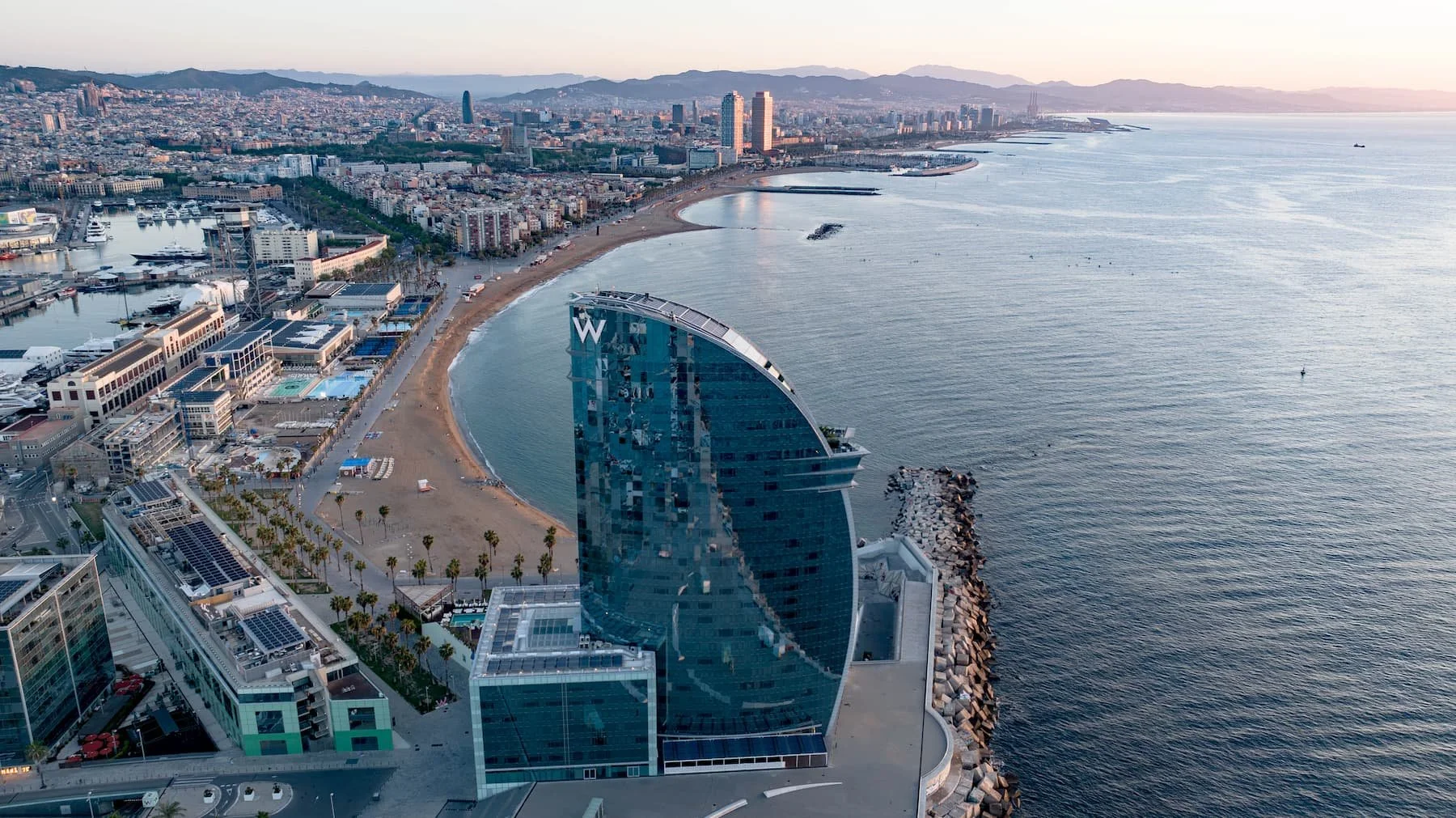
On the last morning I got up before the city did. The drone went up into a quiet sunrise, and Barcelona finally held still. The W hotel stood out first, its glass sail curving against the flat calm water, the whole facade catching the first pink light off the sea. From up there the shape of the city made sense. The port and its yachts on one side, the long clean arc of the Barceloneta beach on the other, and the water going soft and silver all the way to the horizon. A single ship sat far out on the glass. The beach was nearly empty, just a few early swimmers and a couple of paddleboarders cutting slow lines across the bay. This is the hour photographers chase and rarely get. No crowds, no noise, just warm light and a city breathing easy before the day starts.
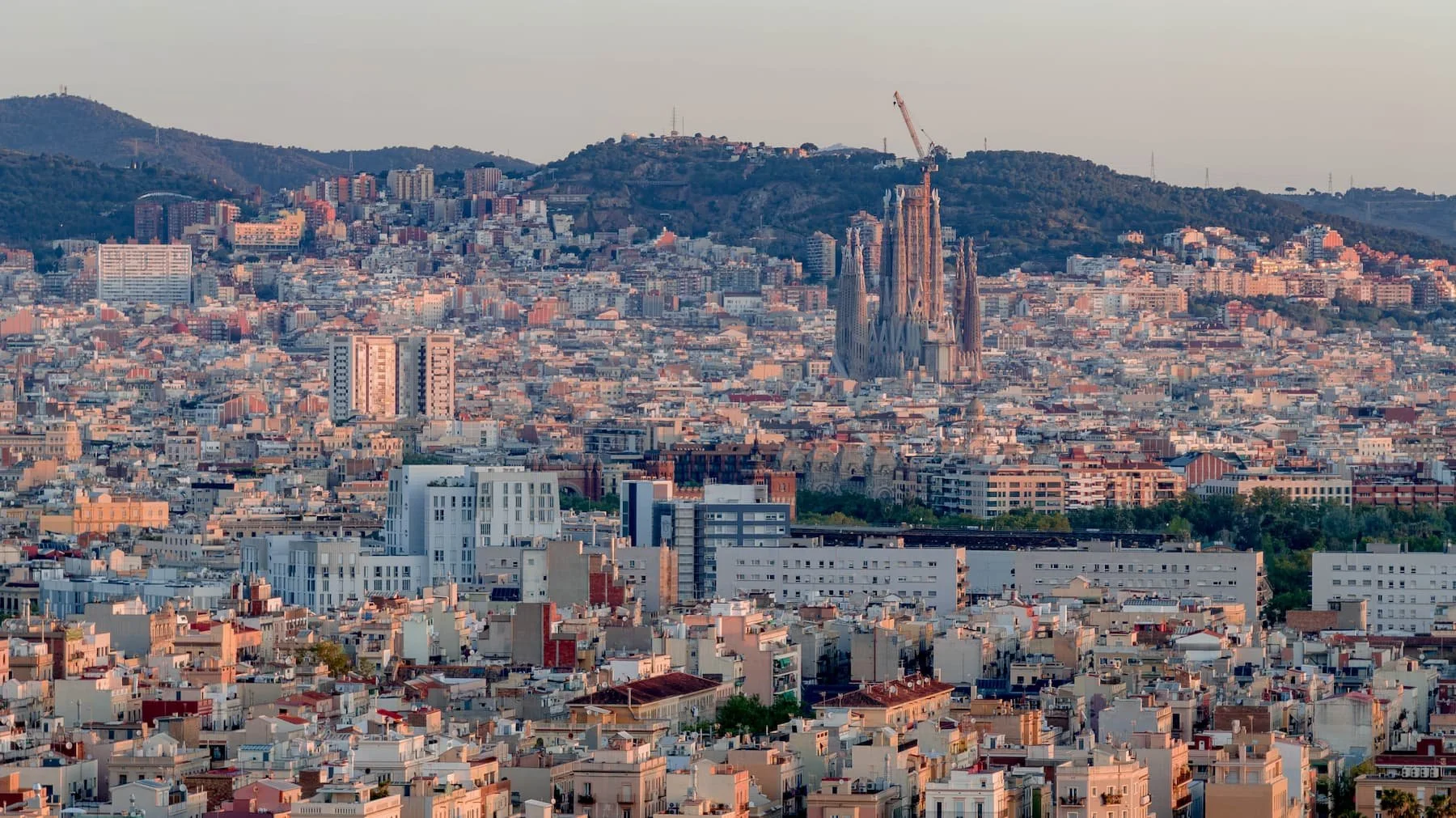
Then I turned the drone inland and there it was again. The Sagrada Família standing up over the rooftops, catching the same morning light, framed by the hills of Barcelona behind it. After three days of chasing that building from the street, from the base, from directly overhead, here it was one more time, small in the distance but impossible to miss, the tallest thing on the skyline. That felt like the right way to end the trip. A city that runs from the mountains down to the sea, packed with life and history and one unfinished church holding the whole view together. Barcelona gave me monuments and quiet streets, a festival I stumbled into, and a sunrise worth waking up for. Next stop, Italy. But this city set a high bar.
The Cathedral of the Holy Cross and Saint Eulalia (Catalan: Catedral de la Santa Creu i Santa Eulàlia), commonly known as Barcelona Cathedral or La Seu, is the seat of the Archbishop of Barcelona and the principal Gothic monument of the city's old quarter. Construction of the present Gothic church began in 1298, during the reign of James II of Aragon, on a site that had held Christian places of worship since the fourth century, including a Romanesque cathedral consecrated in 1058. The main body of the building was carried out over roughly 150 years, reaching effective completion with the cloister around 1448.
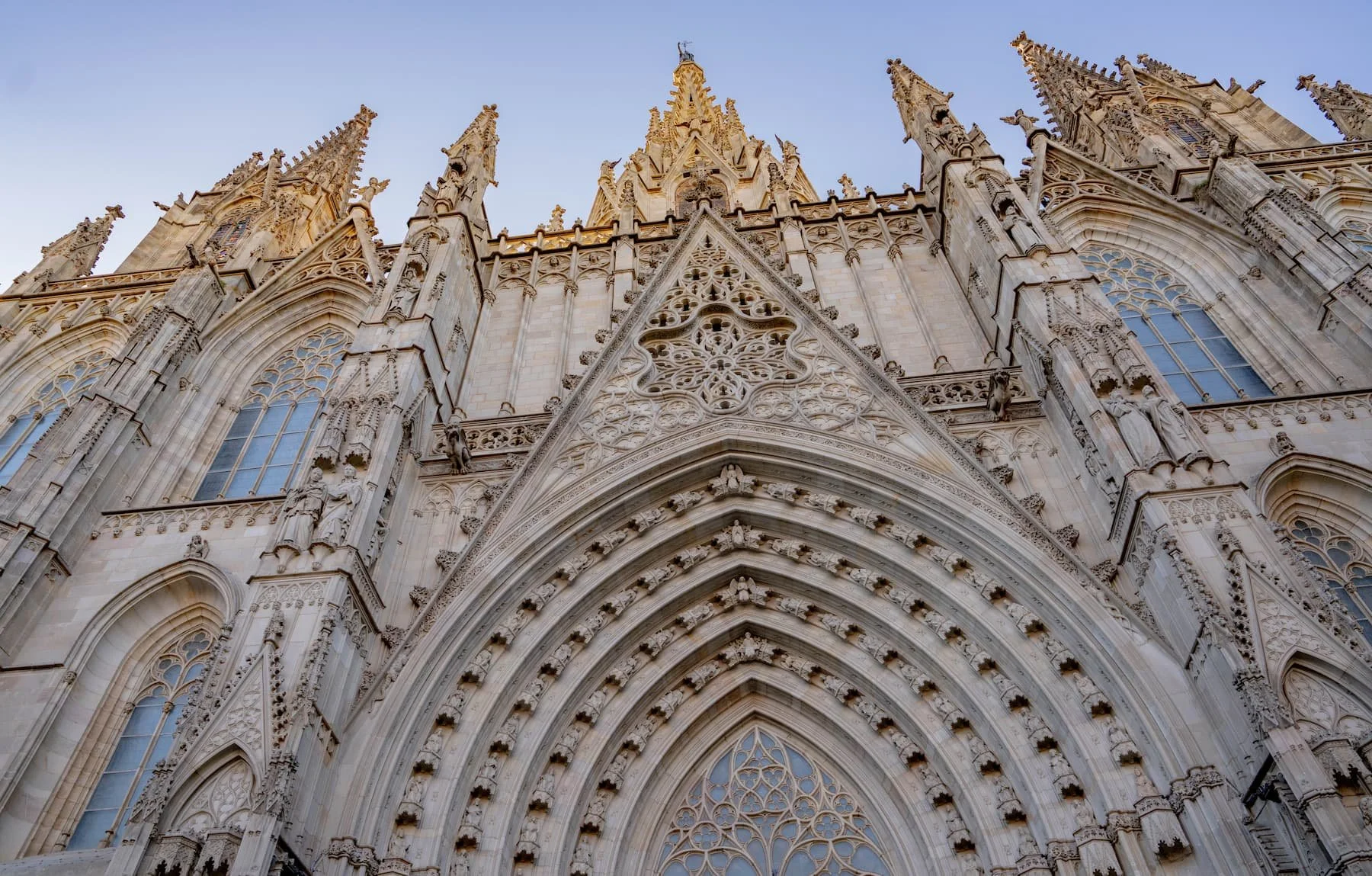
The cathedral is built in the Catalan Gothic style. It has three naves divided into five bays, with a single apse, and its external dimensions are approximately 93 metres long by 40 metres wide, the central nave rising to about 28 metres. In a characteristic feature of Catalan Gothic construction, the space between the buttresses of the aisles is occupied by secondary chapels that ring the building, each bay opening onto two inward-facing chapels. The interior is notable for its ribbed vaulting and large number of carved keystones, and for the crypt beneath the high altar containing the sarcophagus of Saint Eulalia, a co-patron of the city.
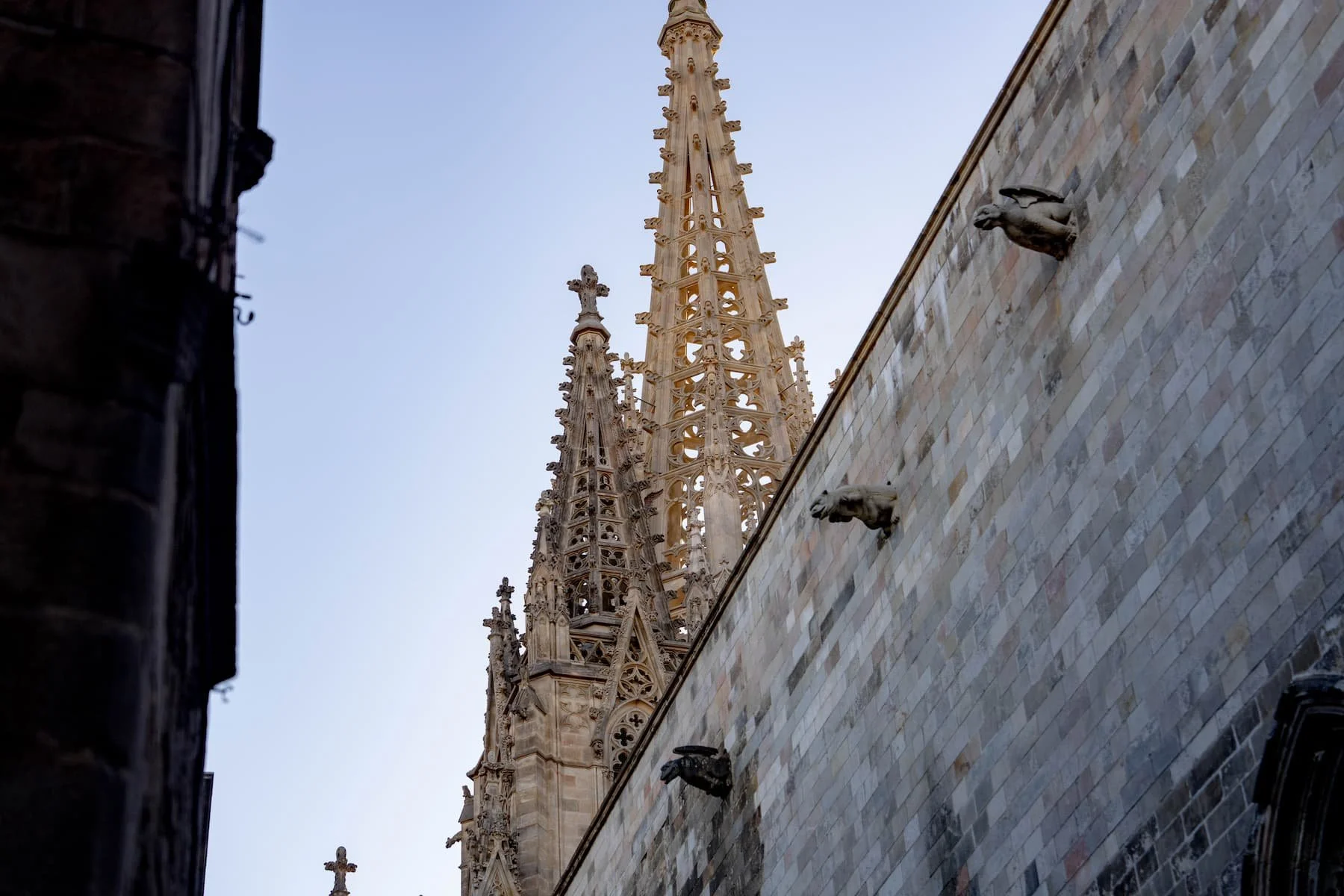
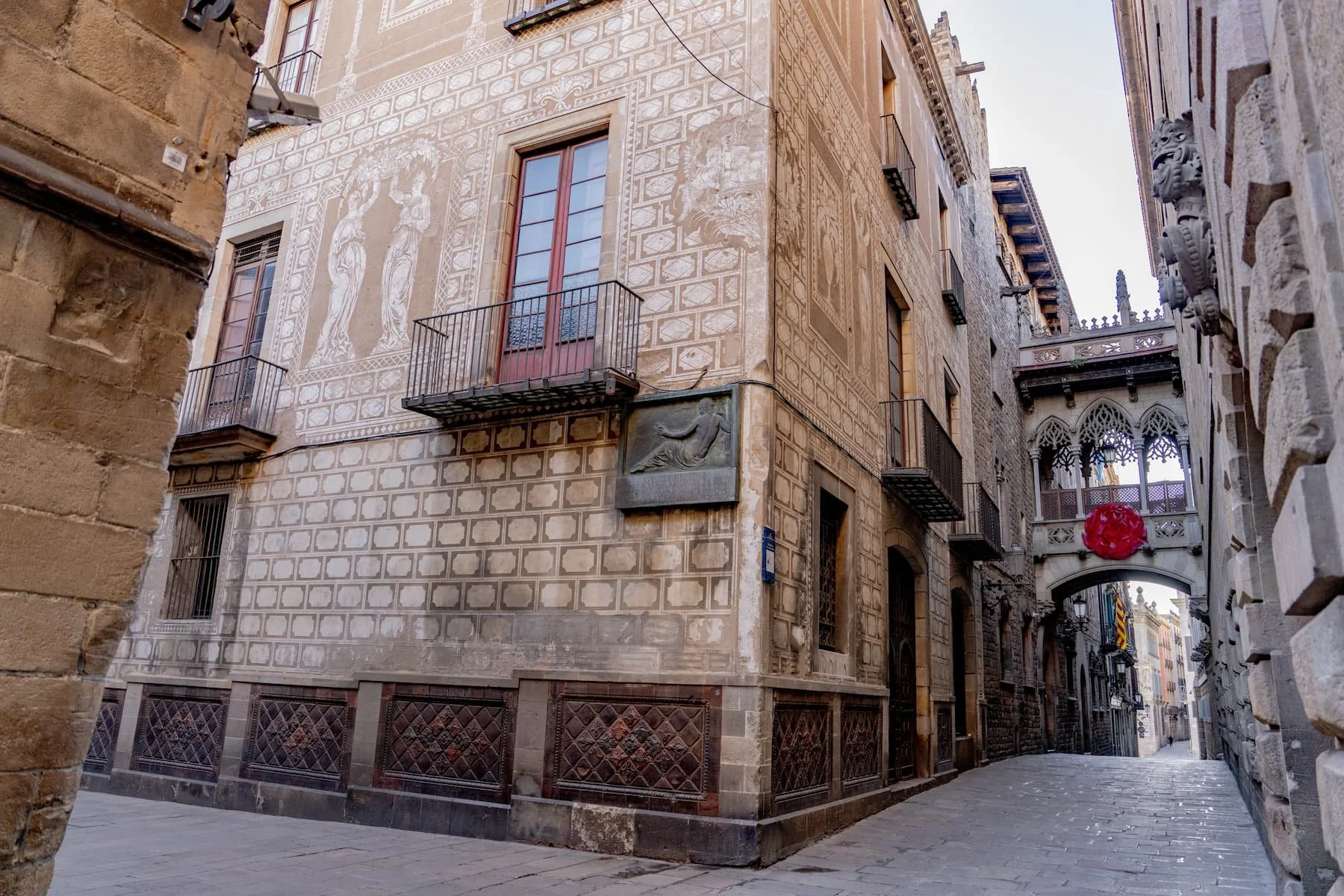
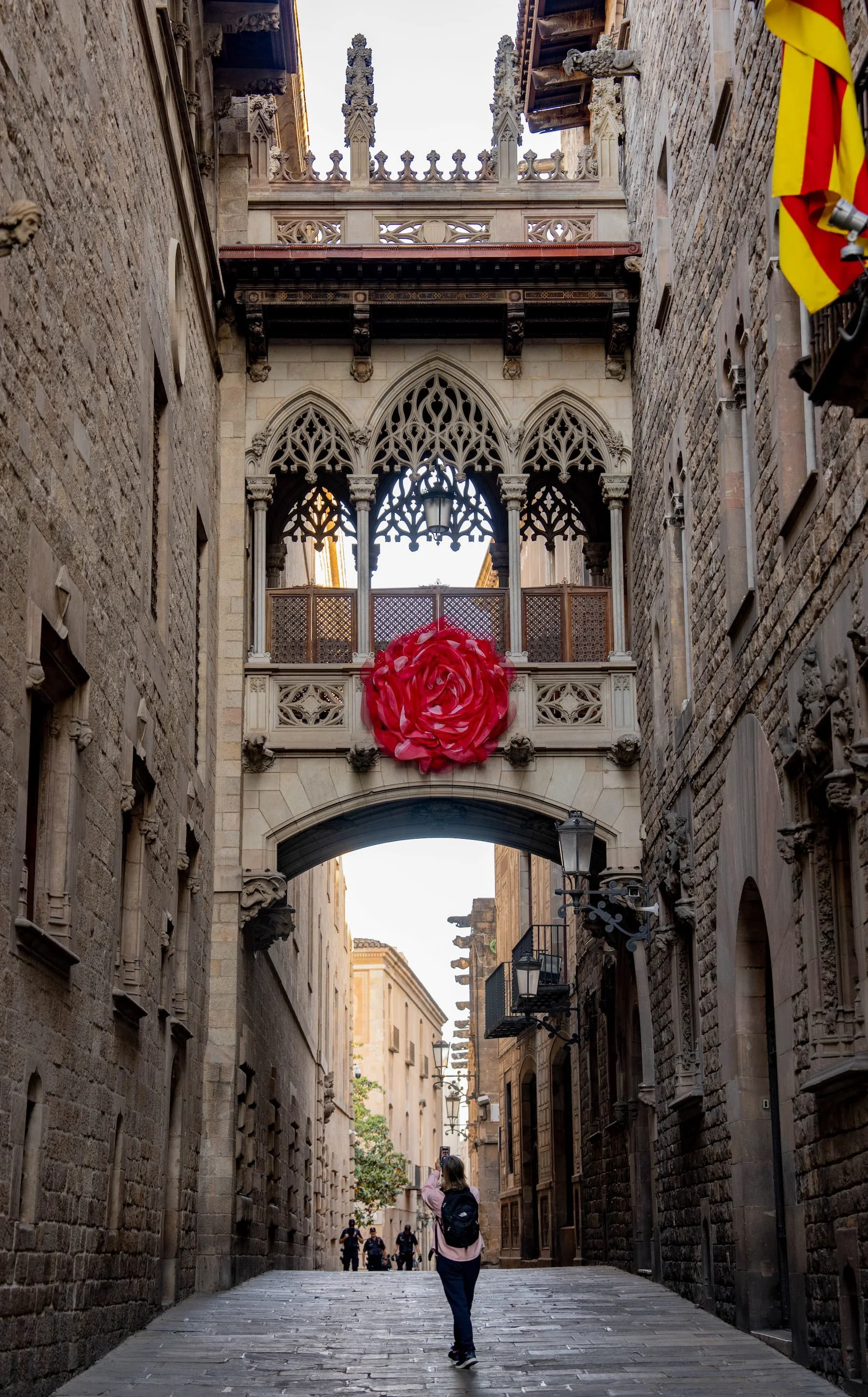
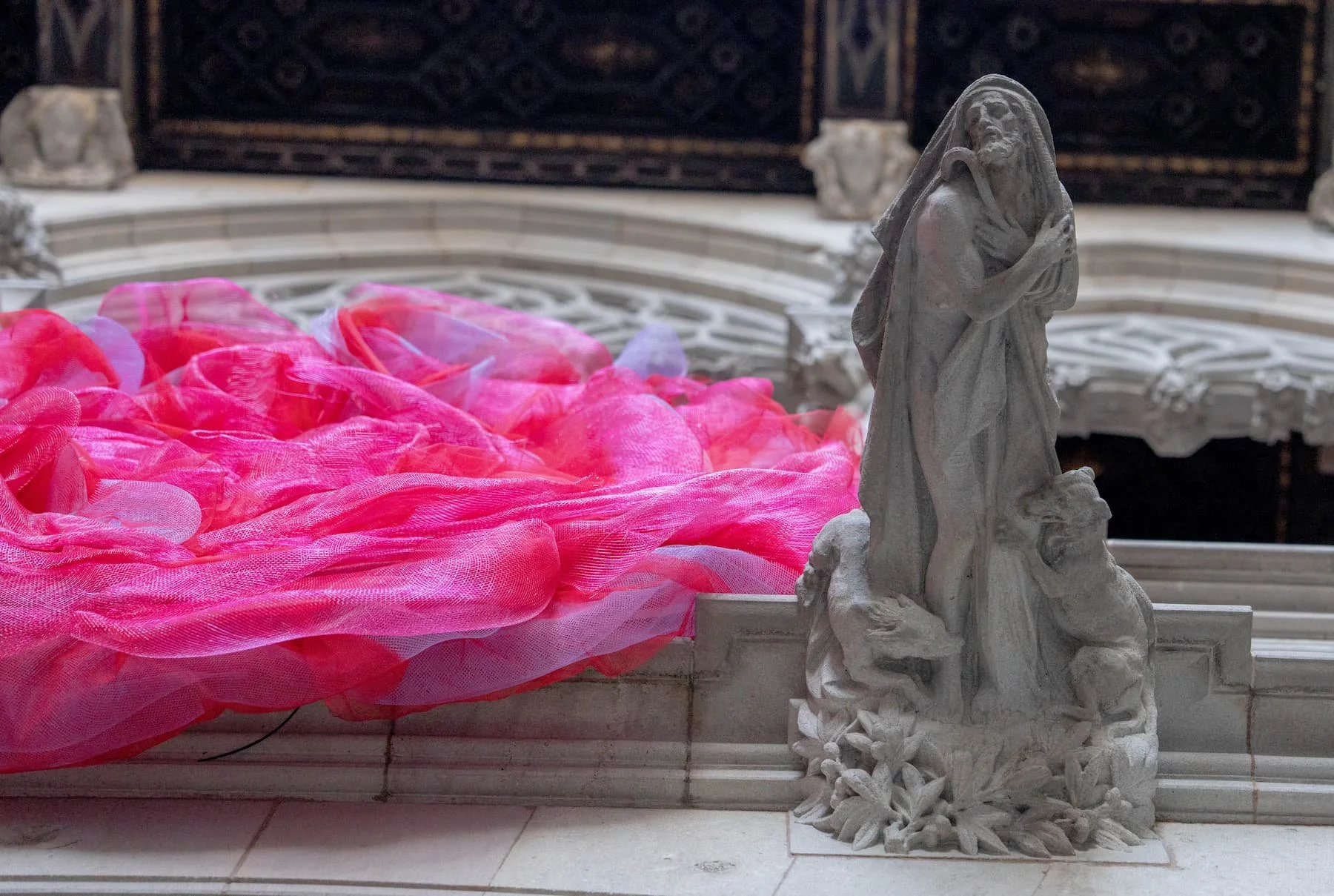
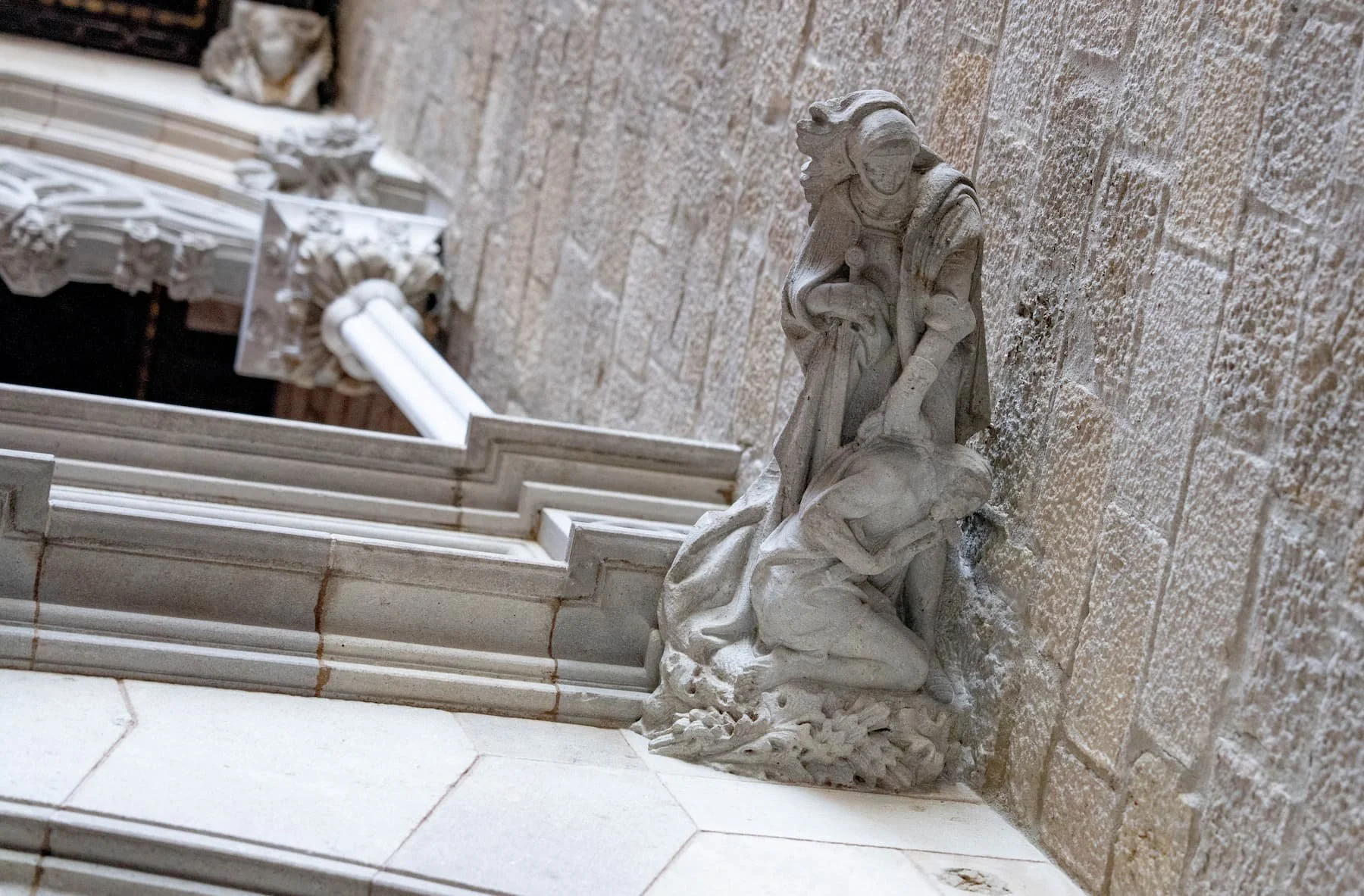
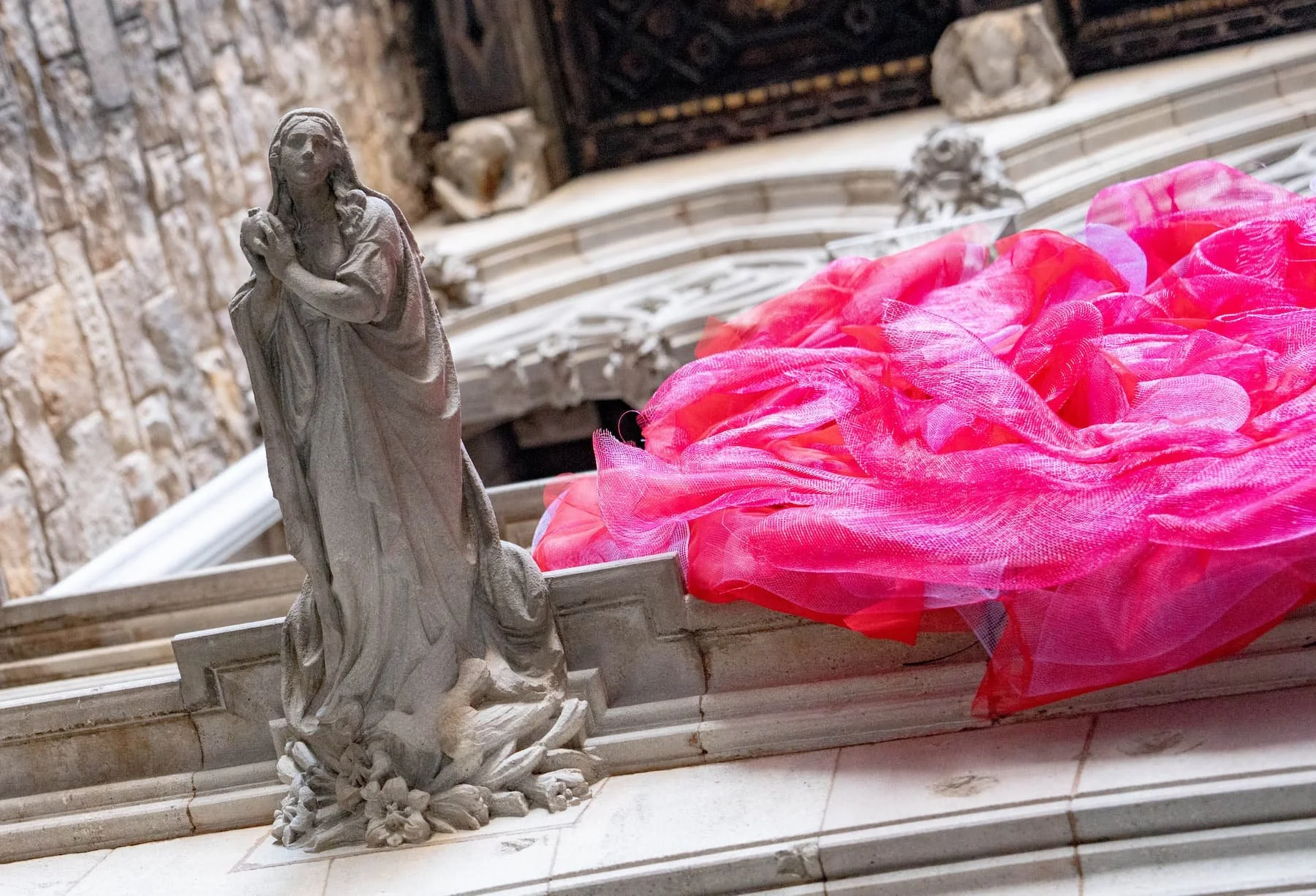
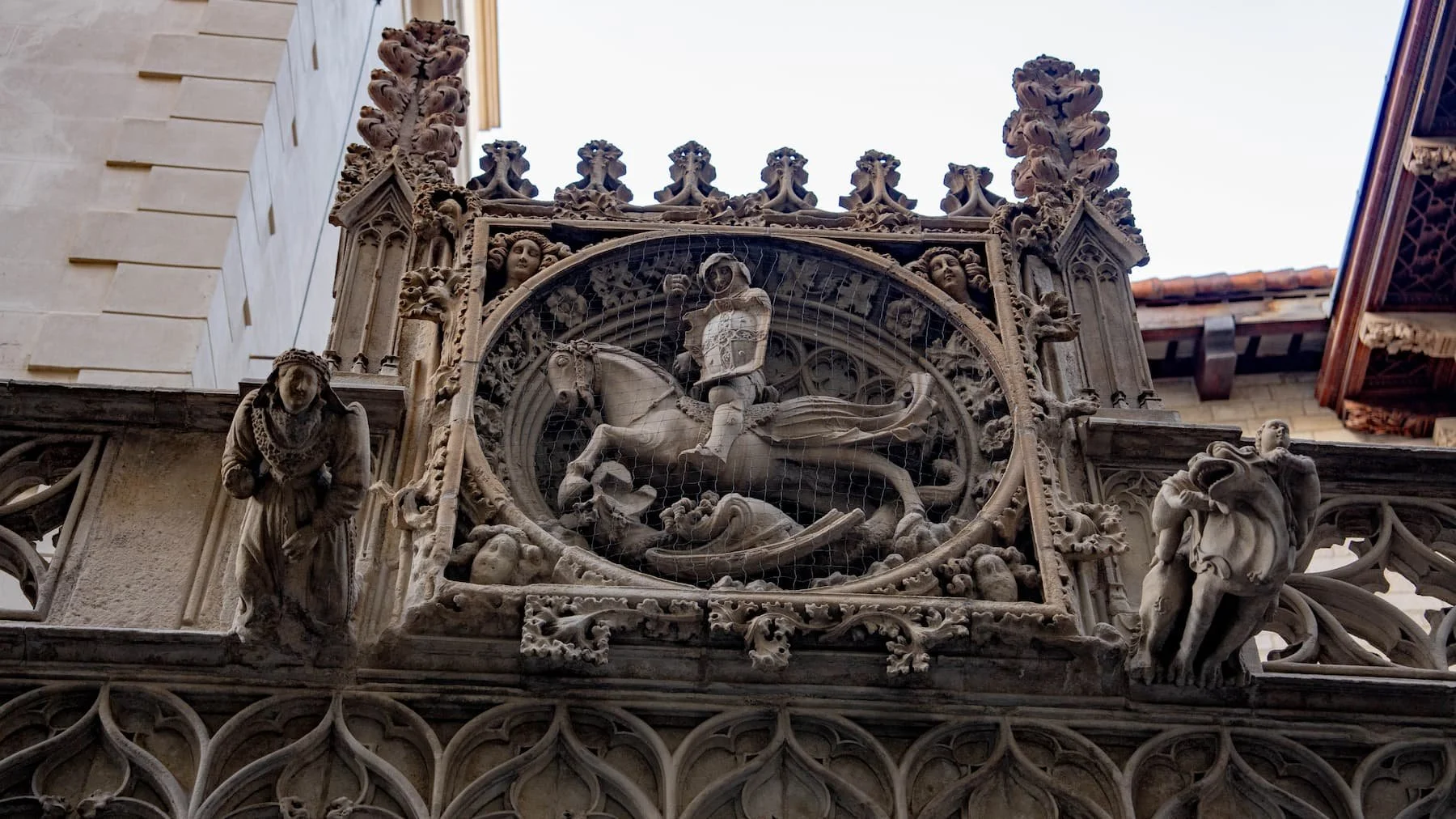
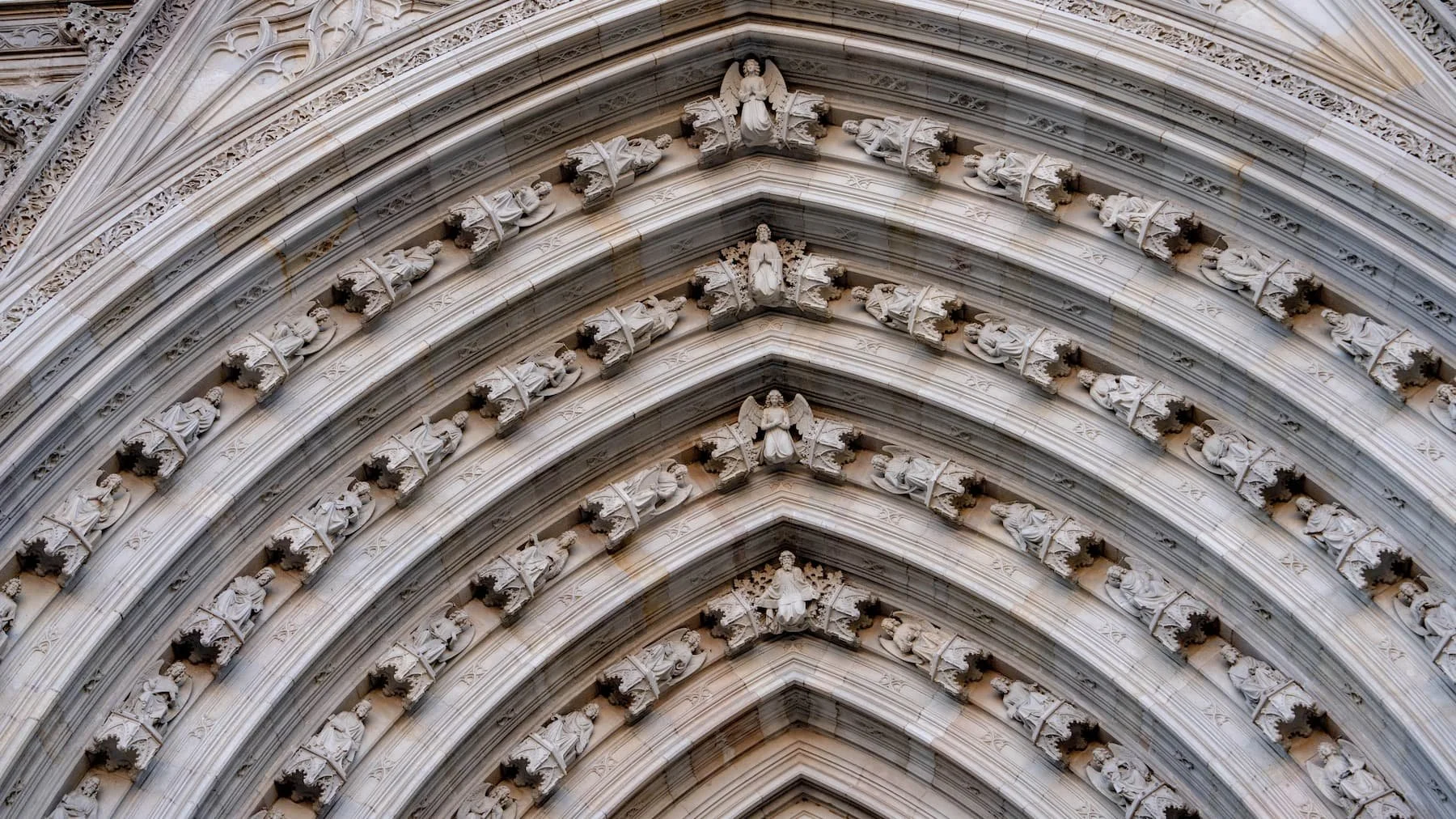
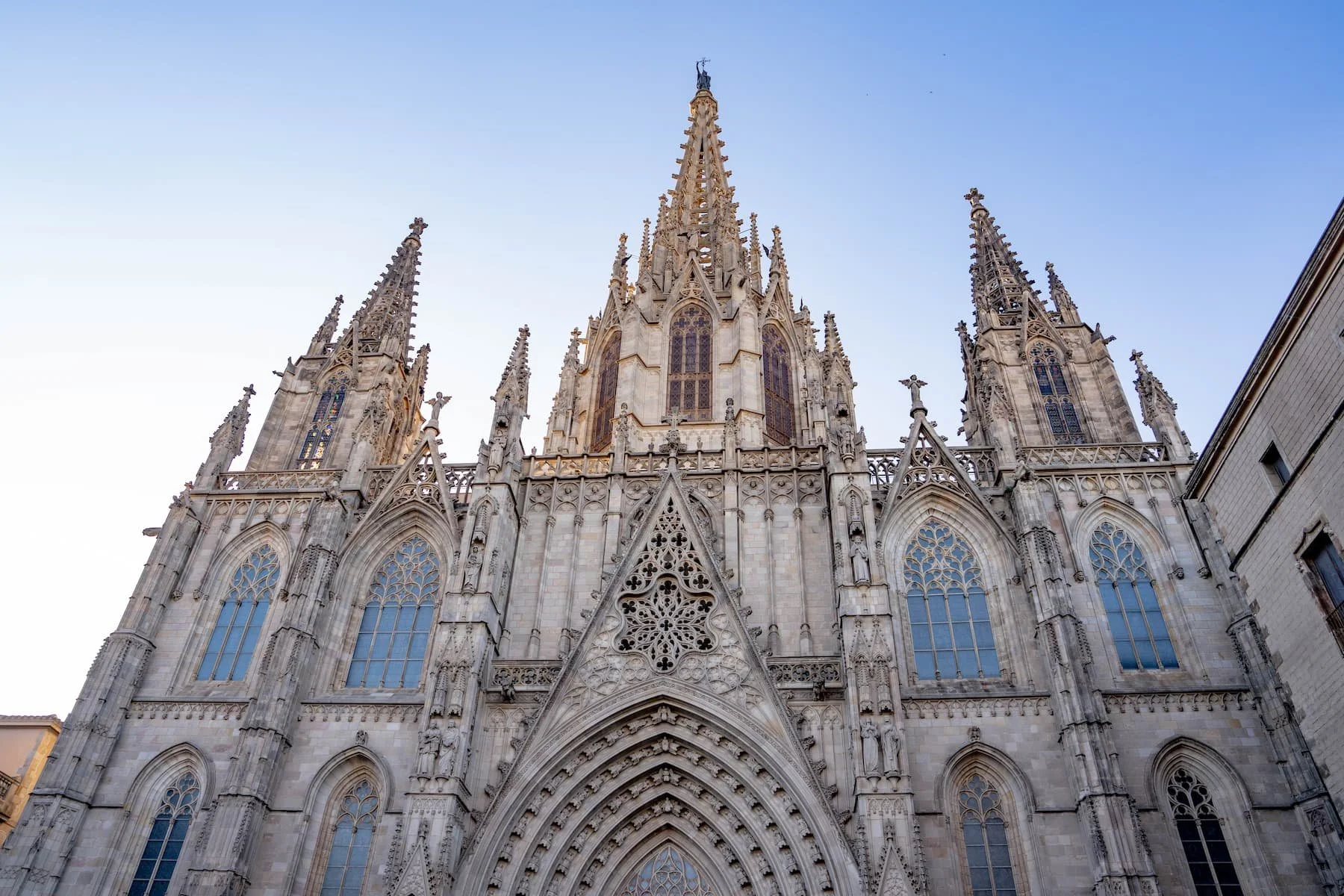
The most prominent element visible from the Pla de la Seu is comparatively modern. The Gothic church stood for some four centuries with a plain, unfinished western front until, at the end of the nineteenth century, the industrialist Manuel Girona i Agrafel funded the completion of a new façade based on earlier plans. The architect Josep Oriol Mestres designed the Neo-Gothic façade with its two lateral pinnacles, and Augusto Font i Carreras added the roughly 70-metre central tower, or cimborio, completed in 1913. Although executed in the Gothic Revival manner, the façade incorporates extensive medieval iconography, including a figure of Christ flanked by the twelve apostles around the central portal, whose deep, banded archivolts are lined with rows of carved figures and angels.
The roofline and cornices carry a menagerie of gargoyles in the form of real and mythical creatures, including dragons, a unicorn, and an elephant, which serve to channel rainwater from the roof. The adjoining cloister has four groin-vaulted galleries enclosing a garden and fountain, and includes a terracotta relief of Saint George by Antoni Claperós. The cloister is traditionally home to thirteen white geese, said to represent the age of Saint Eulalia at her martyrdom.
One image shows a nearby but separate structure often photographed with the cathedral: the Pont del Bisbe (Bishop's Bridge) on Carrer del Bisbe, an ornate covered walkway. Despite its medieval appearance, it is a Neo-Gothic addition designed by Joan Rubió i Bellver and built in 1928, connecting the Palau de la Generalitat with the Canons' House.
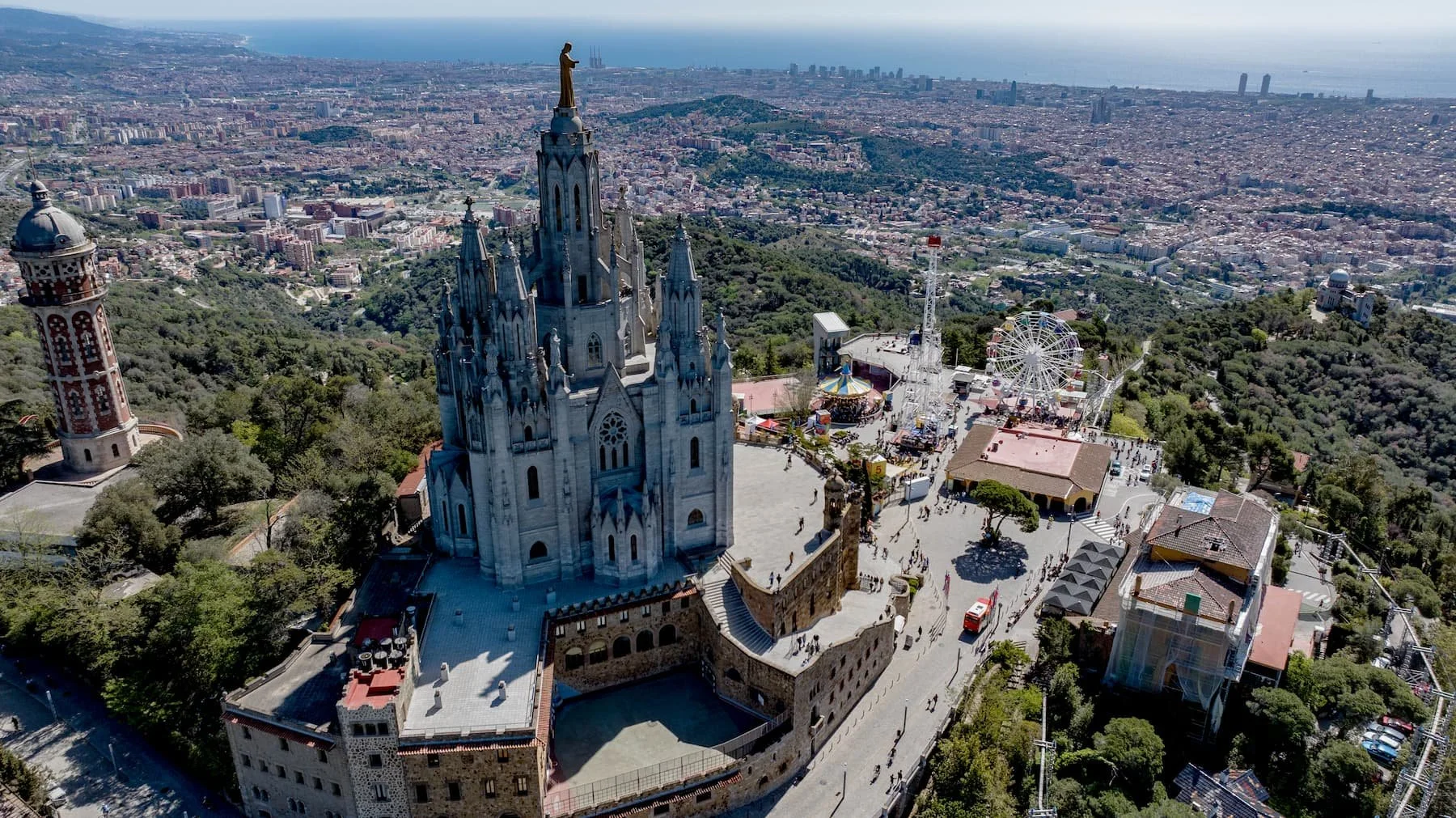
Three days in Barcelona ended the way they should, up high, with the whole city laid out below me. I had spent the trip chasing one building from every angle, and on the last morning I went looking for the two landmarks that crown the Collserola ridge. Both sit on the green spine of hills that walls Barcelona off from the interior, and both are visible from almost anywhere in the city. Getting up close to them, by drone and on foot, felt like the right way to say goodbye.
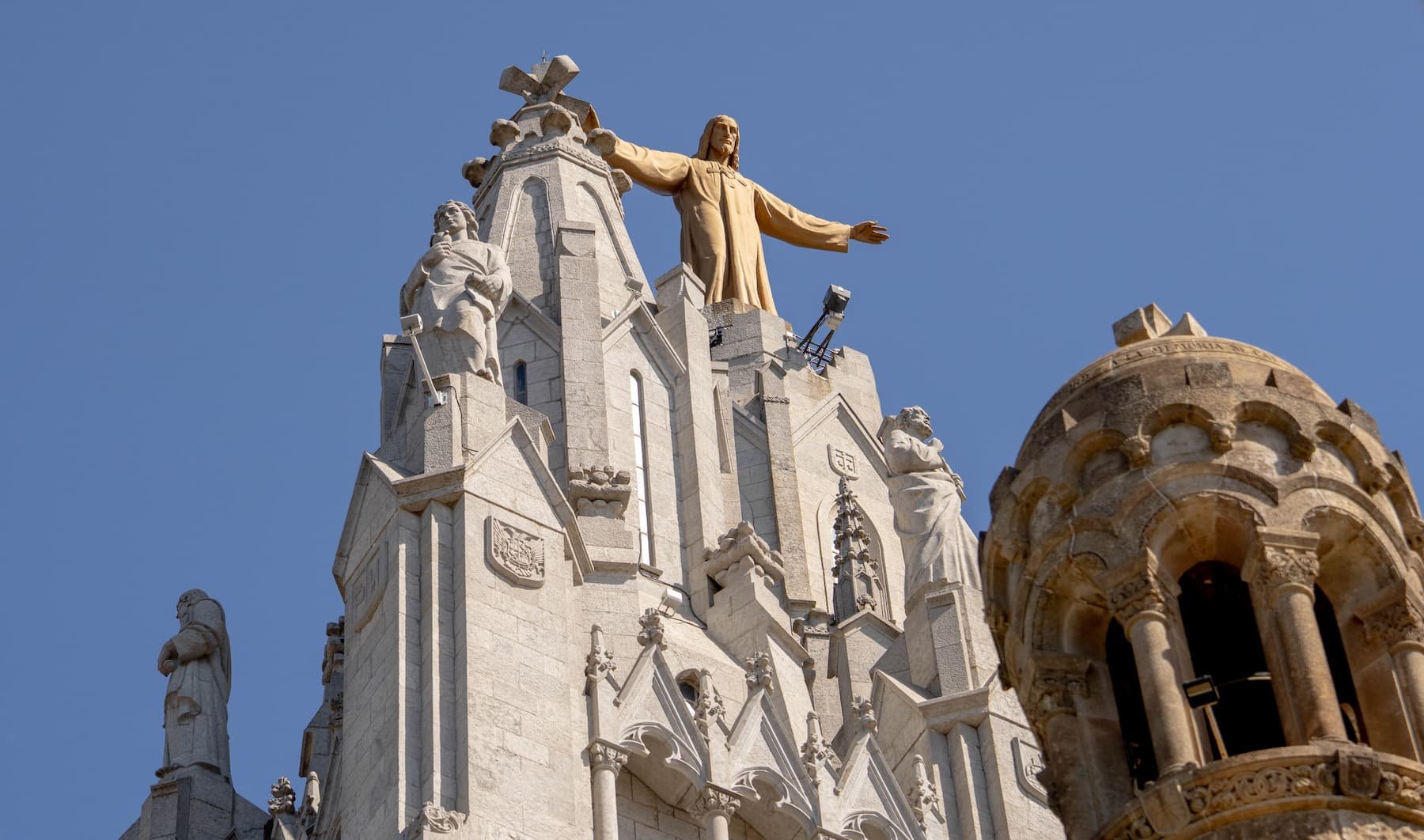
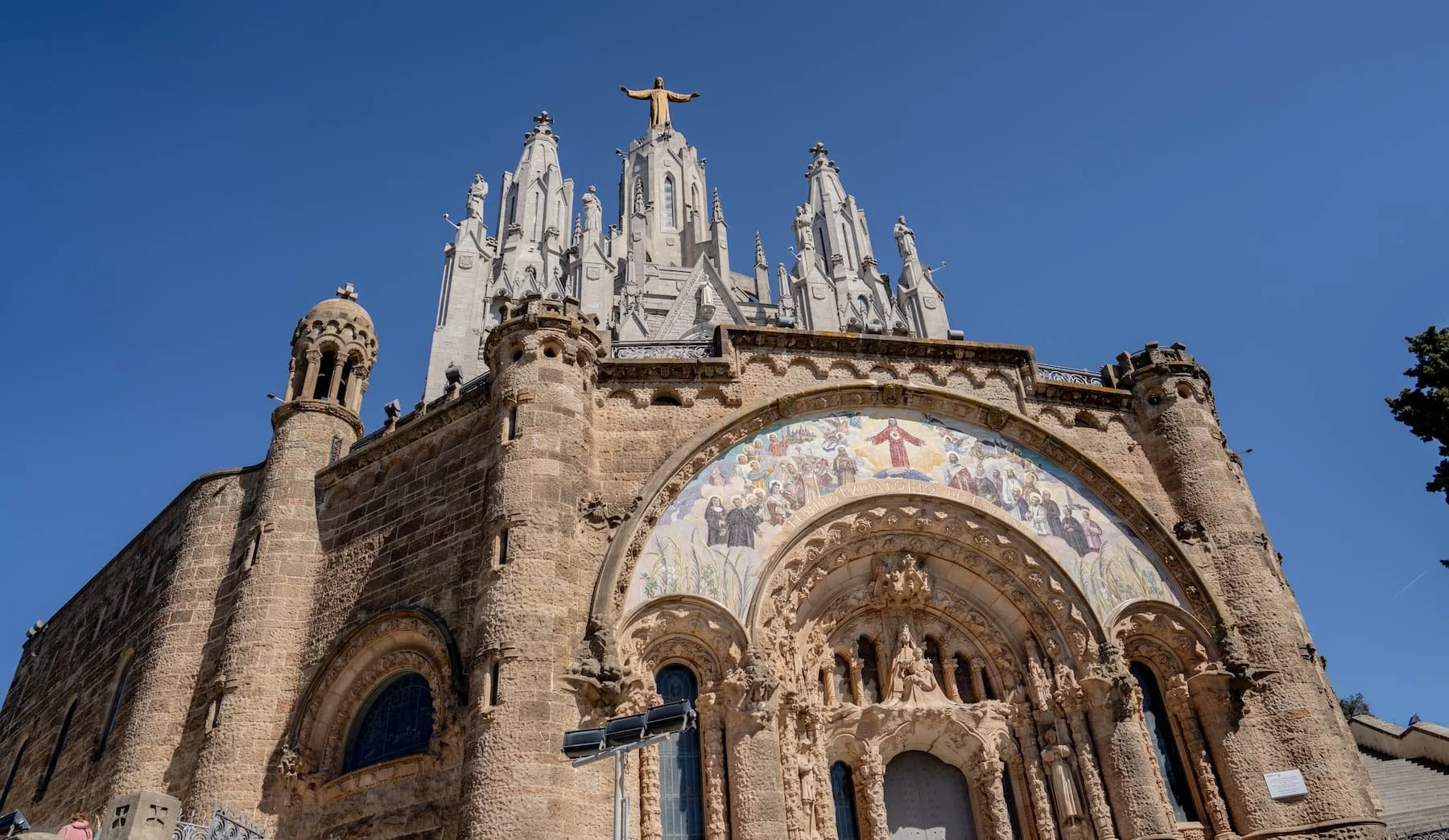
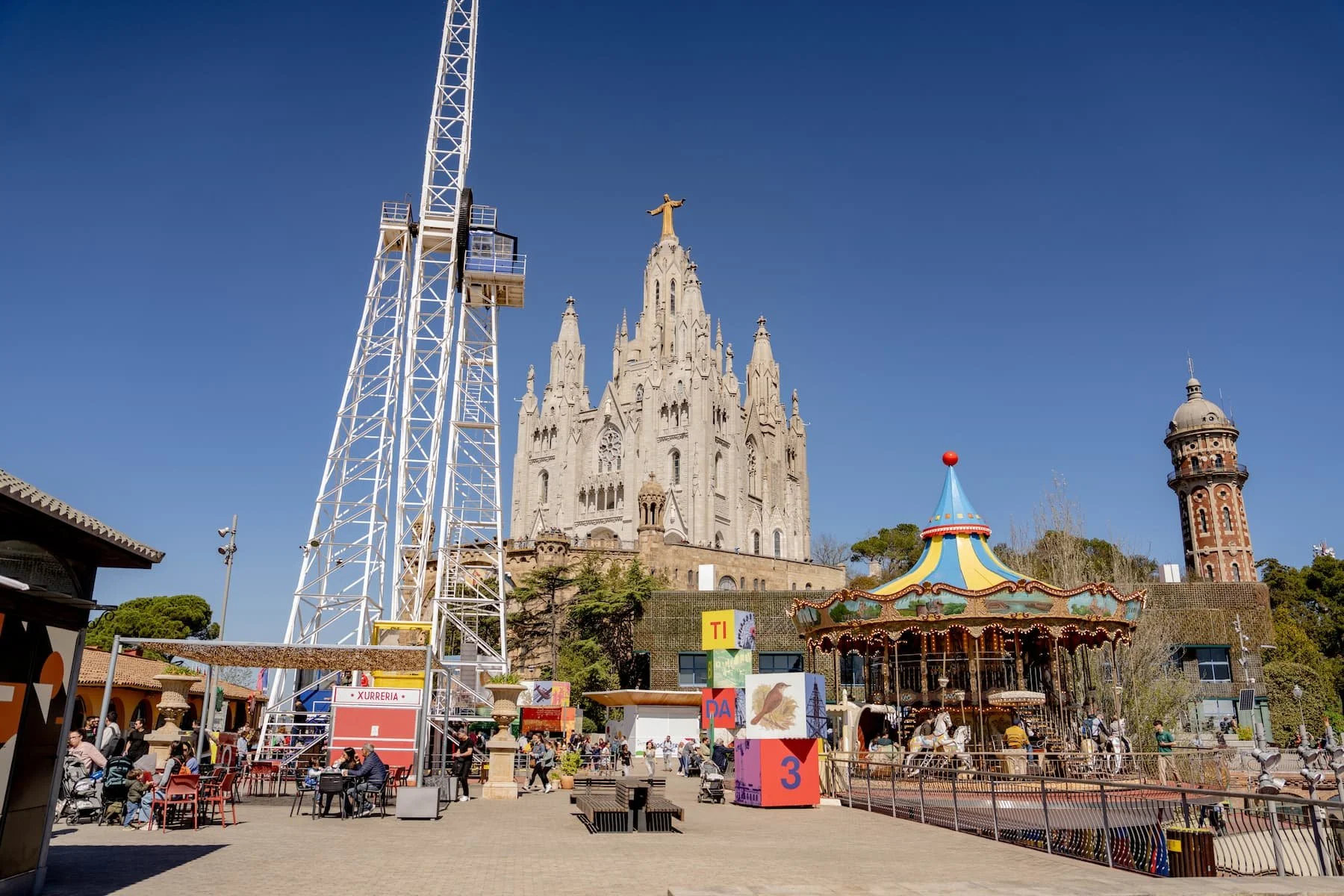
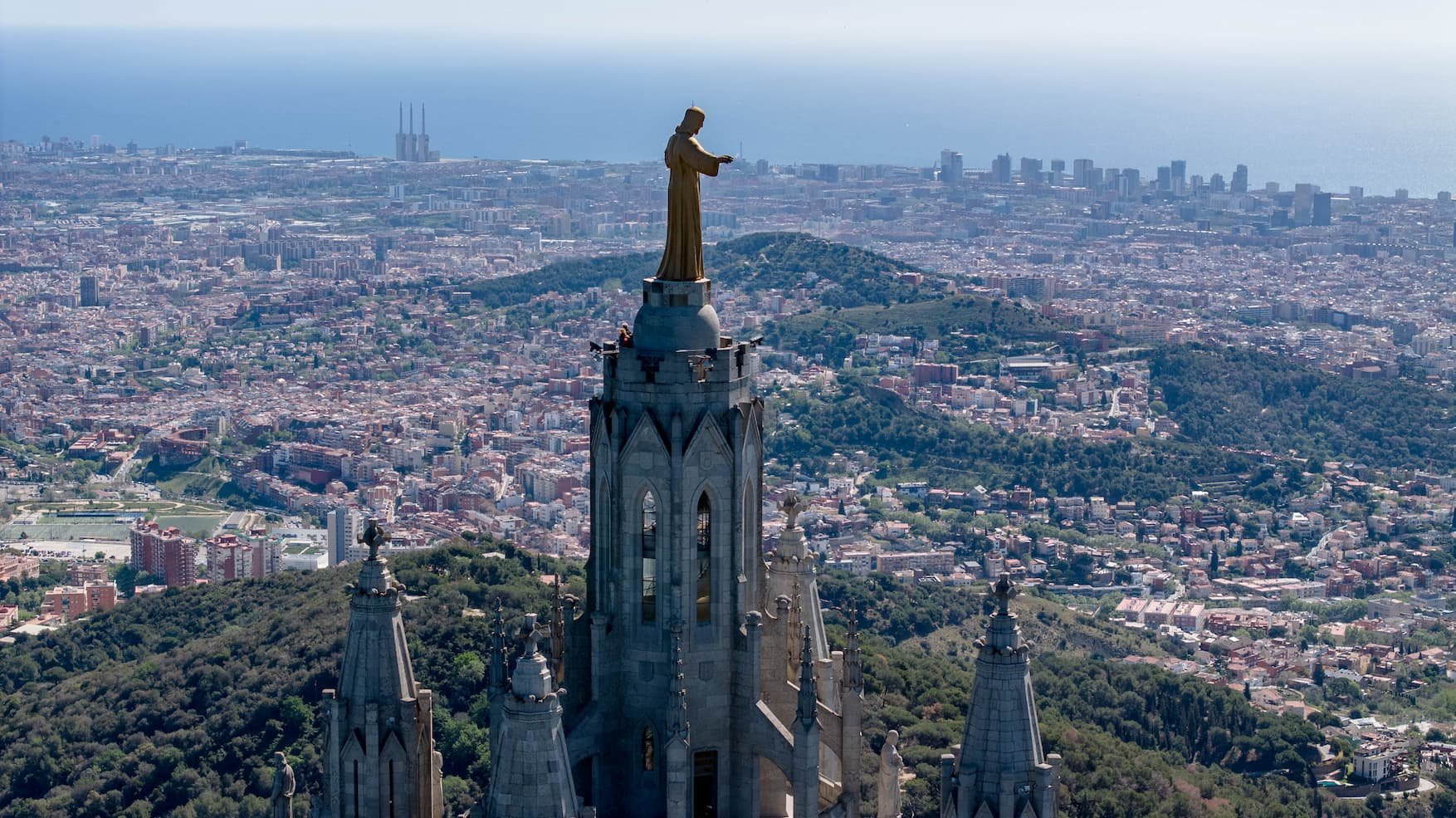
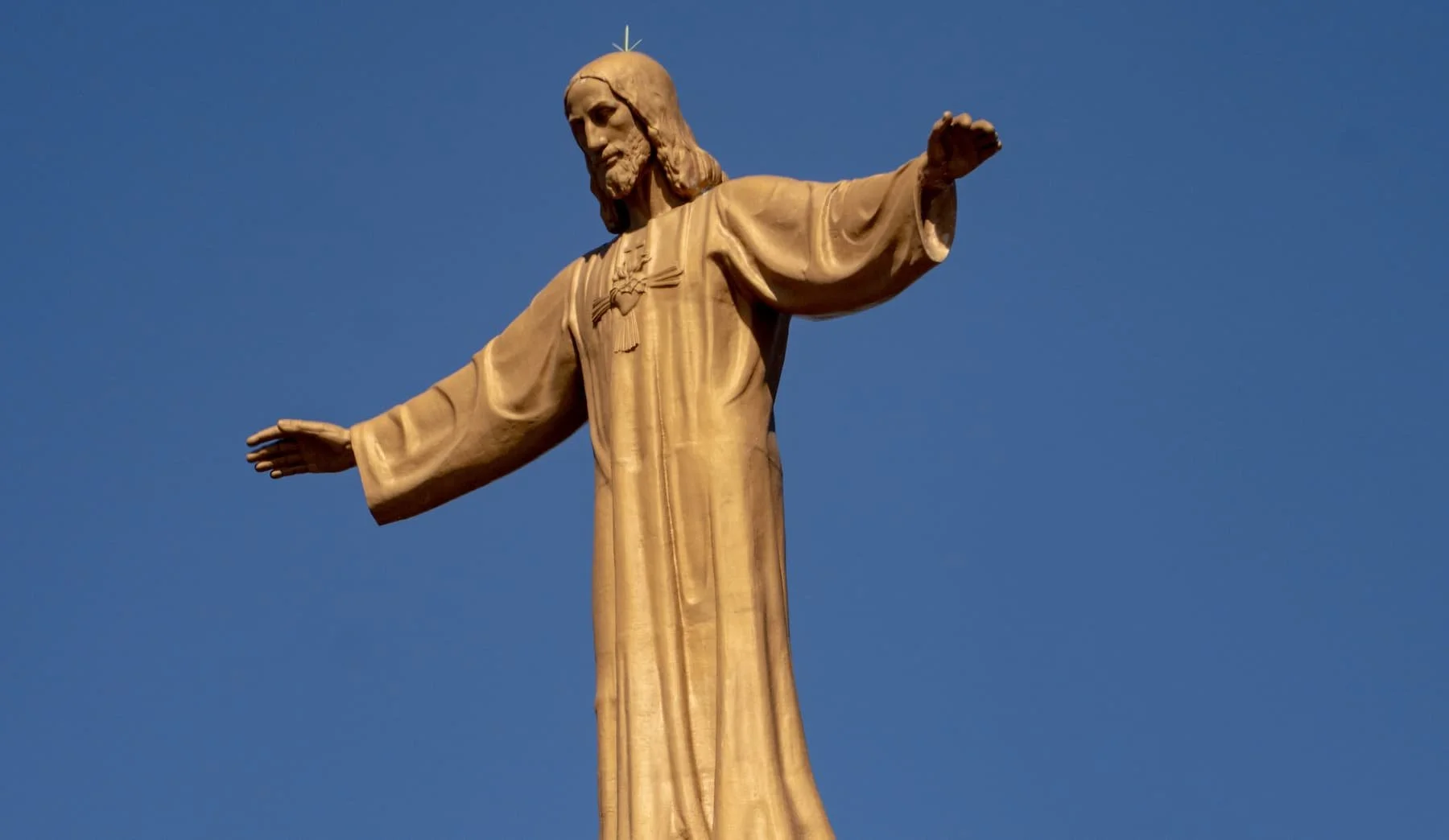
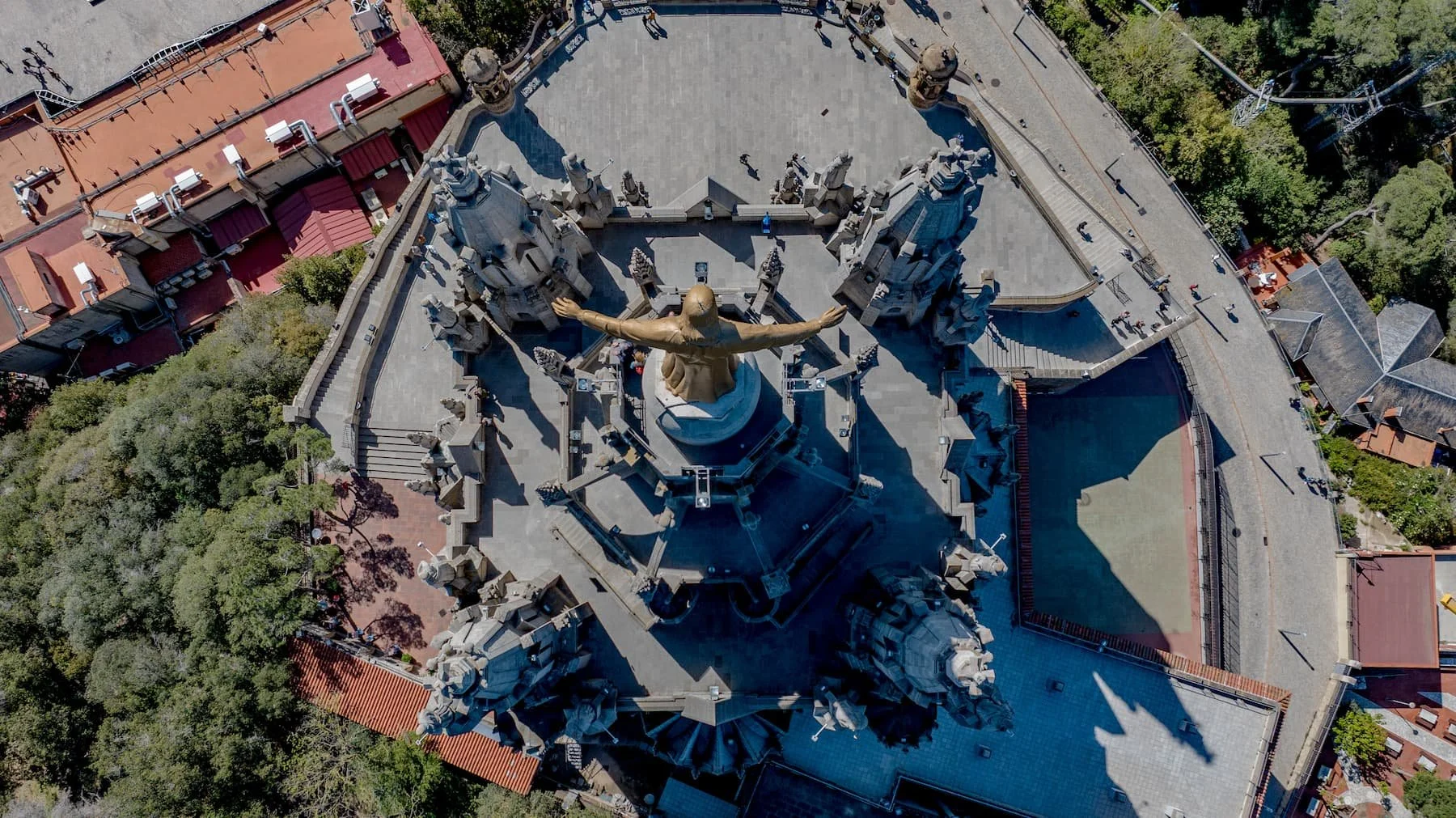
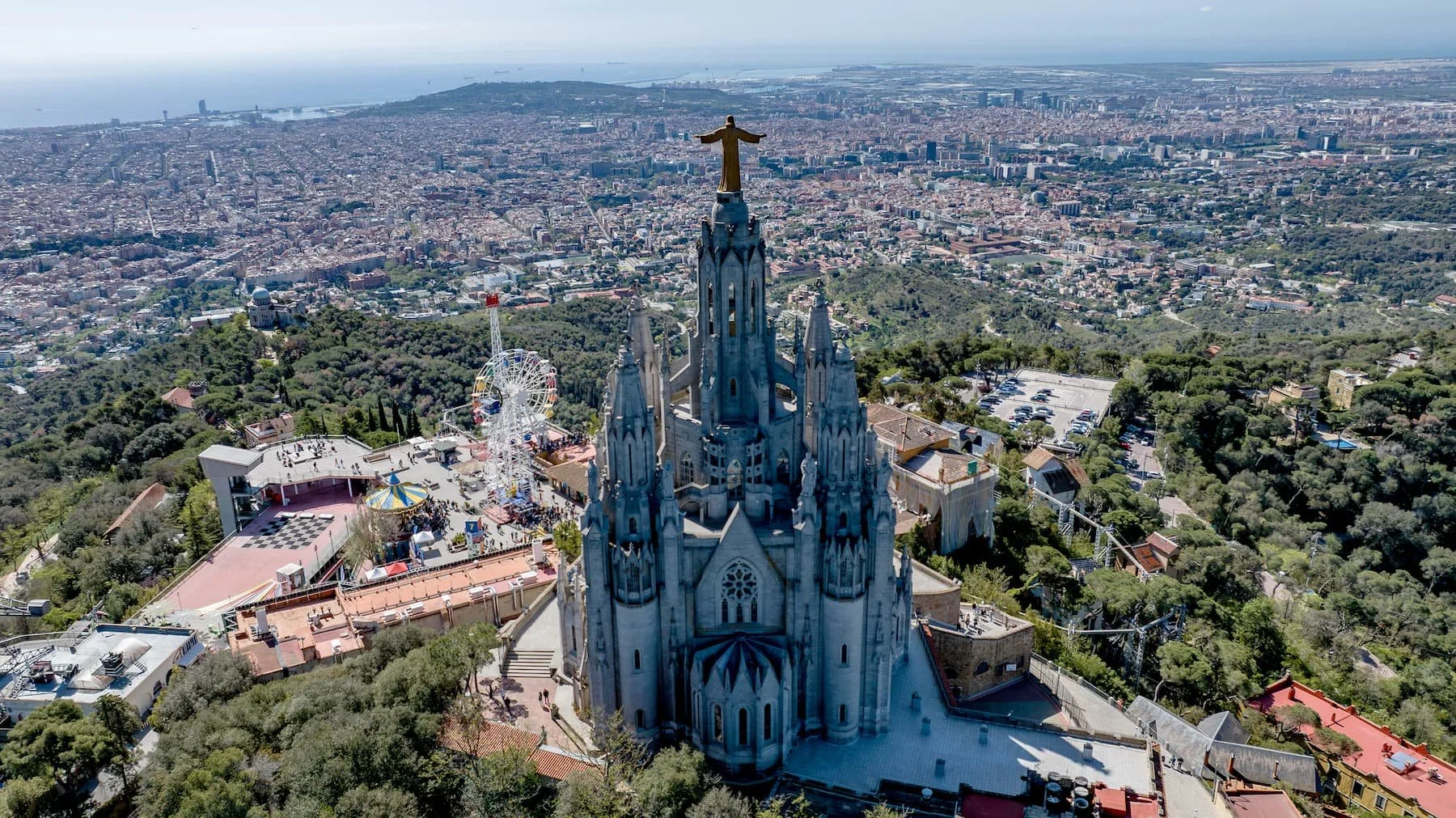
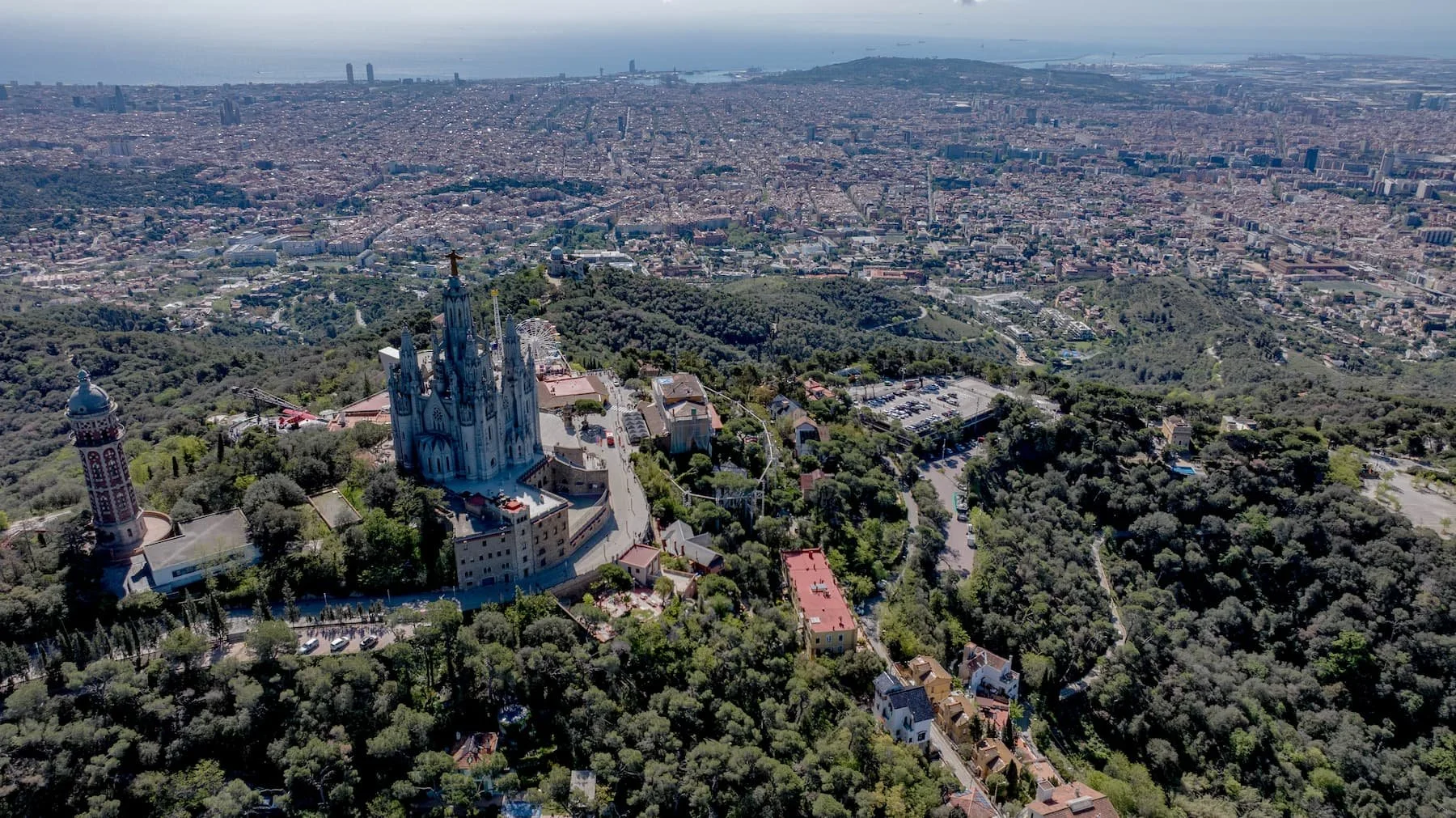
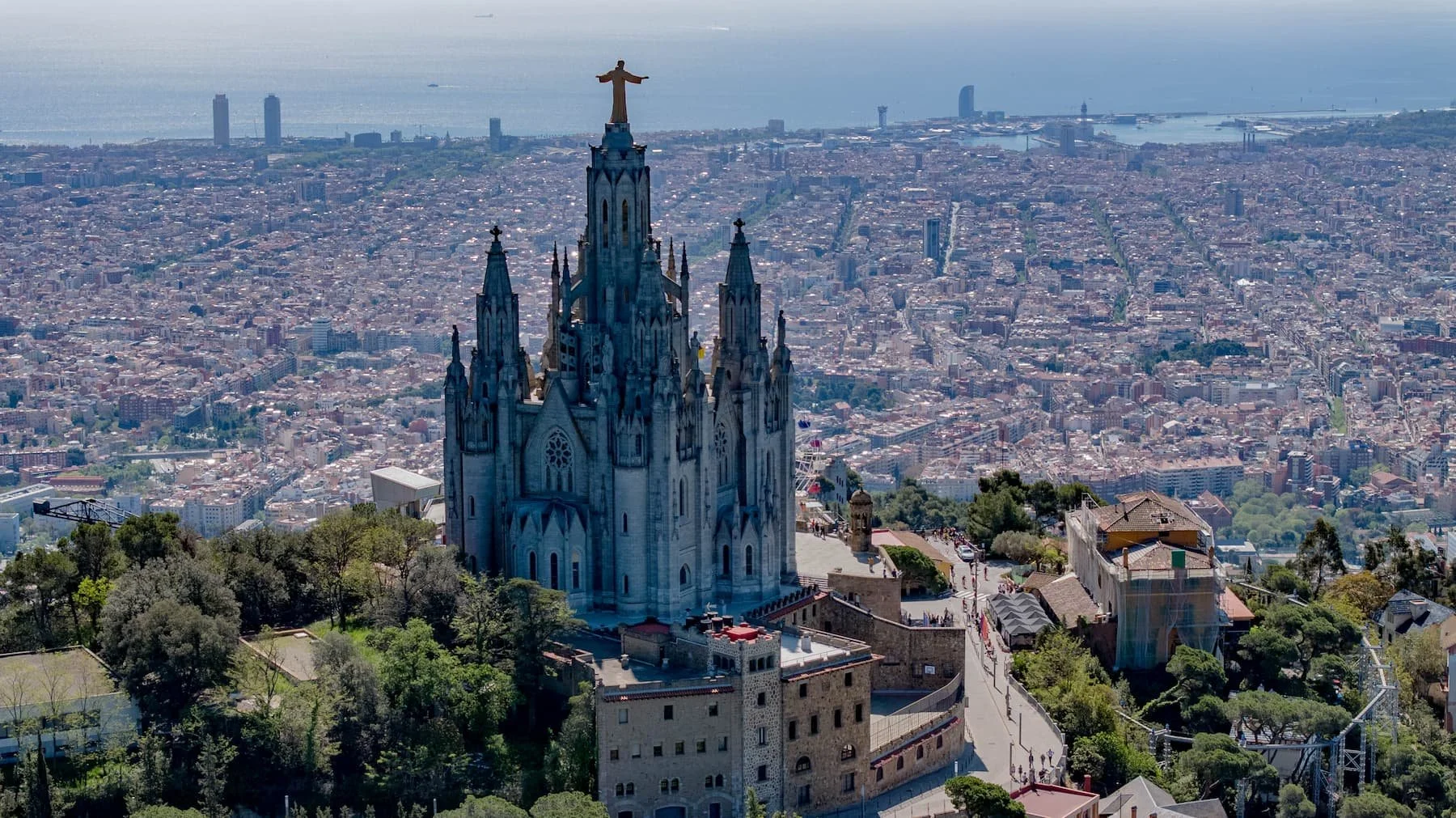
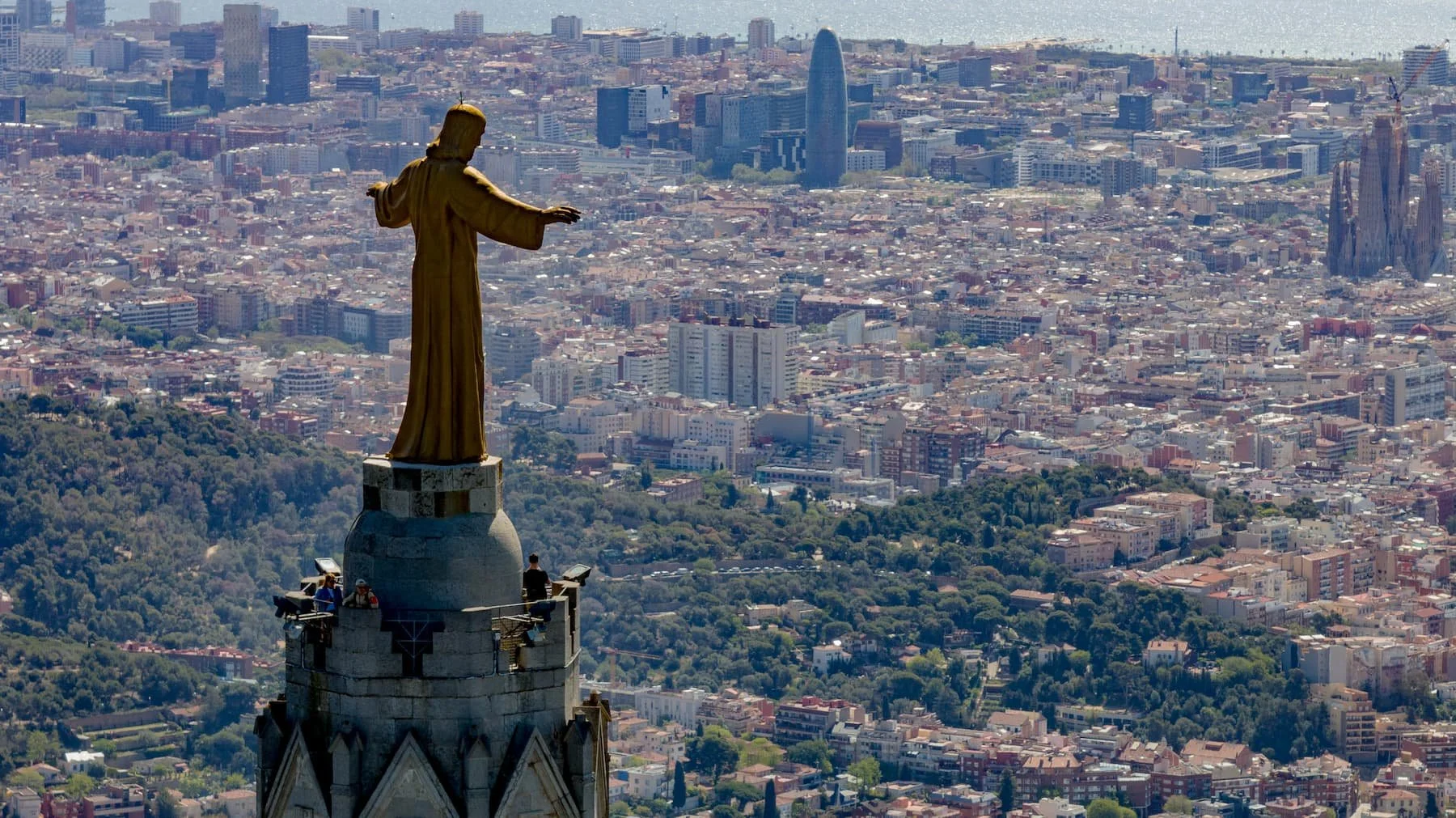
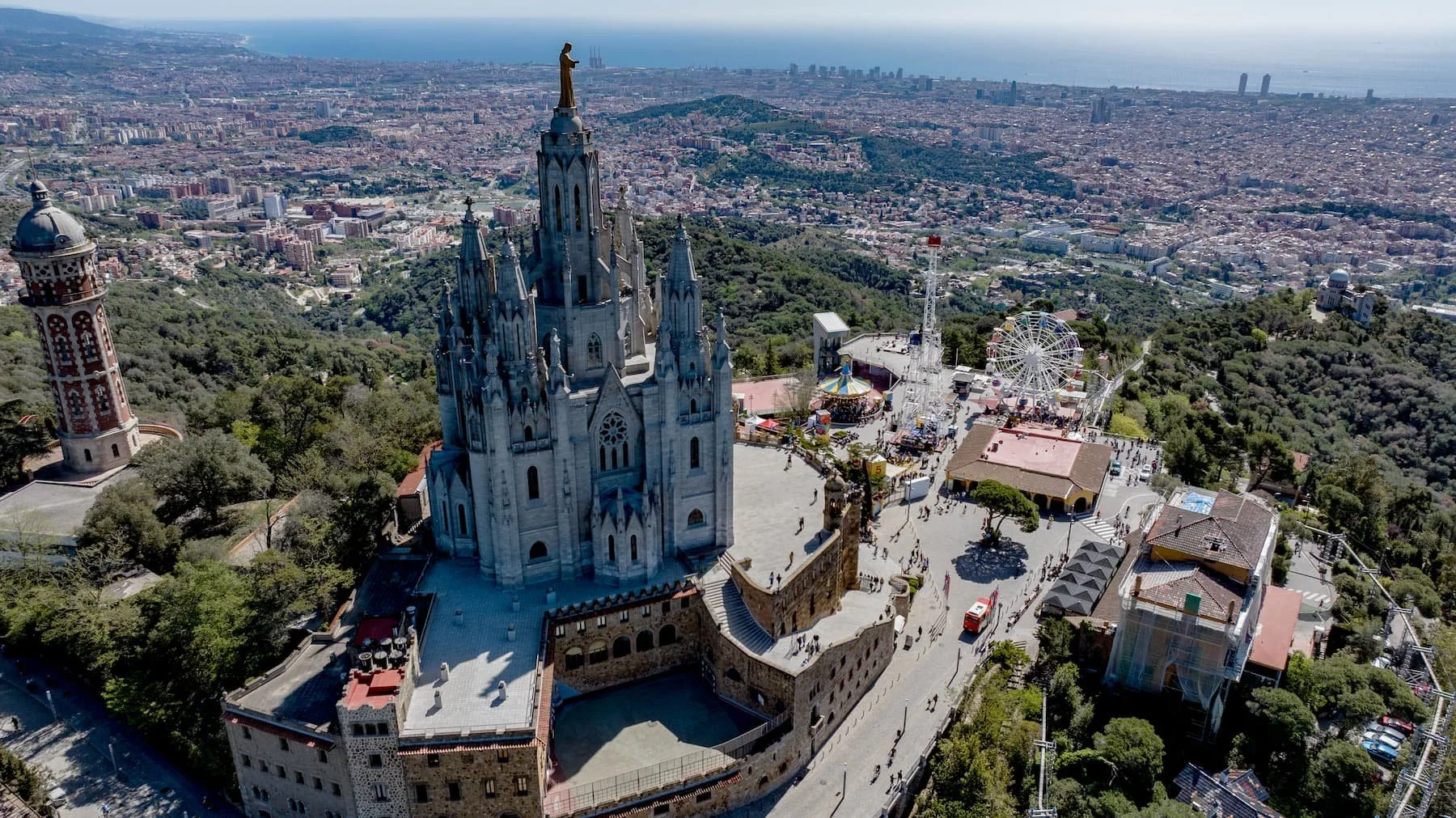
First was the Temple Expiatori del Sagrat Cor, the church that sits on the summit of Tibidabo, the highest point over the city. From the air the scale finally landed. A neo-Gothic upper church rising off a fortress-like stone base, crowned by the gilded statue of the Sacred Heart with its arms thrown open toward the sea. Straight down from above, the building opens into a strange and perfect symmetry, the statue at the center of a stone star, the shadow of the spire thrown long across the terrace. And right next door, a Ferris wheel and an old funfair, because only in Barcelona does a holy mountain come with an amusement park bolted to its side. The gold figure looks out over an endless grid of rooftops running all the way down to the Mediterranean.
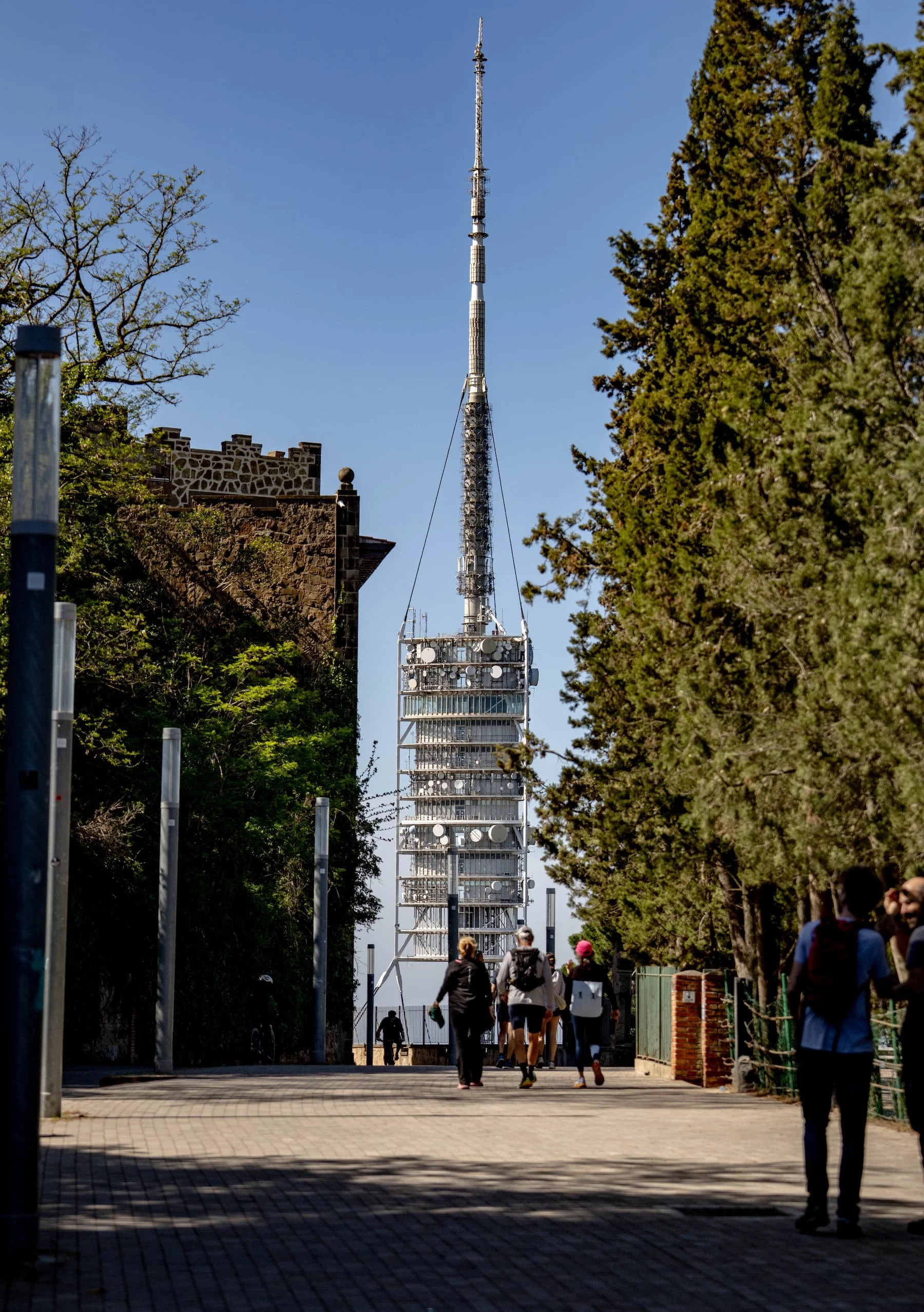
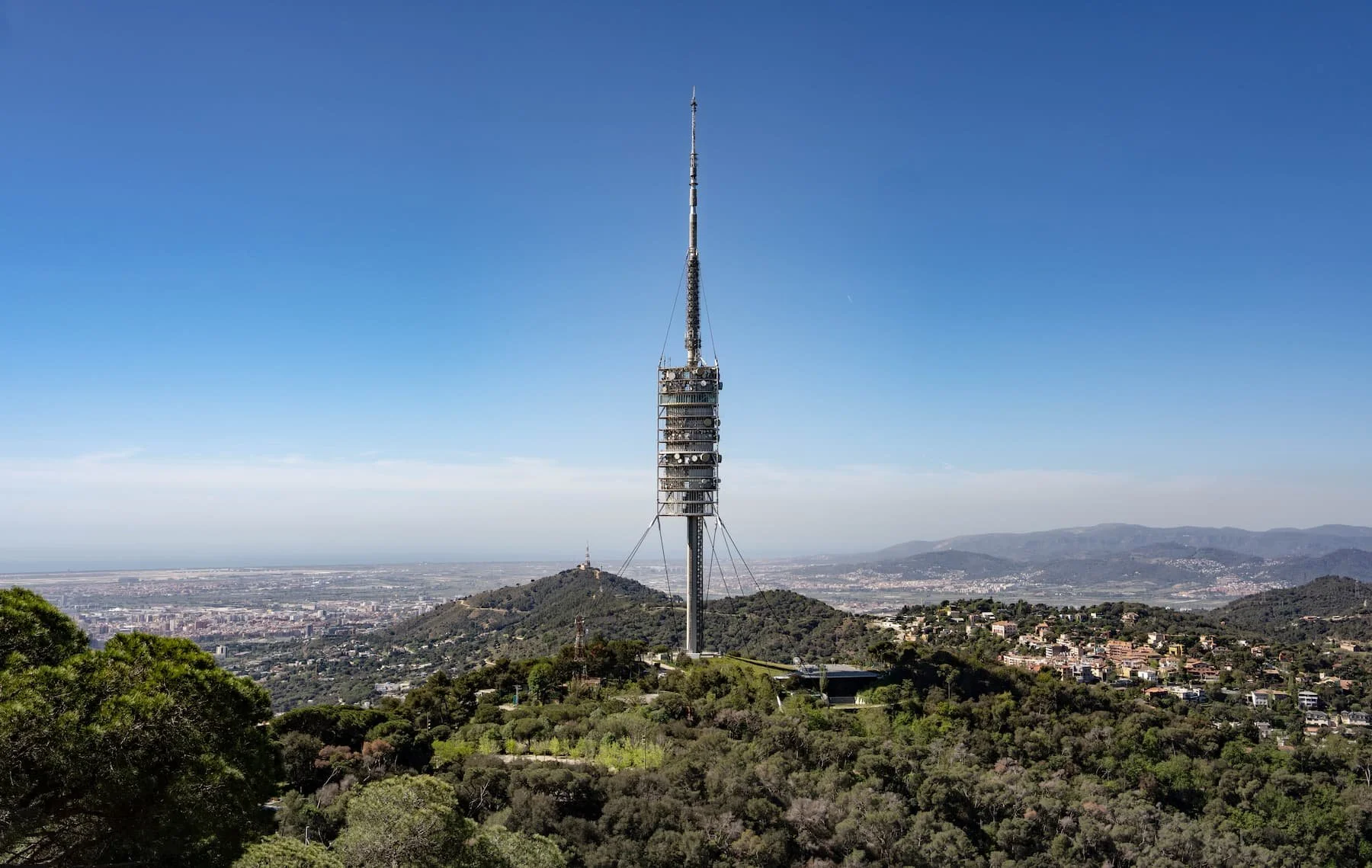
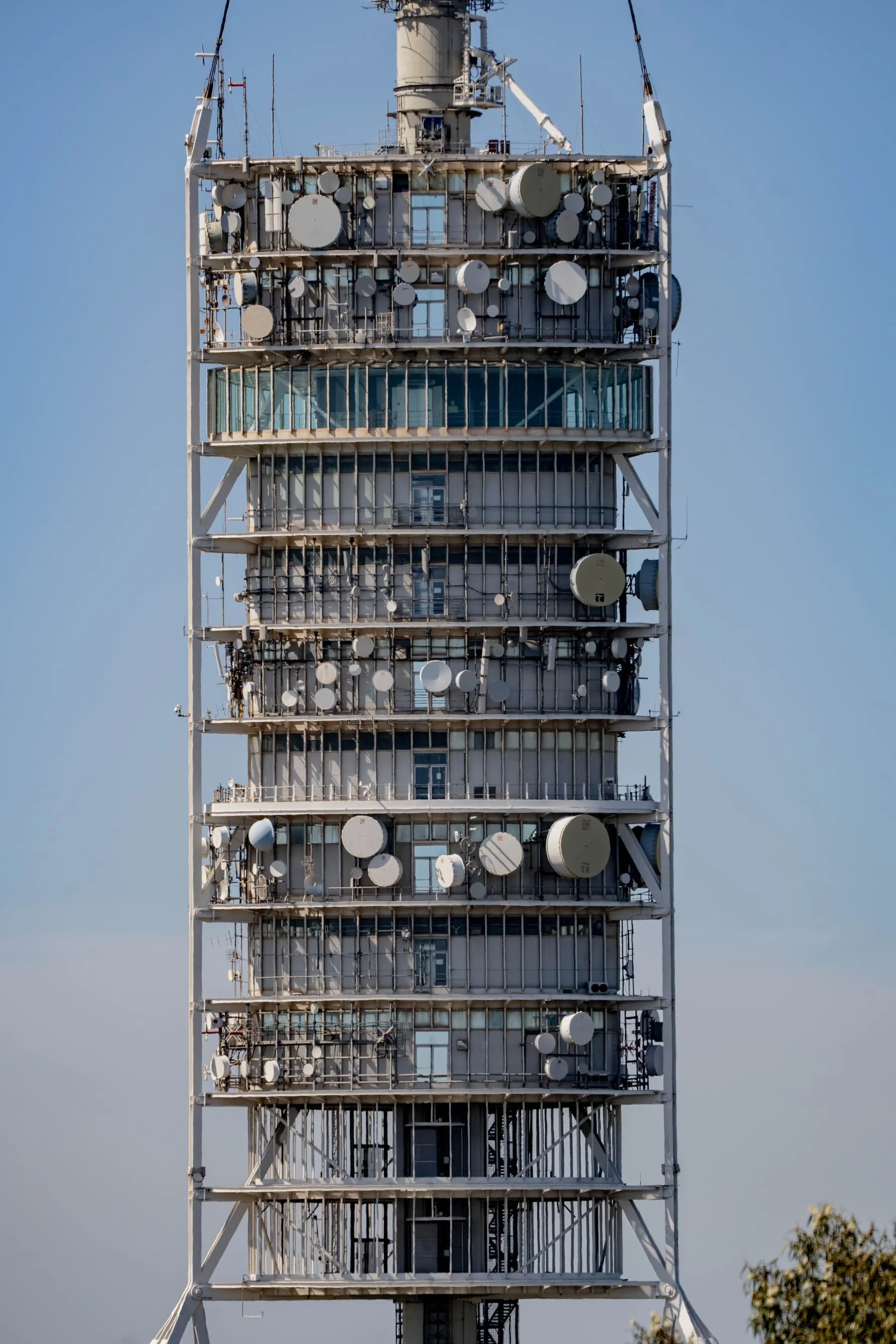
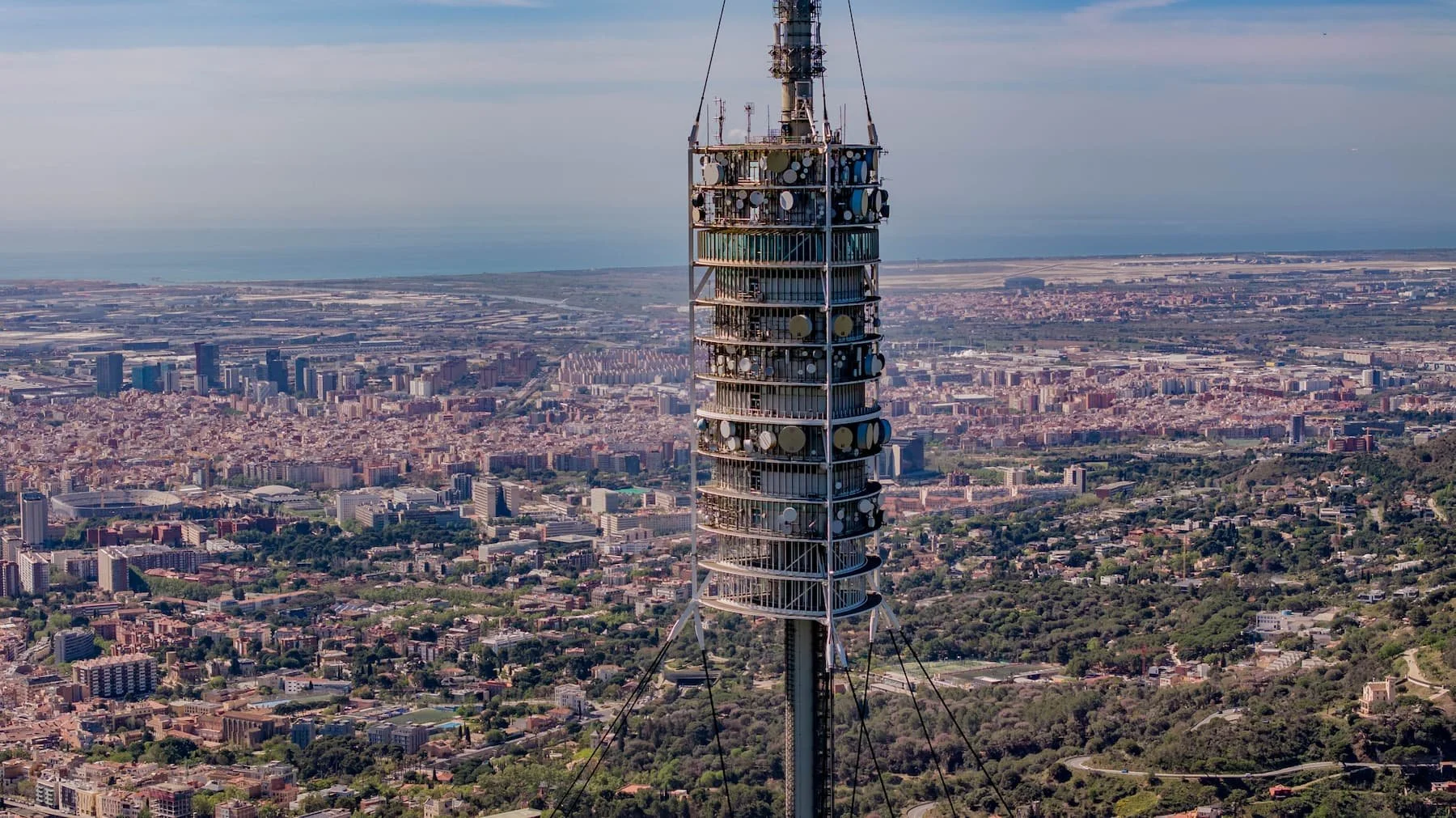
Then came the Torre de Collserola on the next hill over, and it could not be more different. Where the basilica is stone and devotion and a hundred years of slow building, the tower is Norman Foster's clean answer to a single question, how to put a communications mast on a mountain without ruining the mountain. A needle-thin white shaft, decks of dishes and drums hung off it on cables, a spike of antenna reaching almost 300 meters into the sky. From below, walking up the path with everyone else, it looks like something dropped in from the future. From the air, it stands alone over the trees, the tallest thing in Barcelona.
That contrast is the whole city in a single view. Old and new, sacred and technical, hand-carved stone and engineered steel, all sharing the same skyline and somehow all belonging together. Gaudí's unfinished basilica, a Gothic cathedral, a red brick arch, a beach at sunrise, a festival in the street, and two landmarks watching over it all from the hills. Three days was not enough. It never is. But I flew to Italy with a full card and a short list of reasons to come back. Stay tuned for full blog posts from Montserrat and my time in Italy.