The Science Behind Fall Foliage: Why, How, and When Leaves Change Color
Here is the information you need to plan your fall foliage travel to make sure you find the best colors on your trip.

Fall Foliage Color Progression: Green to Red Maple Leaves. Photo taken by Anthony Quintano
Every fall, I get the same question from people planning a trip to New England. "When should I come?" Why do they come to me? Mostly because they know I’m obsessed with fall foliage and do lots of research before we make our annual pilgrimage to New England.
It's a fair question, but it's harder to answer than most people think. The color change isn't random and it isn't just about temperature. It's a mix of biology and weather working together, and once you understand how it actually works, you can read the signs yourself instead of guessing.
Here's what's really going on inside those trees.
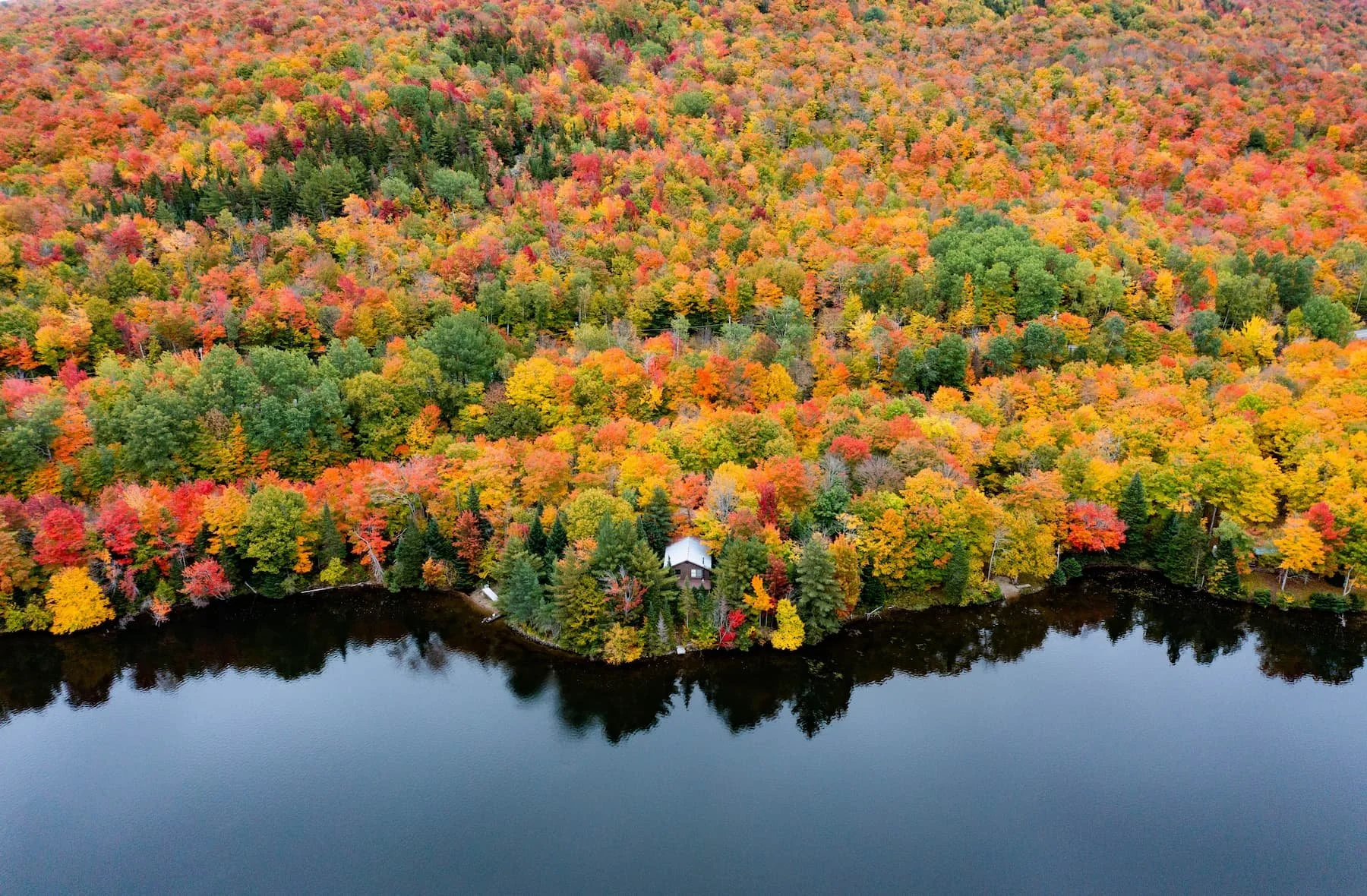
Peak Fall Foliage from Above at Norton Pond, Vermont's Northeast Kingdom. Photo taken by Anthony Quintano
Why Leaves Change Color
A leaf is green all summer because of a pigment called chlorophyll. Chlorophyll is what allows a leaf to absorb sunlight and turn it into energy for the tree, a process called photosynthesis. Chlorophyll is so dominant during the growing season that it covers up two other pigments that are in the leaf the whole time, we just can't see them yet.
Those two hidden pigments are carotenoids and anthocyanins. Carotenoids produce yellow and gold, and they are the same pigments that make carrots orange and bananas yellow. They are already sitting in the leaf all summer long, waiting.
Anthocyanins are different. They aren't there all summer. The tree actually produces them in the fall, and they're what give us the deep reds and purples. Anthocyanins form when sugar builds up inside the leaf, which is directly connected to how the tree shuts down for winter. I'll get into that part next.
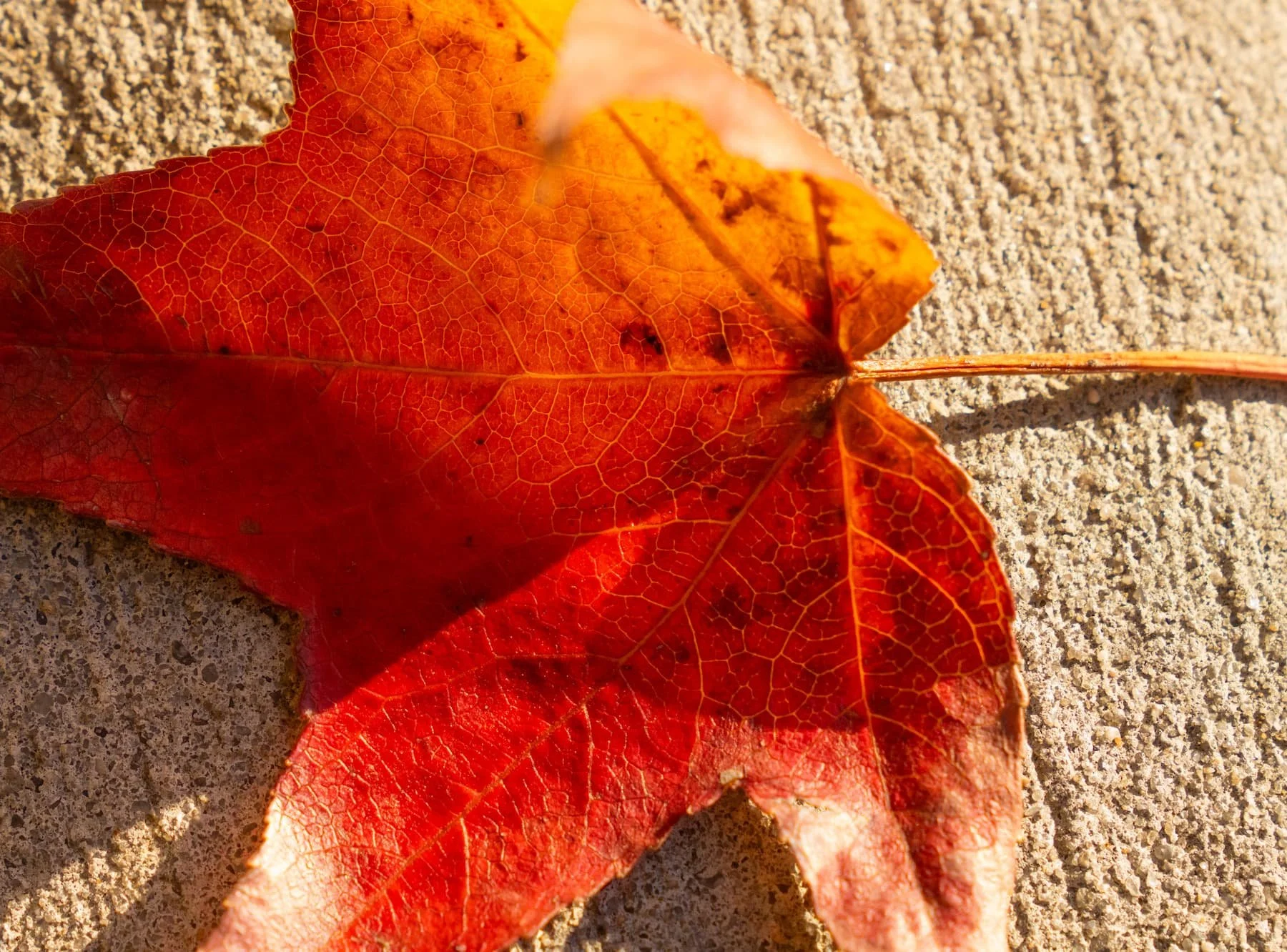
A macro shot of a fallen maple leaf backlit by low autumn sun, glowing red, orange, and gold, with every vein visible against the concrete underneath. Photo taken by Anthony Quintano
How the Change Actually Happens
As fall approaches, the tree starts preparing to shut down for winter. It does this by growing a layer of cells at the base of each leaf, called the abscission layer. Think of it as the tree building a wall between itself and the leaf.
Once that layer forms, it slowly closes off the veins that carry water and nutrients in and out of the leaf. That cuts off the leaf's ability to keep making chlorophyll, and the green starts to fade. As the green disappears, the yellows and golds from the carotenoids finally show through, since they were there all along.
At the same time, that closing-off process traps sugar inside the leaf. Trapped sugar is what triggers the tree to produce anthocyanins, which is why the reds and purples tend to show up a little later than the yellows, and why they're so dependent on the weather in a way the yellows aren't. This is also why the same tree can look different from year to year. The yellow is basically guaranteed. The red has to be earned by the right conditions.
Eventually that abscission layer finishes closing off completely, and the leaf detaches and falls. That's the whole point of it from the tree's perspective. It's not decoration, it's the tree protecting itself from winter by shedding the parts it can't support once the ground freezes and water becomes harder to pull up through the roots.
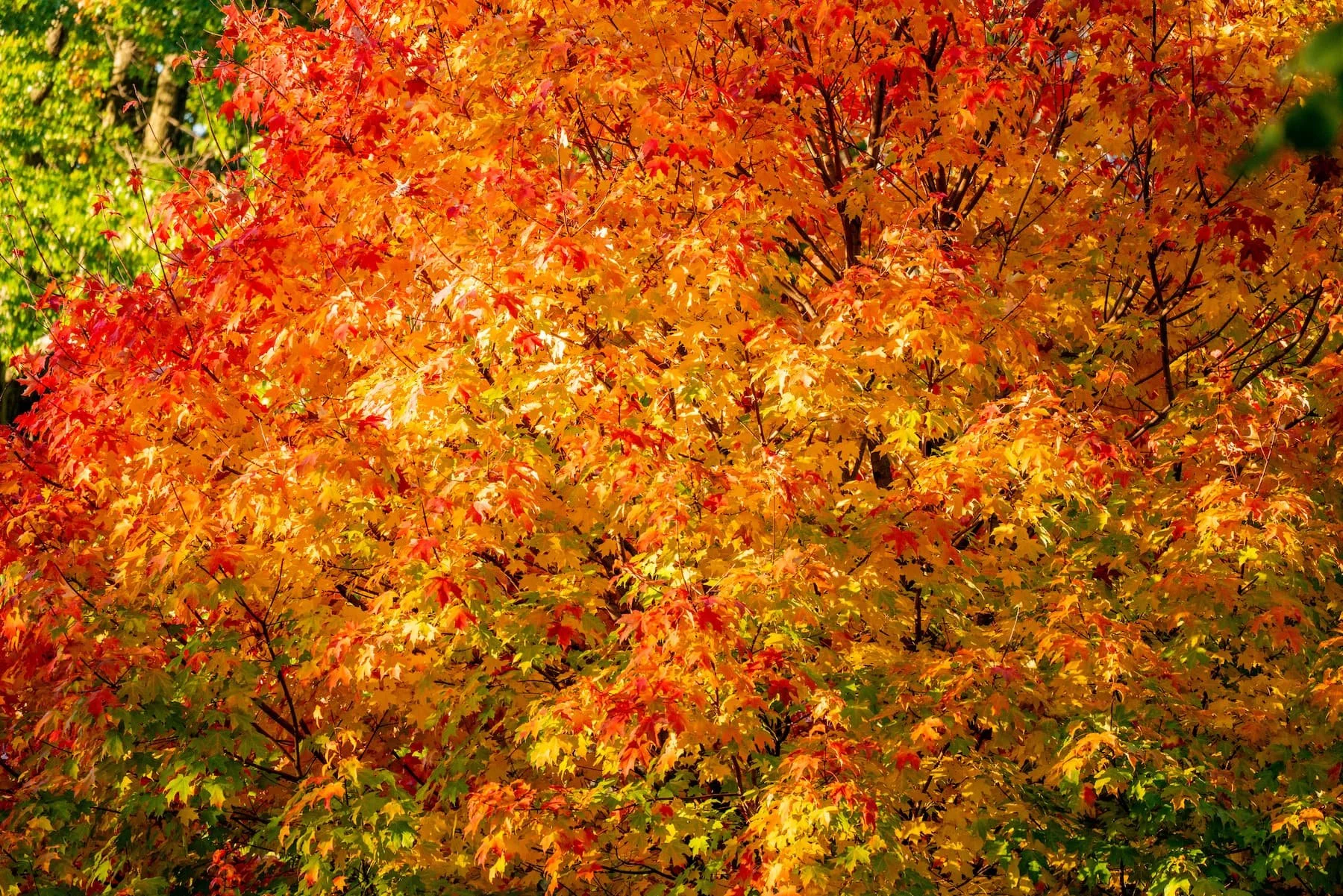
A maple mid-transition, red on one side, still holding green on the other. This is the stage that only lasts a few days before the whole tree catches up.
When It Happens: The Real Trigger
Most people assume the first cold snap is what starts the color change. It's not, not really. The real trigger is day length.
As we move through late summer into fall, nights get longer and days get shorter. Trees track that shift closely, and it's what tells them to start building that abscission layer and slowing chlorophyll production. This is why the color change starts around the same general time every single year in the same location, even in years with a hot September. Day length doesn't change based on the weather. It's the one constant a tree can always count on, so it relies on it as the master signal.
This is also why elevation and latitude matter so much for timing. Higher elevations and areas farther north experience their seasonal light and temperature shifts earlier, which is why the White Mountains and northern New Hampshire change before the Seacoast and southern New England. It's a real, predictable gradient that moves south over several weeks, not something random.
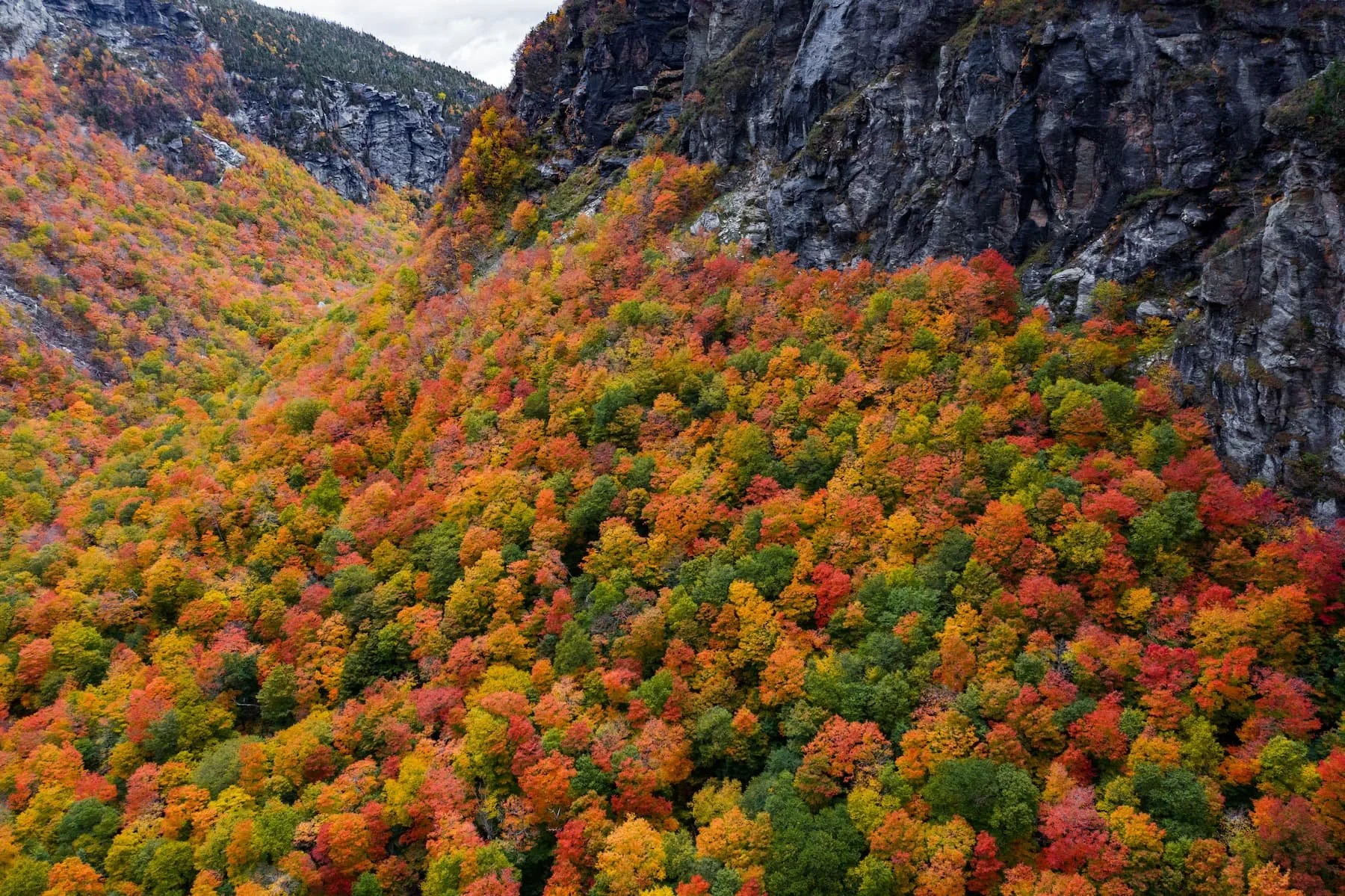
Smugglers Notch, Vermont. The cliffs make this one of the most dramatic passes in New England, and peak color against all that exposed rock is worth the drive on its own. Photo taken by Anthony Quintano
Why Higher Elevations Change First
This is one of the questions I get asked the most, and it comes down to basic meteorology, not just the calendar. Air gets colder the higher up you go. This is called the lapse rate, and on average, the air temperature drops a little over 3 degrees Fahrenheit for every 1,000 feet you climb. So the summit of Mount Washington, at over 6,200 feet, is running noticeably colder on any given day than the valleys down around Conway or Franconia.
That temperature difference matters because cool nights are one of the signals that pushes a tree toward shutting down for the season. A mountainside at 3,000 feet is already feeling those cool, crisp nights weeks before a town sitting at a few hundred feet of elevation does. The trees up high are essentially living a little further into fall than the trees down low, even on the same calendar day.
There's also a growing season difference. Higher elevations get their last spring frost later and their first fall frost earlier, so the whole growing season up there is shorter to begin with. That means the trees at elevation are naturally on an earlier internal clock all year, not just in October.
Put those two things together, colder average temperatures and a shorter growing season, and you get a real, physical reason why color starts at the summits and ridgelines first, then works its way down the mountain, and then spreads south and toward the coast over the following weeks. It's not a rumor or a tradition, it's the same reason it's colder at the top of a mountain than at the bottom of it. When I'm out shooting, this is exactly why I start my season at elevation in the north and chase the color as it moves downhill and south over the following weeks.
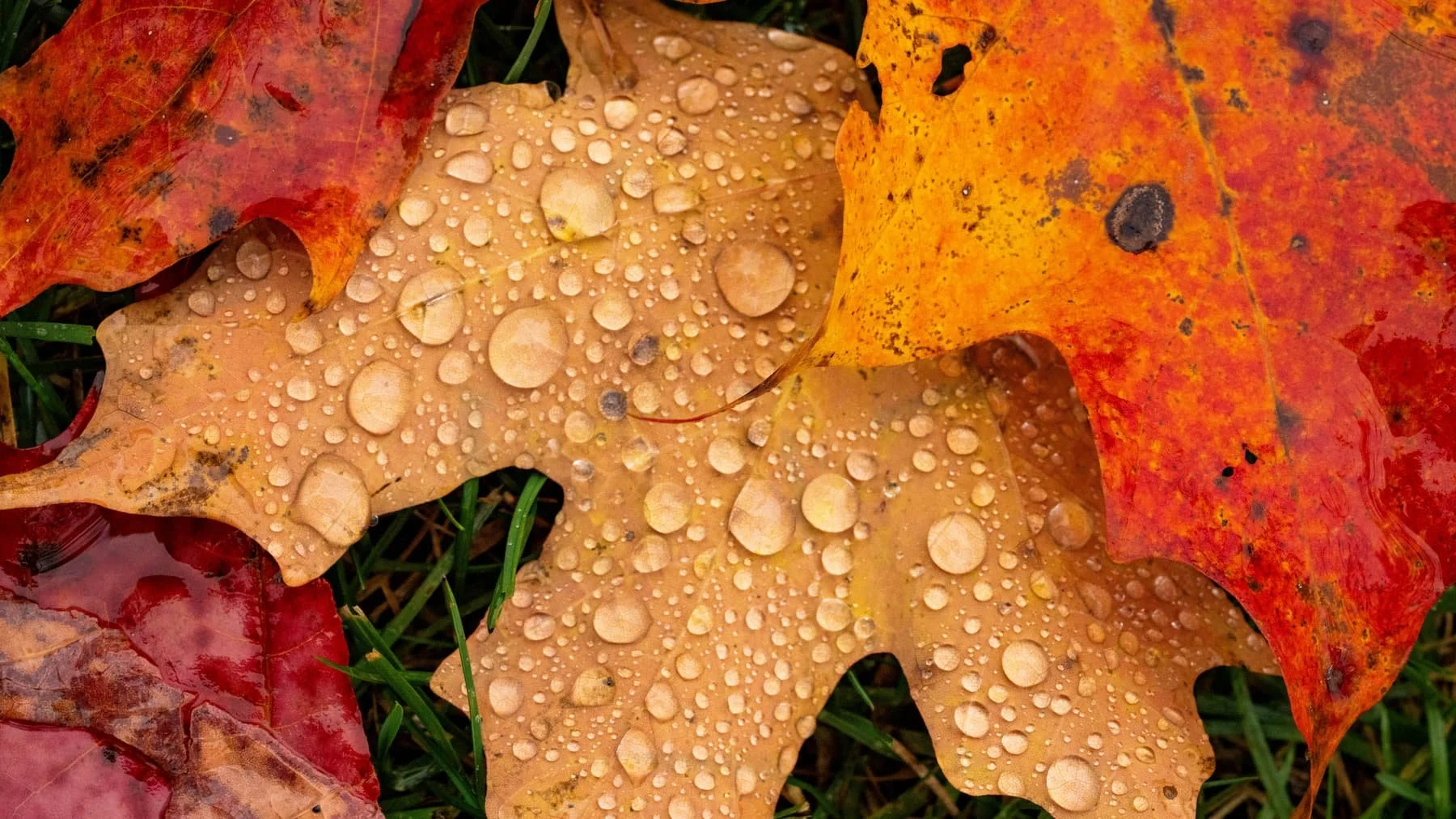
A close-up of fallen maple leaves in gold, red, and orange, beaded with heavy raindrops after a fall rain, resting in green grass. Photo taken by Anthony Quintano
The Weather's Role: Why Some Years Are More Vivid Than Others
If day length decides when the process starts, weather decides how good it looks once it does. This is where meteorology actually comes in, and it's the part that's the most fun to track.
Temperature swings. The ideal pattern is warm, sunny days paired with cool nights that don't quite reach freezing. Warm days keep the tree producing sugar. Cool nights slow down the tree's ability to move that sugar out of the leaf, so it stays trapped and builds up, which is what drives strong anthocyanin production and those deep reds. A fall with too many warm nights in a row tends to produce a duller, flatter season, because the sugar keeps moving out of the leaf instead of concentrating there.
Drought and summer rainfall. This is one of the bigger factors, and it's more complicated than "rain is good, drought is bad." Trees need water all summer to keep making chlorophyll and to build up the sugar that eventually turns into fall color. A lack of water slows that whole process down, which is why a dry summer often shows up as dull, early color, or leaves that turn brown and drop before they really change at all.
But the timing of the drought matters too, not just whether one happened. A severe drought tends to push the tree into an early shutdown, so color shows up ahead of schedule and doesn't last long. A milder, moderate dry stretch can actually do the opposite and delay color slightly, since the tree's metabolism slows down without fully shutting off. That's why two dry summers can produce two different-looking Octobers.
Too much rain causes its own problems. Waterlogged soil pushes oxygen out of the ground around the roots, which stresses the tree in a different way but leads to a similar result: yellowing and early leaf drop. Heavy, soaking rain during the peak weeks can also just physically knock leaves off the branch before anyone gets to see them at their best.
The ideal setup is steady, consistent moisture through the summer, enough to keep the tree healthy without a drought and without a washout, followed by a fall that turns cool and slightly wetter than normal right when the color is coming in. This is also why I don't just watch the fall weather. I'm paying attention to how dry or wet the whole summer was, since that tells me a lot about what kind of season we're heading into before the leaves ever start turning.
Frost timing. A light frost can actually help intensify color, since cold temperatures assist that sugar-trapping process. But a hard, early freeze does the opposite. It can damage the leaf outright and force an early drop, cutting a season short before it ever really gets going.
Wind and storms. This is the one that worries me the most every year, and it's the hardest to predict more than a few days out. A single strong wind event or heavy rainstorm at the wrong moment can strip a hillside bare in a single day, even if the color leading up to it was perfect. I've watched this happen. You can have the best week of color all season, and one nor'easter can end it overnight.
Cloud cover. This one's smaller, but it matters for how the color actually reads to the eye and in photos. Full sun on peak days makes reds and oranges look more saturated. An overcast stretch can make the exact same trees look muted, even though the biology underneath hasn't changed at all.
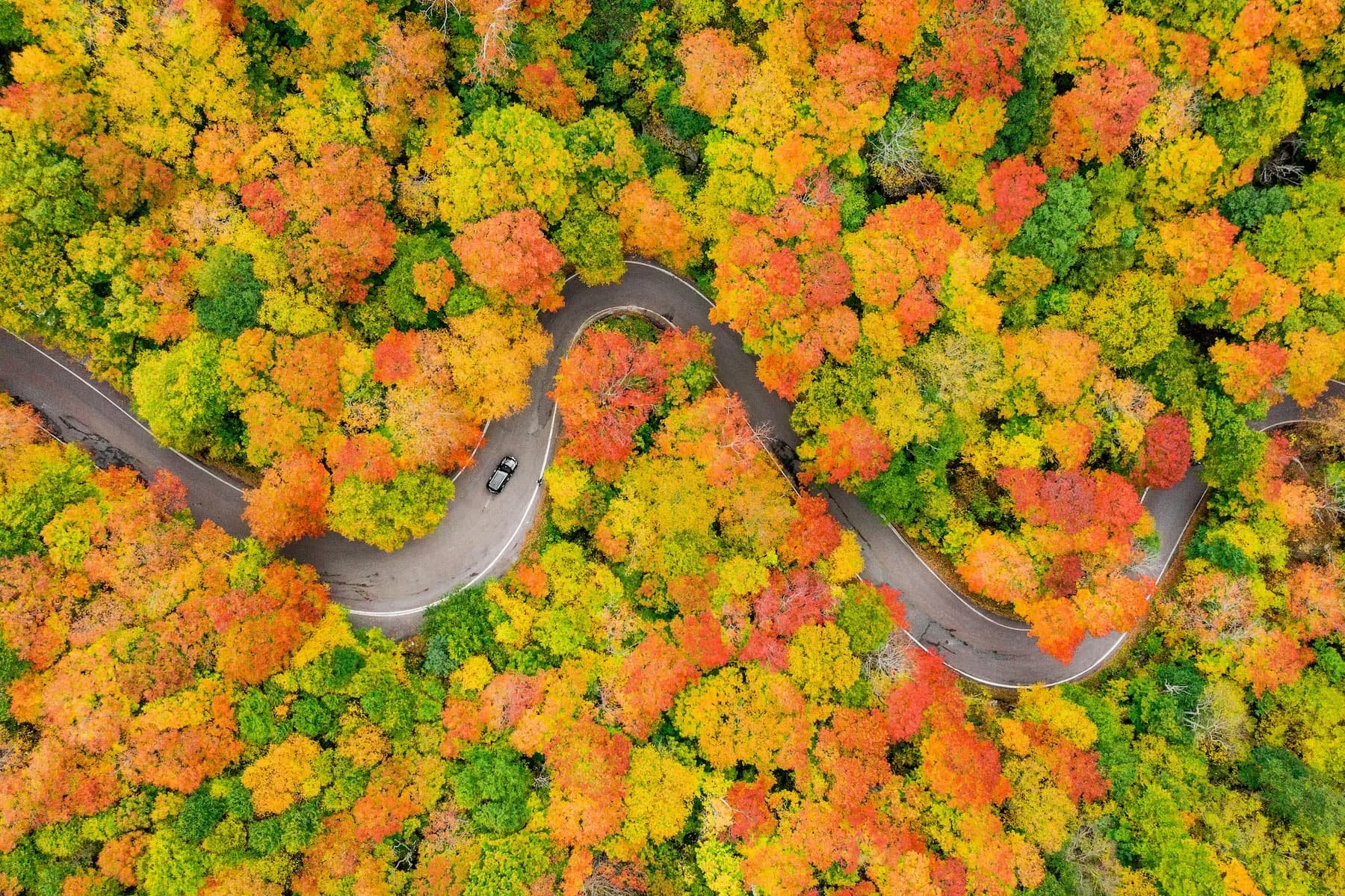
Peak fall foliage at Smuggler’s Notch in Vermont. Photo taken by Anthony Quintano
Why This Matters for Planning a Trip
Now that you know what's actually driving the color, here's what to do with that knowledge before and during the season.
Follow the daily reports instead of an old photo. A picture from someone's feed could be from last week, last year, or heavily edited. Real-time, dated reports are the only way to know what a location looks like right now.
Match your destination to elevation and latitude. If you're going early in the season, head north and up in elevation, the White Mountains and northern New Hampshire, Rangely, Maine or Northeast Kingdom in Vermont. If you're going later, look toward the Lakes Region, southern New Hampshire, and the coast.
Keep an eye on how the summer went. A summer with steady, normal rainfall points toward a strong season. A serious drought or an unusually soggy summer is a sign the color could come in early, dull, or short.
Watch the week-of forecast, not just the season forecast. Warm sunny days paired with cool, non-freezing nights right before your trip is the best possible sign. That combination is what actually builds vivid color.
Check for frost warnings. A light frost is a good sign. A hard, early freeze is a warning that the season could get cut short in that area.
Check for wind and storms before you lock in dates. A single strong storm can wipe the trees of all that beautiful foliage in a single day.
Stay flexible on your travel dates if you can. Peak color shifts by a week or more year to year. Locking in one exact weekend months in advance is the single biggest reason trips miss peak.
Verify conditions the same week you're planning to go, not the month before. Foliage moves fast once it starts. What was accurate two weeks ago may already be past peak or not there yet.
Follow along so you don't miss the window. The reporting window each fall is only a few weeks long in any one region. Following daily means you'll know the moment your target area hits peak.